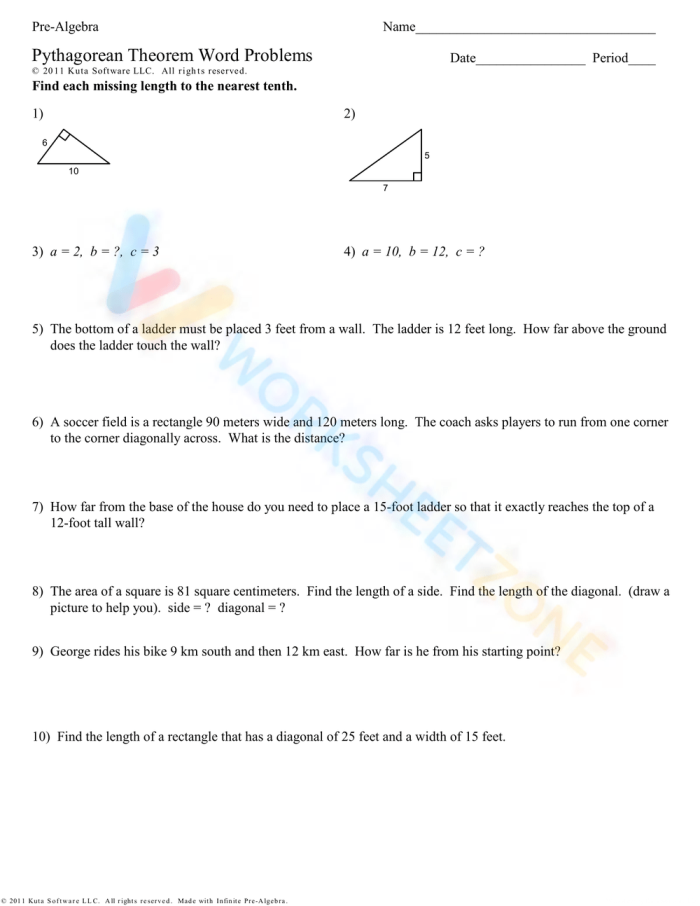
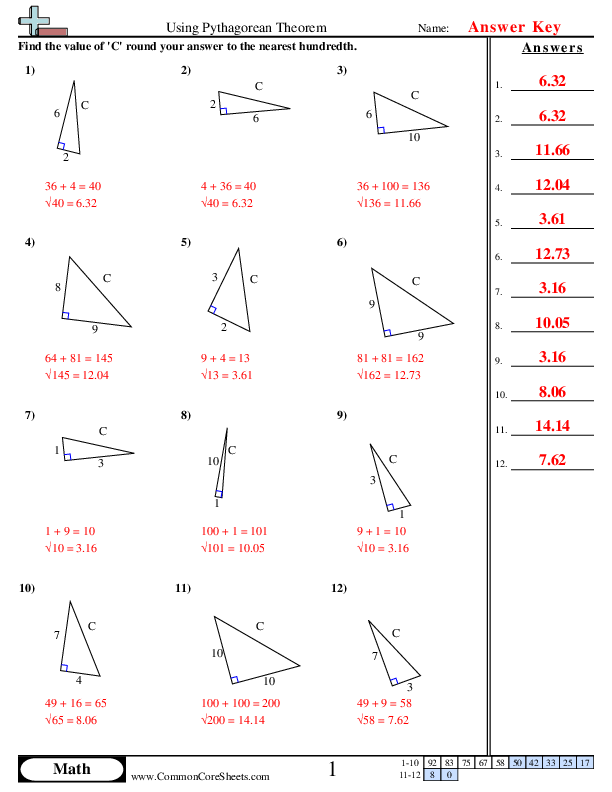
Getting eighth-grade students to see why the Pythagorean theorem matters beyond a textbook can be tough. That changes when you give them problems that actually reflect how people use this math in real life. A well-designed worksheet bridges that gap, letting students work with fractions and measurements in scenarios they can visualize.
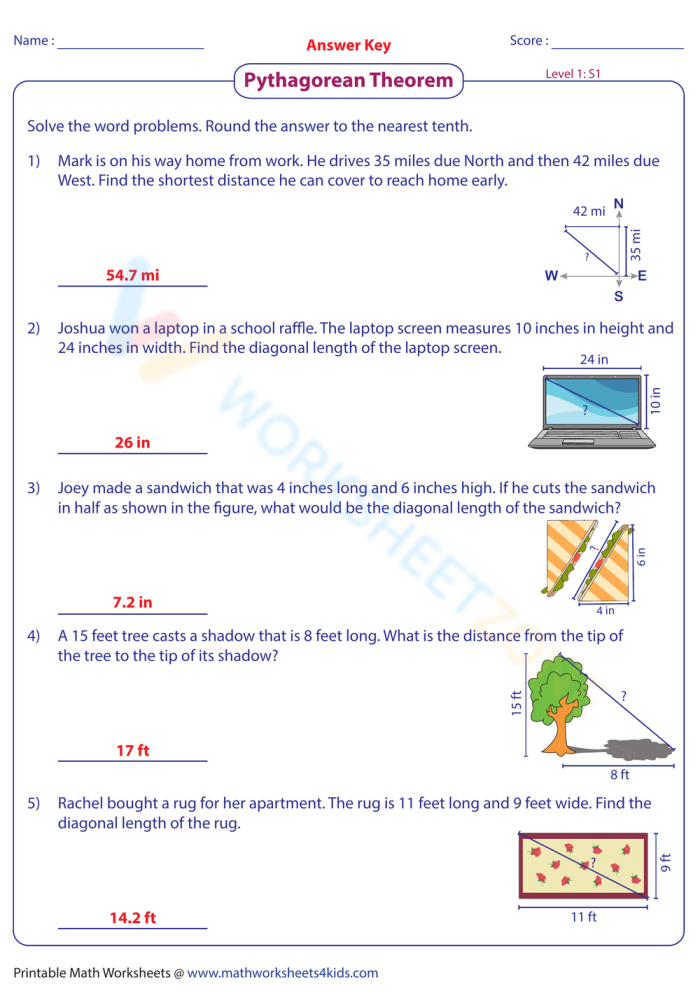
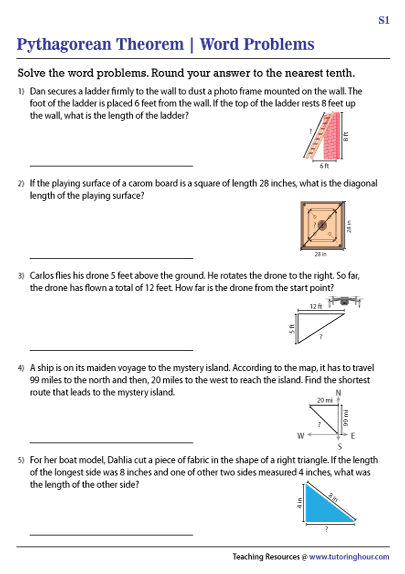
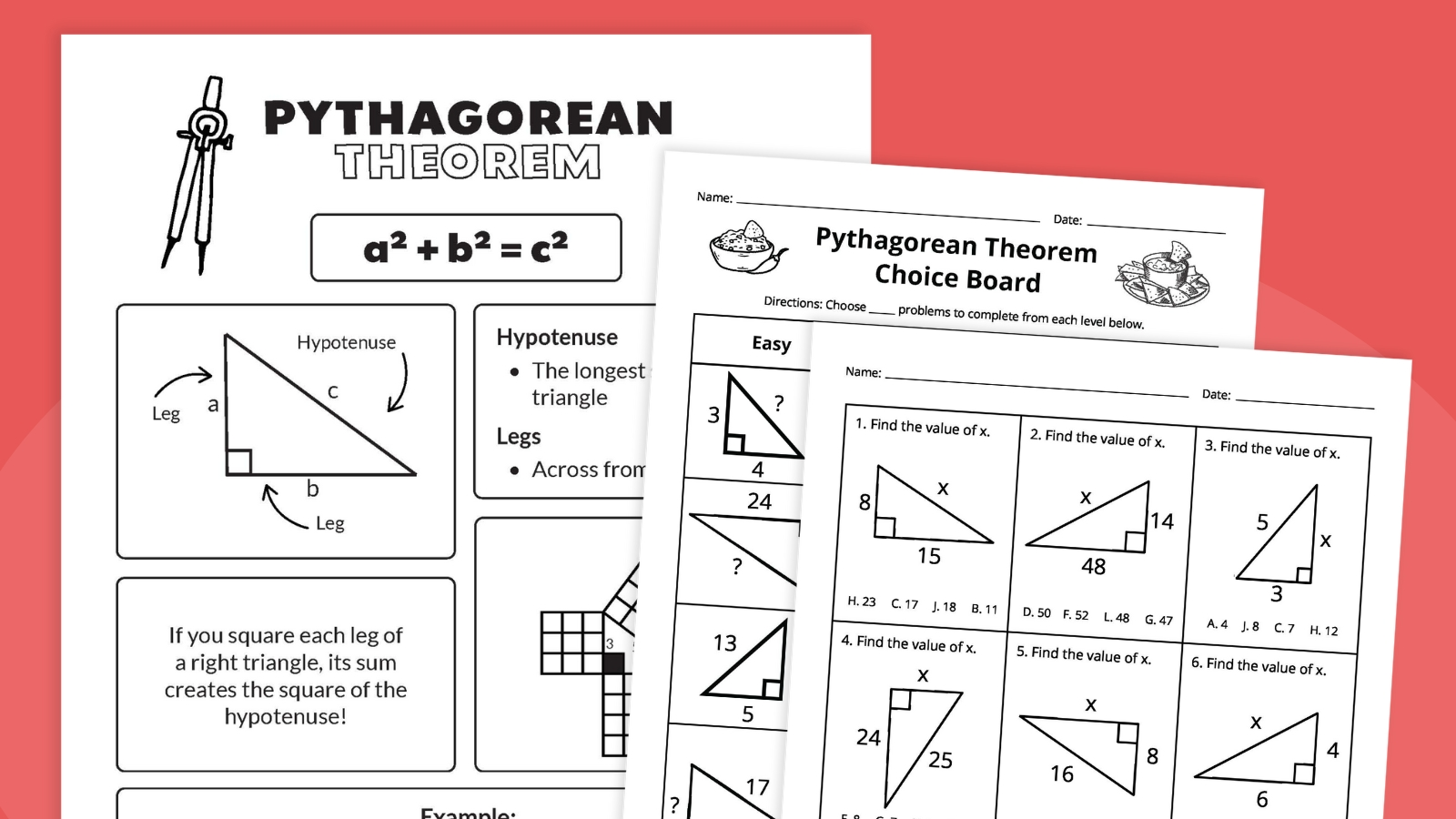
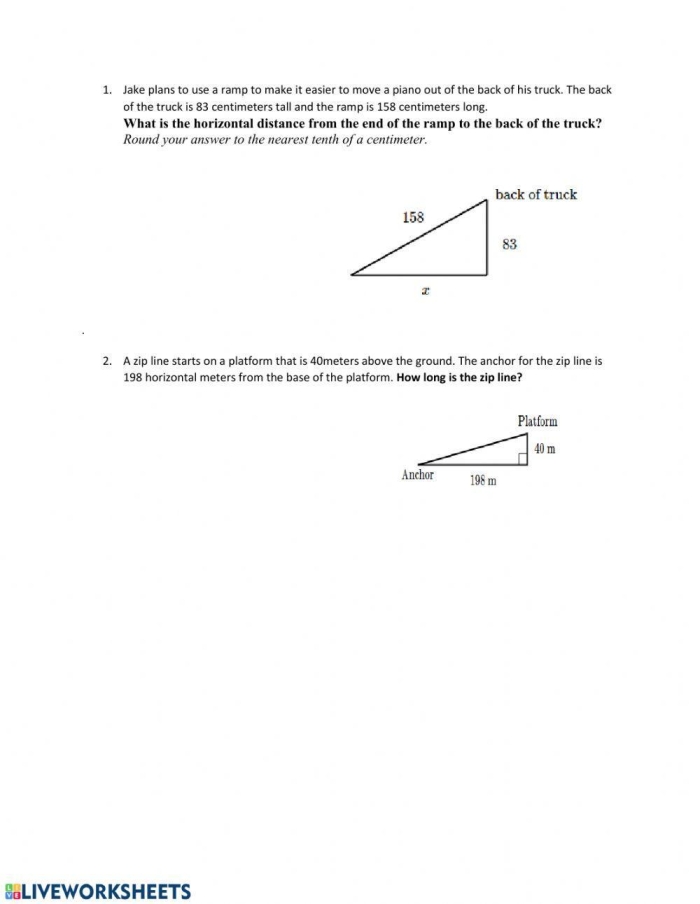
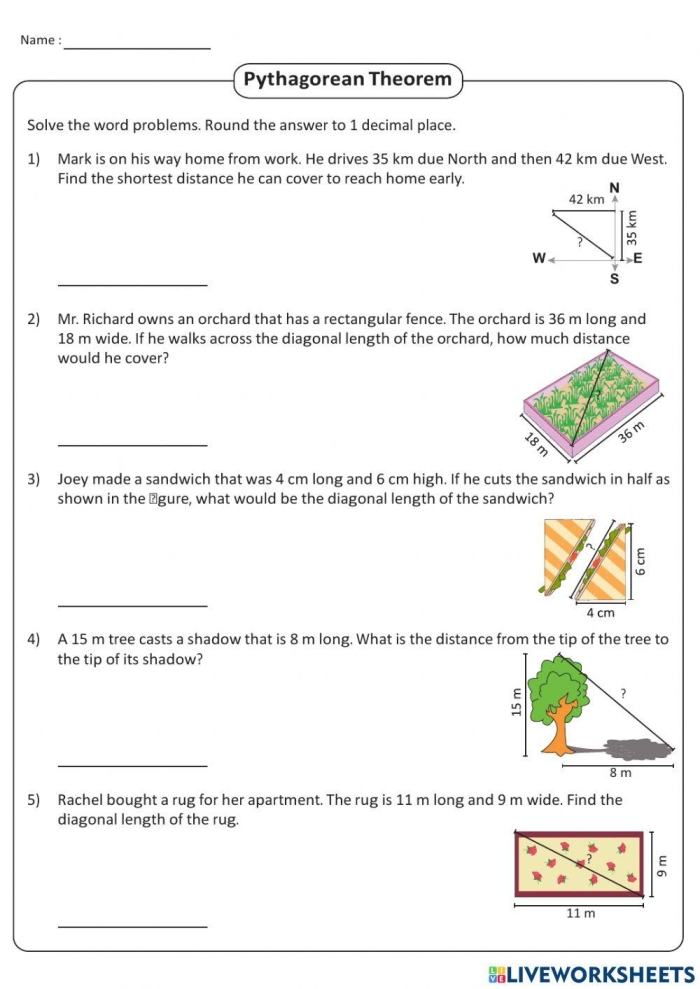
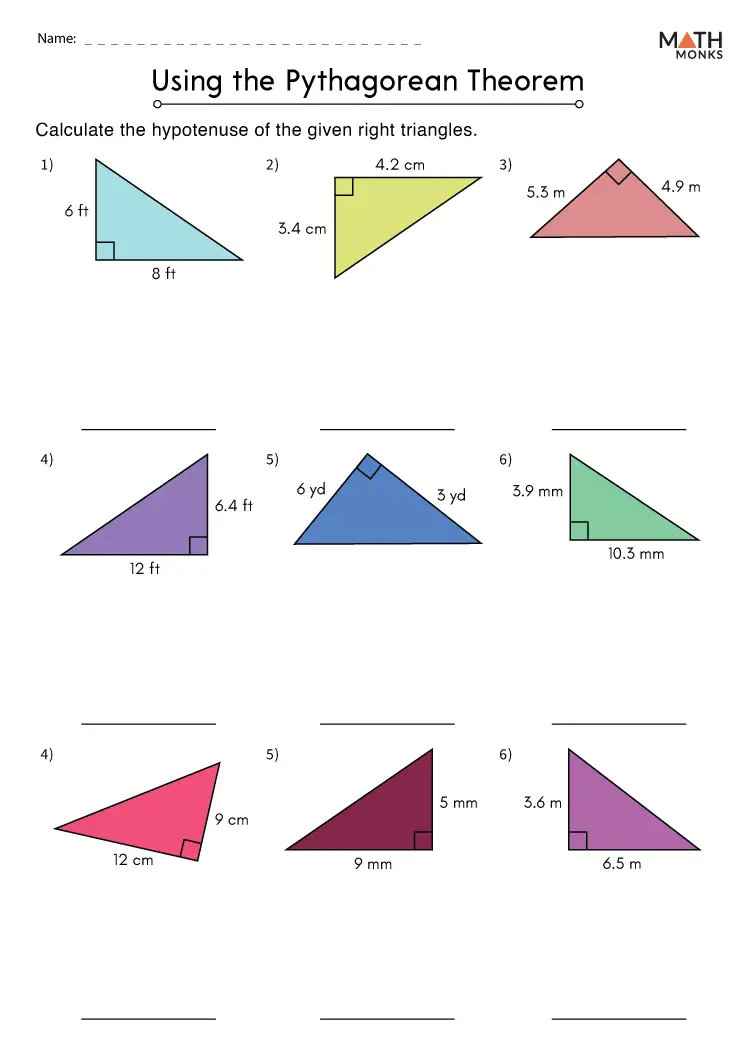
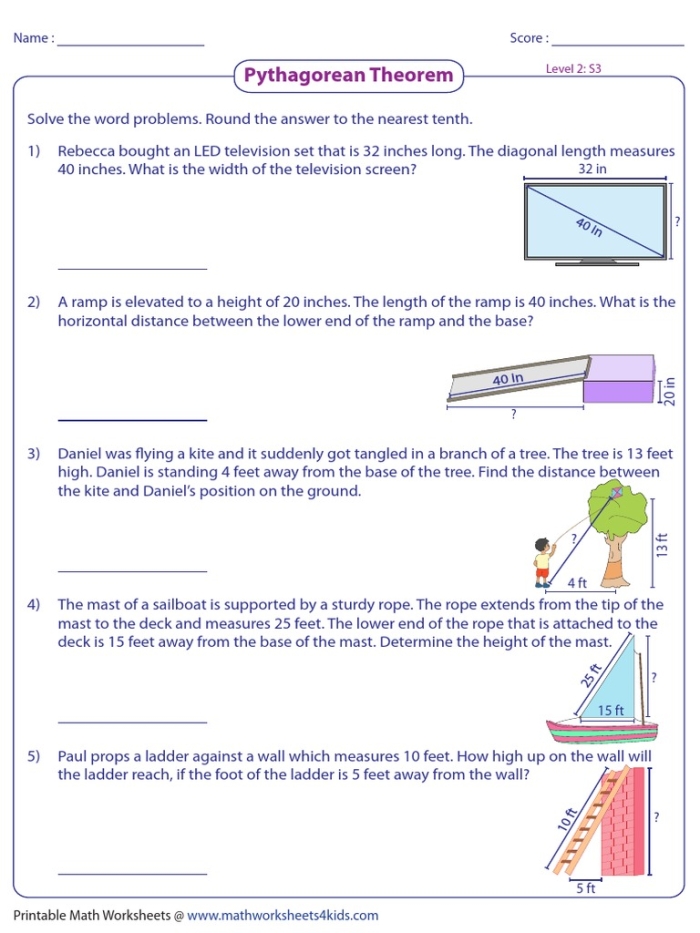
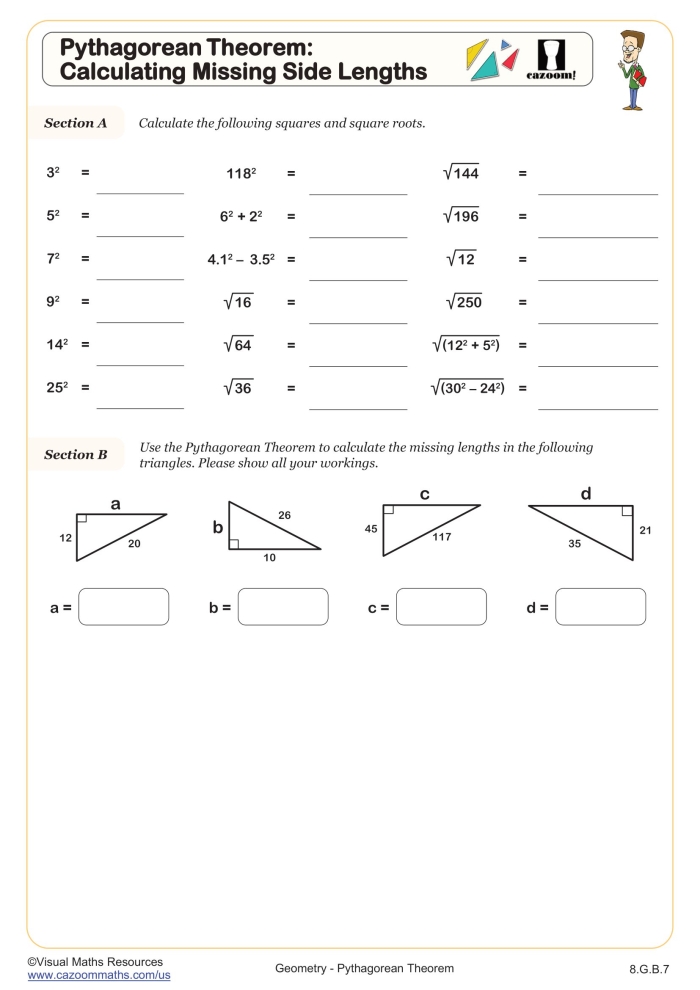
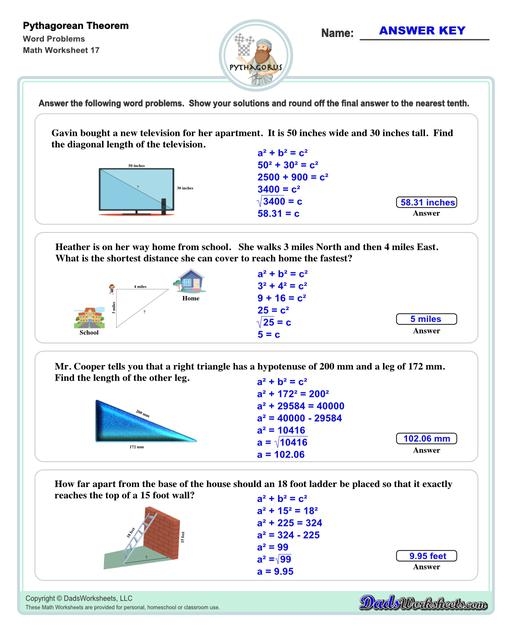
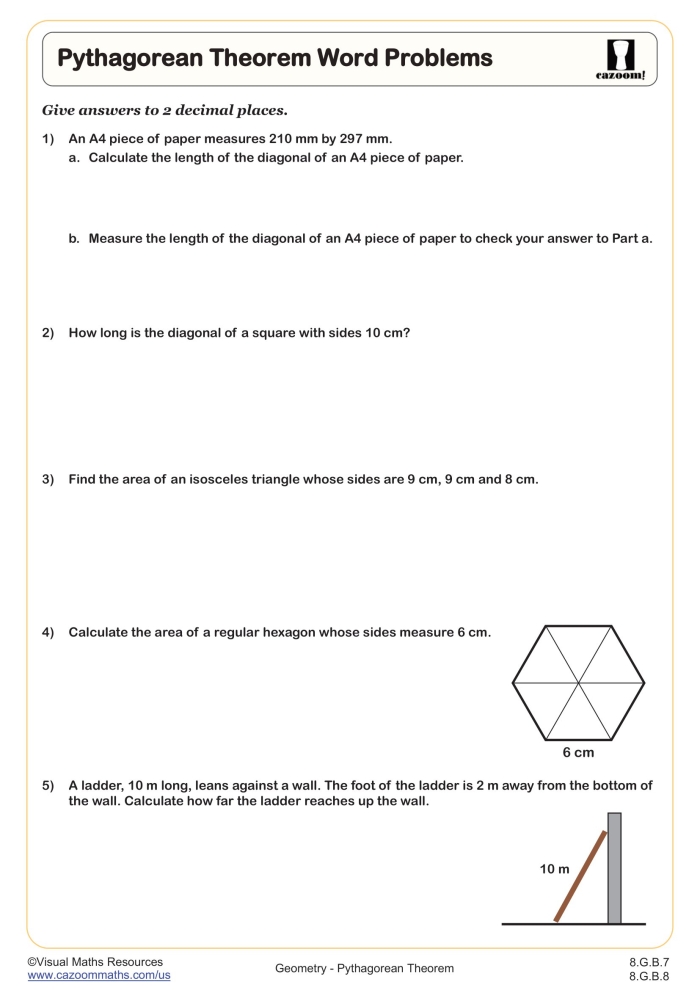
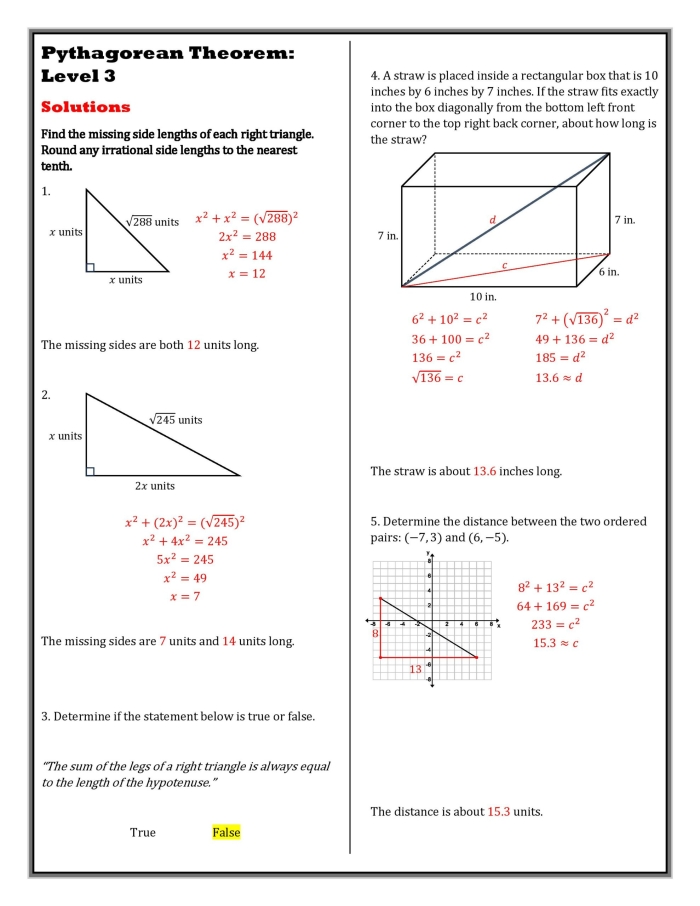
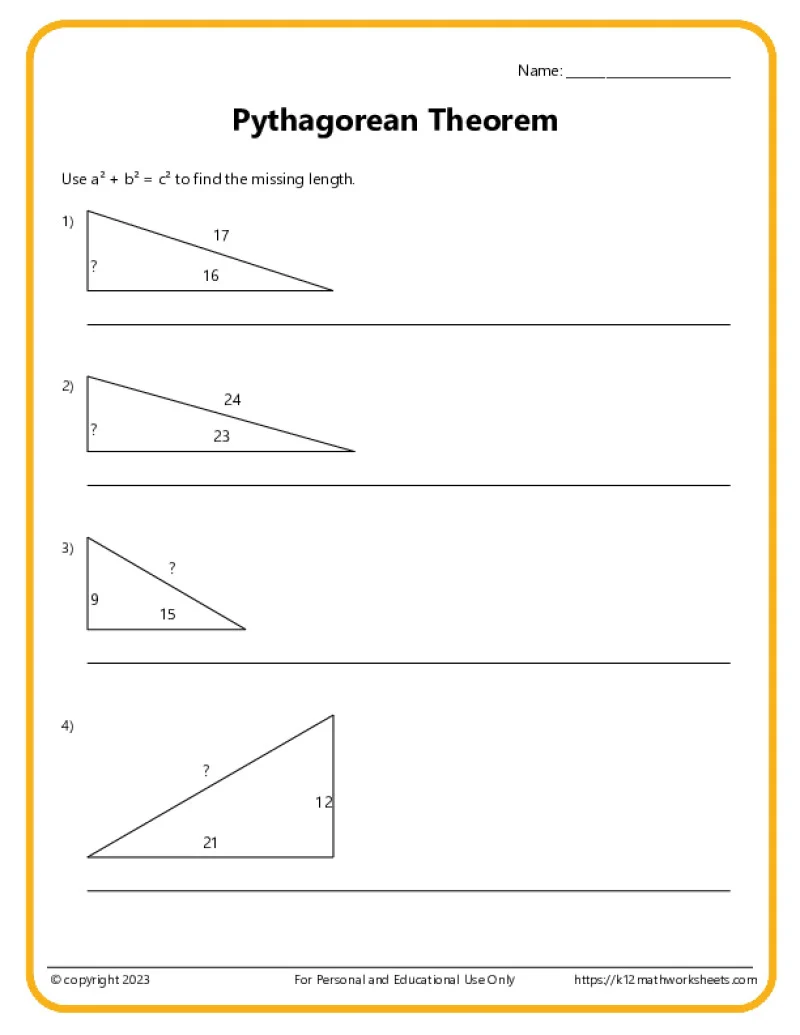
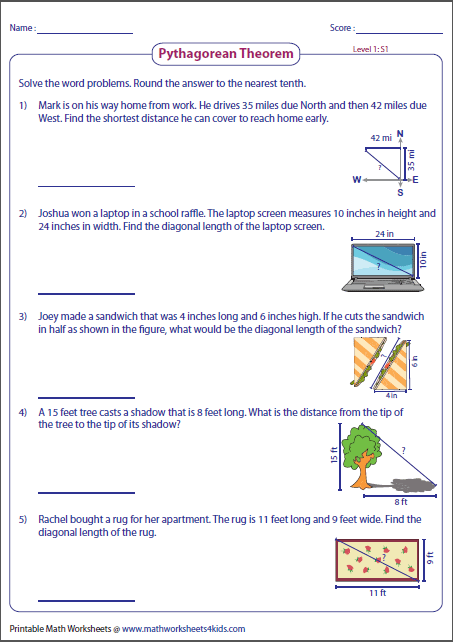
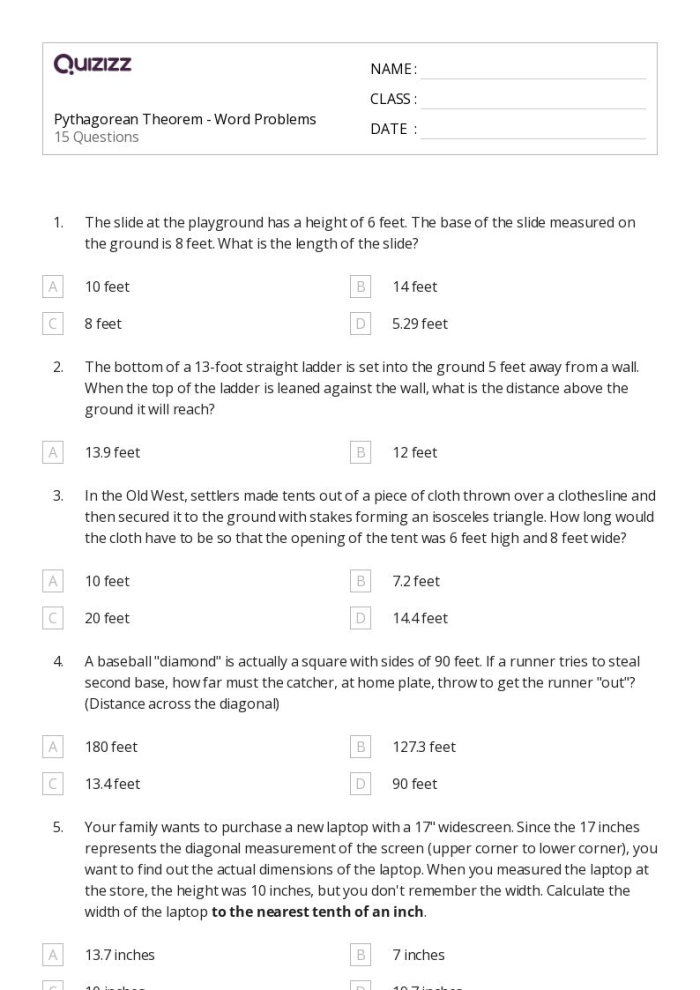
The Pythagorean theorem states that in a right triangle, a² + b² = c², where c is the hypotenuse. When students encounter this formula in word problems, they start recognizing it everywhere: in construction, navigation, sports, and design. Maybe a problem asks how long a ladder needs to be to reach a certain height on a wall, or how far apart two points are if you know their horizontal and vertical distances. These situations make the abstract formula concrete.
Working with fractions in these problems adds another layer of complexity that eighth graders need to master. A worksheet might present measurements like 3½ feet or 7¾ inches, forcing students to convert, multiply, and simplify as they work through the calculations. This reinforces fraction skills while applying geometric thinking simultaneously.
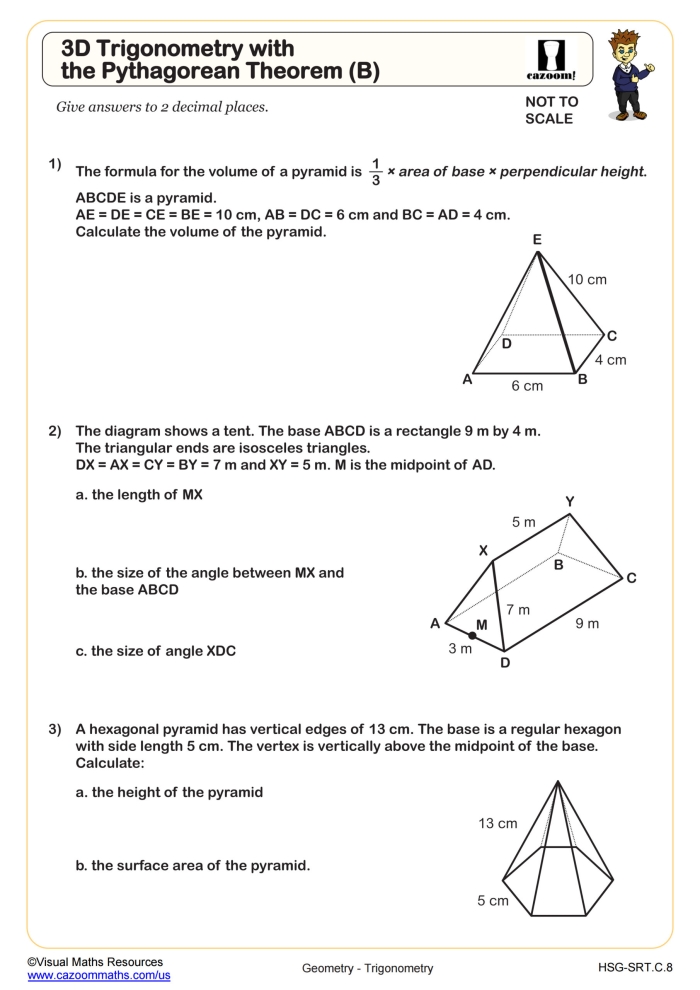
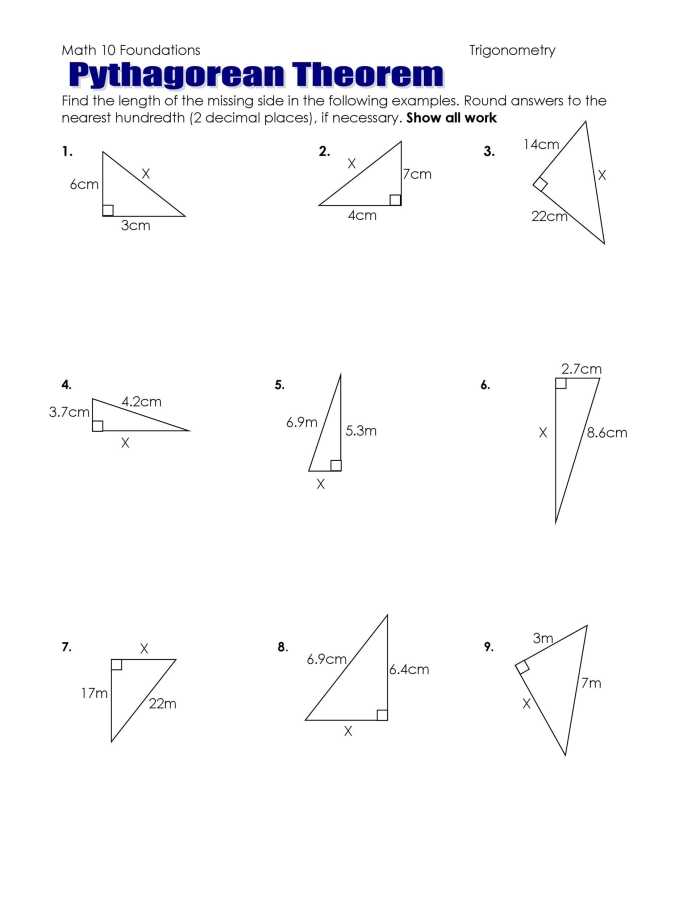
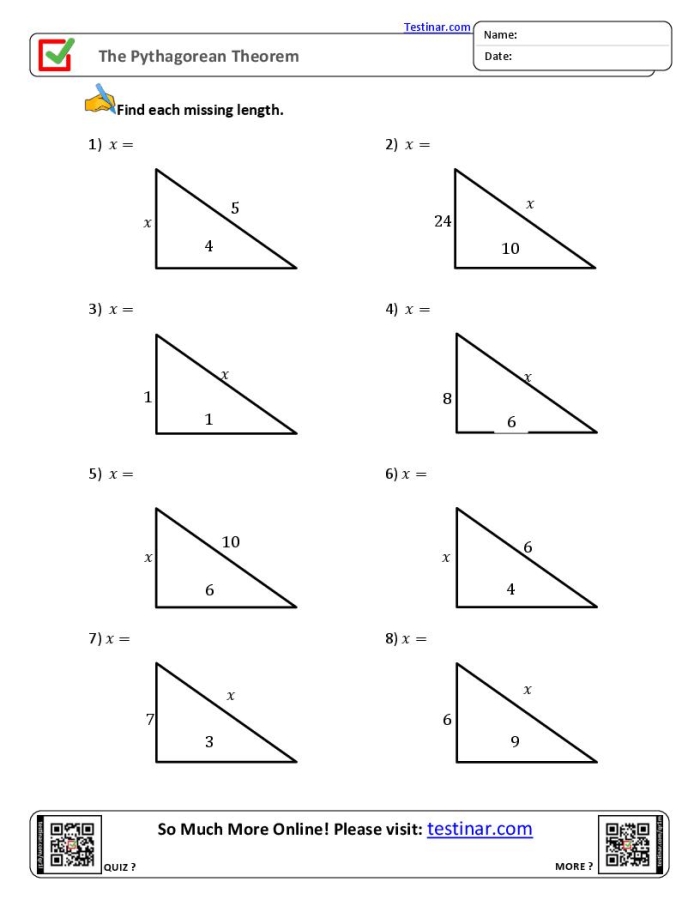
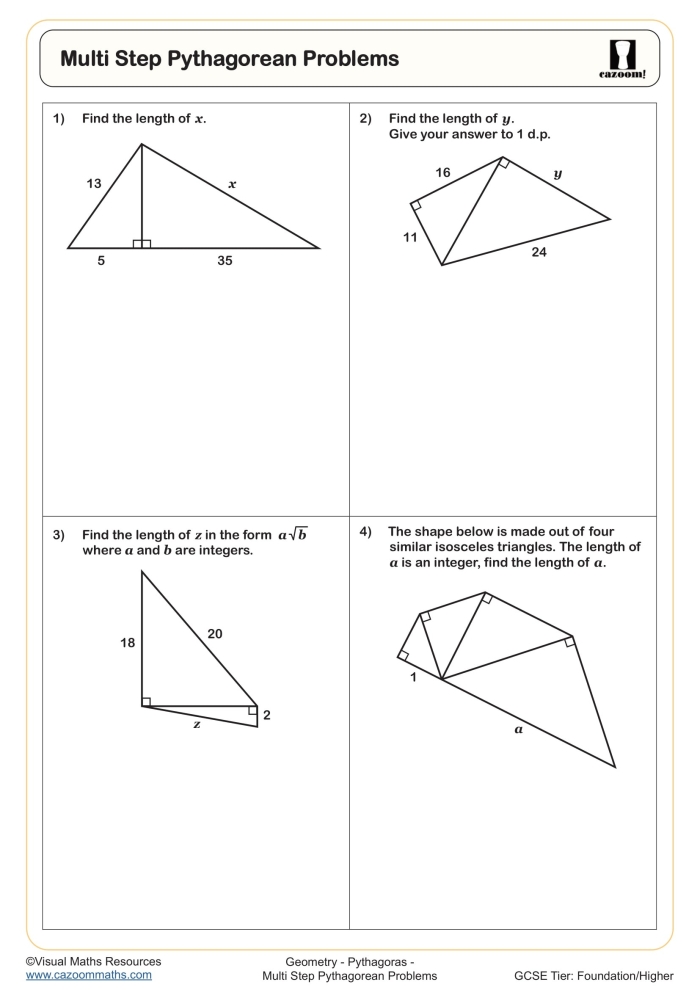
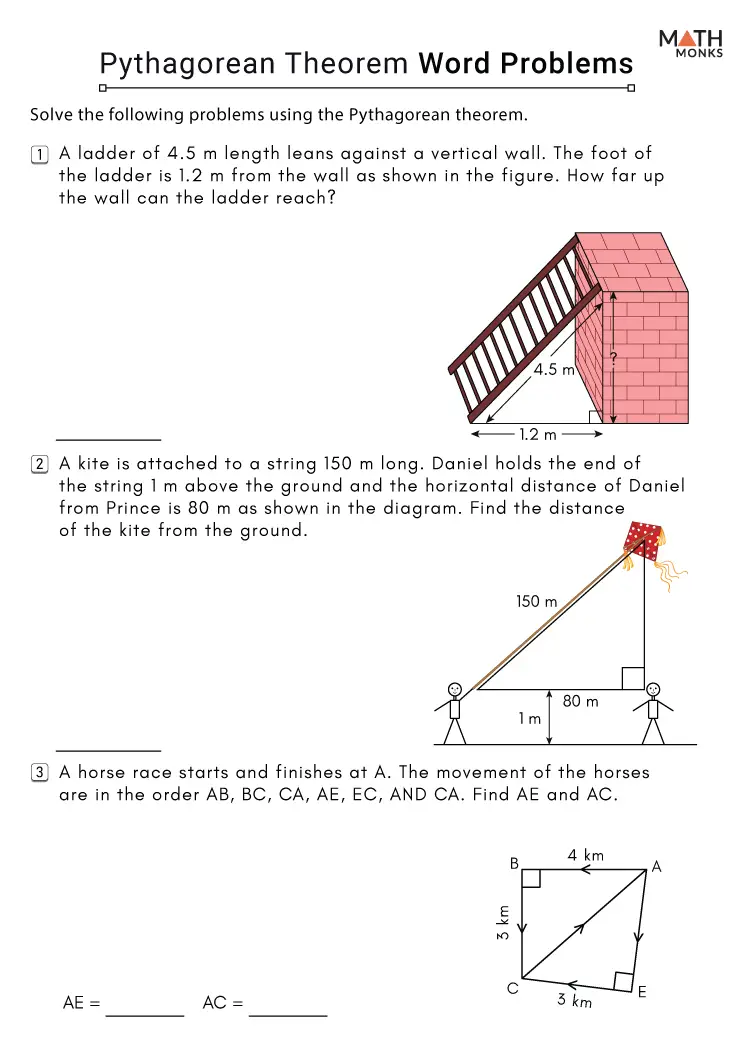
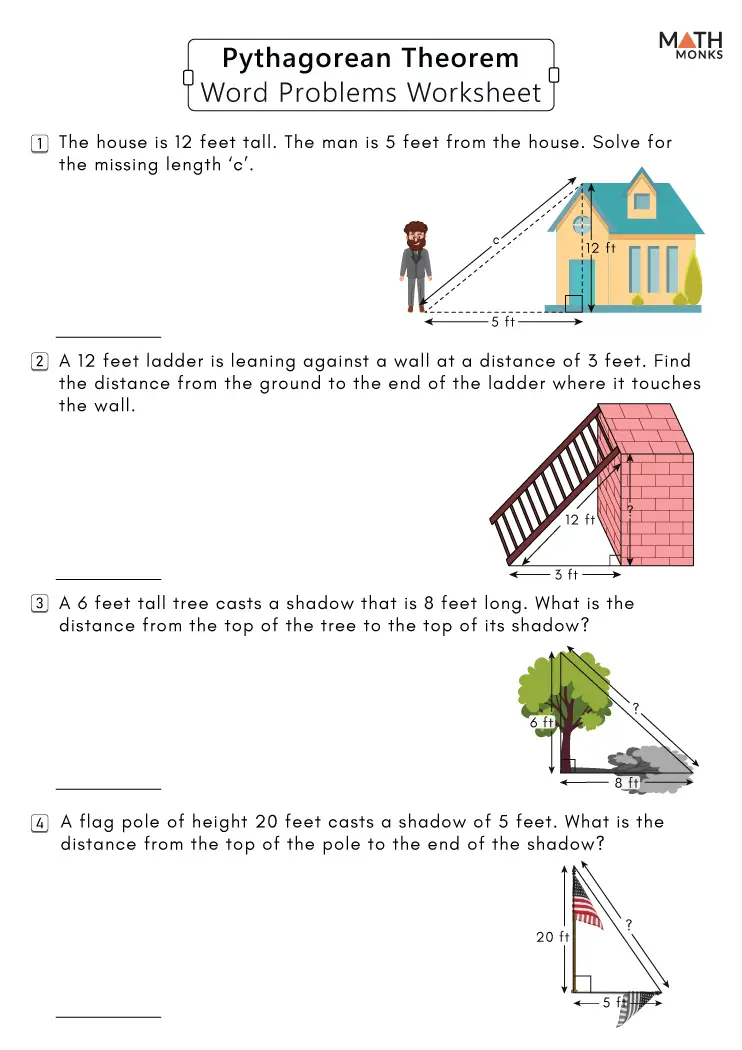
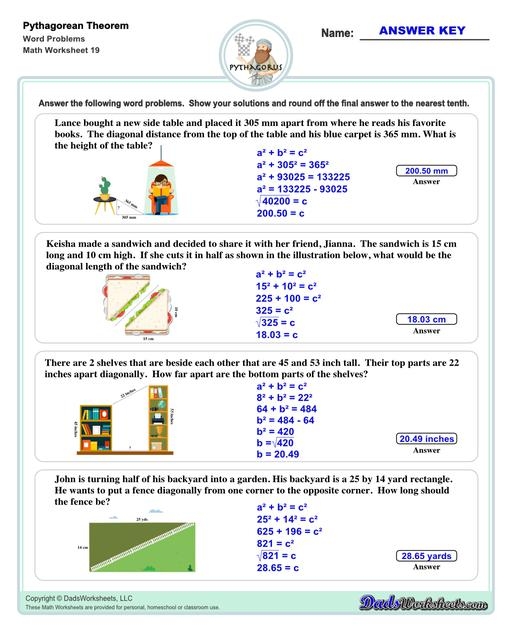
When you structure problems around real scenarios, students develop confidence in their problem-solving approach. They learn to identify which sides of a triangle they know, determine what they’re solving for, and execute the calculation with precision. Some worksheets even include diagrams that help visualize the situation before diving into numbers.
If you’re looking to deepen this work, consider pairing word problems with other geometry and algebra skills. Resources on Pythagorean theorem word problems with fractions provide structured practice, while worksheets on writing linear equations from two points help students see connections between different math concepts. You might also explore materials on proving the Pythagorean theorem to help students understand why this relationship works, not just how to apply it.
Hands-On Worksheet Activities