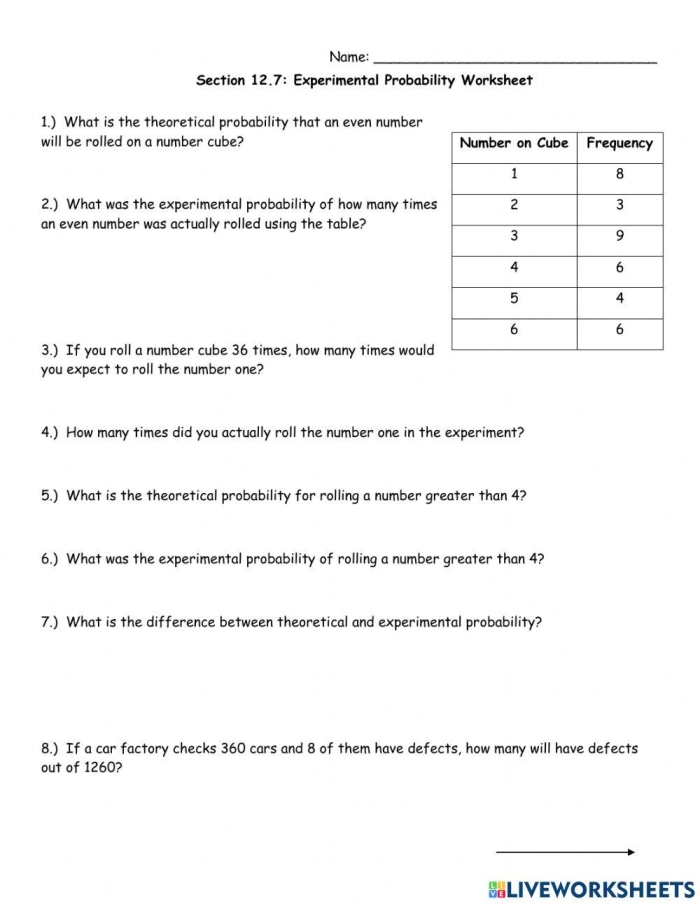
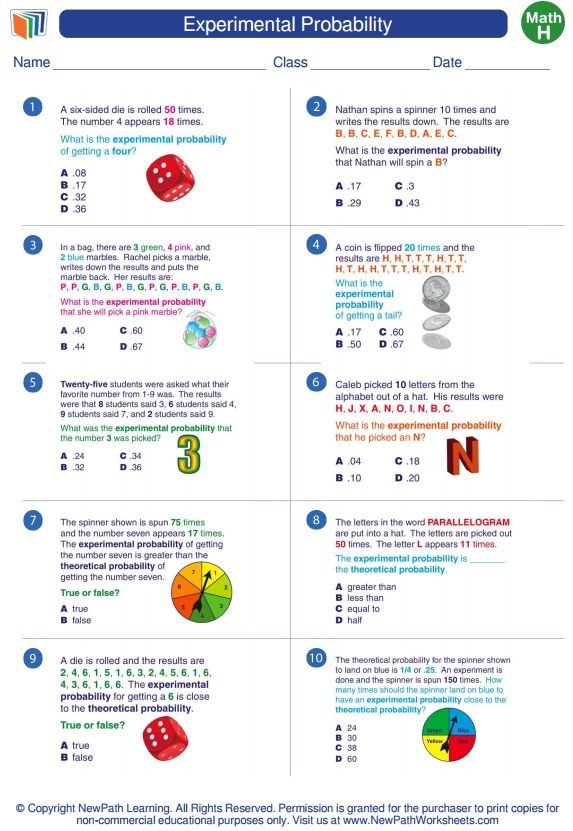
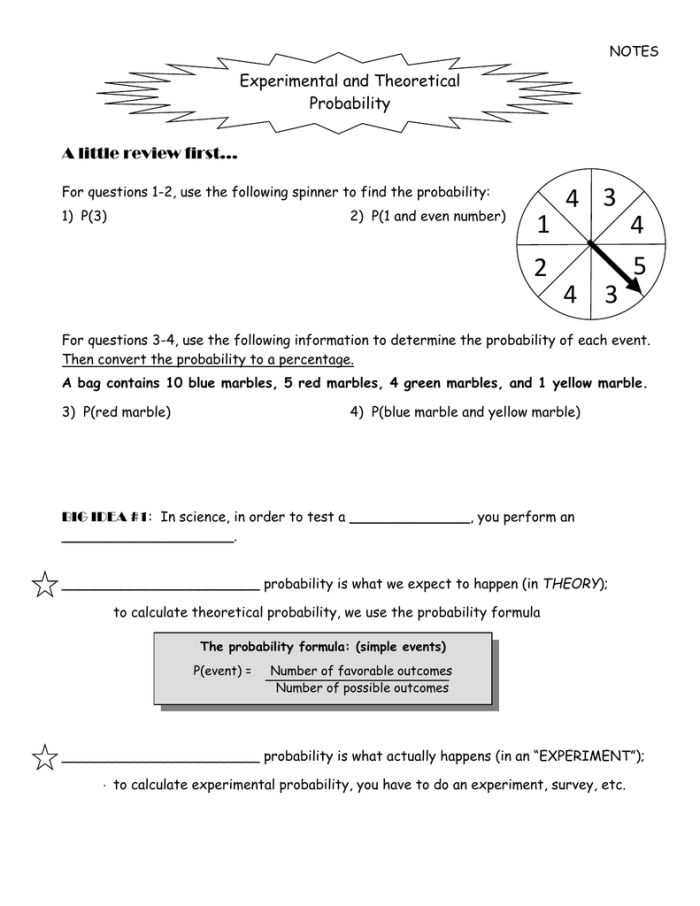
Seventh-grade students often struggle with probability because it requires them to think abstractly about outcomes they haven’t experienced yet. A solid probability worksheet bridges that gap by giving students concrete practice with theoretical probability, which is the foundation for making accurate predictions about future events.
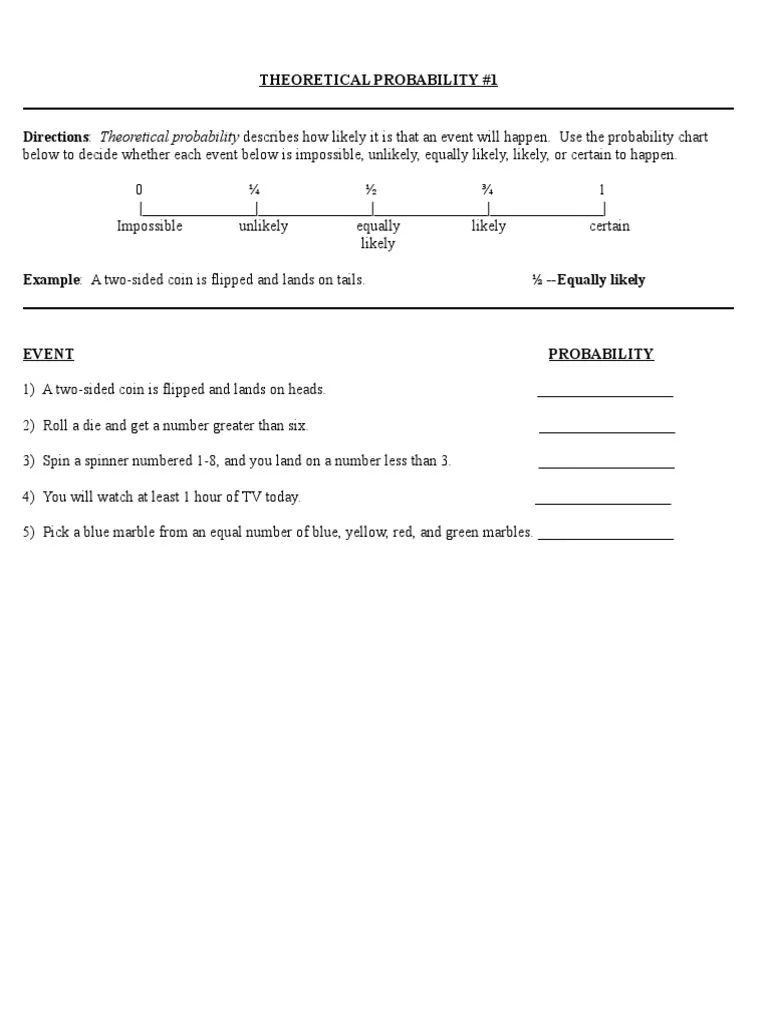
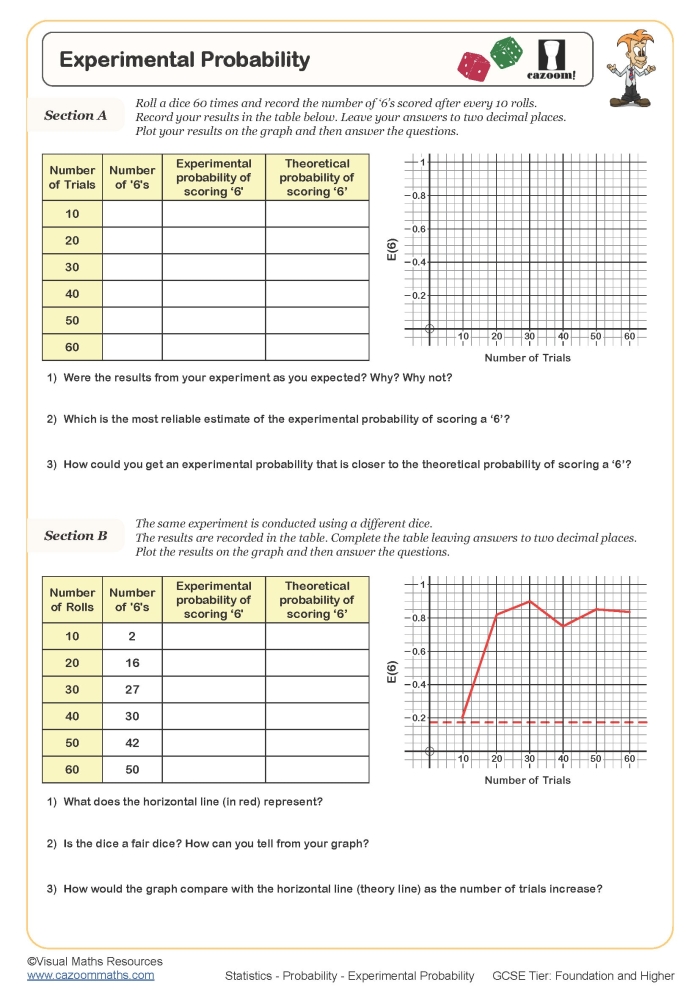
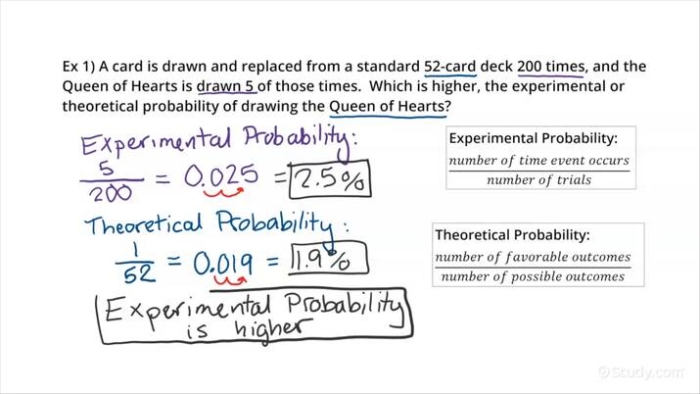
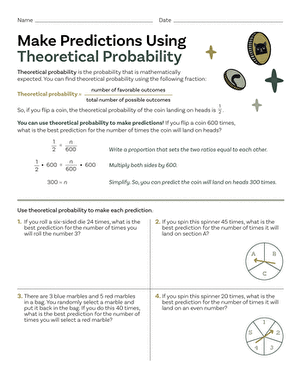
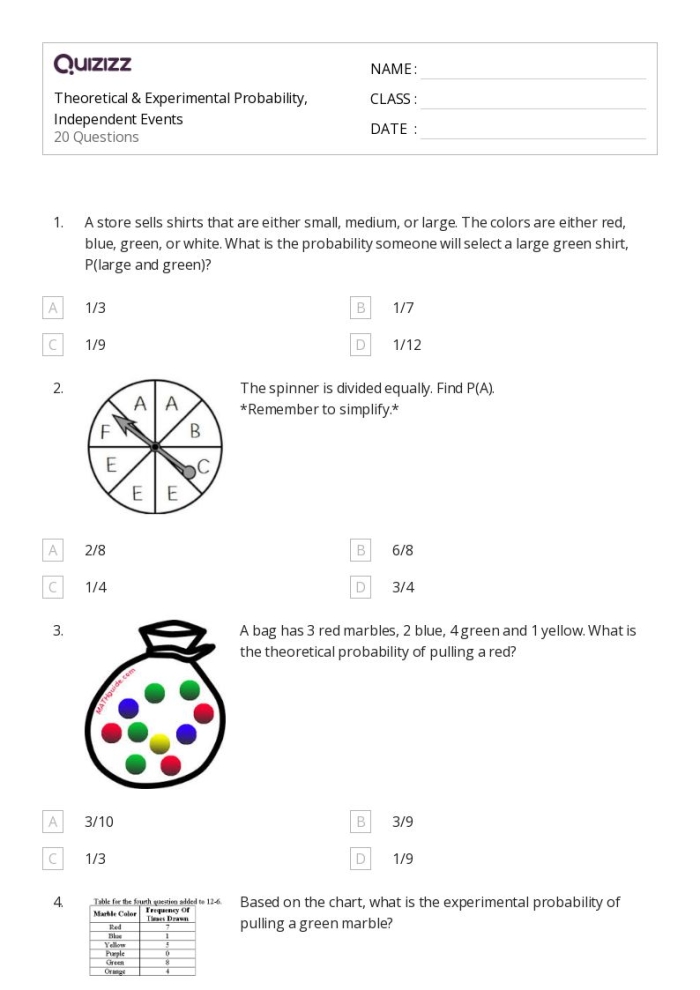
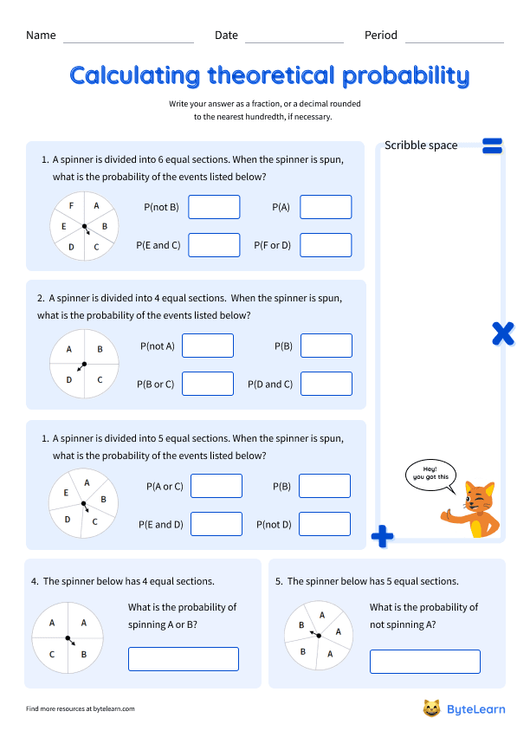
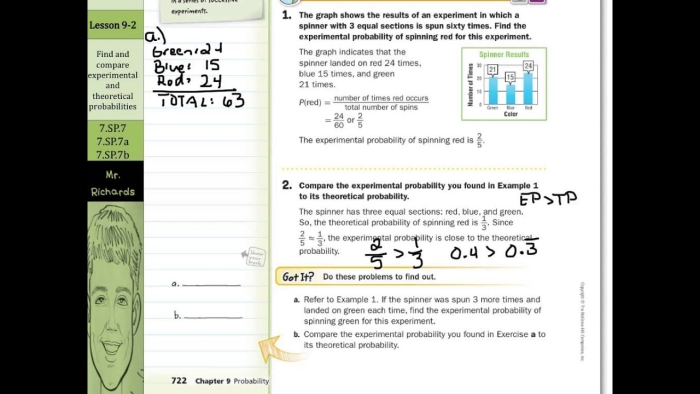
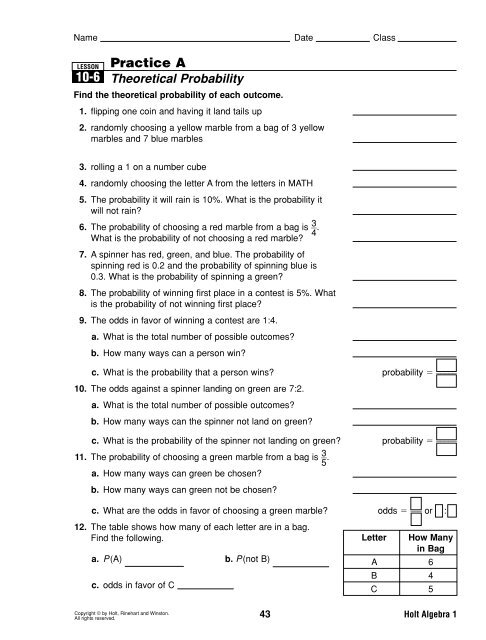
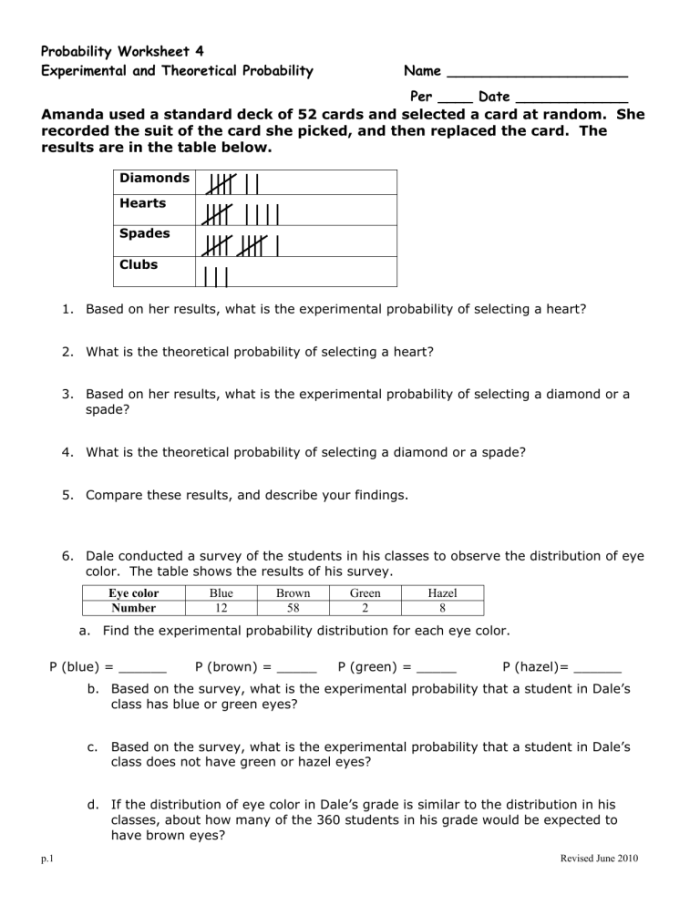
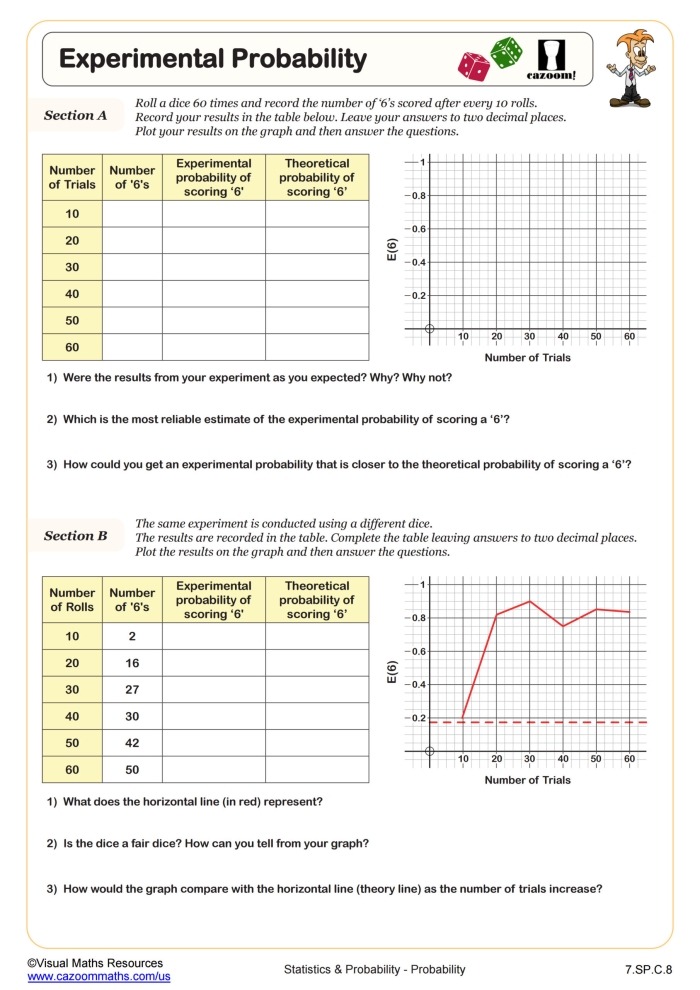
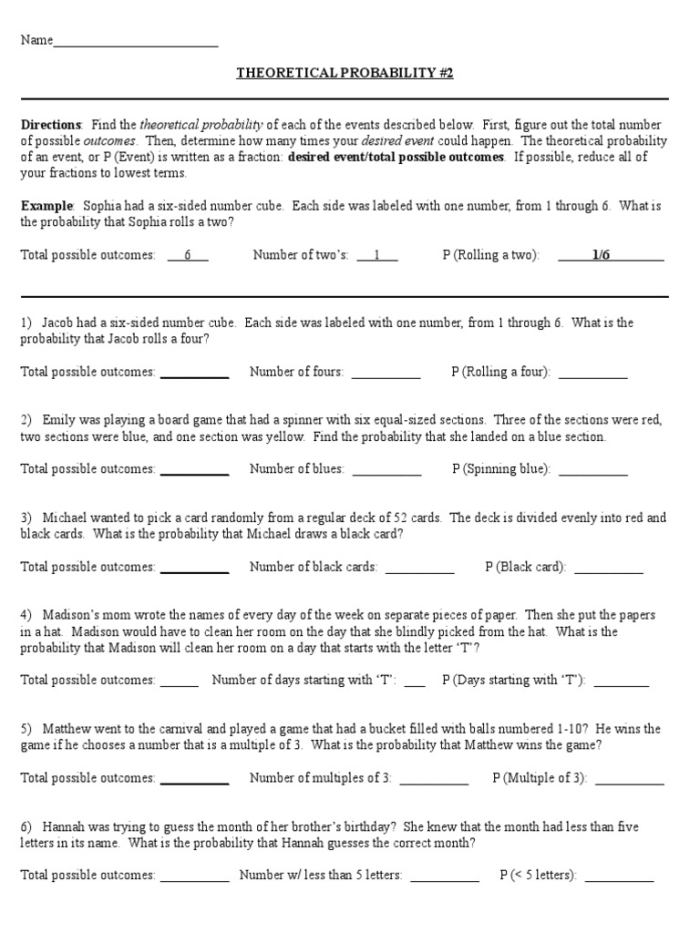
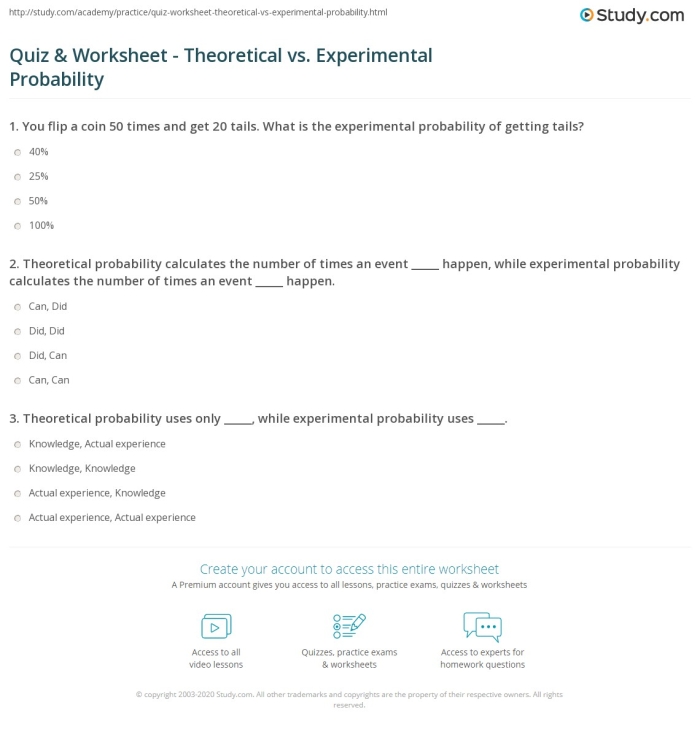
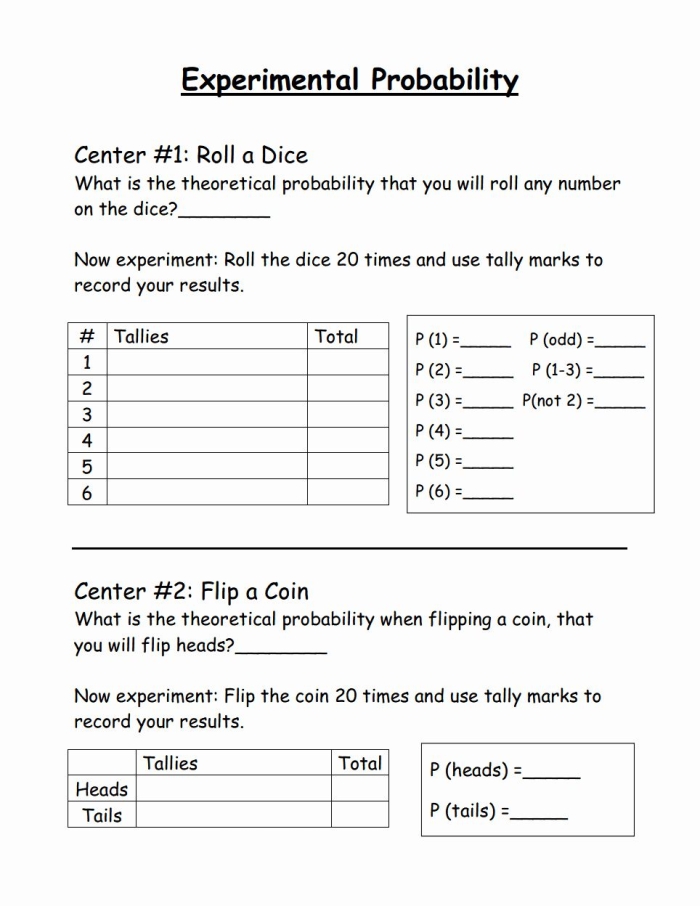
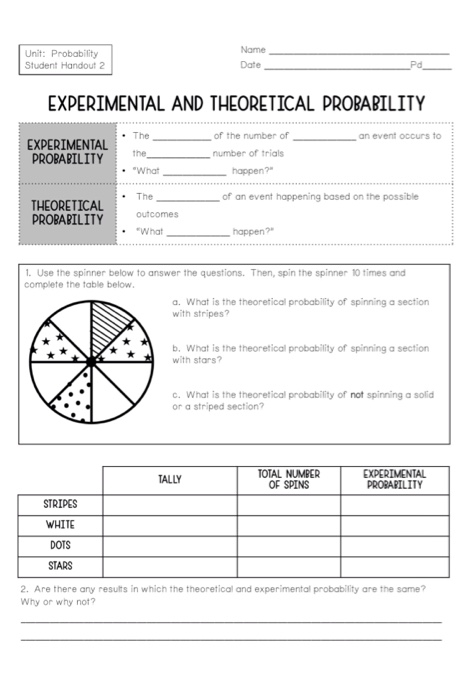
Theoretical probability differs from experimental probability in a key way: it’s based on mathematical reasoning rather than actual trials. When you flip a fair coin, the theoretical probability of heads is exactly 0.5, regardless of whether you’ve actually flipped it before. This concept matters because students need to understand that some probabilities can be calculated without running experiments. A seventh-grade probability worksheet typically presents problems where students calculate these theoretical odds for events like rolling dice, drawing cards from a deck, or spinning spinners.
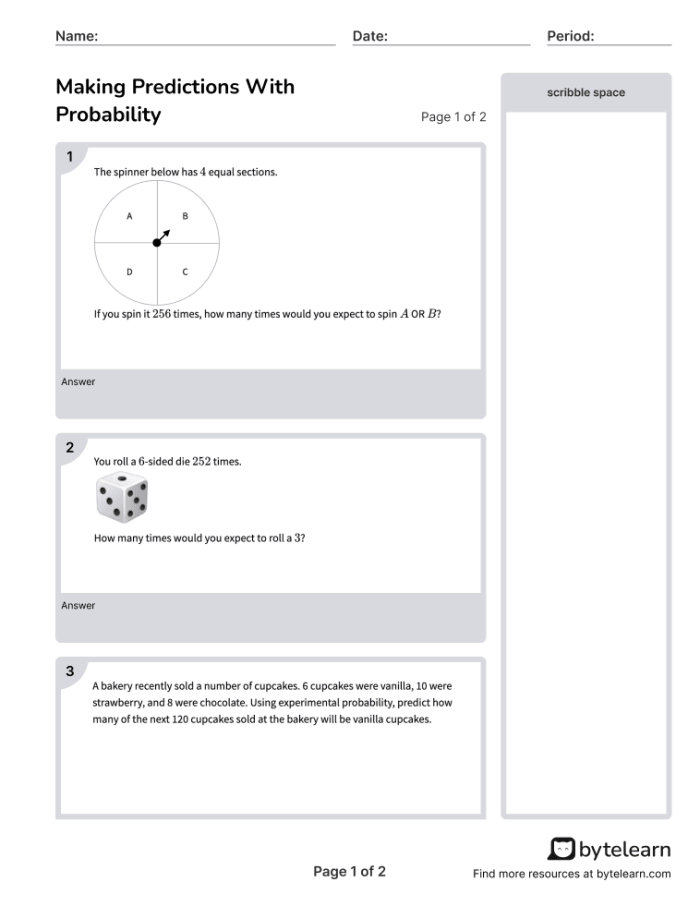
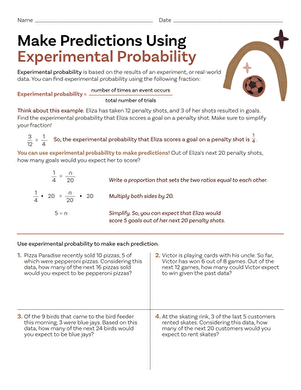
The real value emerges when students move beyond calculation to prediction. Once they know that a six-sided die has a one-in-six chance of landing on any specific number, they can predict what will happen over many rolls. If a student rolls the die 300 times, they should expect roughly 50 outcomes showing a three. This leap from abstract probability to concrete prediction is where learning solidifies.
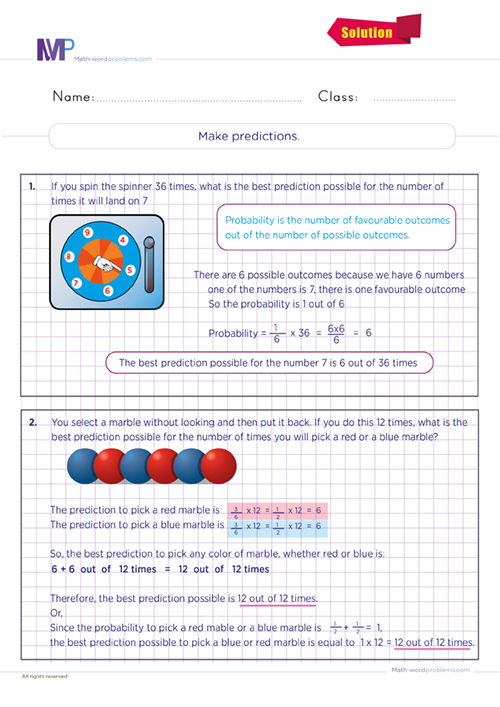
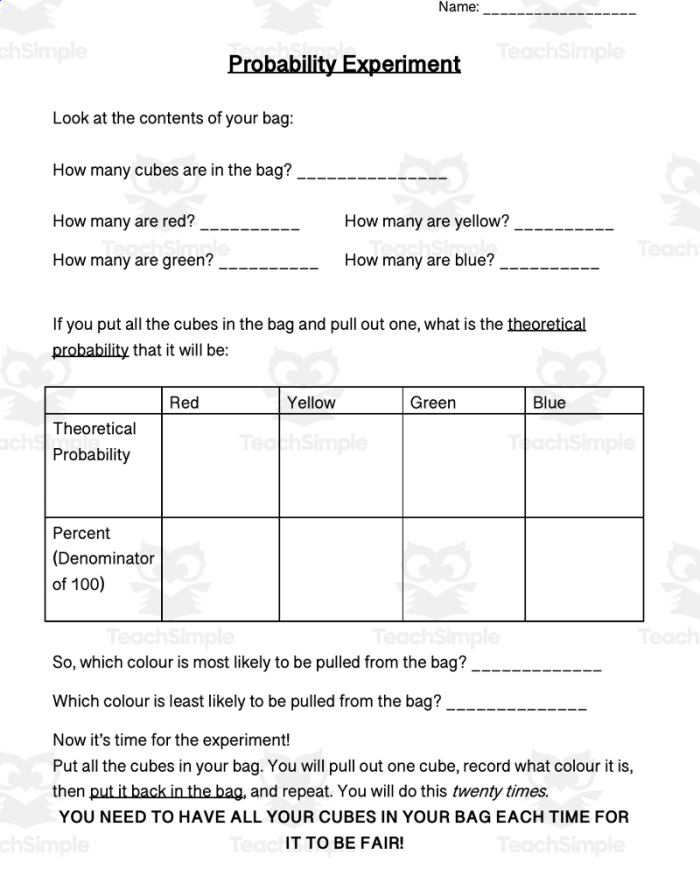
These worksheets typically include practical scenarios: predicting the likelihood of selecting a specific marble from a bag, determining odds in a lottery-style drawing, or forecasting outcomes in a multi-event scenario. Some problems require students to work with fractions, which connects to other seventh-grade math skills like when they add and subtract positive and negative fractions.
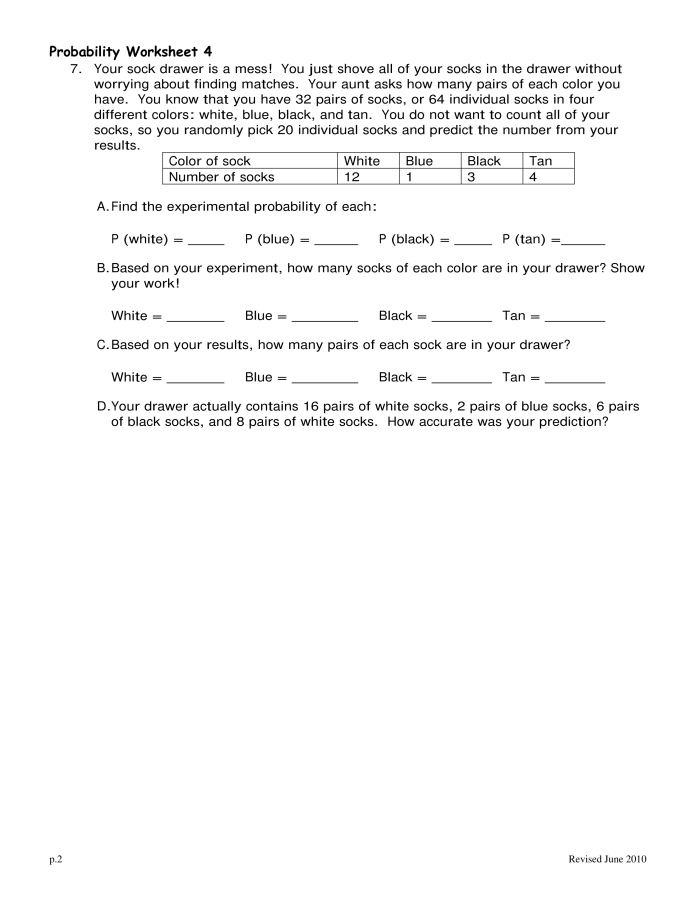
A quality worksheet on how to make predictions using theoretical probability pushes students beyond simple calculation. It asks them to apply their understanding to new situations, compare predictions to actual outcomes, and adjust their thinking when reality doesn’t match expectations. This process develops mathematical reasoning that extends far beyond the probability unit itself.
Grab These Worksheets Now