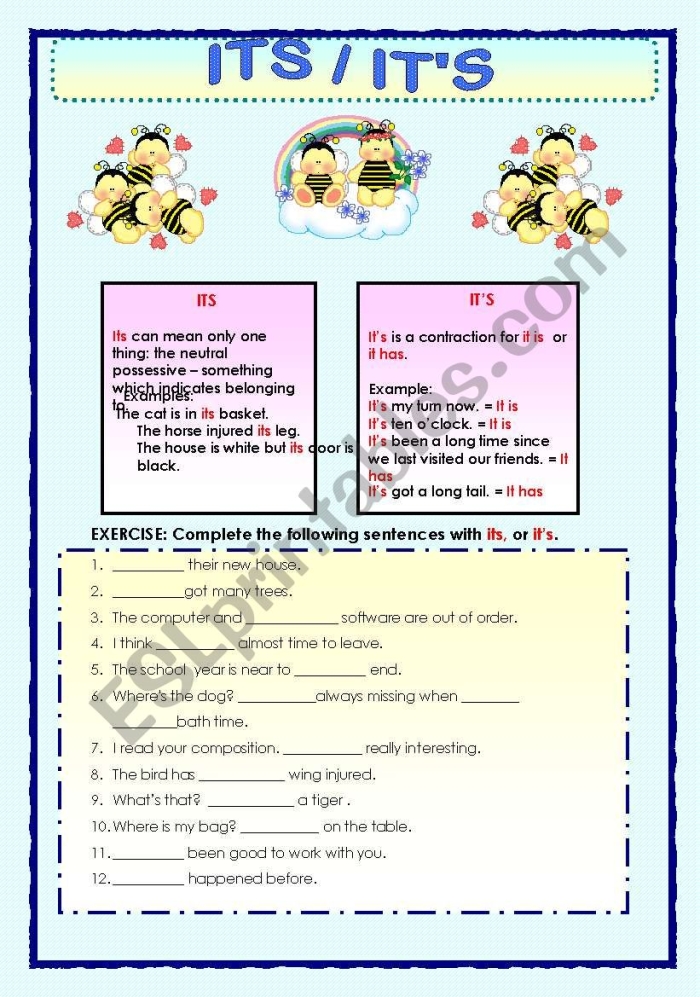
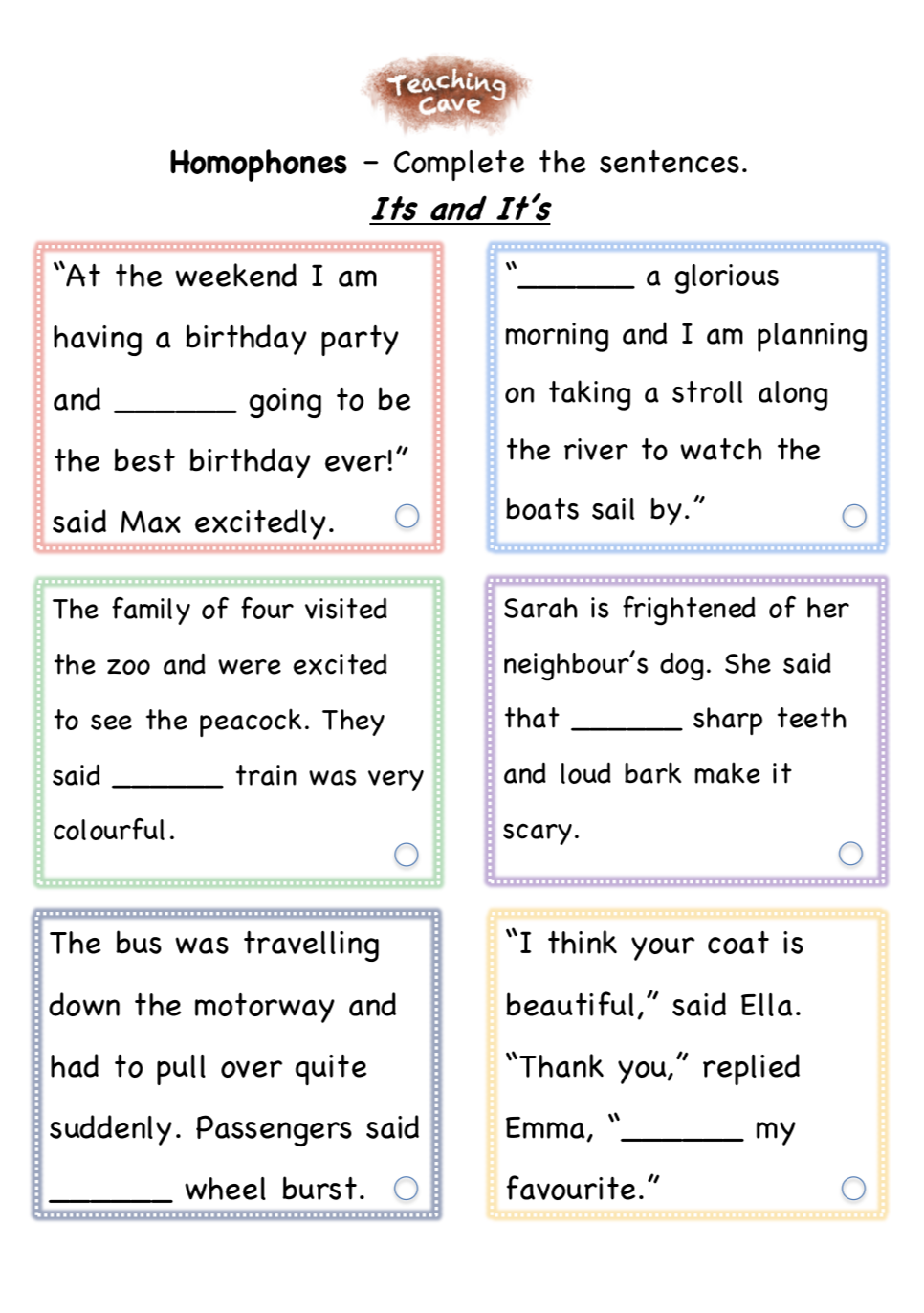
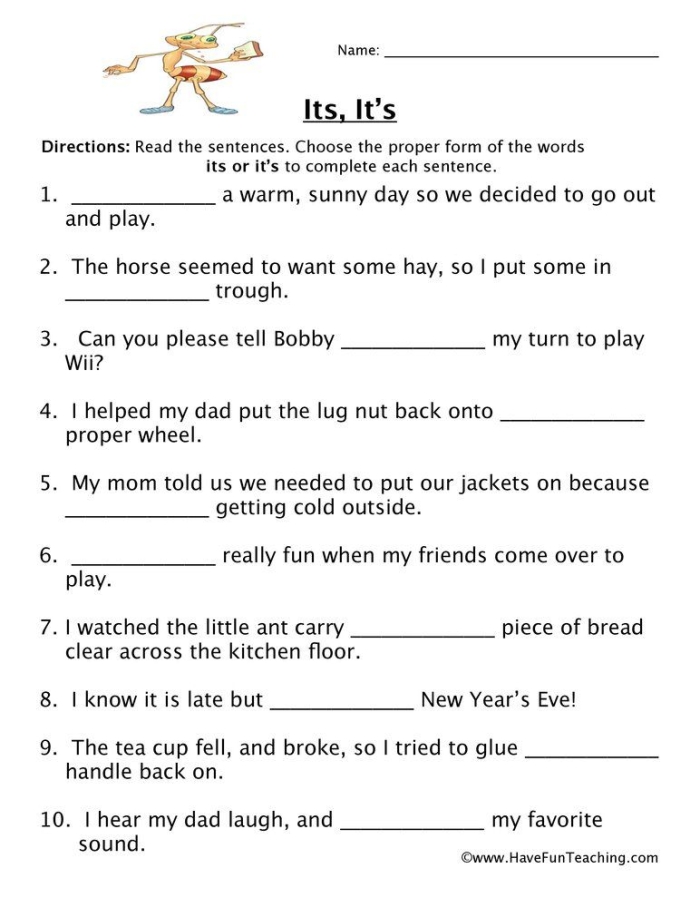
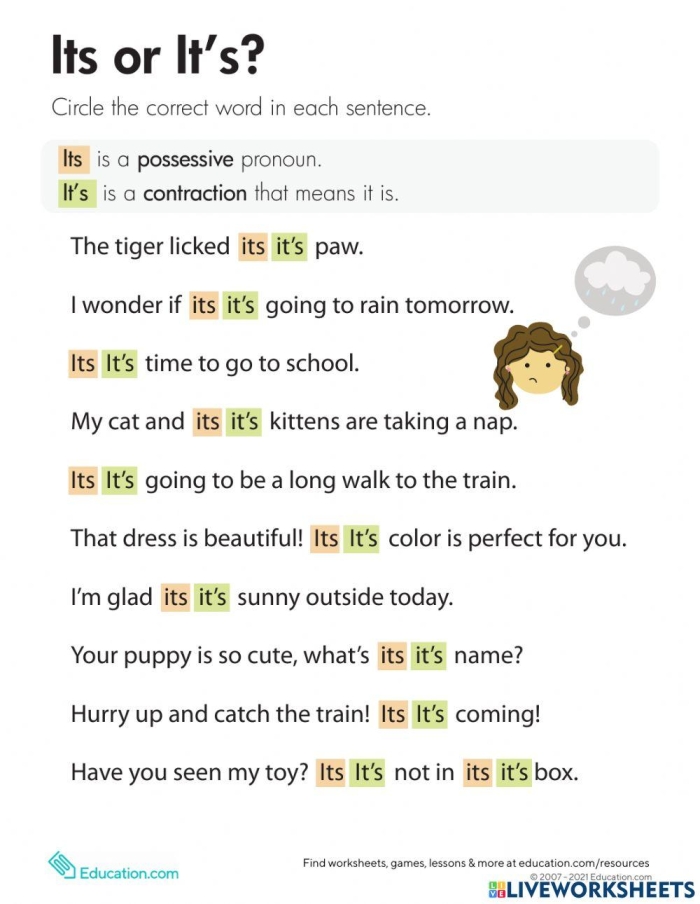
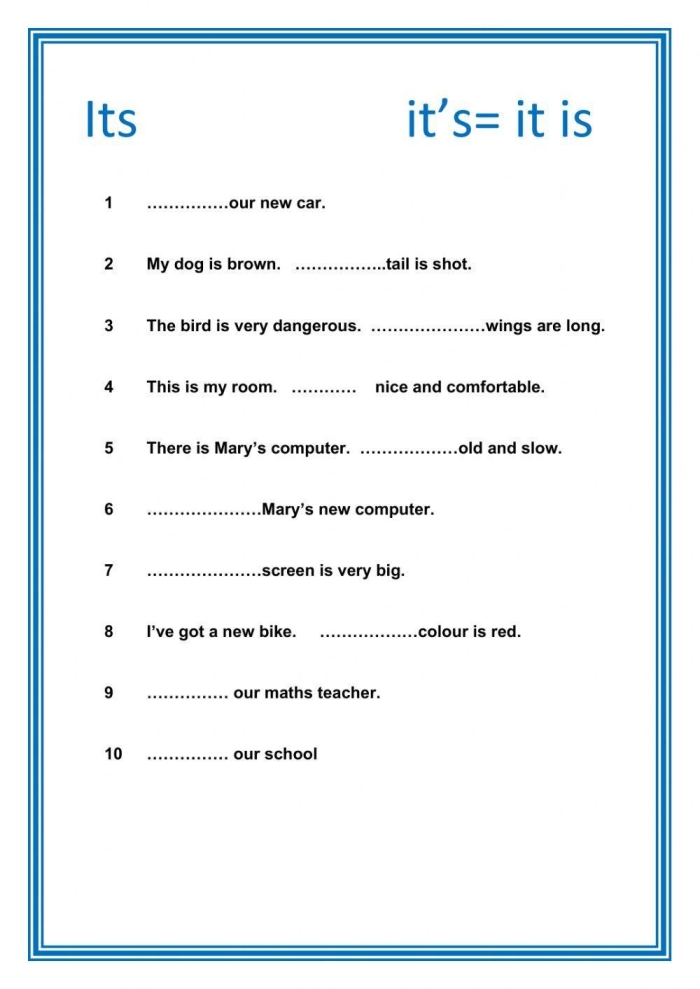
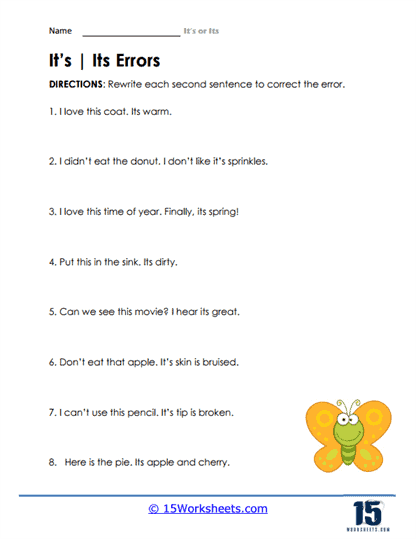
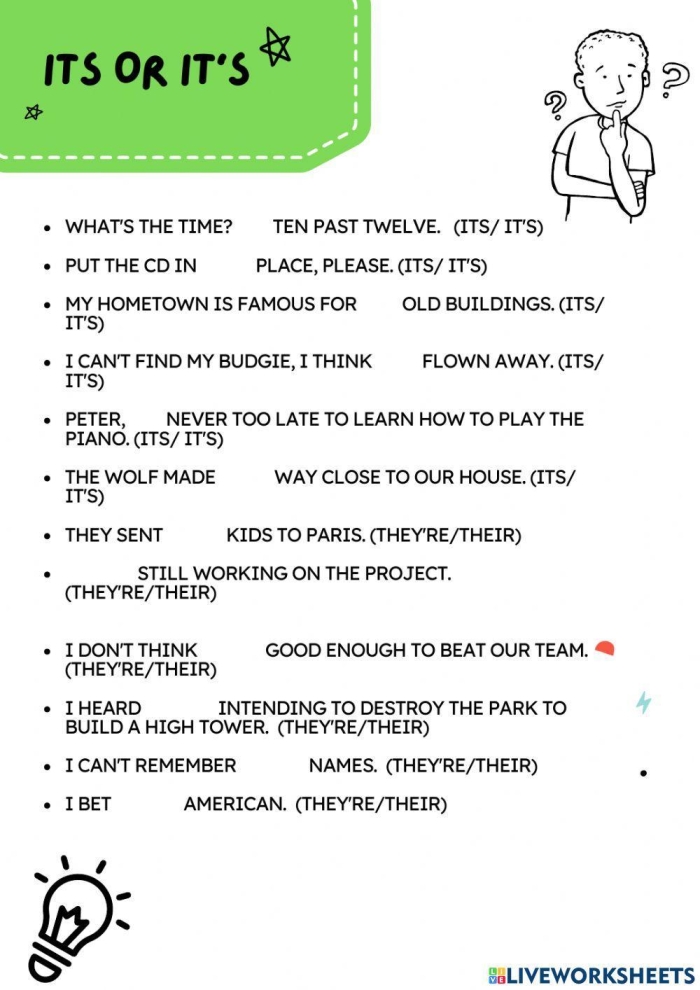
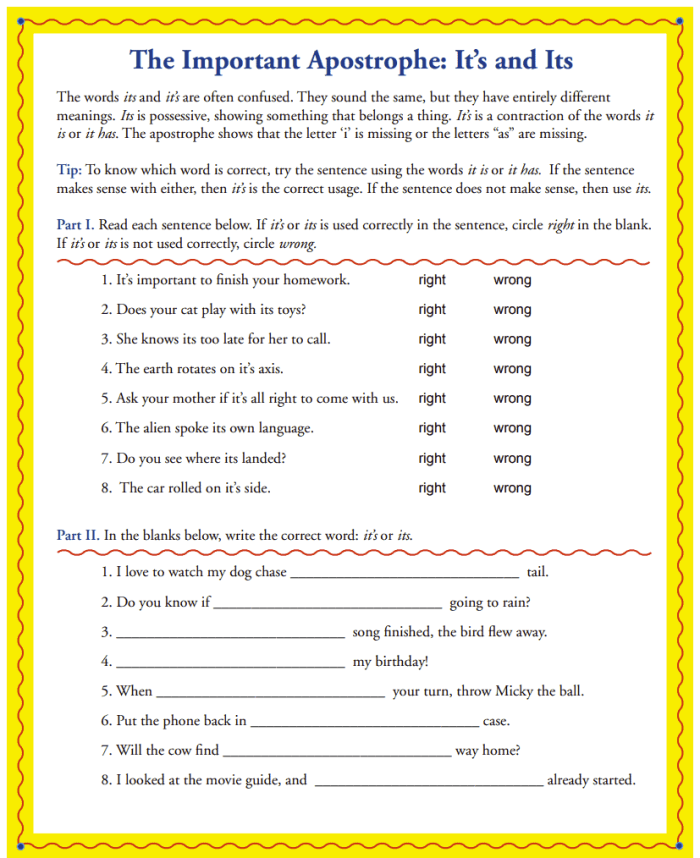
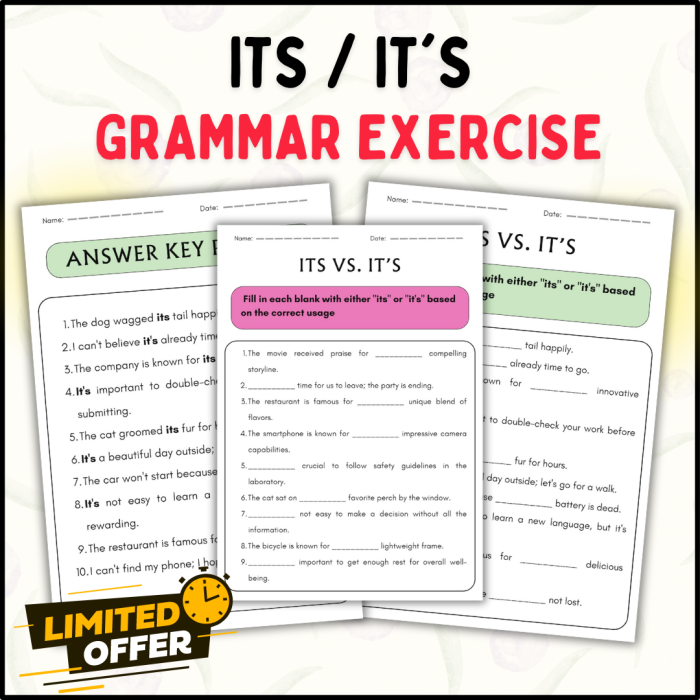
Learning the difference between homophones can be a fun and engaging experience for children, especially when using creative resources like fill-in-the-blank worksheets. For third graders, mastering homophones such as “its” and “it’s” is crucial, as these words often confuse young learners. A well-designed worksheet can transform a challenging concept into an enjoyable activity.
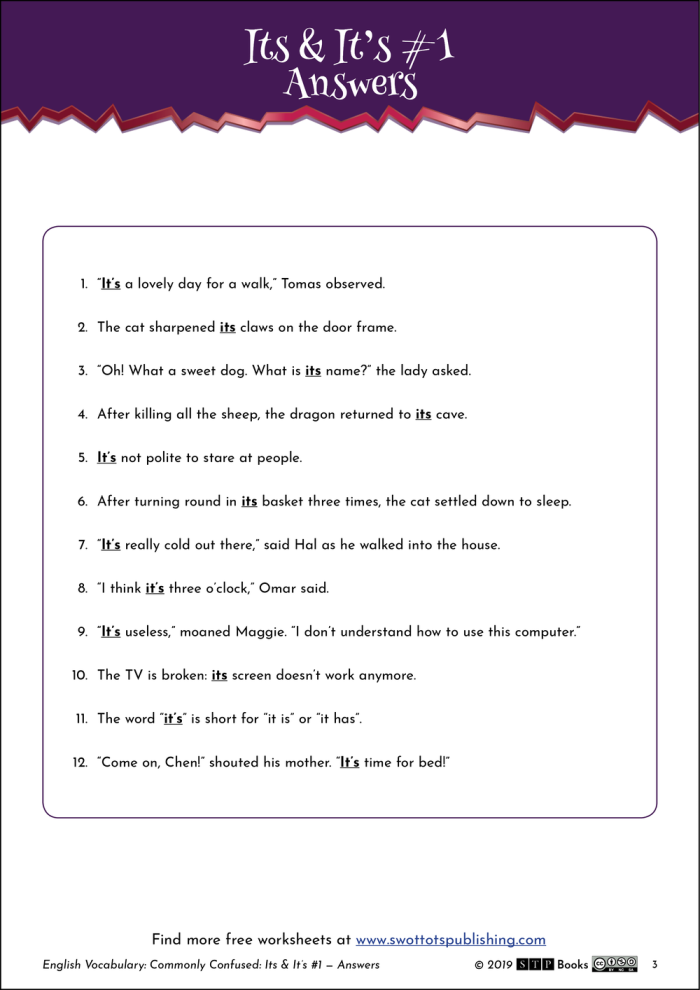
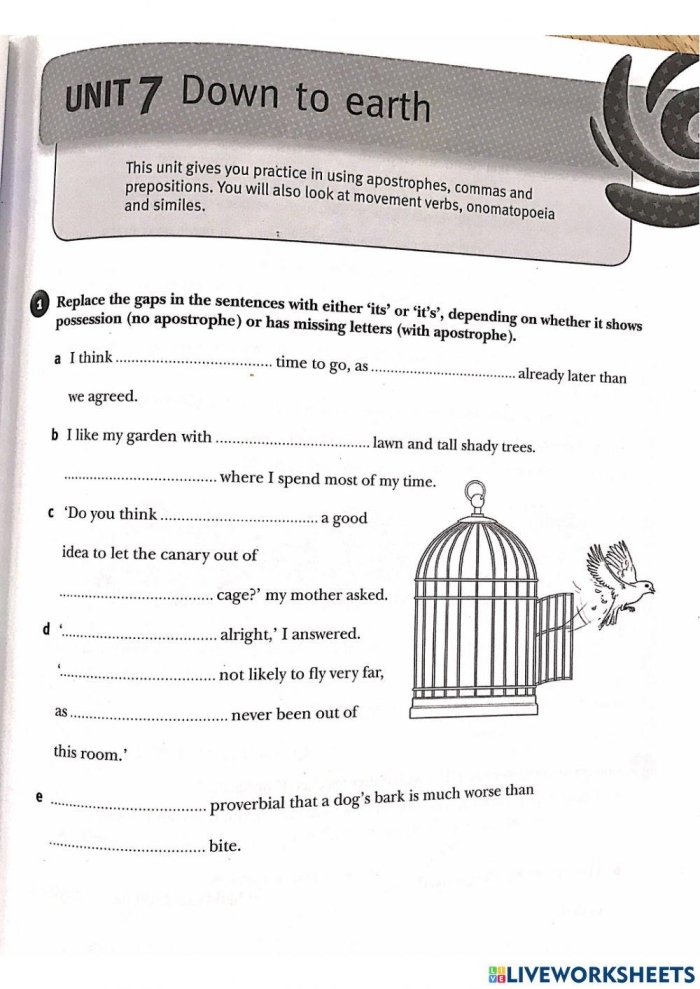
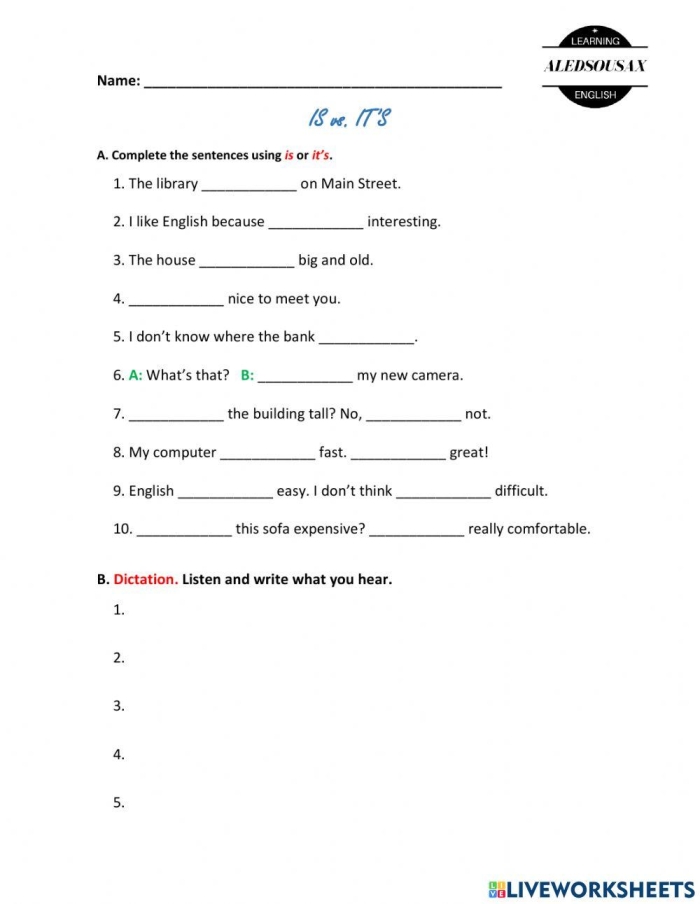
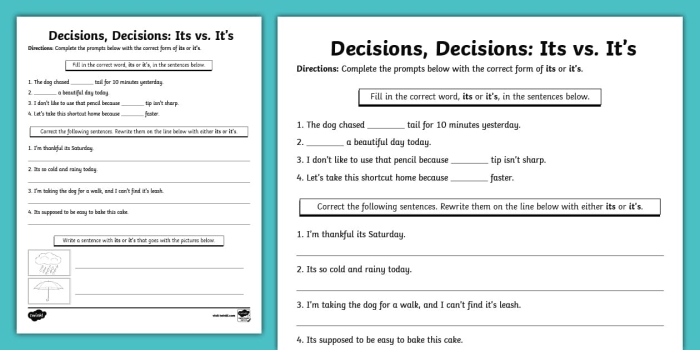
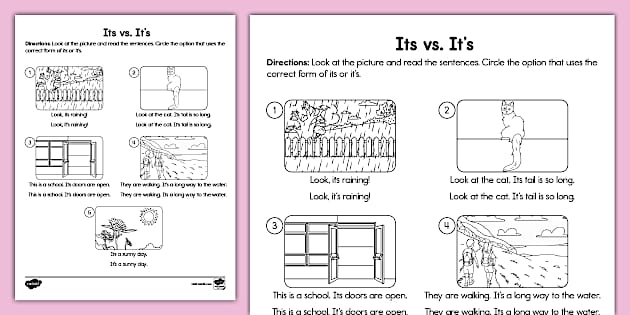
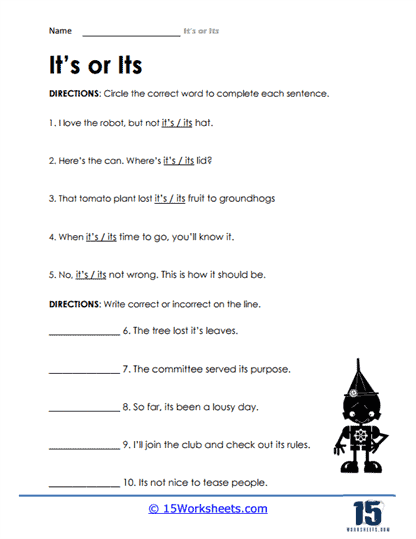
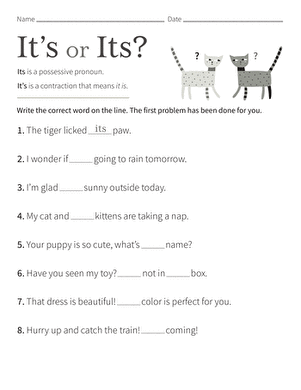
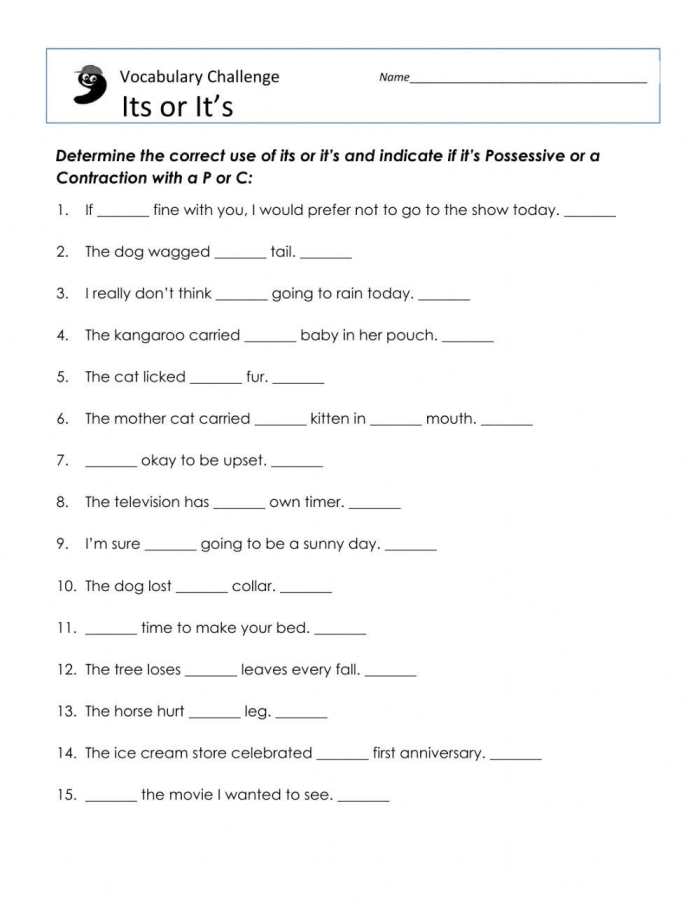
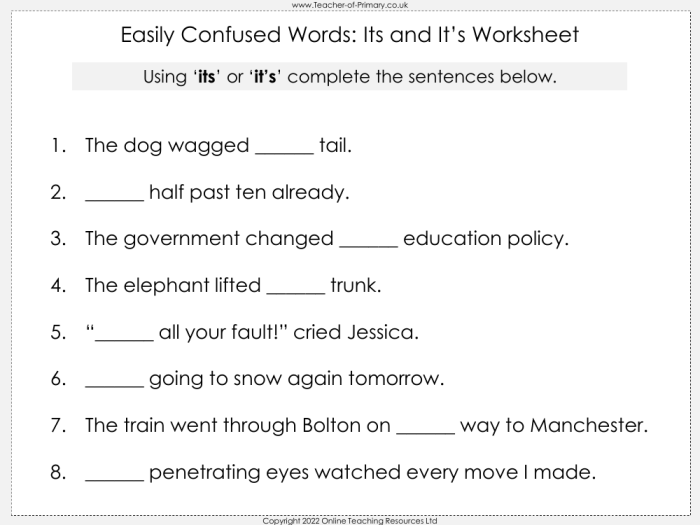
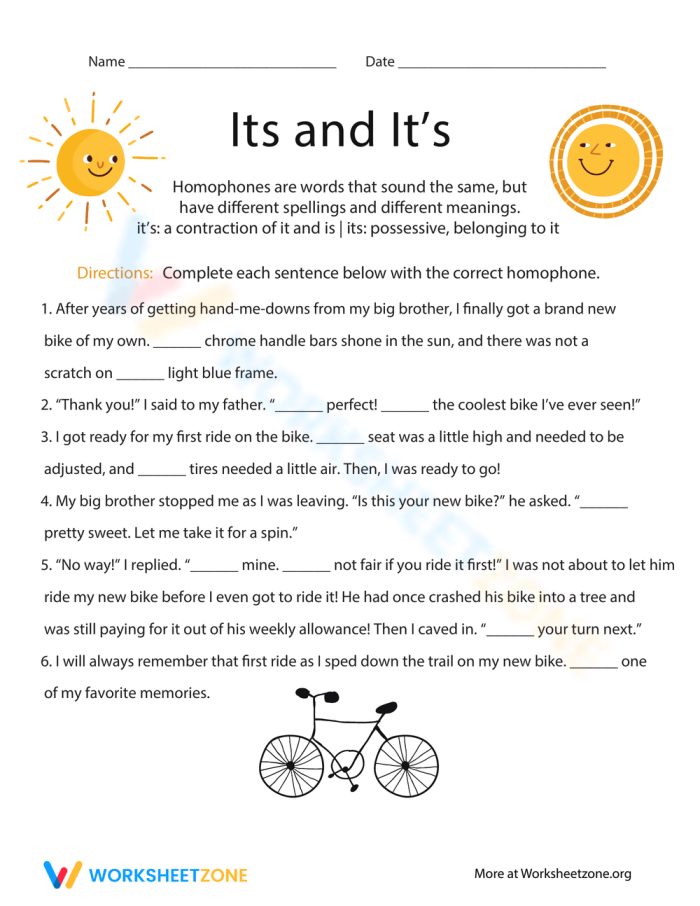
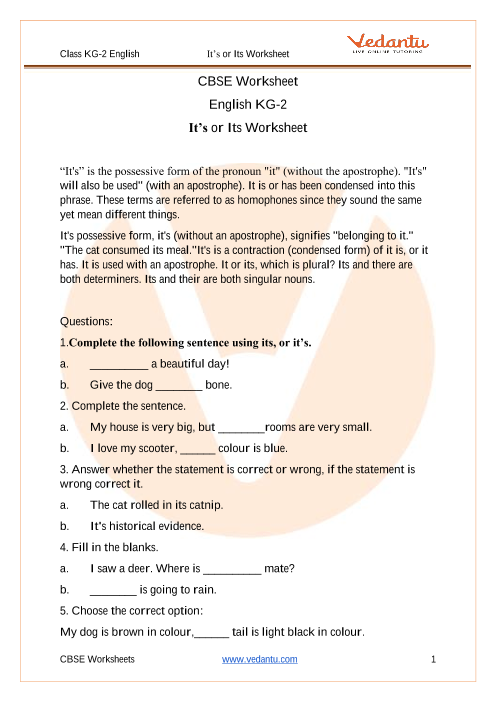
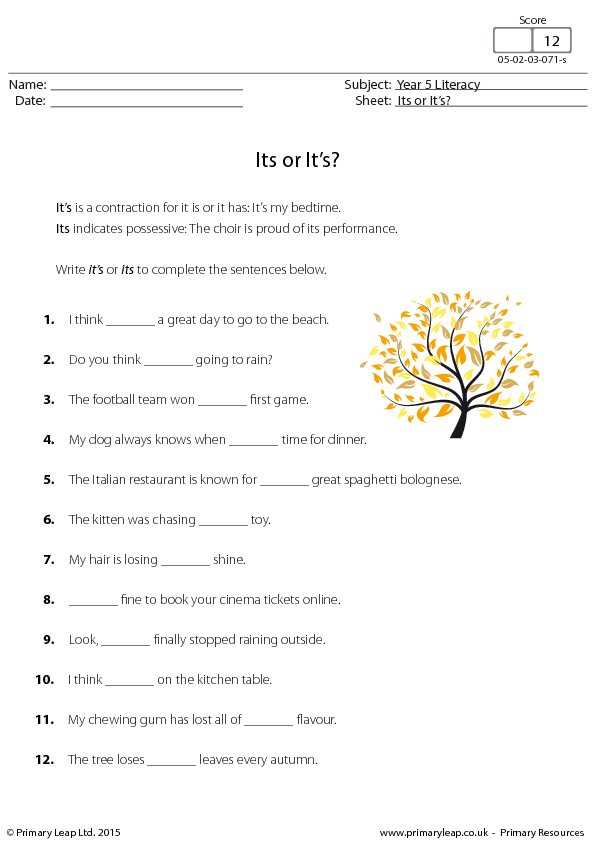
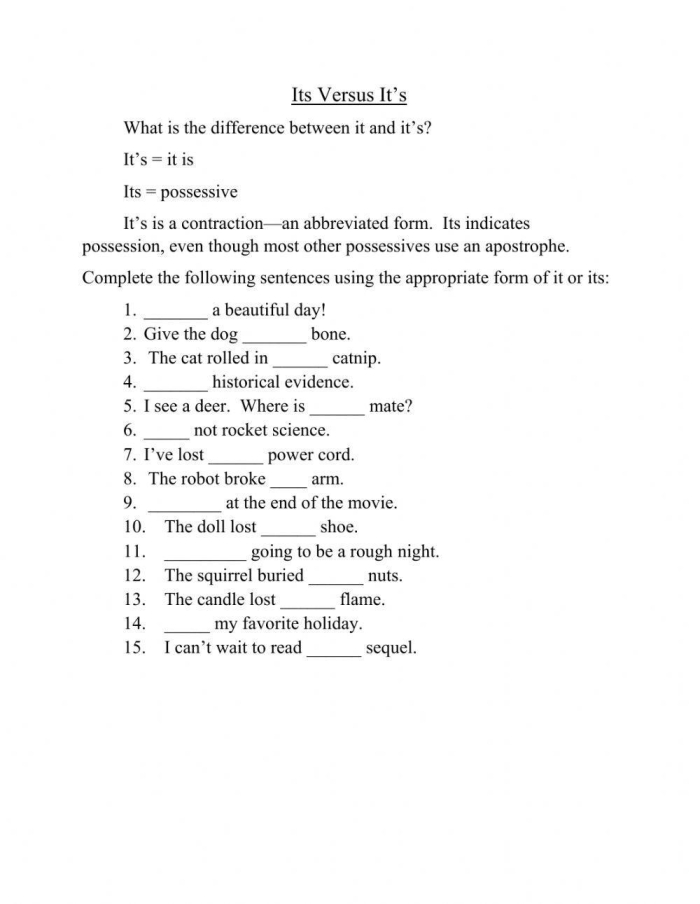
Imagine a colorful worksheet featuring various sentences with blanks, prompting students to fill in the correct homophone. One sentence might read, “The cat chased its tail,” while another could say, “It’s a sunny day outside.” By choosing the appropriate word, children not only practice their understanding of homophones but also enhance their overall writing skills. This hands-on approach encourages active learning, making the lesson more memorable.
Worksheets like these can be found online, providing a variety of exercises tailored to third graders. For example, grammar worksheets often include similar fill-in-the-blank activities that reinforce essential language skills. Additionally, resources focusing on reading comprehension, such as reading comprehension worksheets, can complement these homophone exercises by encouraging students to understand context and meaning.
Moreover, using worksheets allows for differentiation in the classroom. Some children may need more practice with homophones, while others may grasp the concept quickly. Printable “its” and “it’s” worksheets can cater to different learning paces, ensuring that every child can participate meaningfully in the lesson.
Incorporating these engaging activities into the curriculum not only makes learning enjoyable but also equips students with the skills they need for future writing tasks. By focusing on homophones in a fun way, teachers can foster a love for language that lasts a lifetime.
Worksheet Practice Section