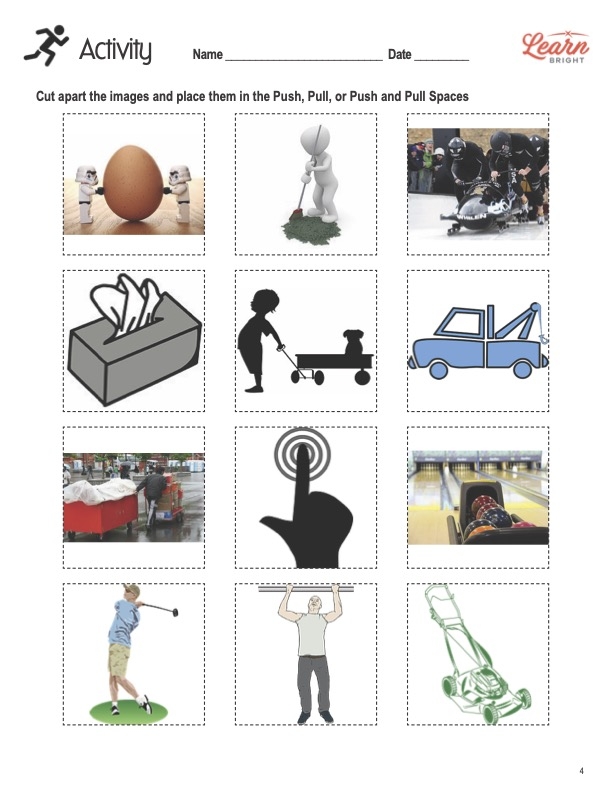
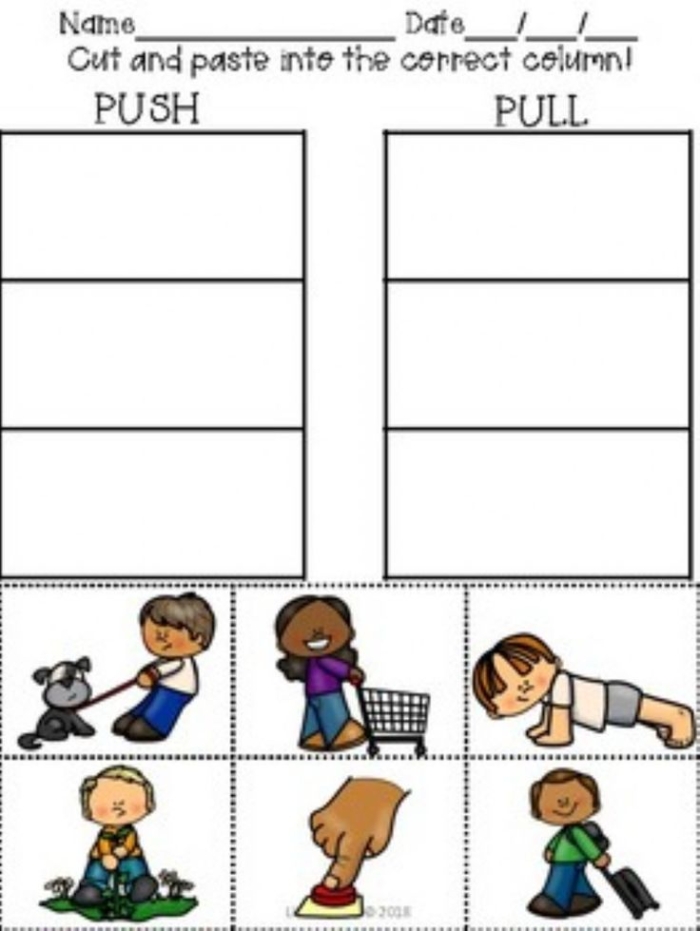
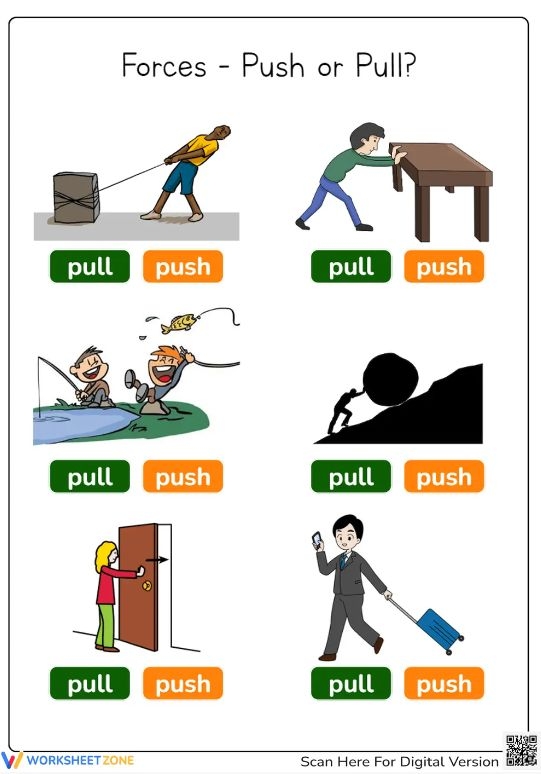
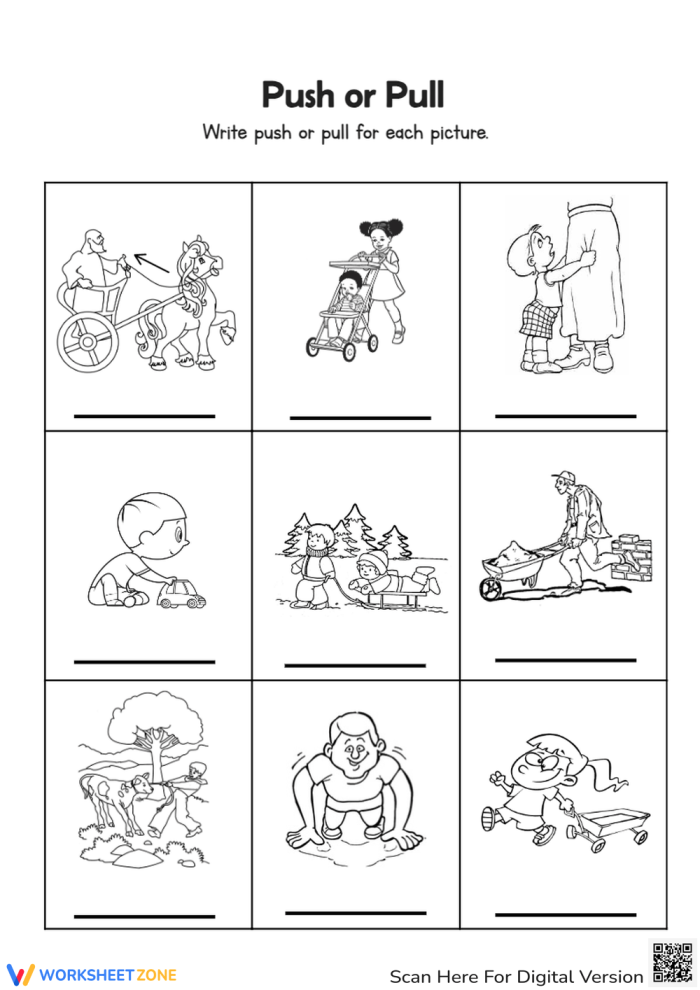
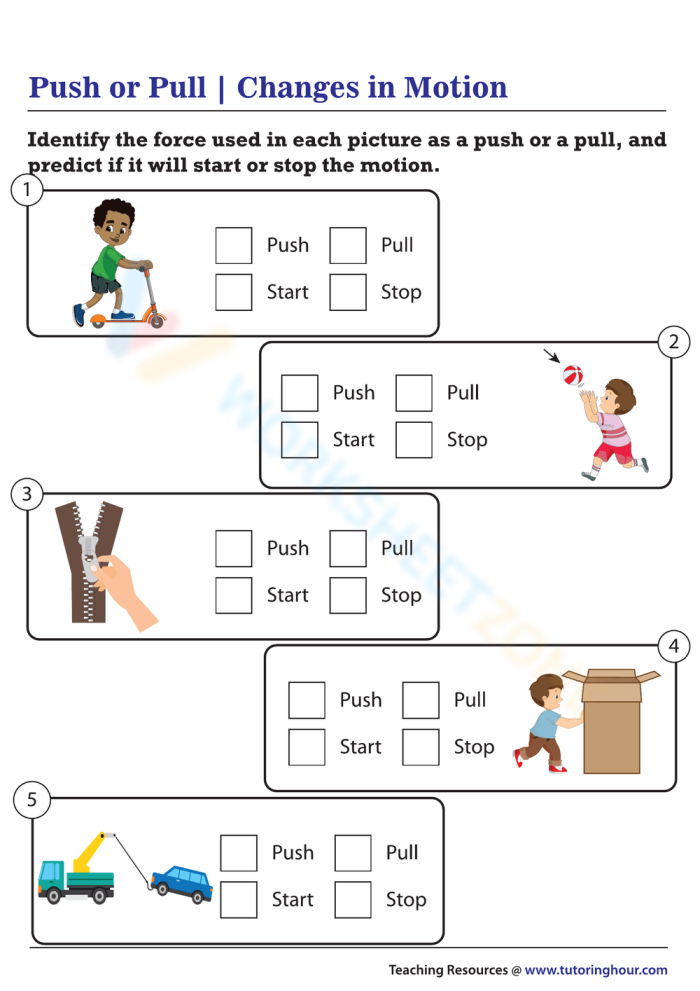
Young learners discover how the world moves when they work through activities that focus on identifying pushes and pulls. This hands-on approach helps children in kindergarten and early elementary grades understand the forces that make things happen around them every day.
Forces are everywhere, from the moment a child pushes a toy across the floor to when they pull open a door. These simple actions form the foundation of physics concepts that students will build on for years. By introducing pushes and pulls early, teachers and parents give children a concrete way to think about cause and effect in their physical environment.
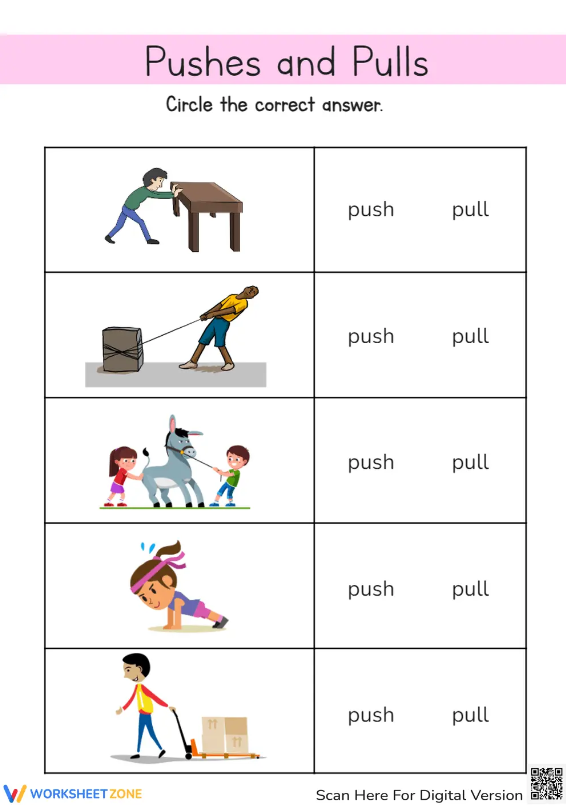
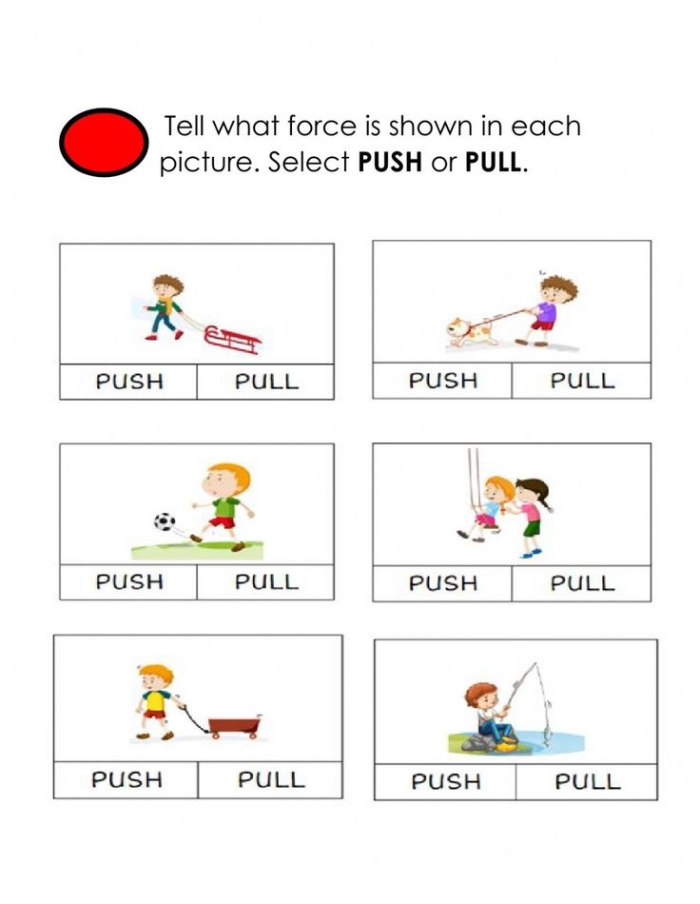
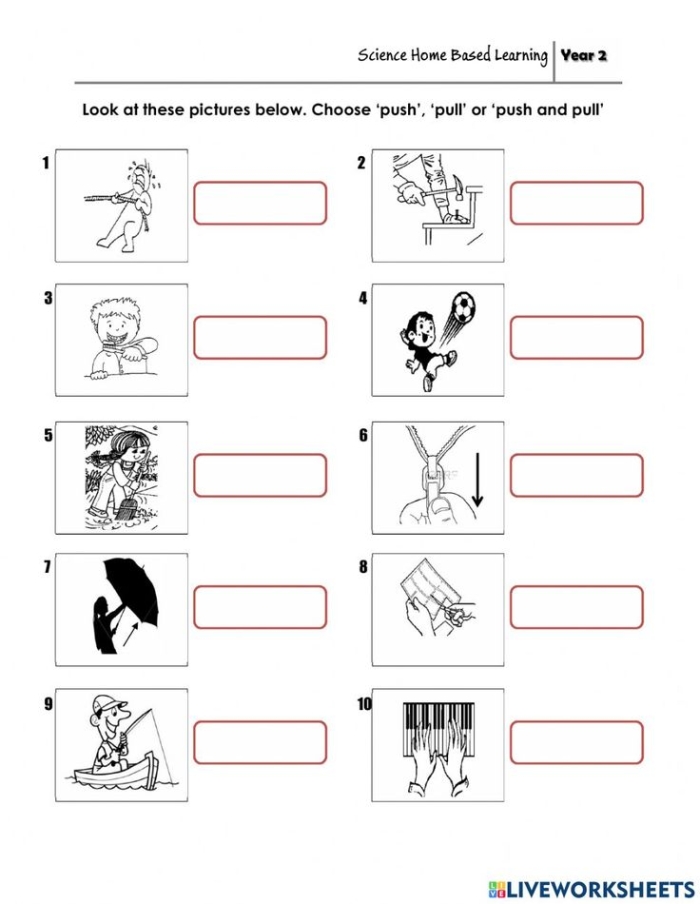
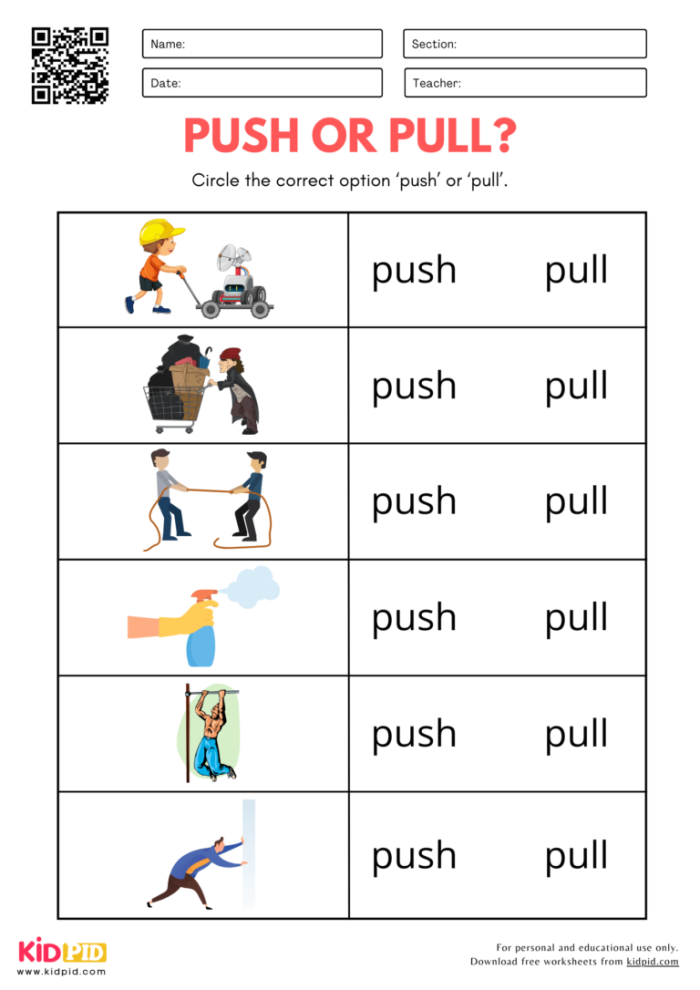
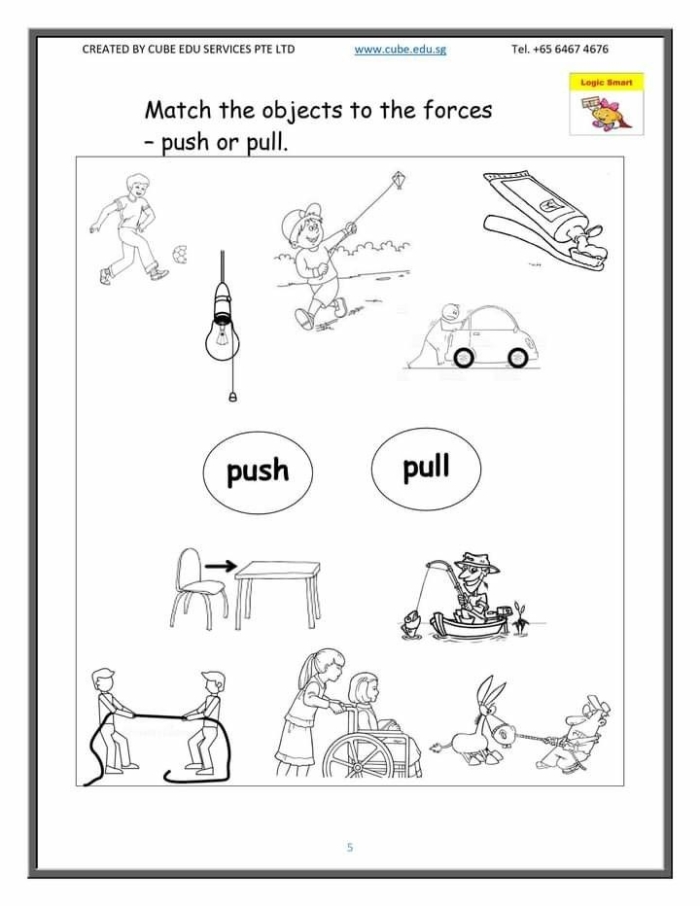
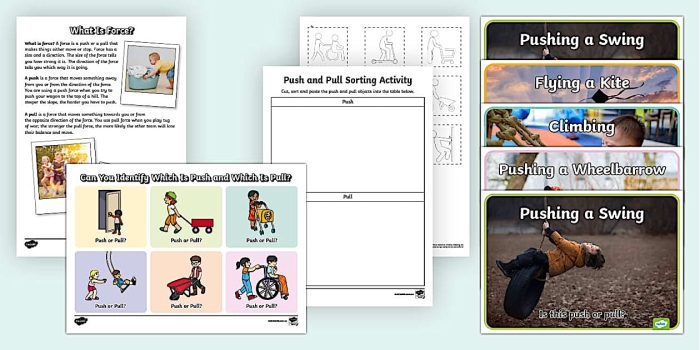
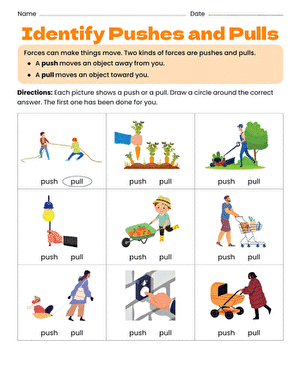
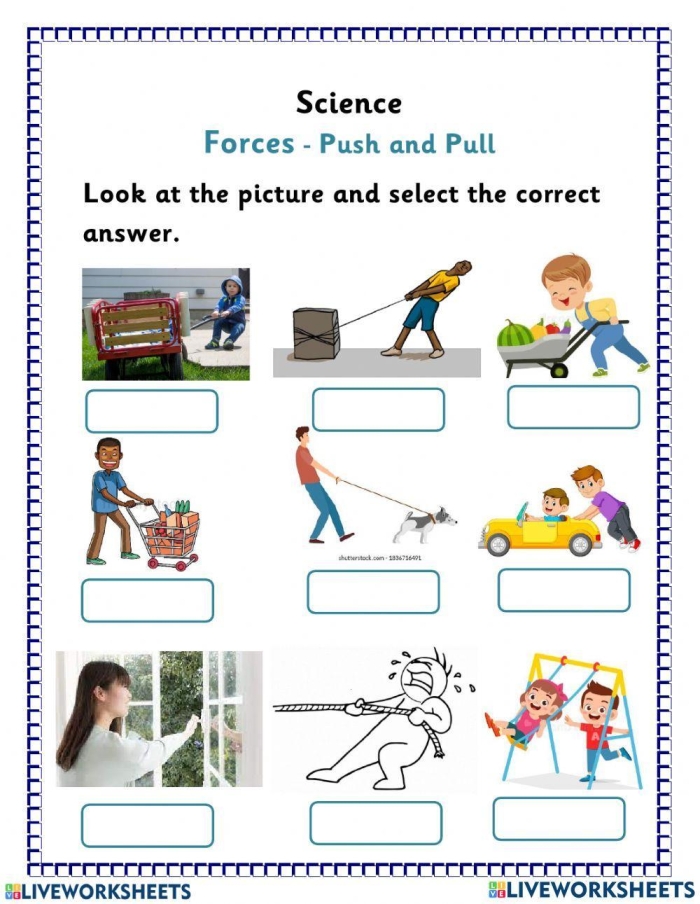
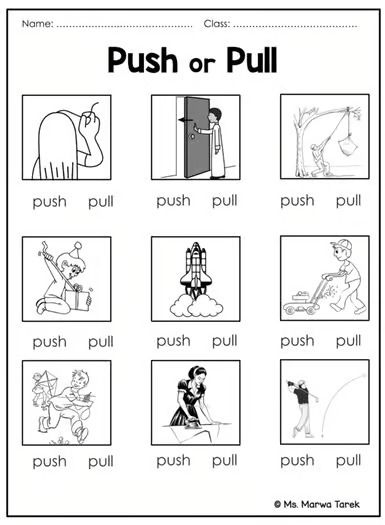
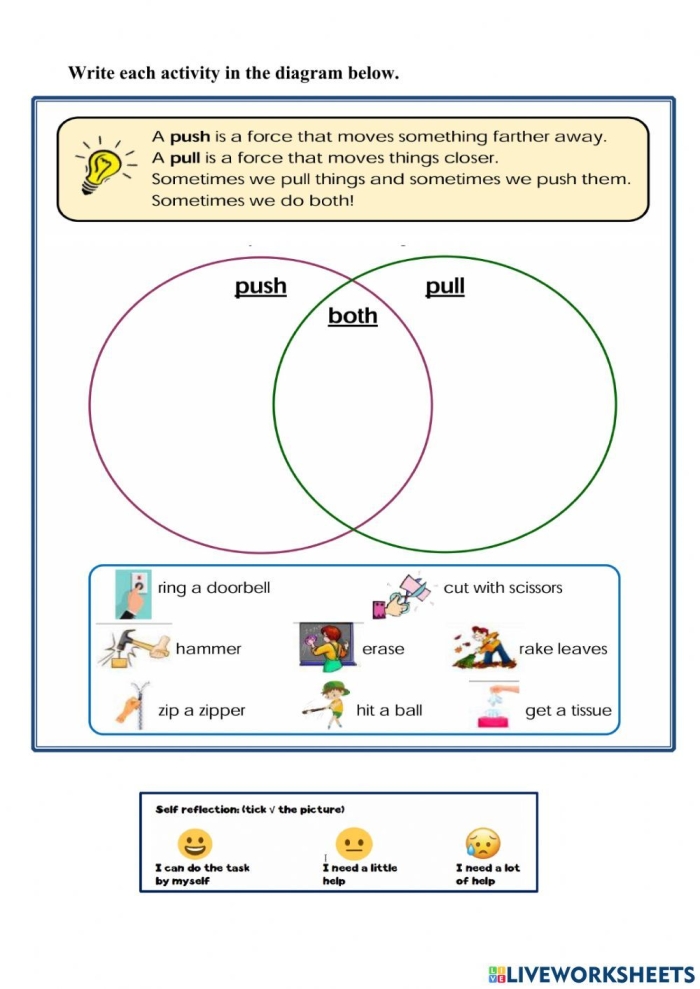
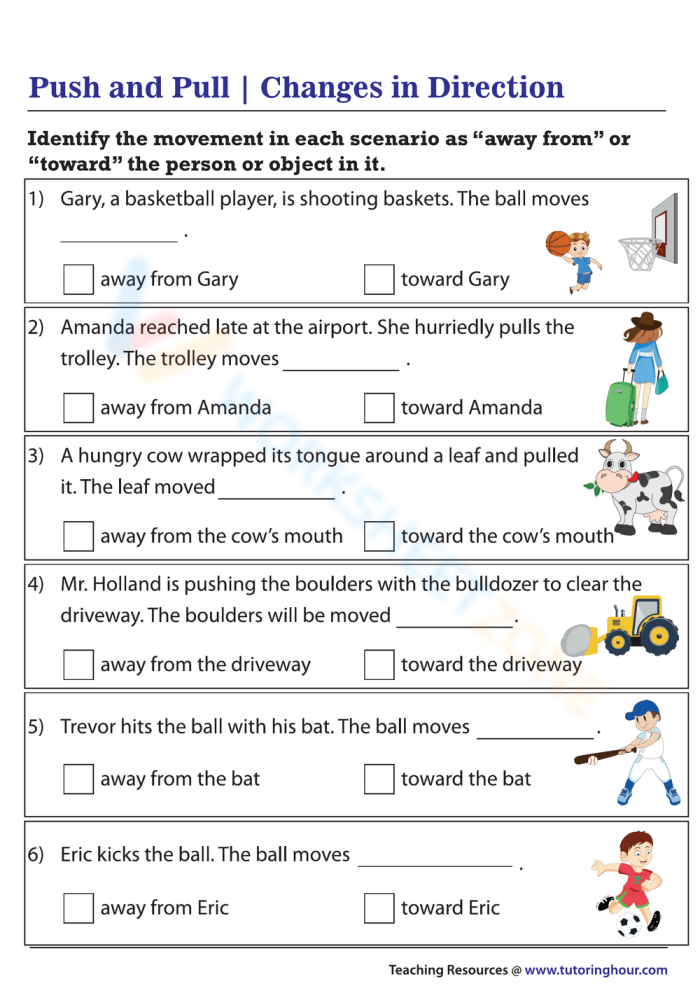
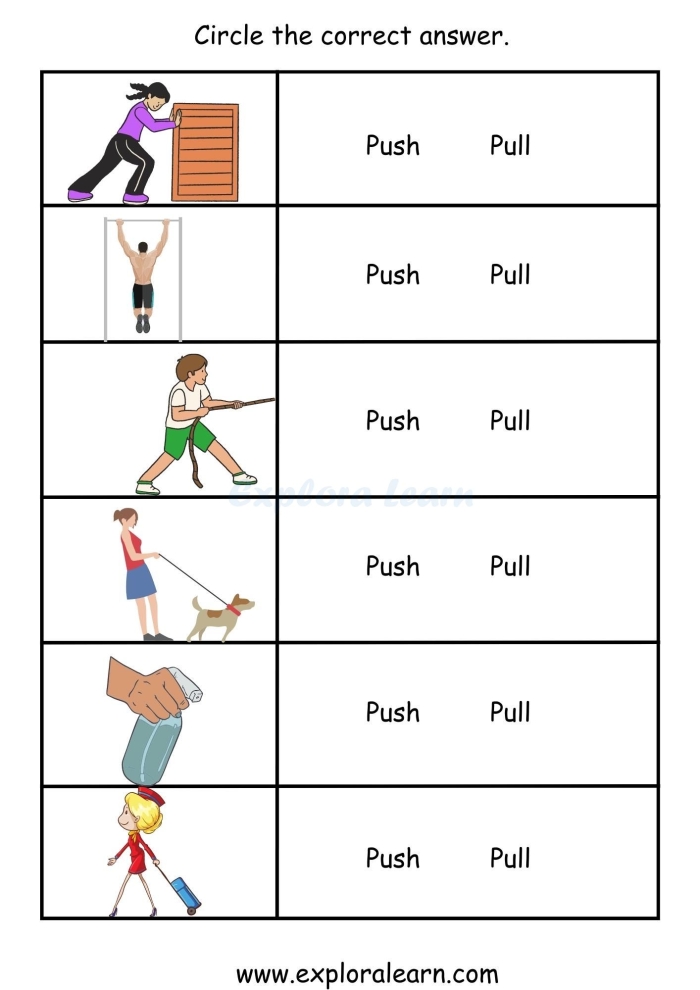
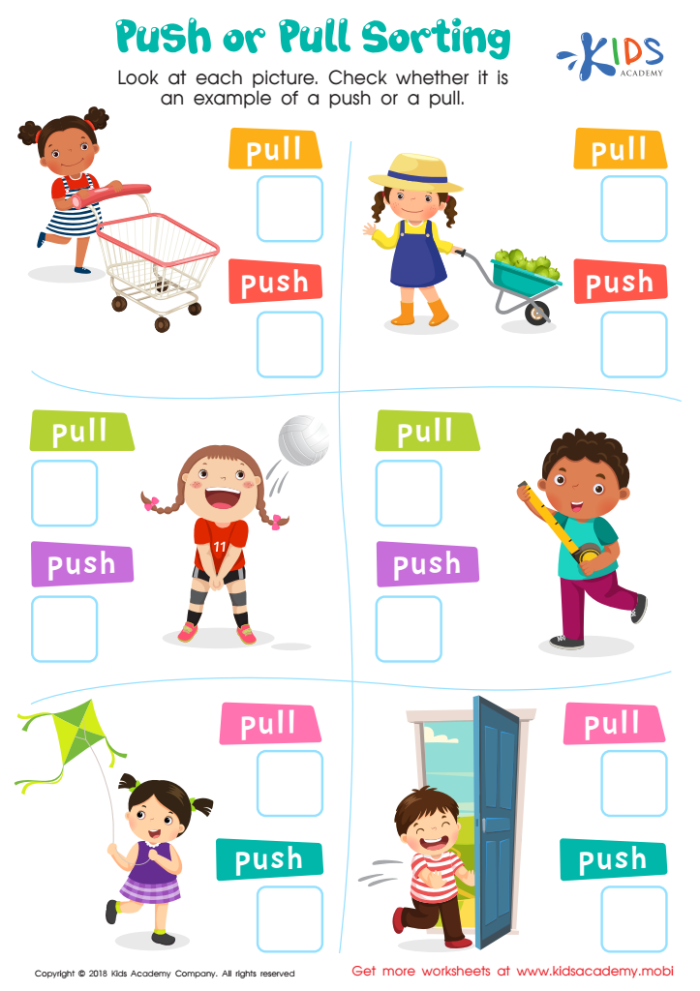
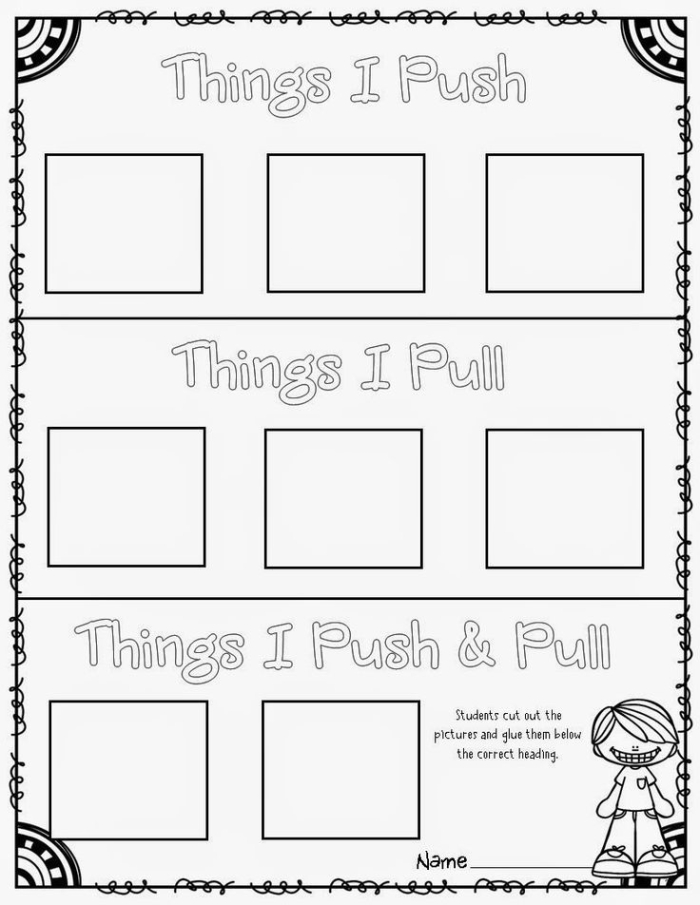
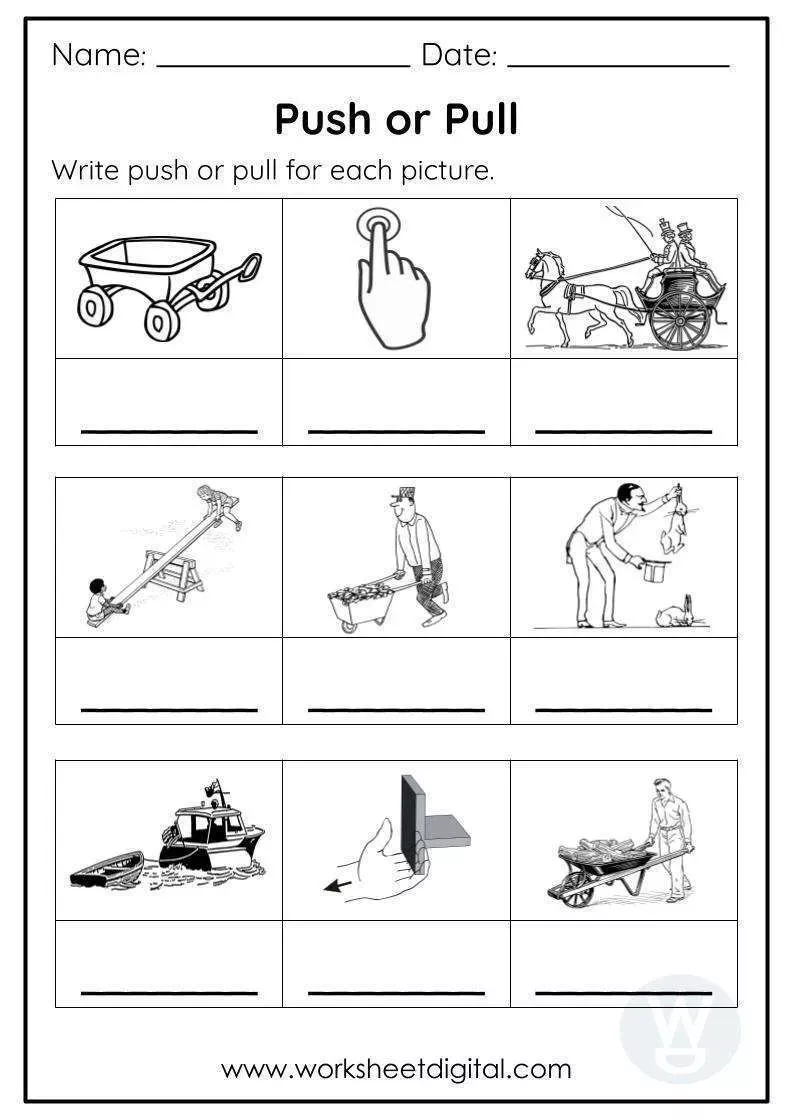
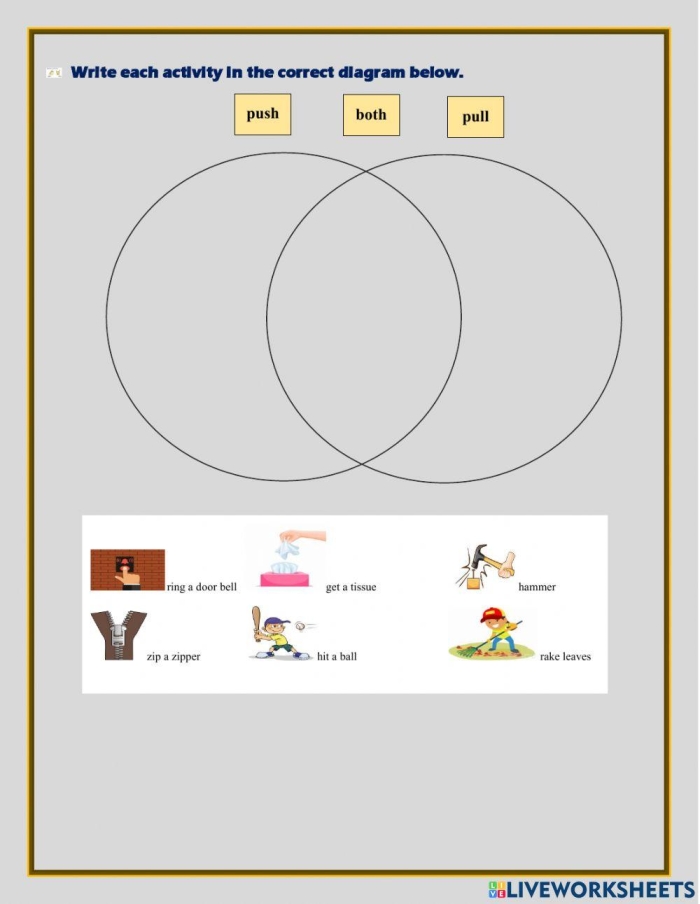
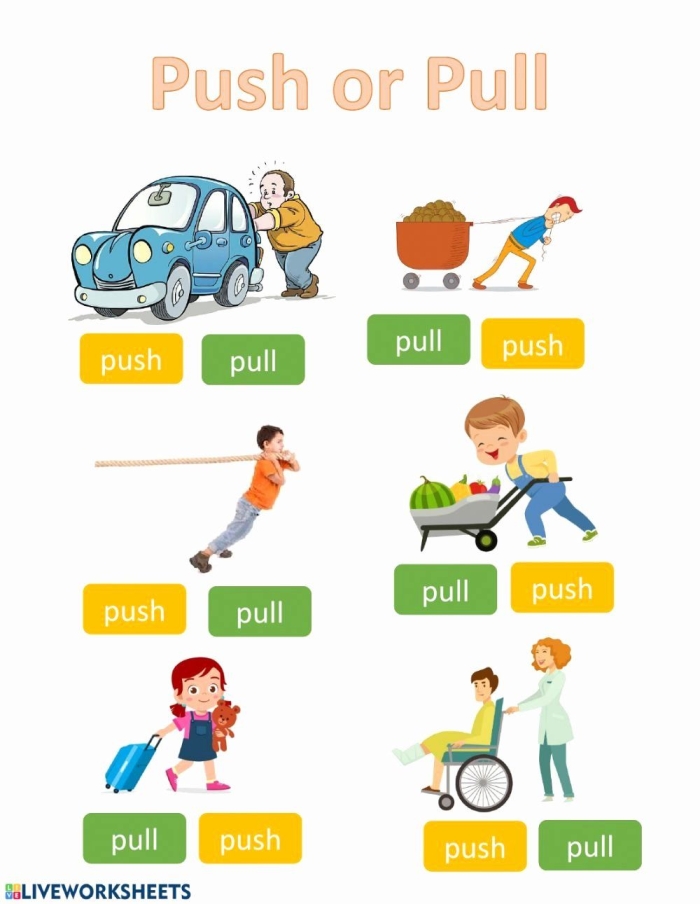
A printable identify pushes and pulls worksheet typically includes illustrations of everyday situations. A child might see a picture of someone opening a drawer, kicking a ball, or closing a window. The student’s job is to recognize whether each action represents a push or a pull. This visual learning method works well because it connects abstract concepts to real experiences children have already had.
What makes these worksheets effective for first and second graders is that they bridge the gap between play and learning. Children aren’t just memorizing definitions, they’re observing their own behavior and the behavior of objects around them. When a student completes these activities, they begin noticing forces in contexts beyond the worksheet, whether during recess, at home, or in the classroom.
Teachers often pair force exploration with other foundational skills. While students work on identifying pushes and pulls, they might also practice nouns and proper nouns to label the objects in their illustrations, or develop supporting details in their writing by describing what happens after a push or pull occurs.
These worksheets serve as stepping stones toward understanding motion, energy, and simple machines. For young learners, recognizing forces is where physics begins.
Download These Worksheets for Practice