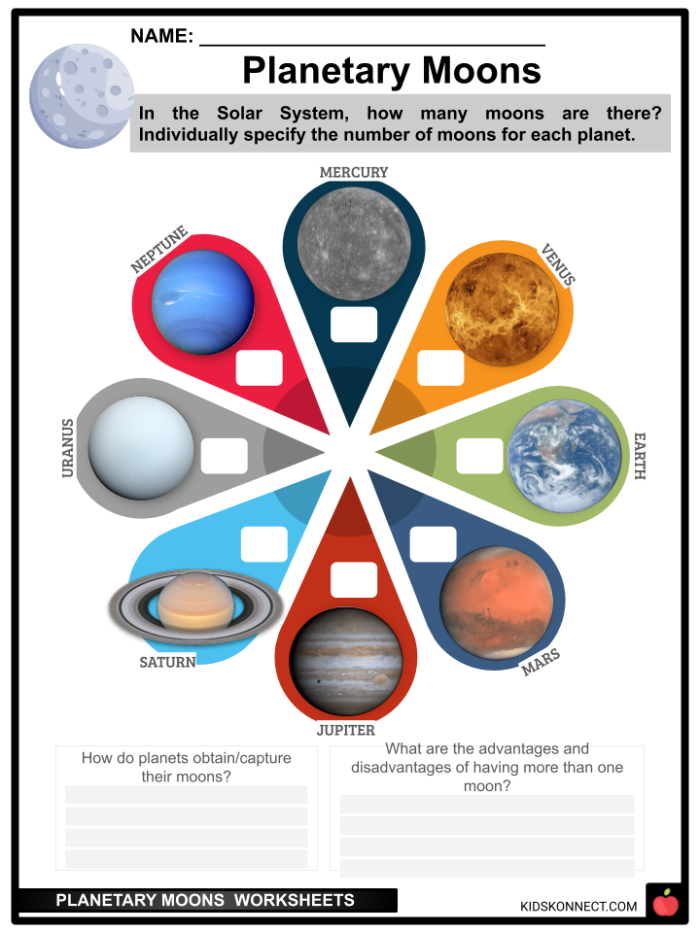
Our solar system is a fascinating place, filled with hundreds of moons orbiting various planets. But how exactly do these celestial bodies form? Understanding the process of moon formation can be an exciting topic, especially for fifth graders exploring the wonders of space and multiplication.
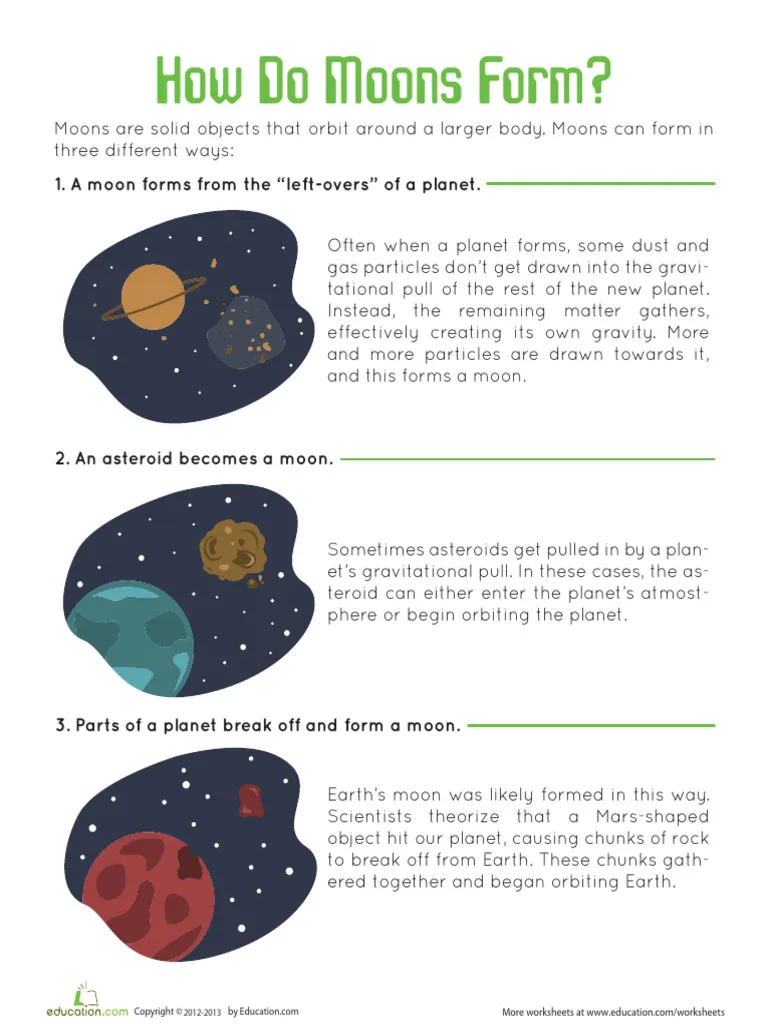
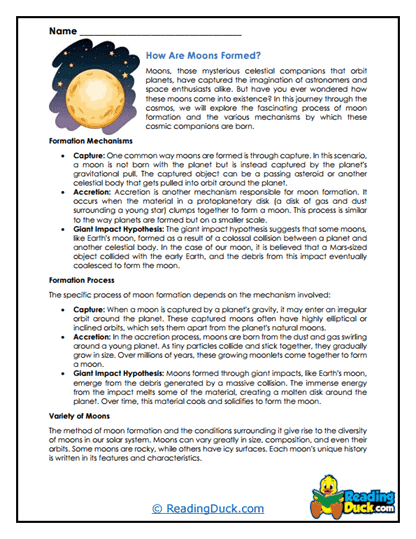
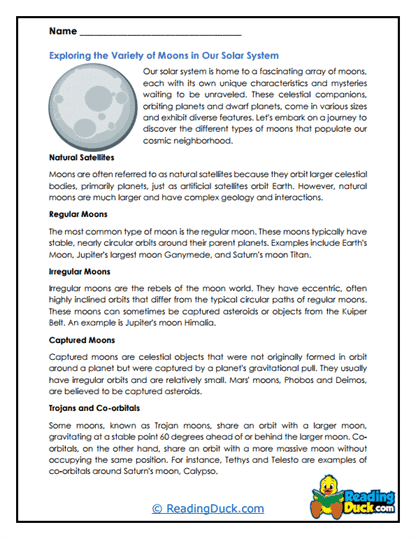
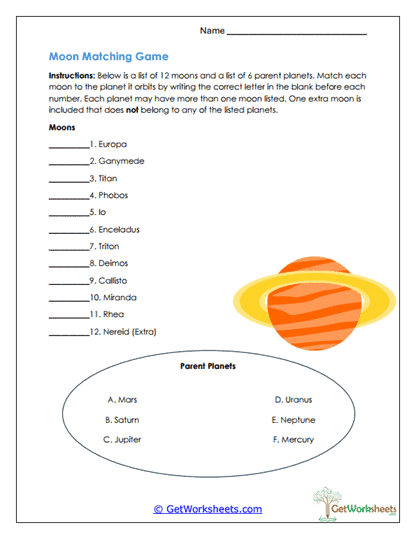
Moons can form in several ways, but the most common methods are through capture, co-formation, and impact. Captured moons are objects that wander too close to a planet and get pulled into its gravitational field. One example is Neptune’s moon Triton, which scientists believe was once a free-floating object in the Kuiper Belt before being captured by Neptune’s gravity.
Co-formation occurs when a moon forms alongside its planet. This happens in a disc of gas and dust surrounding a young star. As the planet grows, it accumulates material, and some of this material coalesces to form moons. For instance, the Galilean moons of Jupiter, including Europa and Ganymede, are thought to have formed this way.
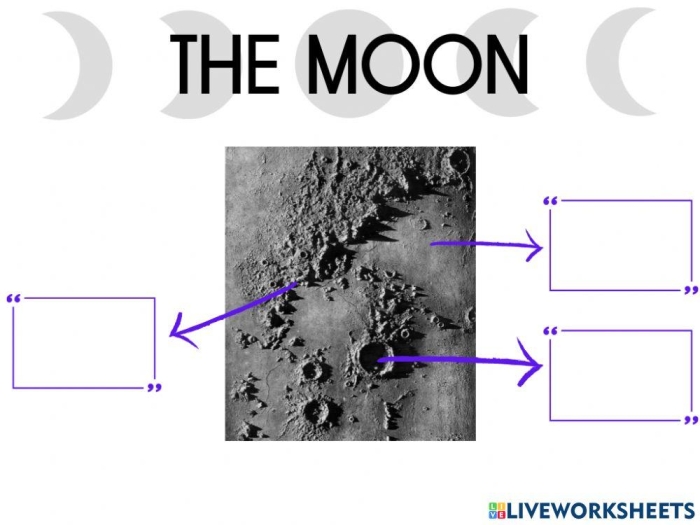
Another interesting method of moon formation is through impact. This occurs when a large object collides with a planet, causing debris to be ejected into orbit. Over time, this debris can clump together to form a moon. A notable case is Earth’s moon, which likely formed after a massive impact between our planet and a Mars-sized body named Theia. This impact theory explains why Earth and the Moon share similar isotopic compositions.
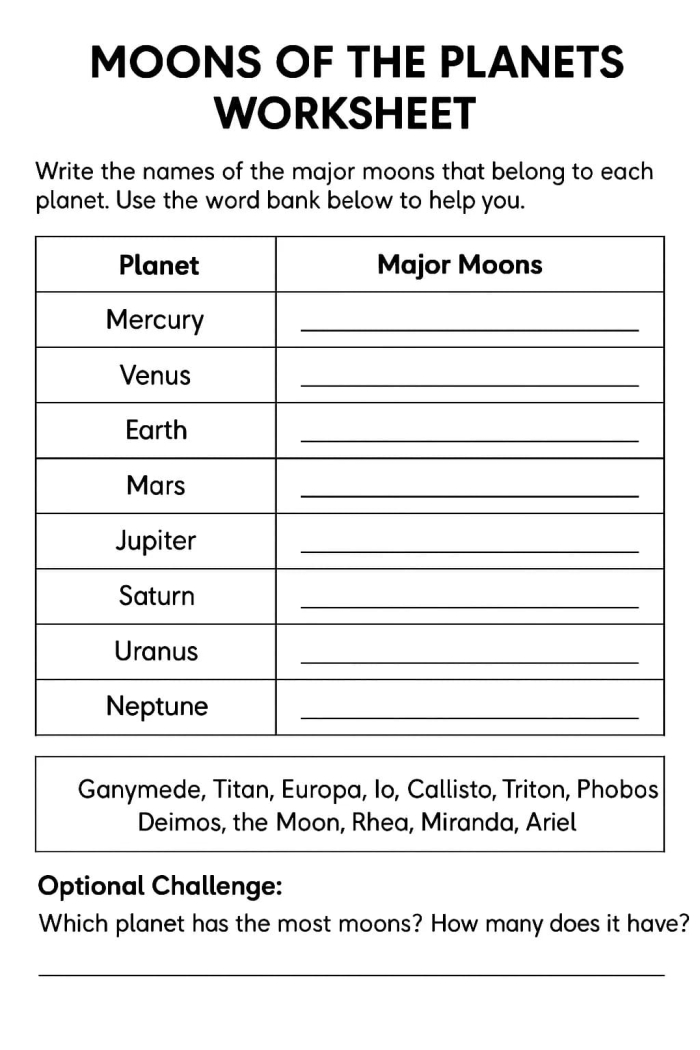
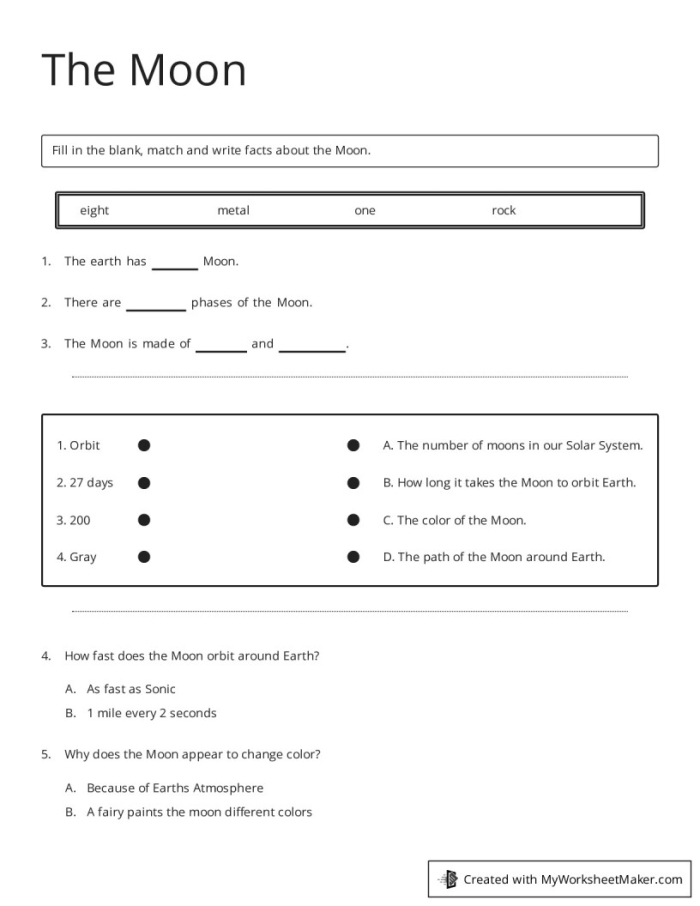
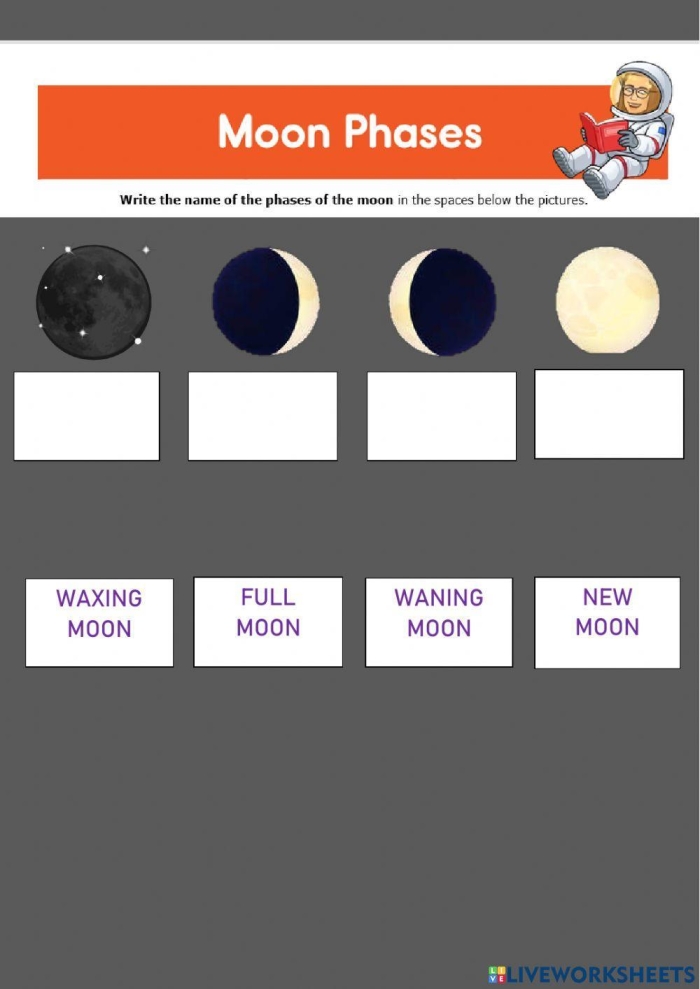
For fifth graders interested in learning more about moons, exploring the different methods of moon formation can lead to many exciting questions and discoveries. To further enhance understanding, educators can incorporate engaging activities, such as printable worksheets that focus on multiplication related to the sizes and distances of moons. For example, students might calculate the circumference of various moons or compare their sizes to other celestial bodies. Such activities not only reinforce multiplication skills but also deepen the understanding of how our universe is structured. You can find useful resources like black hole multiplication worksheets or customary units length worksheets that can support this learning.
Grab These Worksheets Now