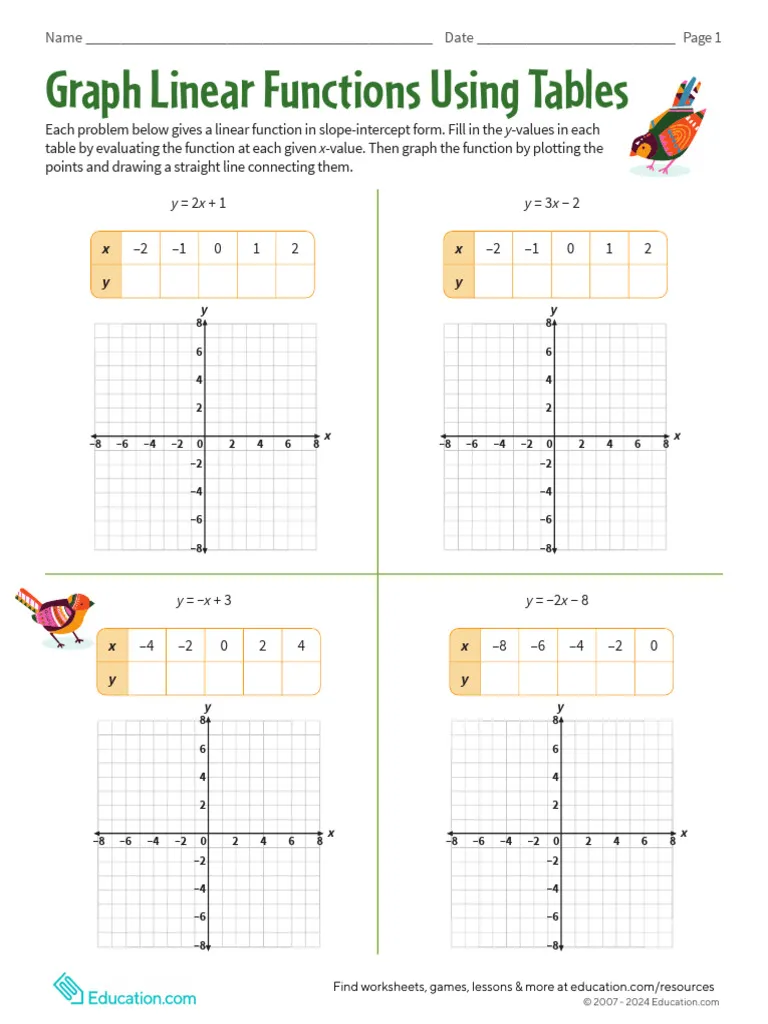
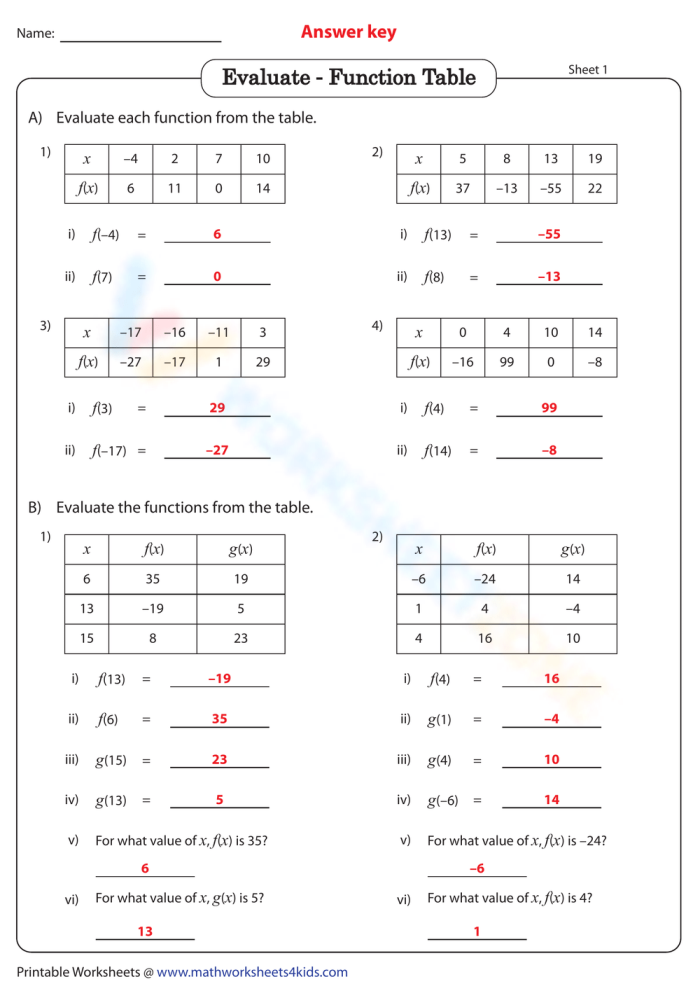
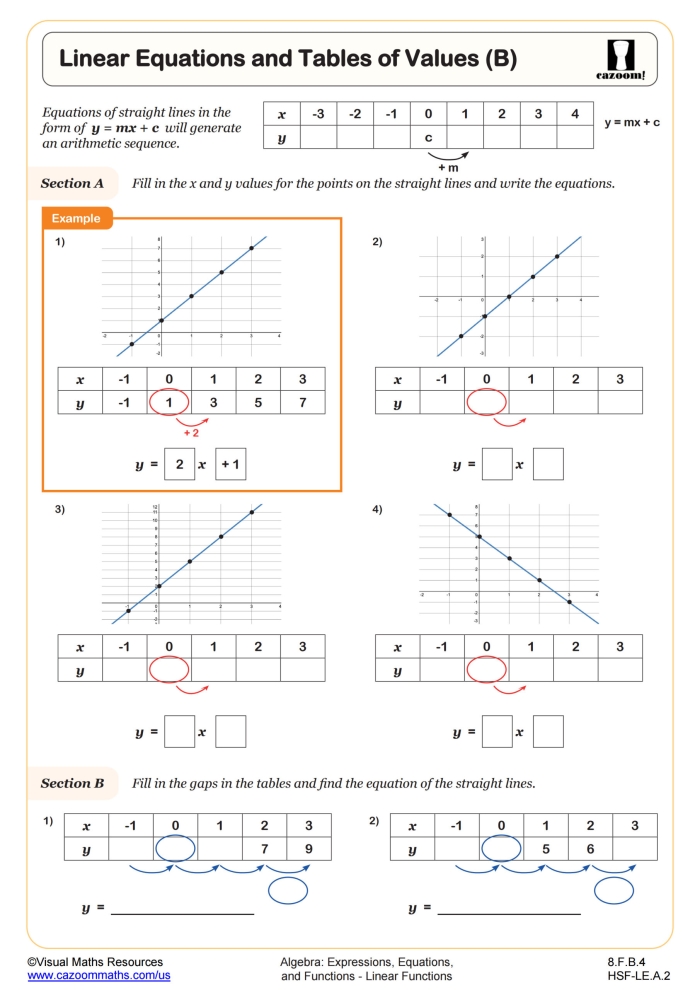
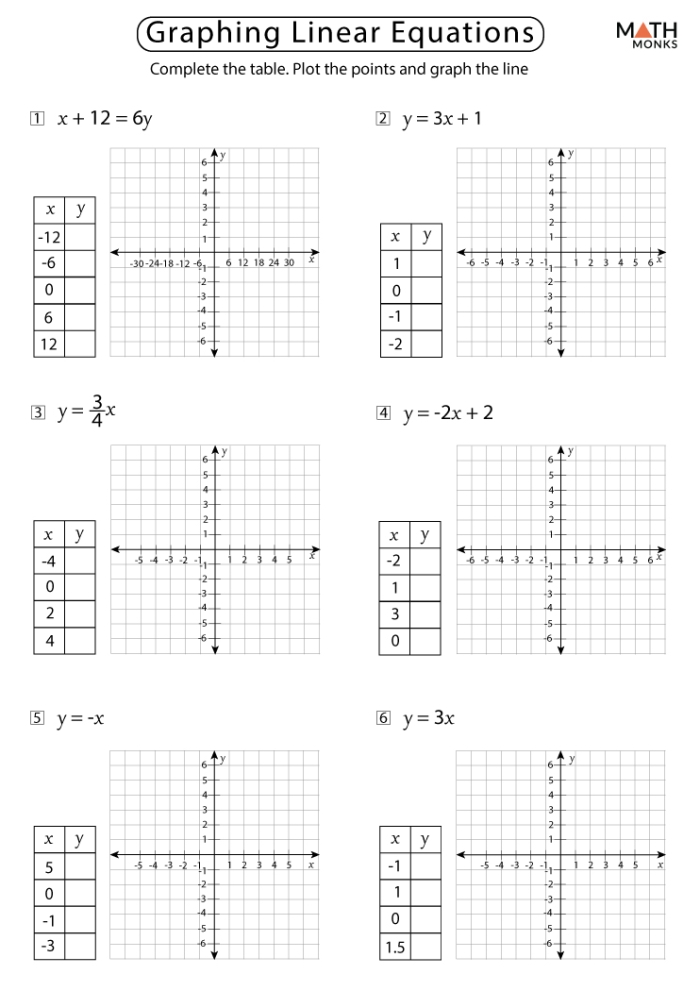
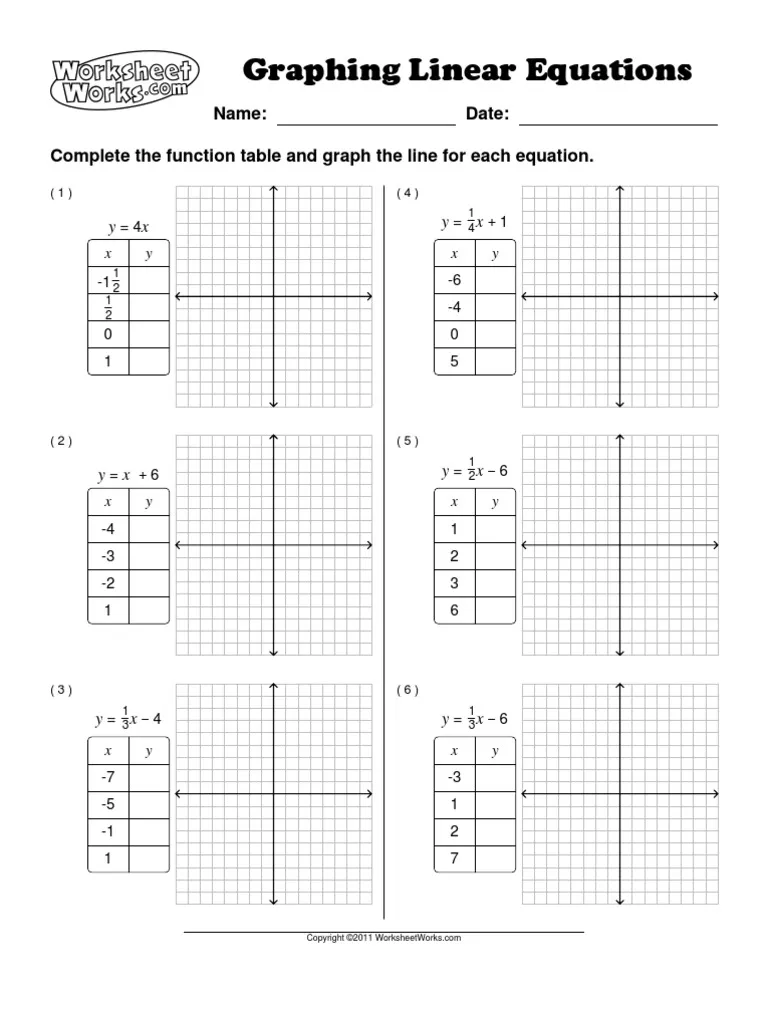
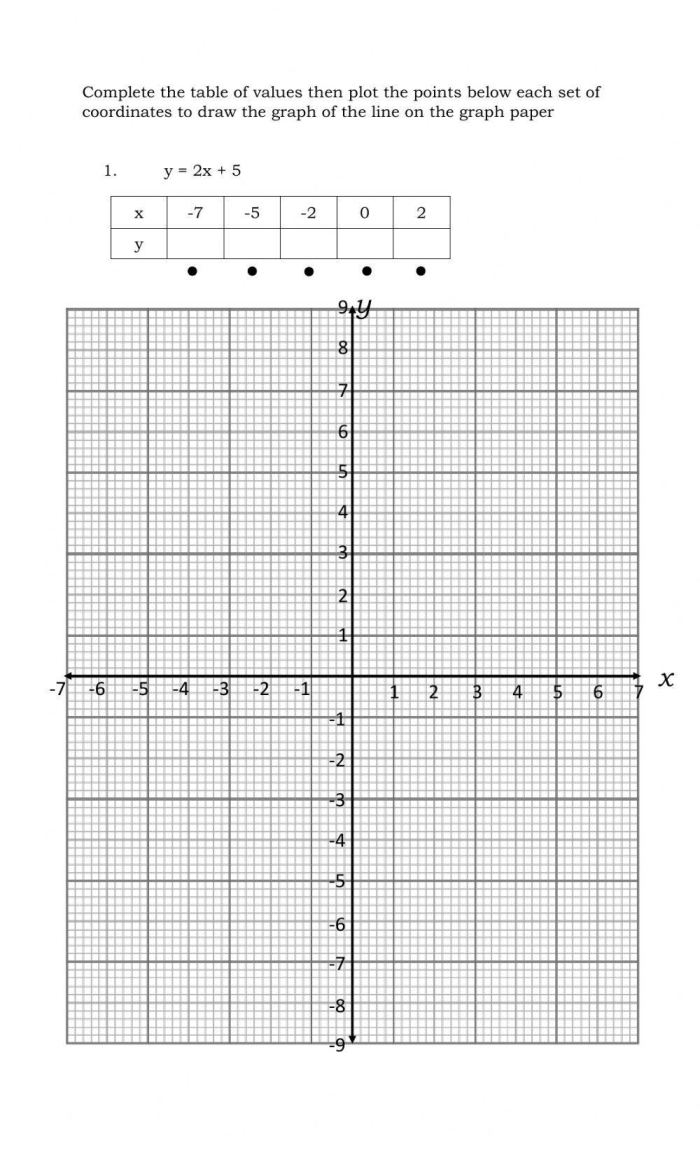
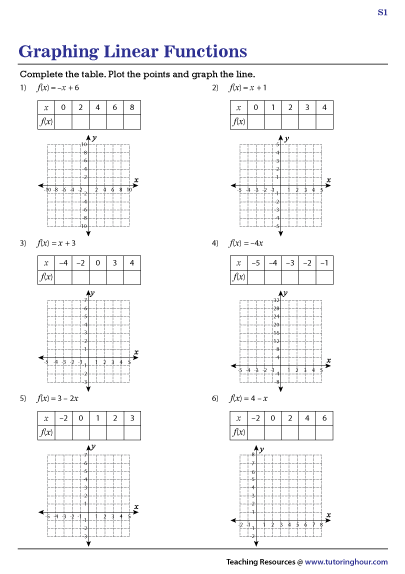
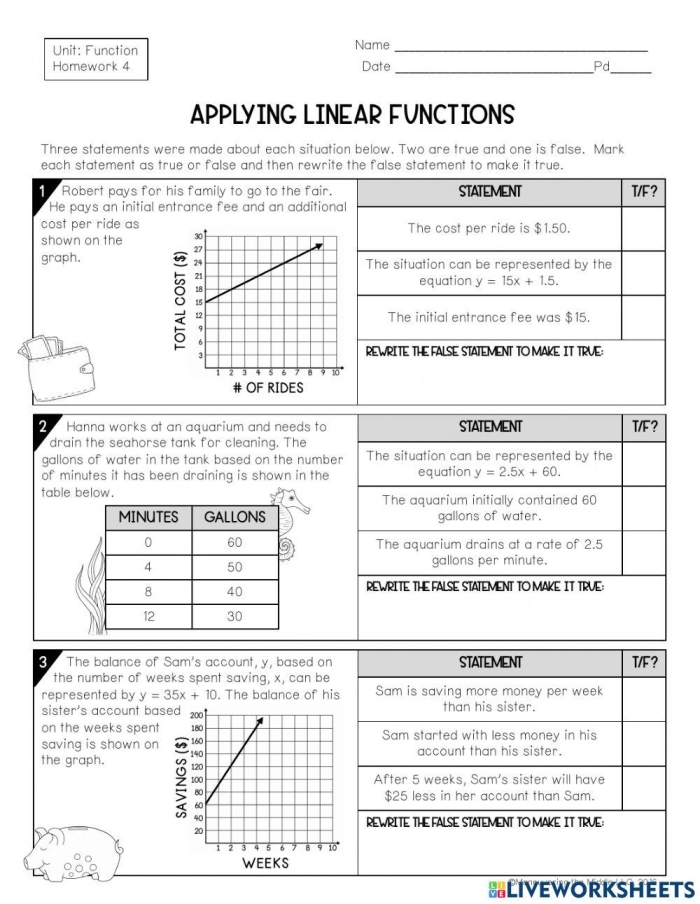
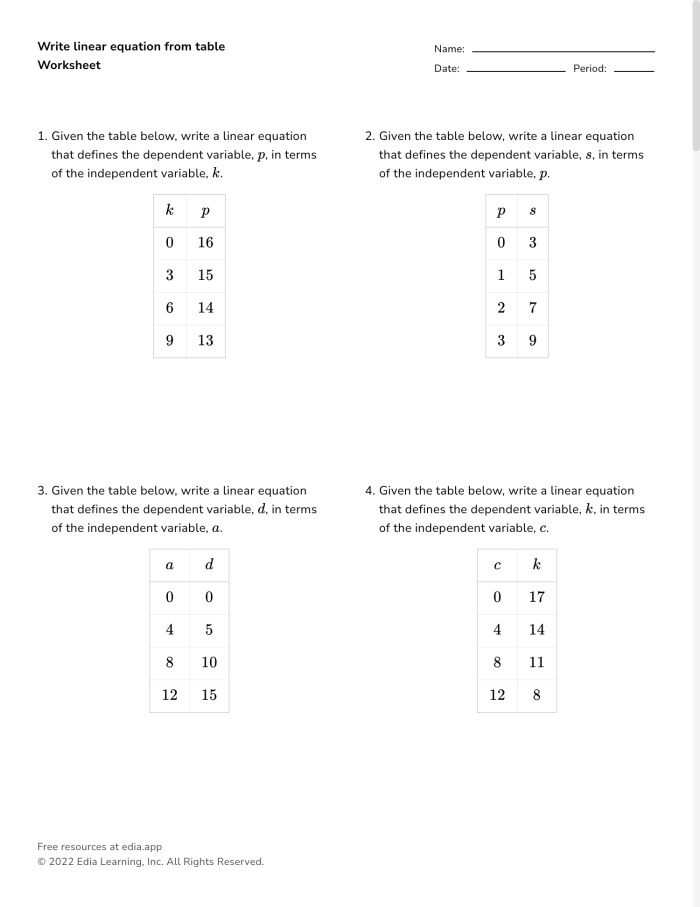
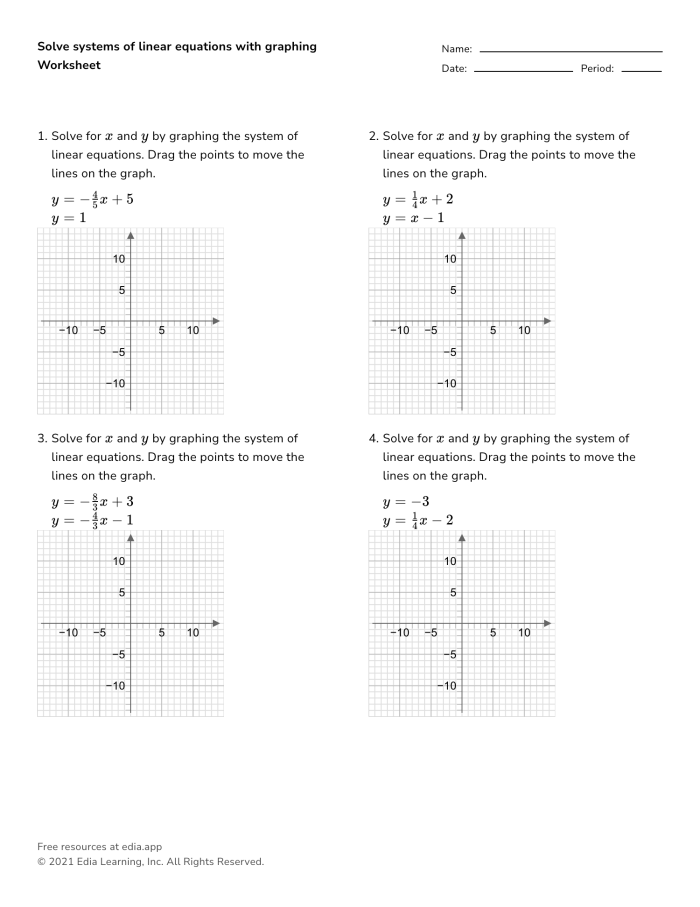
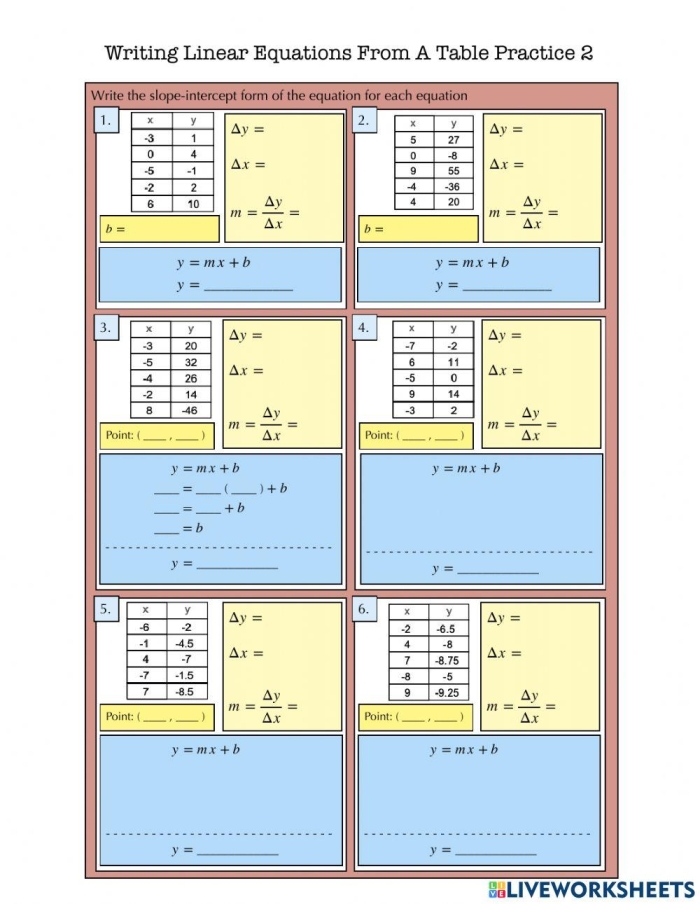
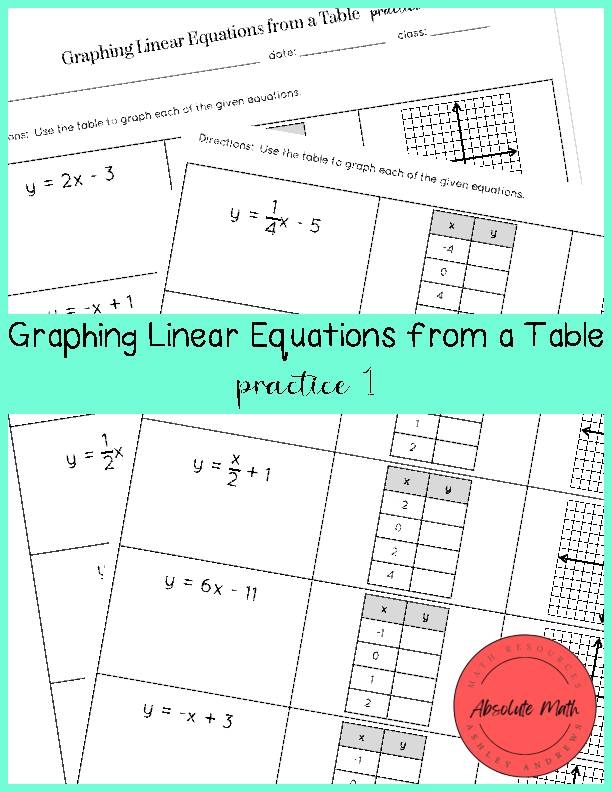
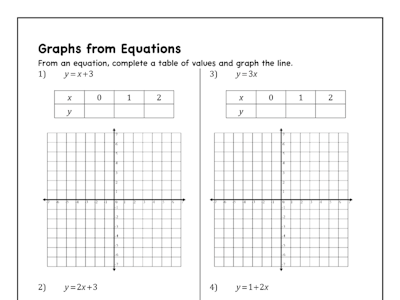
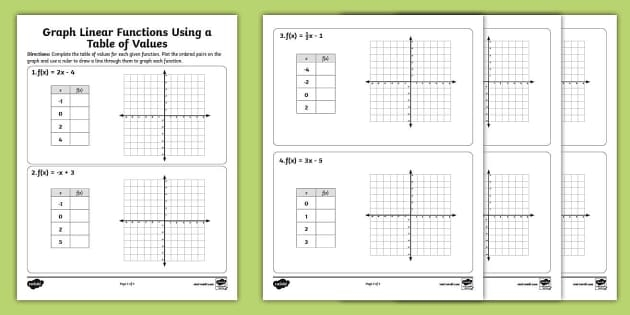
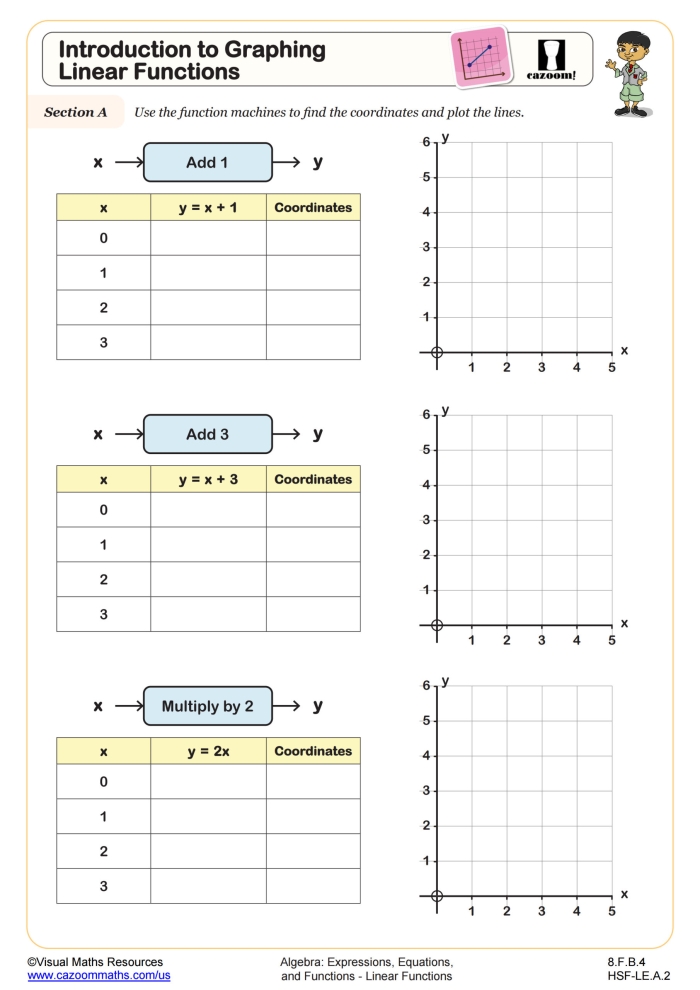
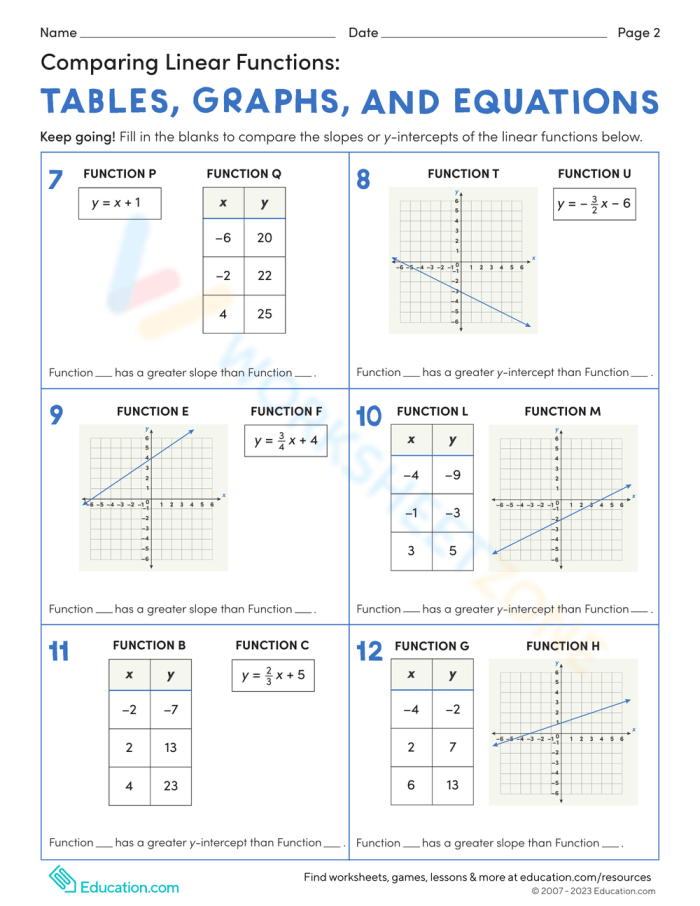
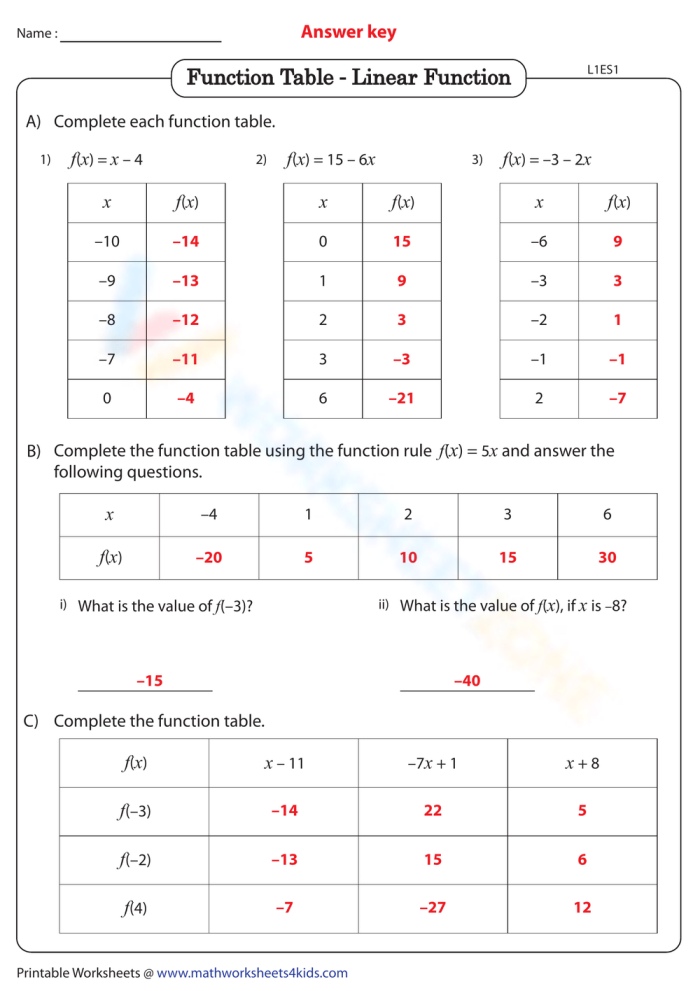
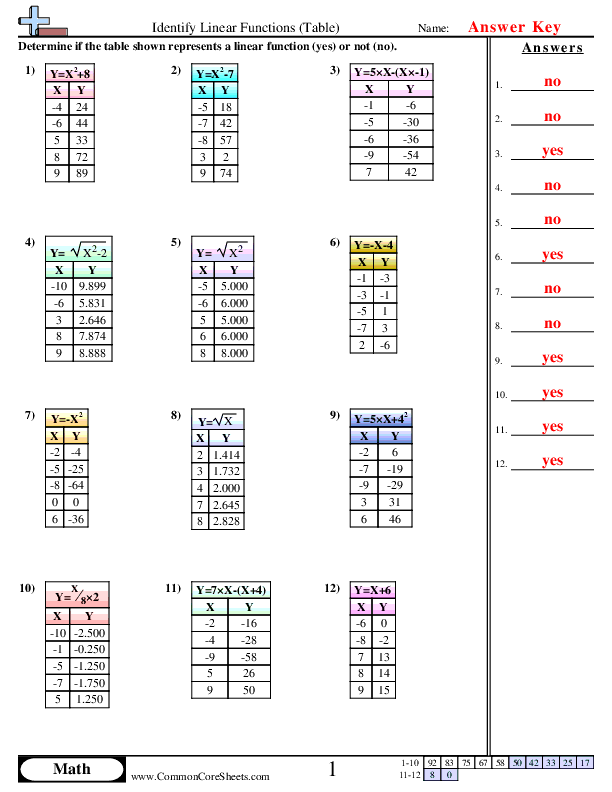
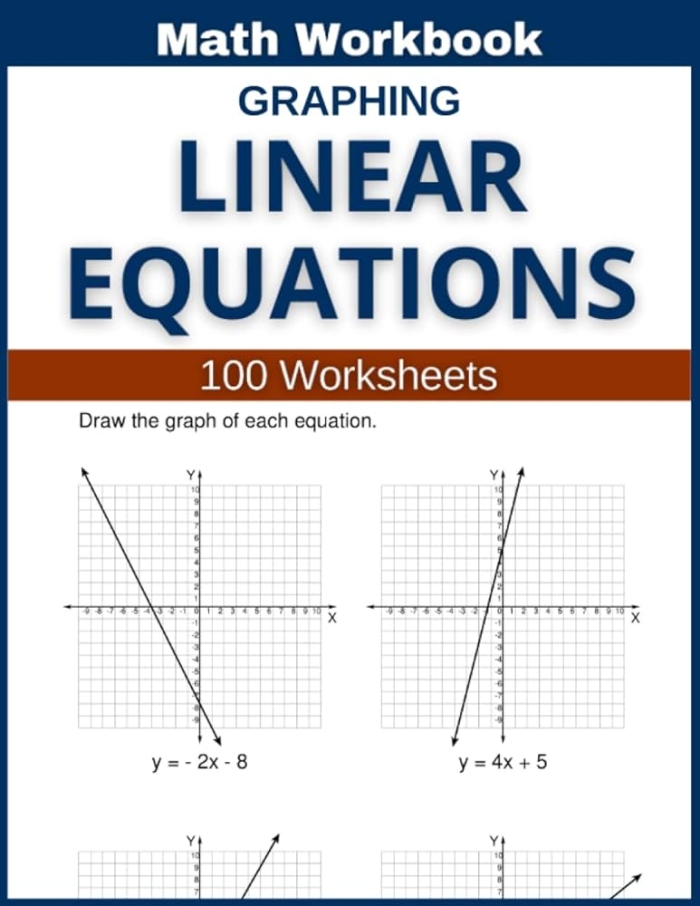
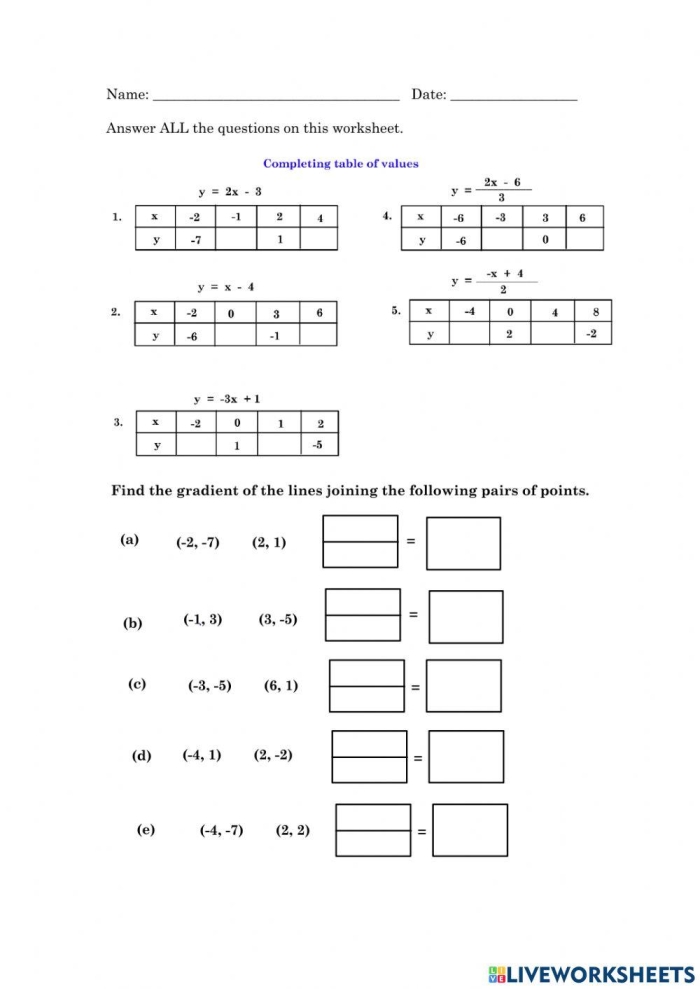
Graphing linear functions from tables is one of those skills that eighth-grade students often find confusing at first, but it clicks once they see the pattern. A good worksheet on this topic walks students through the process step by step, showing them how to take a set of x and y values, plot them on a coordinate plane, and recognize the straight line that forms.
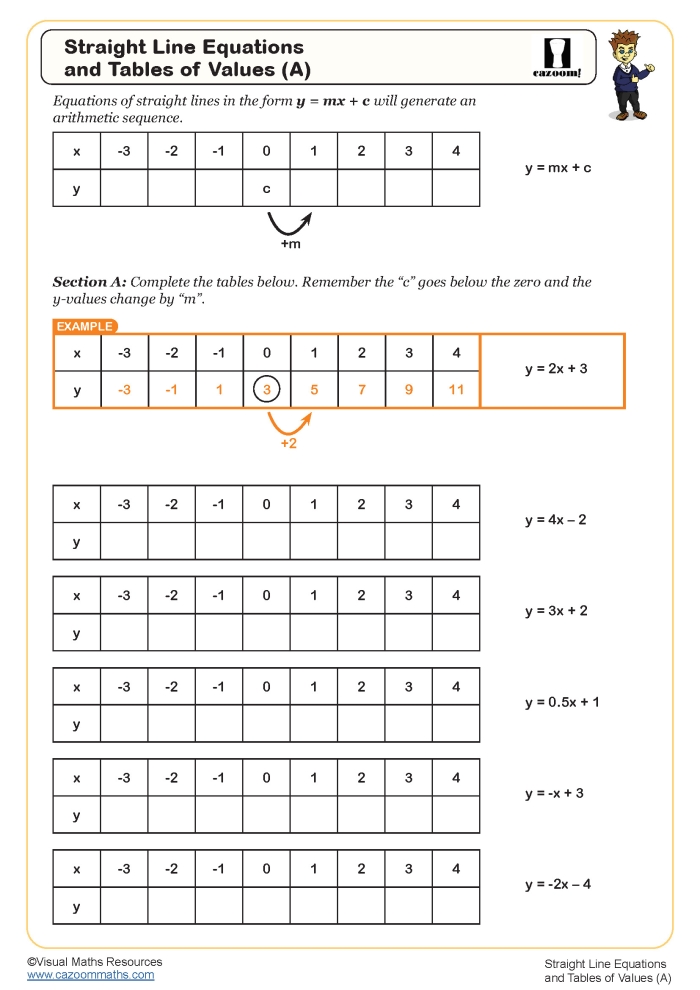
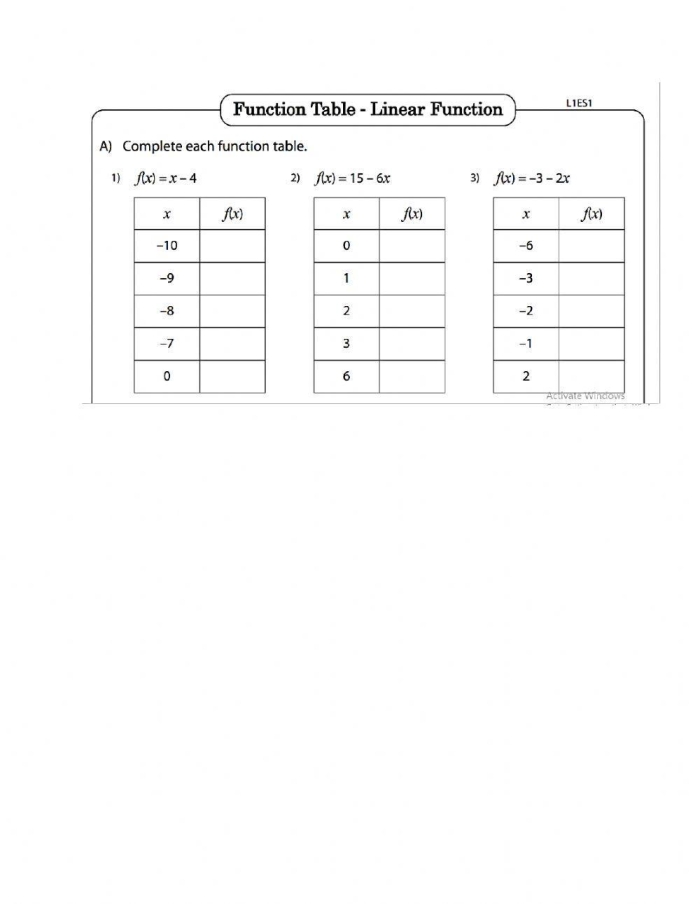
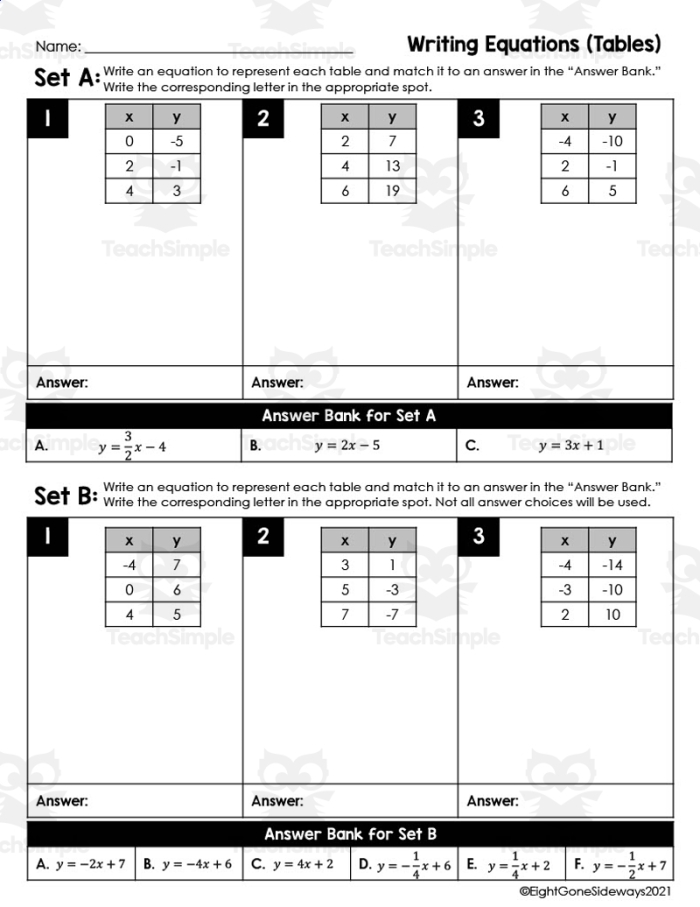
The strength of using tables lies in their clarity. Rather than jumping straight to an equation like y = 2x + 3, students see concrete number pairs first. They might see a table with x values of 0, 1, 2, and 3, paired with corresponding y values of 3, 5, 7, and 9. From there, plotting these points becomes mechanical, and the linear relationship becomes visible. This approach builds confidence before students encounter more abstract algebraic thinking.
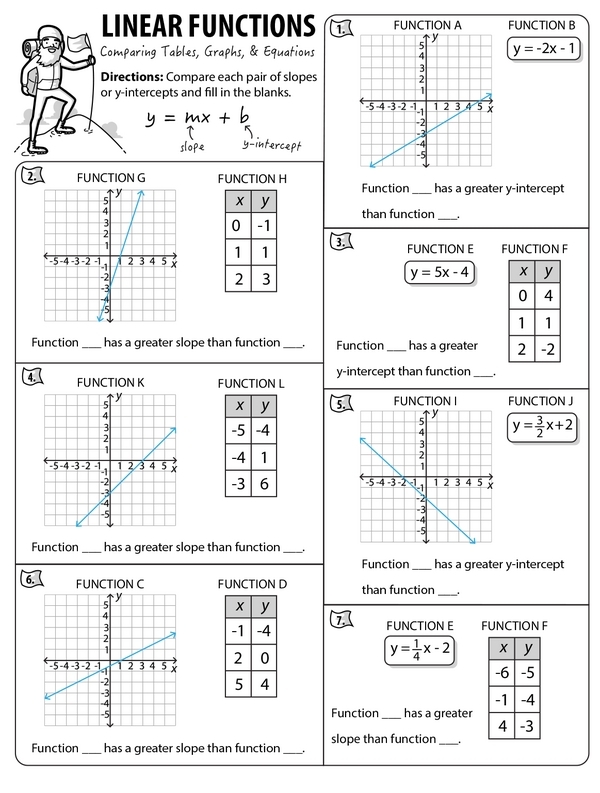
When working through these worksheets, eighth-grade students develop several important skills at once. They practice reading and interpreting data from tables, they strengthen their understanding of the coordinate plane, and they begin recognizing patterns in numerical sequences. These foundational abilities connect to other geometry and algebra concepts they’ll encounter throughout their math education.
A well-designed worksheet typically includes multiple problems with varying slopes and y-intercepts. Some functions might have positive slopes, others negative, and some might pass through the origin while others don’t. This variety ensures students aren’t just memorizing a single procedure but actually understanding how different linear functions behave.
Pairing this type of practice with other eighth-grade geometry work, such as understanding properties of exponents or finding the volume of cylinders, creates a more complete mathematical foundation for students moving into high school algebra.
Use These Worksheets Today