Recognizing figurative language transforms how third grade readers understand what authors really mean. When students learn to identify and interpret similes, metaphors, and personification in writing, they move beyond taking words at face value and start seeing the creative choices writers make to paint pictures with language.
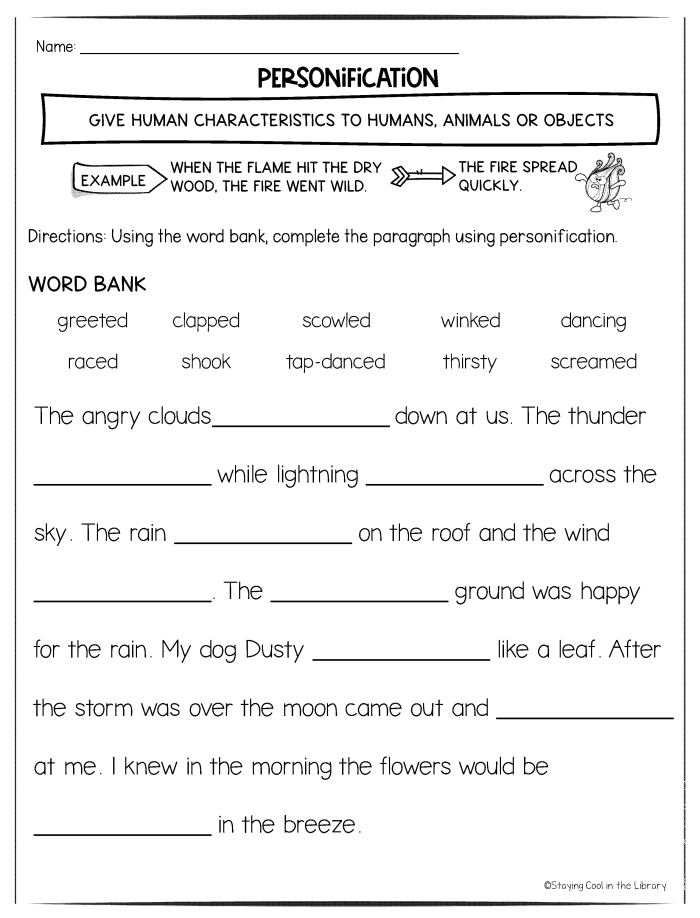
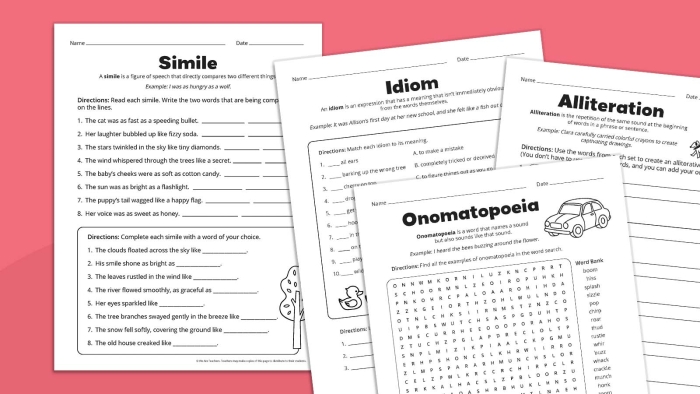
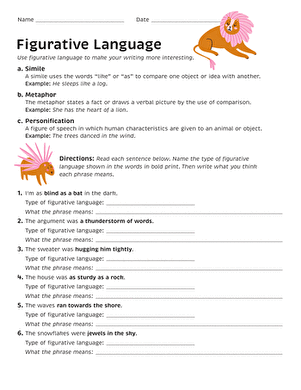
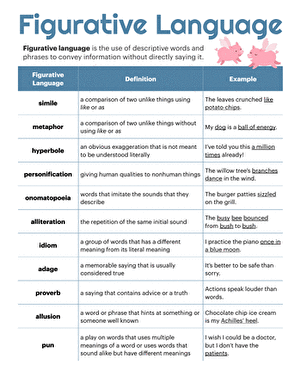
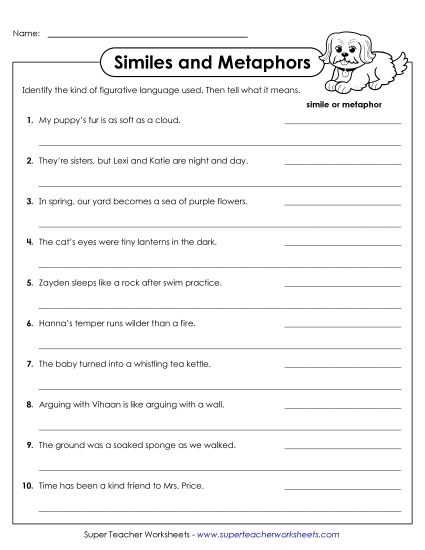
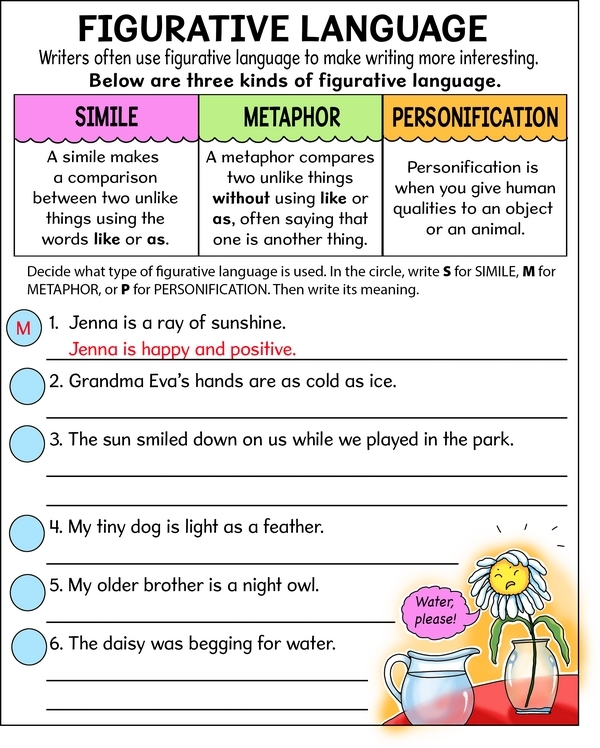
A simile directly compares two unlike things using “like” or “as.” When a third grader reads that a character’s laugh was “like a bell,” they can visualize the bright, ringing quality of that laugh. Metaphors work differently, stating that one thing actually is another thing without using comparison words. “Her heart was ice” tells us something about her emotional state more vividly than saying she felt cold. Personification gives human qualities to non-human things, making a storm “angry” or a flower “dancing” in the breeze.
The challenge for young readers is learning to pause and ask: what is the author comparing here, and why? Third graders benefit from seeing these devices in stories they already enjoy. When working through exercises like adjectives to describe food, students practice descriptive language that builds toward understanding figurative comparisons. Similarly, analyzing stories with rich imagery helps them notice when authors use figurative language to create mood and meaning.
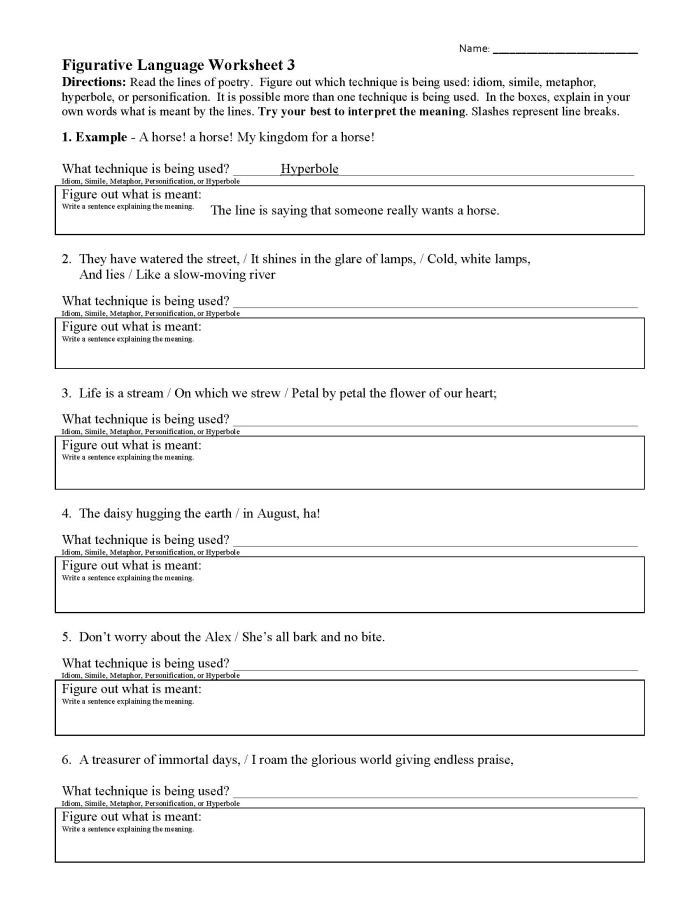
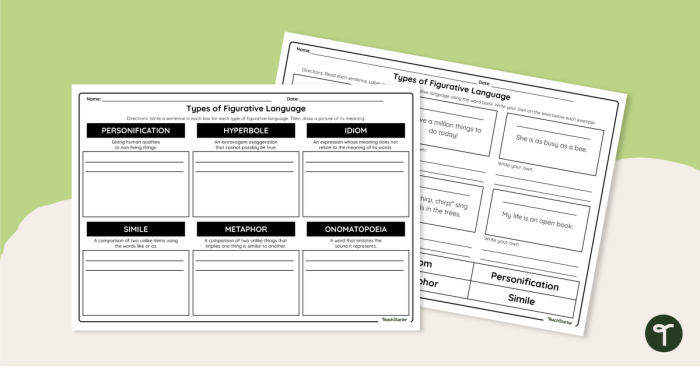
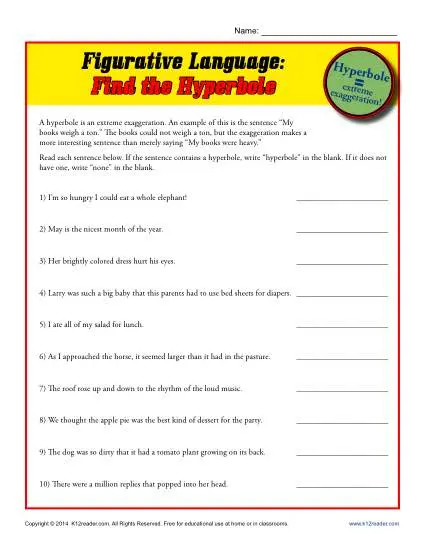
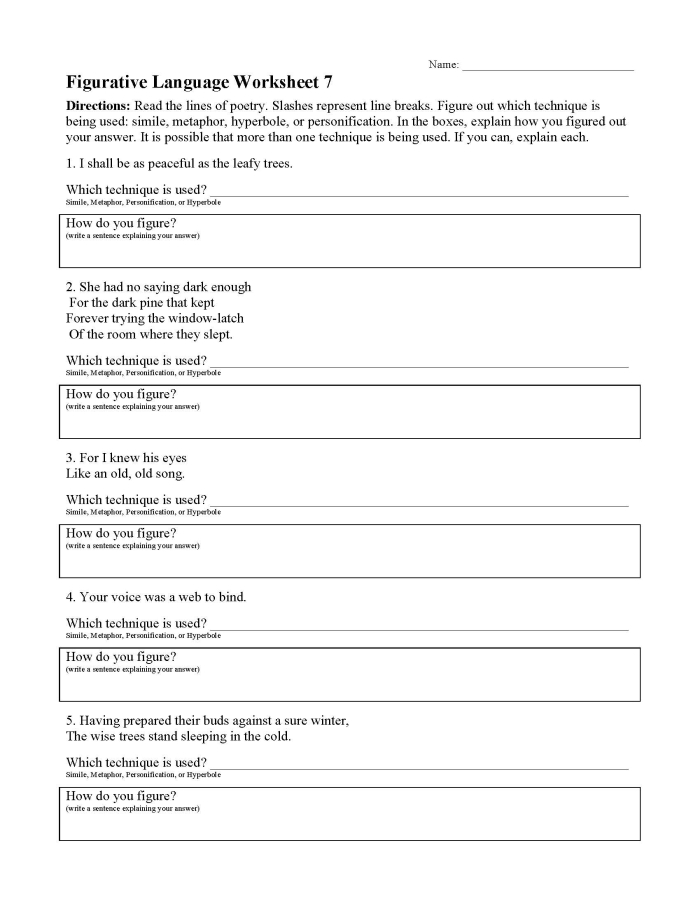
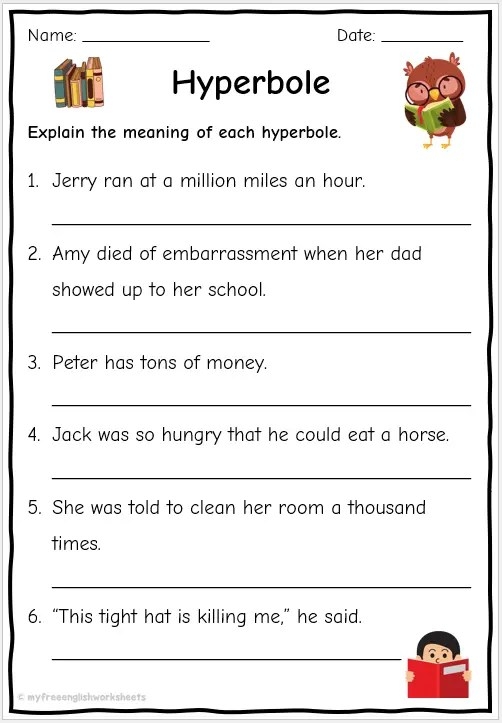
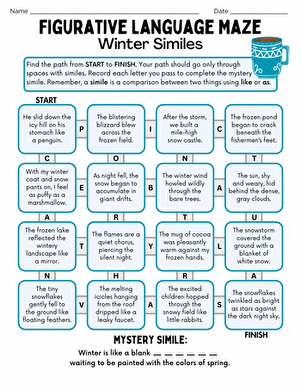
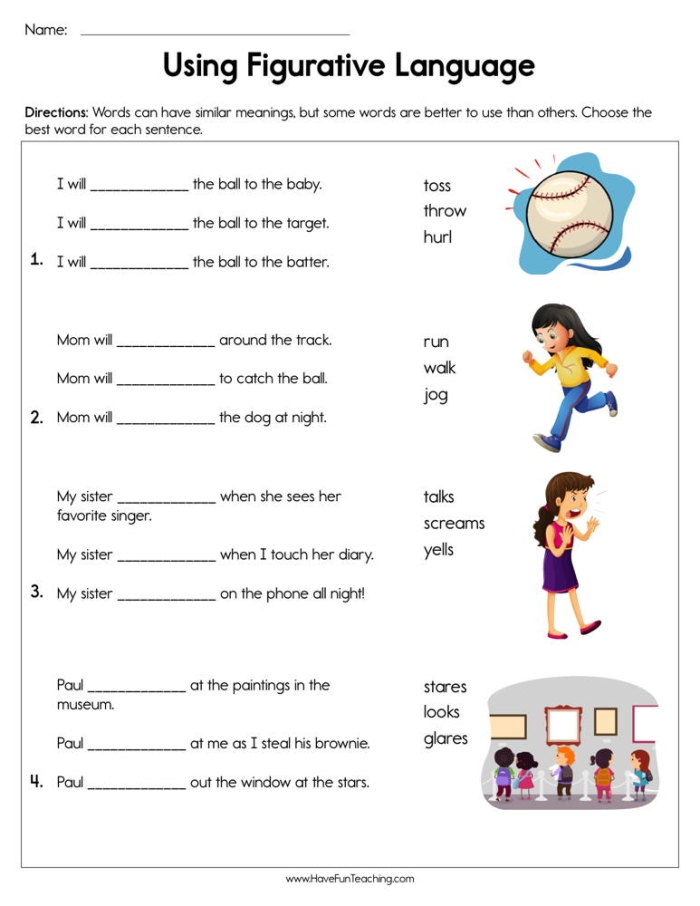
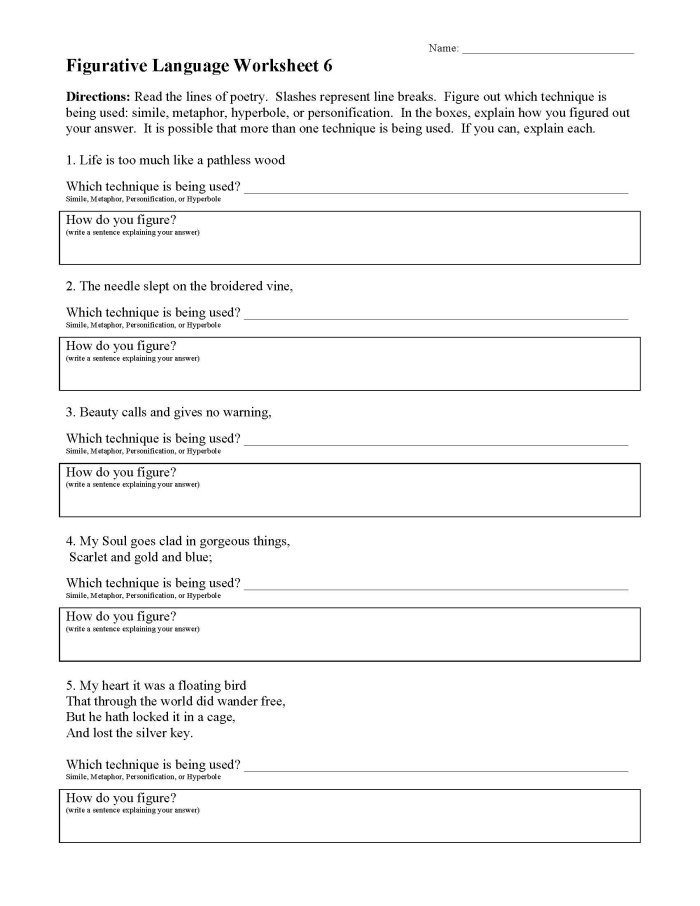
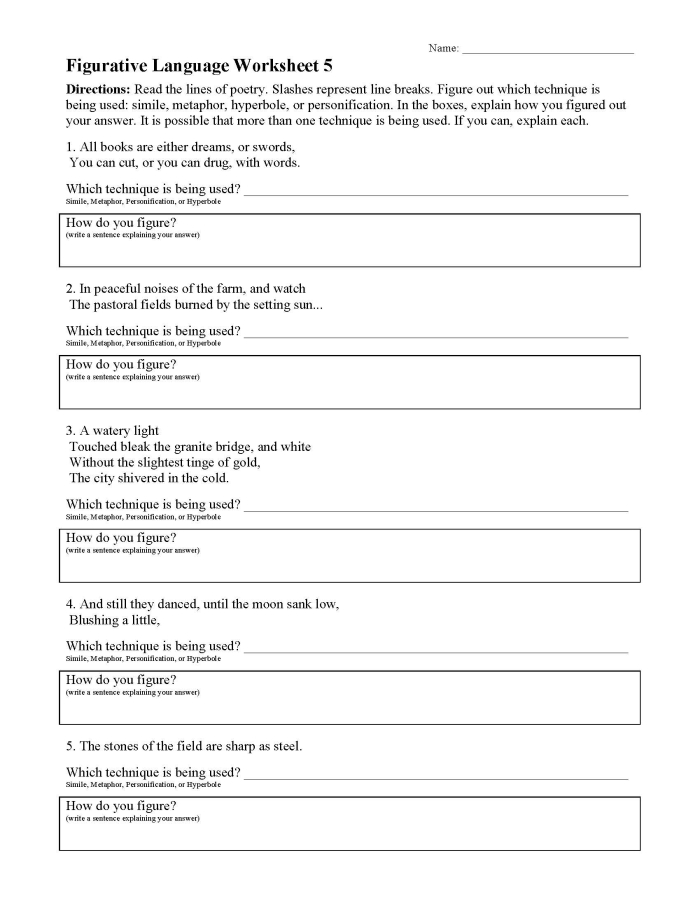
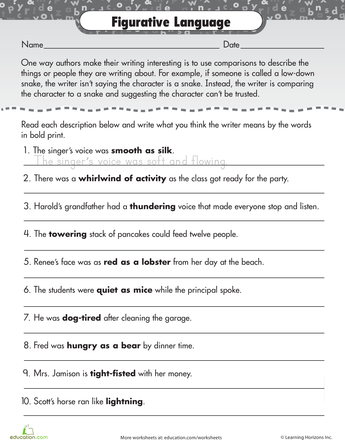
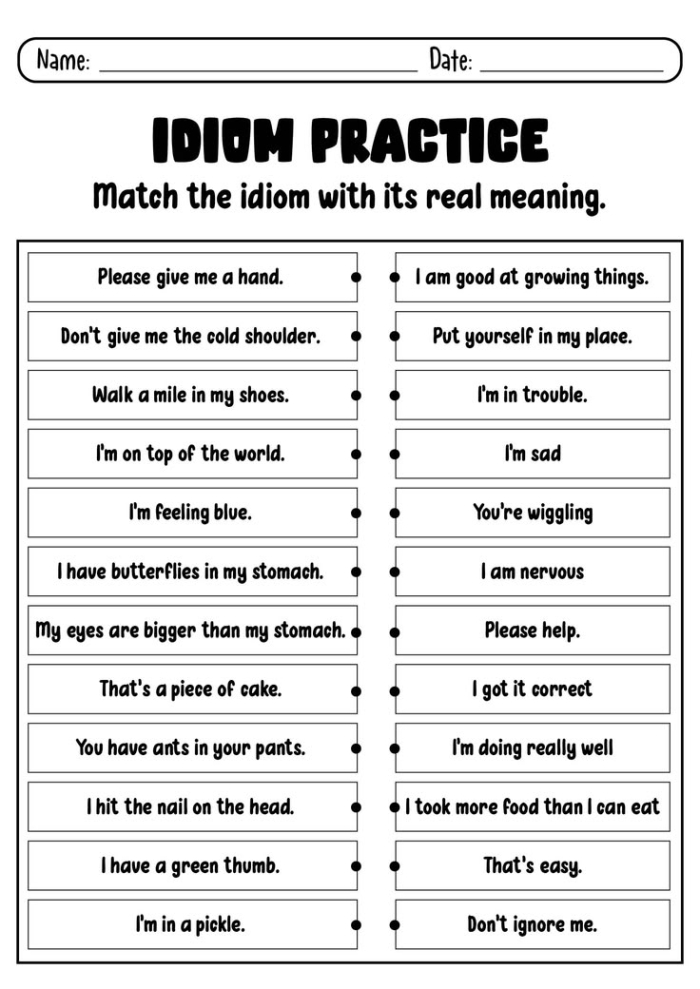
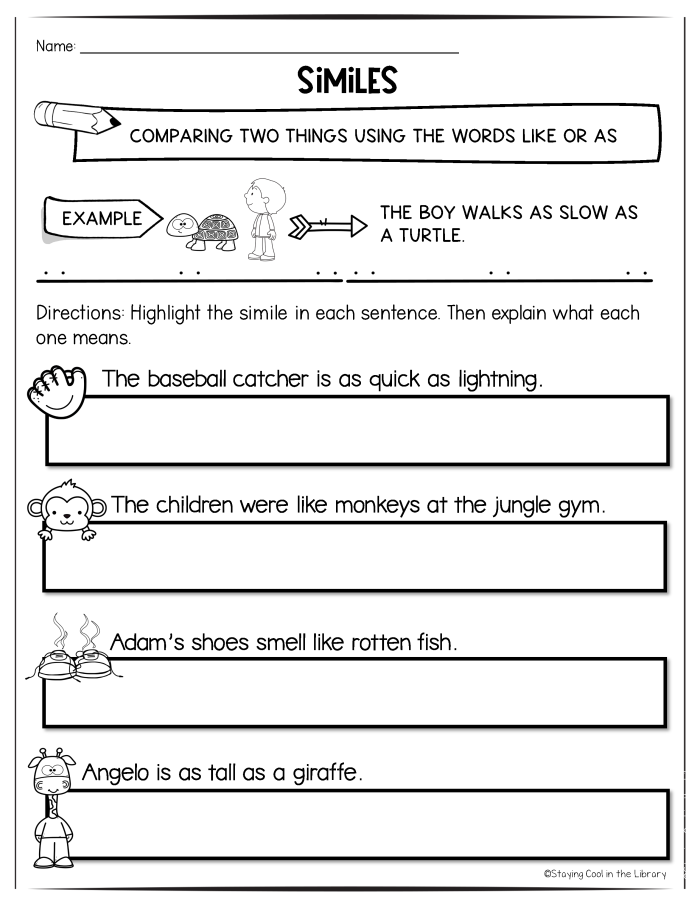
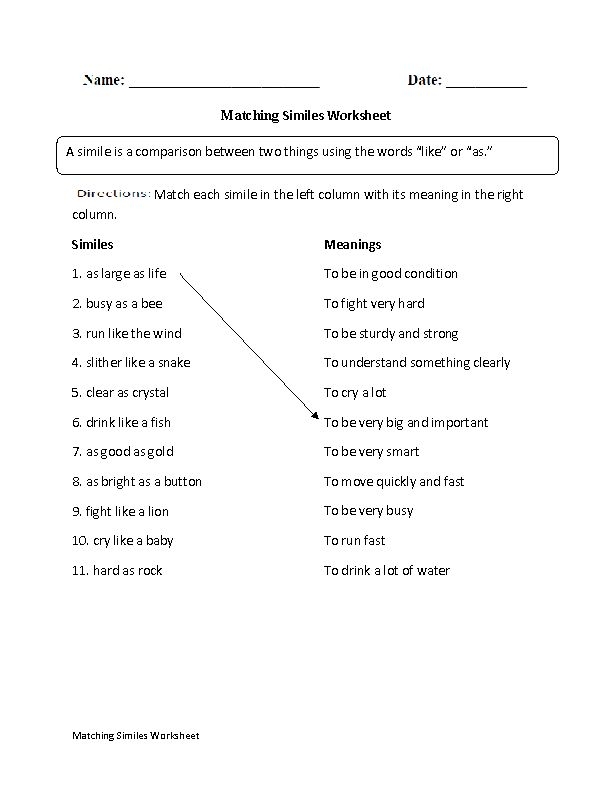
Printable figurative language practice worksheets work well because they let students mark examples, circle comparison words, and explain what they think the author meant. This hands-on approach sticks better than lectures. When students encounter a metaphor or personification in their independent reading, they’ll recognize it and understand that the author chose those words deliberately to make the writing more interesting and meaningful.
Use These Worksheets Today