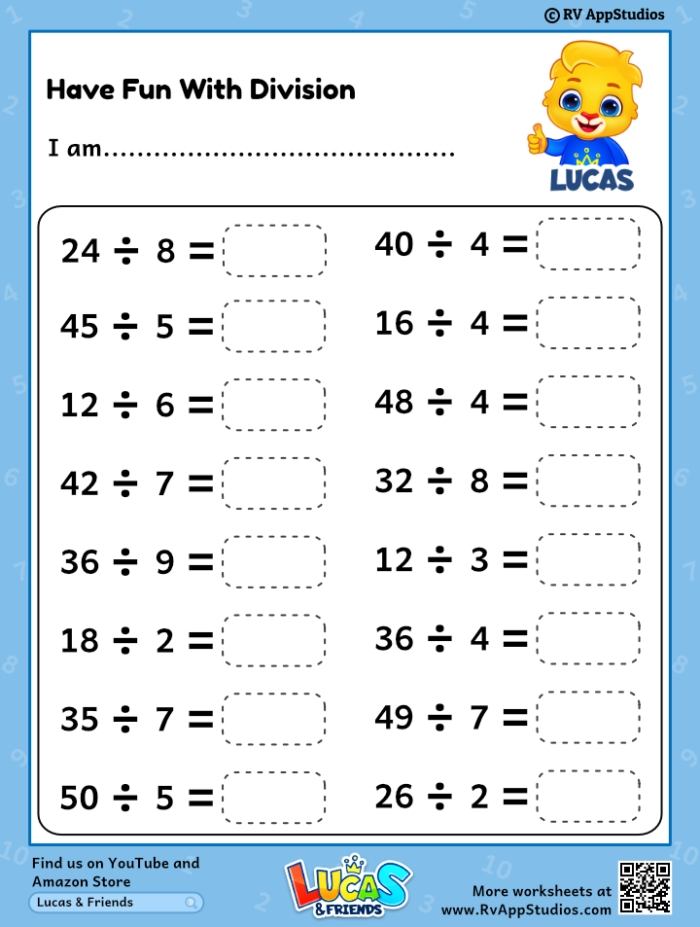
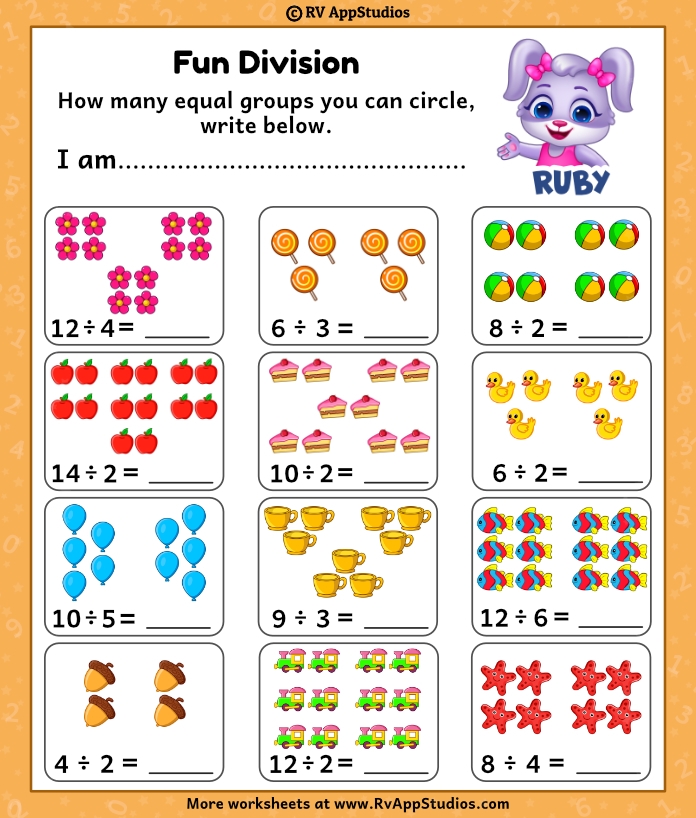
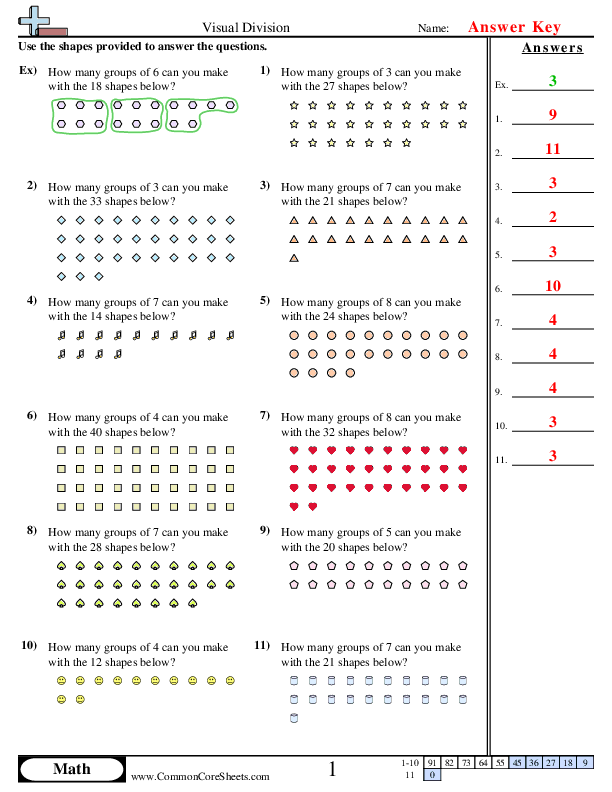
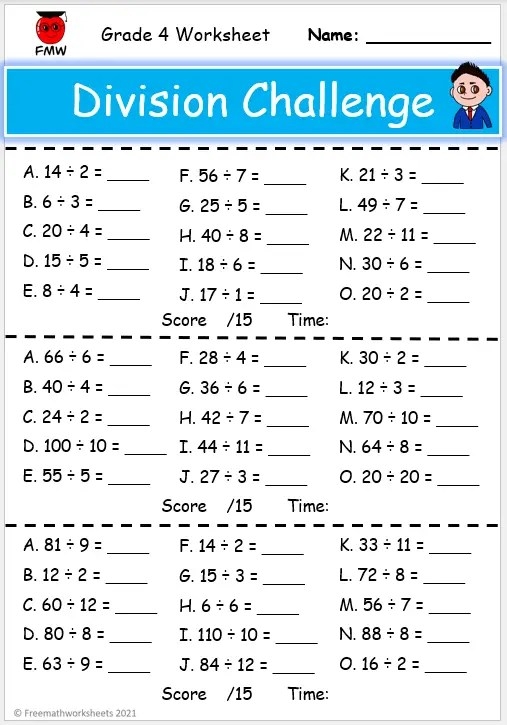
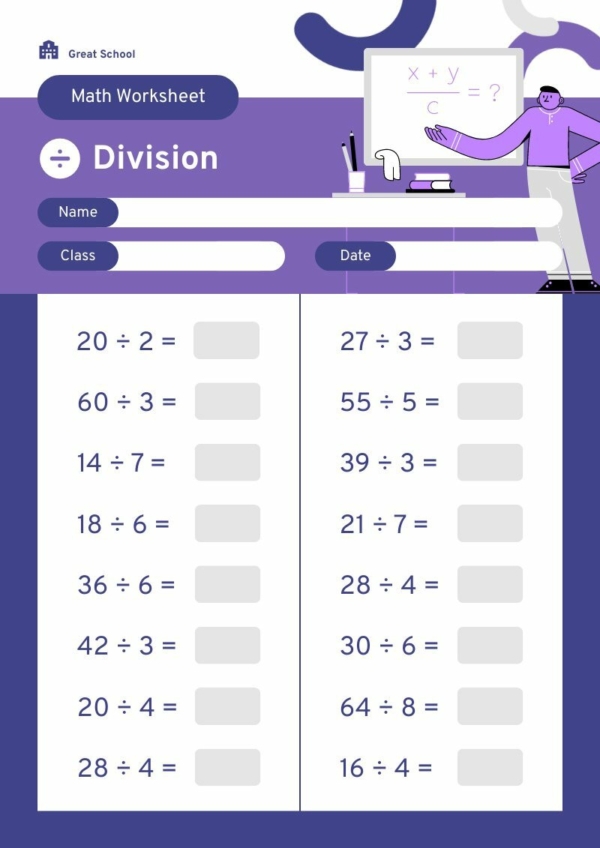
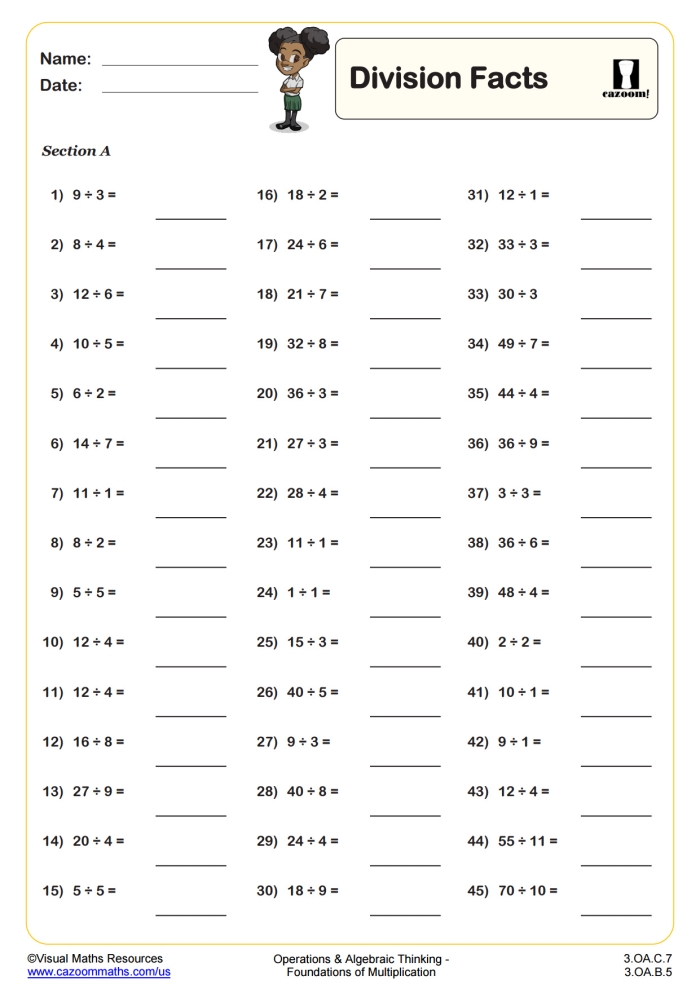
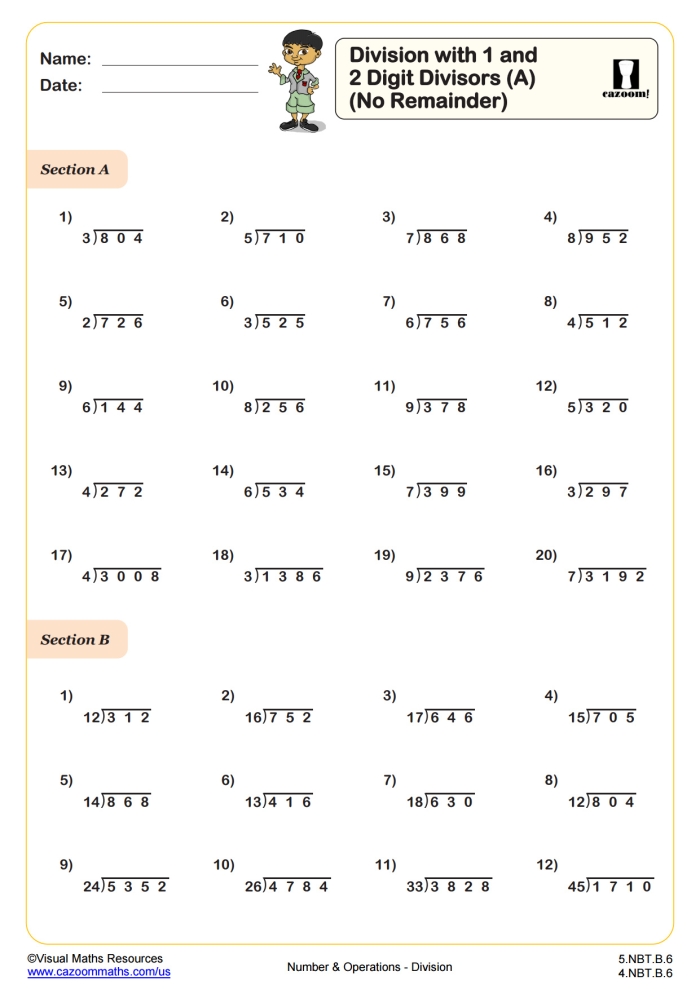
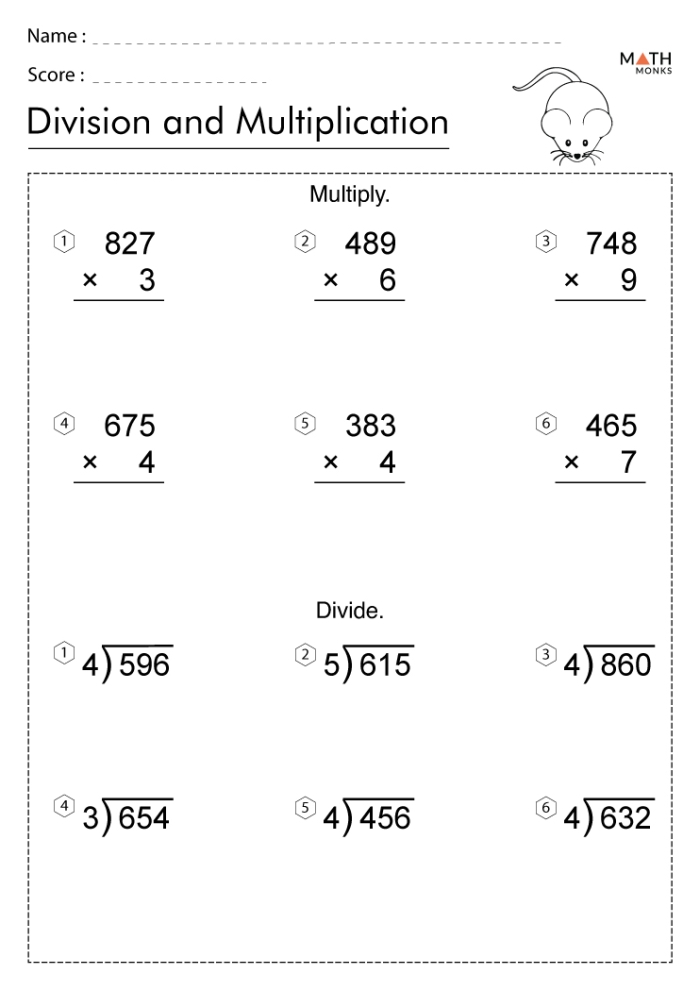
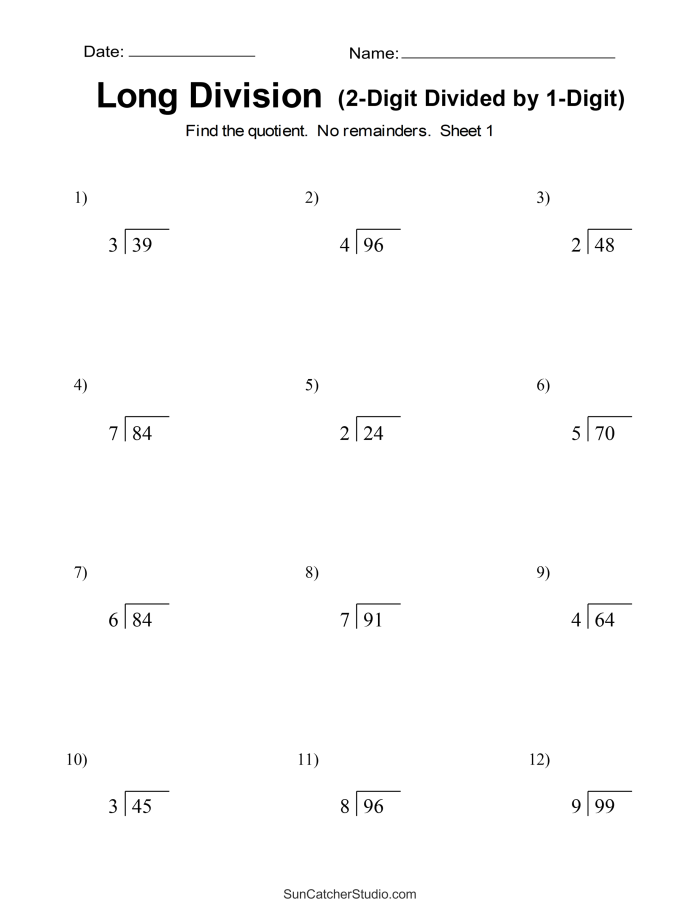
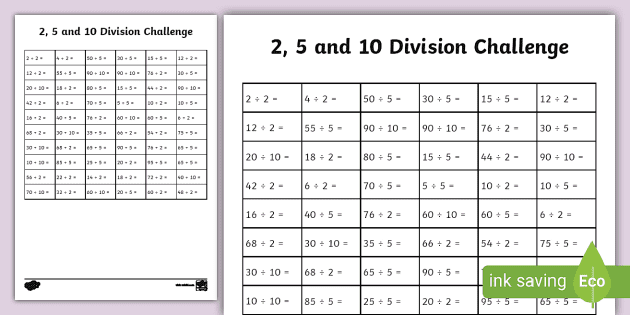
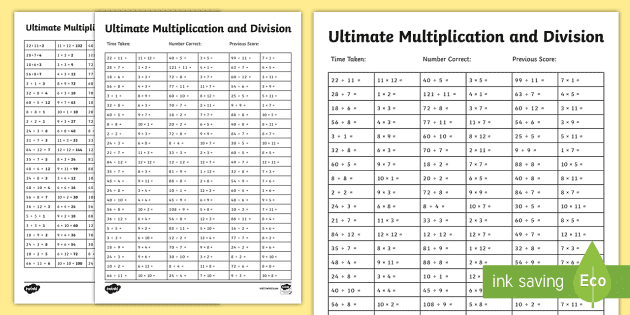
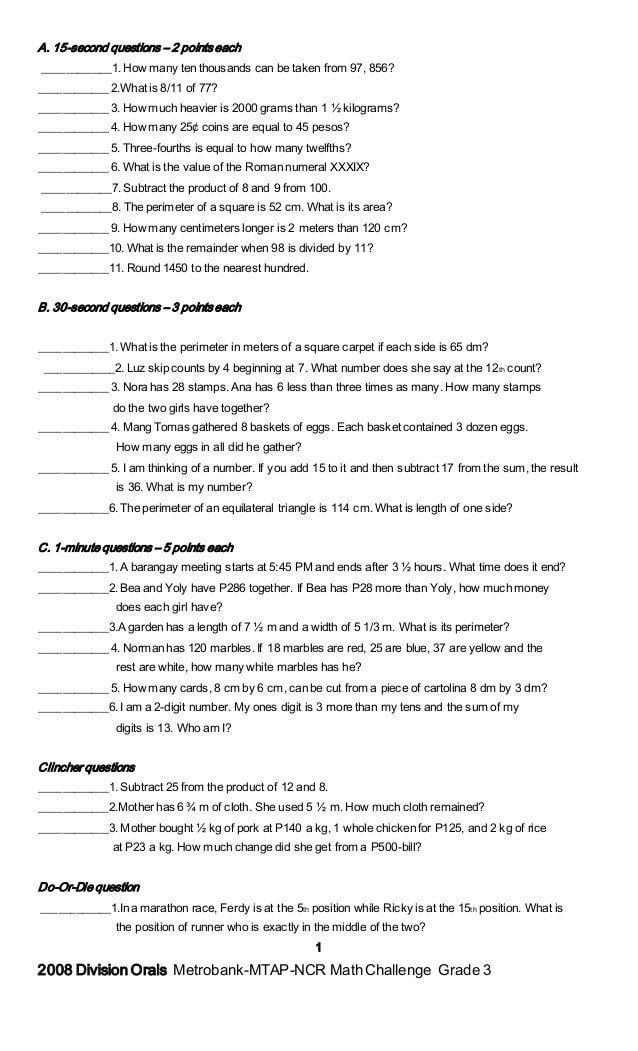
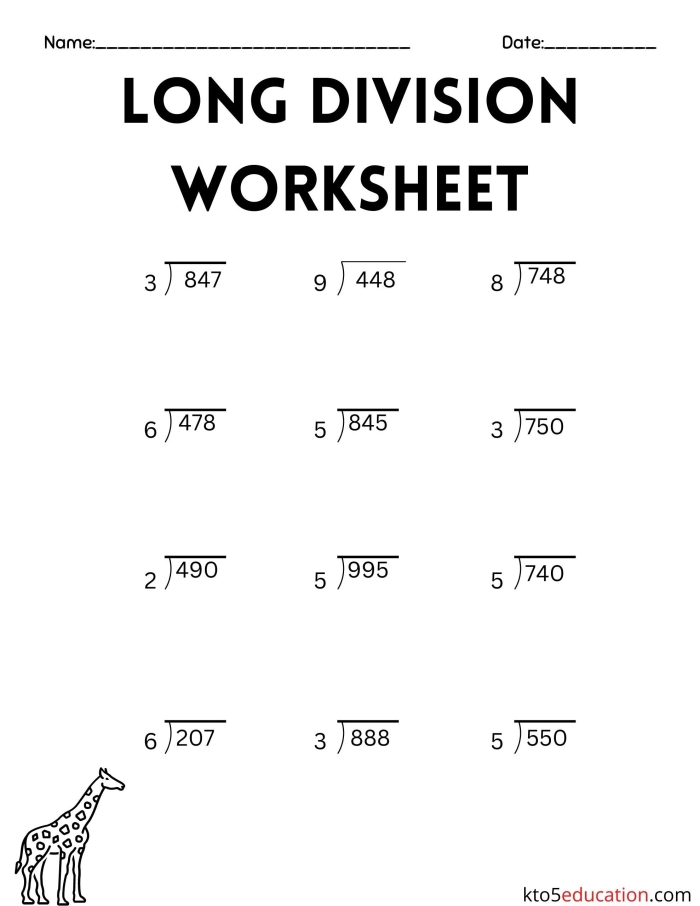
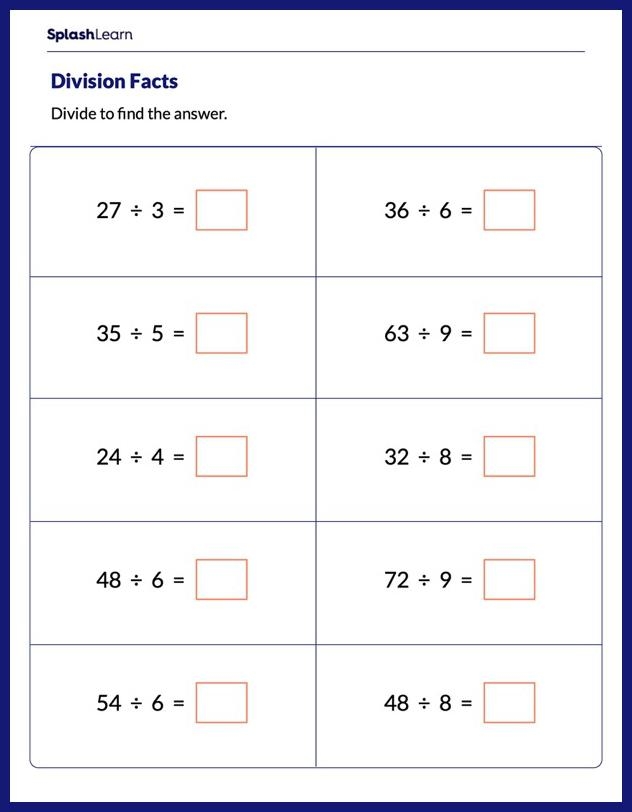
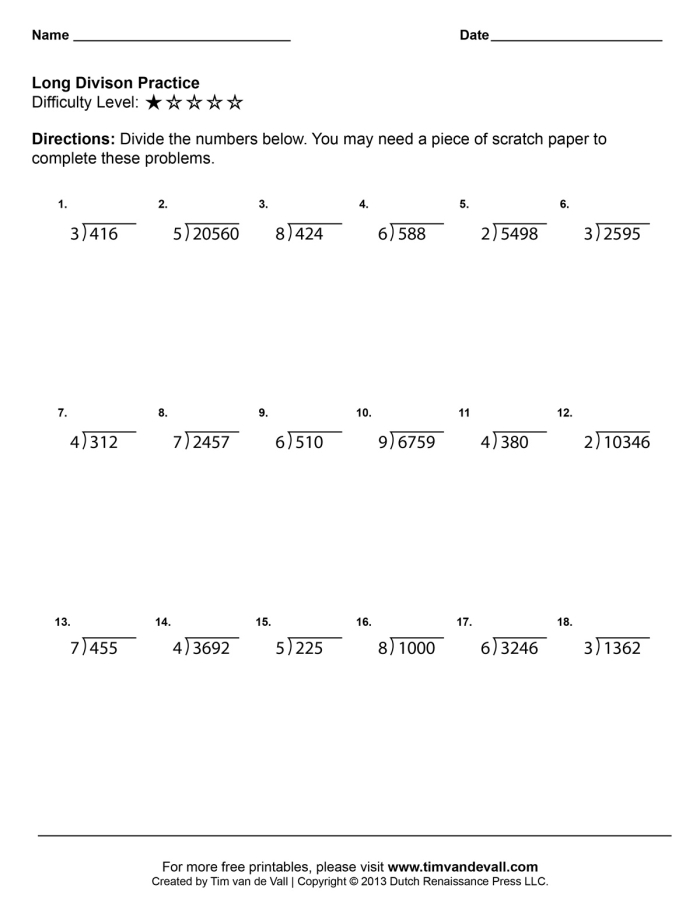
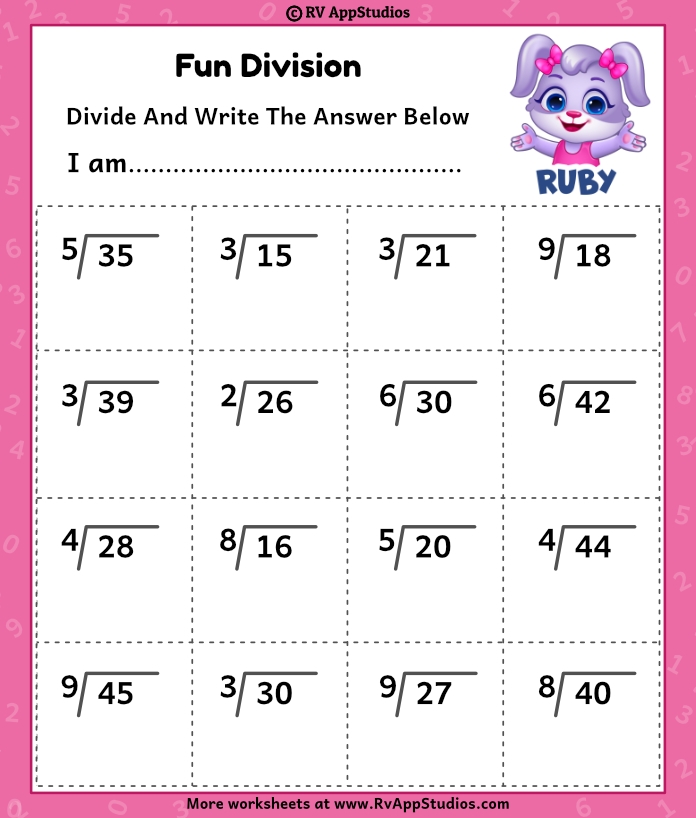
Division becomes real when your third grader tackles problems with two-digit divisors and three-digit dividends. This is where the skill stops feeling abstract and starts demanding actual strategy. A printable division challenge at this level pushes students past simple facts and into genuine problem-solving territory.
Two-digit divisors change everything. When a child moves from dividing by single digits to working with numbers like 12, 15, or 23, they need to estimate, adjust, and think through each step. Three-digit dividends mean there’s real work to do: long division becomes a process rather than a quick calculation. Your math whiz will discover that sometimes their first guess at how many times the divisor goes into the dividend is too high or too low, and they’ll need to revise. That trial-and-error thinking is exactly what builds mathematical confidence.
Third grade is the sweet spot for introducing this challenge. Students have mastered basic division facts by this point, so they’re ready to apply that knowledge in a more complex format. The transition from simple to challenging problems helps cement understanding in a way that jumping straight to hard problems cannot.
Using a structured worksheet keeps the practice focused. Rather than random problems scattered across a page, a well-designed division challenge presents problems in a logical sequence, allowing students to build momentum. Each correct answer reinforces the method and builds toward fluency.
You might also explore related skills alongside division practice. Working on multiplication facts involving six strengthens the inverse operation, and practicing area calculations connects division to spatial reasoning. These connections help your student see math as interconnected rather than isolated skills.
Grab These Worksheets Now