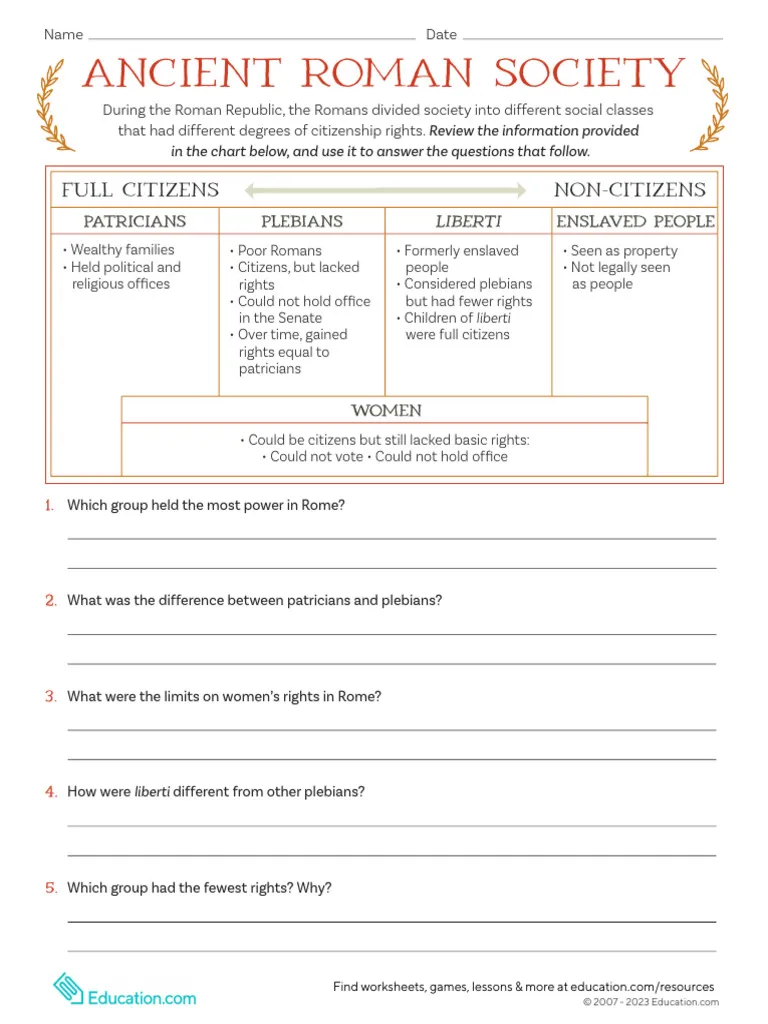
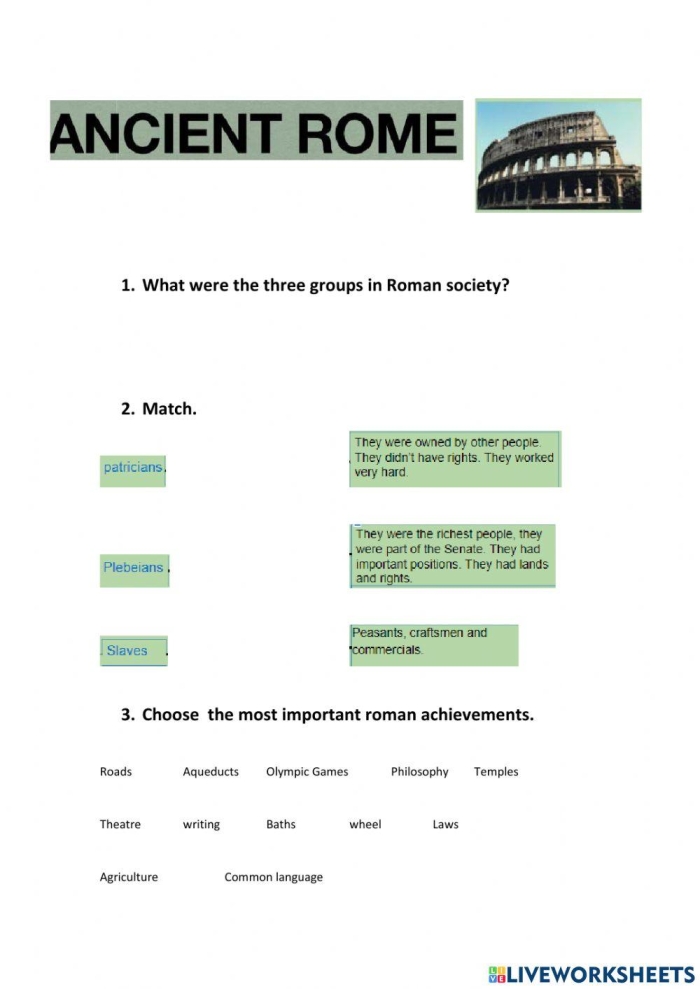
Understanding the different social classes of ancient Roman society offers a fascinating glimpse into how people lived, worked, and interacted during one of history’s most influential periods. Ancient Rome was structured into distinct classes: the patricians, plebeians, equestrians, and slaves, each with its own roles and privileges.
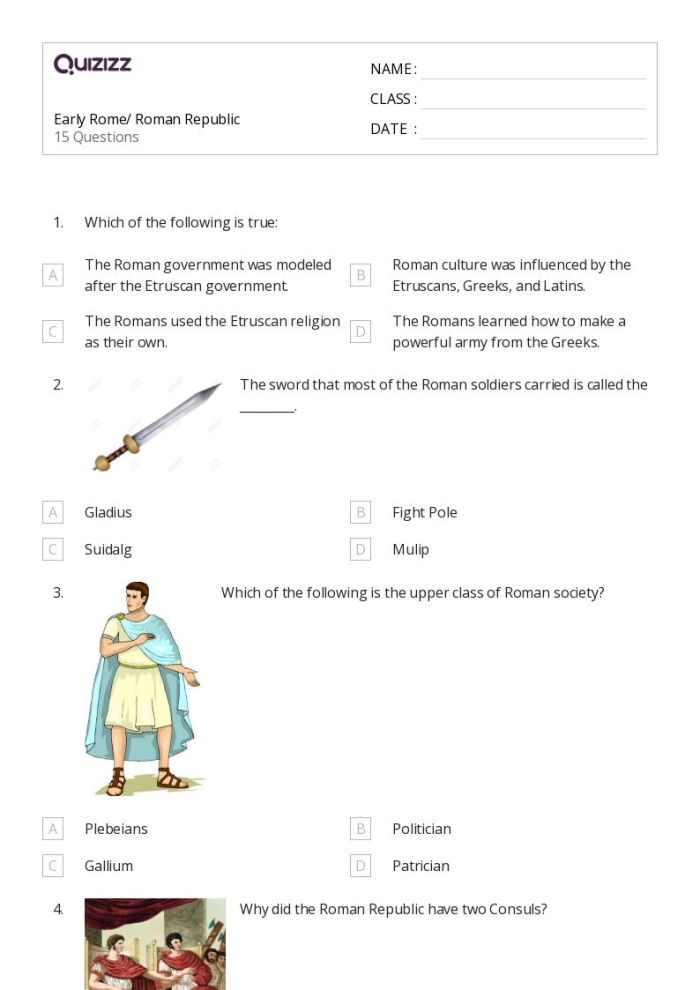
The patricians were the elite class, consisting of wealthy landowners and influential politicians. They held significant power in the government and had access to education, which allowed them to maintain their status across generations. In contrast, the plebeians made up the majority of the population. This class included farmers, laborers, and artisans, who often struggled for rights and representation. Their demands led to significant social changes, including the establishment of the Tribune of the Plebs, a political office that gave them a voice in the government.
The equestrians, or equites, represented a middle class that emerged from the wealth generated by trade and commerce. They were often involved in business and could gain considerable wealth, though they were excluded from high political offices reserved for the patricians. Slaves, on the other hand, occupied the lowest social tier. They were considered property and had no rights, performing various tasks from household duties to labor on farms. It’s important to note that some slaves could earn their freedom, which allowed them to rise in social status.
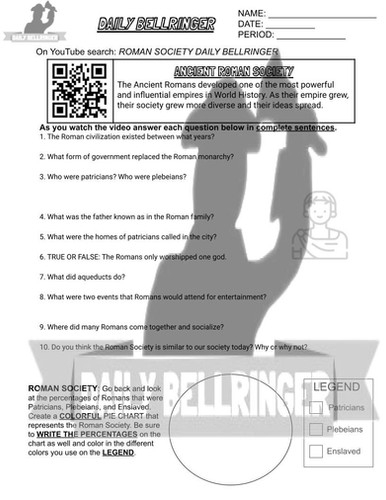
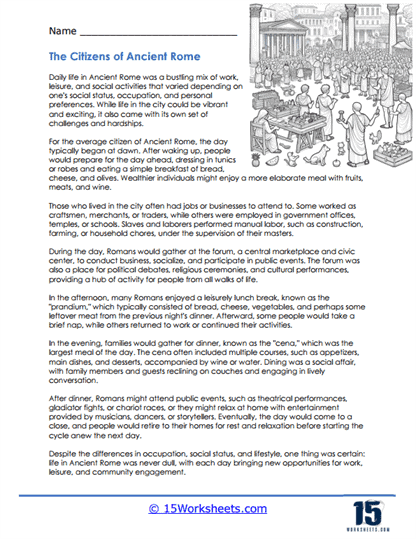
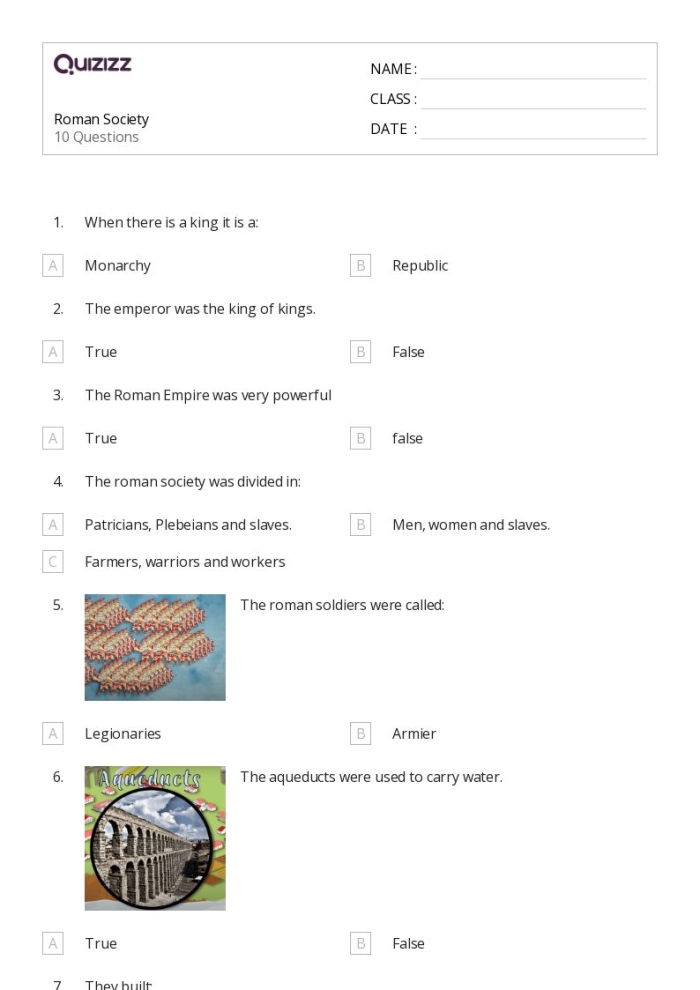
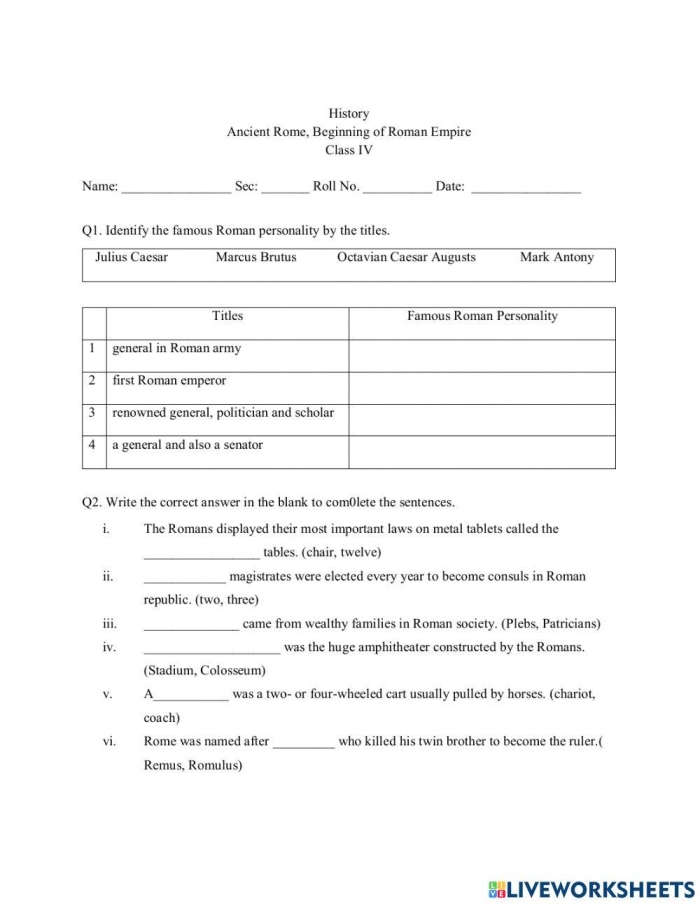
For sixth-grade students exploring ancient Roman society, a printable worksheet can be an engaging tool. Activities may include comparing the responsibilities and lifestyles of each class, which can help students grasp the complexities of social hierarchies. Such worksheets can be particularly valuable in social studies, enhancing understanding through interactive learning experiences. For instance, they can relate this knowledge to their daily lives or other historical contexts, building critical thinking skills.
Incorporating social studies worksheets into the curriculum not only makes learning interactive but also allows students to explore significant themes like power dynamics and social justice, making history relevant and accessible. Consider using resources that facilitate this exploration, as they can enrich the learning experience and spark curiosity about the past.
Try These Printable Worksheets