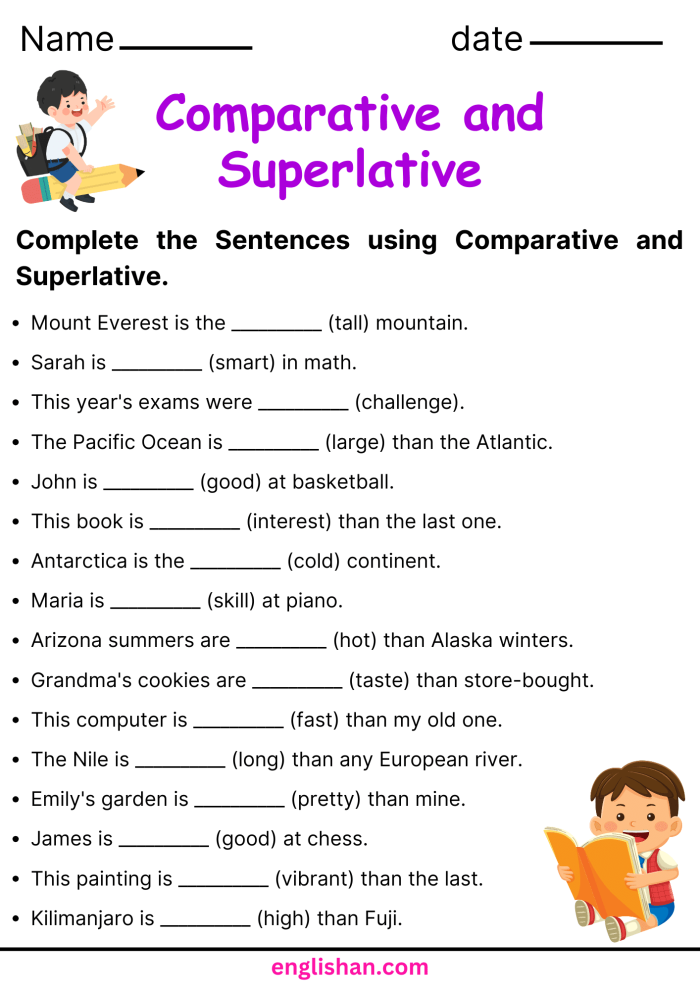
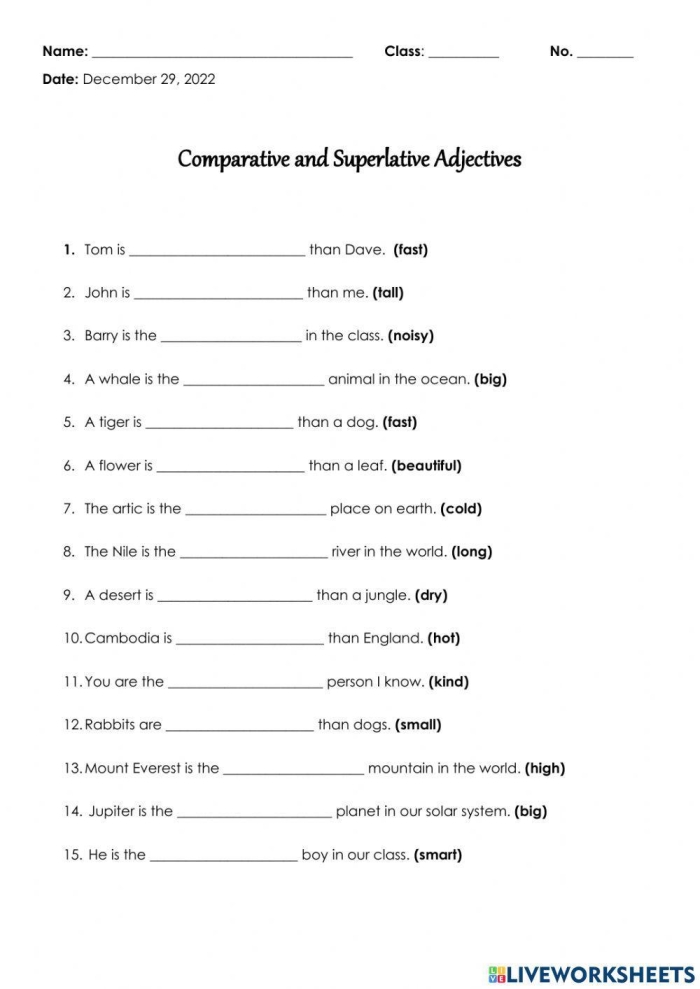
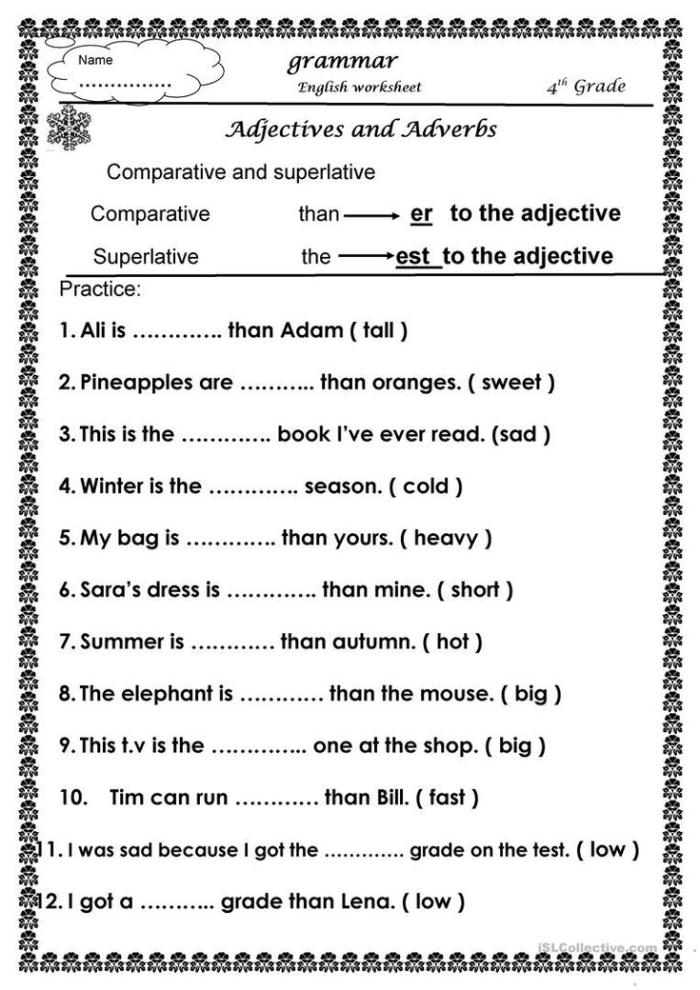
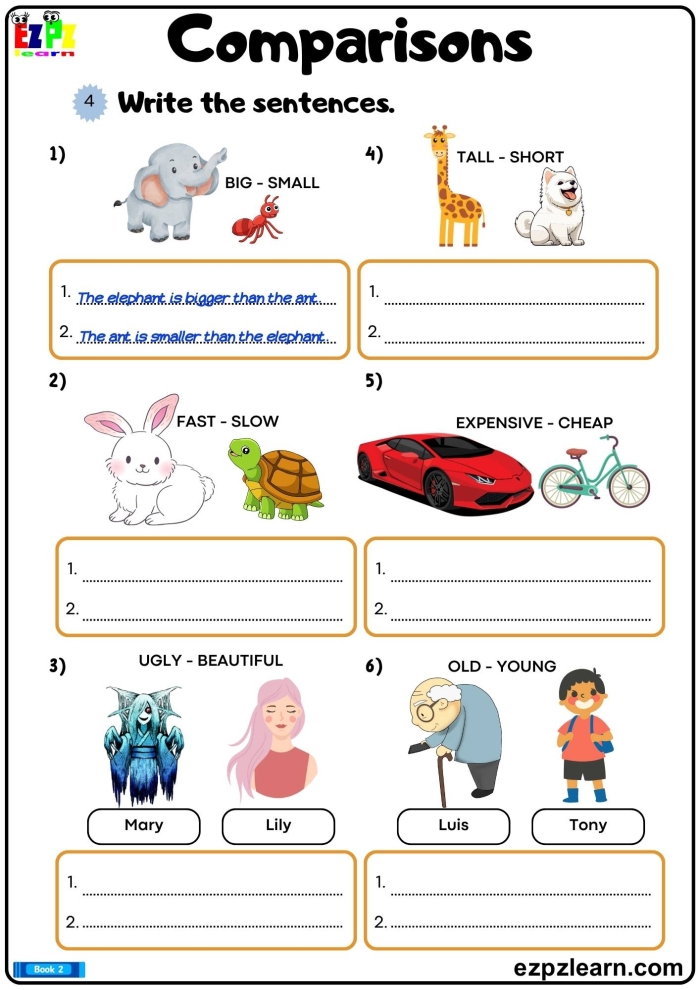
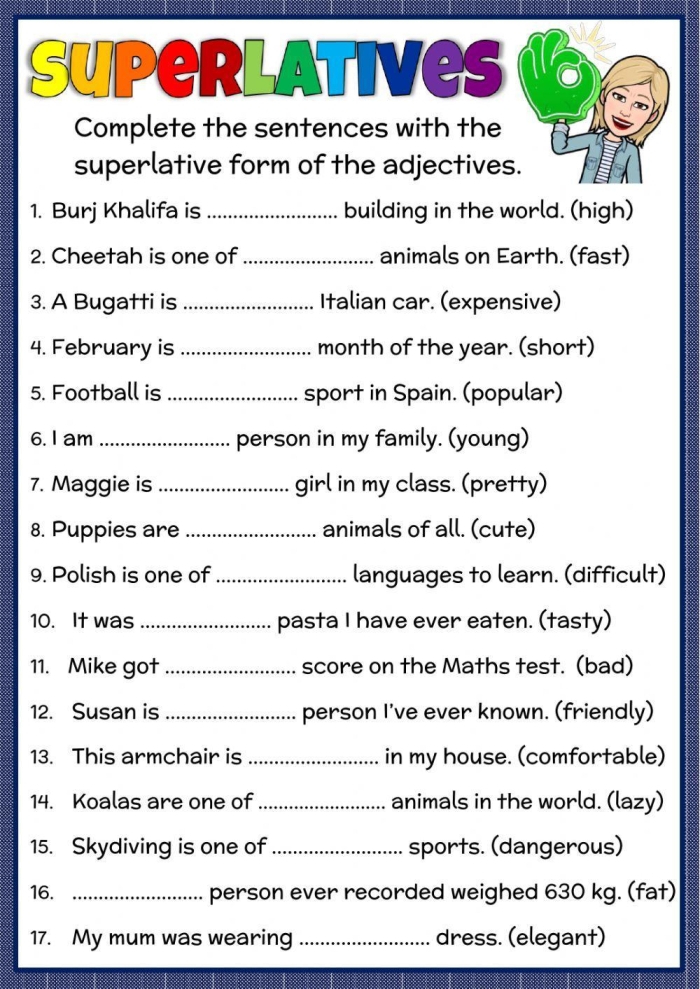
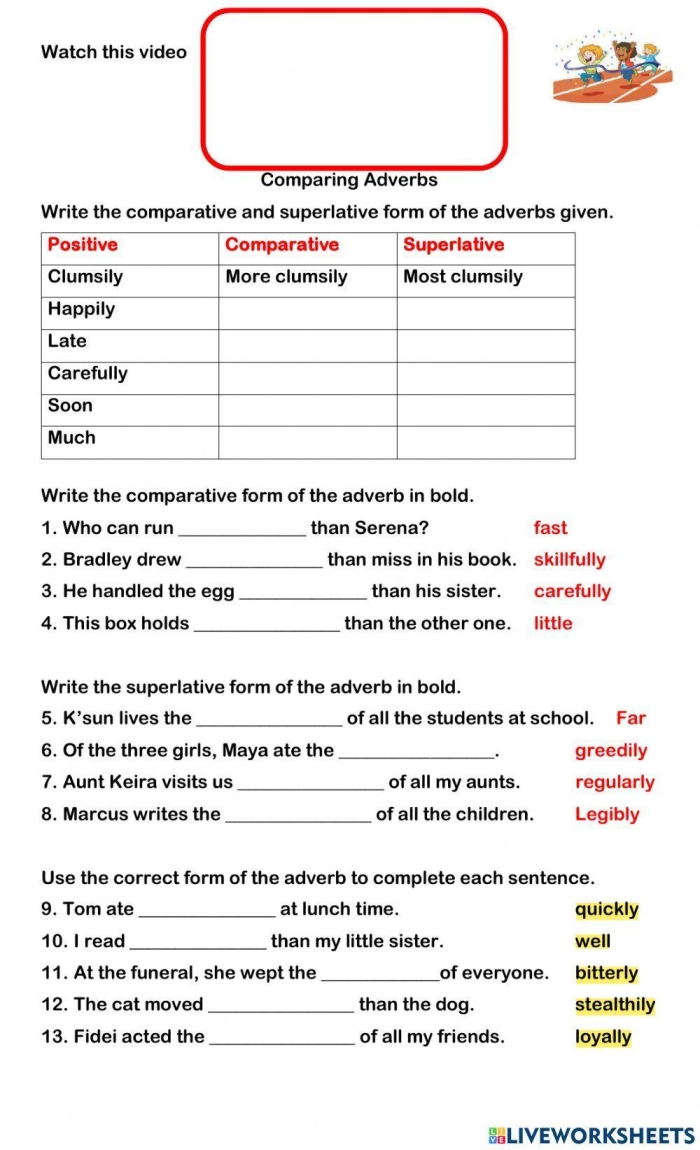
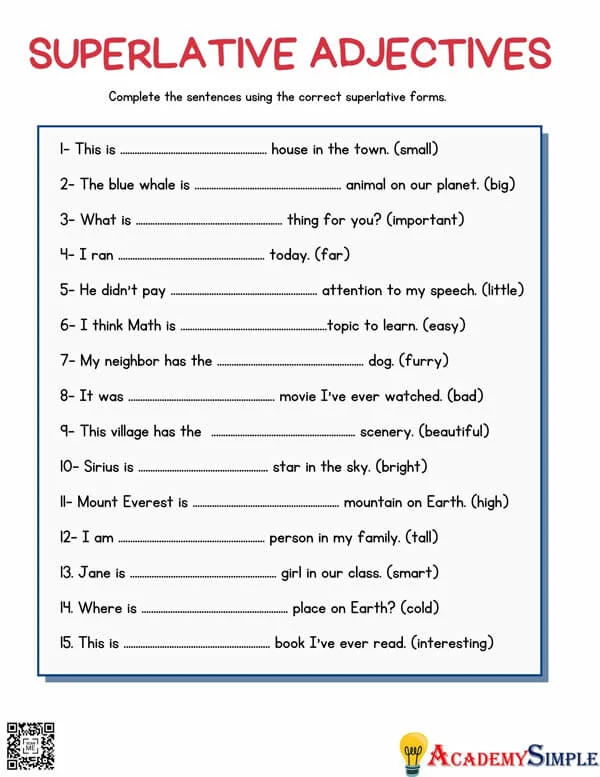
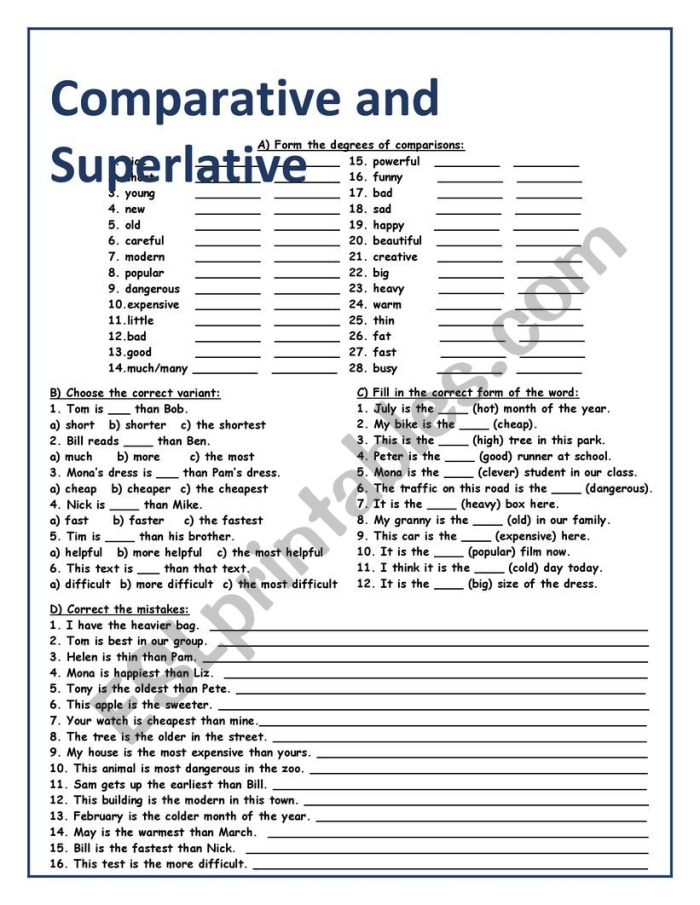
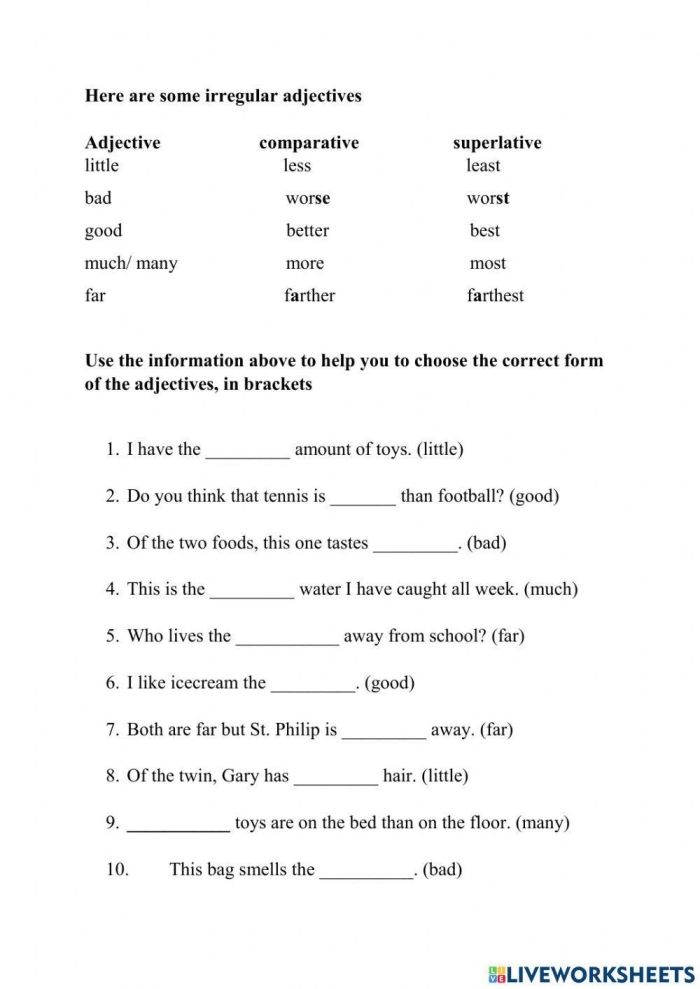
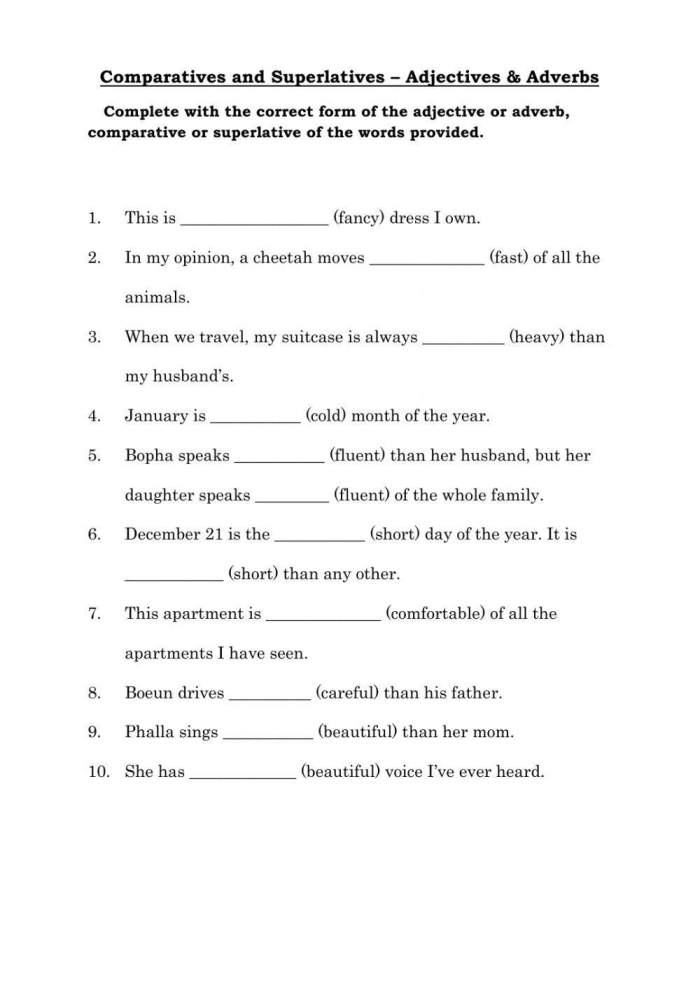
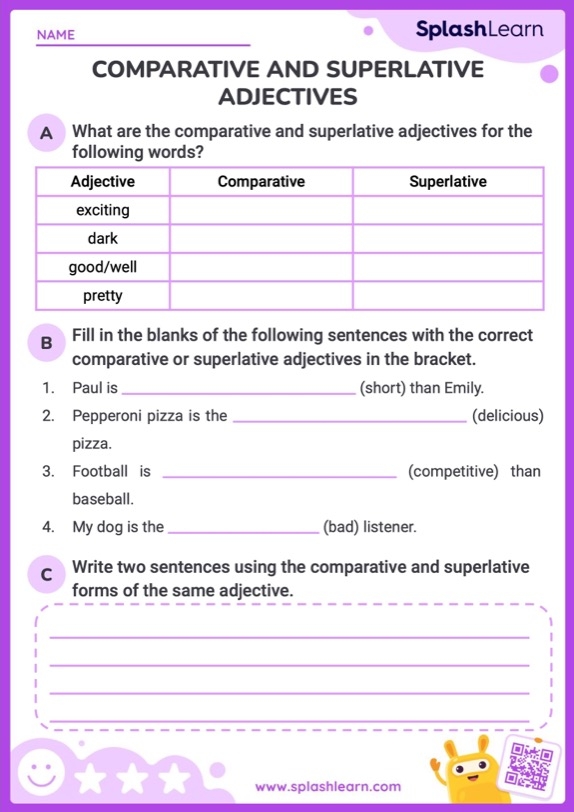
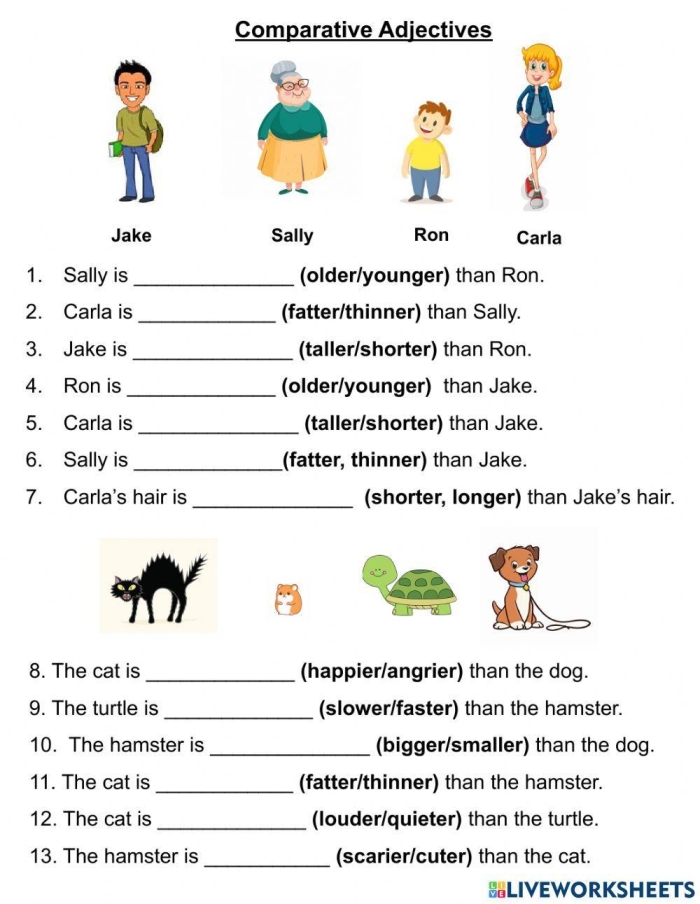
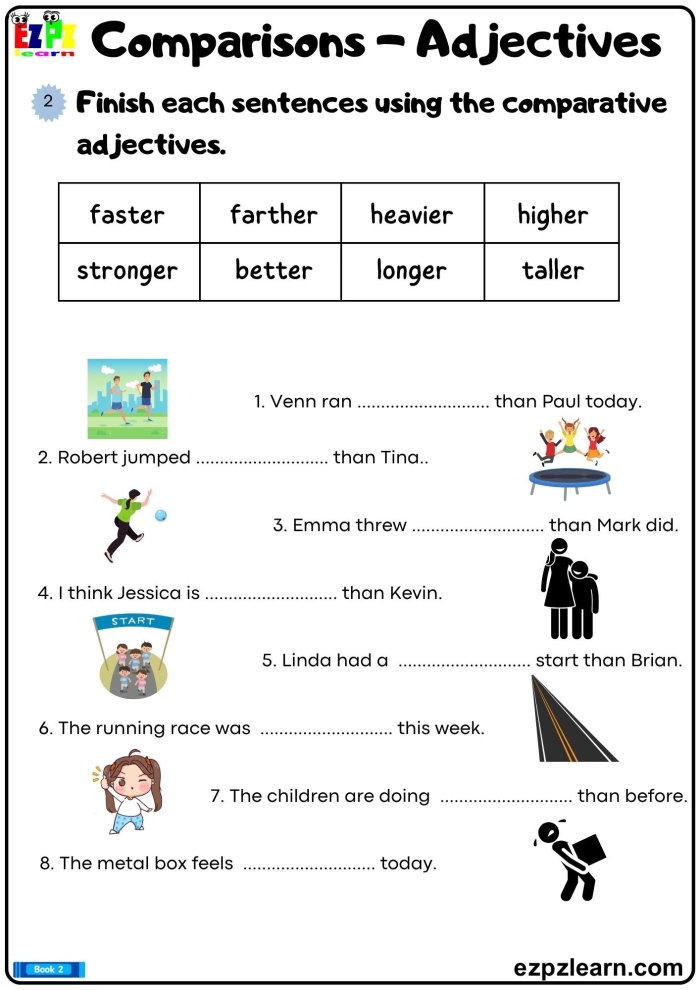
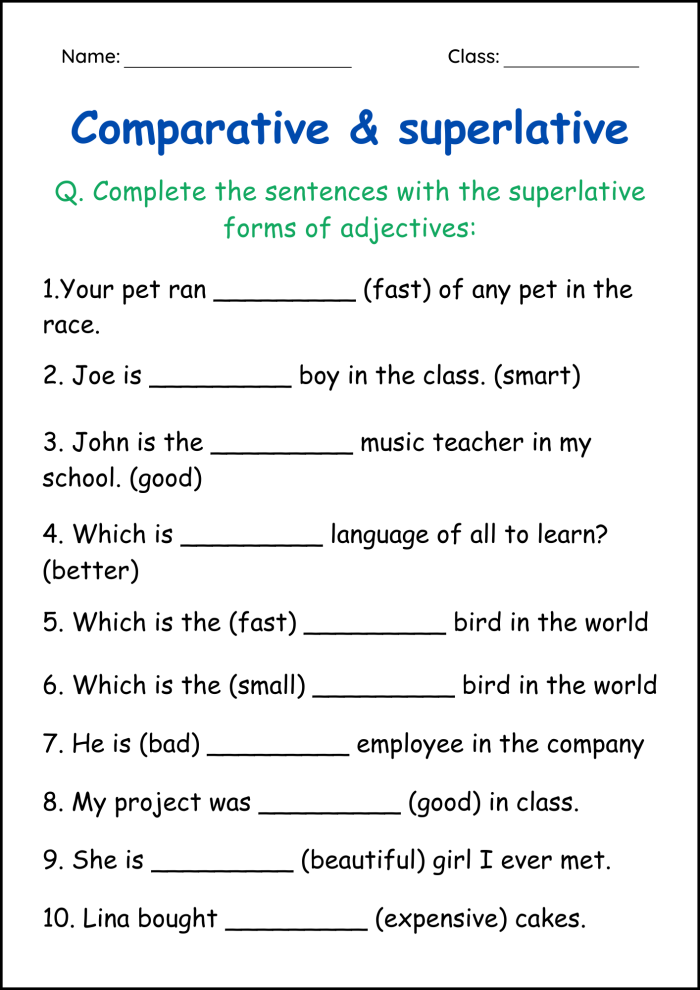
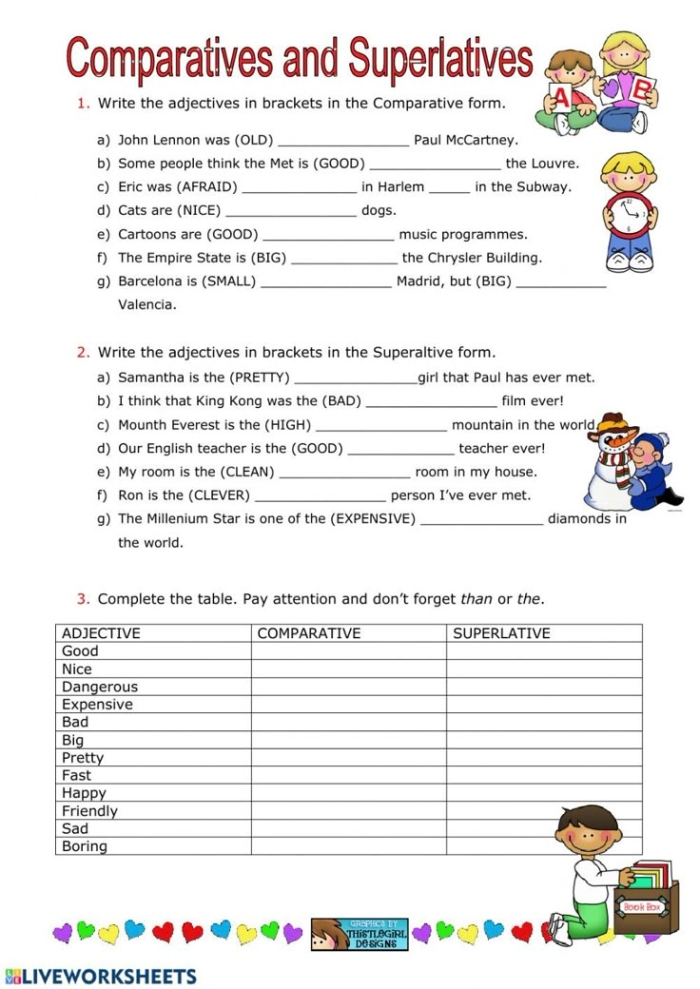
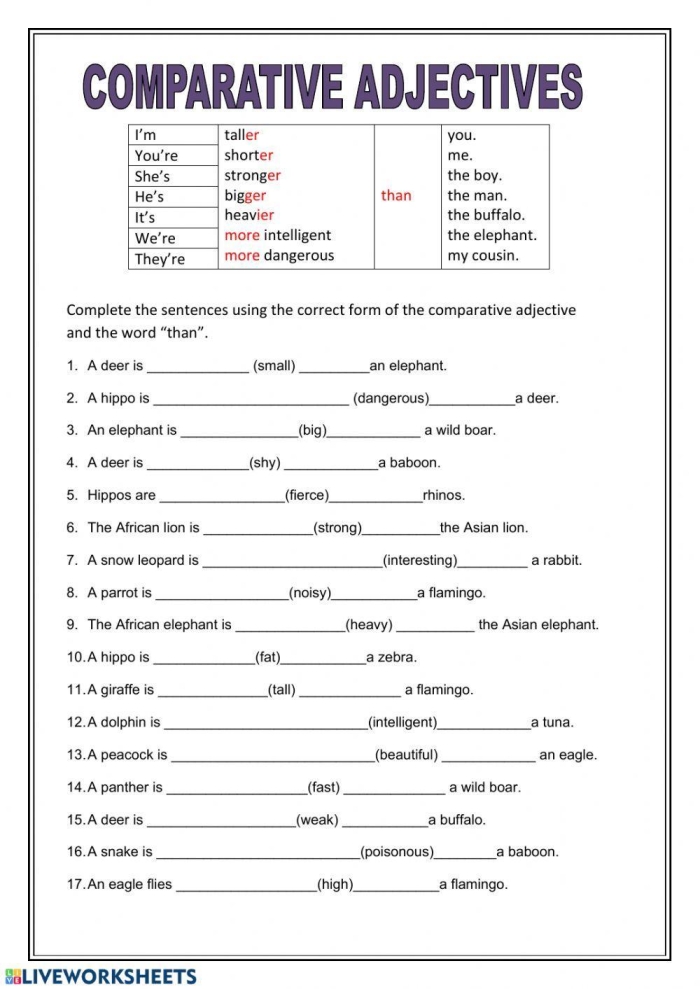
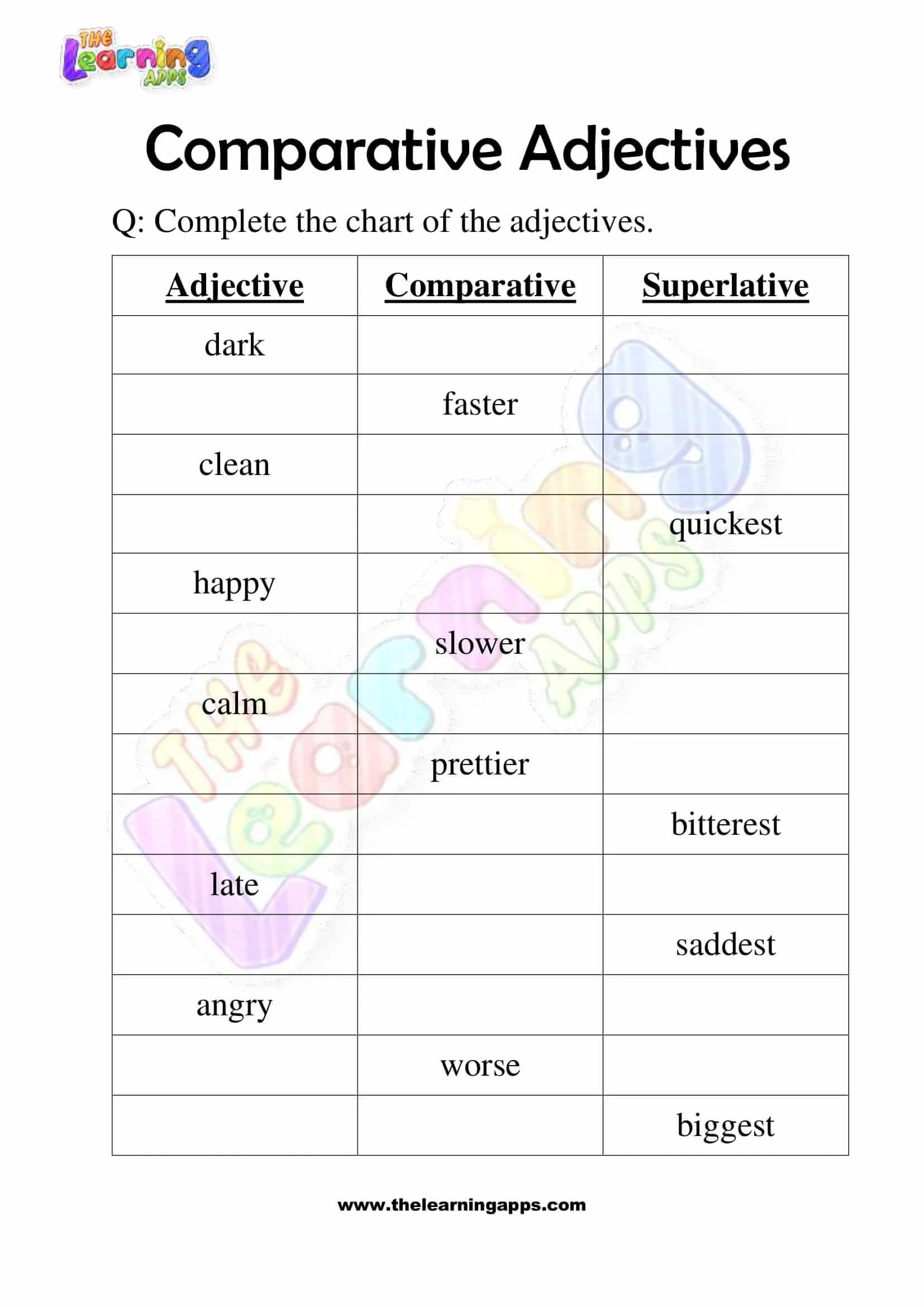
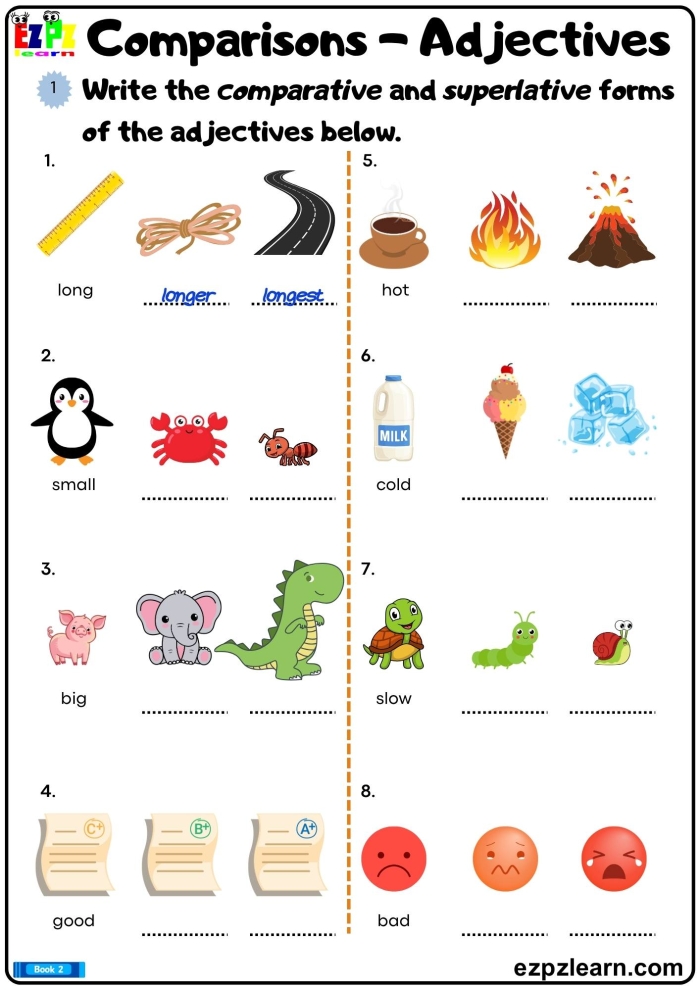
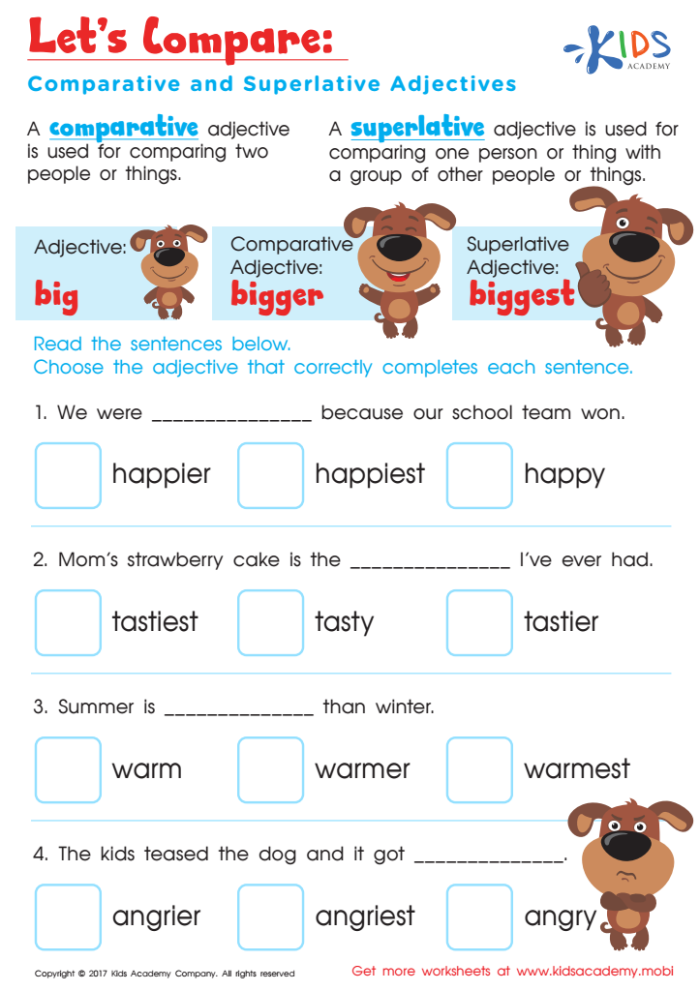
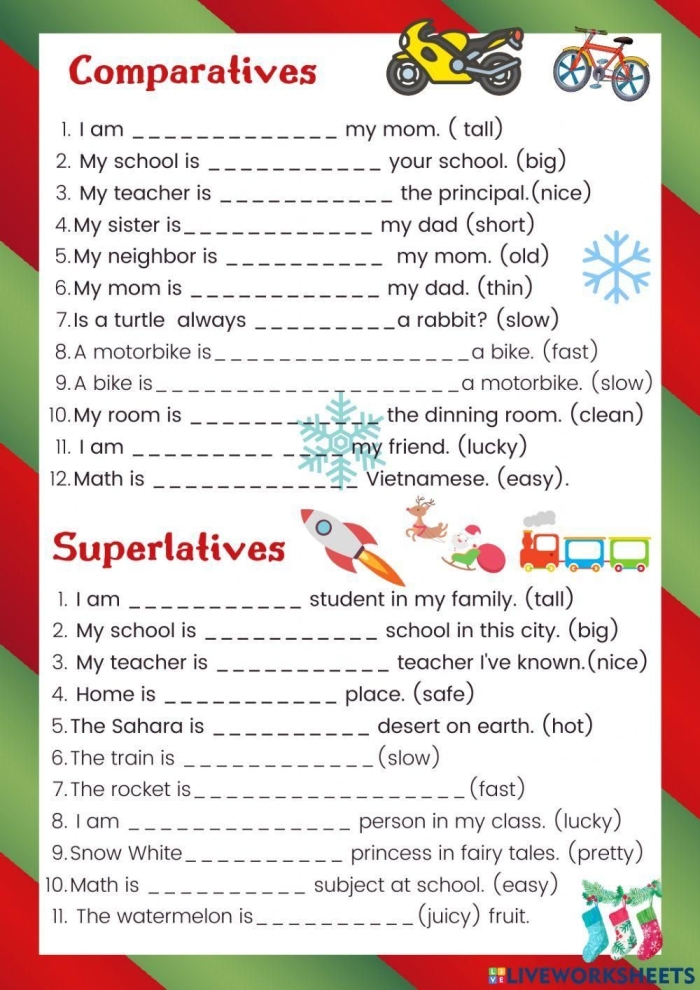
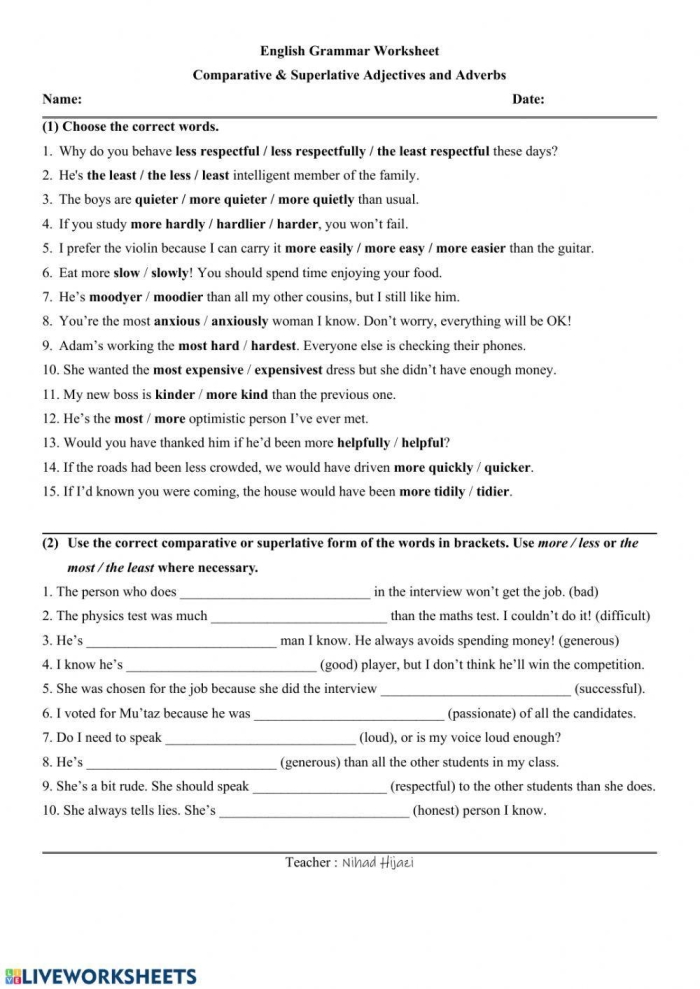
Comparing things is something children do naturally, but putting those comparisons into grammatically correct sentences requires deliberate practice. When third graders work through a worksheet with 20 sentences focused on comparative and superlative adjectives, they’re building a skill that extends far beyond grammar exercises into clear communication.
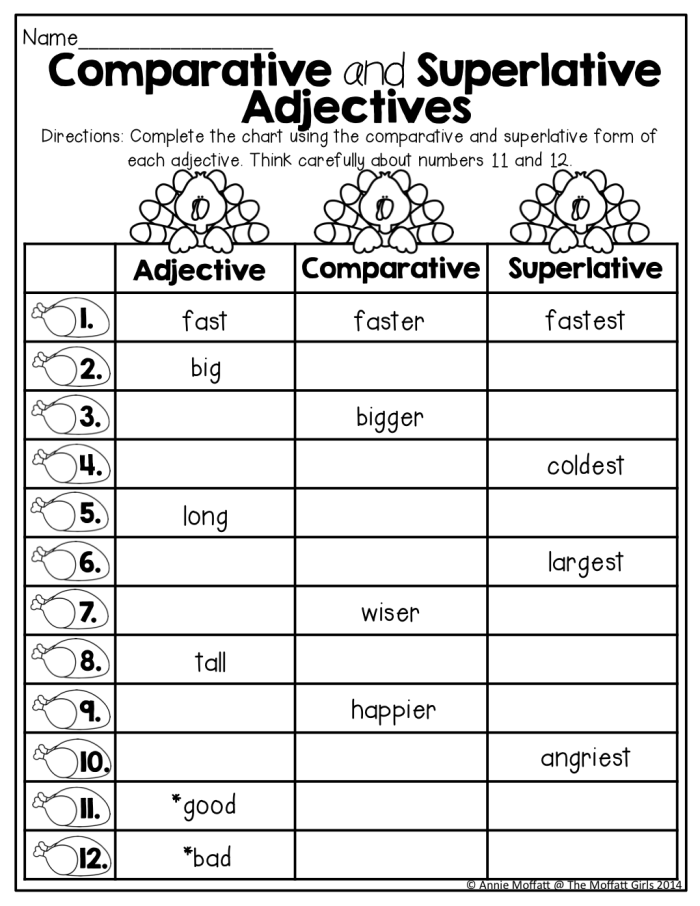
The challenge with adjectives that compare lies in their inconsistency. Some adjectives follow predictable patterns: add “-er” for comparisons between two things (tall becomes taller) and “-est” for comparisons among three or more (tallest). Others break these rules entirely. Words like “good,” “bad,” and “many” transform into “better,” “worse,” and “more” without any logical pattern to guide students. This unpredictability makes exposure to both regular and irregular forms essential during the third grade years when foundational grammar concepts solidify.
A worksheet containing 20 sentences works because it provides enough repetition without becoming tedious. Students encounter comparative adjectives in context, which helps them understand how these words function in real writing rather than in isolated word lists. When a child reads “The blue marker is brighter than the red one,” they’re seeing the comparative form applied meaningfully. When they encounter “This is the brightest marker in the box,” they recognize the superlative form and understand its purpose.
The structure of sentence-based practice also prevents common mistakes. Rather than memorizing rules, children develop an intuitive sense of which form belongs in which situation. They learn when to use “more beautiful” versus “beautifuler” not through explanation alone, but through repeated exposure to correct usage. This approach connects naturally to other third grade grammar work, such as when students work on writing sentence fragments and learn how complete sentences should function.
Completing these 20 sentences gives students the practice volume they need to move from conscious effort to automatic recognition, making comparative and superlative adjectives a reliable tool in their growing writing toolkit.
Use These Worksheets Today