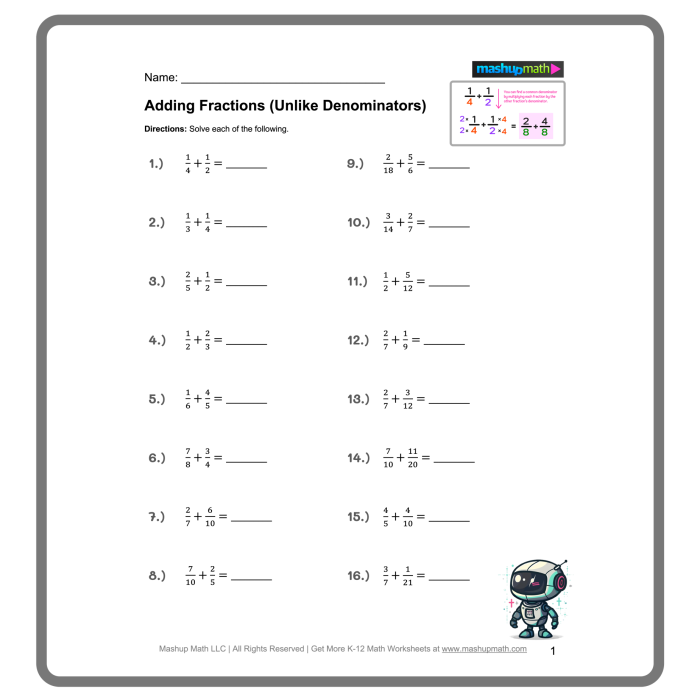
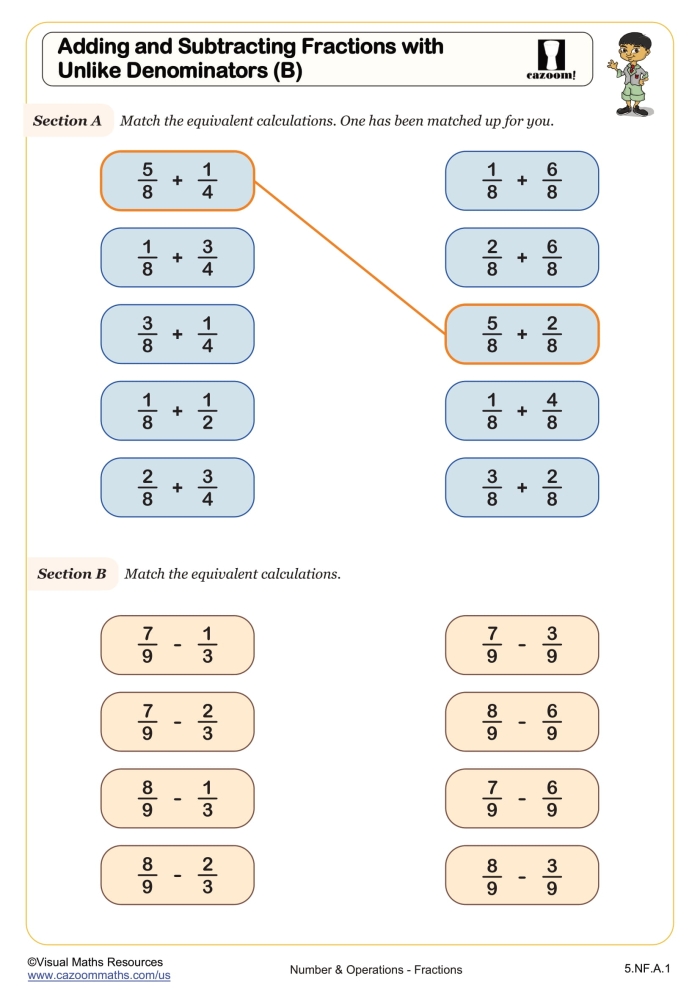
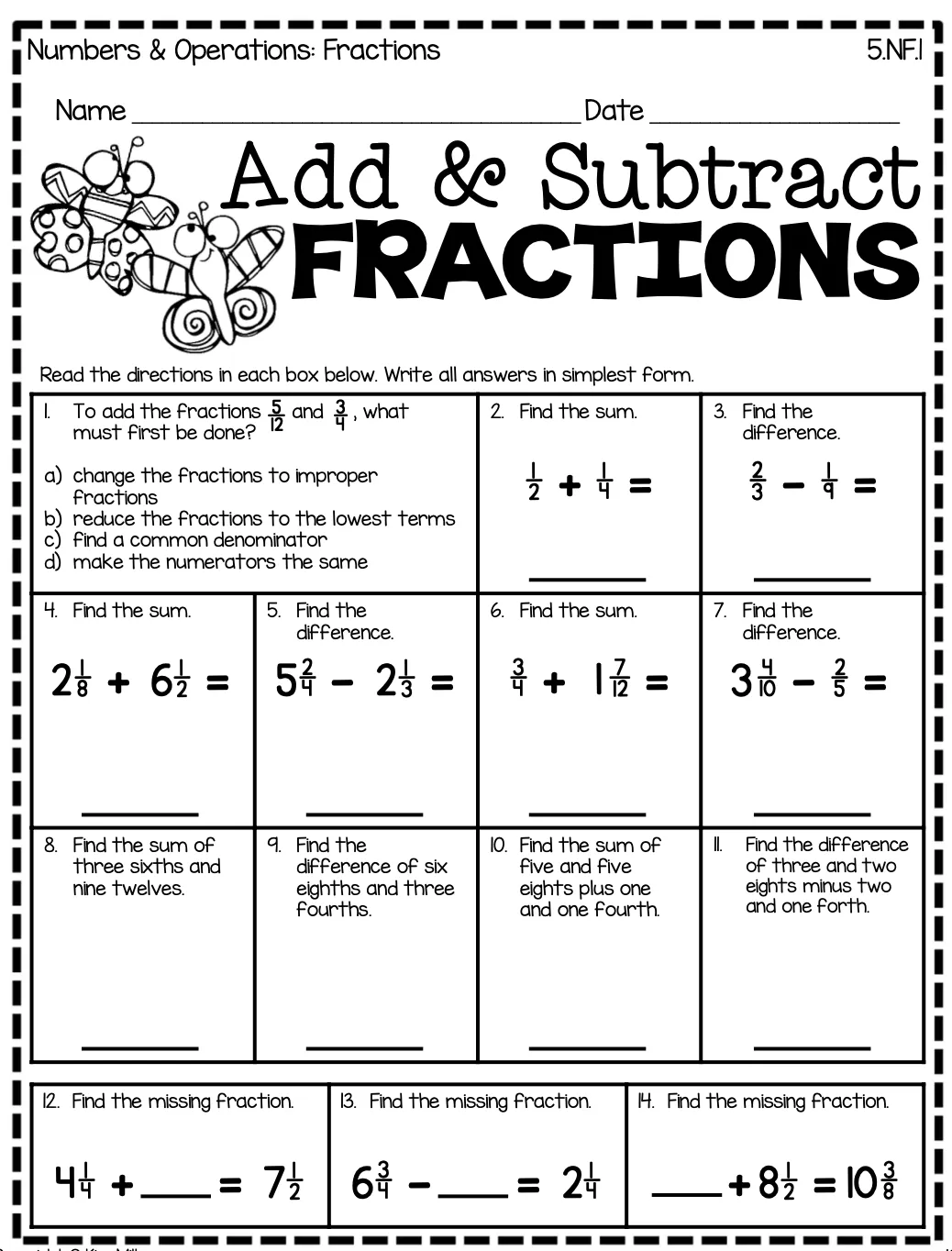
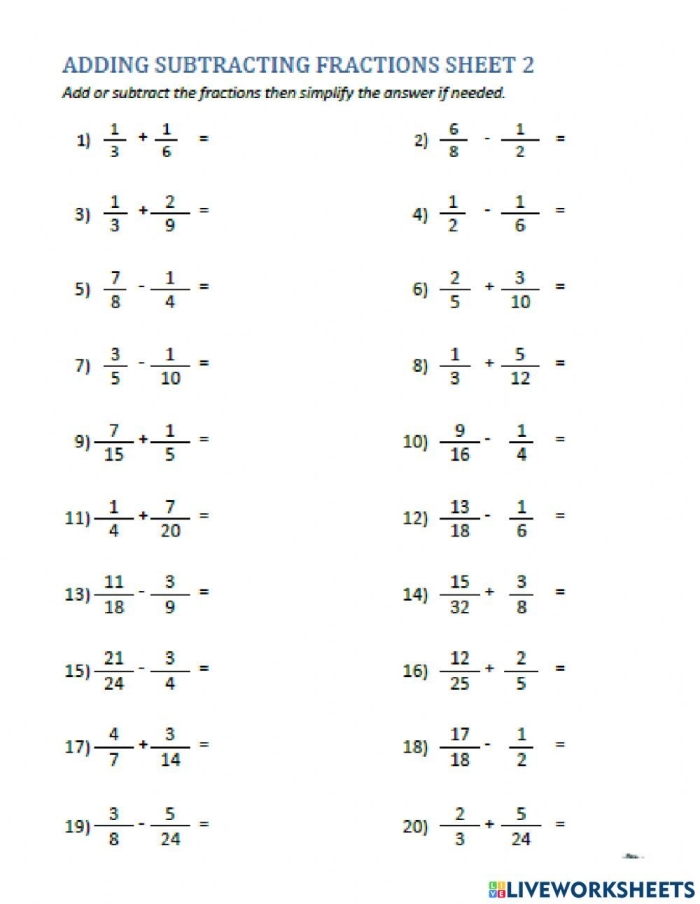
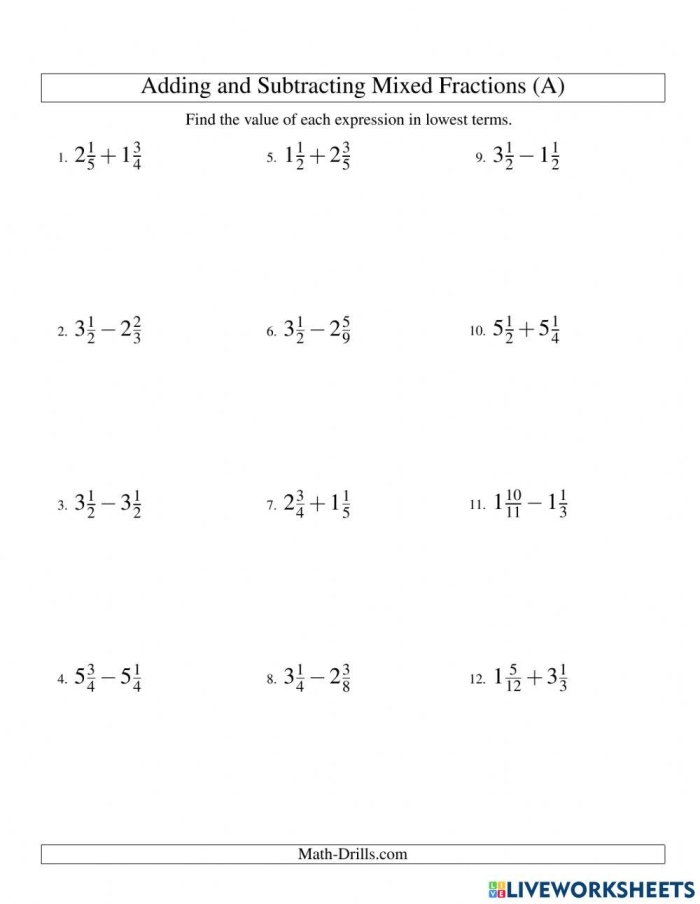
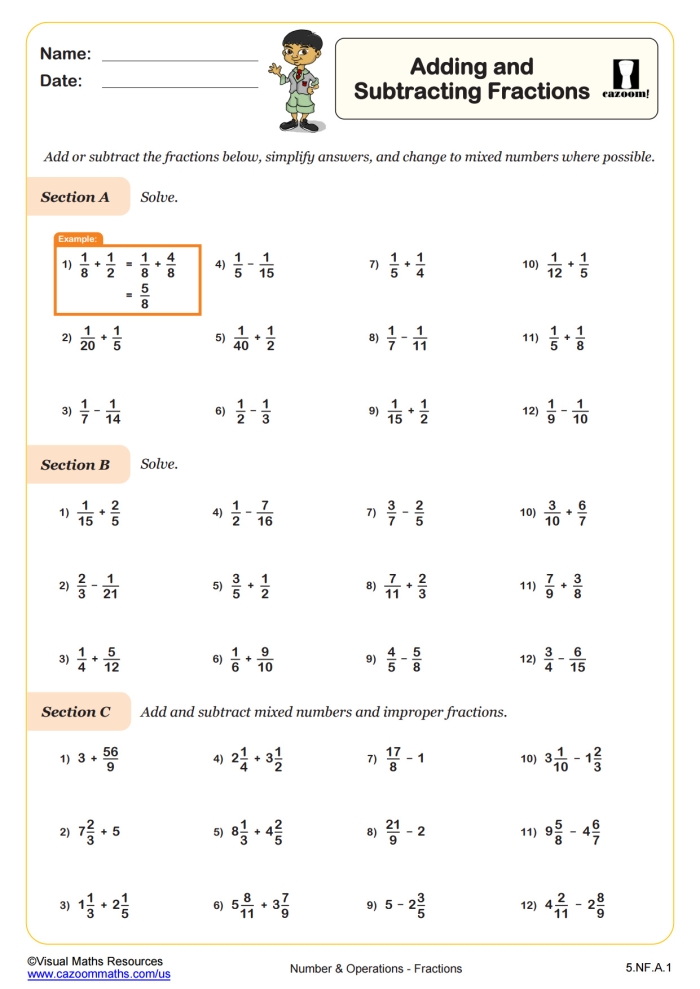
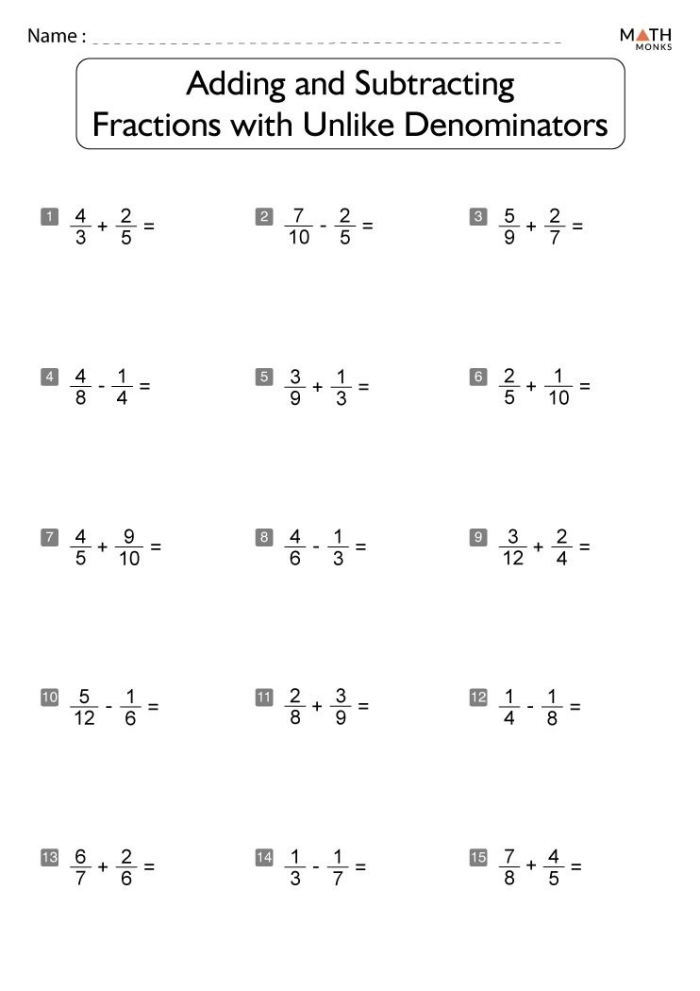
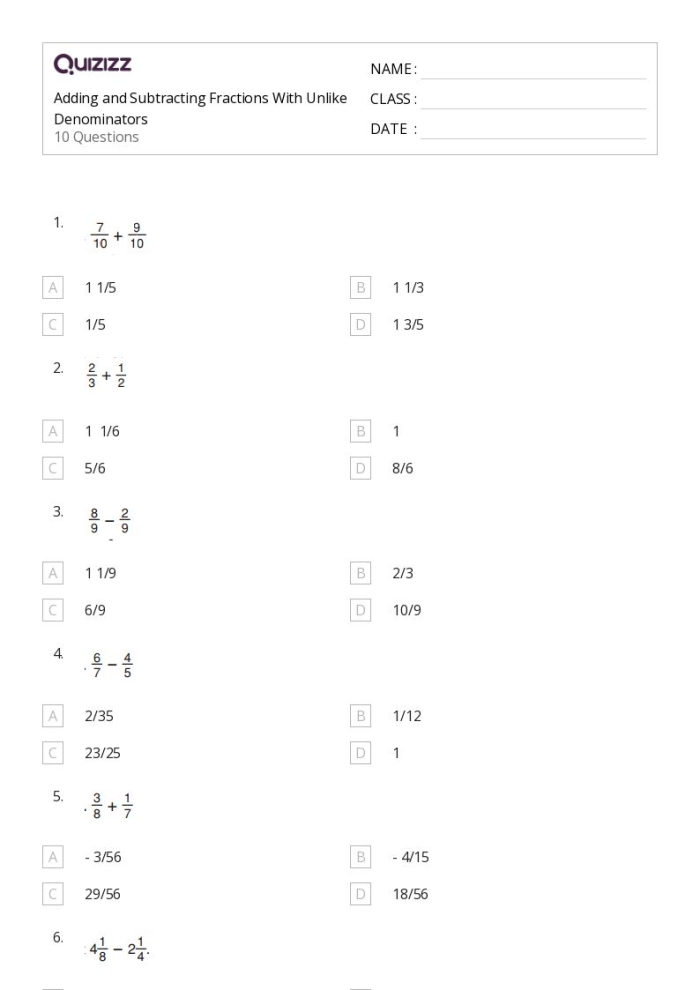
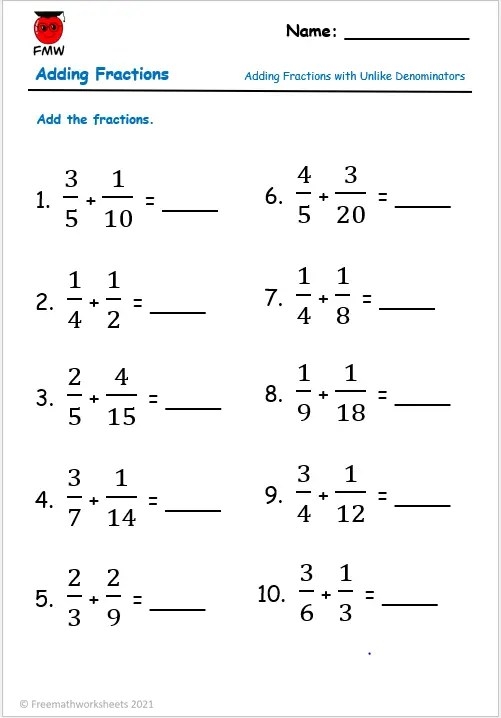
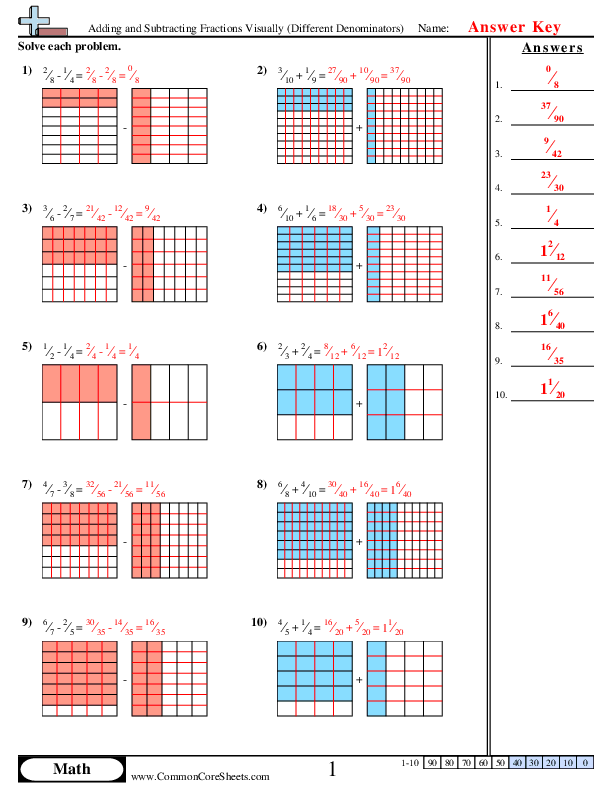
Fractions with unlike denominators trip up most fifth grade students, and it’s not hard to see why. The concept requires holding multiple steps in mind at once: finding a common denominator, converting each fraction, then performing the actual addition or subtraction. Without targeted practice, kids often mix up the process or skip critical steps.
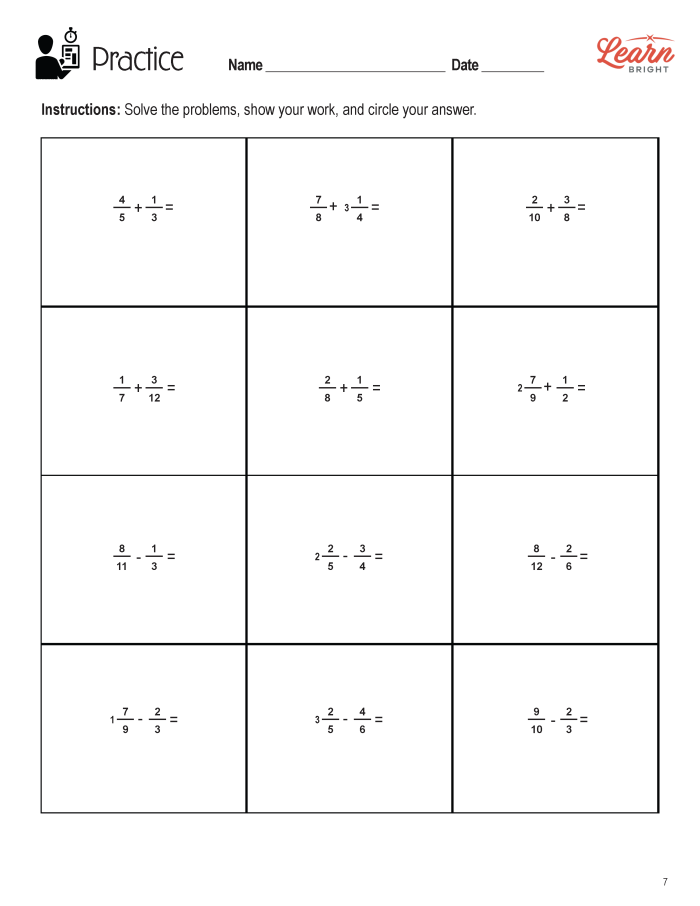
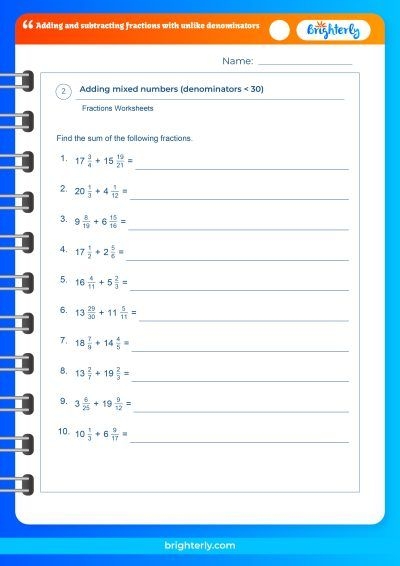
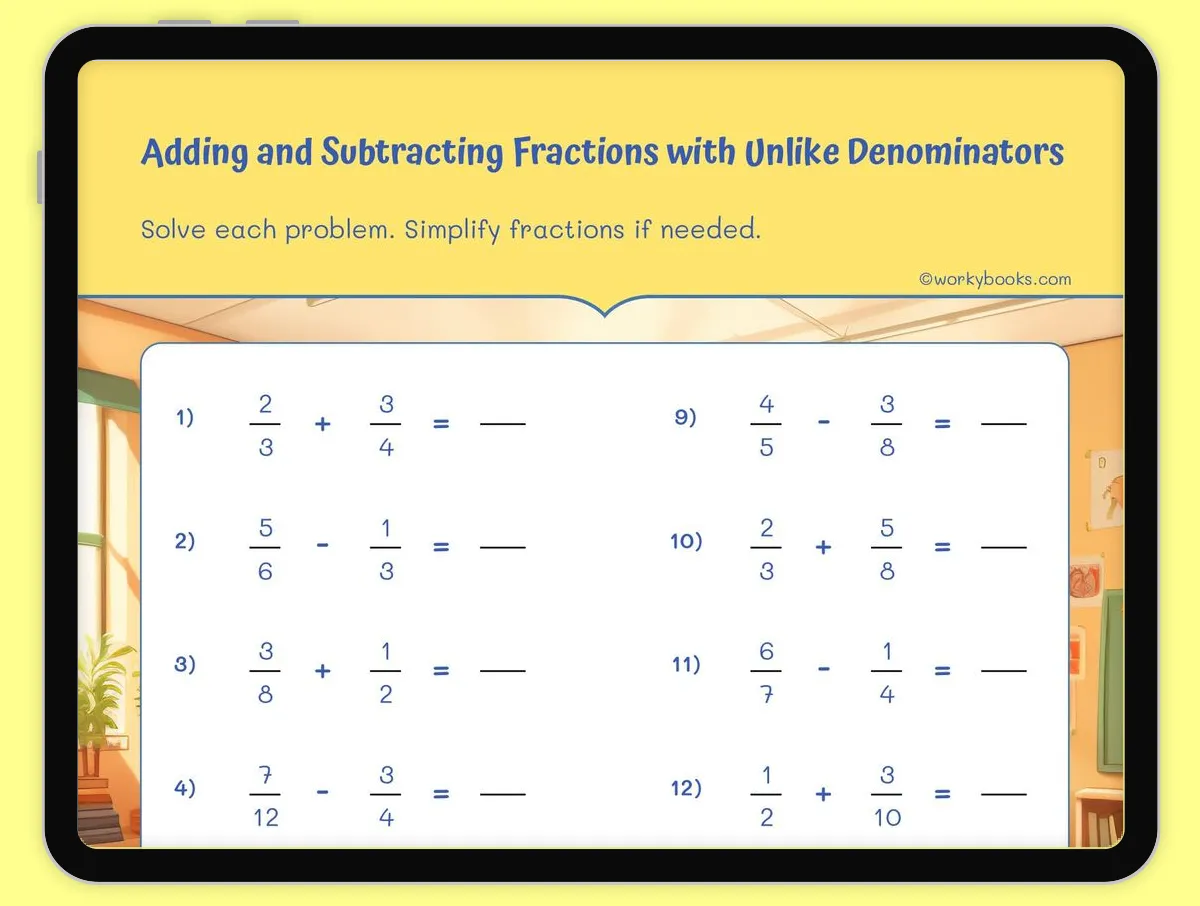
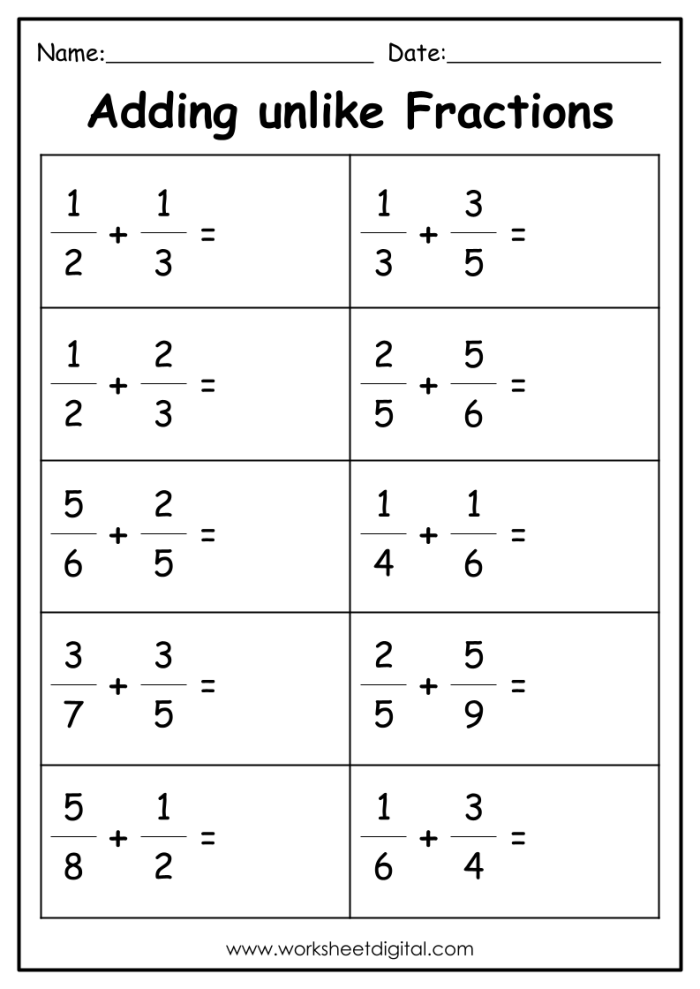
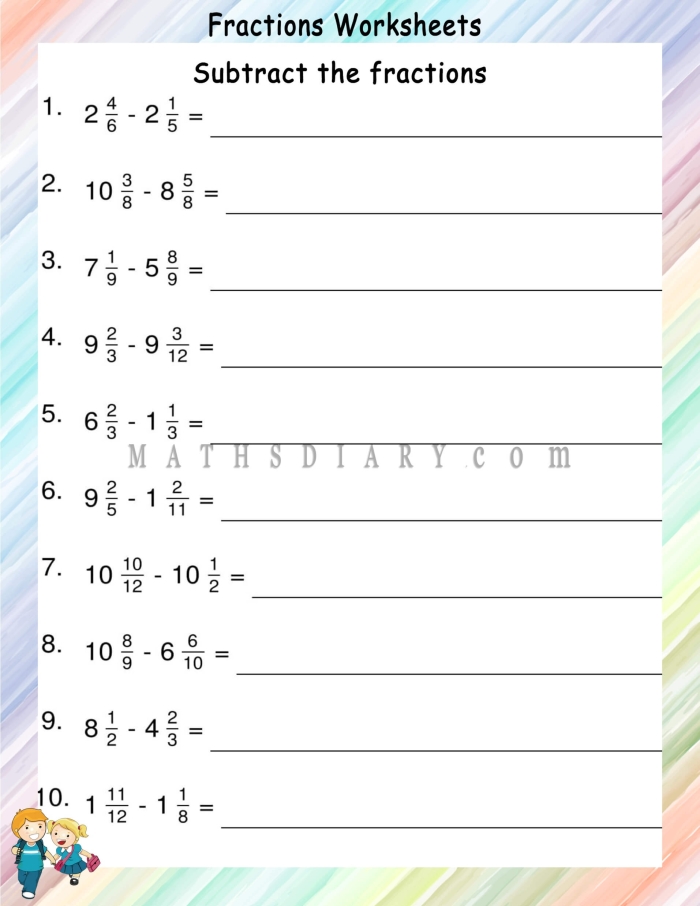
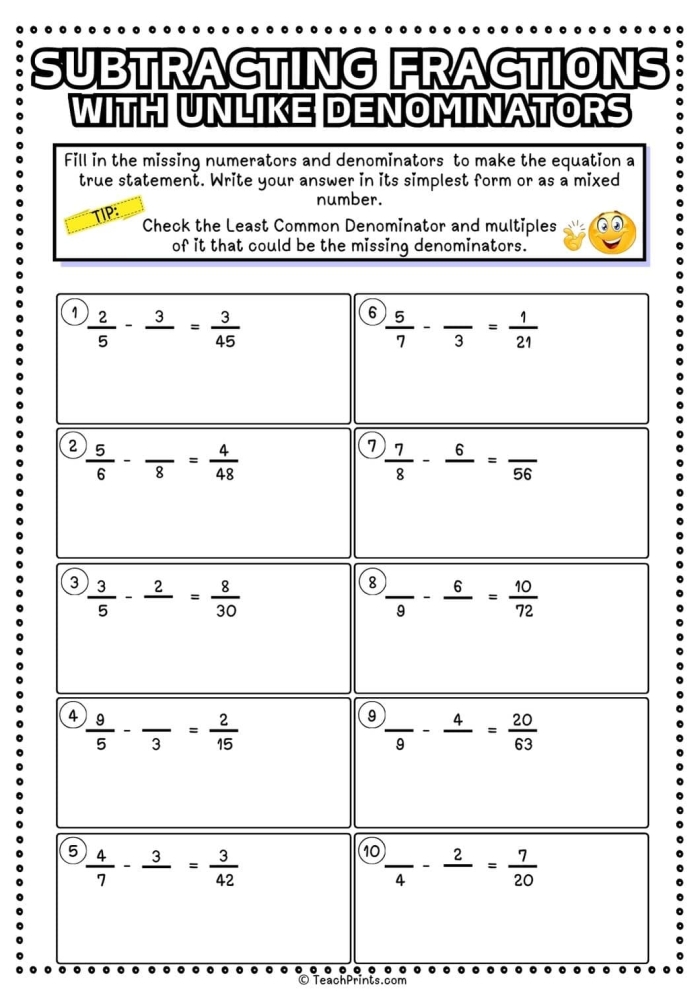
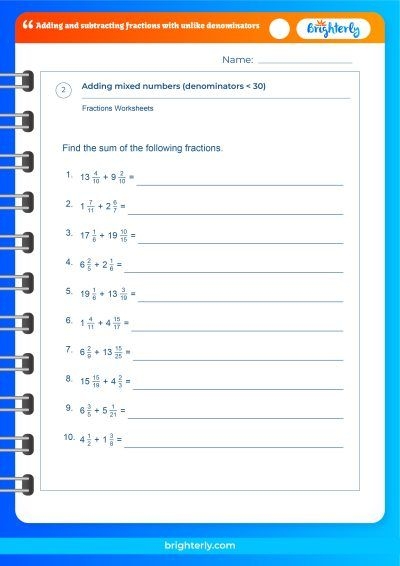
A well-designed worksheet addresses this exact struggle. When children work through problems repeatedly, the pattern becomes clearer. They start recognizing which denominators share common multiples, and the mechanics of conversion shift from confusing to automatic. The key is having enough examples that build in difficulty, moving from simpler pairs like halves and fourths before tackling trickier combinations.
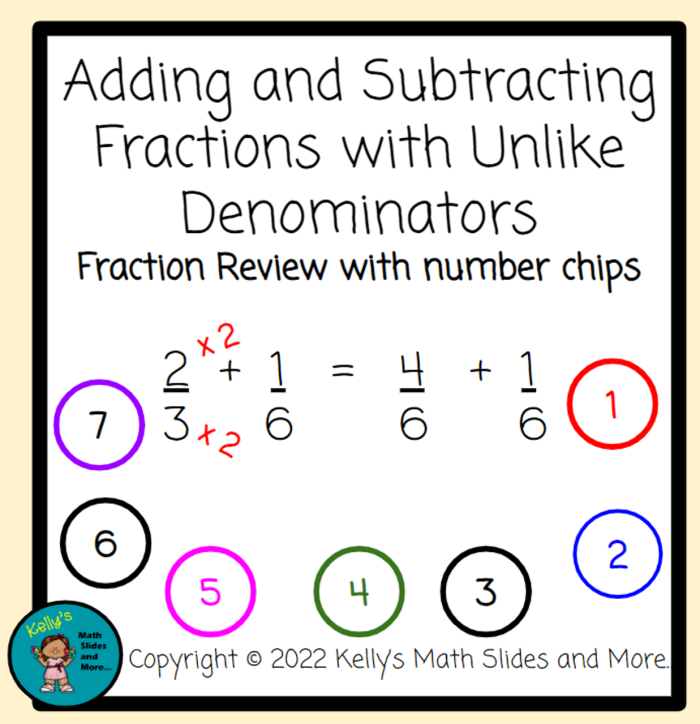
Fifth grade is the critical window for mastering this skill. Students need to understand that you cannot simply add 1/3 and 1/4 by combining numerators and denominators. Instead, they must find that common denominator of 12, convert to 4/12 and 3/12, then add to get 7/12. Worksheets that focus on adding and subtracting fractions with unlike denominators create these patterns through repetition.
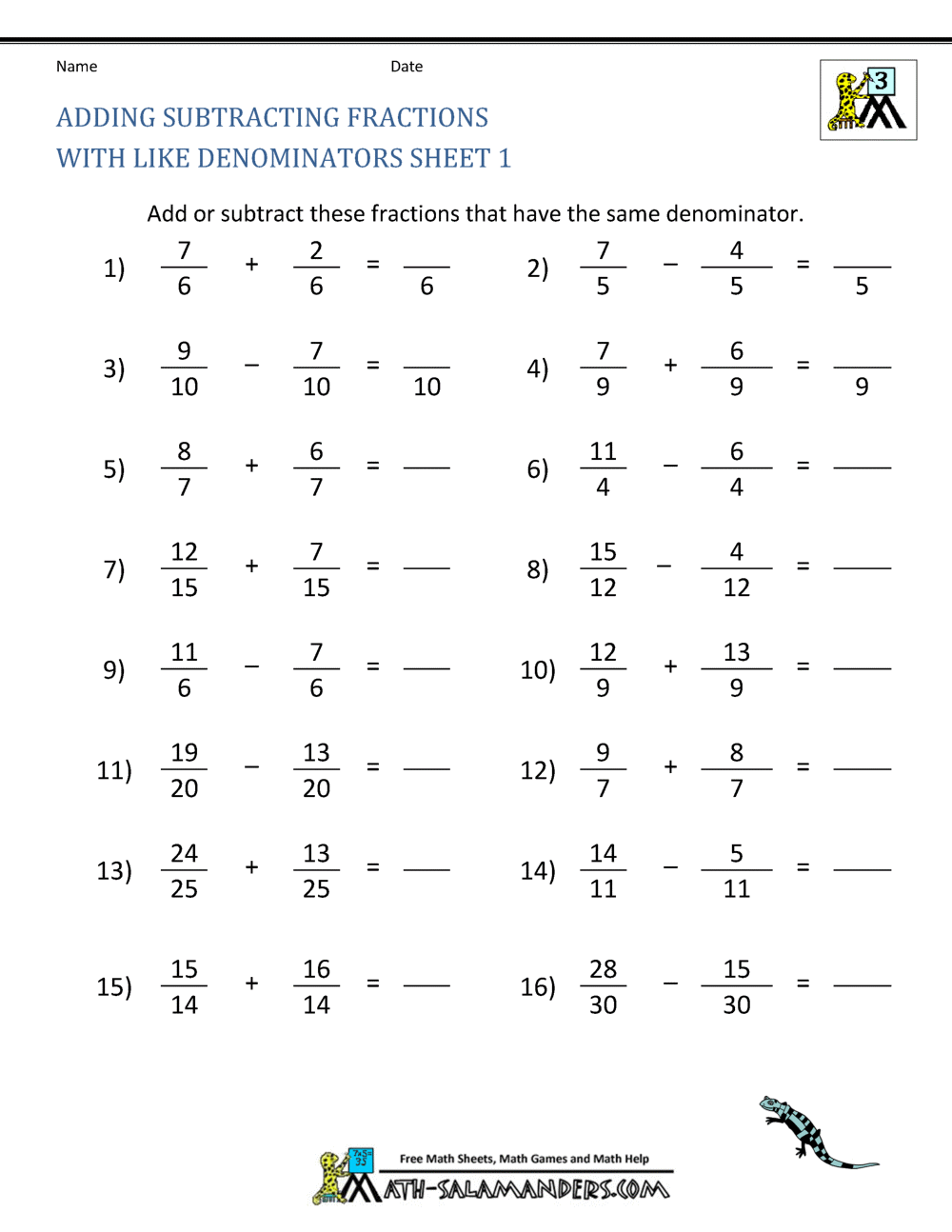
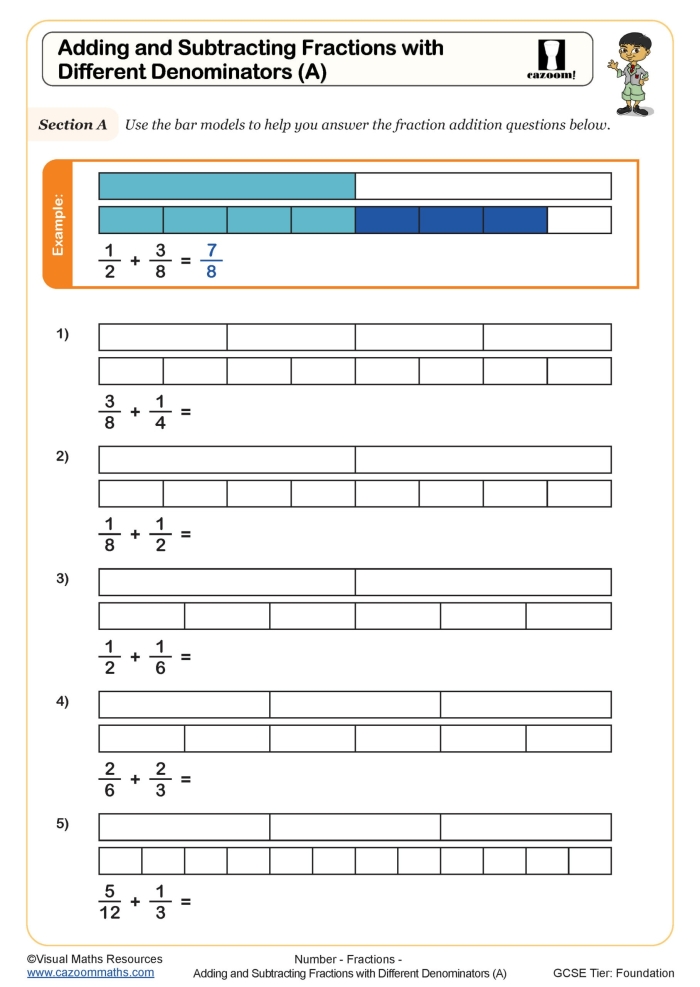
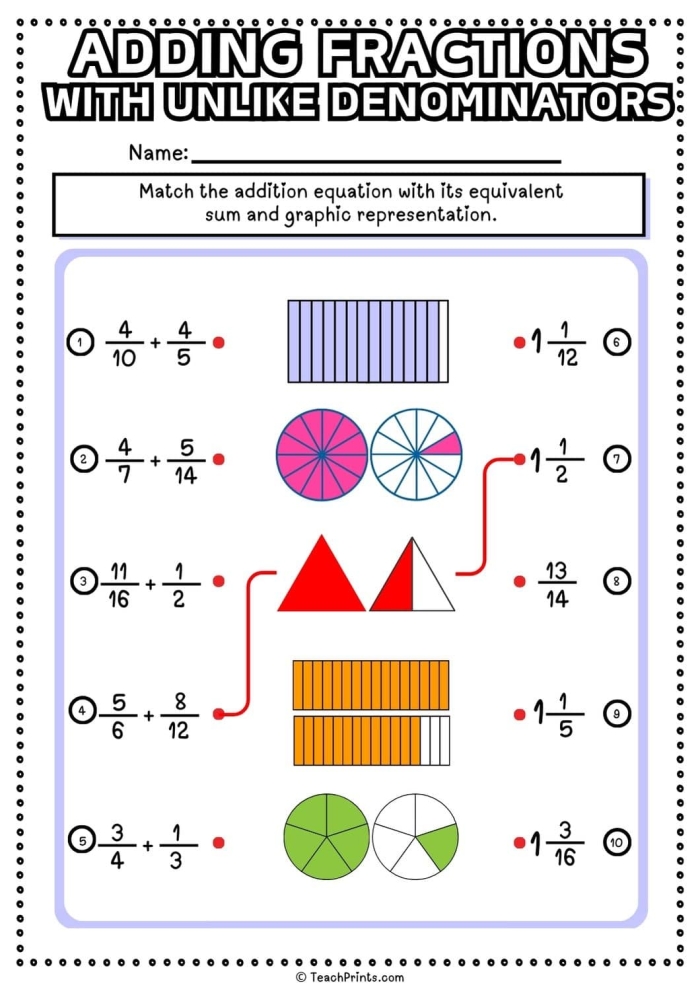
The structure matters too. Effective worksheets separate addition problems from subtraction problems initially, then mix them together once confidence builds. Some include visual representations like pie charts or number lines alongside the symbolic notation, helping visual learners connect the abstract numbers to concrete quantities.
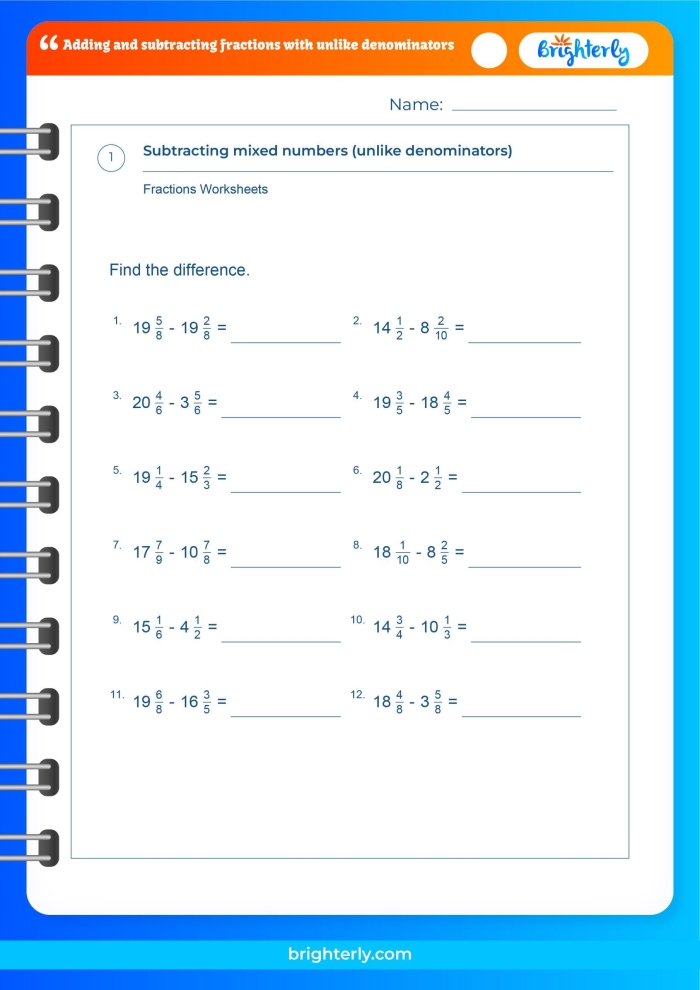
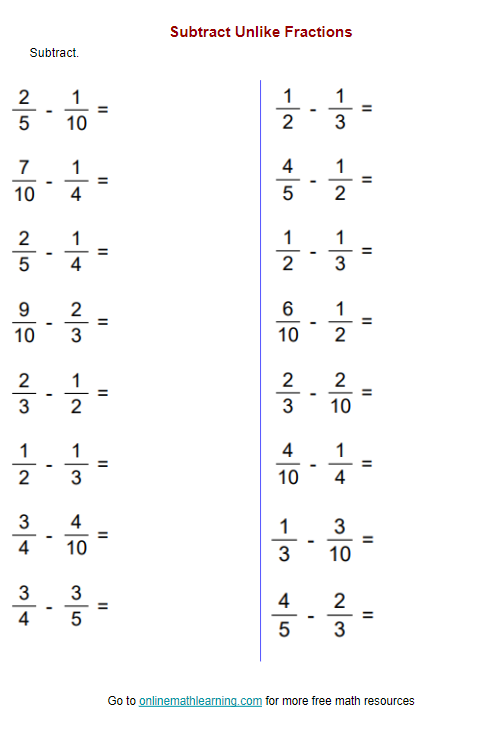
Beyond fractions, fifth graders benefit from varied practice across other areas. Working on subtracting fractions with unlike denominators specifically, or even tackling converting customary units for capacity, strengthens overall mathematical thinking. When children practice consistently, they build the automaticity needed to handle more complex problems later.
Start Practicing with These Worksheets