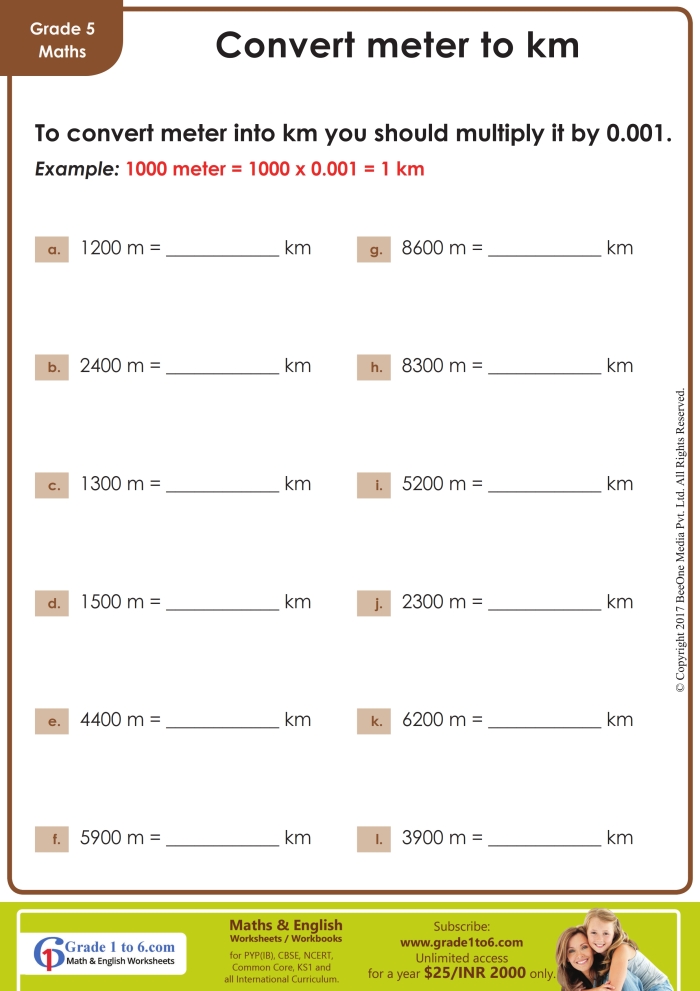
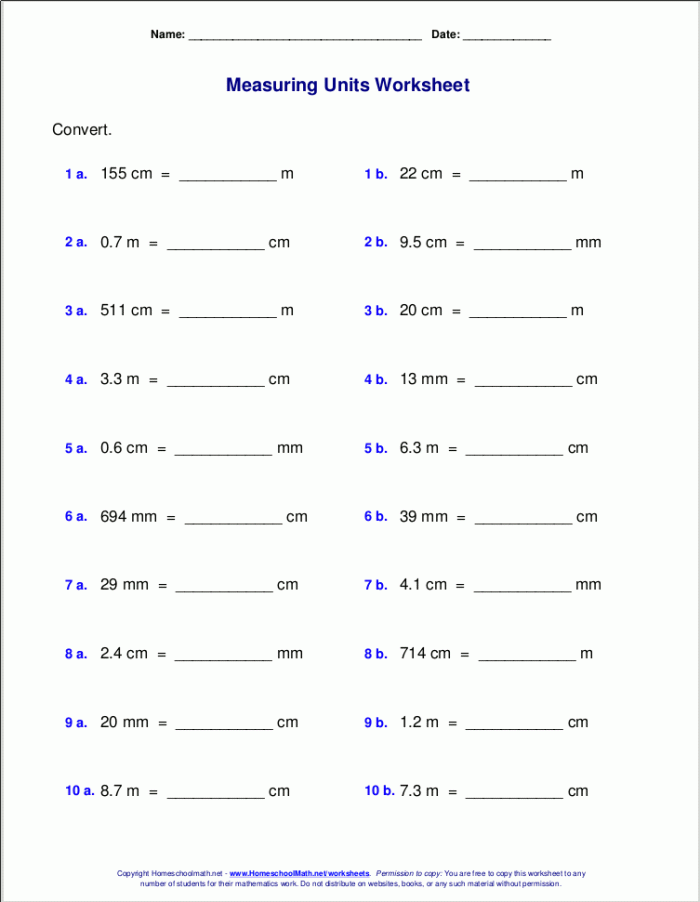
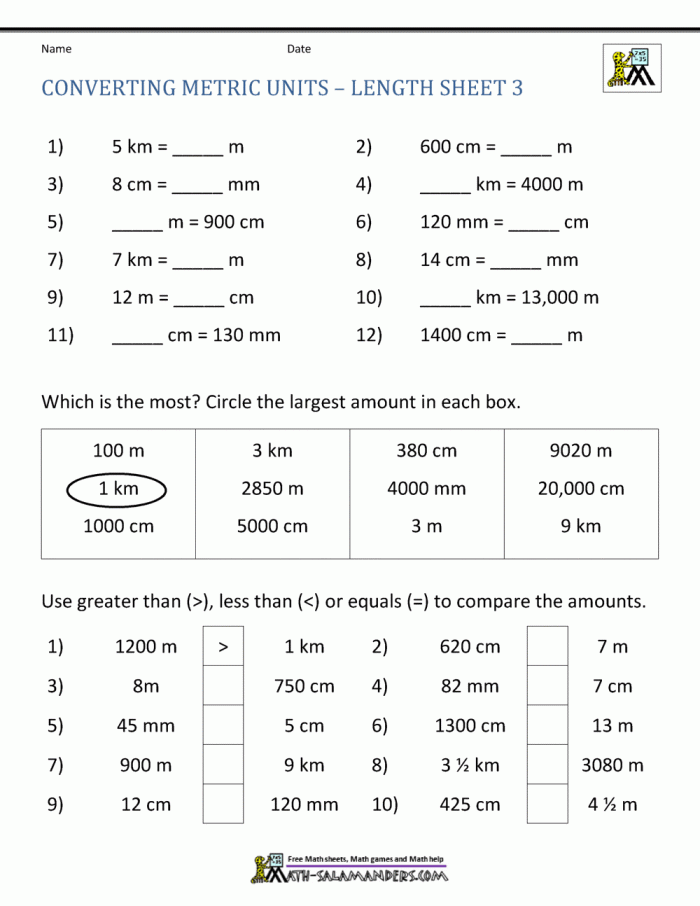
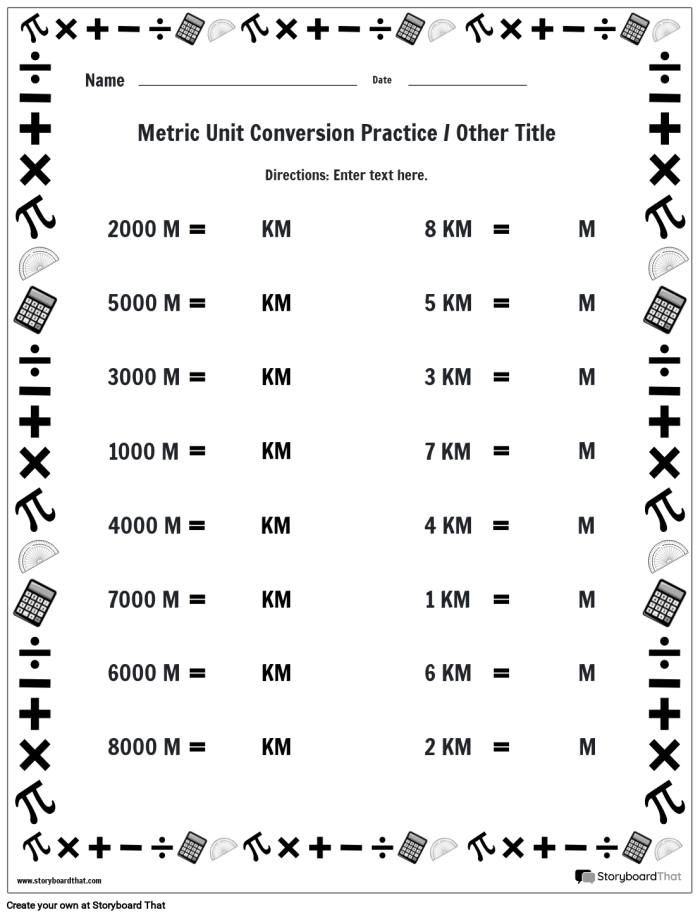
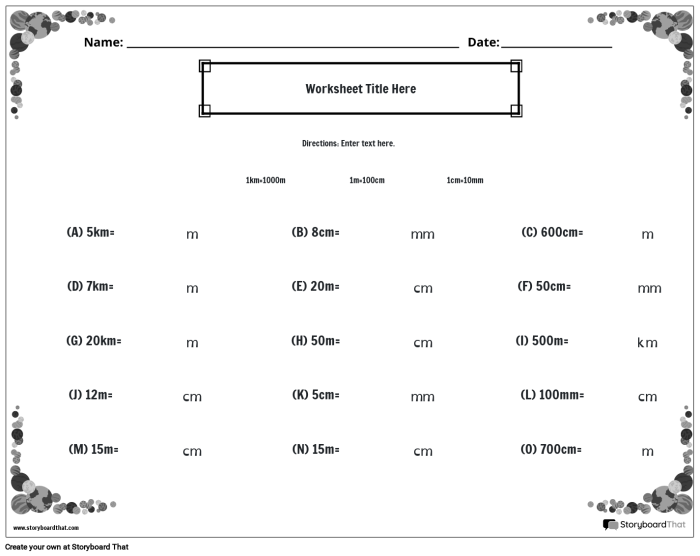
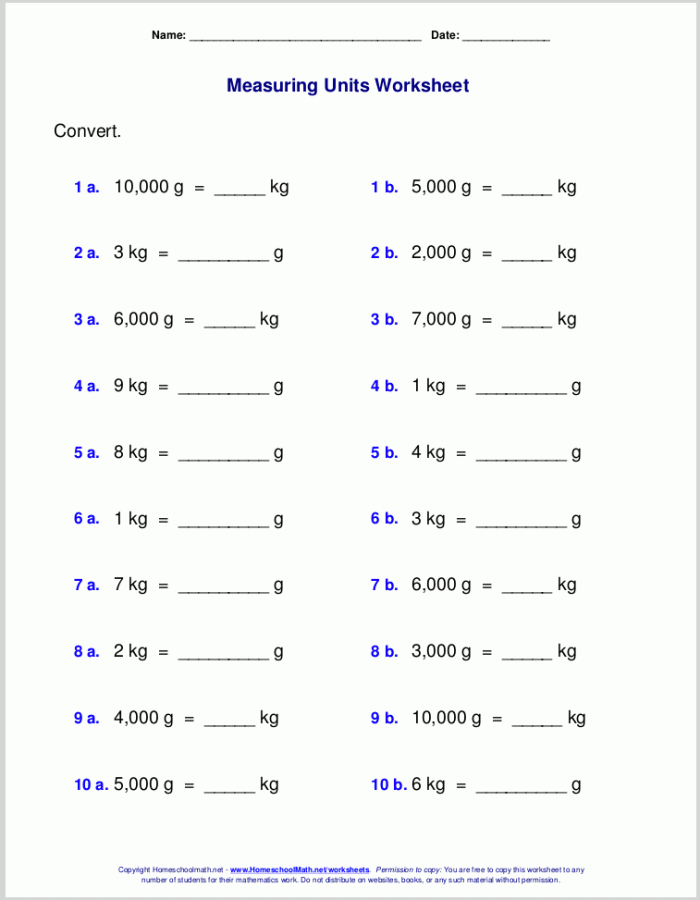
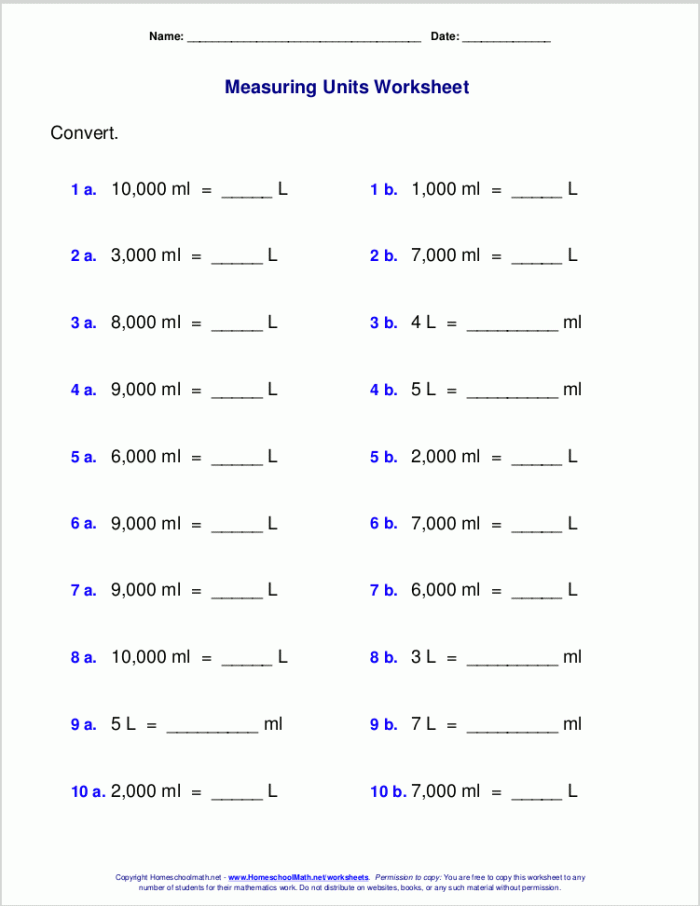
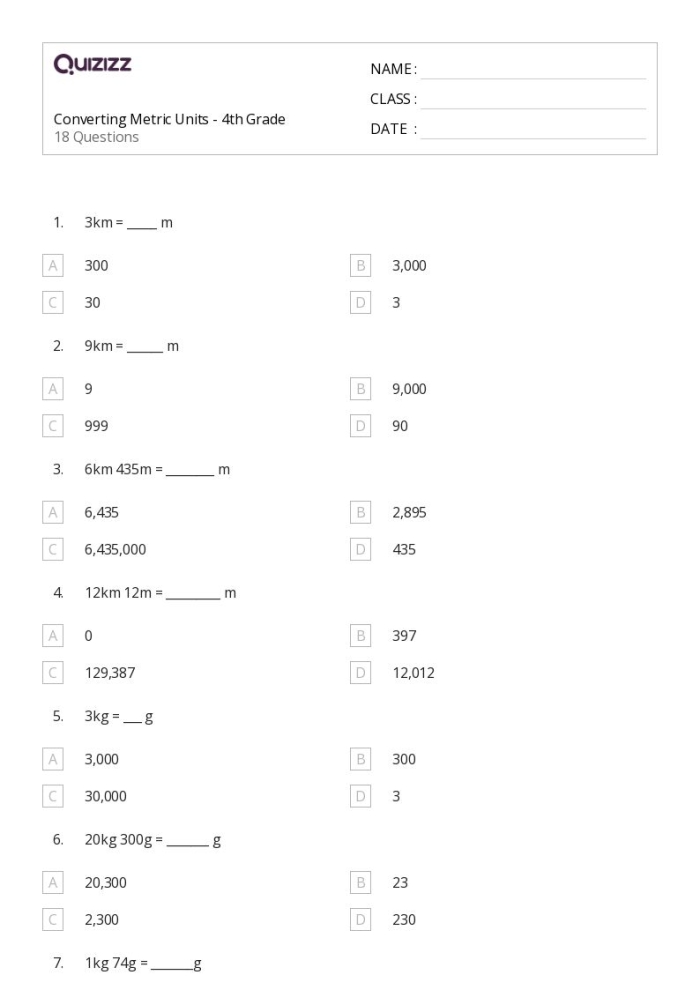
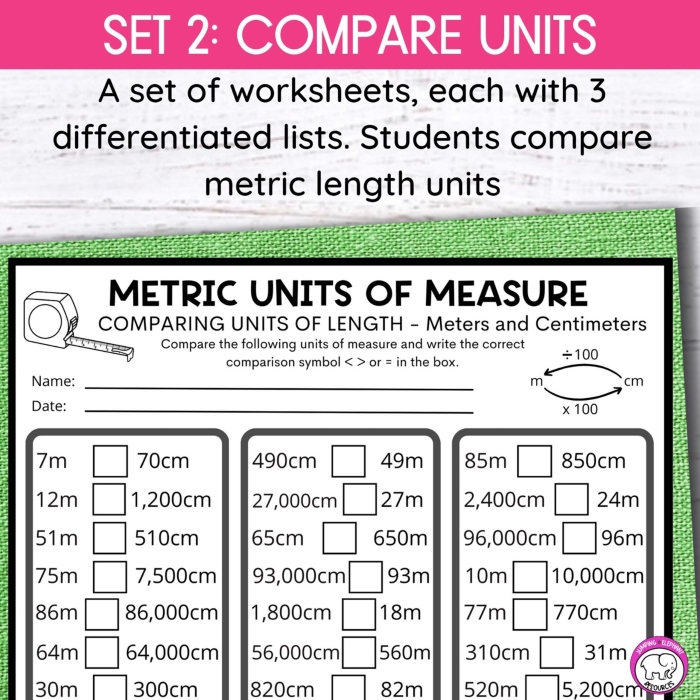
Converting between different metric units can be a daunting task for many students, but it doesn’t have to be. In this worksheet, challenge your fifth graders to fluidly convert between various metric units, making the process engaging and interactive. Understanding how to switch between units like meters, centimeters, and kilometers is essential for their mathematical development and everyday problem-solving skills.
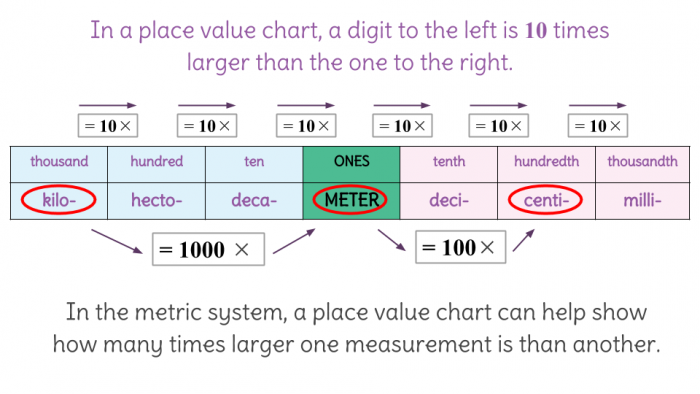
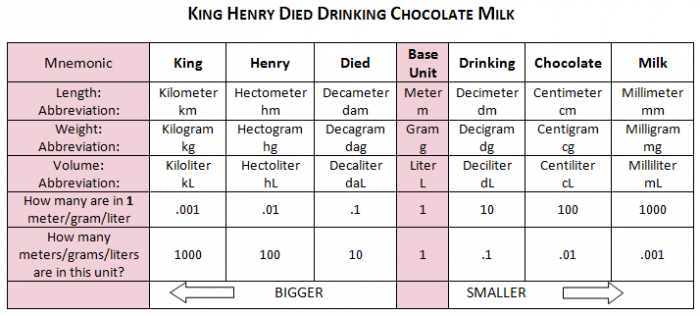
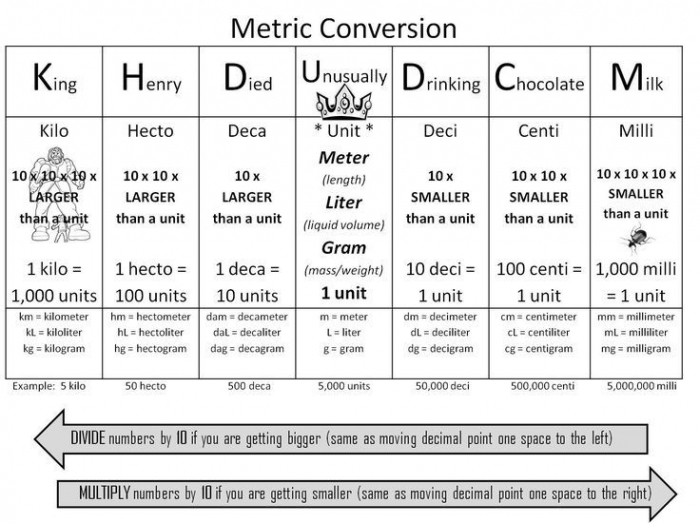
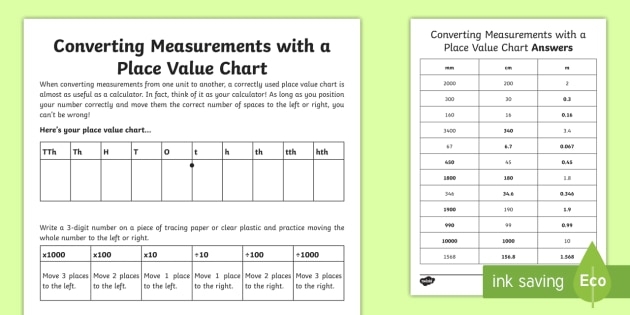
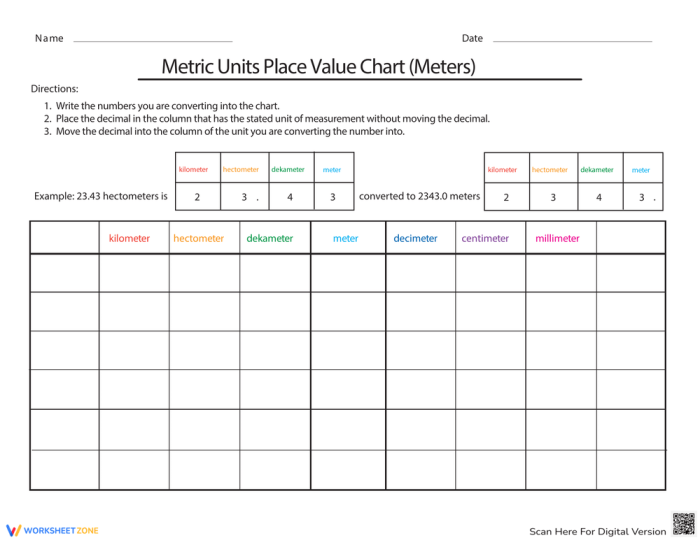
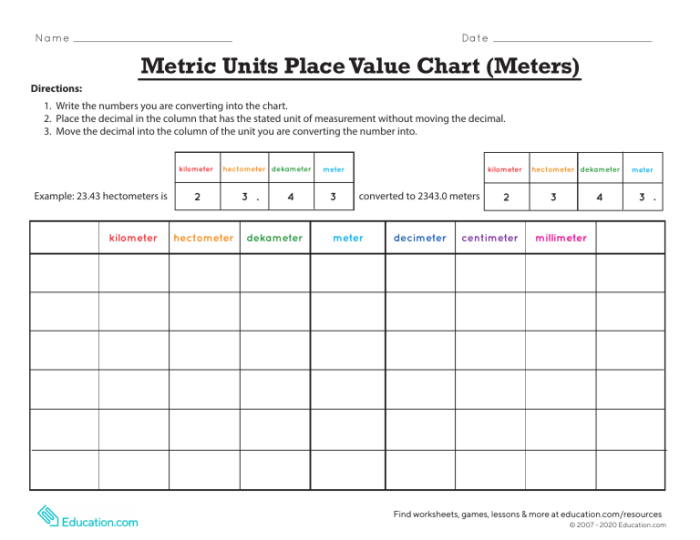
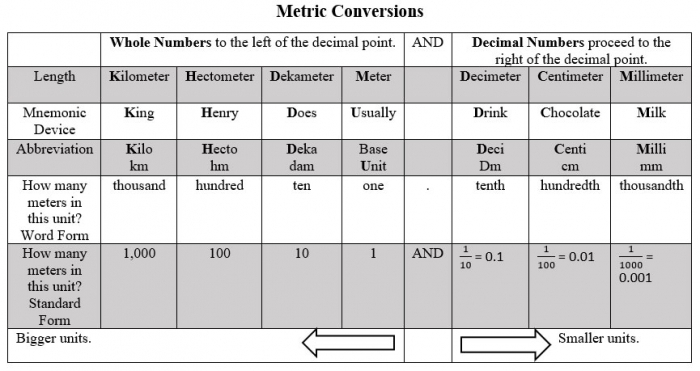
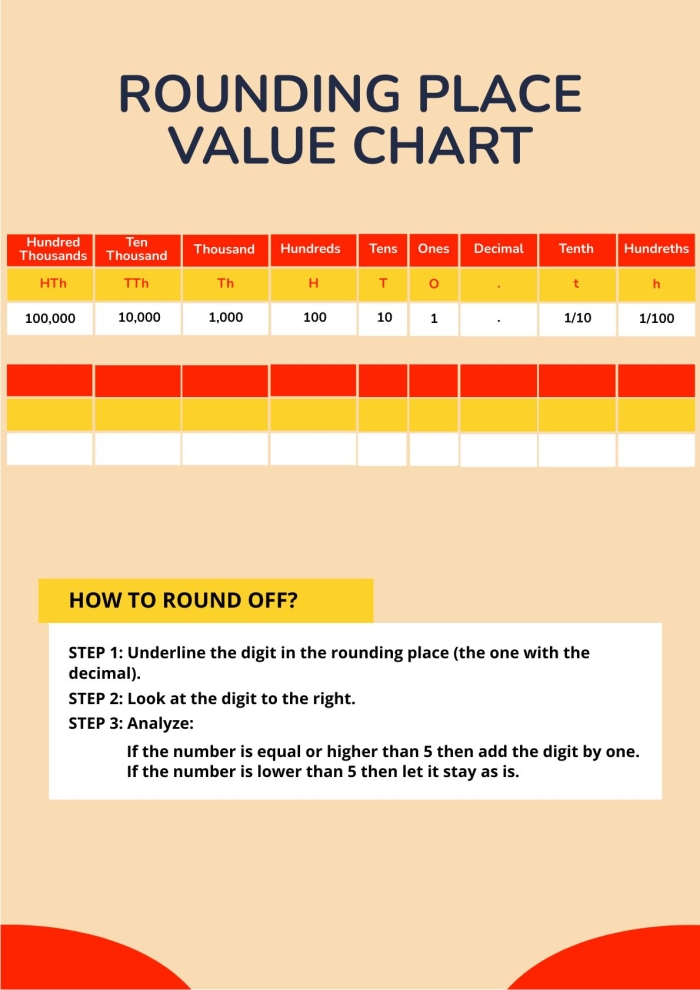
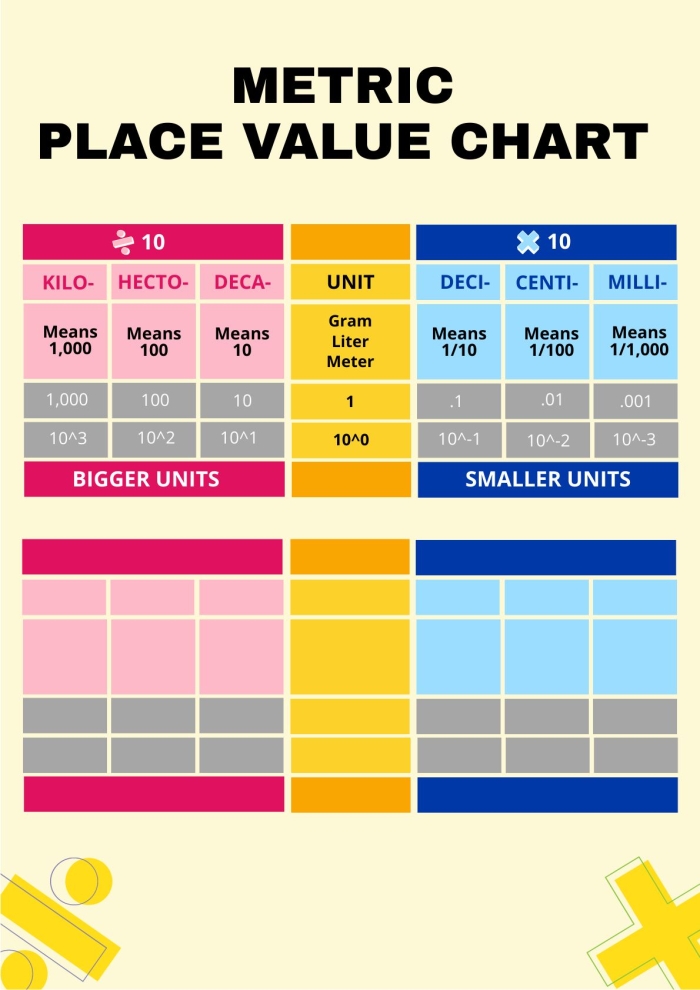
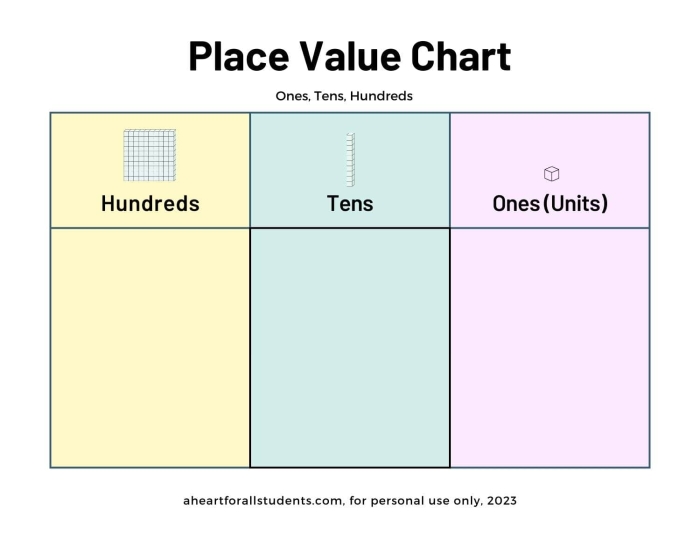
To get started, introduce the concept of metric units and their prefixes. For example, a meter is the base unit of length, while a centimeter is one-hundredth of a meter. This hierarchical structure can help students visualize relationships between units. Incorporating a Printable Metric Units Place Value Chart can be a useful tool during this learning process. It allows students to see how different units relate to one another in a clear, organized manner.
Engagement is key in helping students grasp these conversions. One effective method is through practical examples. Ask students to measure objects around the classroom in meters and then convert those measurements to centimeters. This hands-on activity not only reinforces their understanding but also demonstrates the usefulness of metric conversions in real life.
Another approach is to introduce word problems that require students to apply their conversion skills. For example, if a runner completes a race that is 5 kilometers long, how many meters is that? This not only tests their conversion abilities but also integrates math with critical thinking.
Ultimately, by integrating these activities into your lessons, you can create a dynamic learning environment where students feel confident in their ability to convert metric units. Exploring these concepts in depth prepares them for more advanced mathematical challenges and fosters a greater understanding of the world around them.
Grab These Worksheets Now