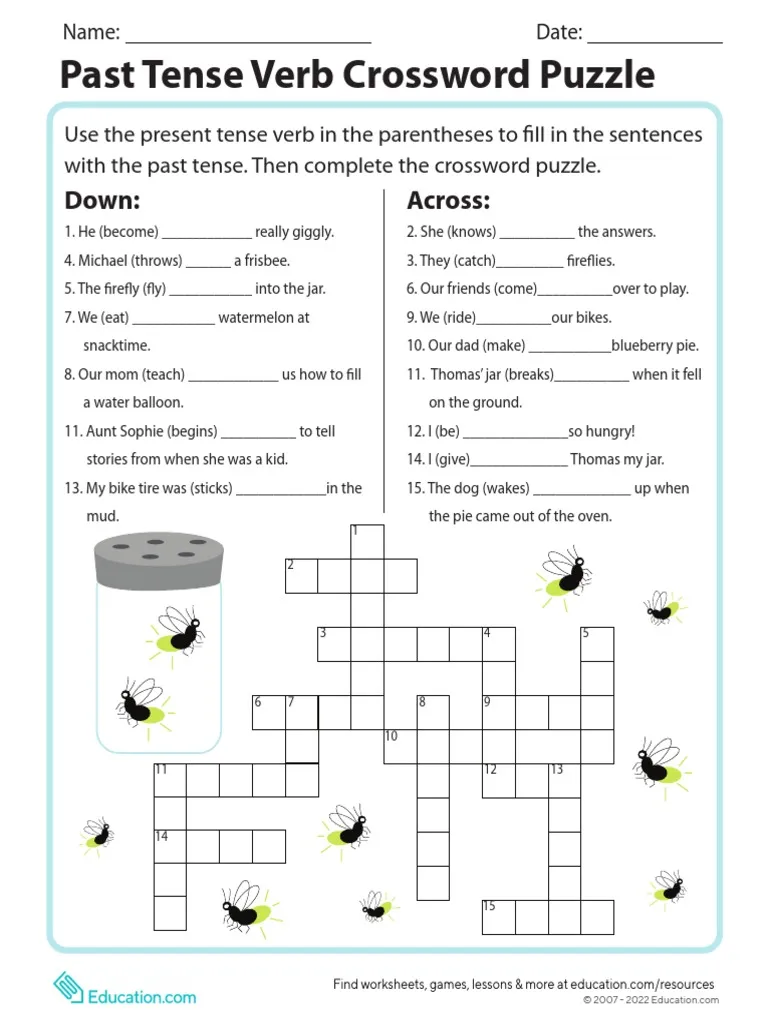
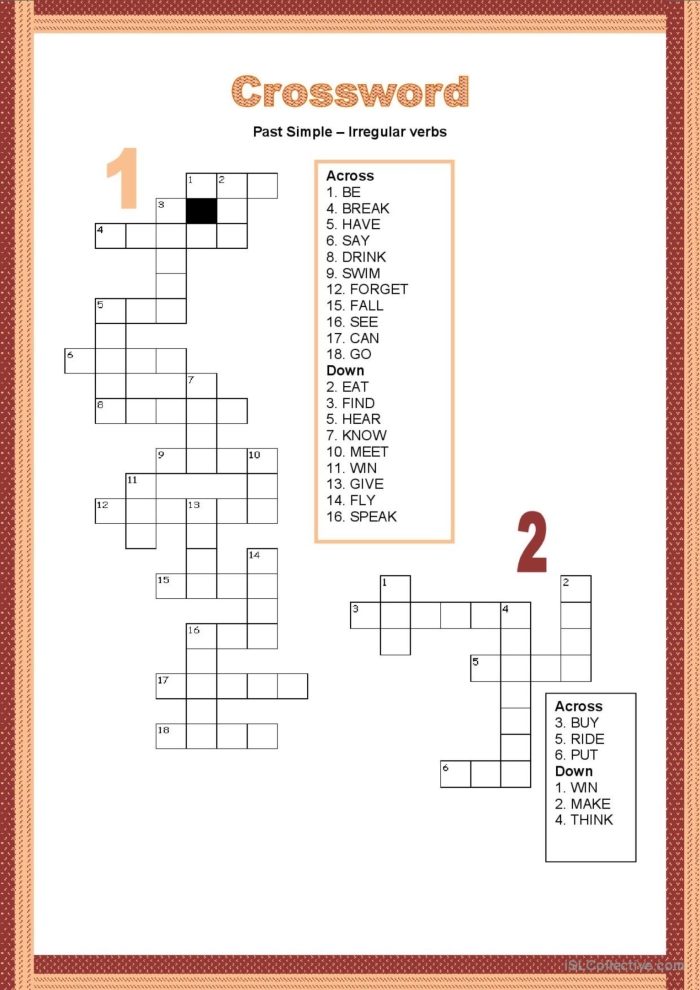
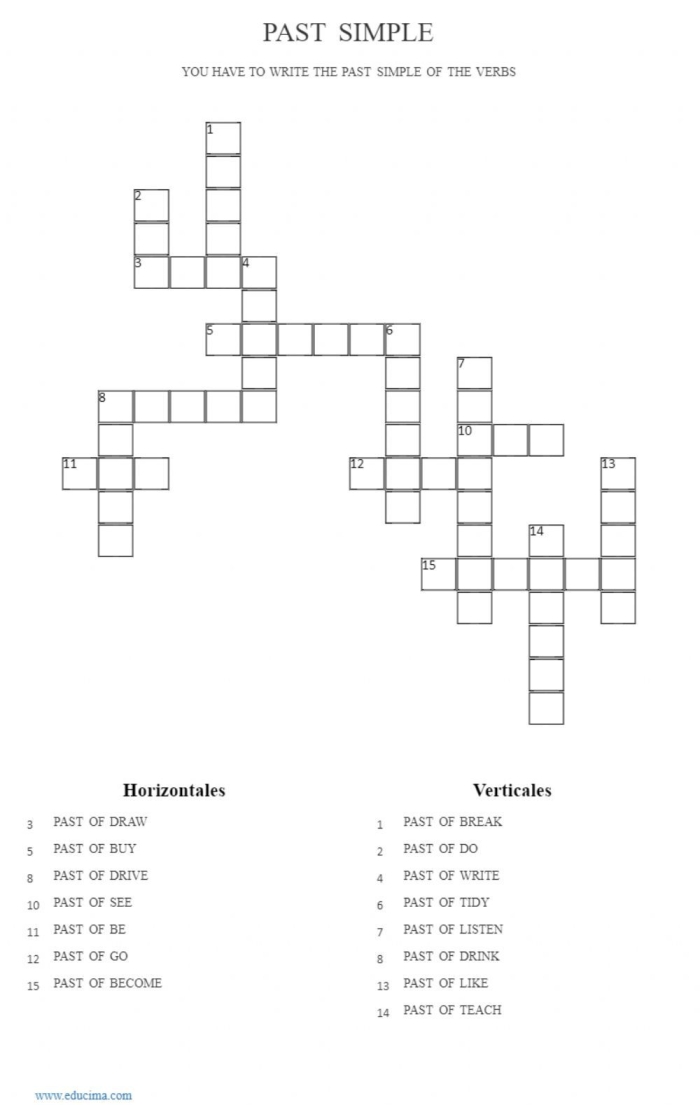
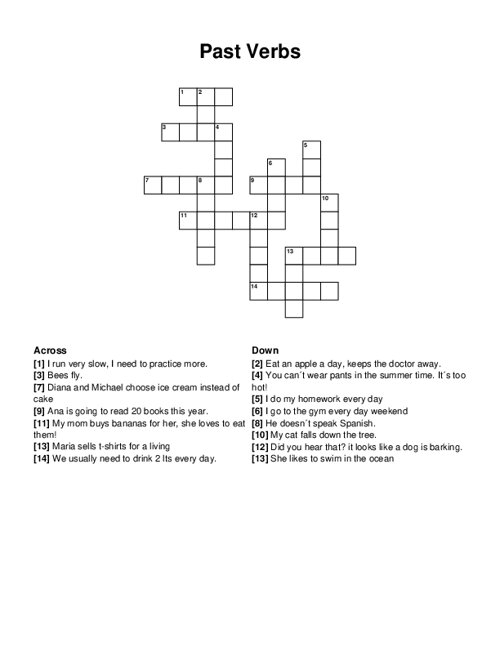
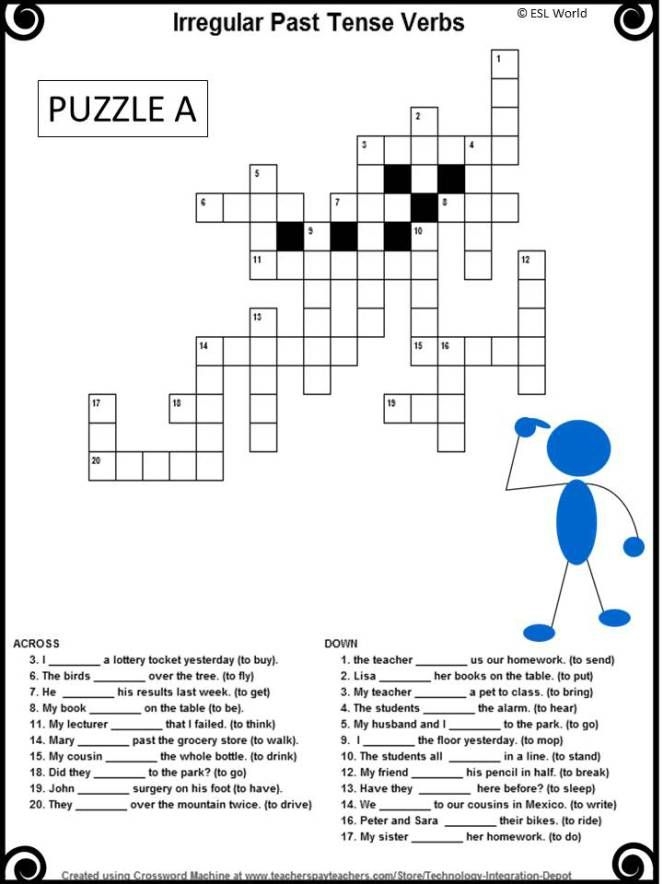
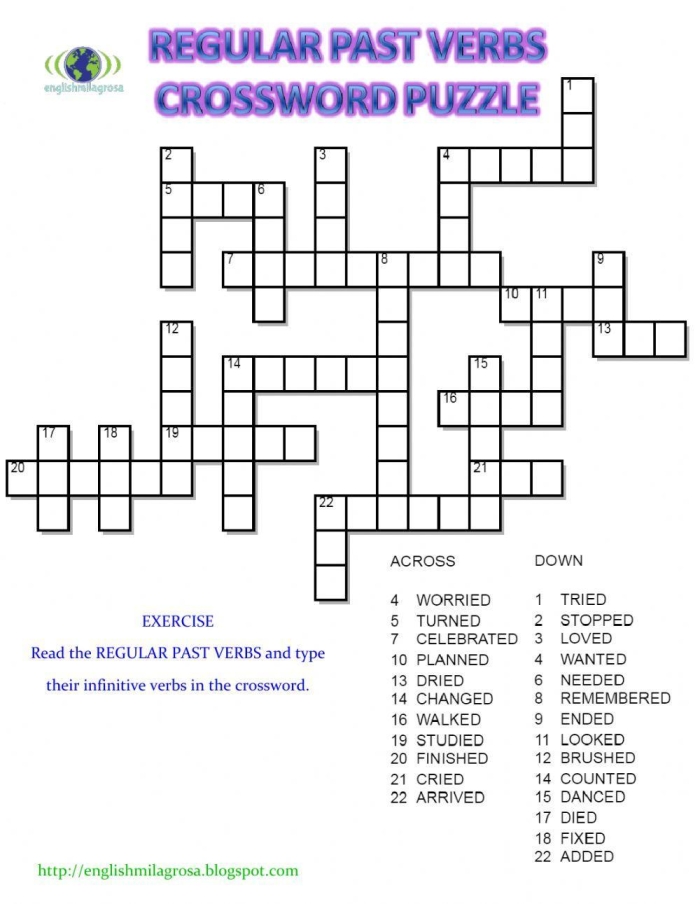
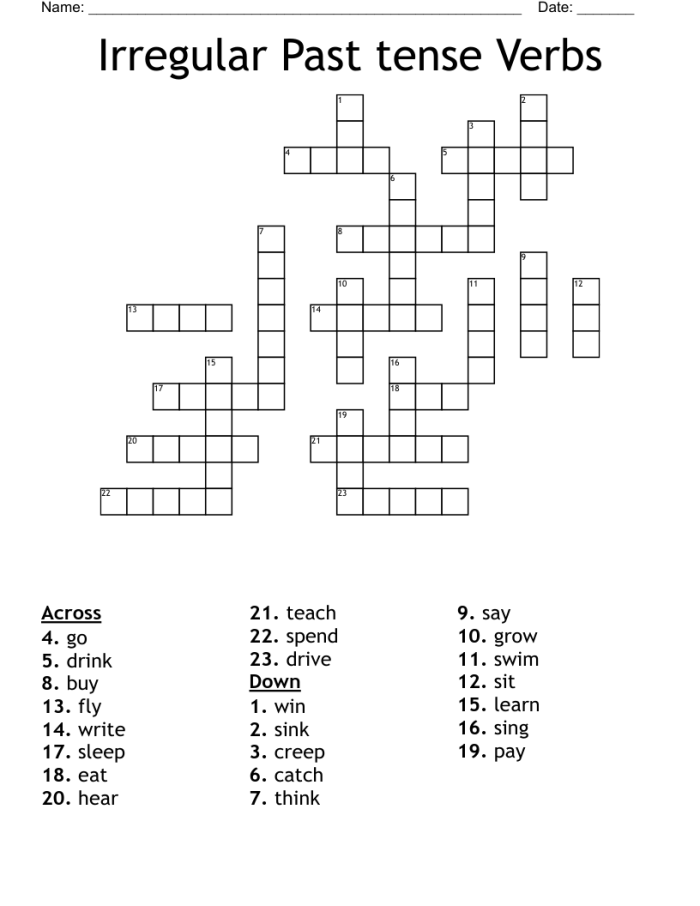
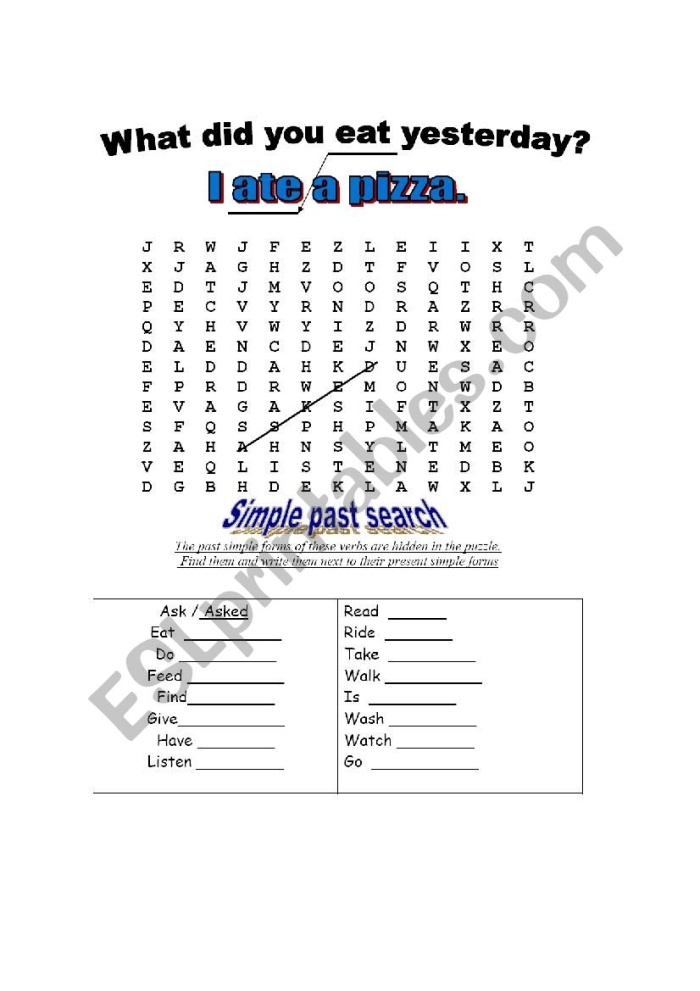
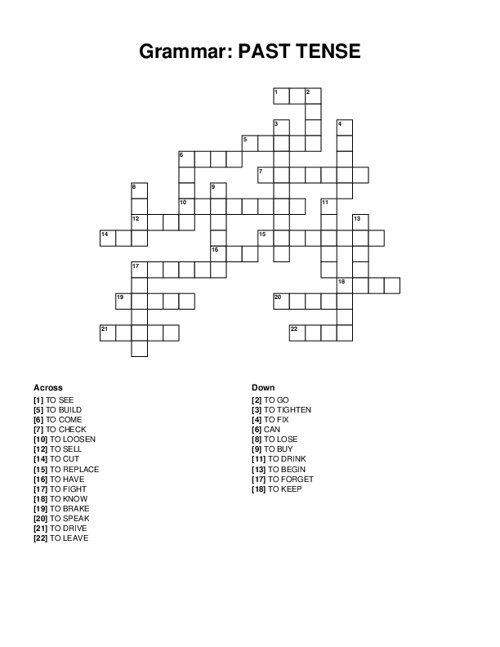
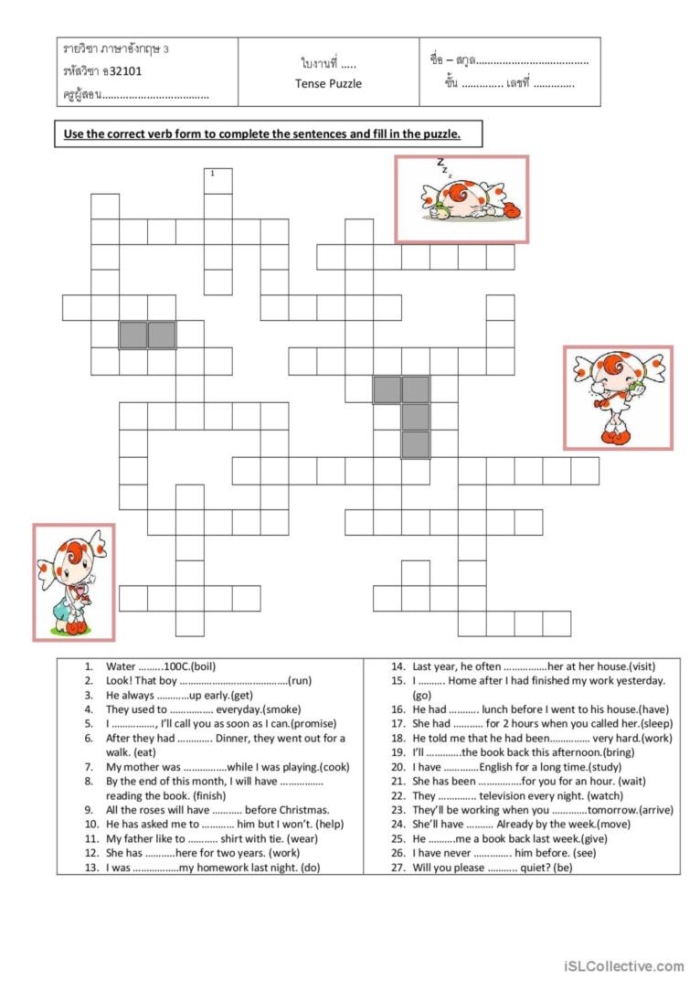
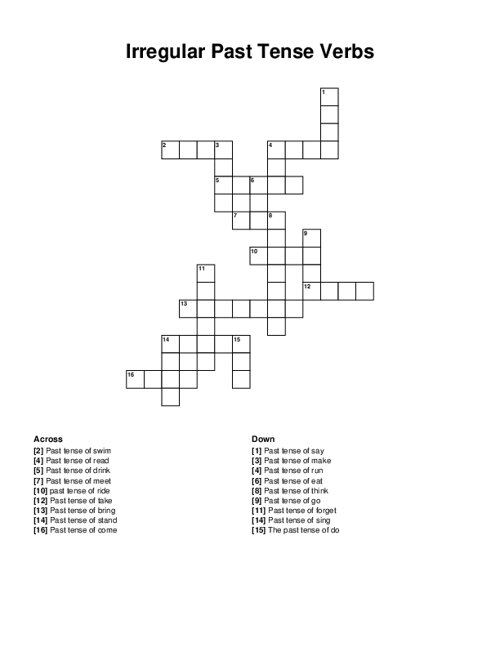
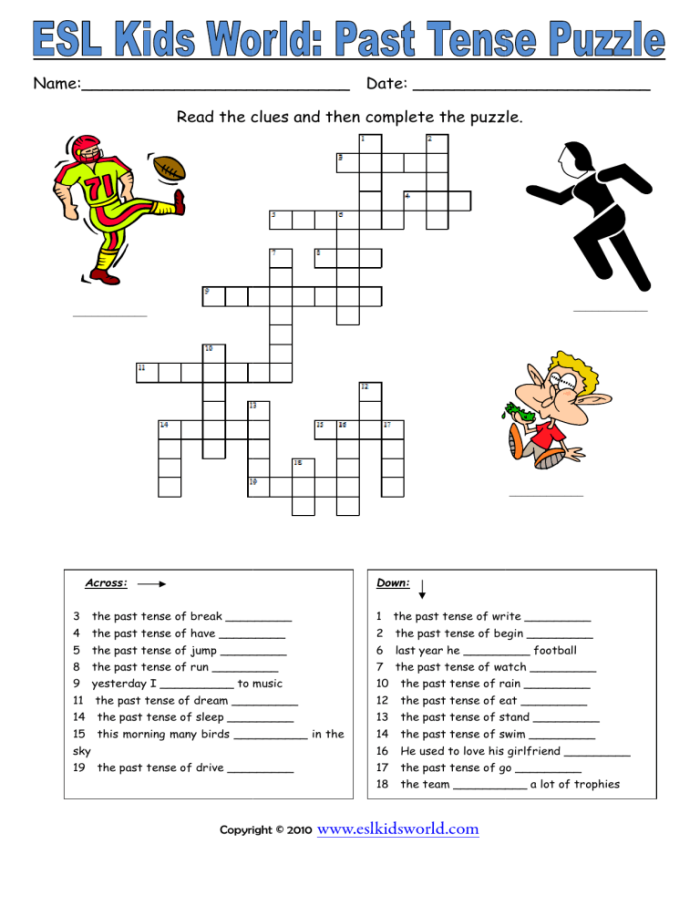
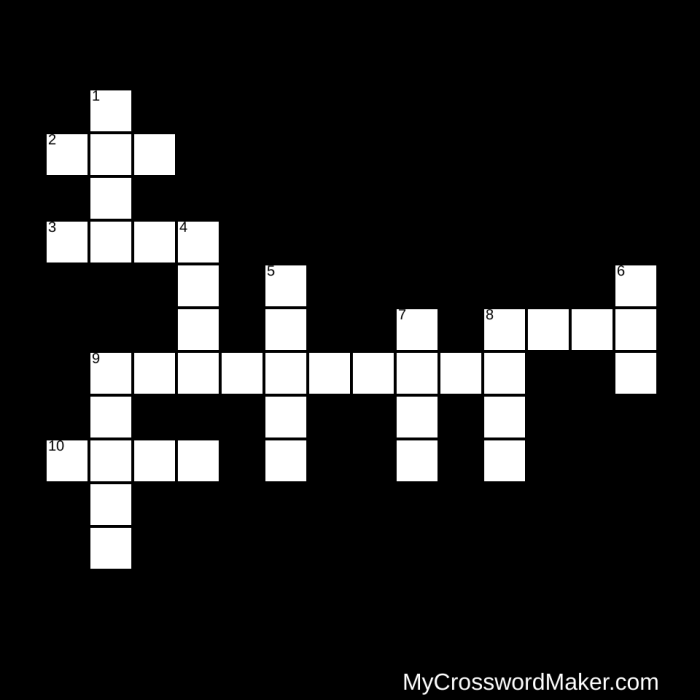
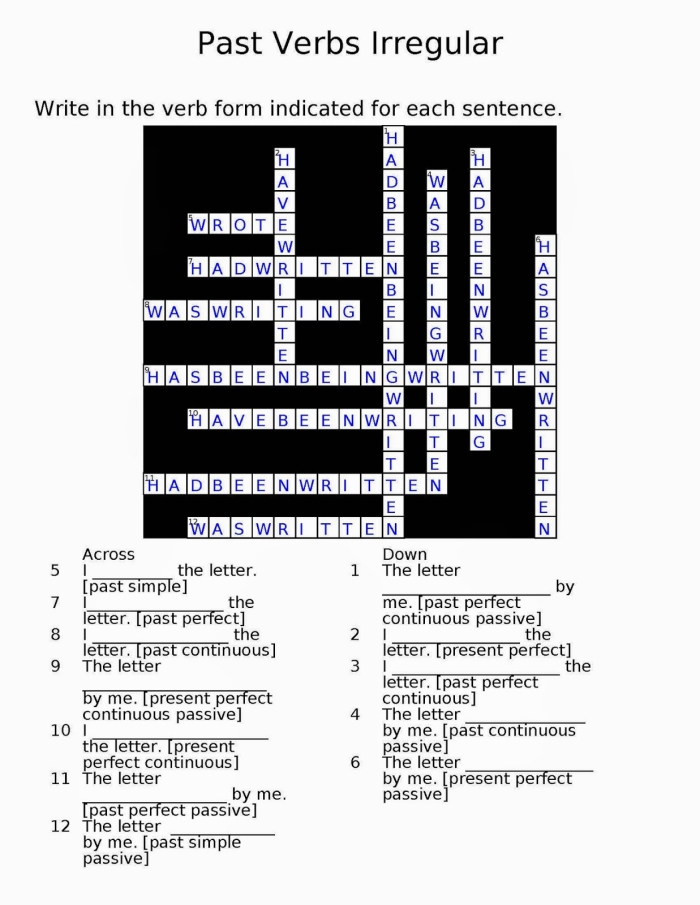
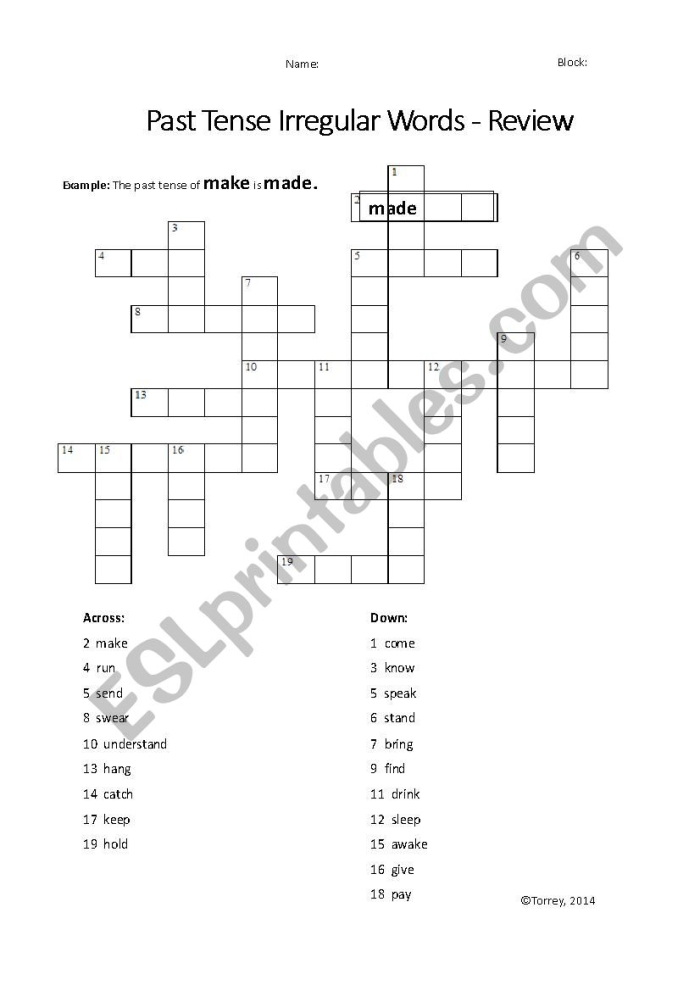
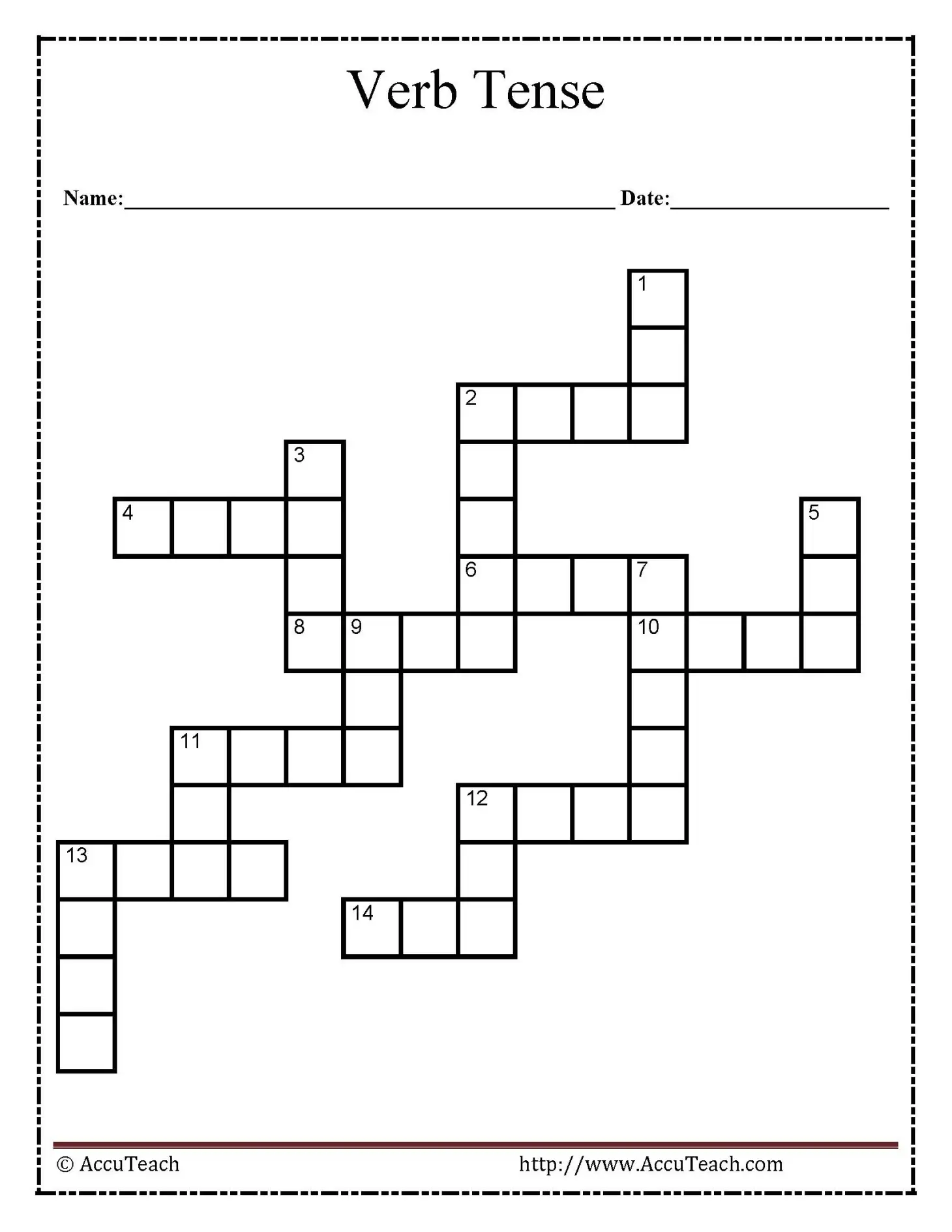
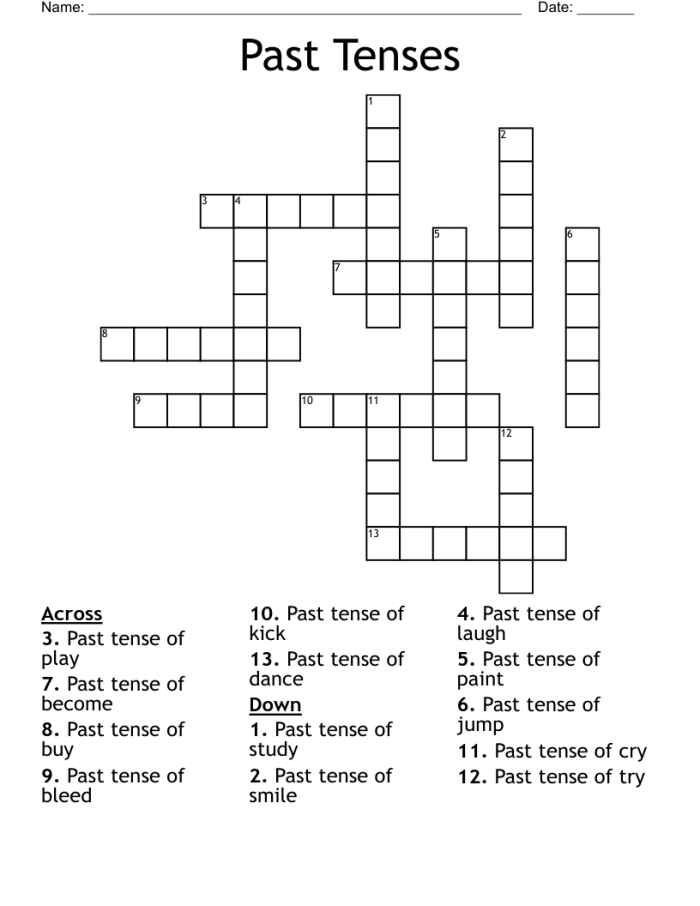
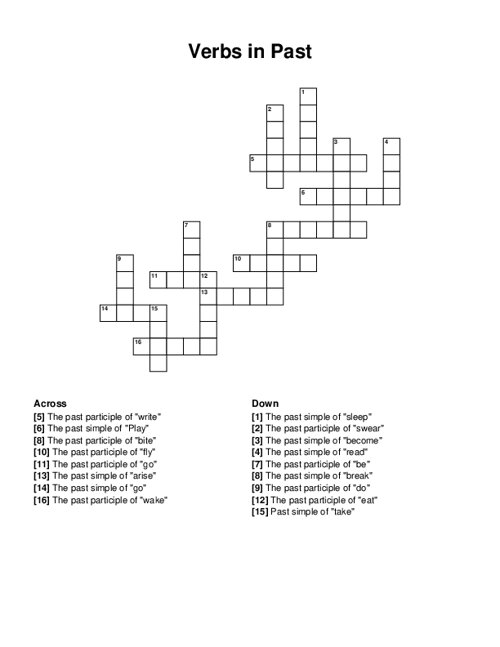
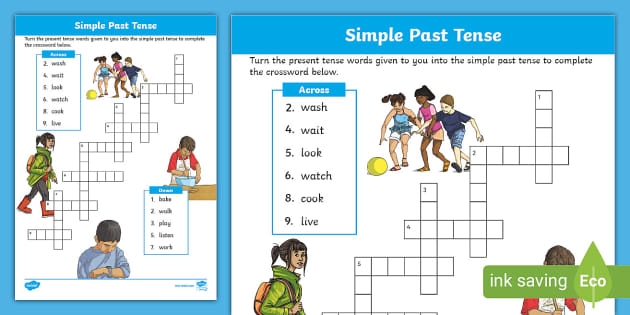
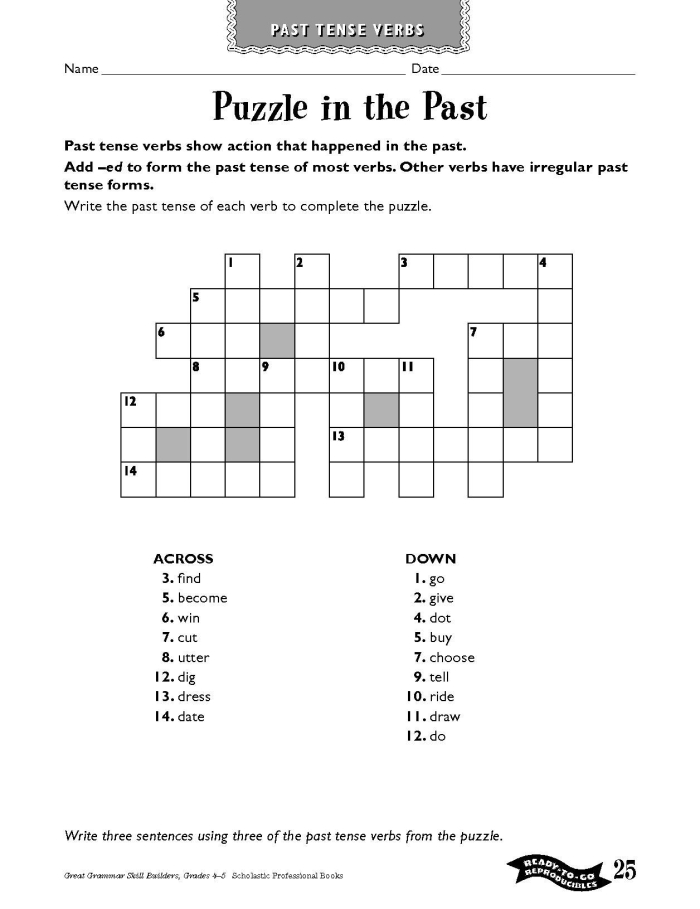
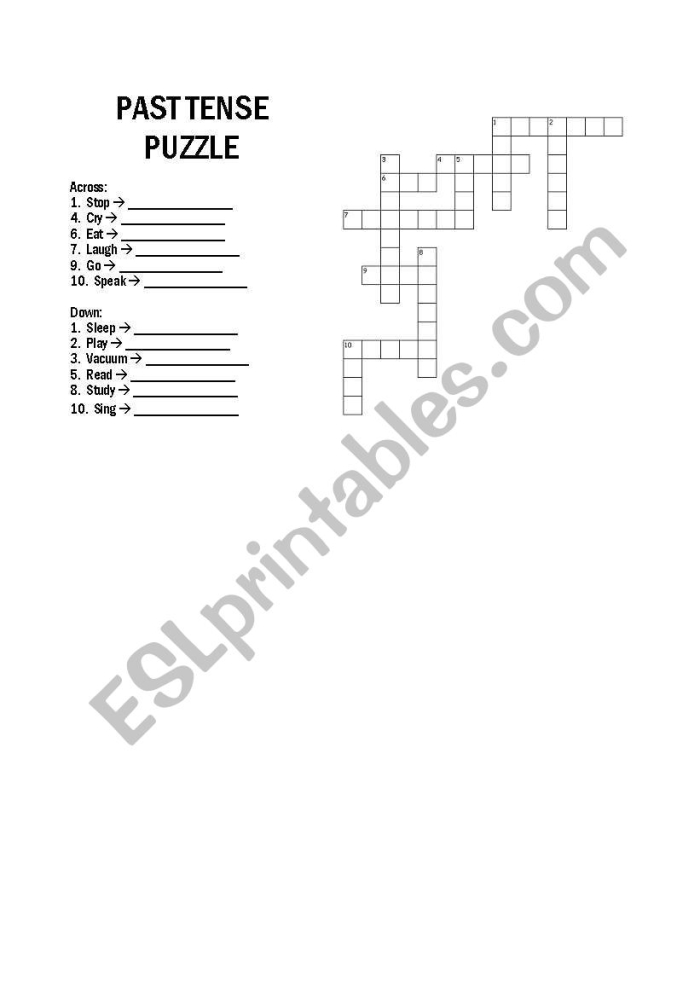
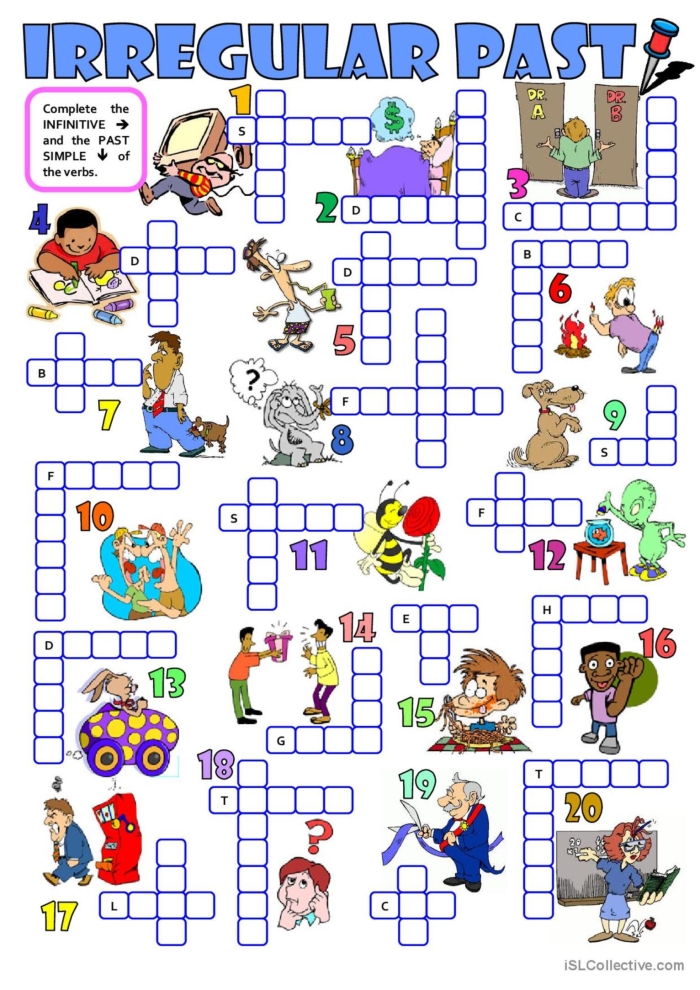
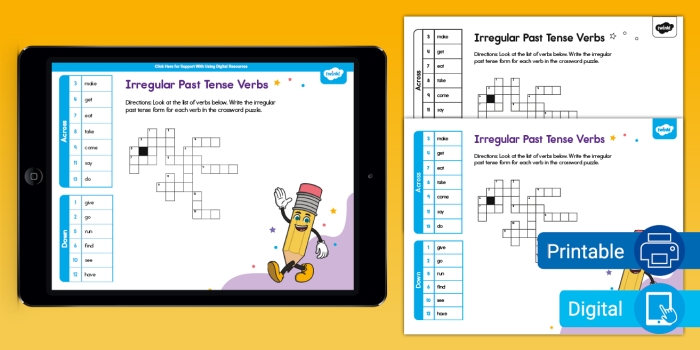
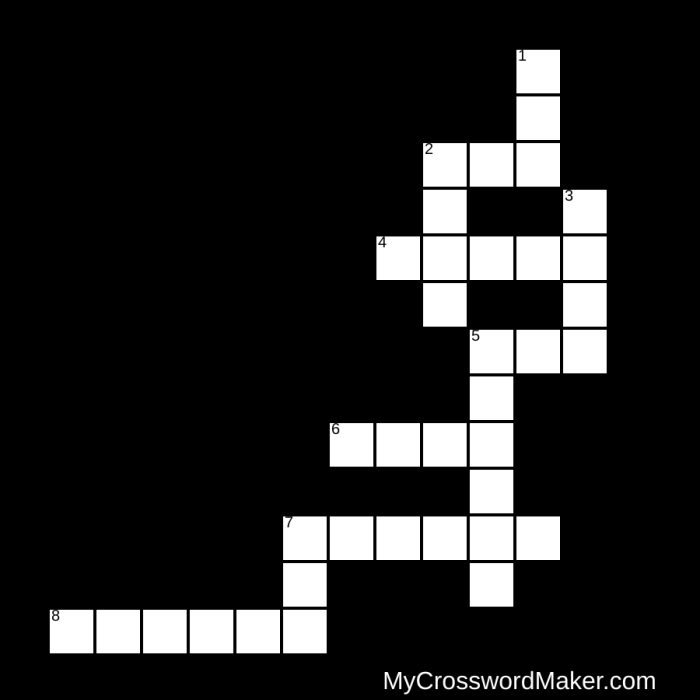
Word puzzles, particularly crossword puzzles, are an engaging way for second graders to practice their understanding of irregular past tense verbs. These puzzles not only challenge young learners but also make the process of learning fun. When children are excited about what they are doing, they are more likely to absorb the material effectively. This is especially true for tricky concepts like past tense verbs, which can often confuse students.
As educators, we know that traditional methods of teaching grammar can sometimes fall flat. However, incorporating interactive elements like a past tense verb crossword puzzle can lead to a lively classroom atmosphere. Students can work individually or in pairs, turning the learning experience into a collaborative effort. This peer interaction can enhance their understanding as they discuss and debate their answers, making the learning process more dynamic.
For example, consider a crossword where clues involve sentences like “The past tense of run” or “What do you call the past tense of eat?” Students will have to recall and think critically about the verbs they’ve learned. It’s a fantastic way for them to review their knowledge while also developing problem-solving skills. In addition, once they complete the puzzle, it can lead to discussions about why certain verbs are irregular. This reinforces their learning and helps solidify their grasp of the topic.
Printable past tense verb crossword puzzle worksheets can easily be integrated into an existing curriculum. Teachers can find suitable worksheets that align with their lesson plans and incorporate them into reading activities. For instance, after reading a passage, students can fill out a related crossword to reinforce the verbs they’ve encountered. This method not only supports their reading comprehension but also enhances their vocabulary skills.
Ultimately, using word puzzles in your classroom is a practical approach to teaching past tense verbs. By making learning enjoyable, students are likely to engage more deeply with the material. If you’re looking for additional resources, consider exploring various reading comprehension worksheets that can complement your teaching strategy, such as those focusing on Amelia Earhart or Frederick Douglass.
Worksheet Practice Section