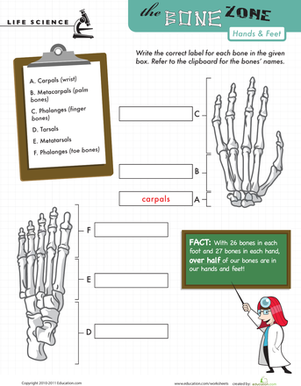
Your fifth grader’s hand contains 27 bones, and most students have no idea. This worksheet taps into that gap by asking them to label the intricate skeletal structure from the wrist all the way out to the fingertips. It’s a hands-on way to build anatomy literacy during the Life Science curriculum.
The activity works by providing a detailed diagram where students match bone names to their correct locations. The wrist alone has eight small carpal bones arranged in two rows, and many kids are surprised to learn they’re not just one solid block. Moving past the wrist, the metacarpals form the palm, and then come the phalanges, the finger bones that give us our dexterity. Each finger has three phalanges except the thumb, which has two.
What makes this worksheet effective is that it forces careful observation. Students can’t just guess randomly, they have to look at the shape and position of each bone in the diagram and think about where it belongs. This kind of focused attention helps the information stick better than simply reading about bones in a textbook.
The hand is also a perfect starting point for skeletal learning because it’s something students can directly relate to. They can hold up their own hand while working through the worksheet and feel the bones moving beneath their skin. This connection between the diagram and their own body makes the lesson memorable.
This worksheet pairs well with other Life Science activities in your fifth grader’s curriculum. If they’re also working on data skills, you might combine it with graphing exercises or mapping projects like those found in U.S. map worksheets with data and graphing. The bone labeling task itself develops the same careful attention to detail that shows up in reading and analysis work across other subjects.
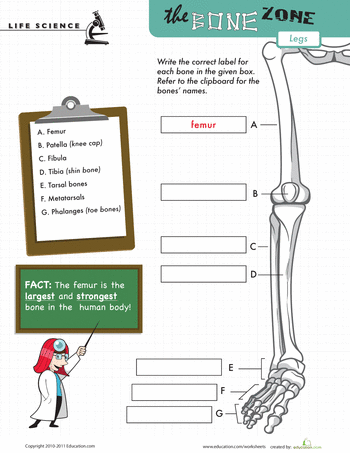
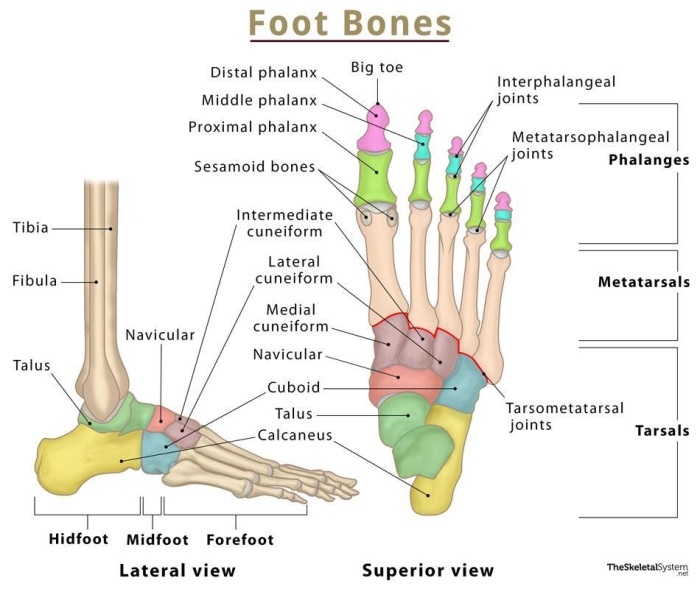
Once your student masters the hand, the same labeling approach works beautifully for the foot, which has an equally complex arrangement of tarsals, metatarsals, and phalanges. Together, these two worksheets give a solid foundation in skeletal anatomy that will serve them well as they move into more advanced biology.
Boost Skills with These Worksheets