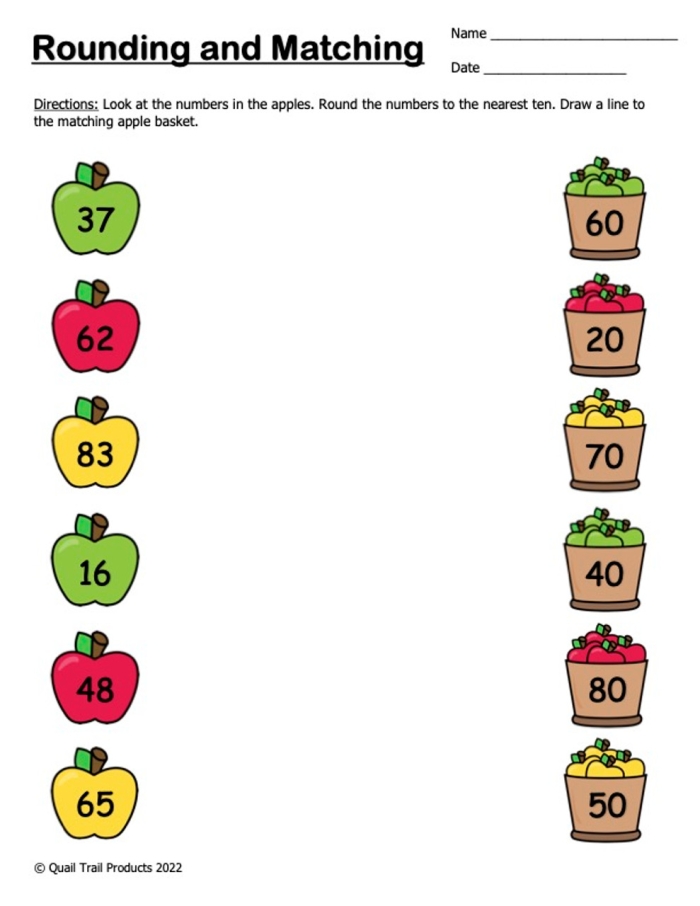
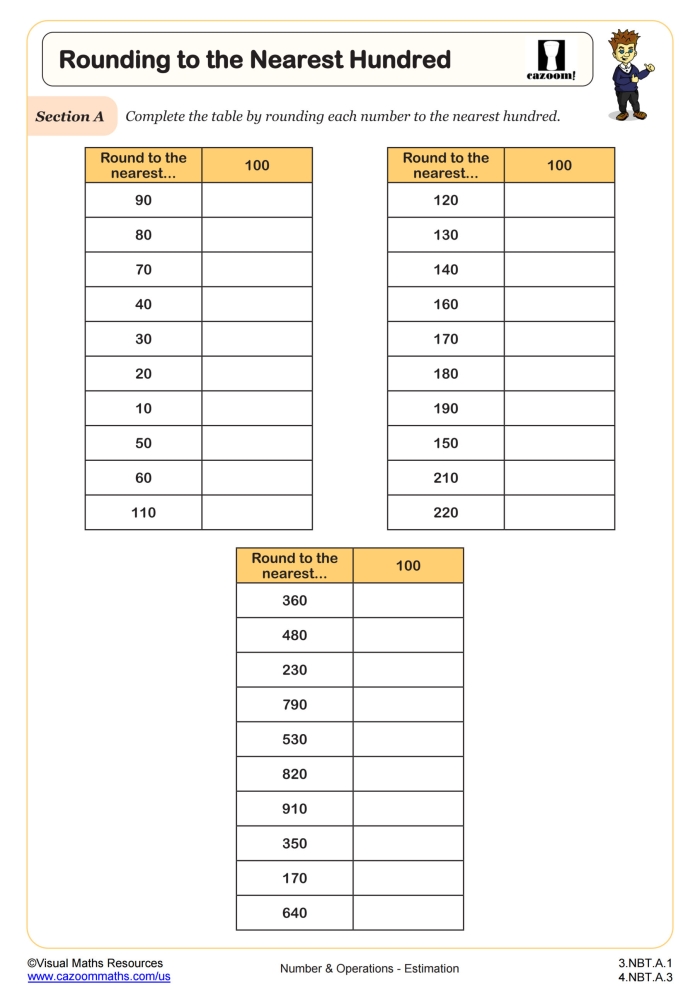
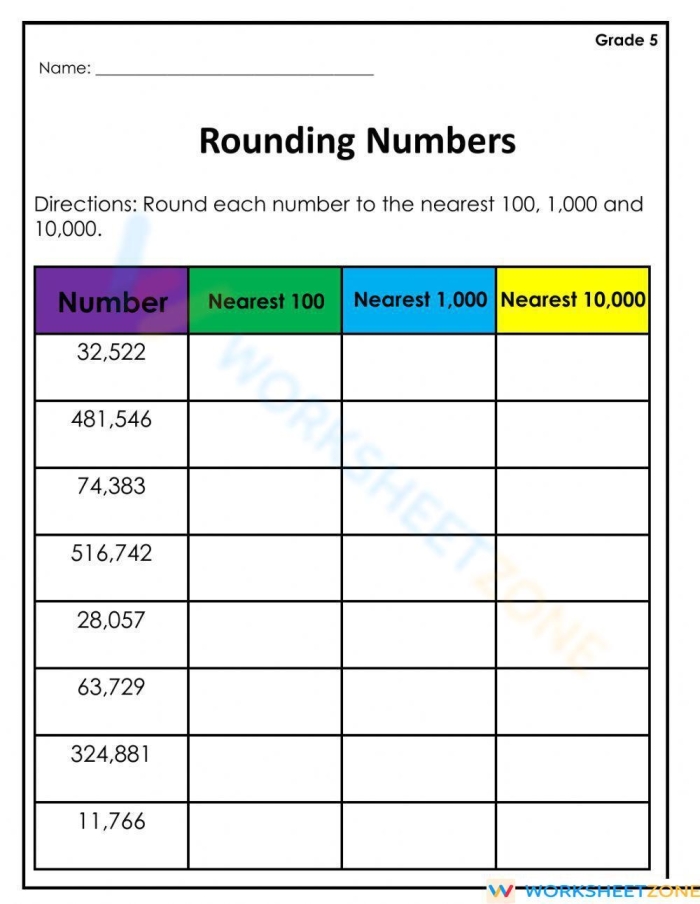
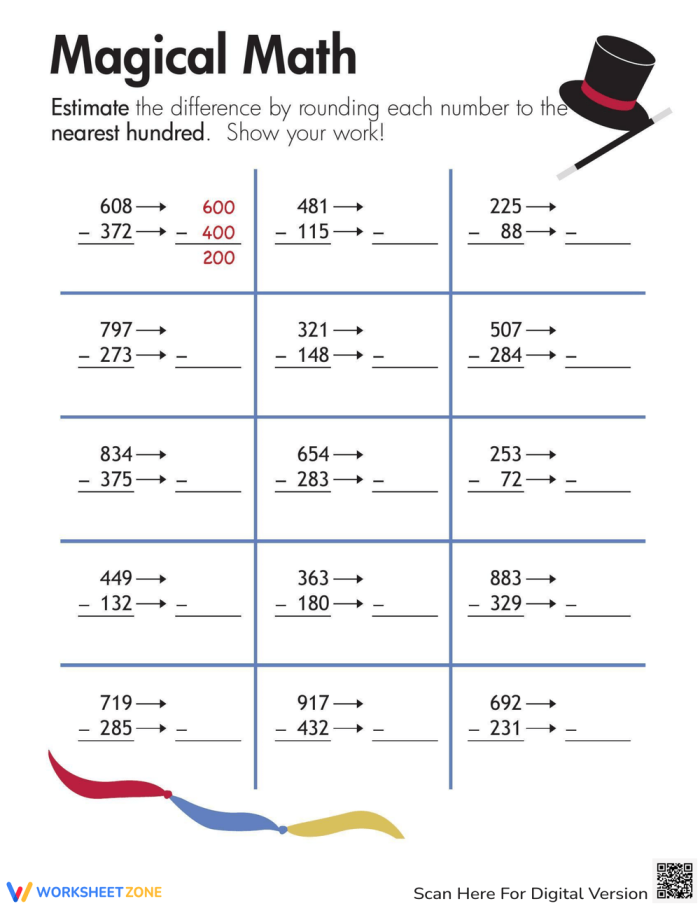
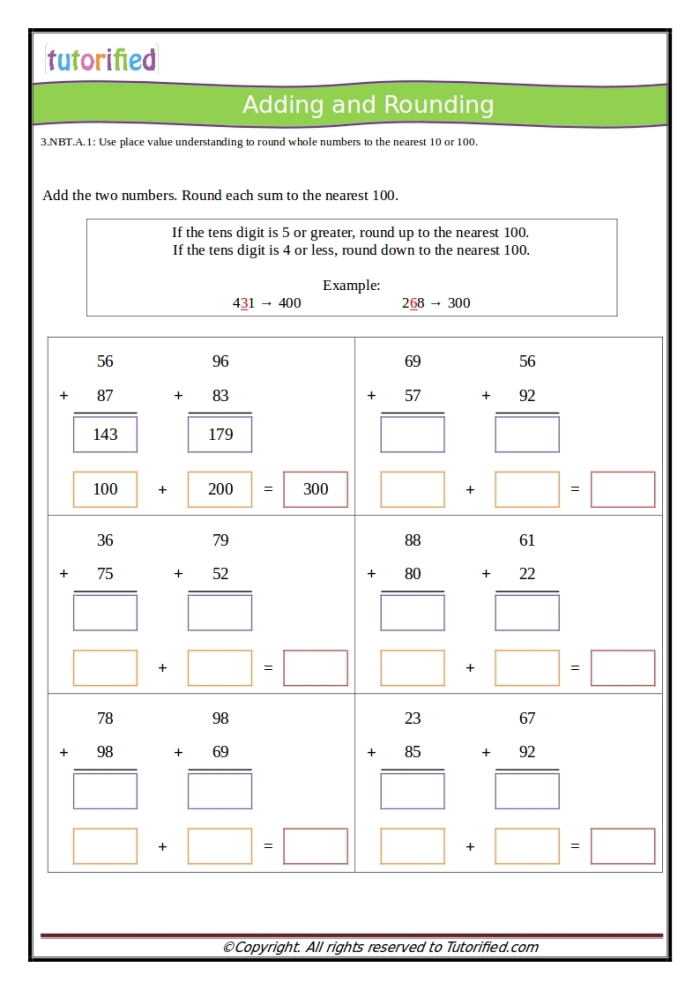
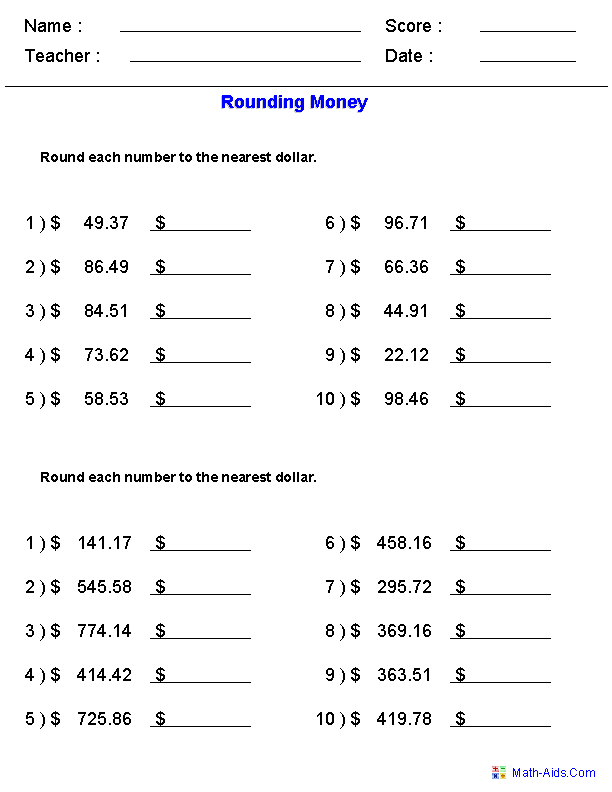
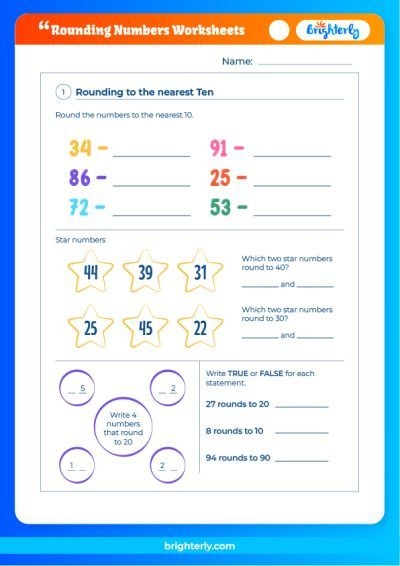
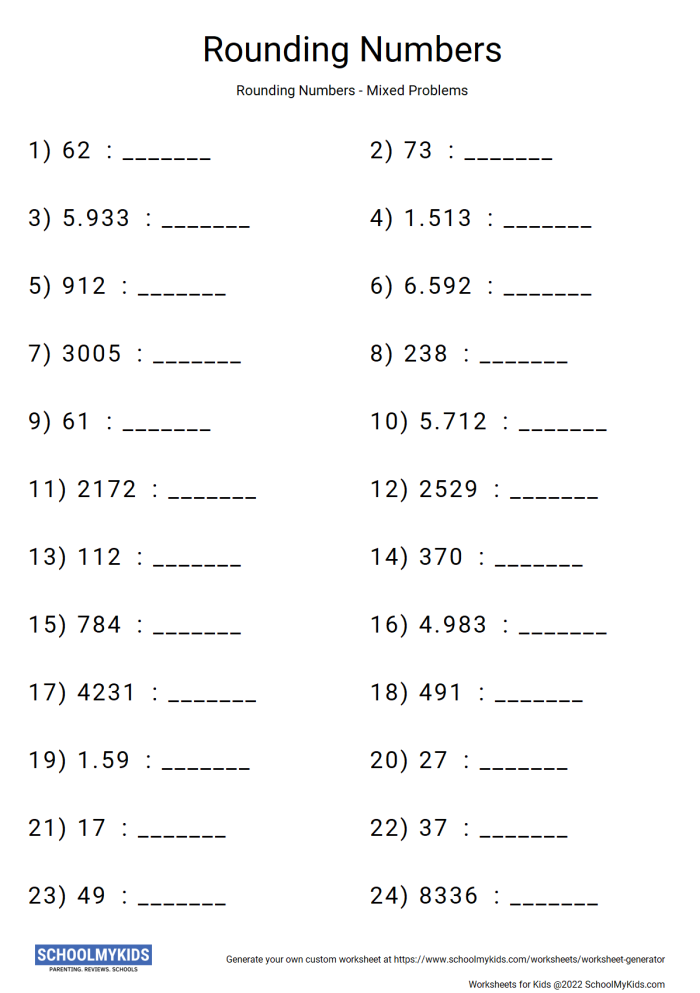
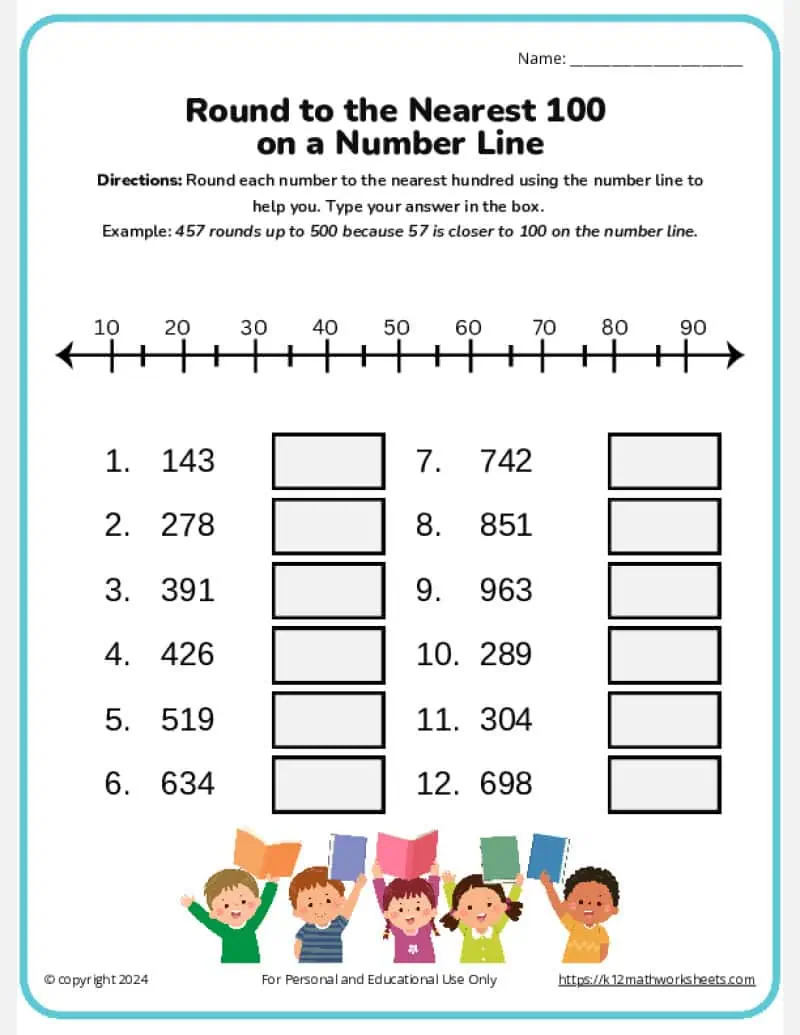
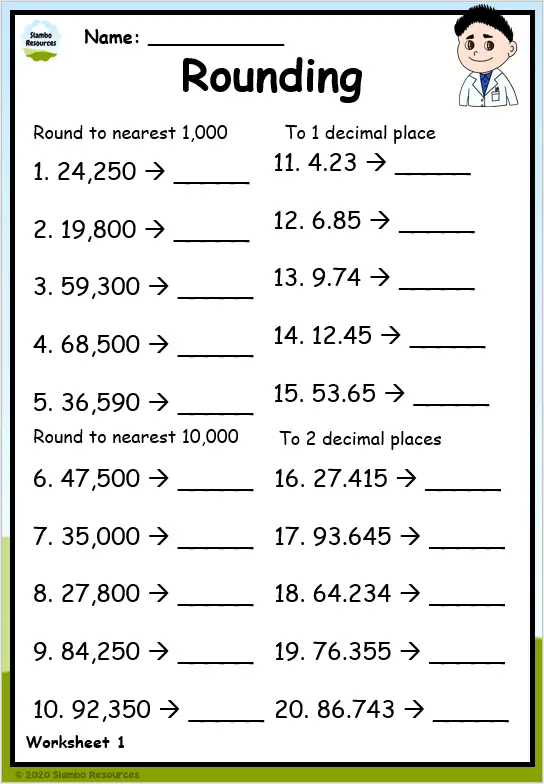
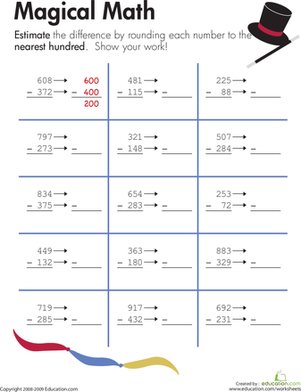
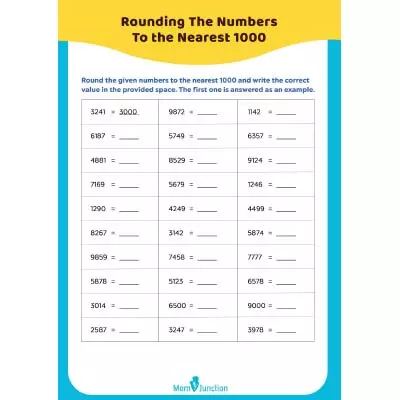
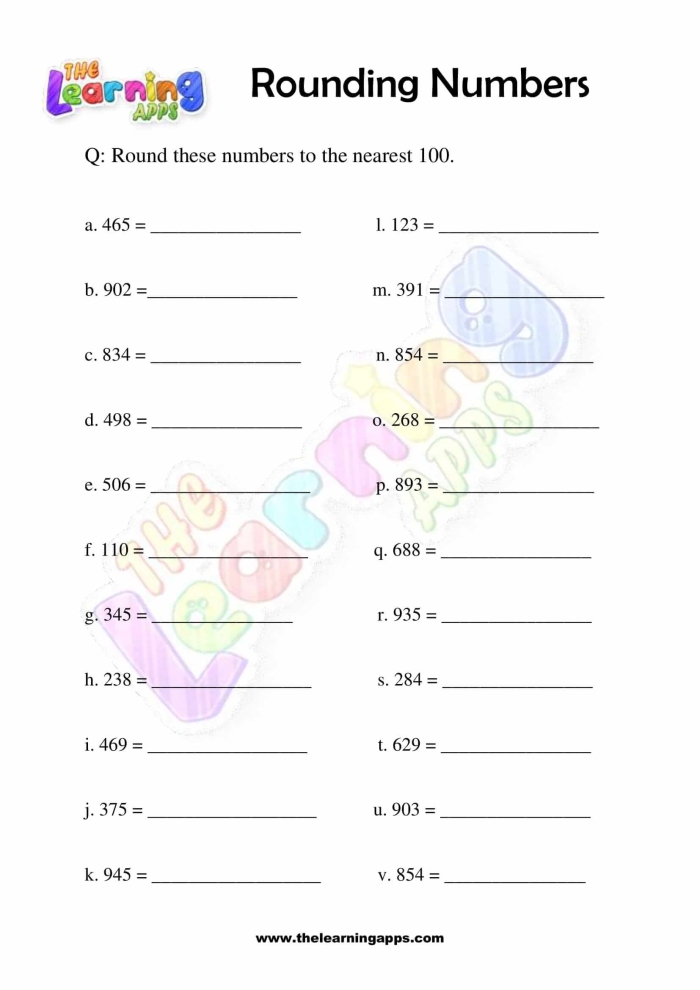
Rounding numbers is not just a math skill; it’s a practical tool that helps kids solve problems with greater confidence. On this third grade math worksheet, students practice rounding to estimate the difference between two numbers. This approach not only simplifies calculations but also serves as a reliable method for checking their work.
Imagine a scenario where a child has to subtract 59 from 83. The exact calculation can be tricky, but by rounding, the problem becomes more manageable. Students can round 83 to 80 and 59 to 60, making it much easier to see that 80 minus 60 equals 20. This estimate tells them that the actual difference should be close to 20, allowing them to quickly verify their detailed calculations.
Using rounding as a strategy in math has several benefits. First, it encourages kids to think about numbers conceptually, rather than just mechanically performing operations. This helps develop their number sense, which is crucial for more advanced math skills later on. Additionally, rounding can save time during tests or homework, enabling children to focus on understanding concepts rather than getting bogged down in complex calculations.
Furthermore, this skill isn’t limited to just subtraction. Rounding can be applied in various situations, such as estimating totals for shopping or figuring out distances. For example, if a child knows they need to buy 27 apples and 34 bananas, they can round these numbers to 30 and 30, respectively, making it easy to estimate that they will need about 60 pieces of fruit in total.
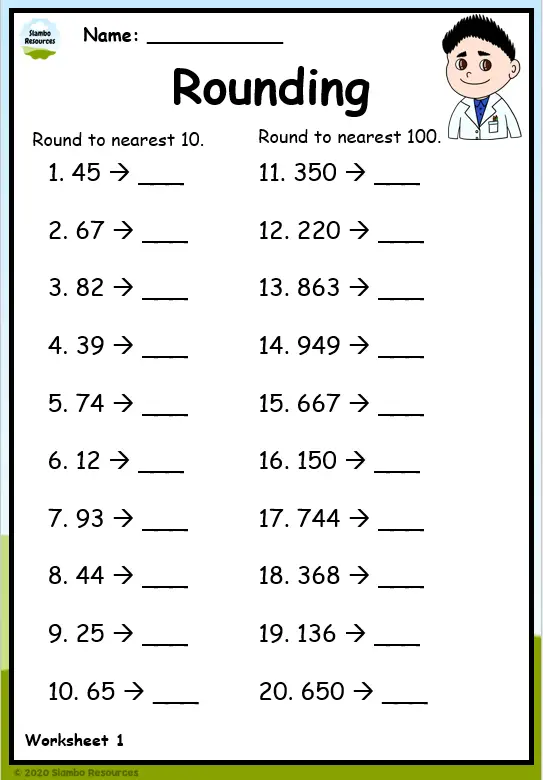
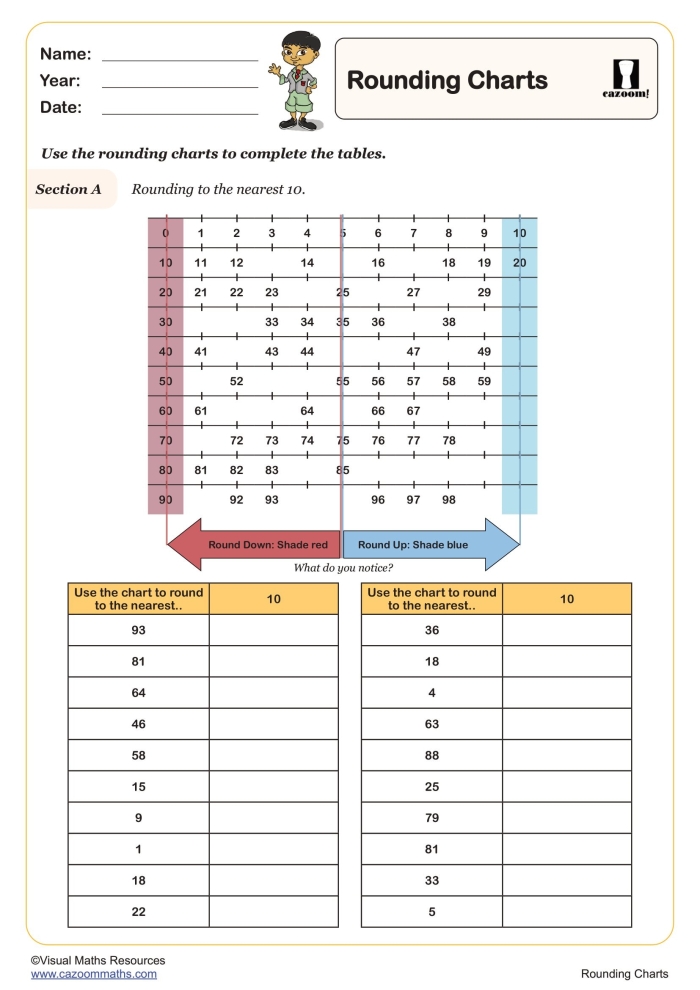
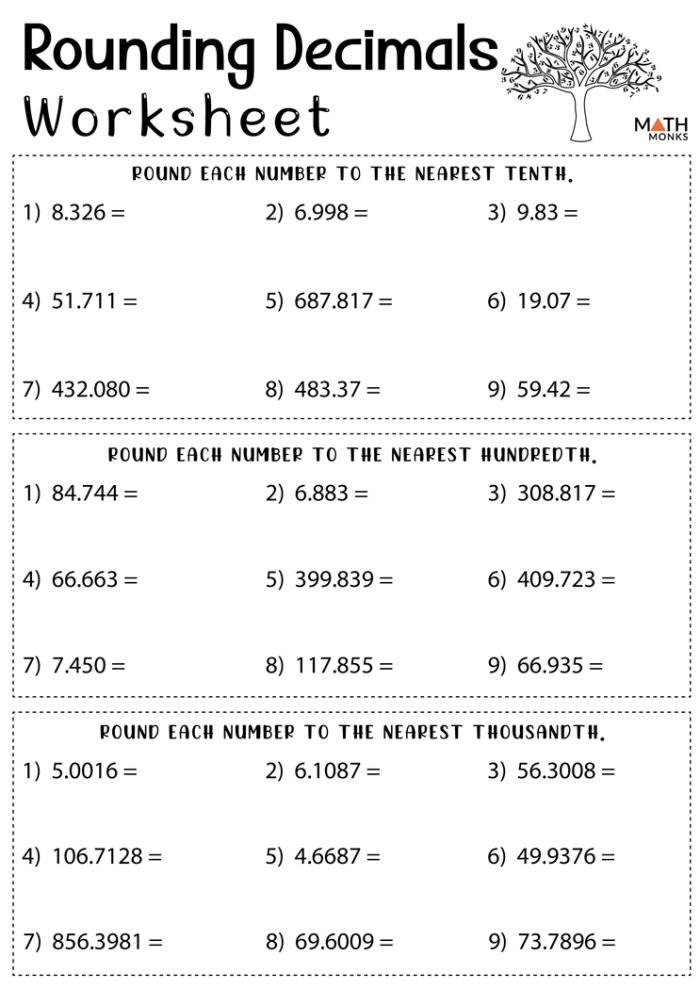
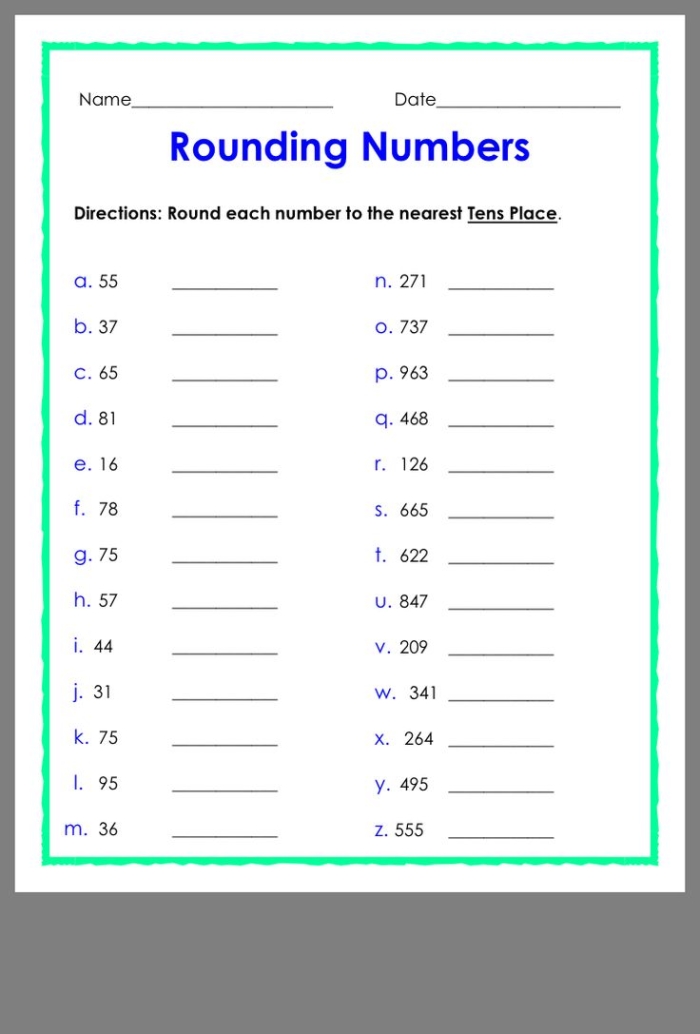
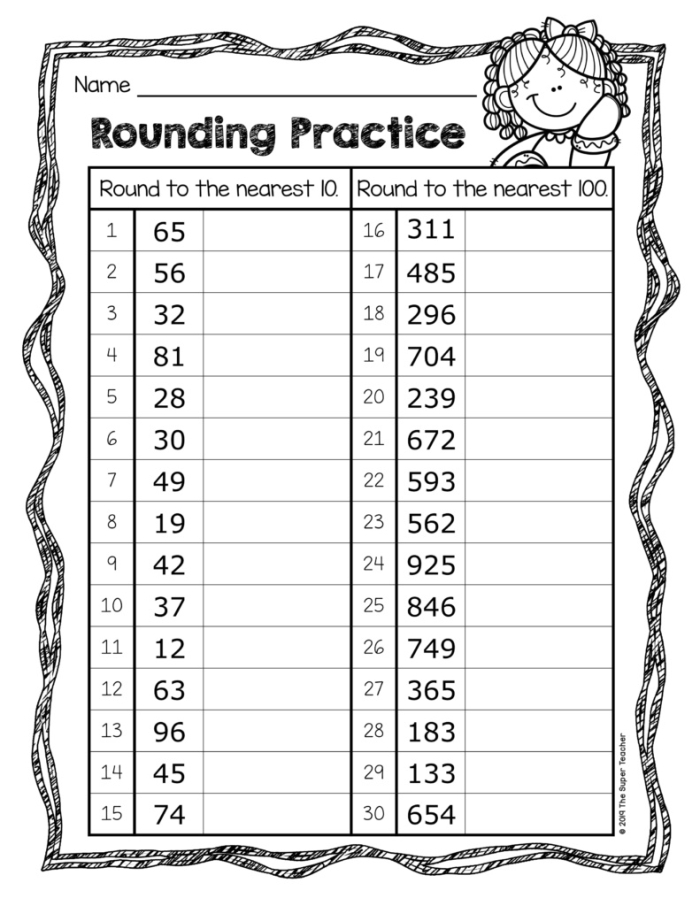
For educators and parents looking to reinforce these concepts, resources like worksheets on rounding can provide practice opportunities that are fun and engaging. By incorporating rounding into their math toolkit, third graders can approach their studies with a sense of achievement and clarity, ultimately making math a less intimidating subject.
Worksheet Practice Section