Getting fourth graders excited about astronomy doesn’t require a telescope or a planetarium visit. Sometimes all you need is a good story about the people who spent their lives staring at the sky and making discoveries that changed how we understand the universe.
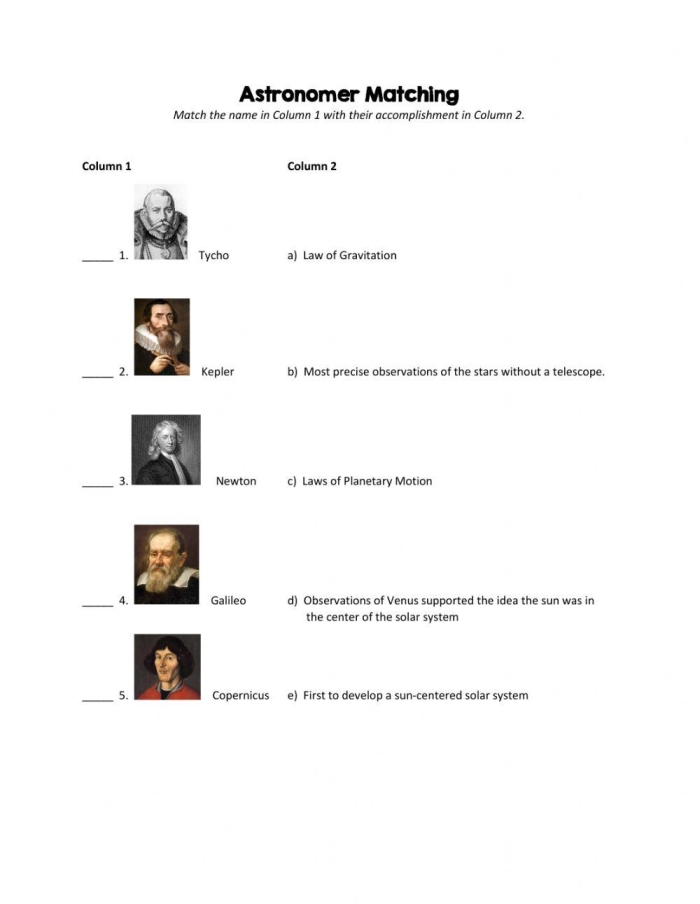
The five most influential astronomers in history offer perfect entry points for young learners. Galileo Galilei pointed a telescope at Jupiter in 1610 and saw moons orbiting the planet, proving that not everything in space revolves around Earth. Johannes Kepler figured out that planets move in ellipses, not perfect circles, which sounds simple now but revolutionized how scientists thought about motion. Isaac Newton connected gravity to planetary movement, explaining why objects fall and why planets stay in orbit. Caroline Herschel discovered eight comets and became the first woman to receive a professional astronomy position, breaking barriers in a male-dominated field. Finally, Edwin Hubble proved that our galaxy wasn’t the only one, expanding the known universe almost overnight.
Each of these astronomers approached their work differently. Some used mathematics, others relied on observation, and a few combined both. Their stories show kids that astronomy isn’t just about memorizing facts about stars and planets. It’s about asking questions, testing ideas, and being willing to challenge what everyone else believes.
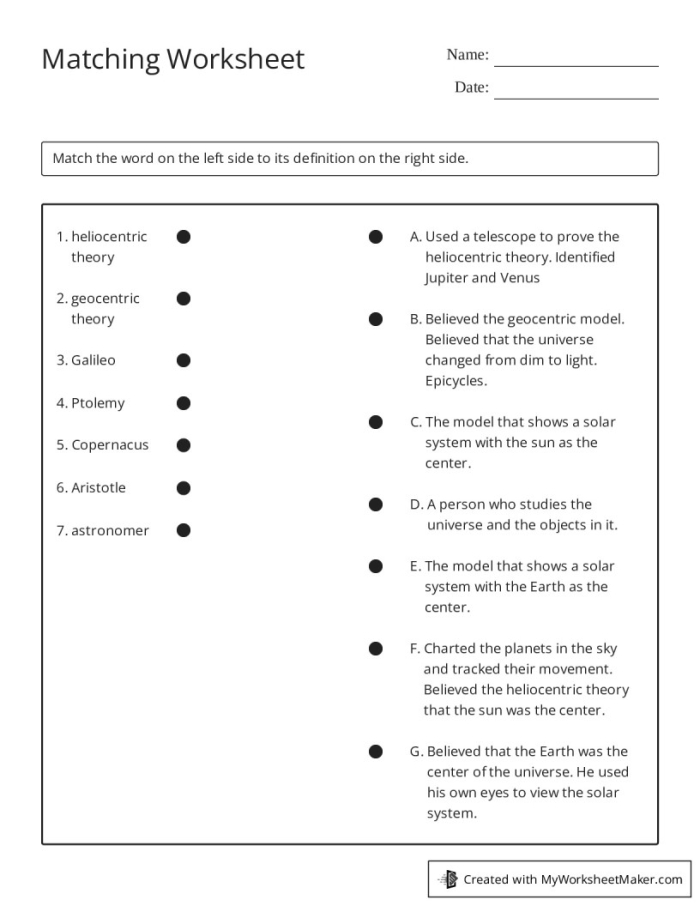
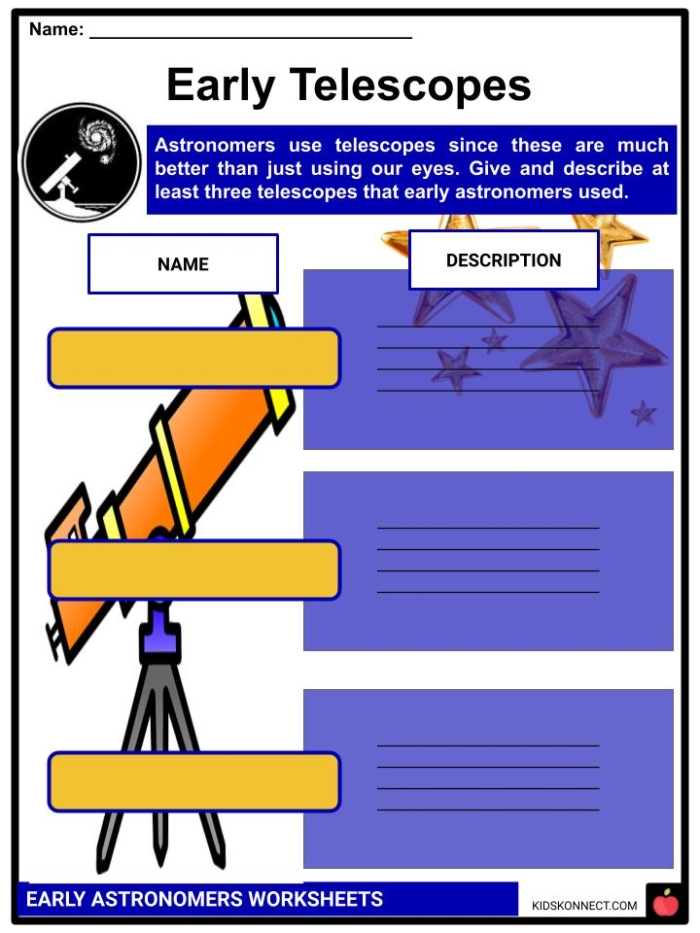
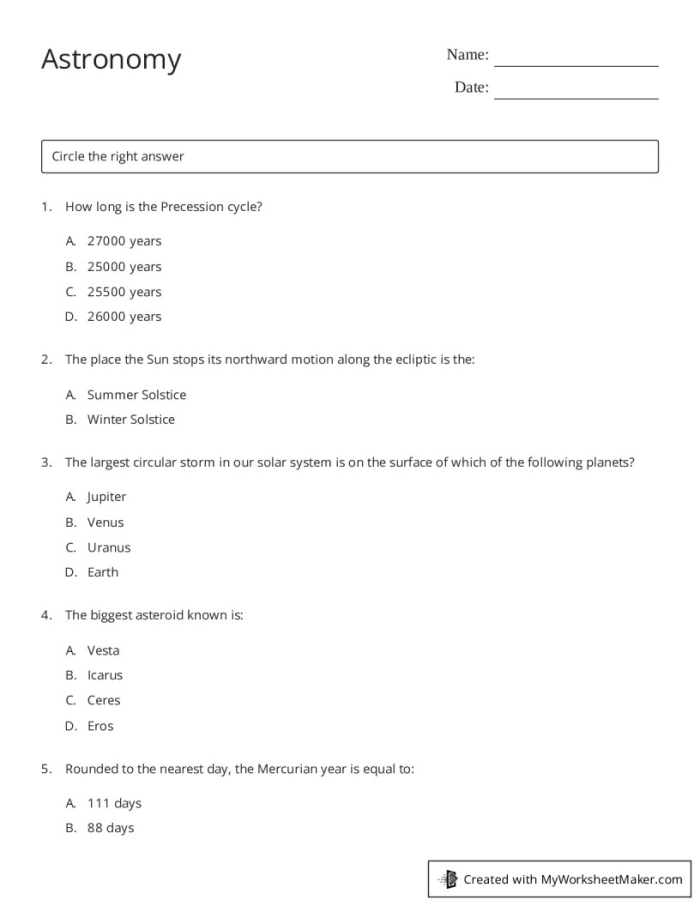
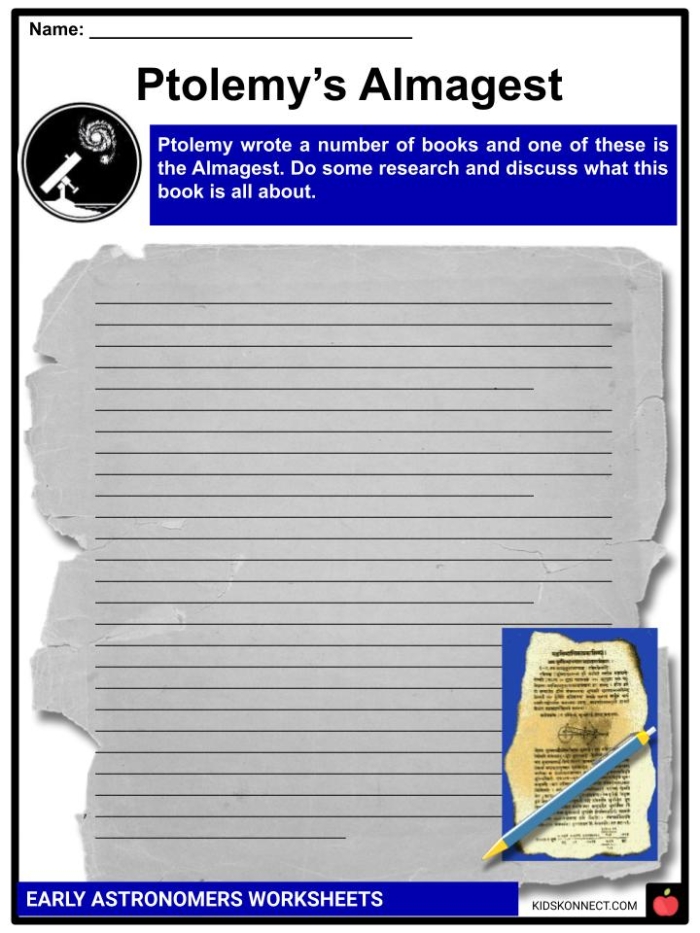
For fourth grade Earth and Space Science classes, worksheets about famous astronomers help students connect names and faces to actual discoveries. Rather than treating history as separate from science, this approach shows how real people made the breakthroughs we teach today. When students complete printable worksheets about astronomers for kids, they’re learning both facts and the human side of scientific progress.
These worksheets work best when paired with other Earth and Space Science activities. Students might explore rock formations and geological features to understand Earth’s structure, then shift focus to the cosmos and the people who studied it. This combination gives students a fuller picture of how science develops over time.
Practice with These Worksheets