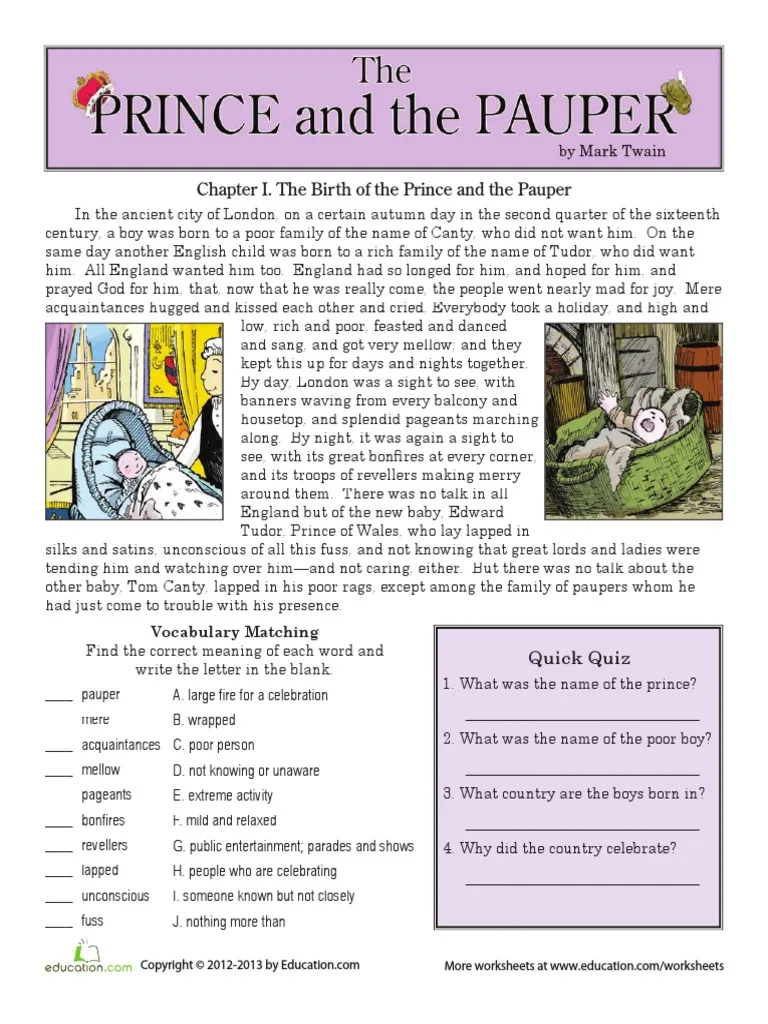
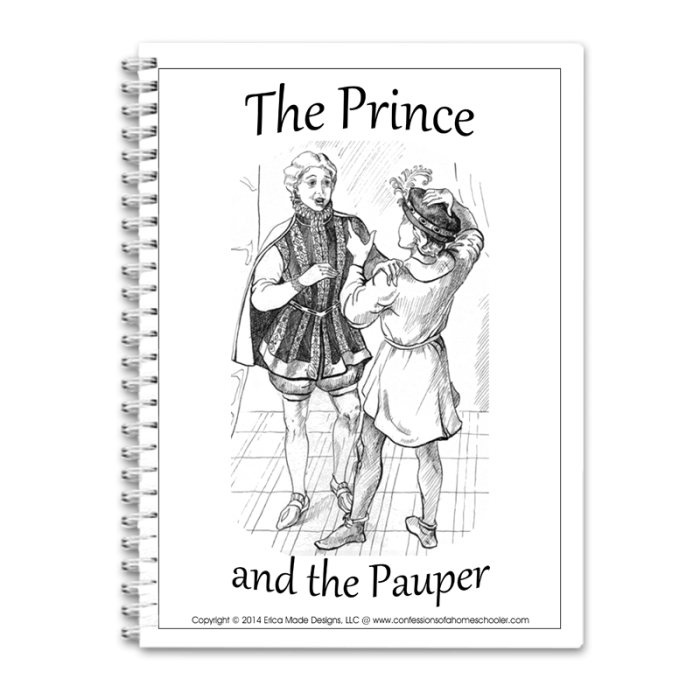
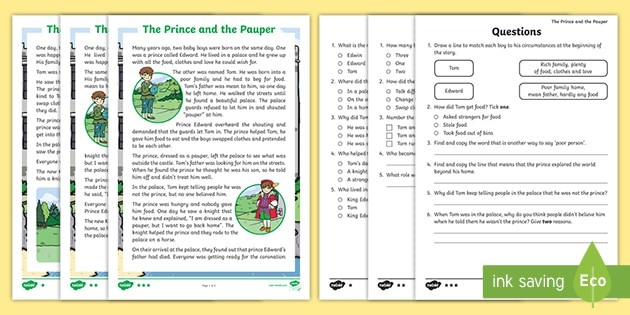
Mark Twain’s The Prince and the Pauper is a fascinating exploration of social class and identity, making it an excellent choice for those interested in historical fiction. This novel, set in 16th-century England, tells the story of two boys—one a prince and the other a pauper—who switch places and experience each other’s lives. This vivid narrative not only entertains but also provides substantial material for analysis, especially in the context of civics and government education.
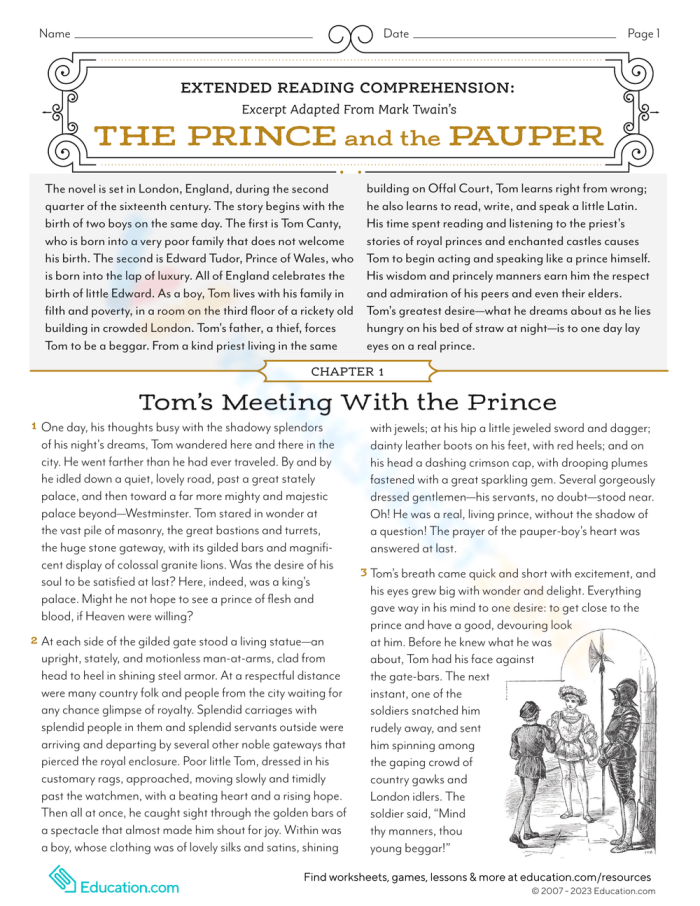
The excerpt adapted for seventh graders captures the essence of the original tale while making it accessible for young readers. It highlights the stark contrasts between the luxurious life of royalty and the harsh realities faced by the impoverished. Through the experiences of the characters, students can engage with themes of social injustice, privilege, and empathy. These discussions are particularly relevant in today’s world, where understanding different perspectives is vital.
Analyzing this excerpt can encourage students to think critically about societal structures and their implications. For instance, they can explore questions like: How does Twain illustrate the differences between the rich and the poor? What can we learn about empathy through the characters’ experiences? By engaging with these questions, students not only enhance their reading comprehension skills but also develop a deeper understanding of civics and government concepts related to class and social dynamics.
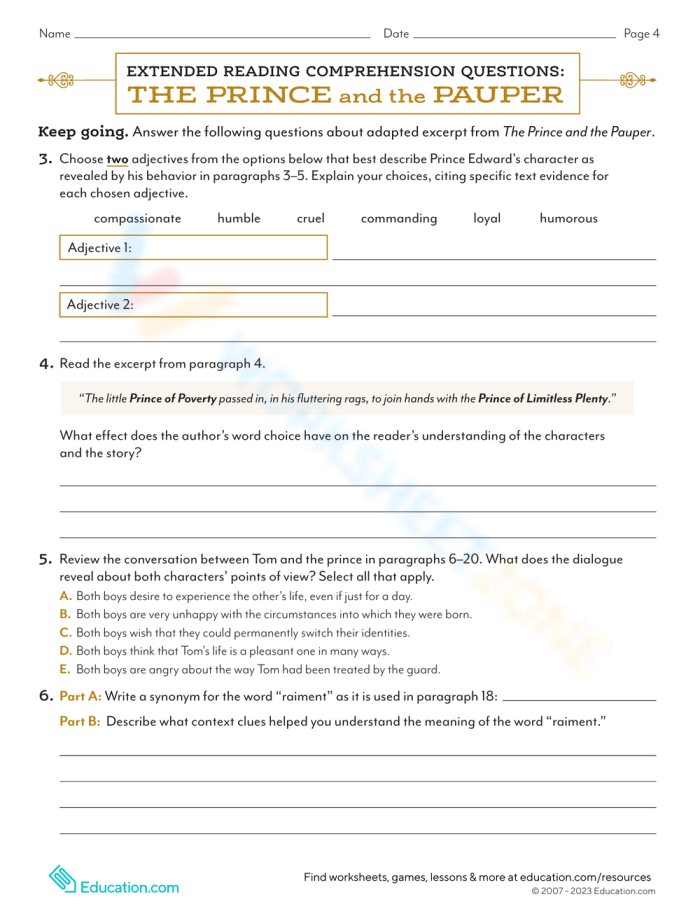
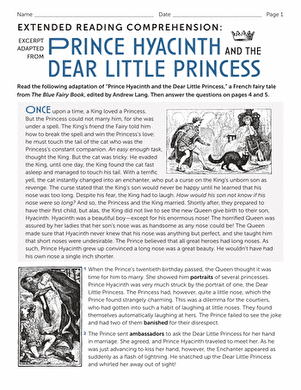
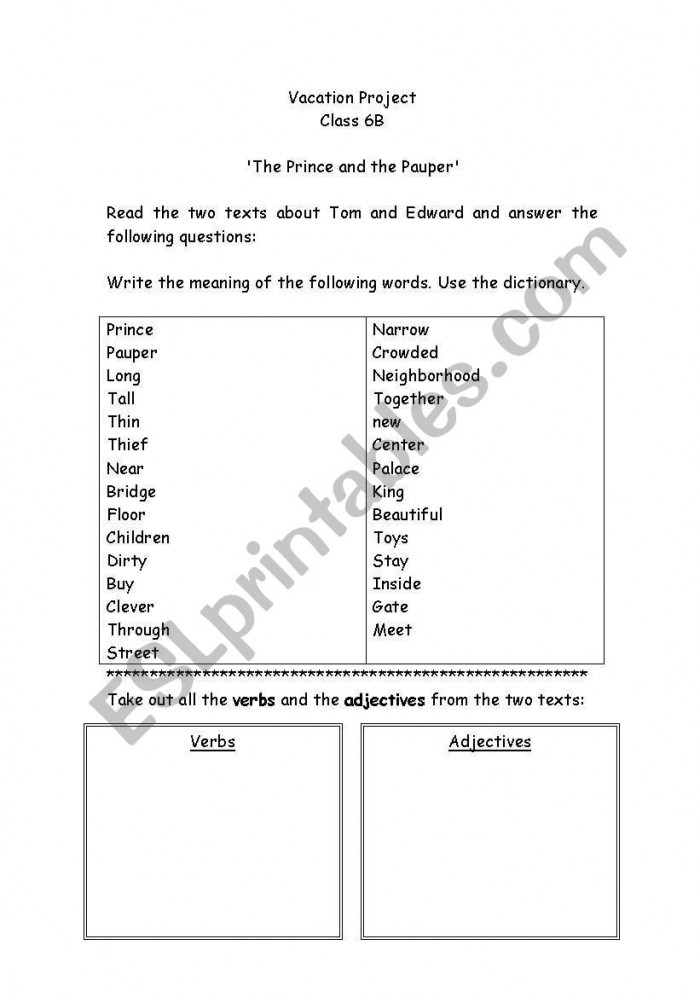
Additionally, educators can utilize printable extended reading comprehension worksheets based on this excerpt to further enrich the learning experience. These worksheets can help students practice their analytical skills while connecting literary themes to real-world issues. By examining adapted excerpts from The Prince and the Pauper, seventh graders can build a foundation for critical thinking that transcends literature and connects to broader societal discussions.
Use These Worksheets Today