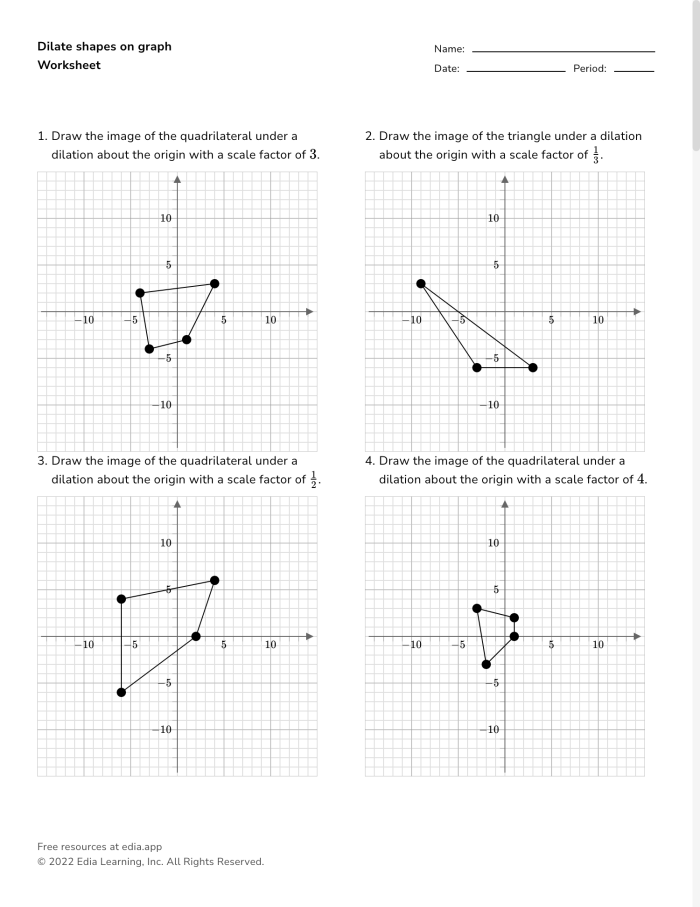
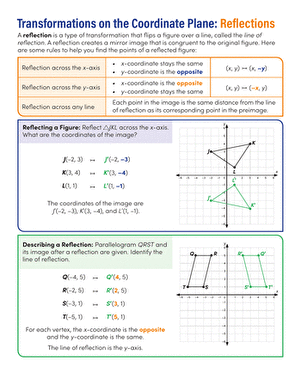
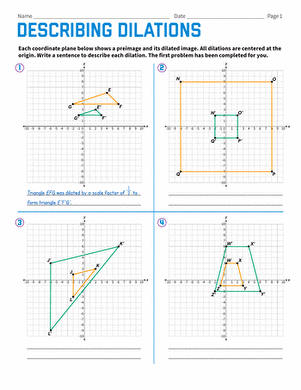
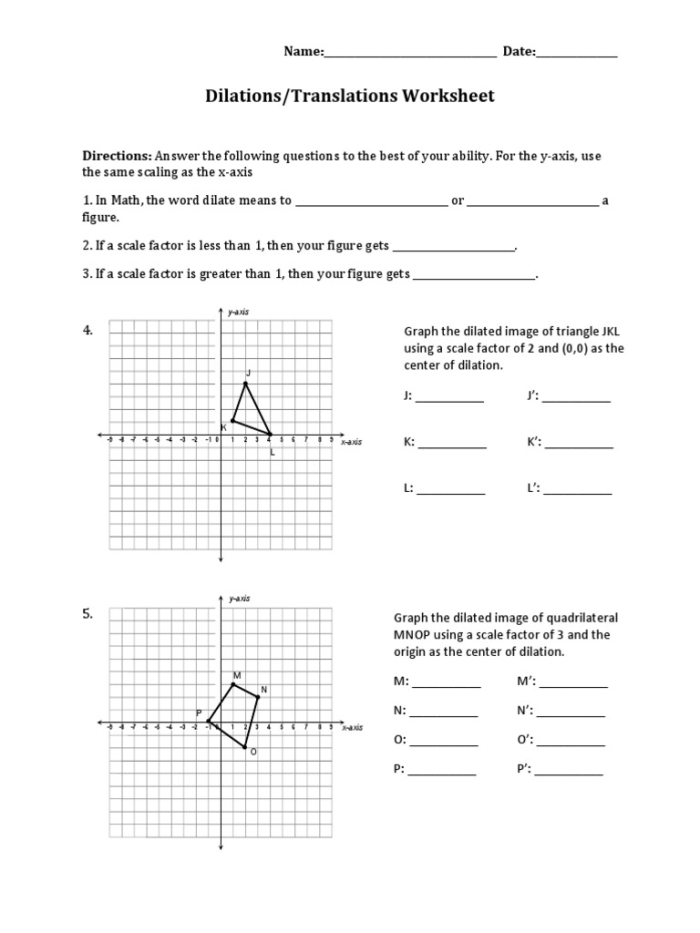
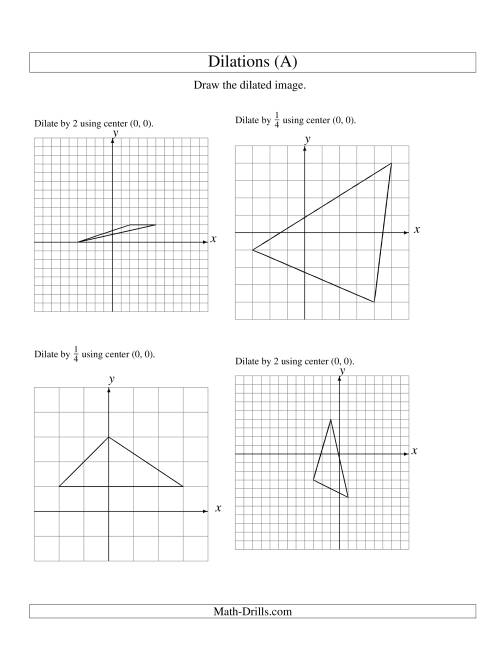
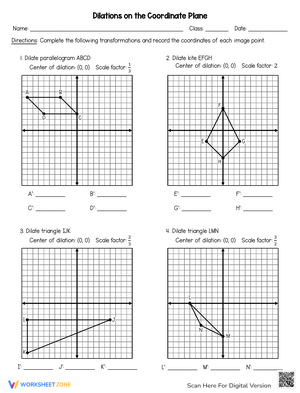
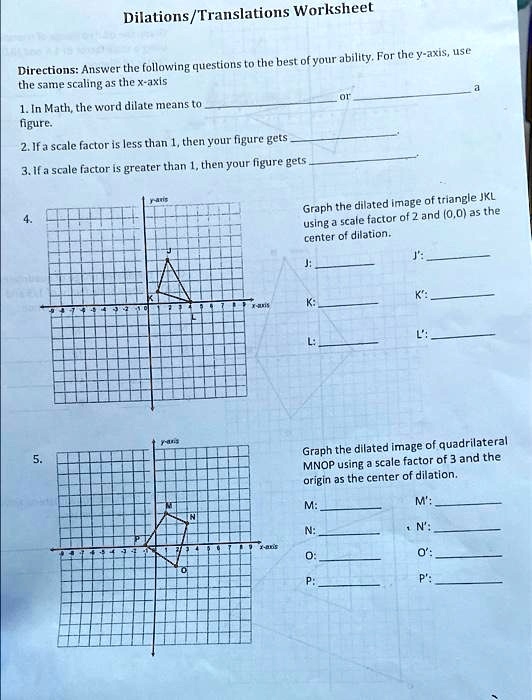
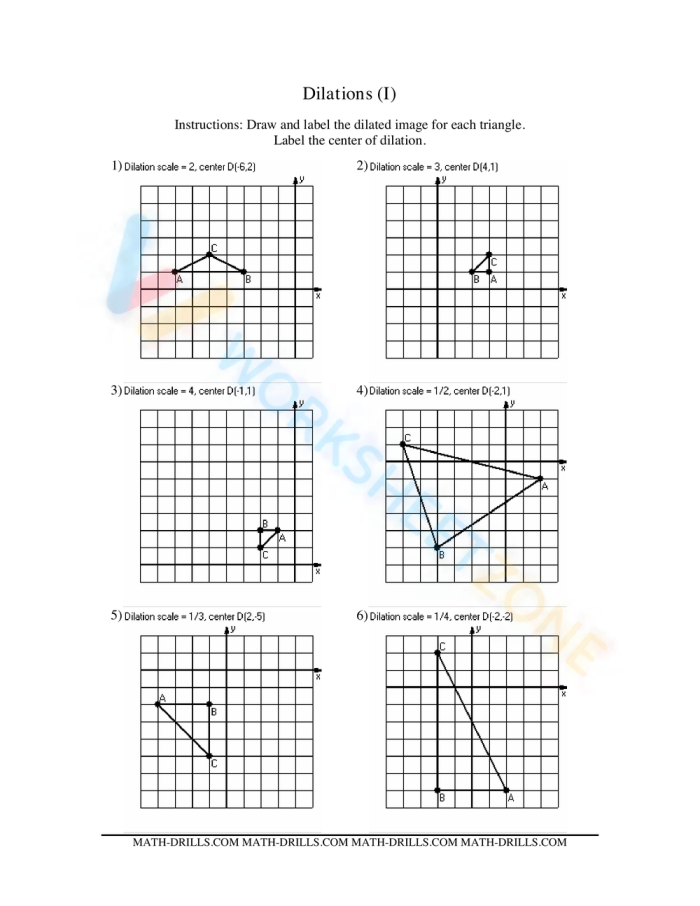
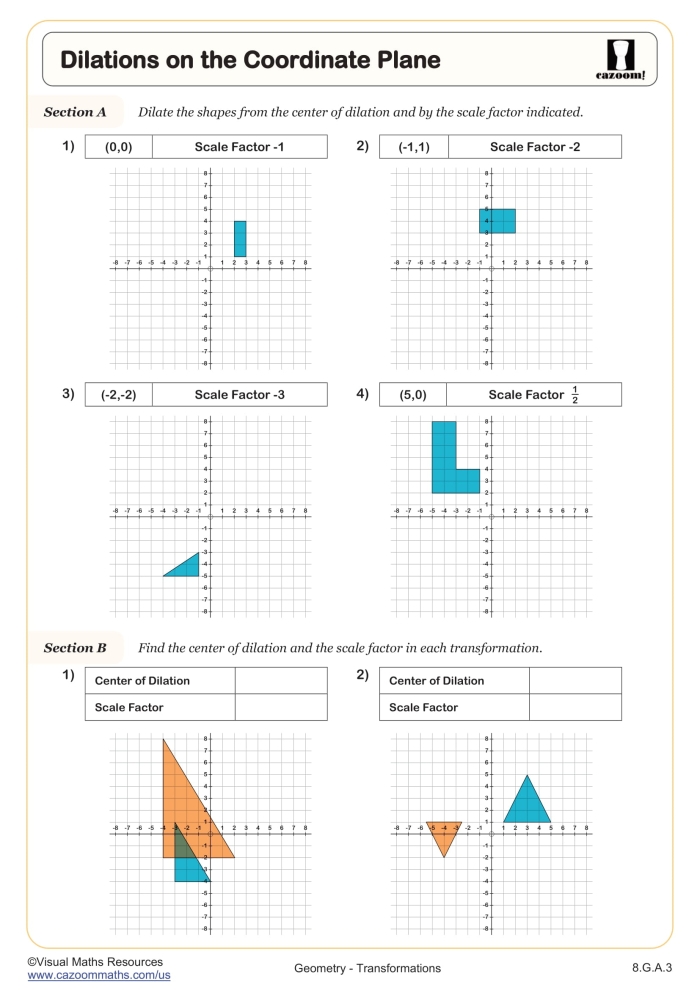
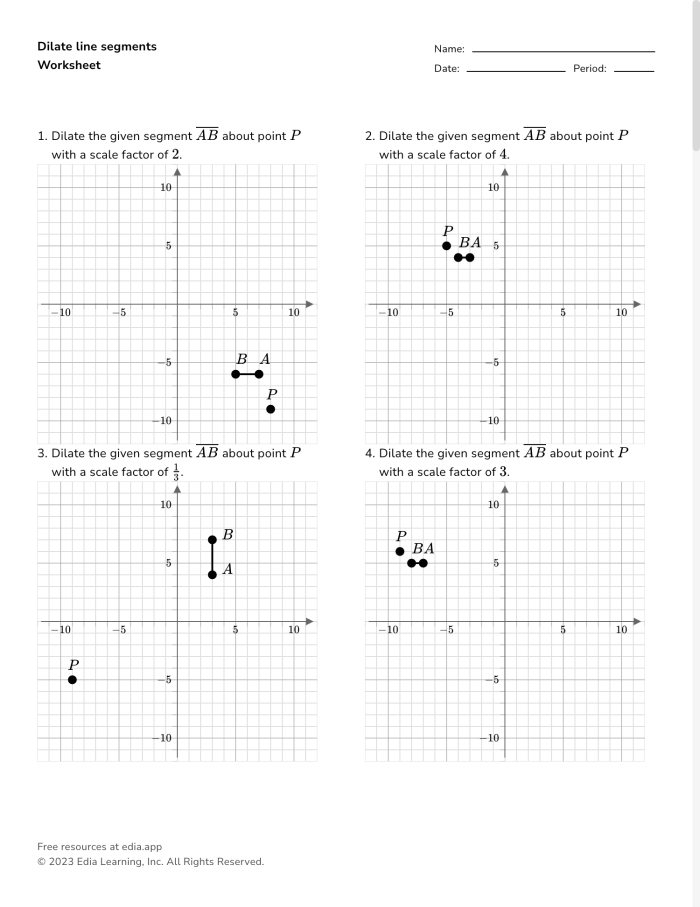
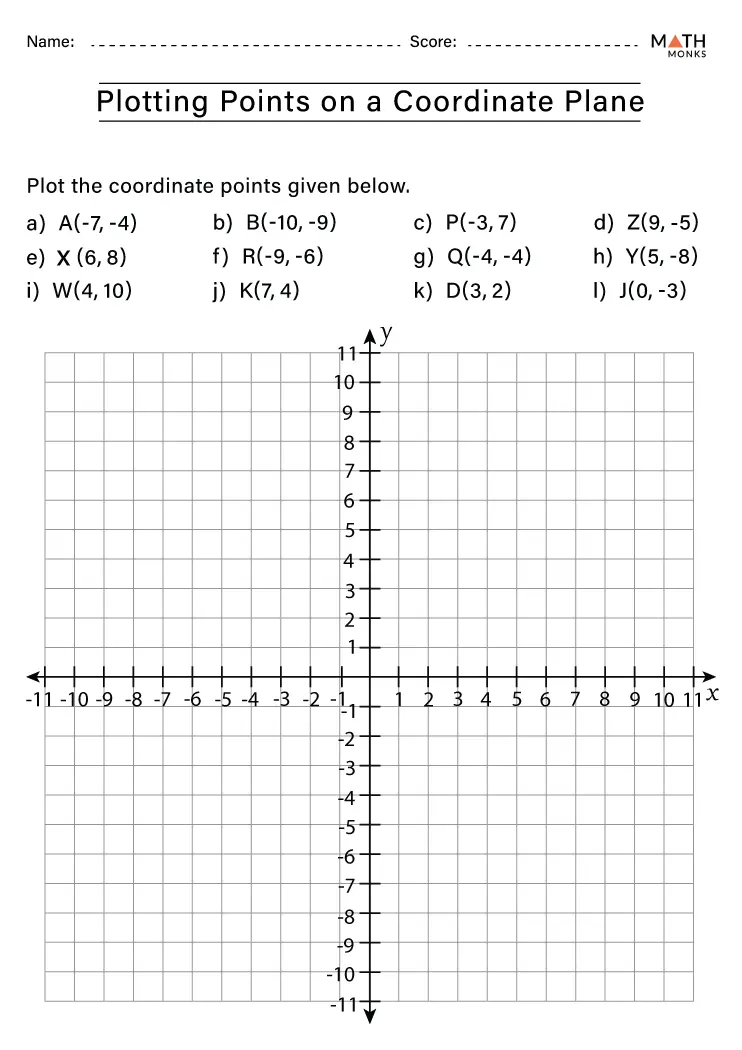
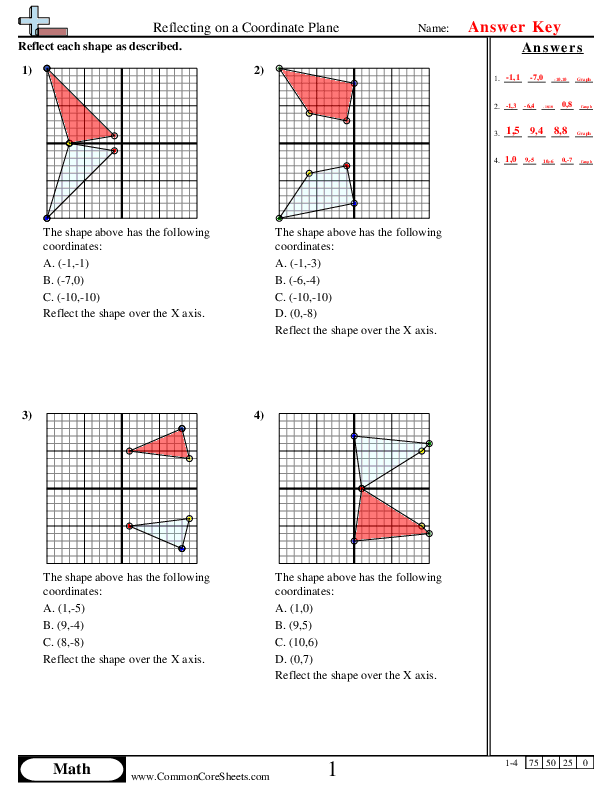
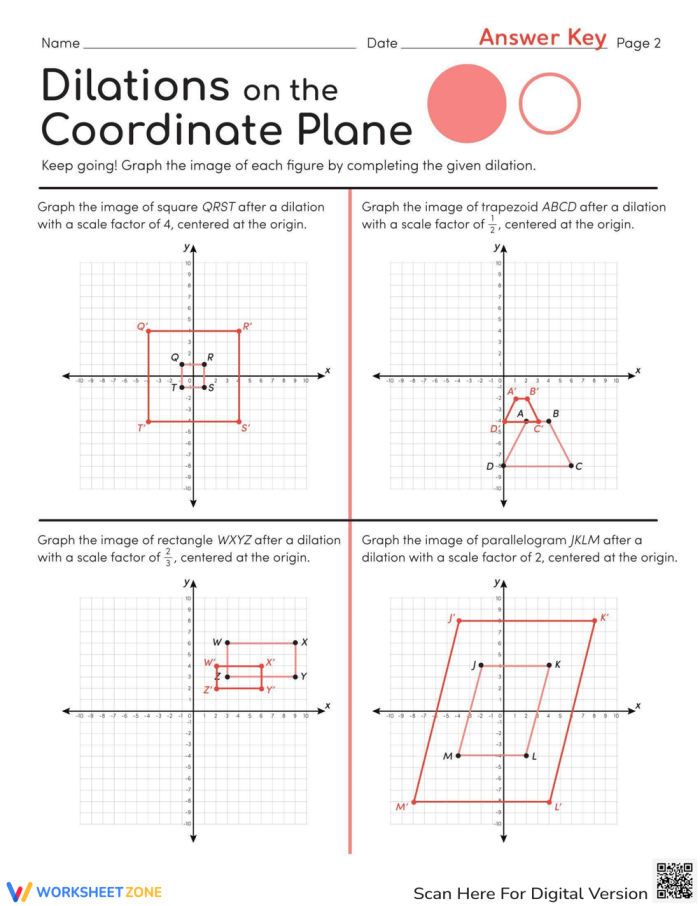
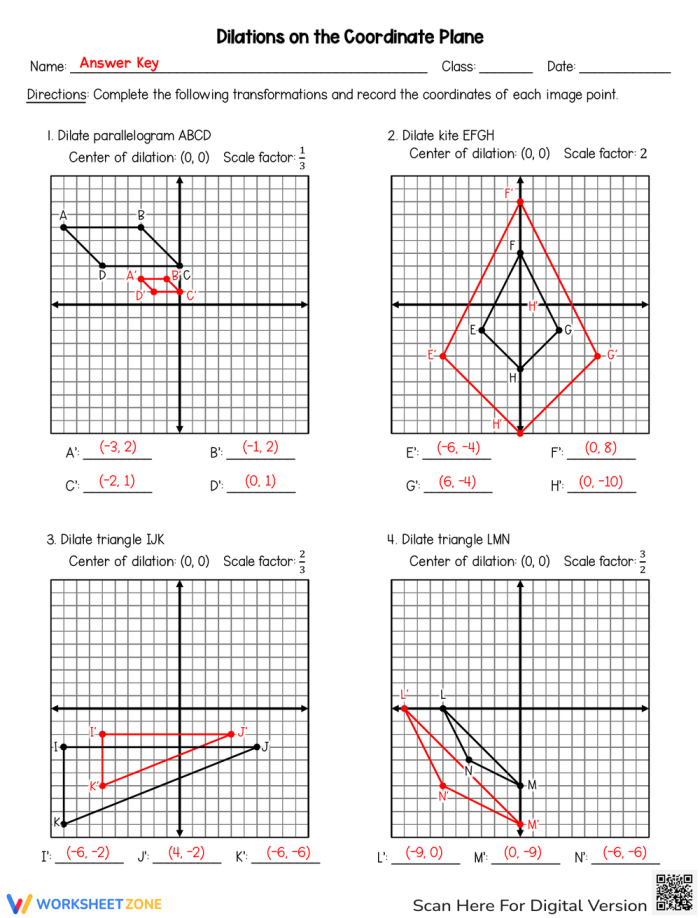
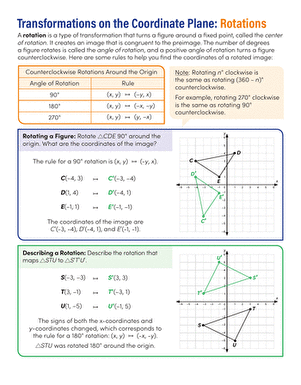
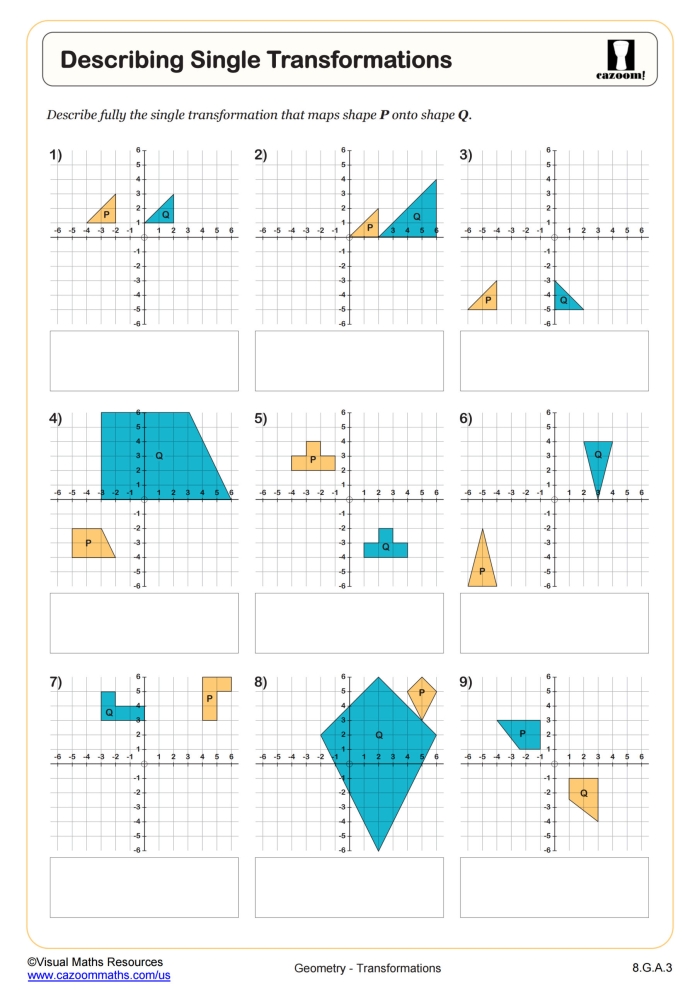
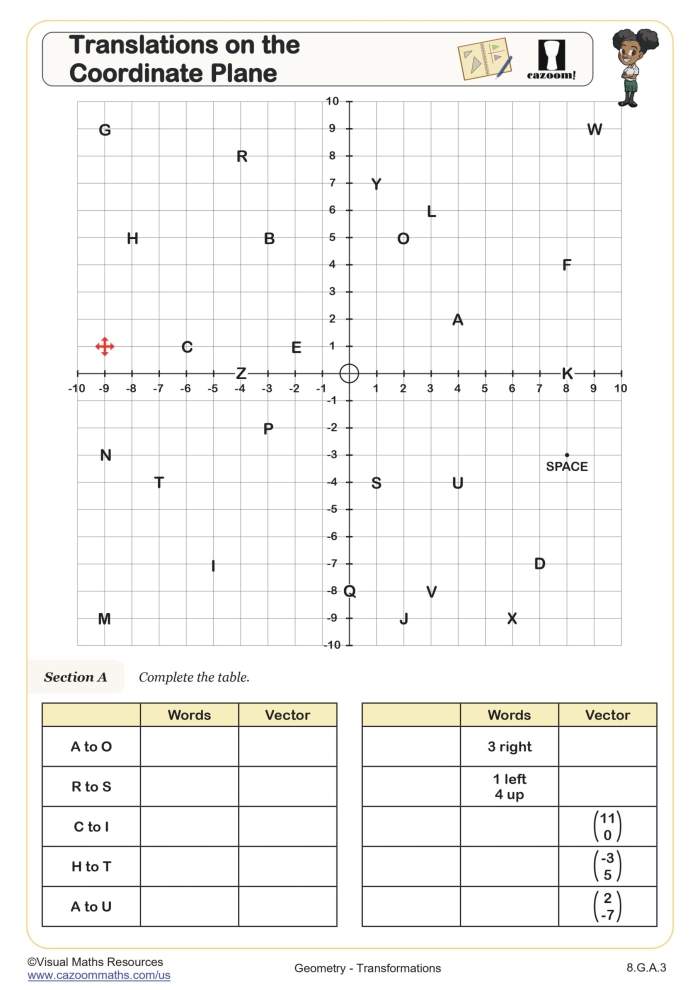
Understanding dilations on the coordinate plane is crucial for eighth graders exploring transformations in mathematics. This concept not only enhances geometric understanding but also lays the groundwork for more complex topics in algebra and geometry. A handy one-page handout can simplify this learning process, making it accessible and clear.
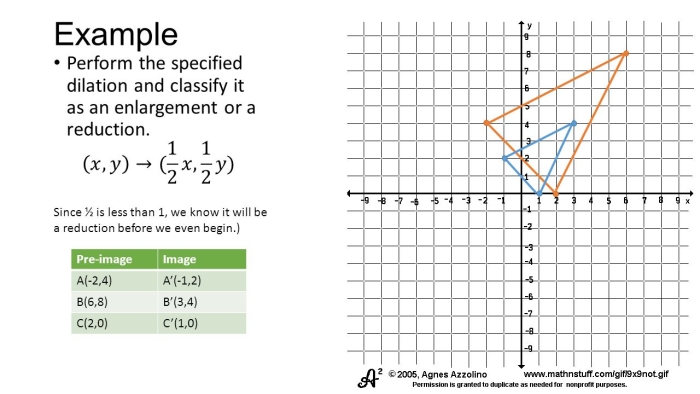
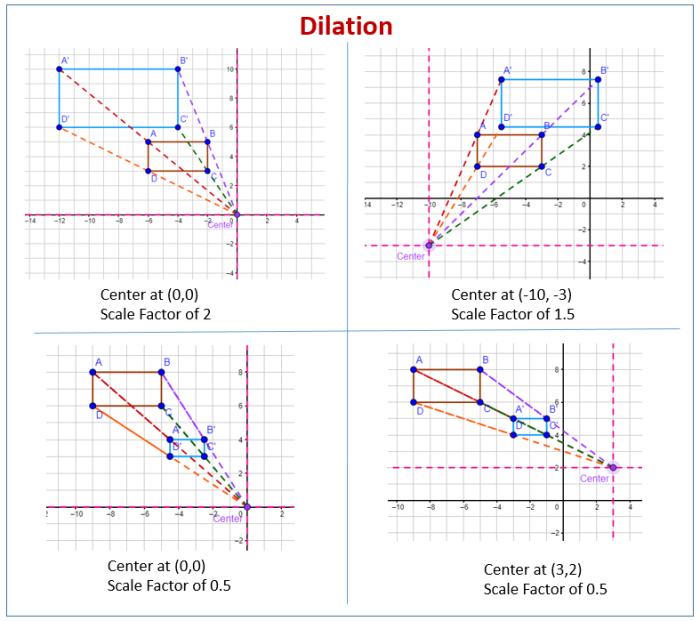
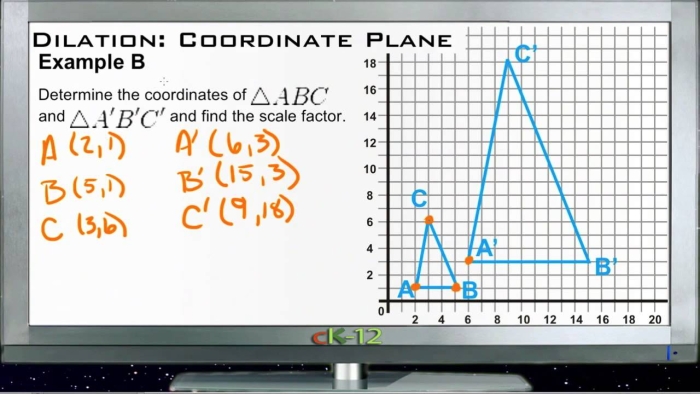
Dilations involve resizing figures on a coordinate plane while maintaining their shape. This transformation uses a center point and a scale factor. For example, if you have a triangle with vertices at (1, 2), (3, 4), and (2, 1), and you choose the origin (0, 0) as the center of dilation with a scale factor of 2, each vertex will move away from the origin. The new coordinates would be (2, 4), (6, 8), and (4, 2). This simple example illustrates how dilations work and how the figures retain their proportionality.
One key aspect of dilations is that they can either enlarge or reduce a shape. A scale factor greater than one enlarges the shape, while a scale factor between zero and one shrinks it. This duality can be particularly engaging for eighth-grade students as they visualize how shapes change size on the coordinate plane.
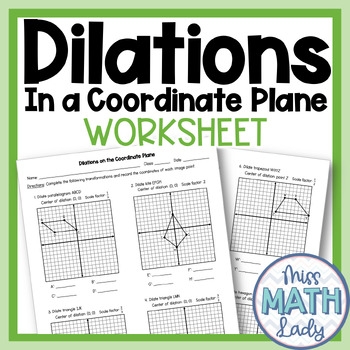
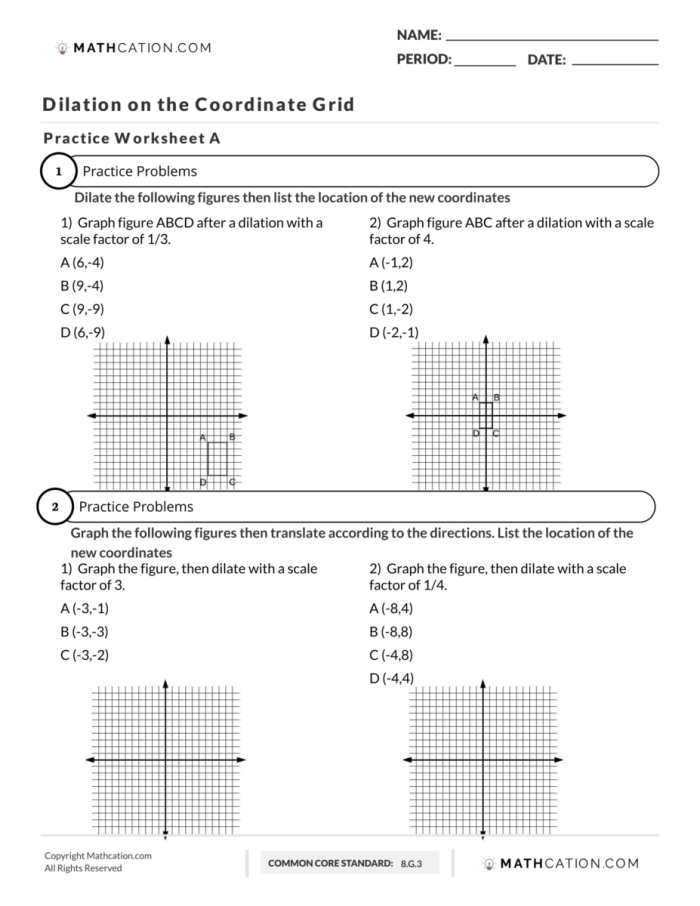
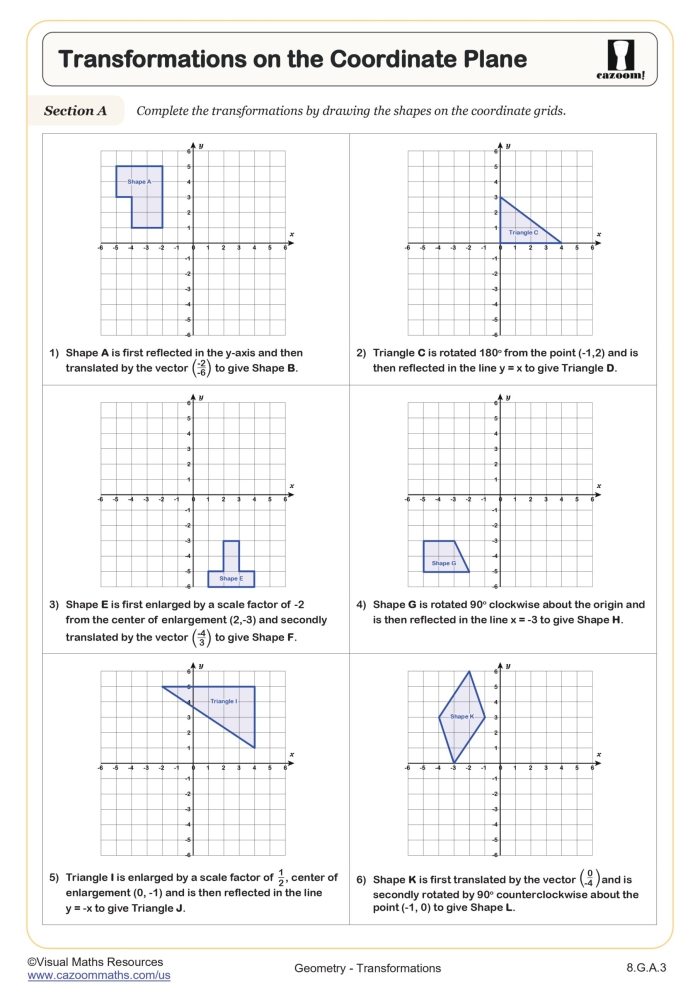
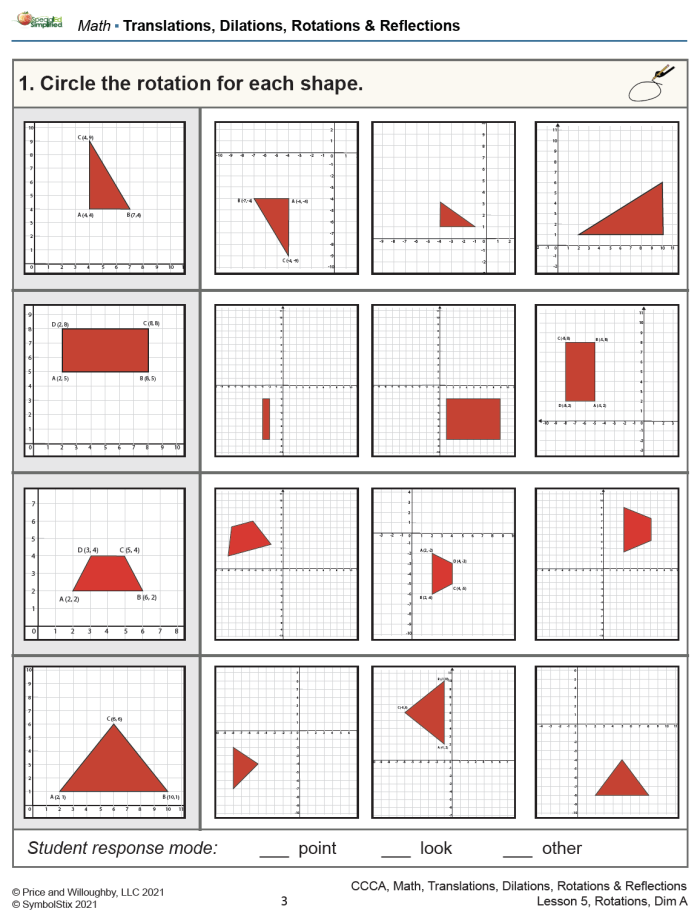
Moreover, practicing with printable transformations on the coordinate plane, such as dilations handout worksheets, reinforces learning. These worksheets not only provide students with exercises but also help them develop spatial reasoning skills. By applying dilations in various contexts, students can better grasp the importance of these transformations in real-world applications, such as architecture and engineering.
For those looking to further enhance their understanding of numbers and counting, exploring irrational numbers can be an excellent complement to learning about dilations. Engaging with resources like the identifying irrational numbers maze can deepen mathematical knowledge and improve problem-solving skills.
Printable Worksheets for Practice