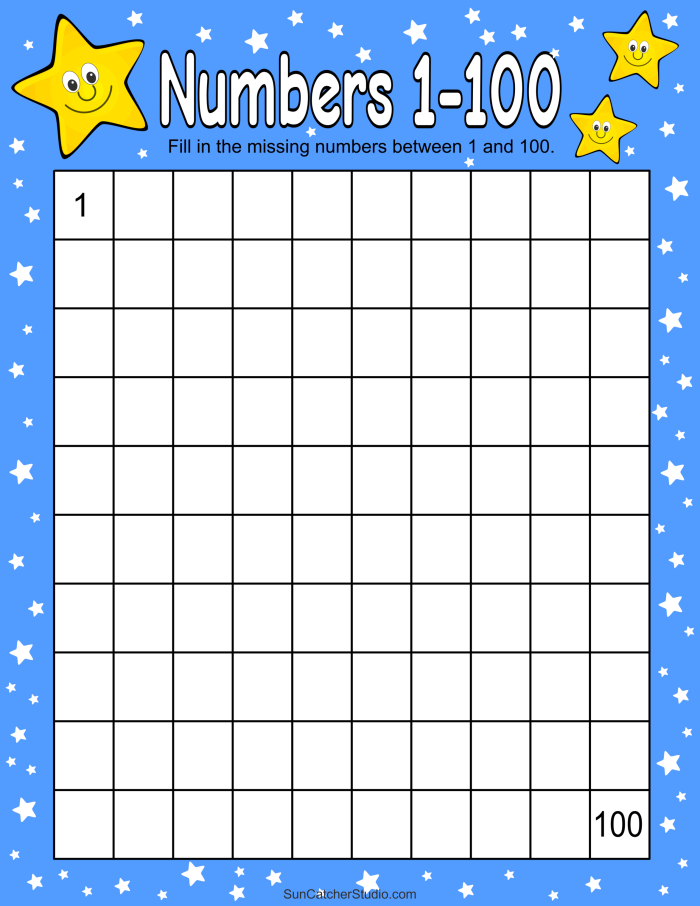
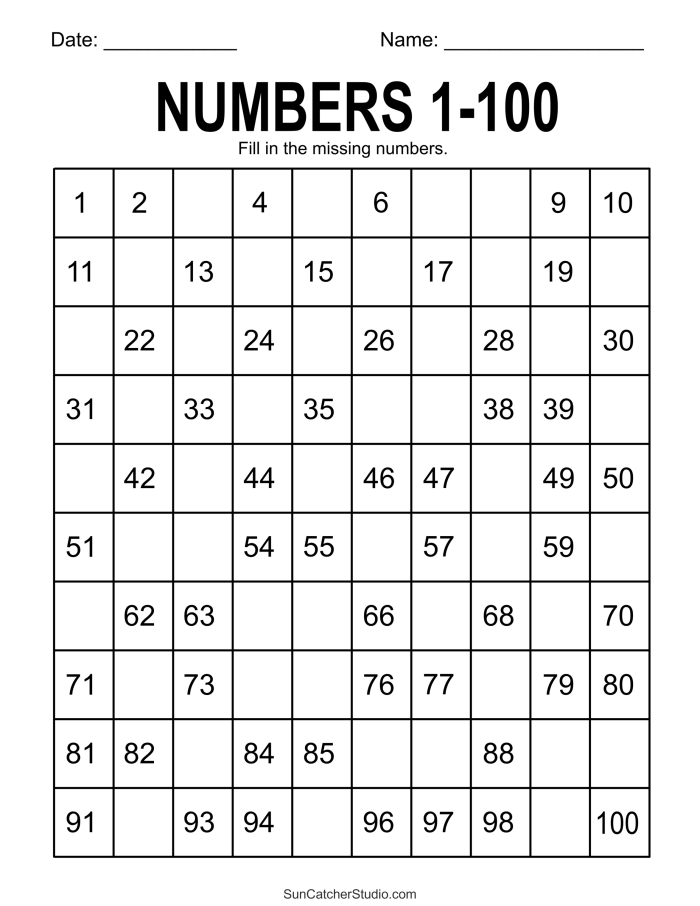
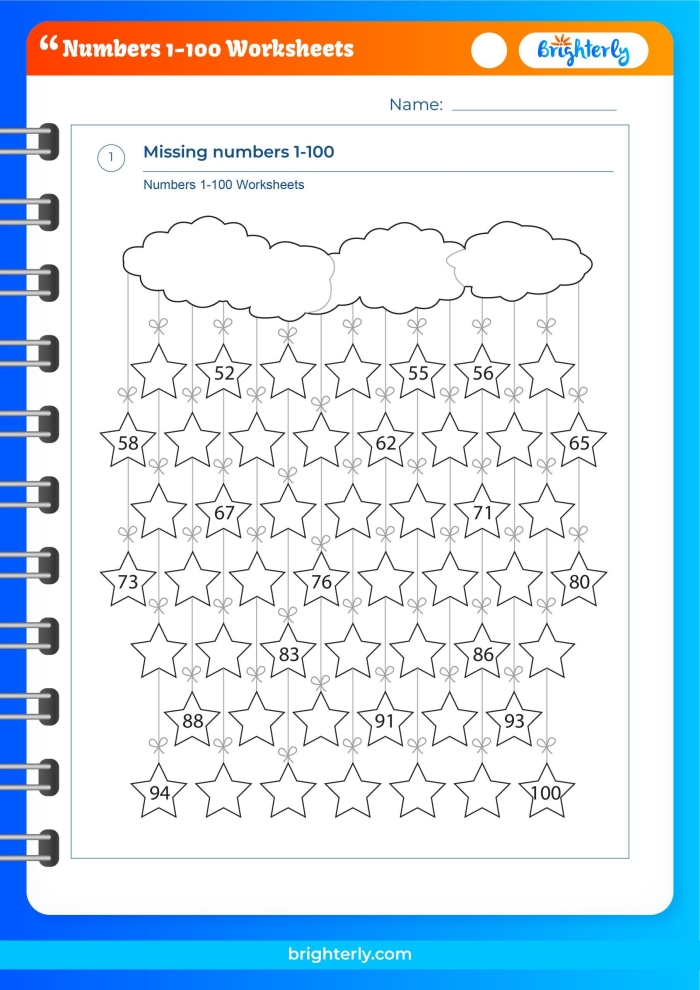
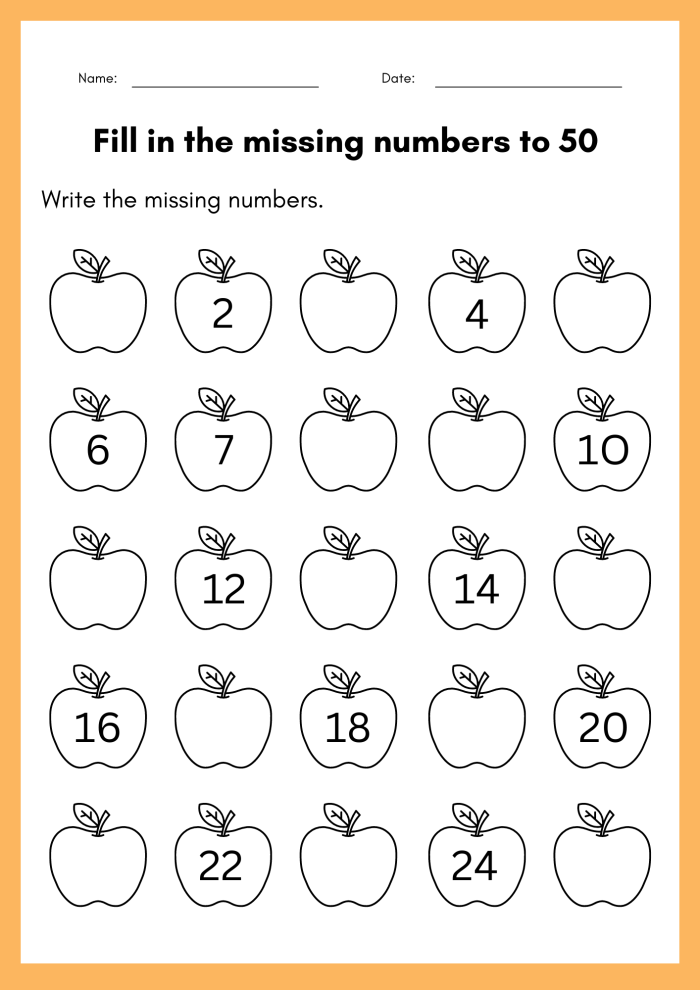
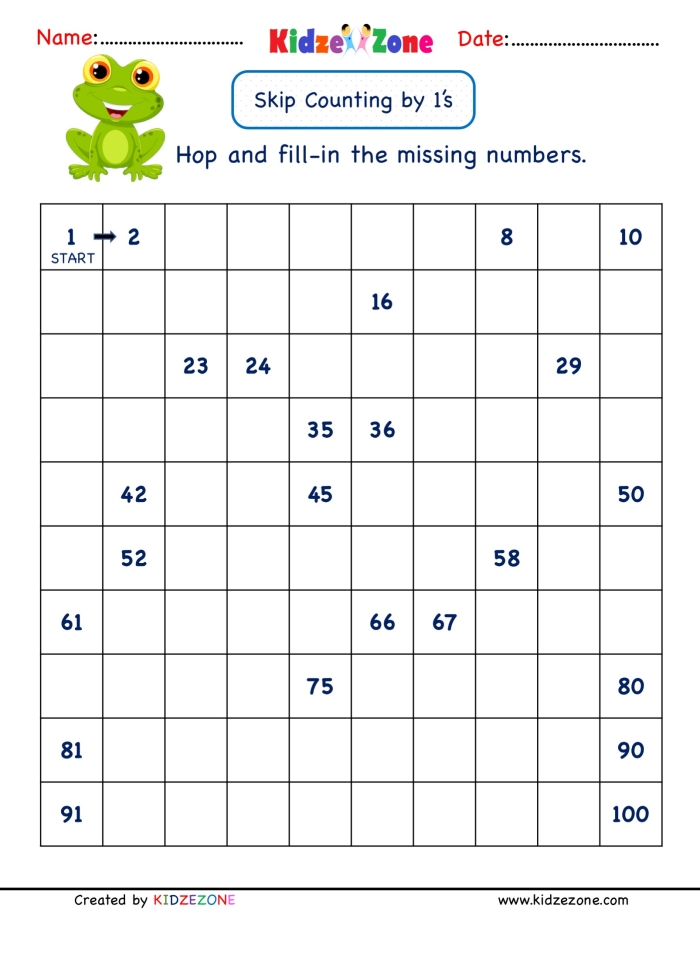
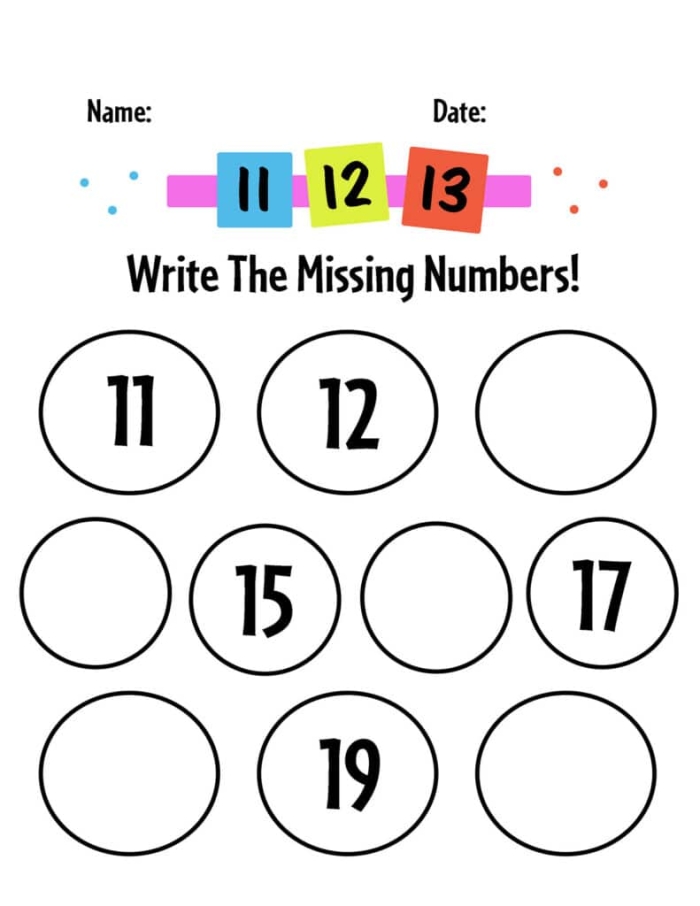
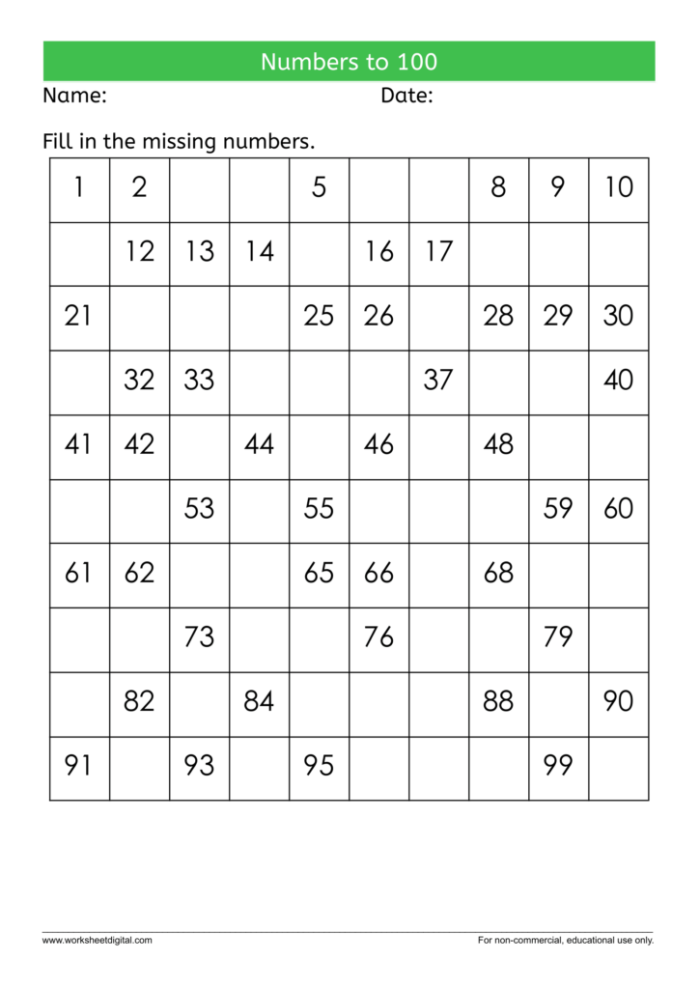
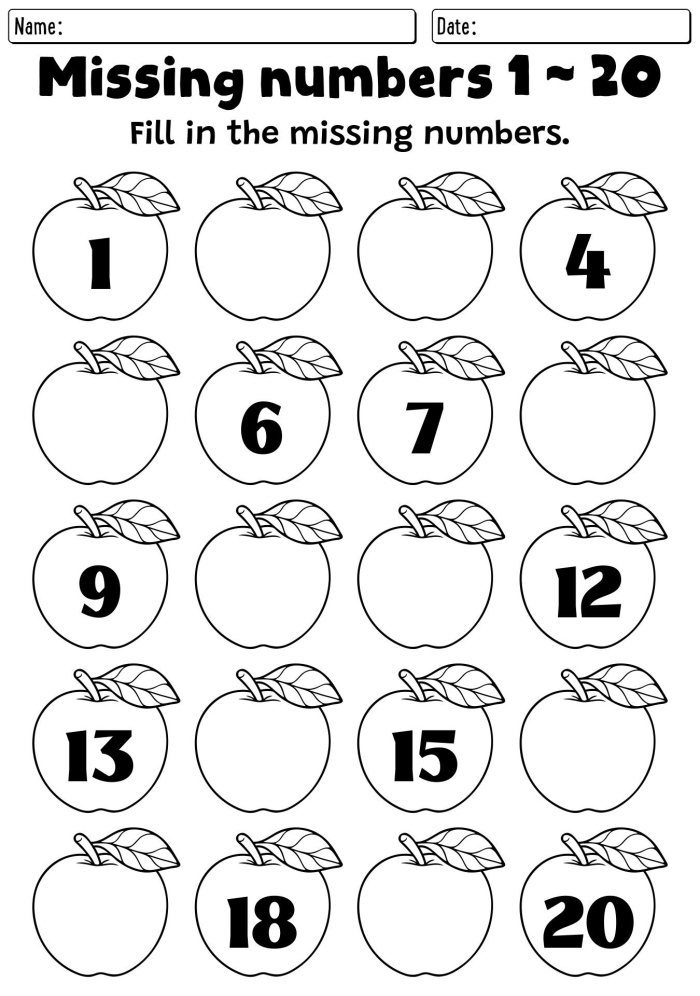
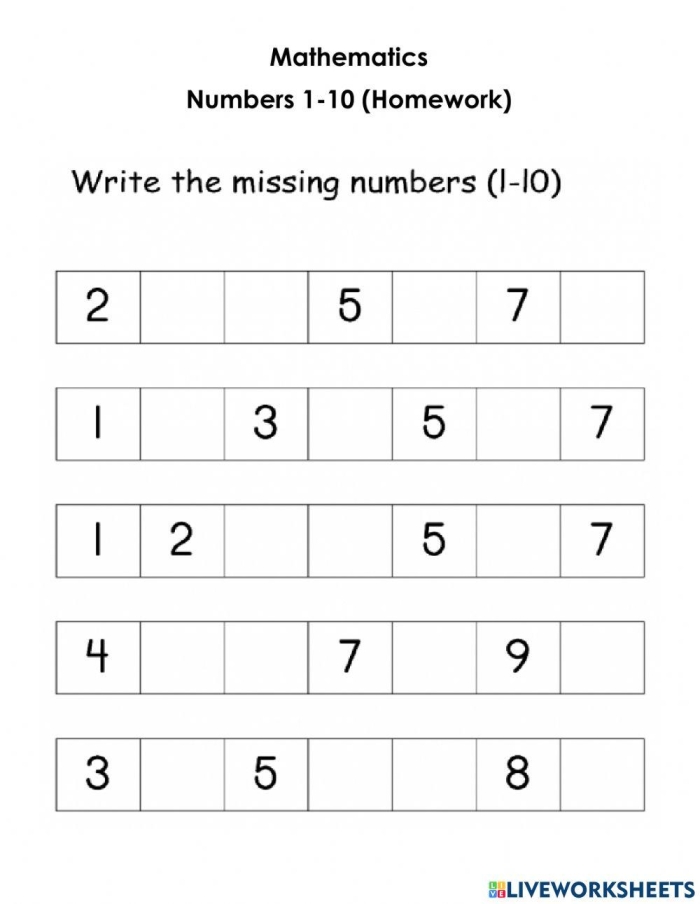
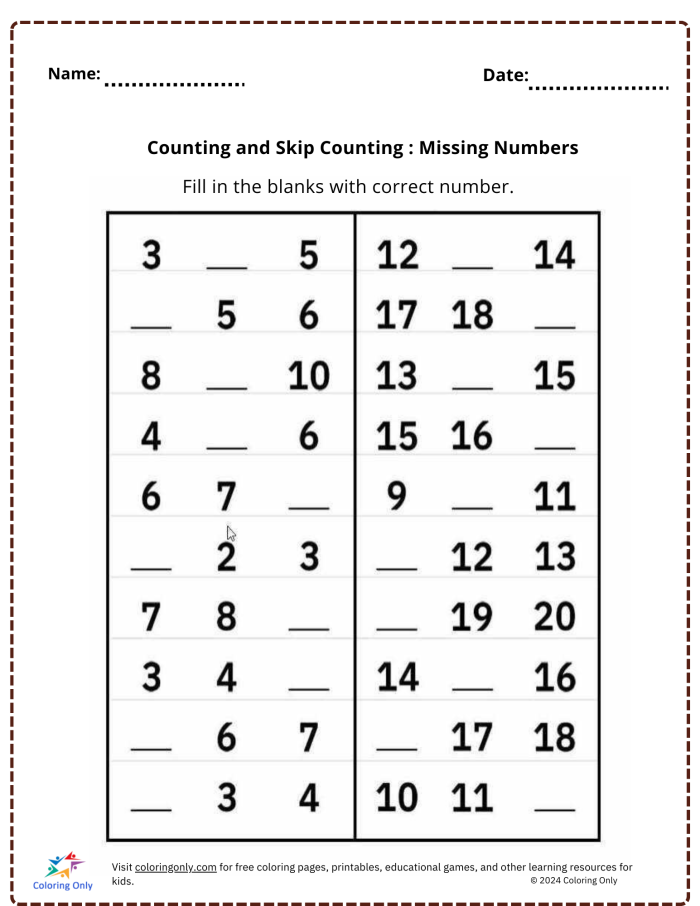
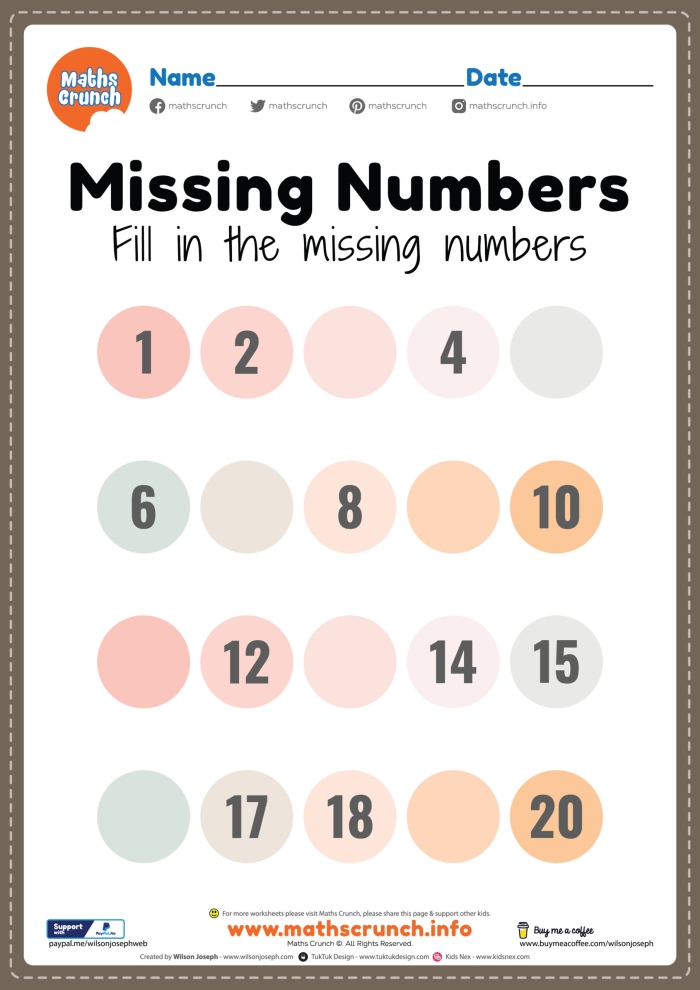
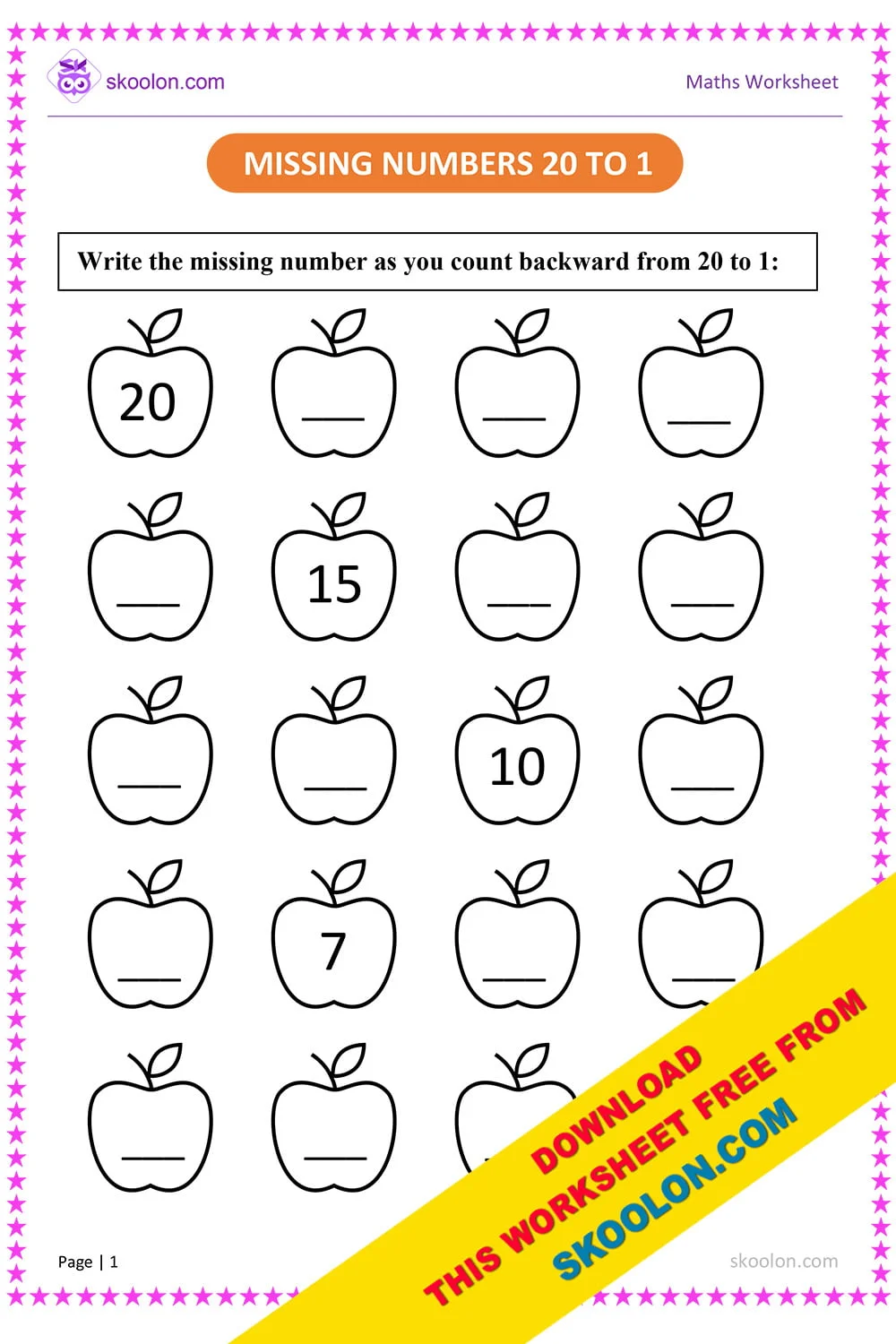
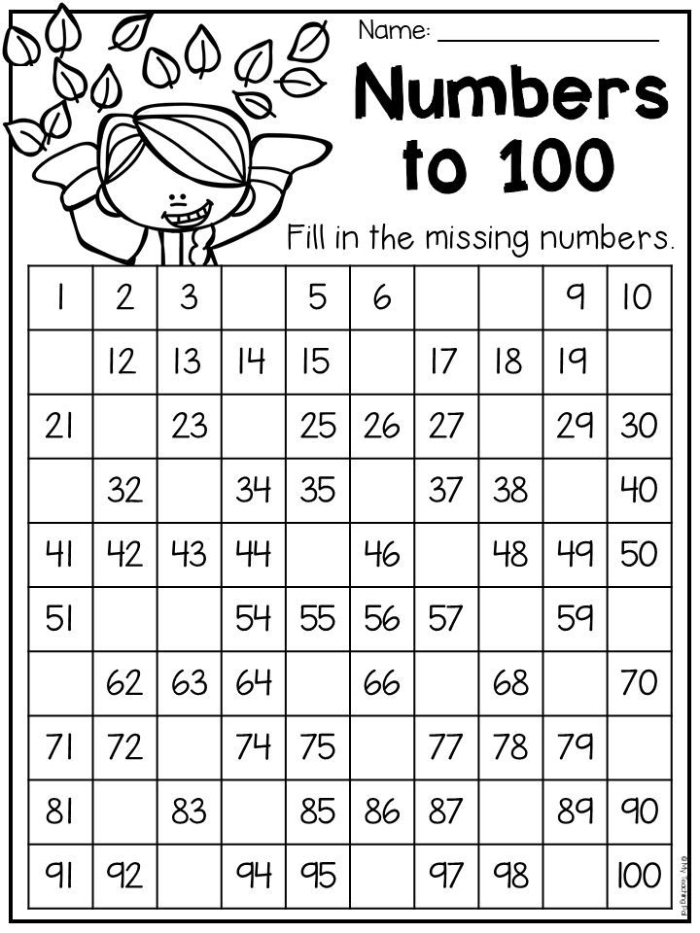
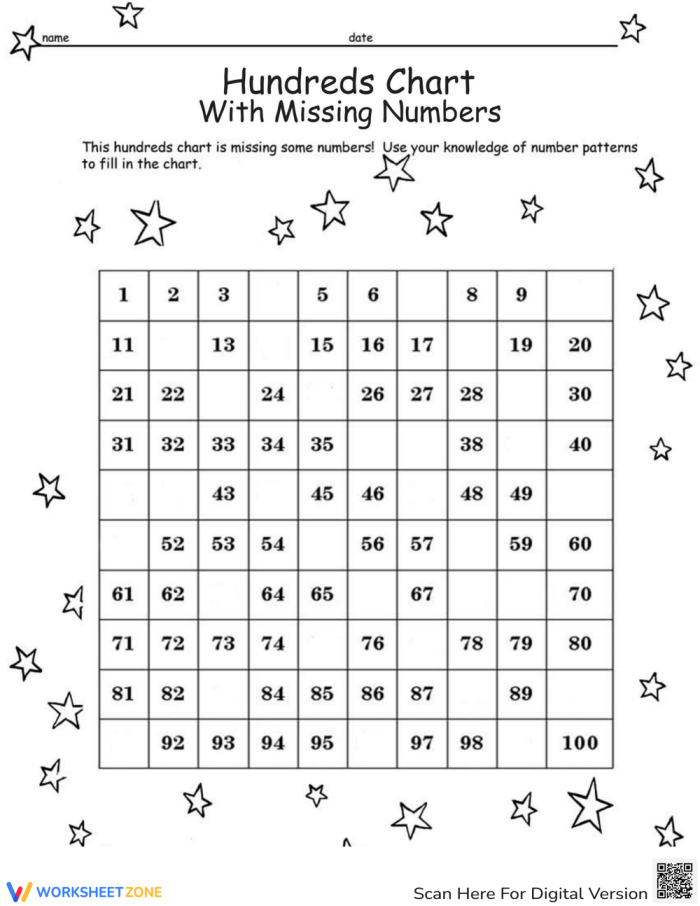
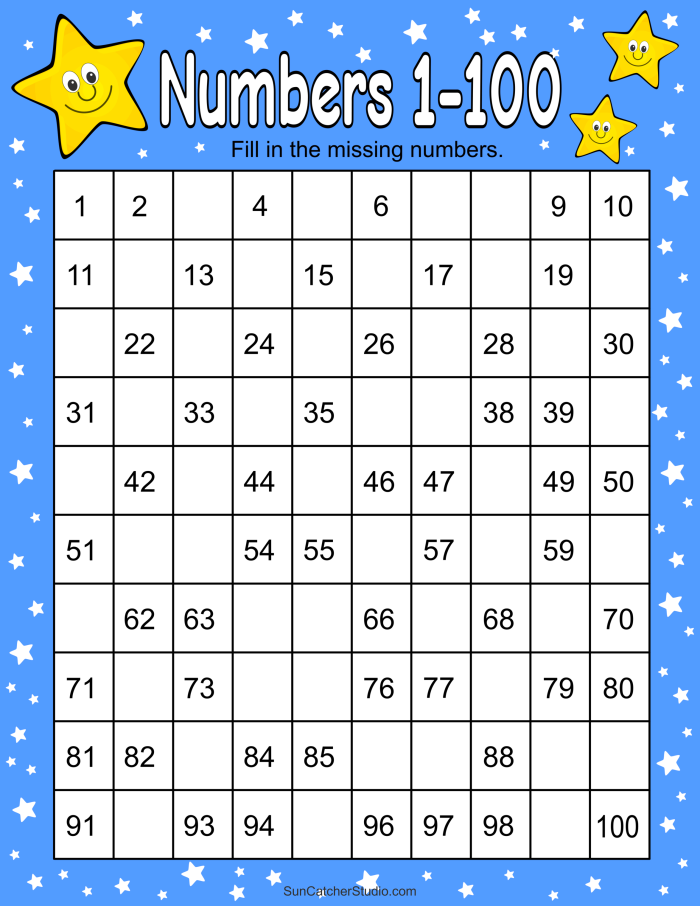
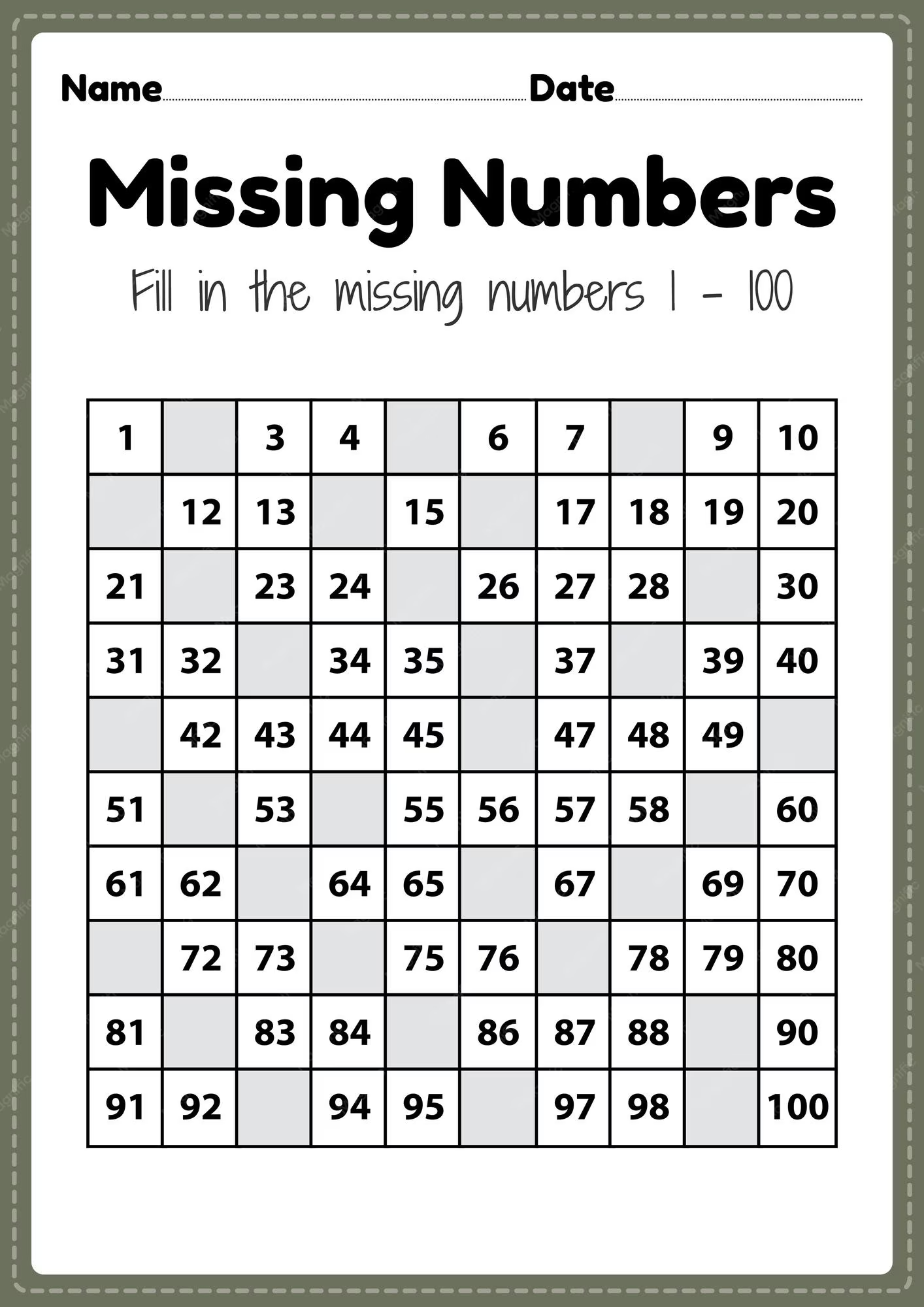
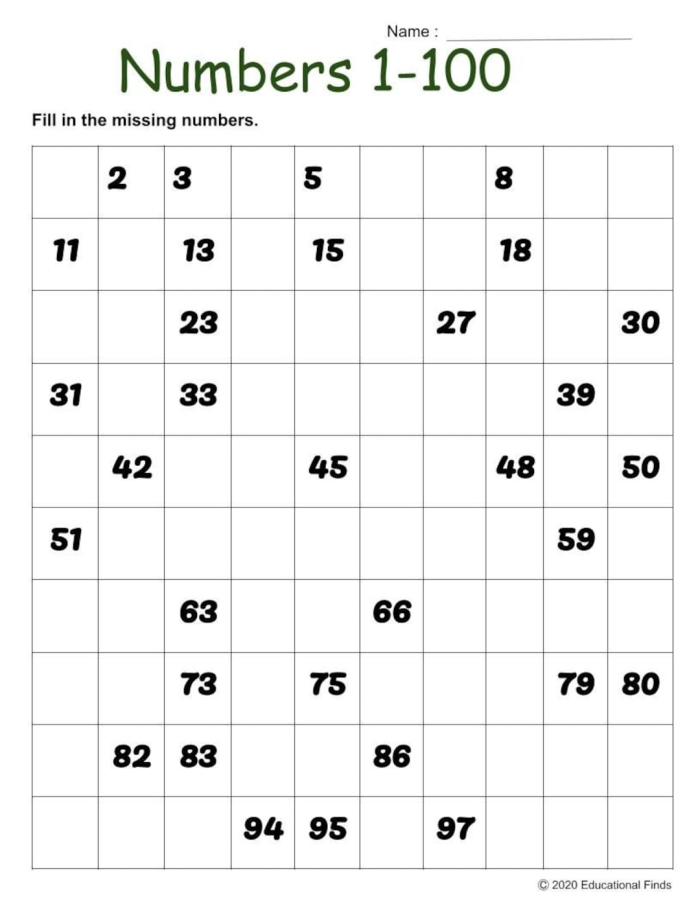
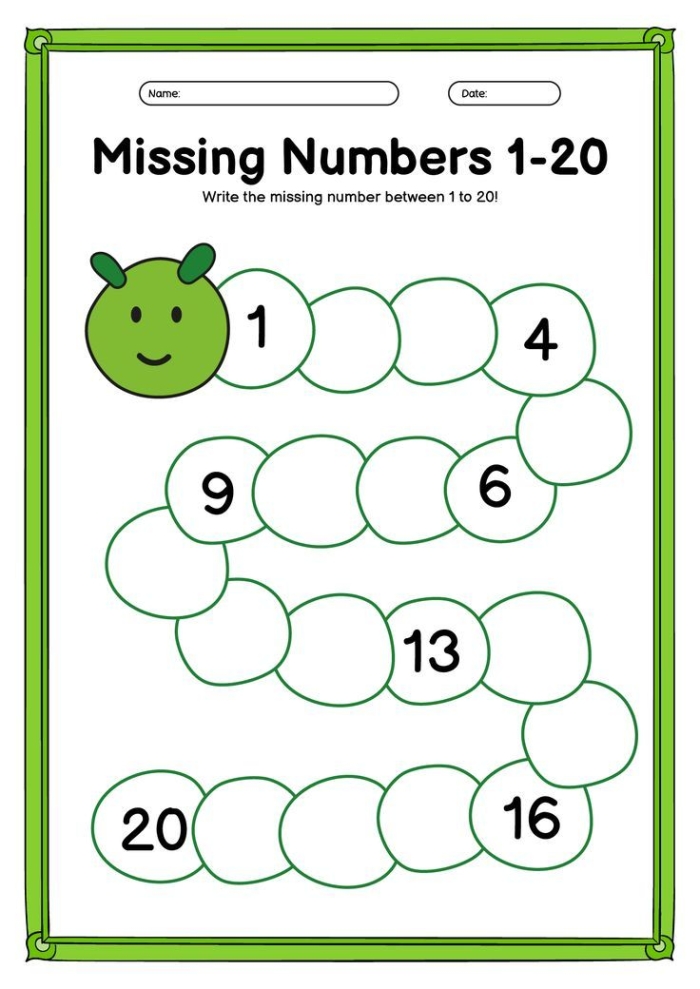
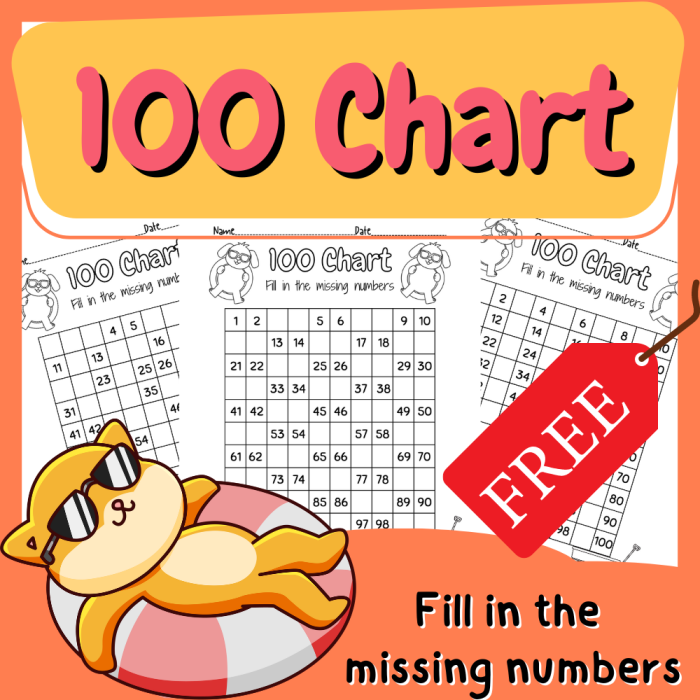
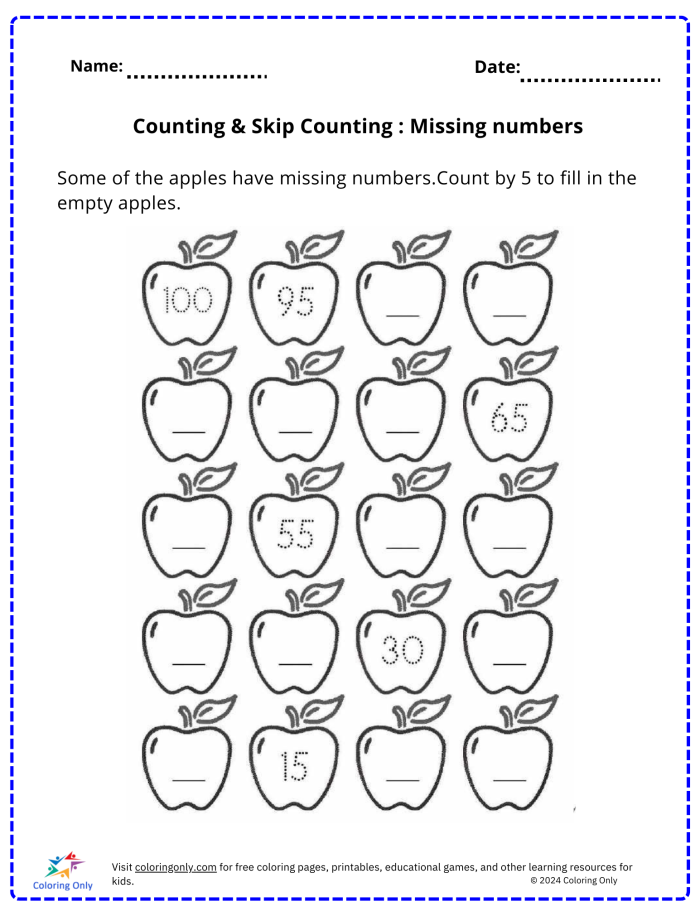
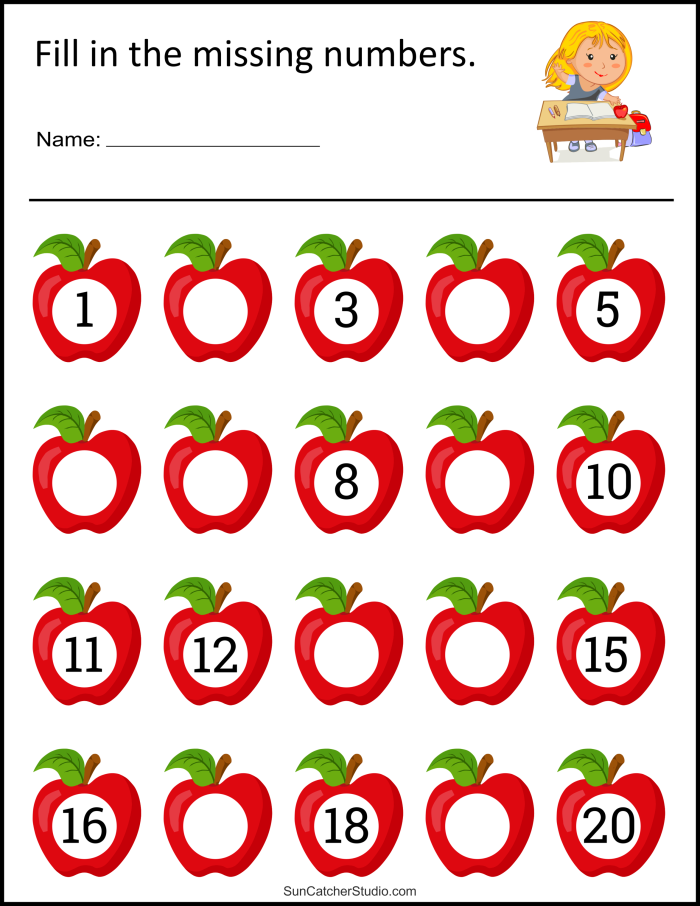
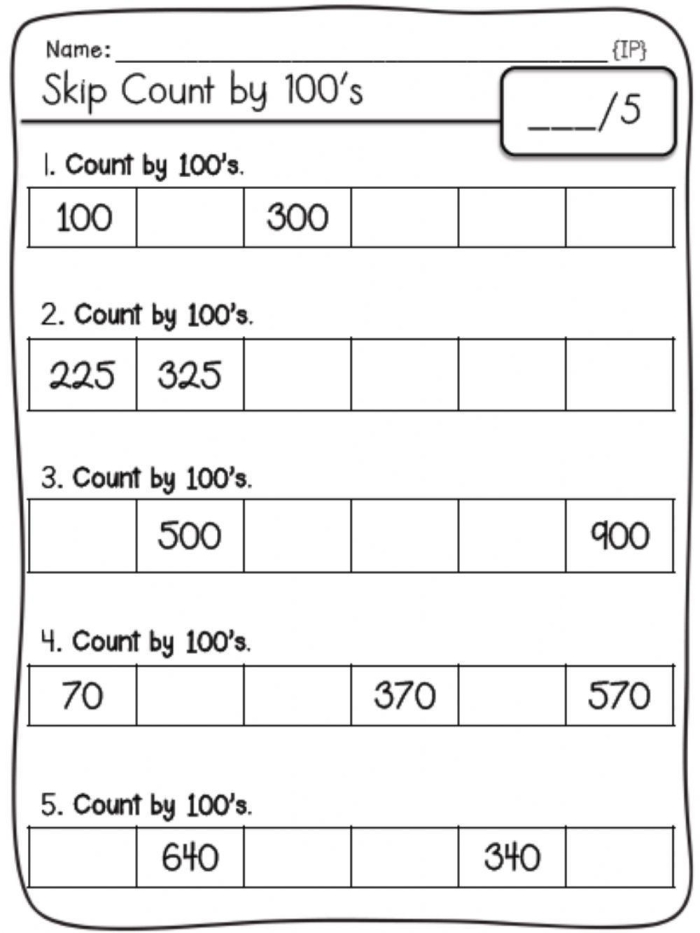
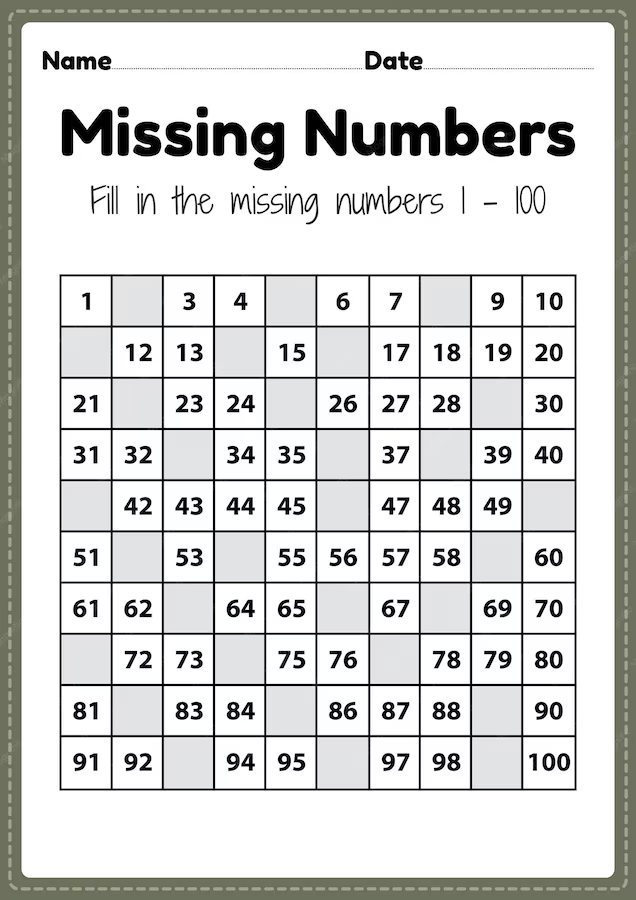
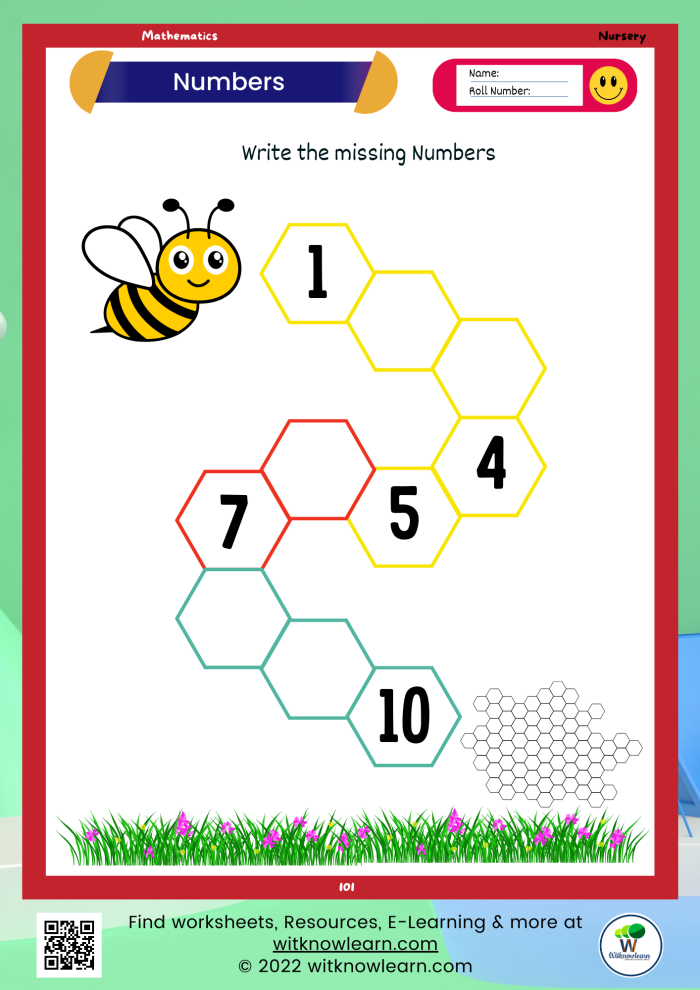
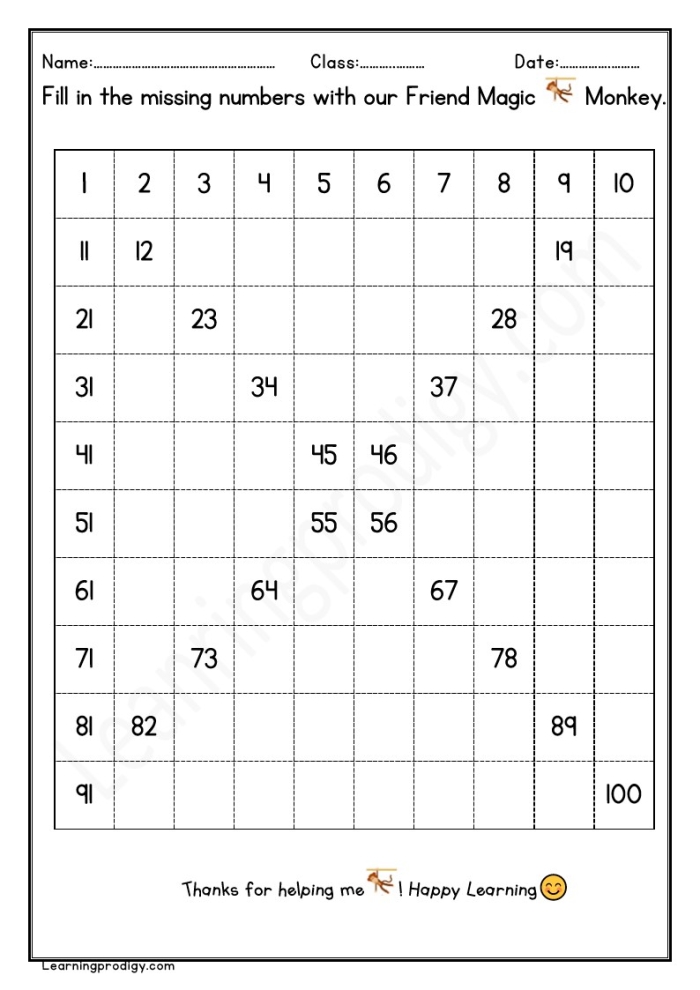
Filling in missing numbers on a hundreds counting chart can be an engaging way for children to enhance their number sense. This activity not only makes learning enjoyable but also lays a strong foundation for mathematical skills as they progress through first grade. Worksheets designed for this purpose often require children to identify and write in the numbers that are absent, reinforcing their understanding of sequences and number patterns.
The act of completing a hundreds chart helps young learners visualize numbers in a structured format. As they fill in the blanks, they gain confidence in their counting abilities and develop a deeper understanding of how numbers relate to one another. For example, when children notice that the missing number between 10 and 12 is 11, they are not just solving a puzzle; they are practicing essential counting skills that will serve them well in more complex math tasks later on.
Incorporating this type of worksheet into a first-grade curriculum can have lasting benefits. Not only does it align with the core principles of life science, where understanding patterns is vital, but it also engages students in critical thinking. Children might even enjoy discussing the patterns they observe, which can enhance their communication skills alongside their mathematical reasoning.
Printable missing numbers worksheets, such as those available on sites like Counting to 100, provide an easy way for parents and teachers to offer additional practice at home or in the classroom. These worksheets can be a valuable resource for reinforcing lessons on number sequences while keeping children motivated and eager to learn.
As children fill in the missing numbers, they engage with math in a fun, interactive way. This not only makes the learning experience enjoyable but also helps solidify their knowledge as they prepare for future challenges in mathematics and beyond.
Worksheet Practice Section