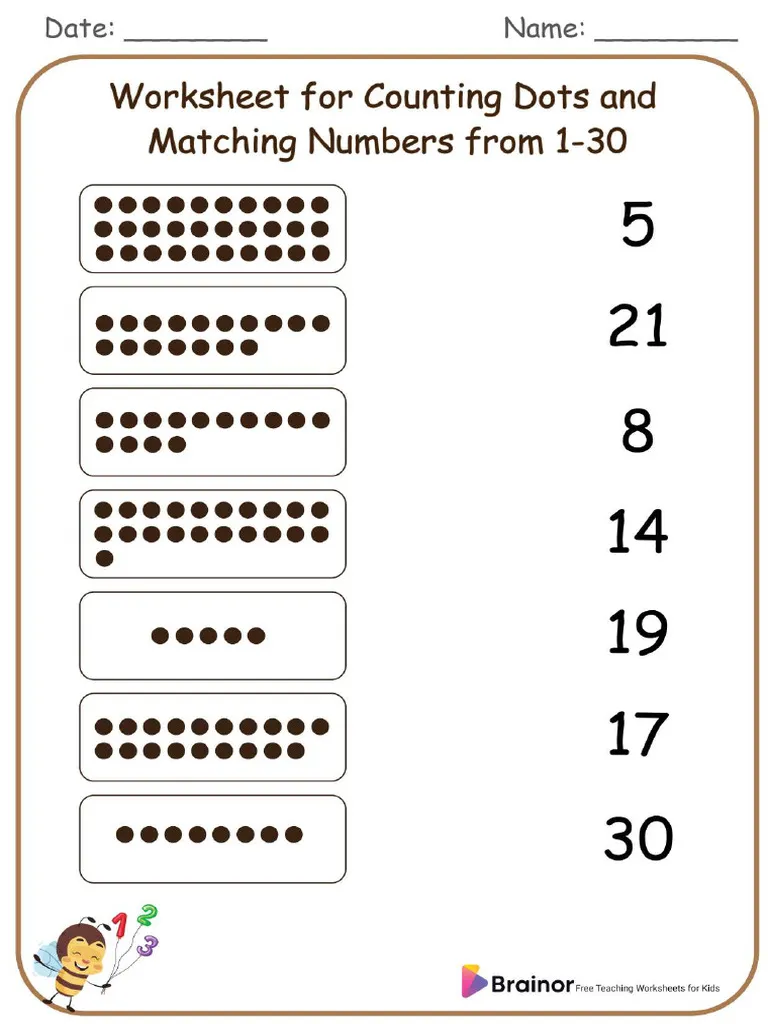
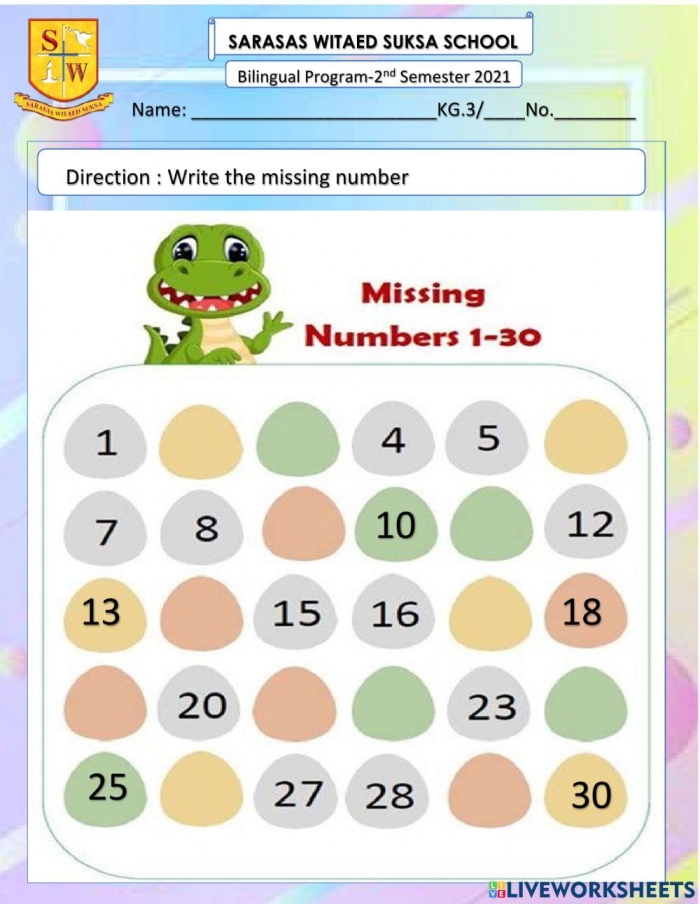
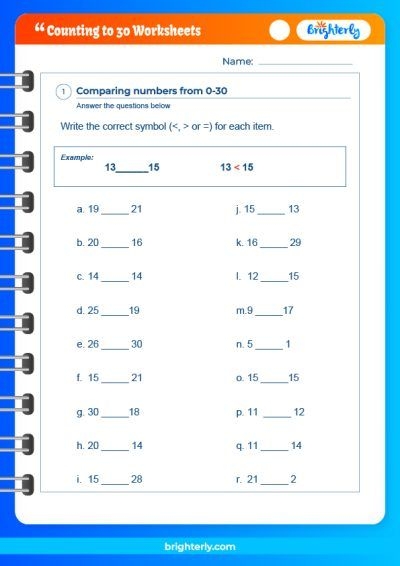
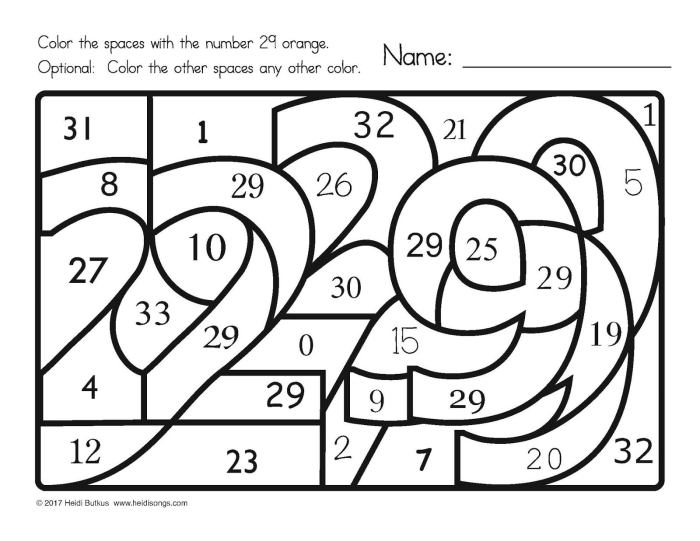
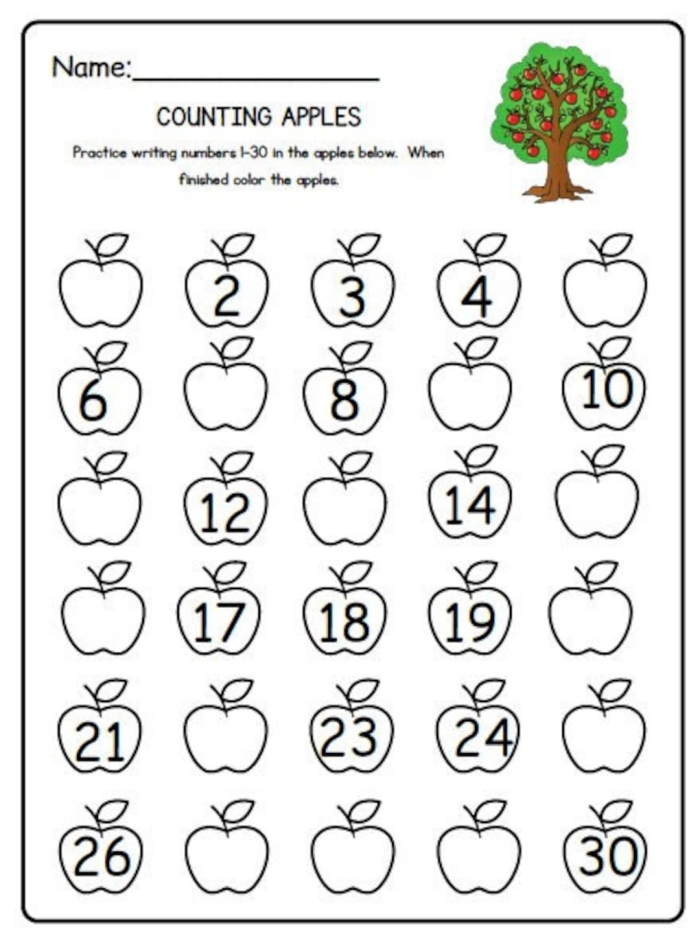
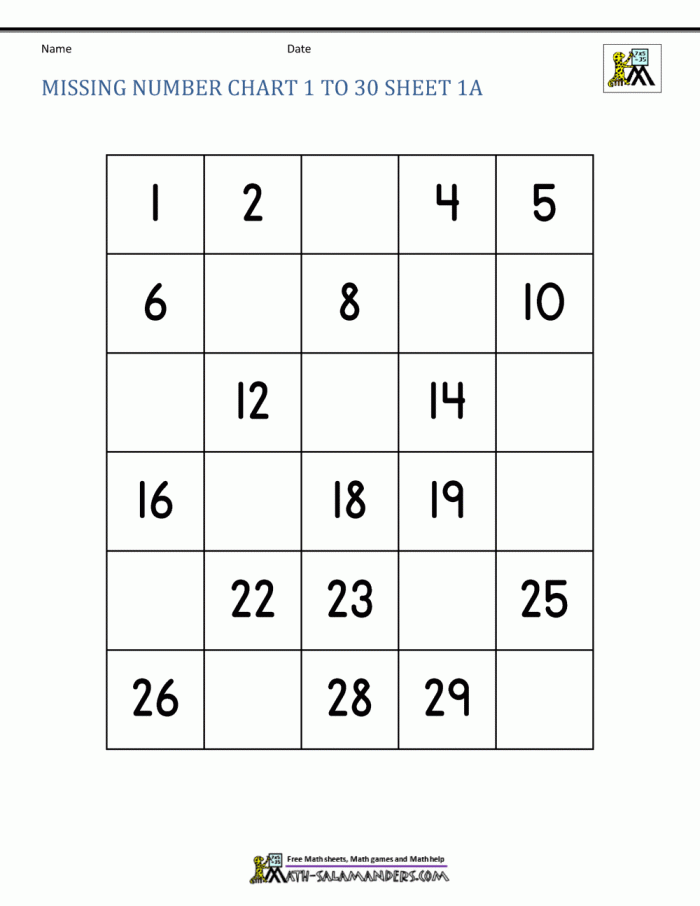
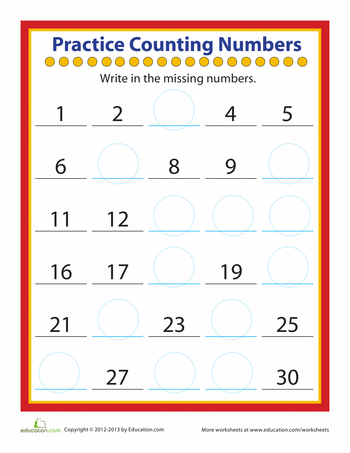
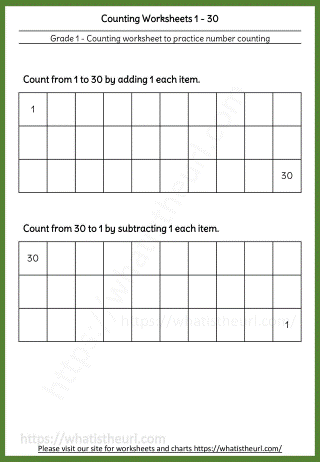
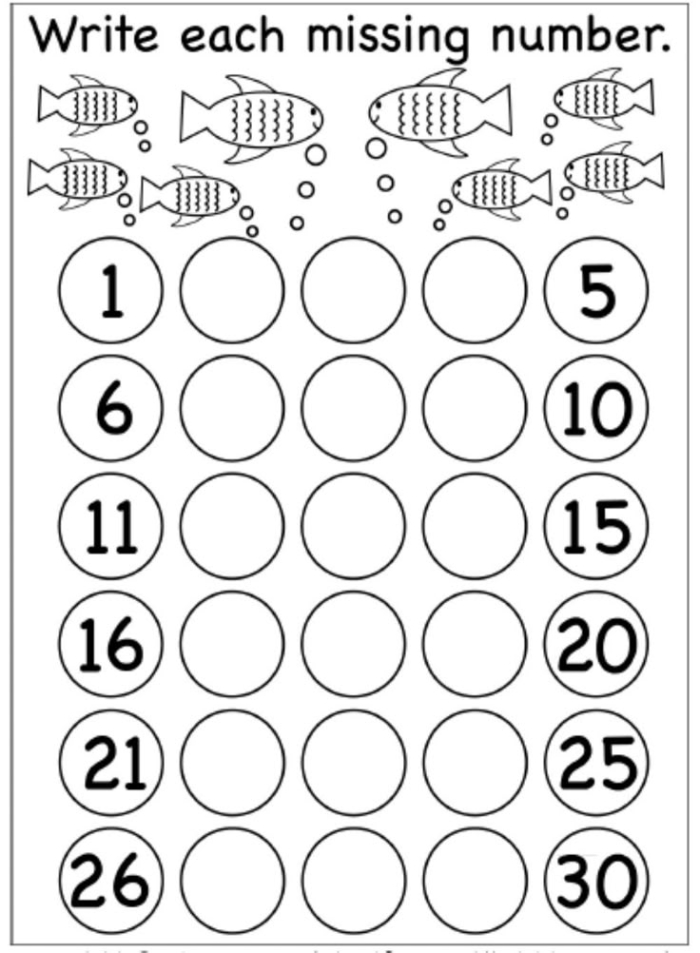
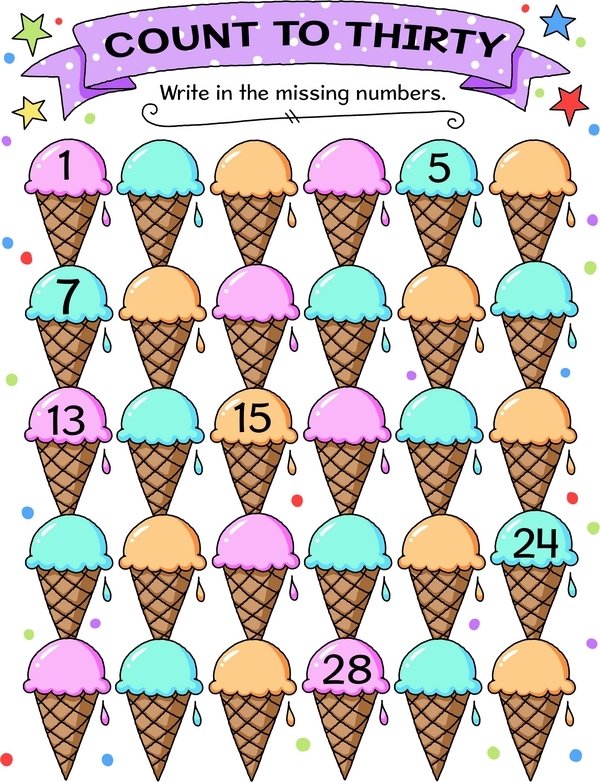
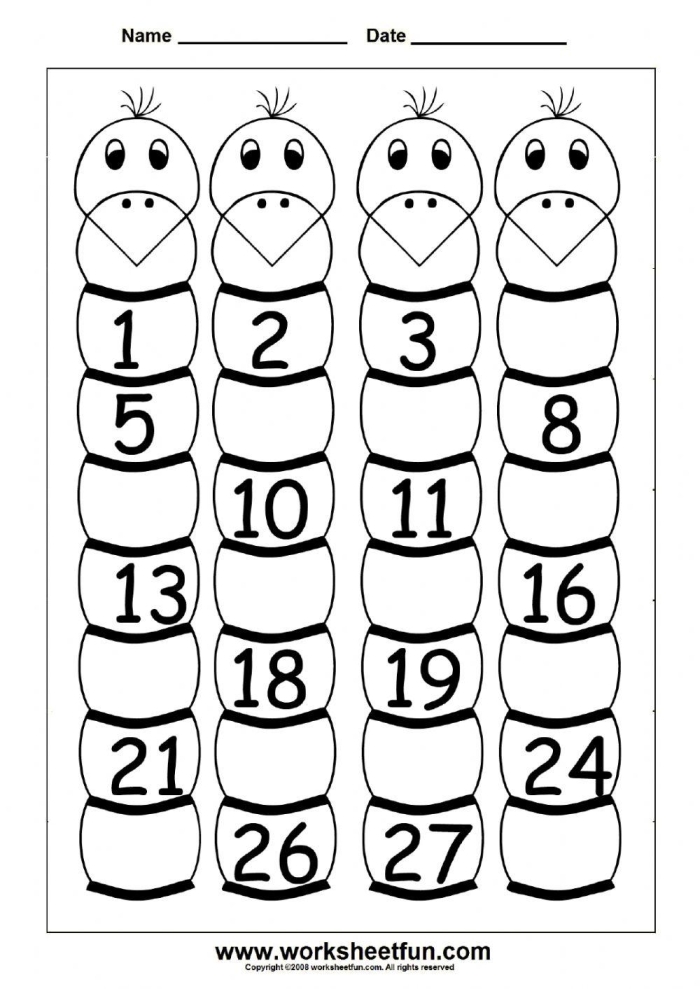
Missing number exercises work because they force young learners to think actively about number sequences rather than passively reciting them. When a child sees a gap in a sequence, their brain automatically searches for the pattern, which strengthens their understanding of how numbers relate to one another.
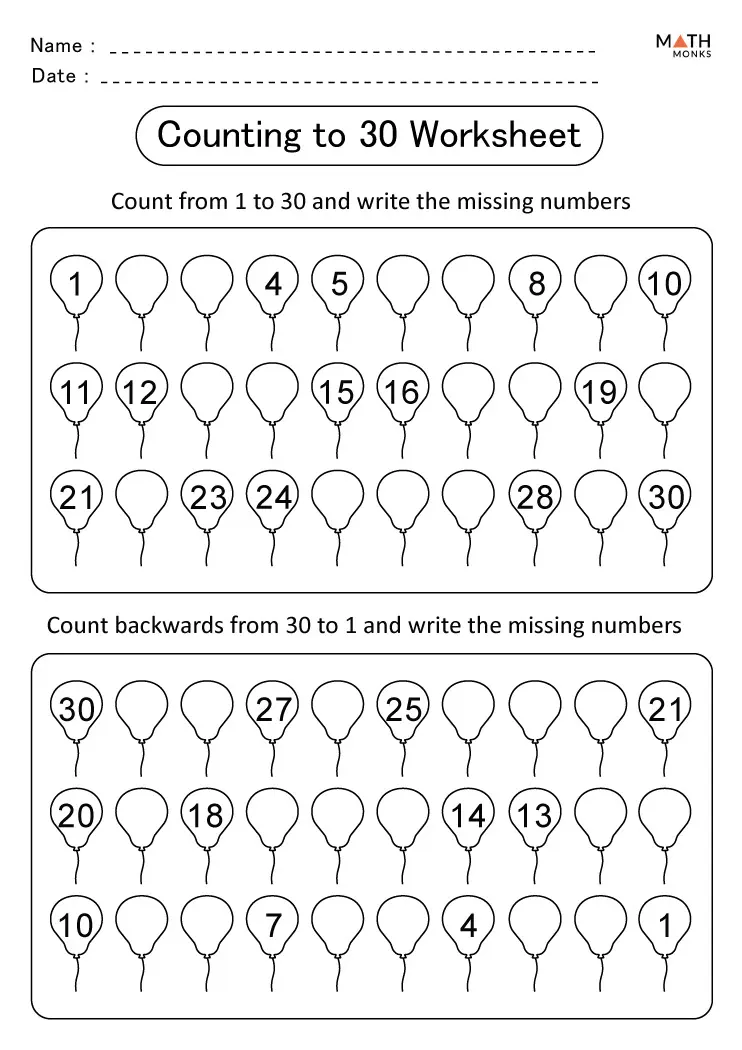
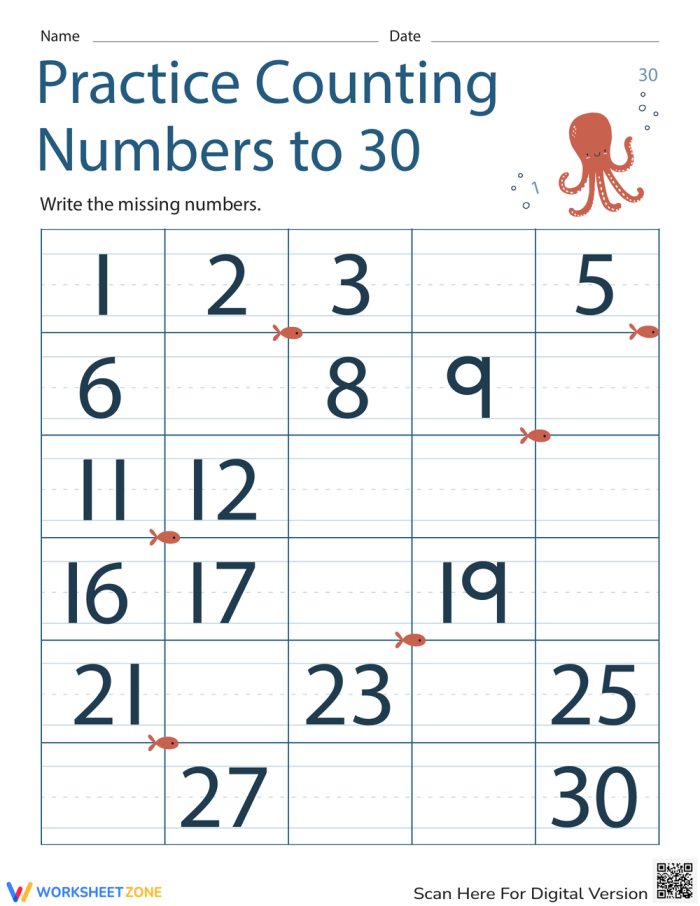
In Kindergarten, this type of activity sits at a sweet spot between concrete and abstract thinking. Kids have moved beyond just counting objects, but they’re not yet ready for complex arithmetic. A fill-in-the-blank worksheet lets them practice numbers and counting in a way that feels like a game rather than a lesson. They’re hunting for the missing pieces, which taps into natural curiosity.
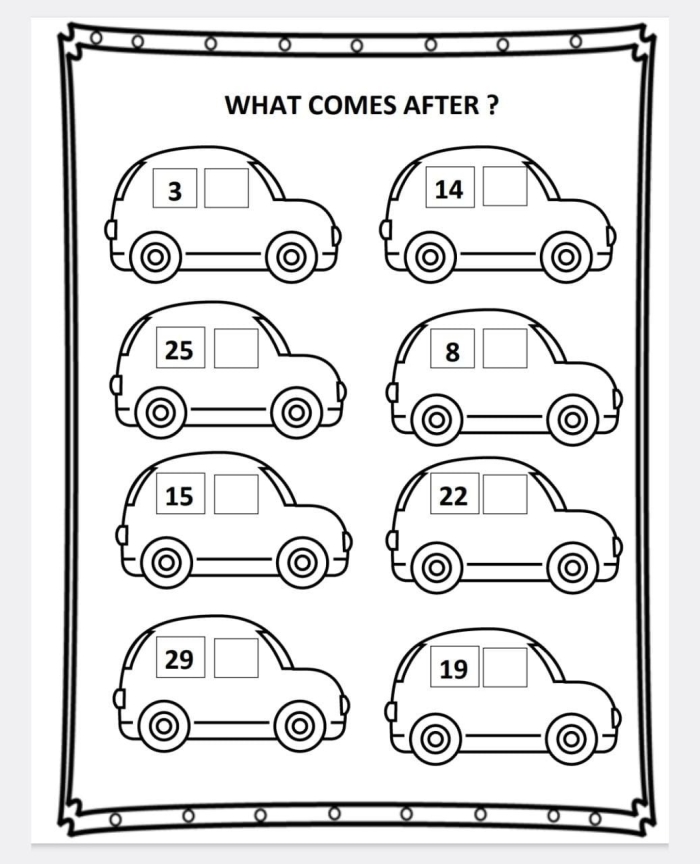
The worksheet format works with both one-digit and two-digit numbers, which means it grows with the child’s developing skills. Early in the year, kindergarteners might focus on gaps within 1 to 10. As their confidence builds, they can tackle sequences that include numbers up to 30 or beyond. This progression helps prevent boredom while maintaining appropriate challenge levels.
What makes this approach effective is the immediate feedback. When a child writes the missing number and it fits the pattern, they feel the correctness in their bones. They’re not waiting for an adult to tell them they’re right, they can see it themselves. This builds genuine confidence in their number sense.
If you’re looking to expand this practice, consider pairing it with related activities. Worksheets that focus on counting forward with missing numbers offer similar benefits with slightly different visual layouts. You might also explore how missing numbers exercises scale up to 100 for children ready for bigger challenges, or try mixing in other counting activities to keep practice varied and engaging.
Start Practicing with These Worksheets