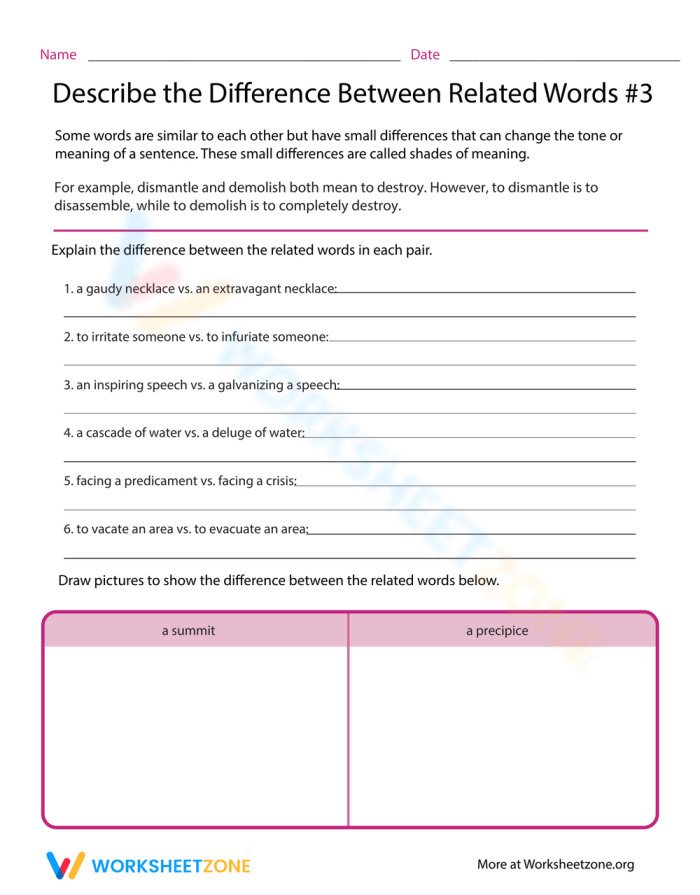
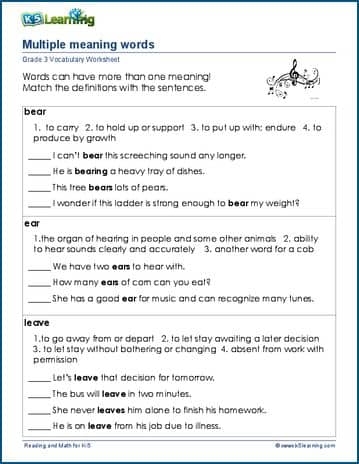
Understanding the subtle differences between related words is a crucial skill for sixth-grade students, especially when it comes to mastering language and vocabulary. One effective way to develop this skill is through worksheets that encourage students to describe the differences between similar terms. This approach not only enhances their vocabulary but also illuminates the unique connotations each word carries.
For example, consider the words “happy” and “joyful.” While both describe positive emotions, “happy” can imply a fleeting feeling often linked to external circumstances, whereas “joyful” suggests a deeper, more enduring sense of contentment. This distinction is essential for students to grasp as it enriches their understanding of language nuances. When students articulate these differences, they learn to choose words more precisely in their writing and conversations, thereby improving their overall communication skills.
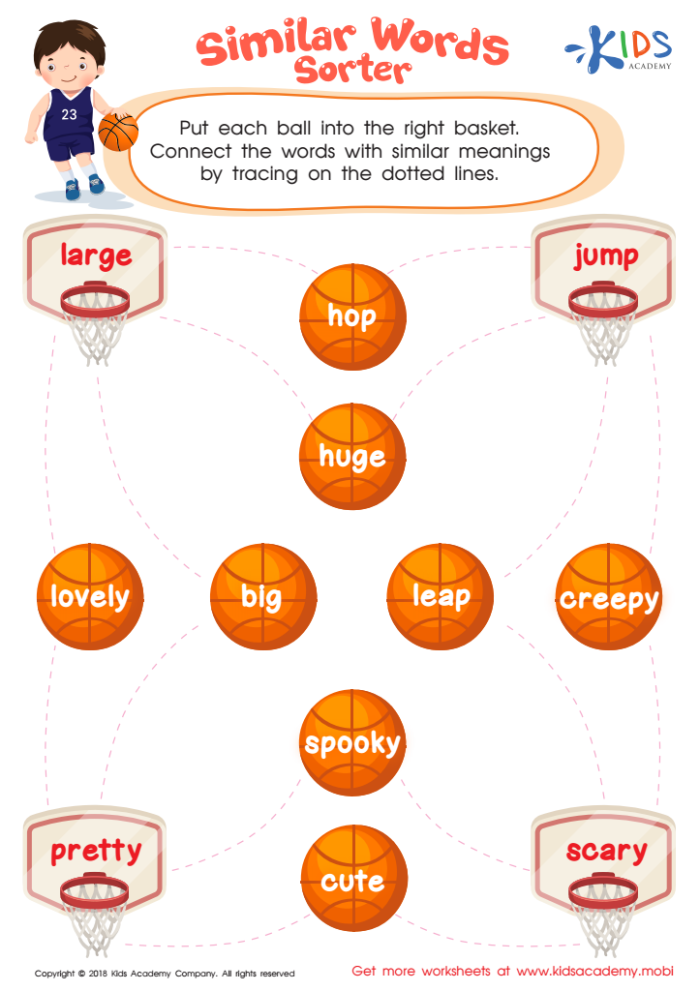
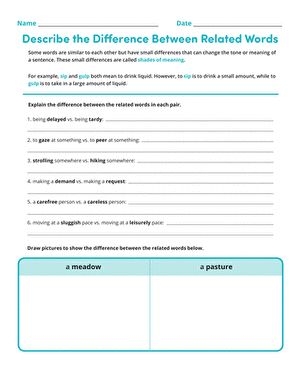
Engaging students in activities that require them to identify and explain these differences can be both fun and educational. Worksheets designed for sixth graders often present a list of related words, asking students to analyze and compare their meanings. Such exercises foster critical thinking and encourage students to reflect on how word choice can alter the tone and impact of their messages. For instance, using a word like “frugal” instead of “cheap” can convey a more positive image, which is especially useful in persuasive writing.
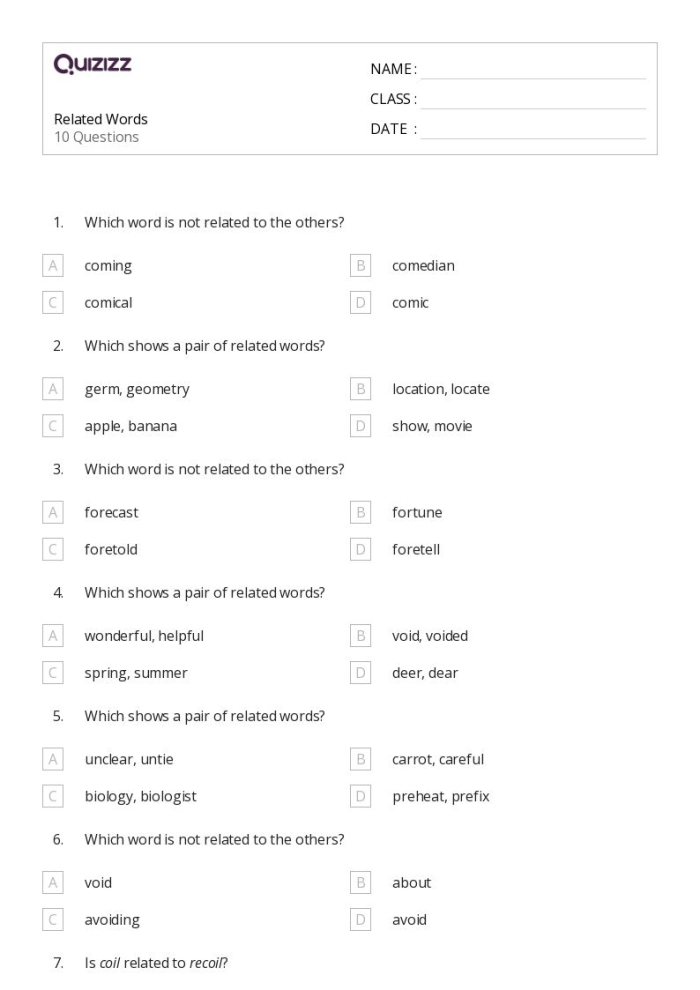
These printable worksheets, such as those available on various educational platforms, provide structured practice for students. By working through exercises that focus on the differences in connotation and usage, students become more adept at selecting appropriate vocabulary for different contexts. This skill is not just valuable in academic settings; it serves them well in everyday communication, helping them express themselves more effectively.
Incorporating activities that ask students to describe the difference between related words can transform their language learning experience. For additional practice, students can explore resources like match language to context worksheets or delve into other subjects, such as the legislative branch worksheets. Through these exercises, they will not only enhance their vocabulary but also develop a greater appreciation for the nuances of language.
Boost Skills with These Worksheets