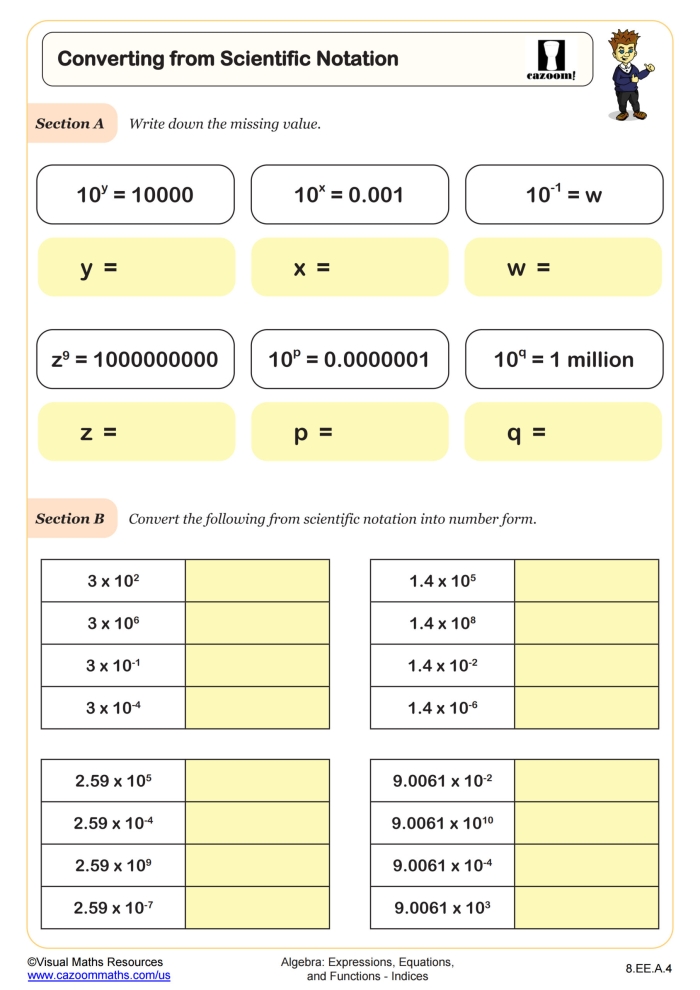
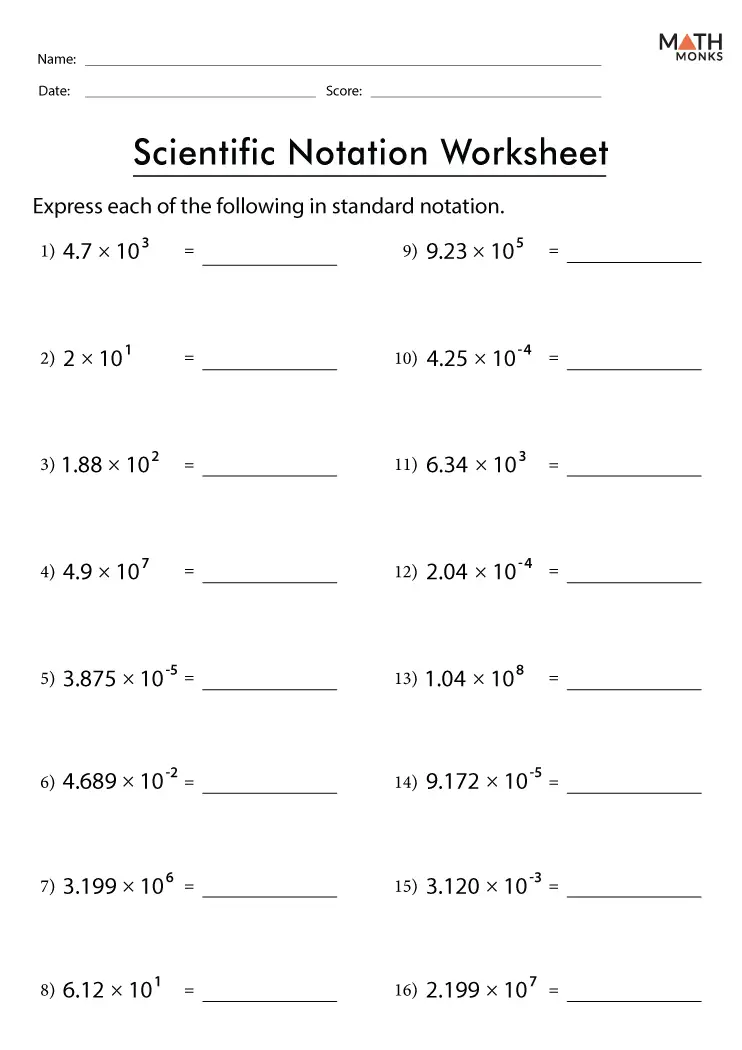
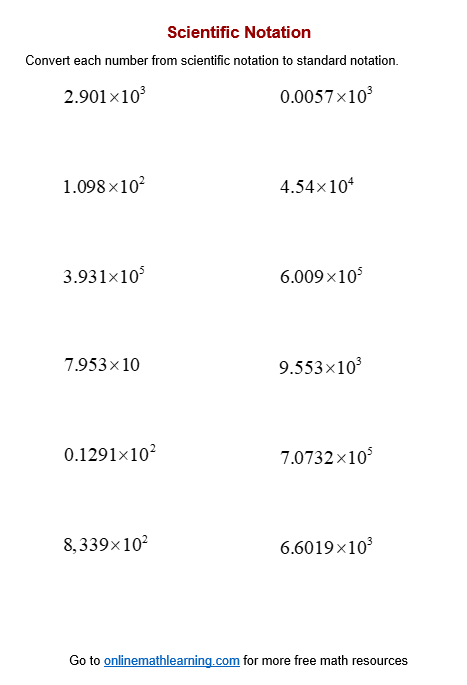
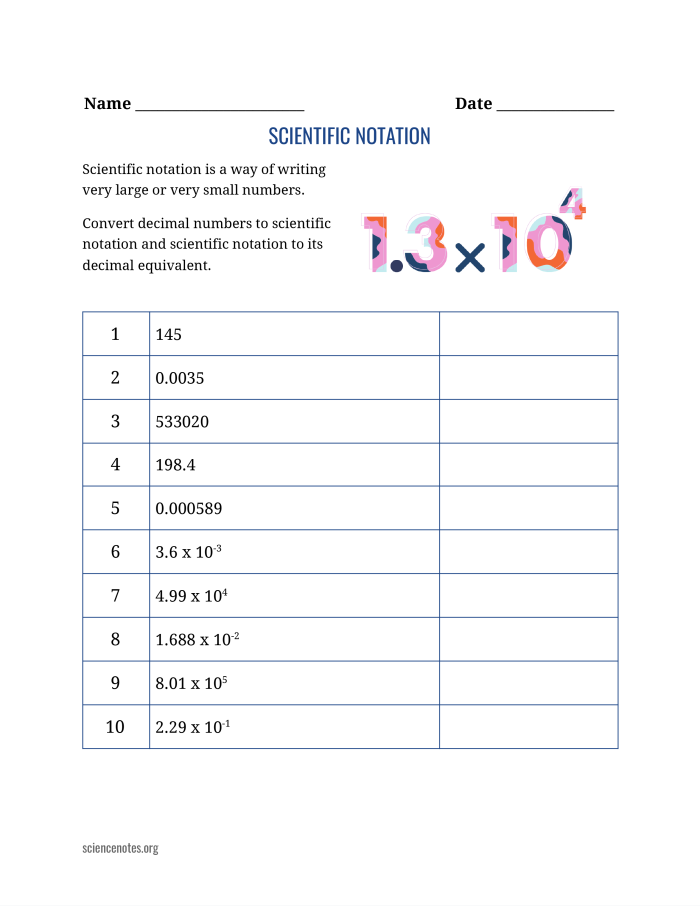
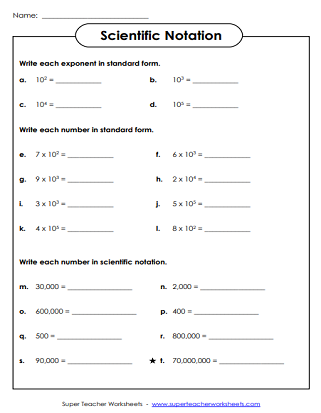
Converting between scientific notation and standard form trips up plenty of eighth graders, but it doesn’t have to be that way. A well-designed worksheet makes the process click, turning what seems like abstract mathematical magic into a straightforward skill students can apply across chemistry, physics, and beyond.
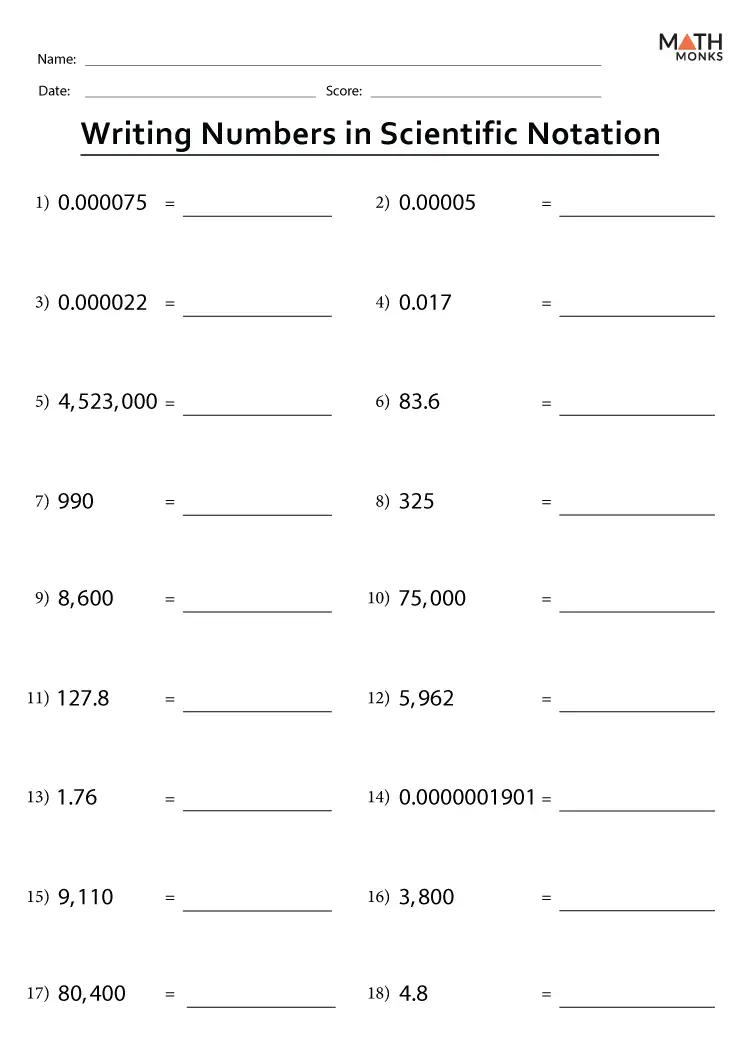
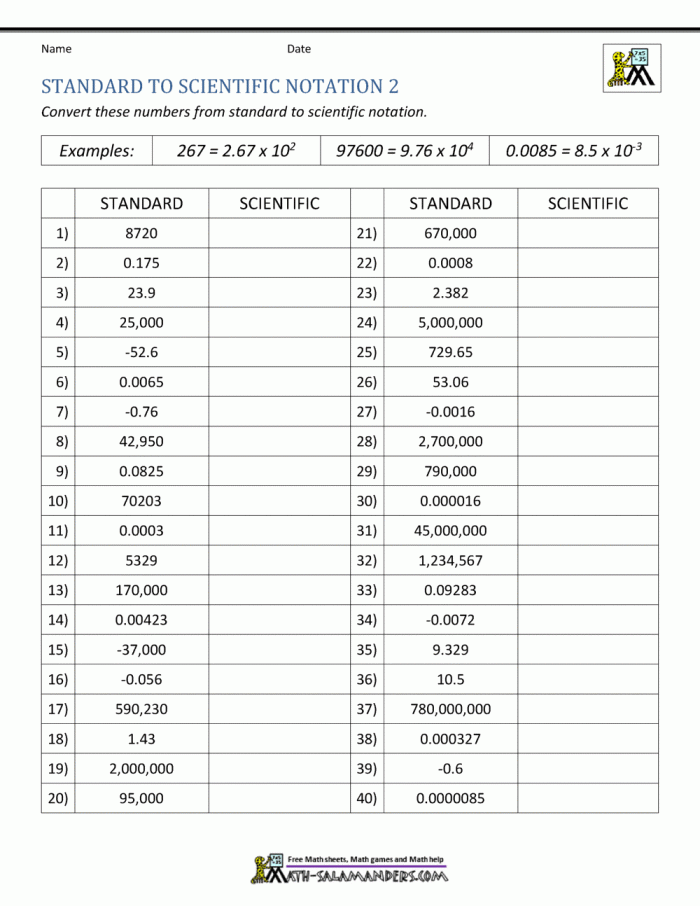
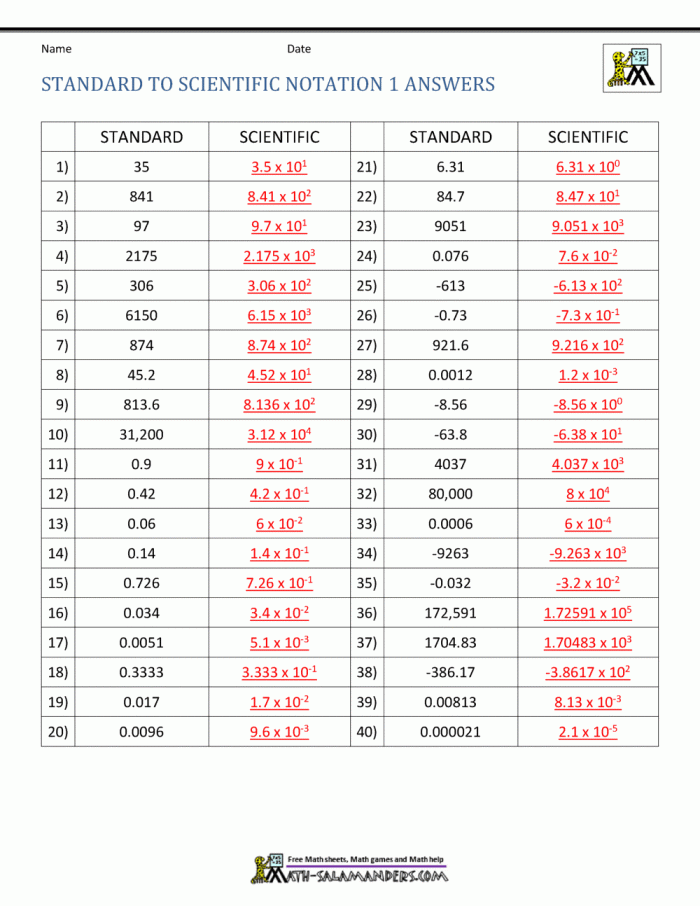
Scientific notation exists because numbers get unwieldy. Writing 0.000000000000456 or 2,450,000,000,000 takes forever and invites errors. Scientific notation compresses these into manageable expressions like 4.56 × 10⁻¹³ and 2.45 × 10¹². The conversion process requires understanding place value, powers of ten, and how moving a decimal point relates to exponent changes.
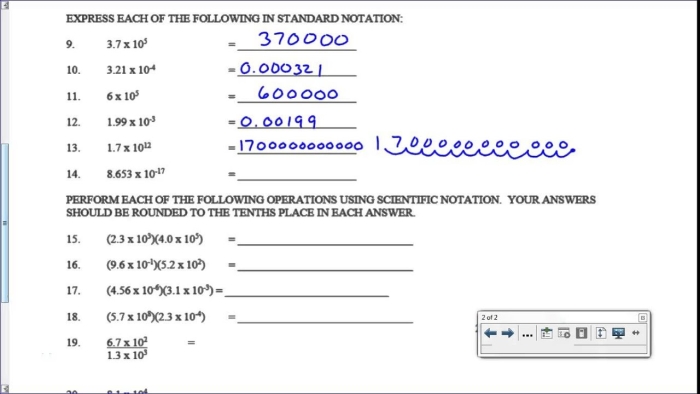
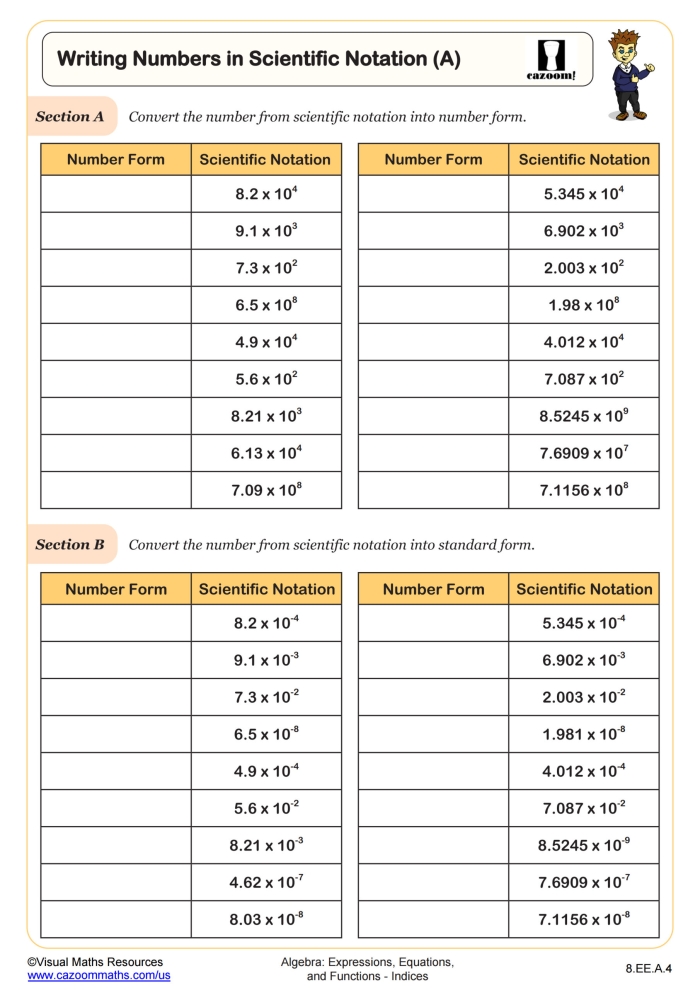
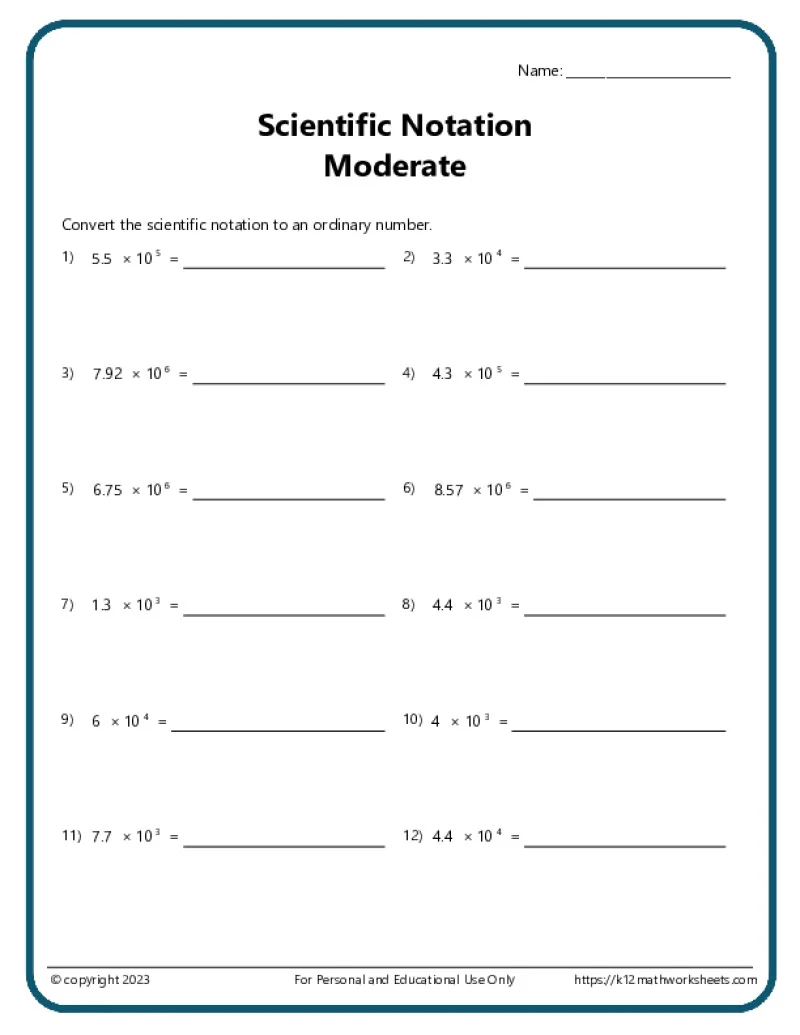
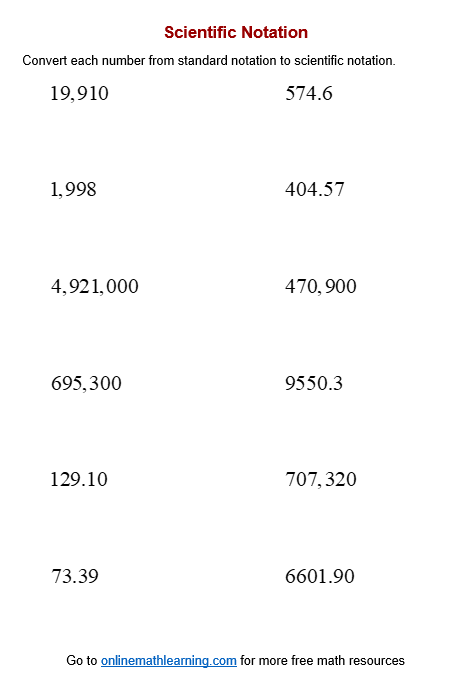
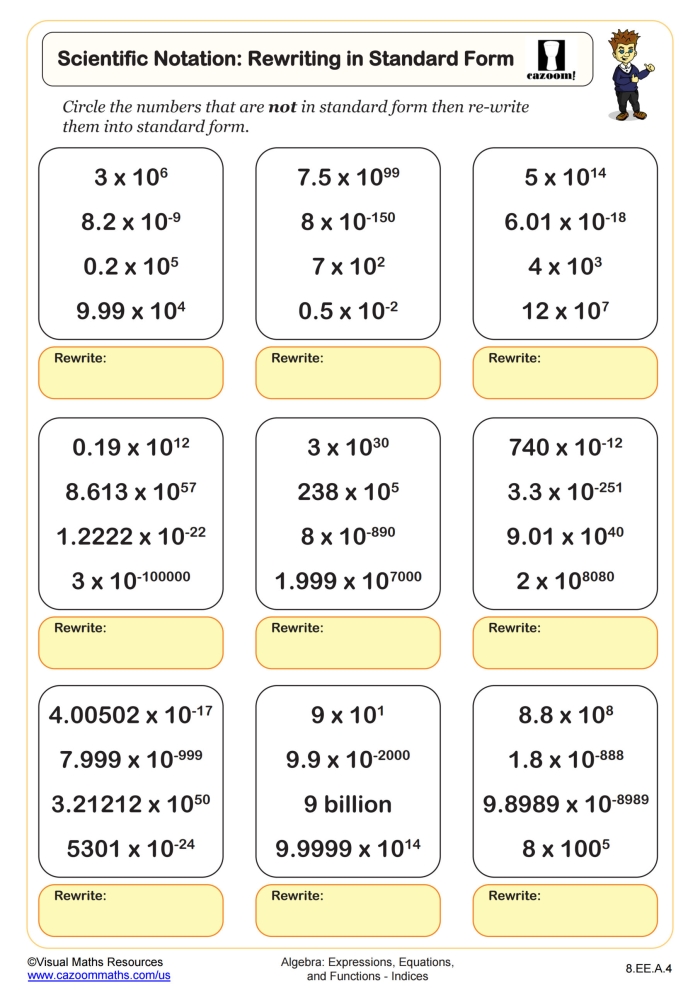
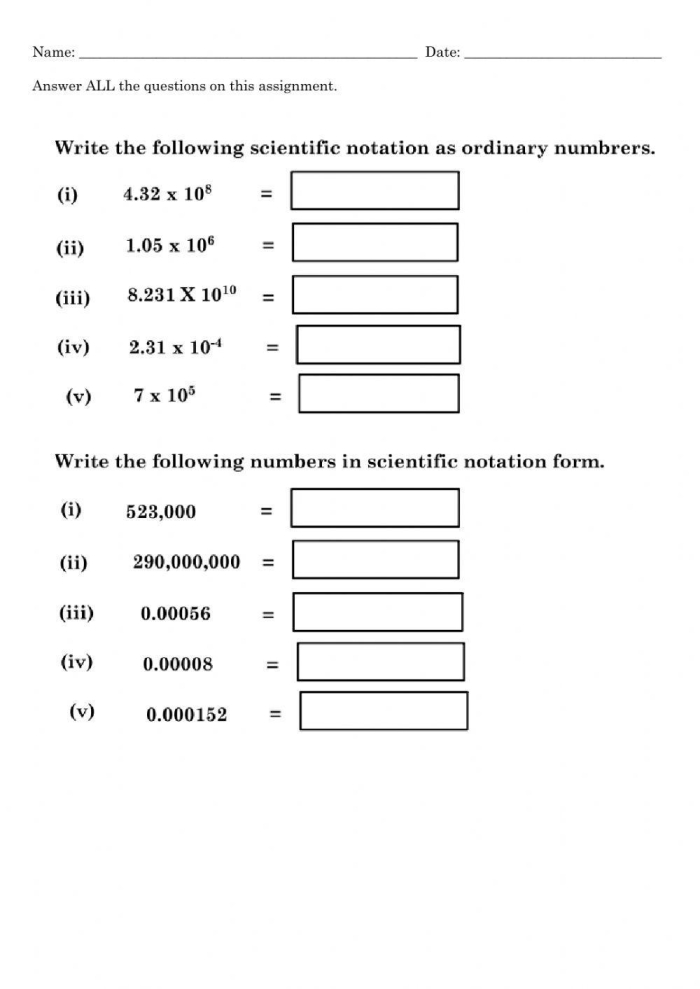
When students work through conversion problems, they’re actually reinforcing their grasp of exponents and decimal placement. Moving from standard form to scientific notation teaches them to identify significant figures. Moving the opposite direction, from scientific notation back to standard form, strengthens their ability to read and manipulate exponents. This bidirectional practice sticks better than one-way instruction.
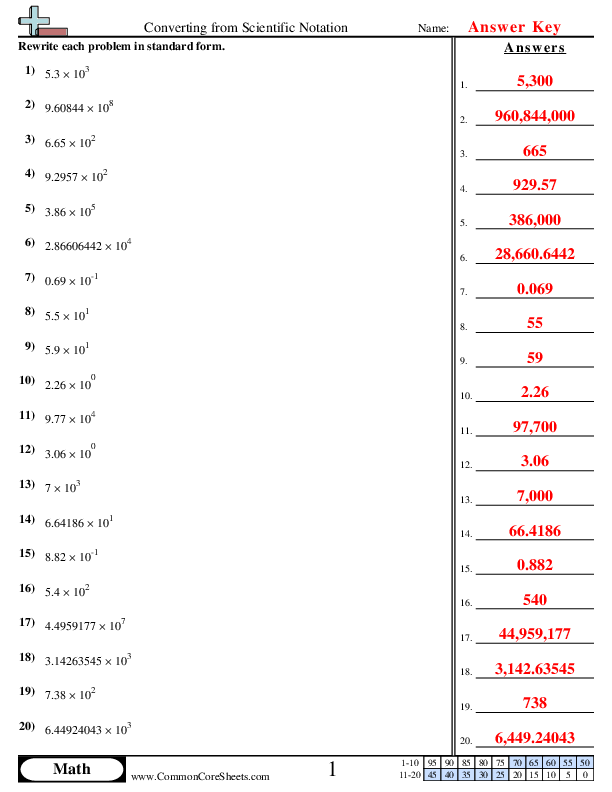
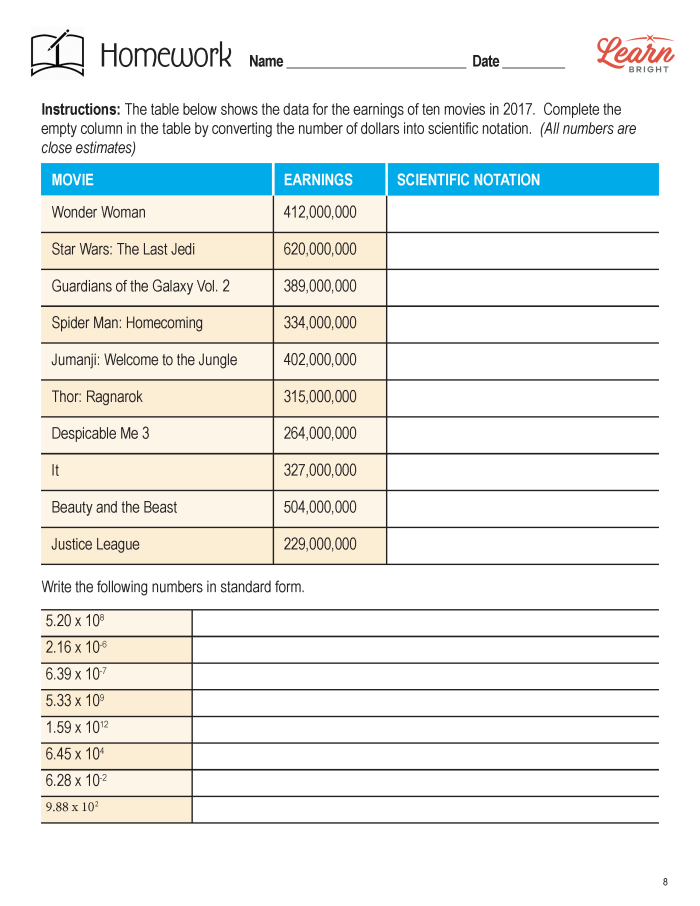
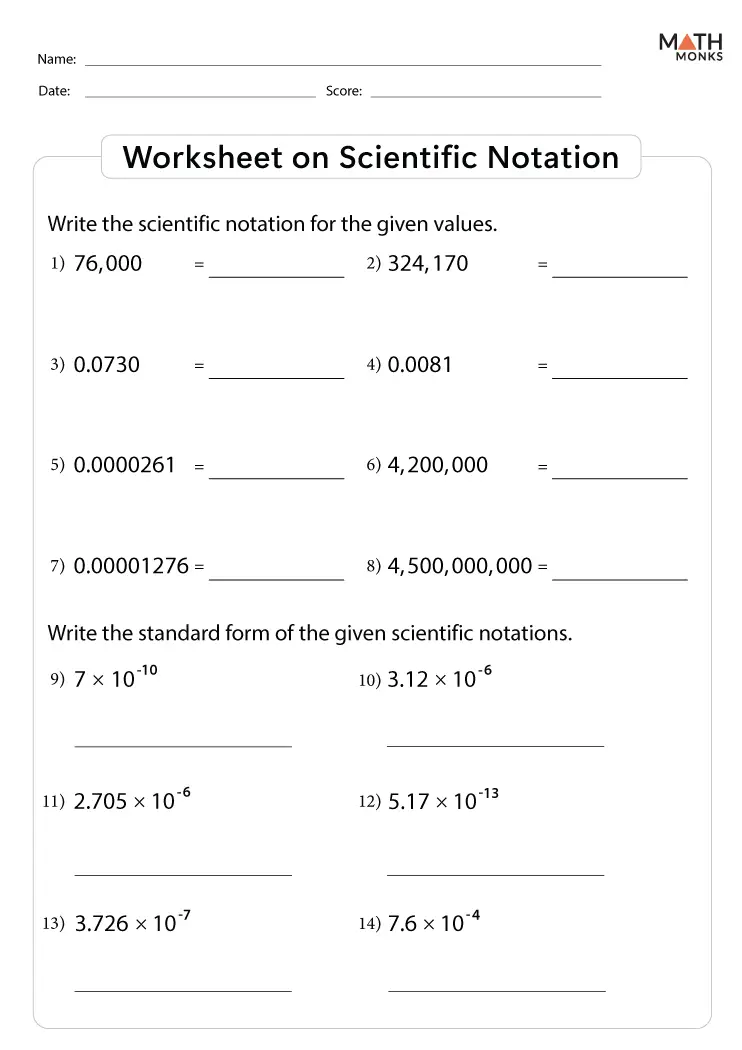
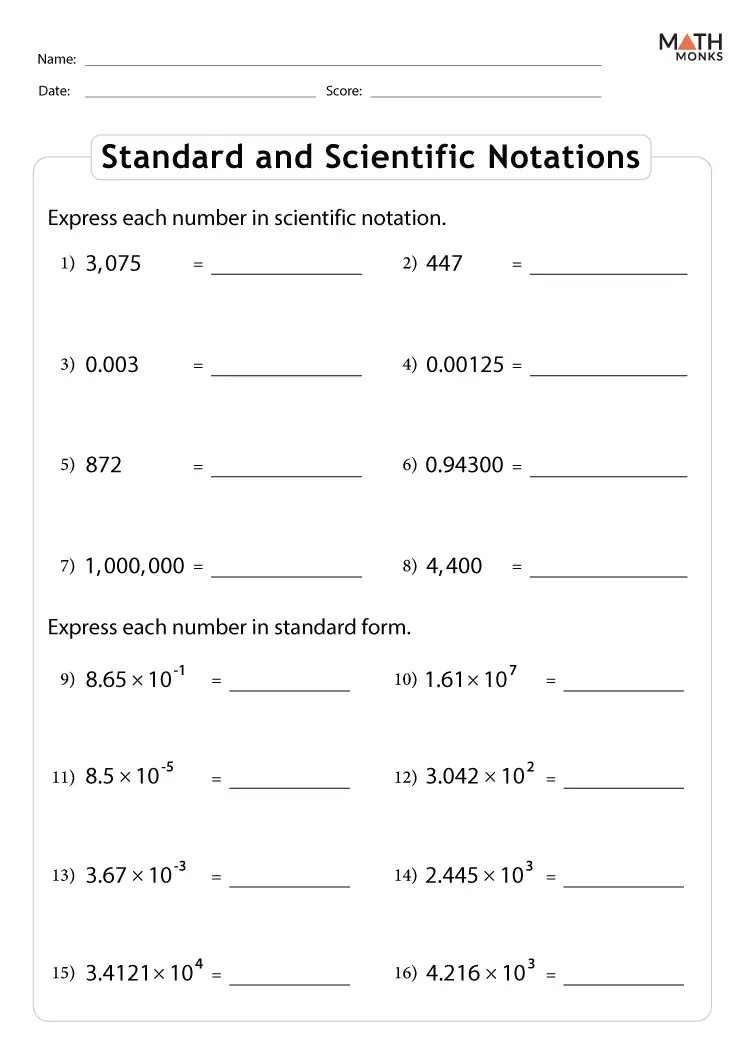
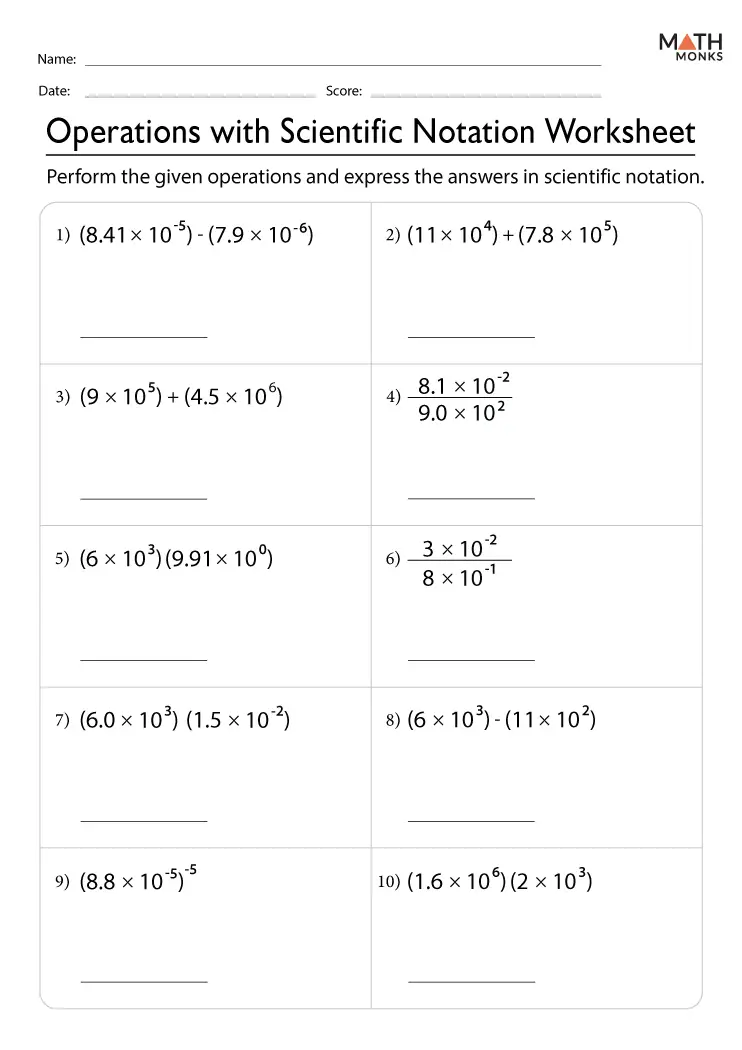
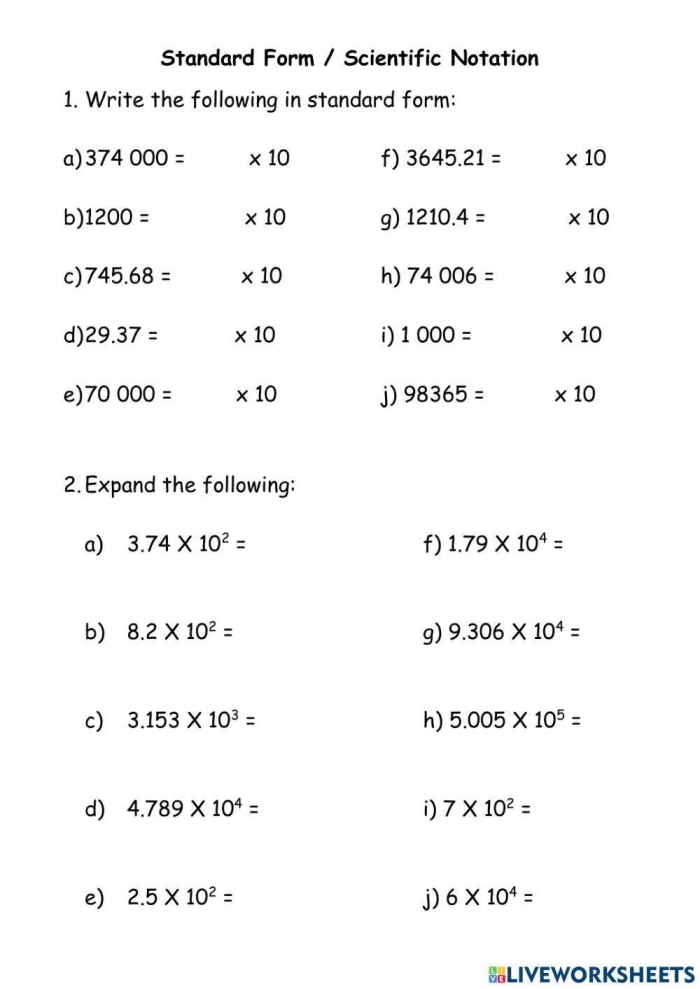
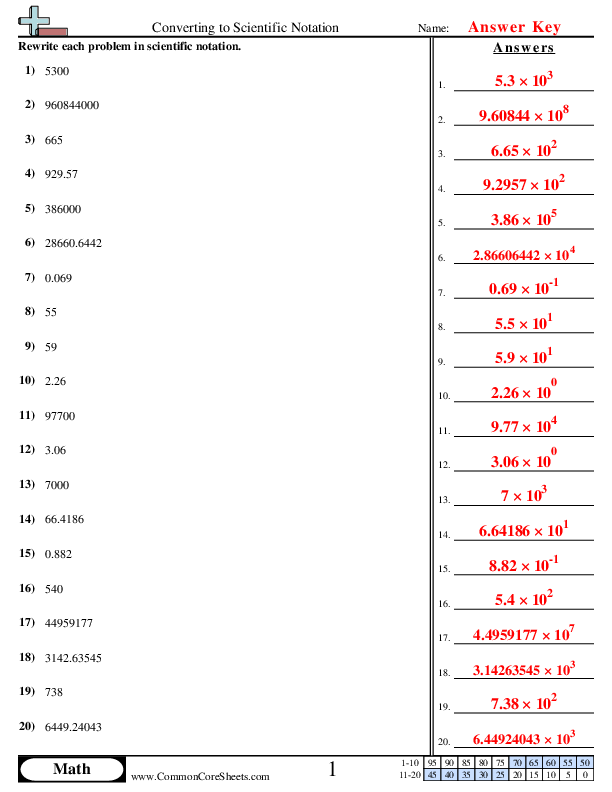
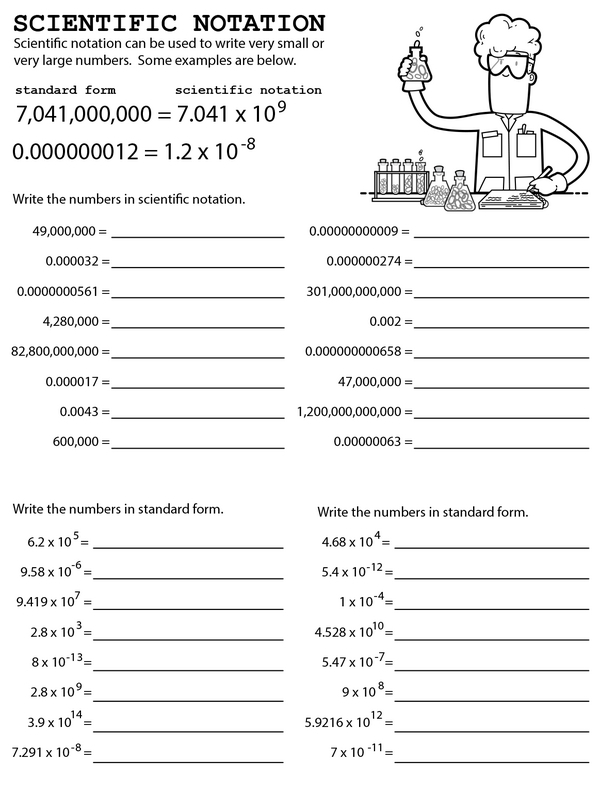
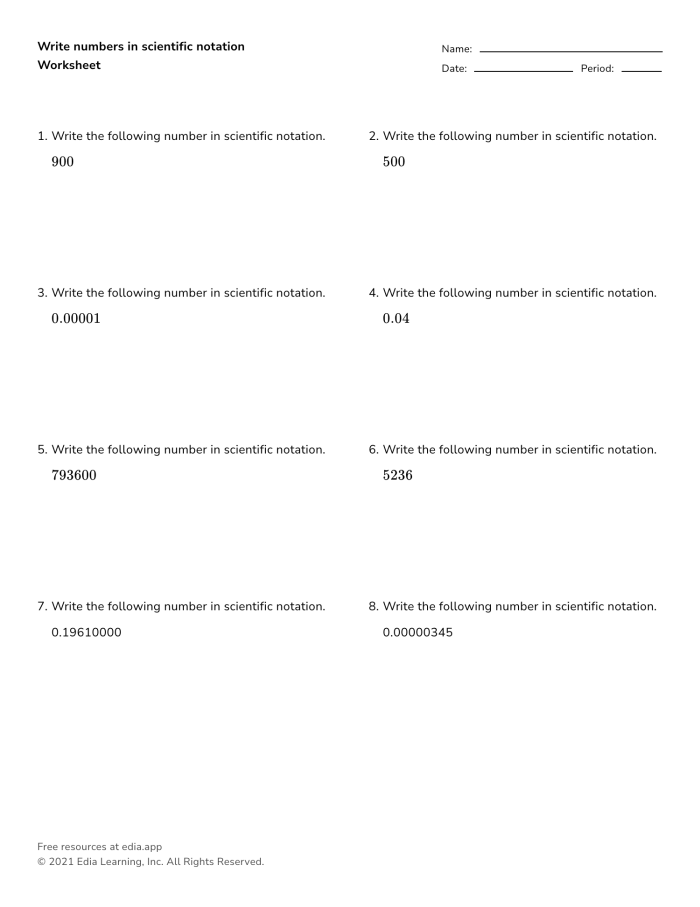
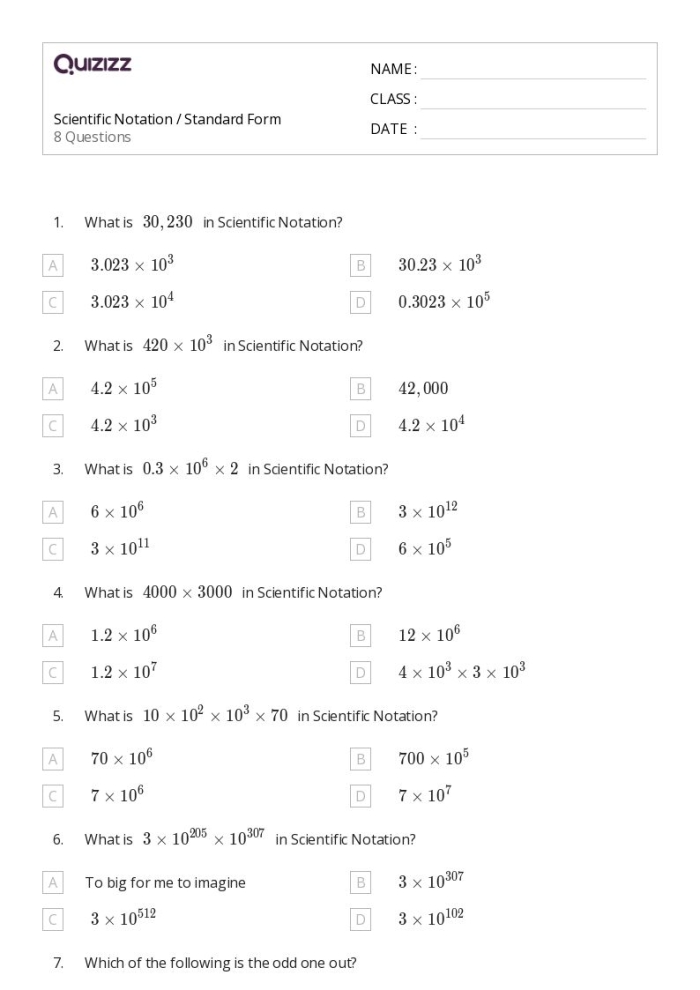
A solid eighth-grade worksheet includes problems that progress in difficulty. It starts with whole numbers like 5,200 converting to 5.2 × 10³, then moves to decimals like 0.0078 becoming 7.8 × 10⁻³. The best worksheets also include mixed sets where students must decide which direction the conversion needs to go, forcing them to think rather than follow a predictable pattern.
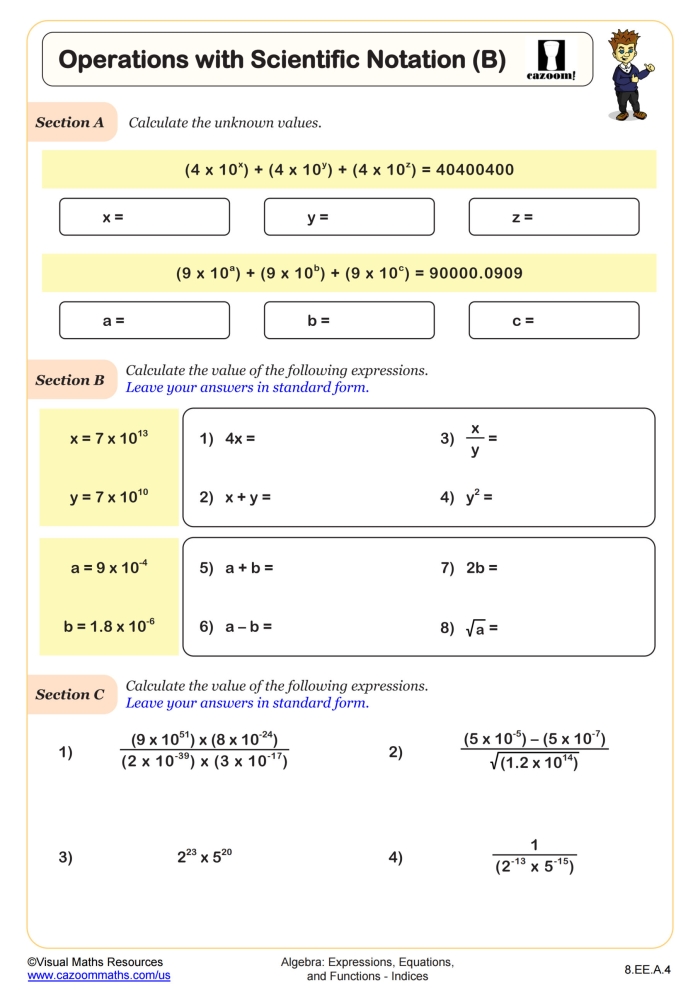
Pairing this skill with other eighth-grade math concepts strengthens overall comprehension. Students benefit from connecting scientific notation to work on multi-step equations and systems of linear equations, where large or small numbers frequently appear. When students encounter these values in real contexts, the conversion process becomes less abstract and more purposeful.
Grab These Worksheets Now