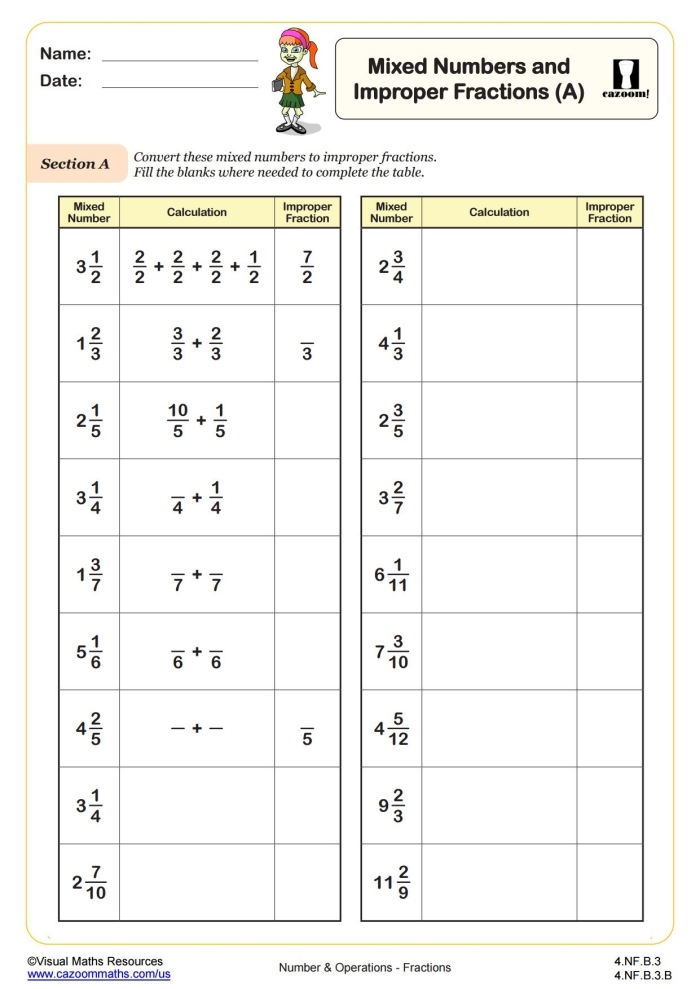
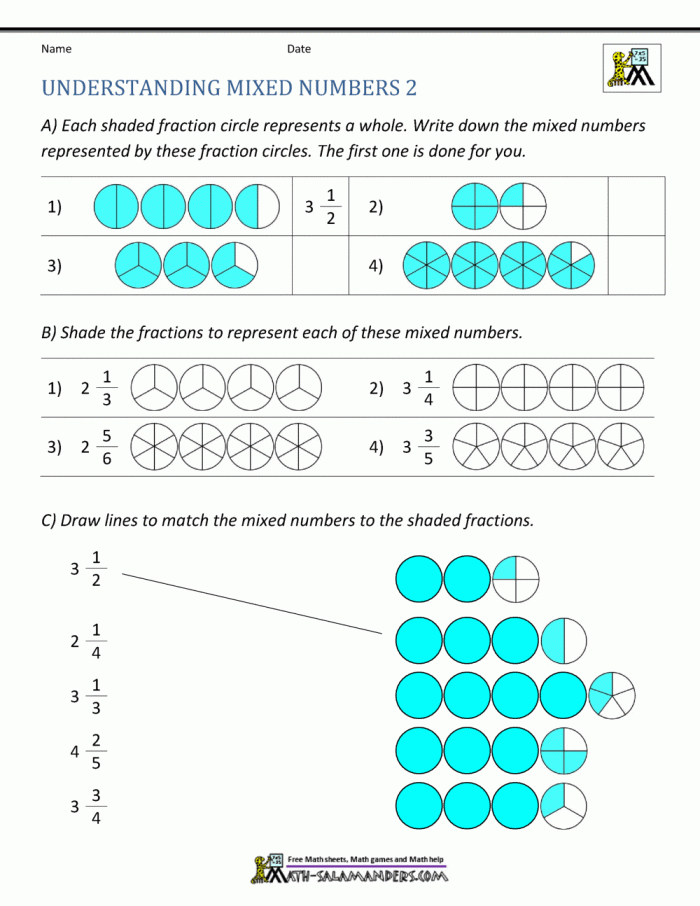
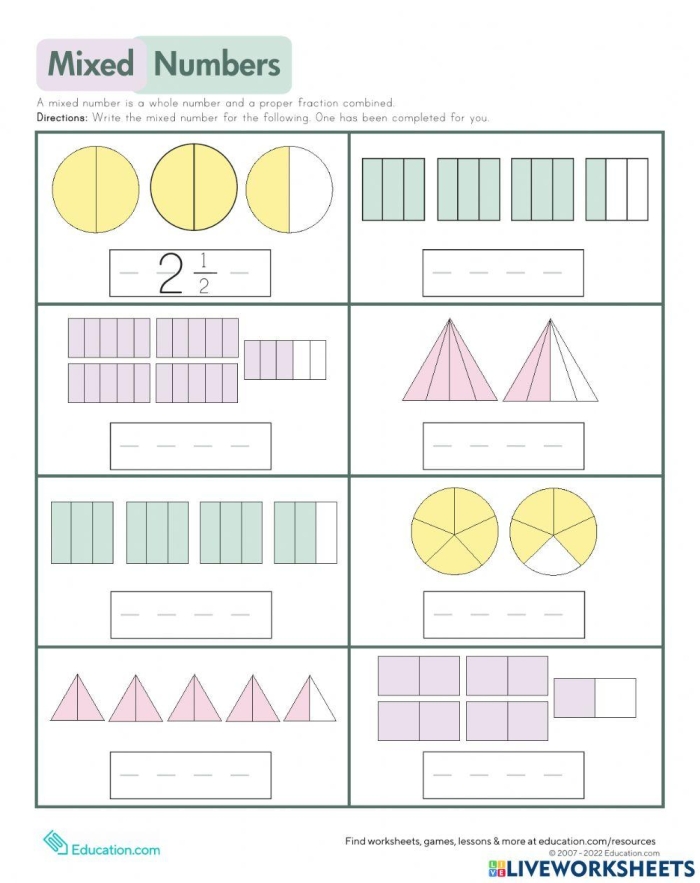
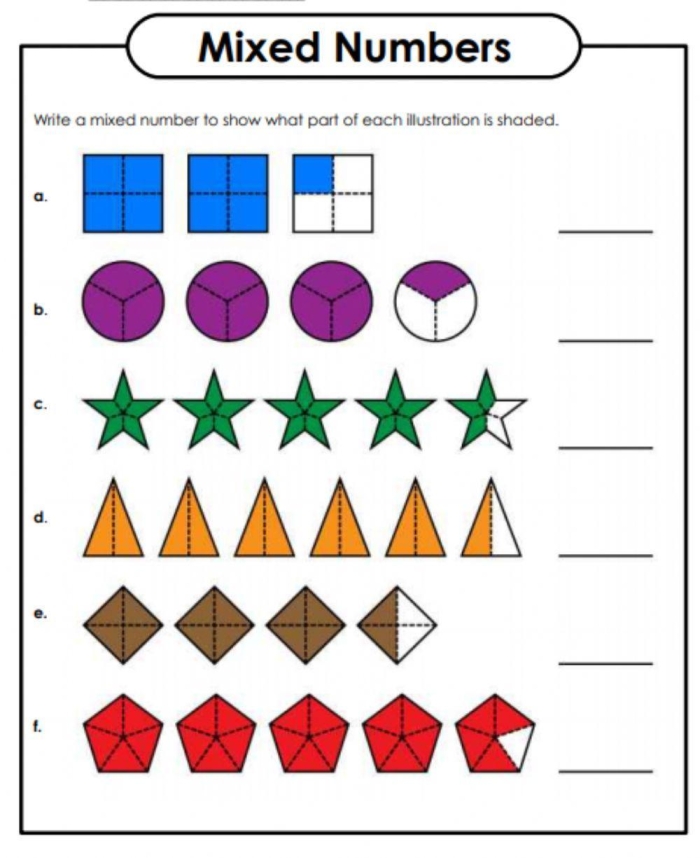
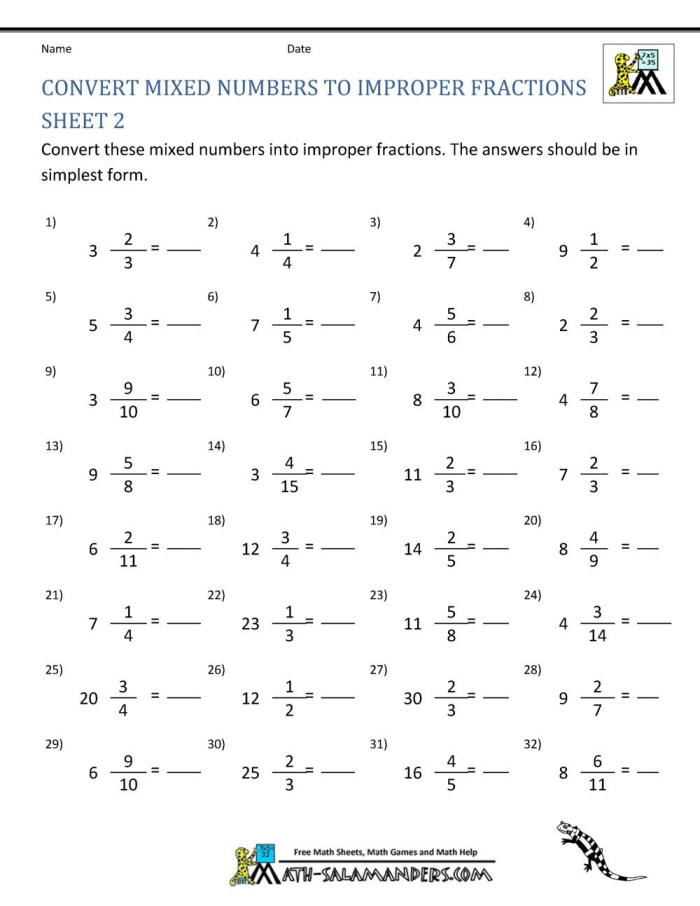
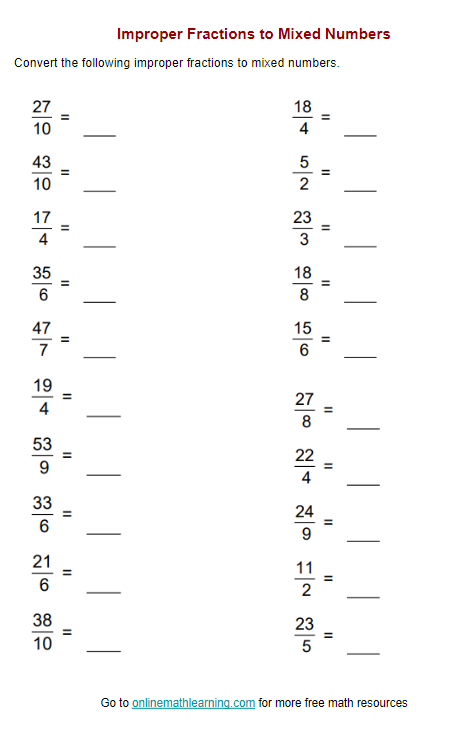
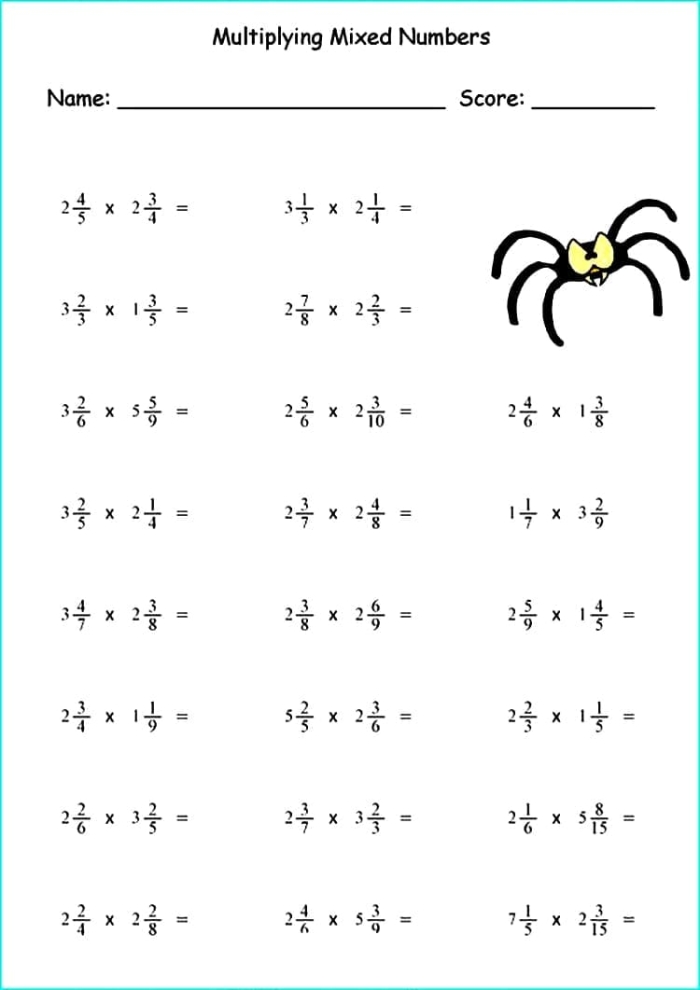
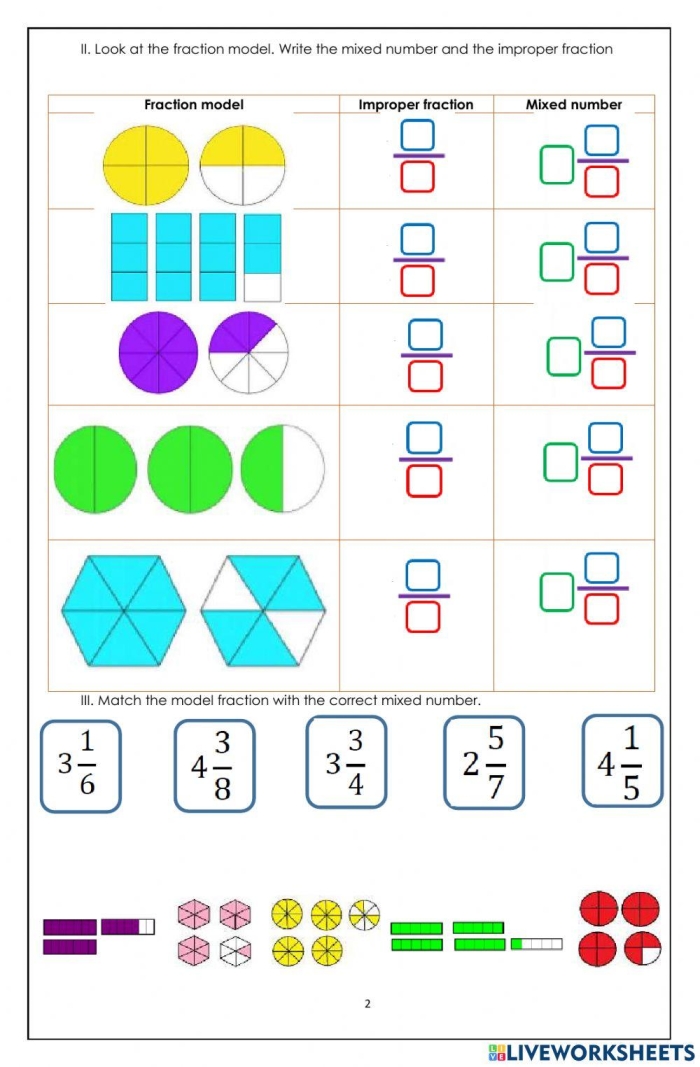
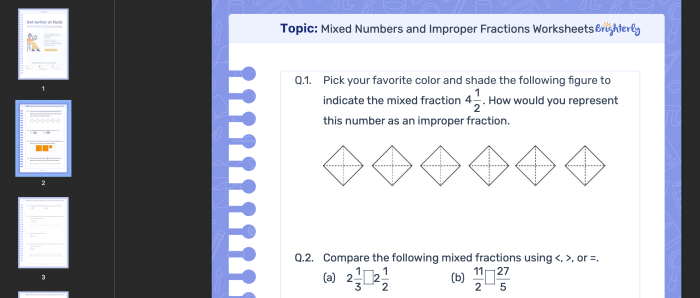
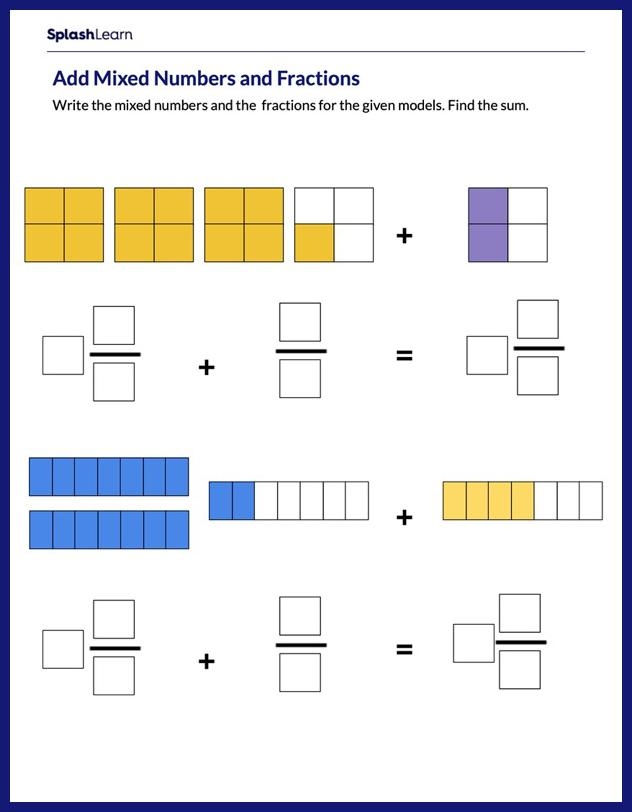
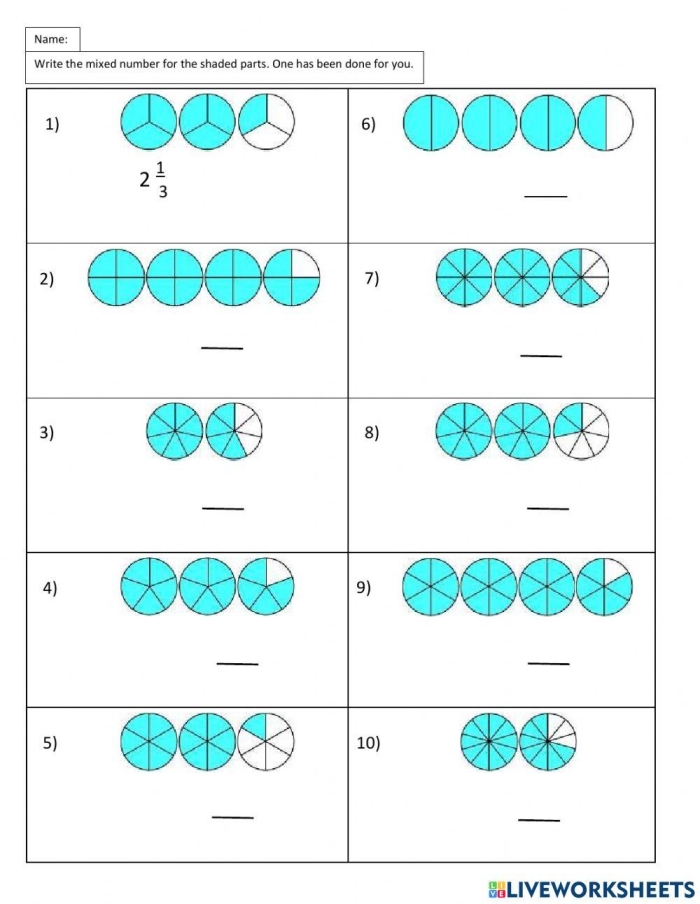
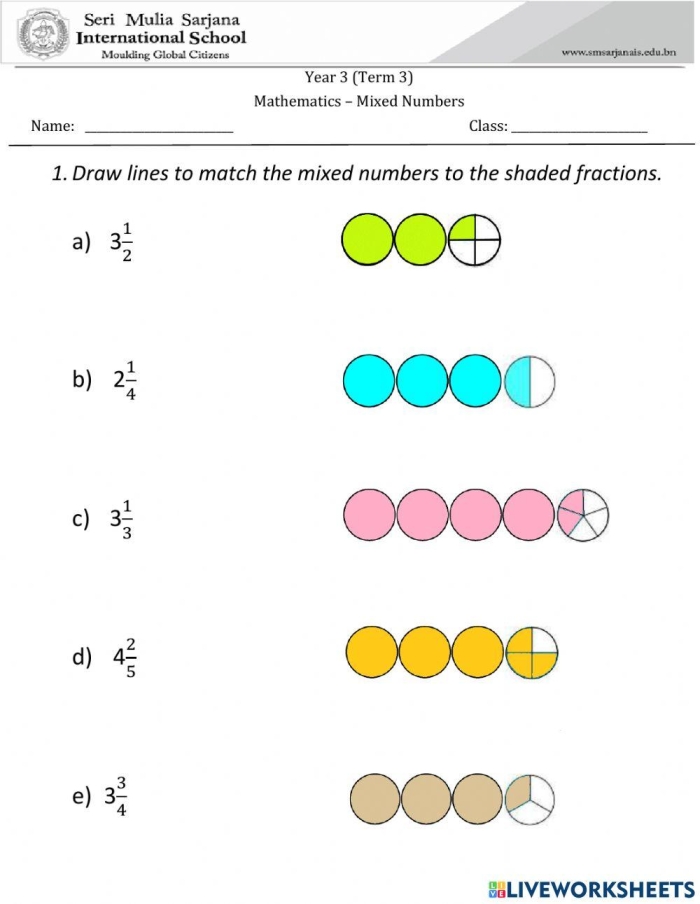
Mixed numbers can feel abstract to third graders who are just beginning to understand fractions and how whole numbers combine with fractional parts. A worksheet that asks your child to identify mixed numbers transforms this concept from something theoretical into something concrete and visual. When kids see a picture of two and three-fourths circles, for example, they start to grasp what that notation actually represents in the real world.
The beauty of this approach lies in the immediate connection between image and number. Your child looks at the visual representation, counts the whole shapes, identifies the fractional piece, and then writes down the mixed number. This process reinforces the relationship between the parts and the whole, which is fundamental to understanding algebra at the third grade level. Rather than memorizing rules, your child builds intuition through repeated practice with concrete examples.
These worksheets work best when paired with other fraction activities. Your child might benefit from exploring equivalent fractions on number lines to deepen fraction understanding, or tackling two-digit addition and subtraction word problems to strengthen related math skills. The combination of visual learning with written practice creates stronger neural pathways than either approach alone.
Start by working through one or two examples together, pointing out how the whole number comes before the fraction. Let your child complete the remaining problems independently, then review their answers together. This balanced approach builds confidence while allowing you to catch misconceptions early. The repetition helps cement the concept, making mixed numbers feel less mysterious and more manageable as your child progresses through third grade mathematics.
Use These Worksheets Today