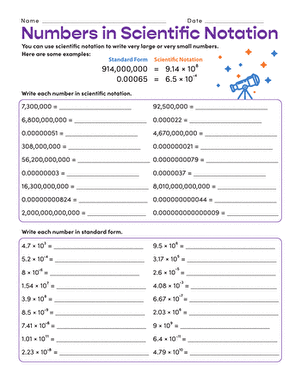
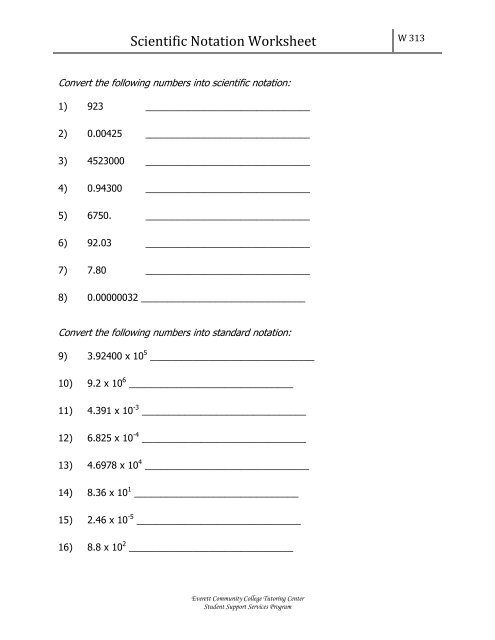
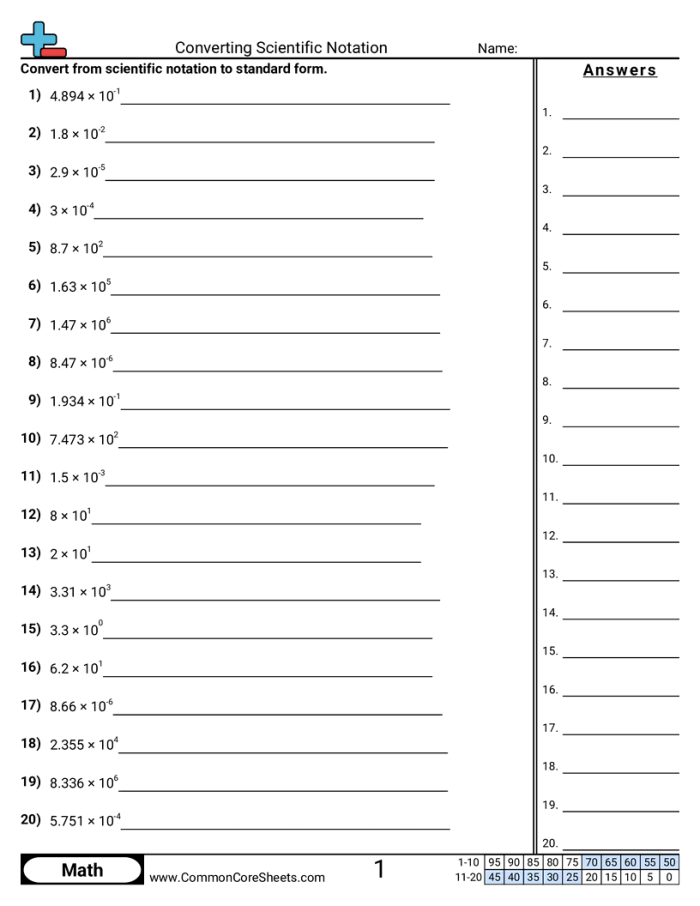
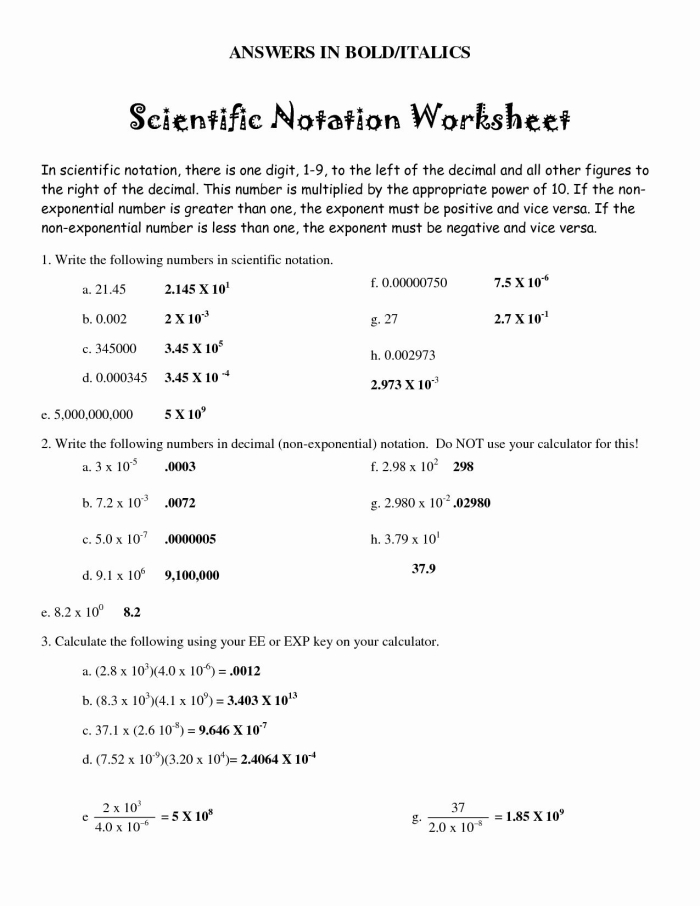
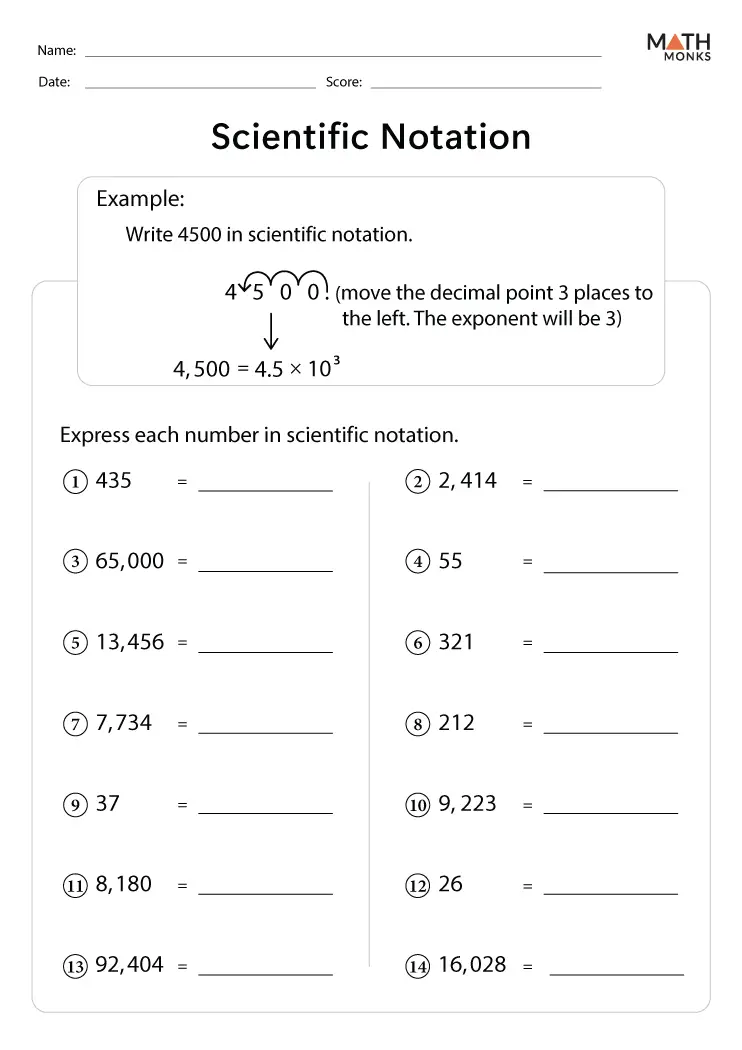
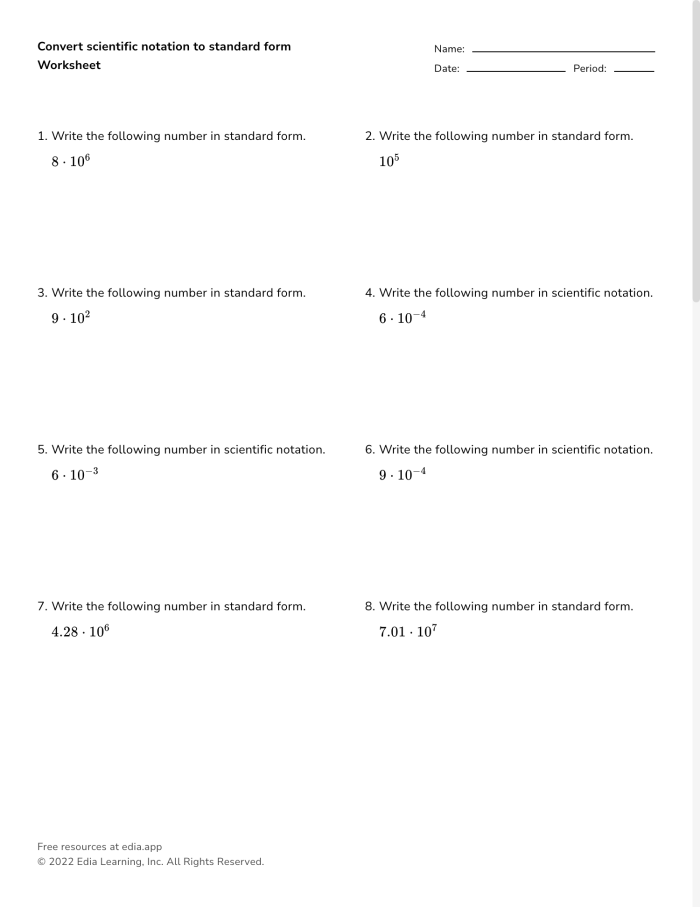
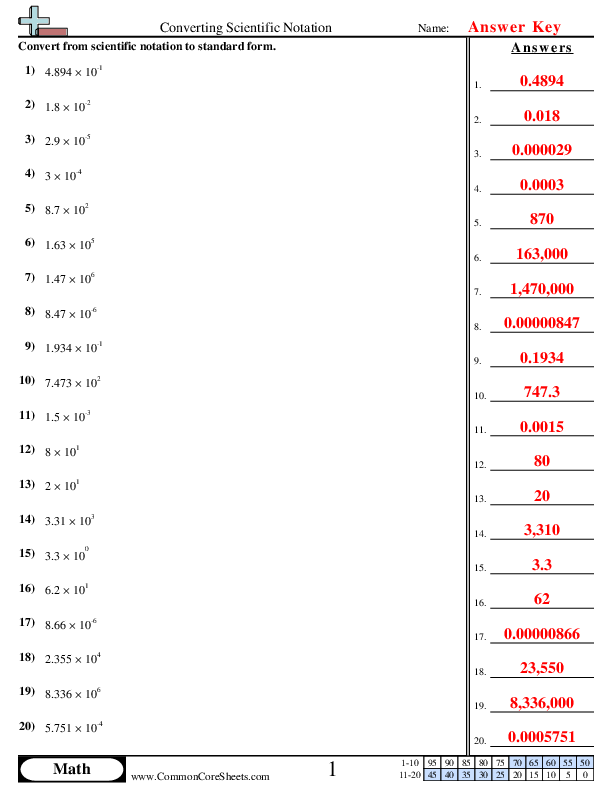
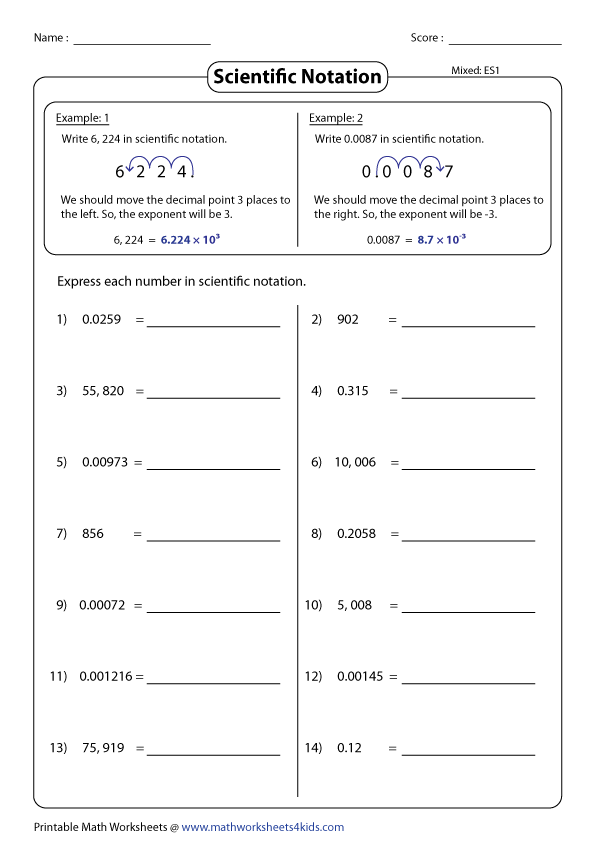
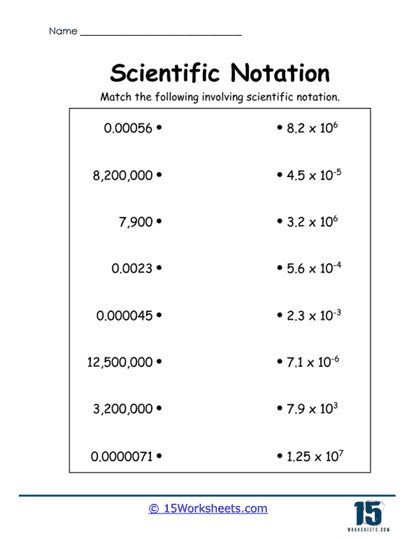
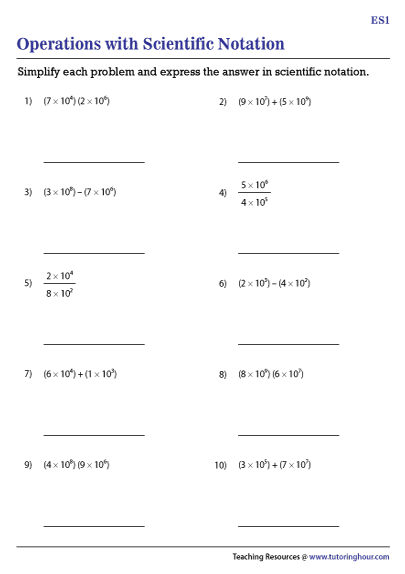
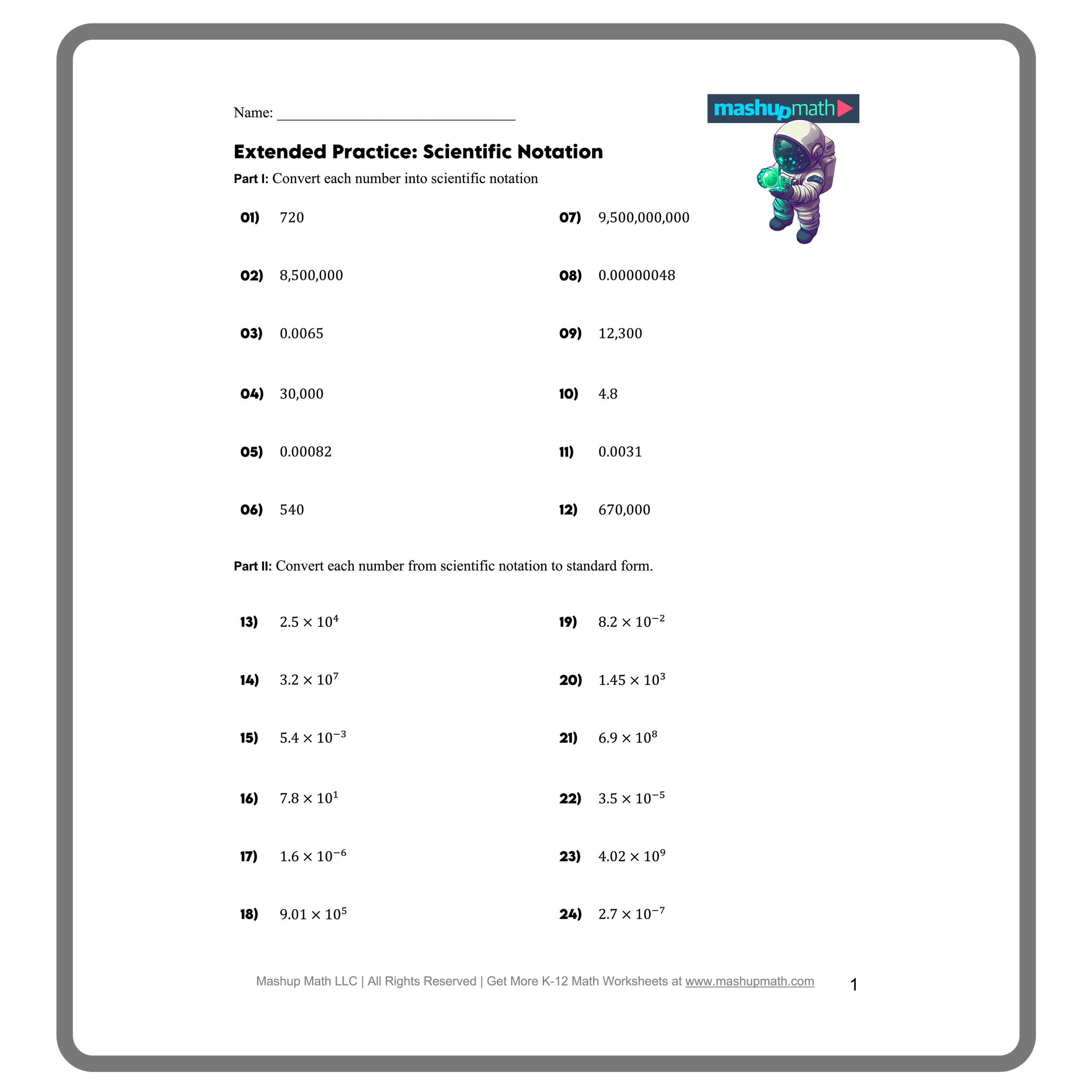
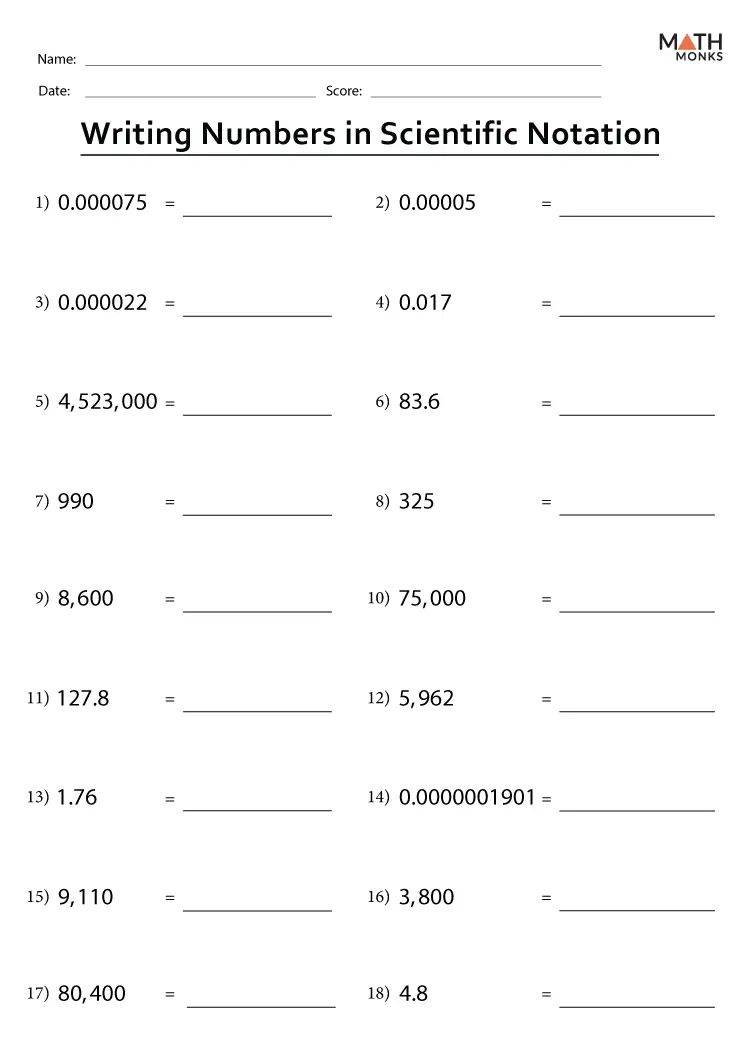
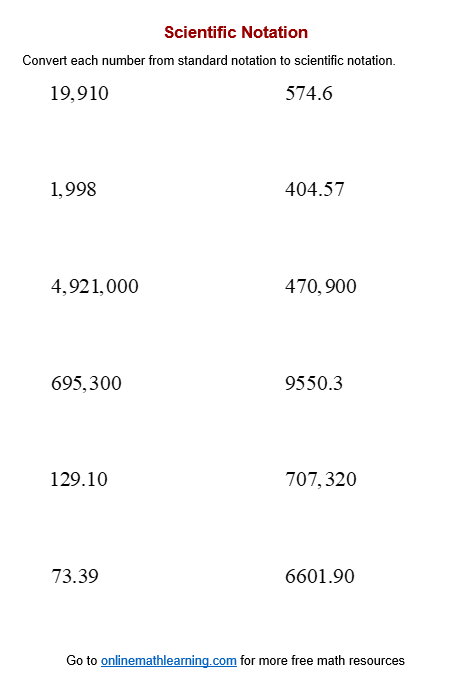
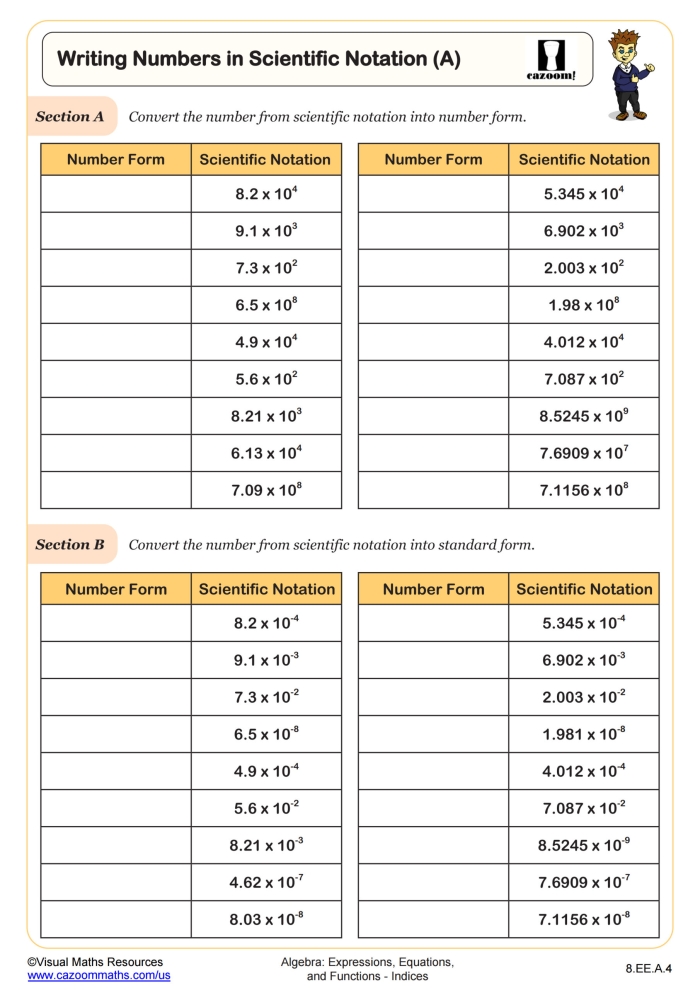
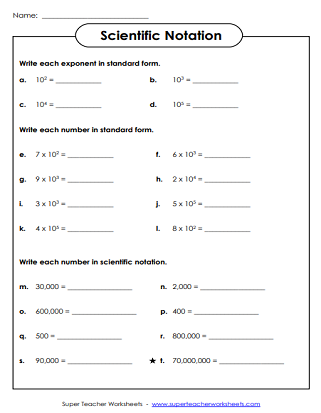
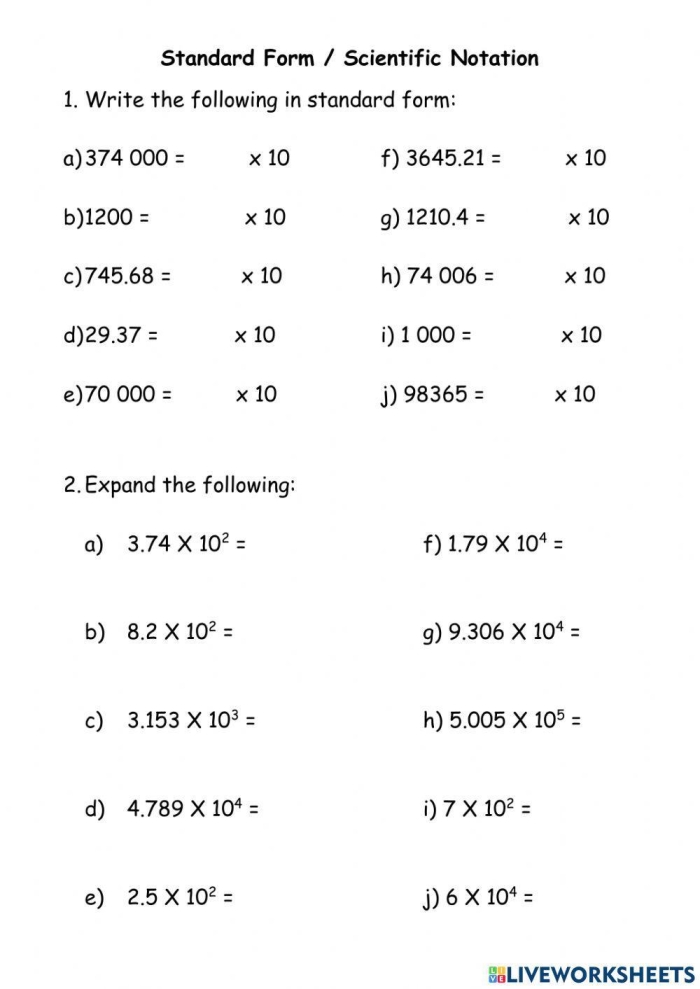
Converting between standard form and scientific notation represents one of those skills that feels abstract until students actually need it. Eighth graders working through place value concepts will encounter this conversion repeatedly, and the practice matters because it builds the foundation for handling extremely large or small numbers they’ll see in high school science and math.
Scientific notation serves a practical purpose. Instead of writing out 5,000,000,000, scientists and mathematicians write 5 × 10⁹. The system compresses unwieldy numbers into manageable expressions. When eighth graders grasp this conversion, they’re essentially learning a language that makes calculations easier and mistakes less likely.
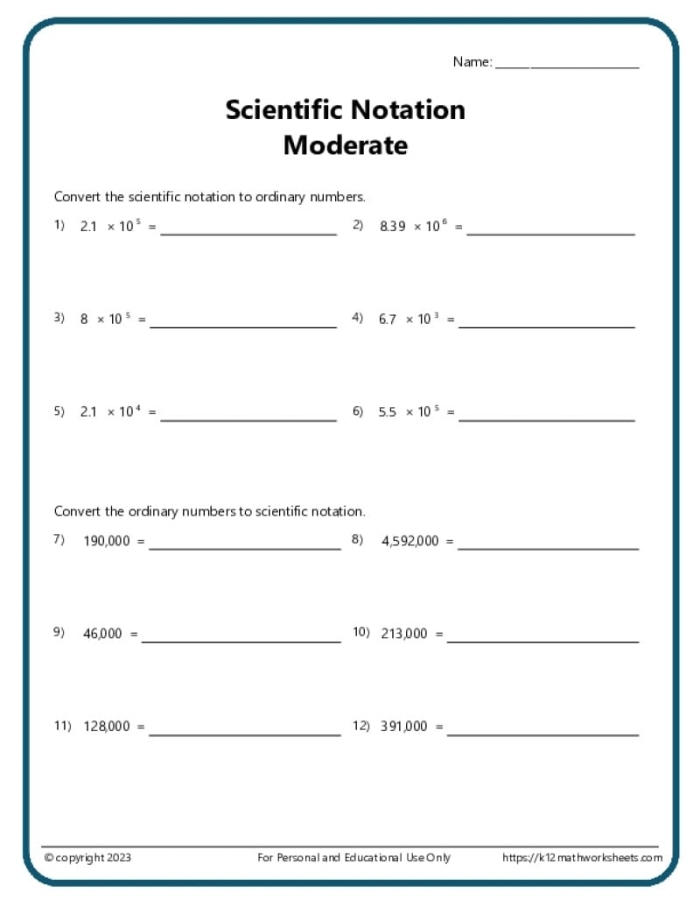
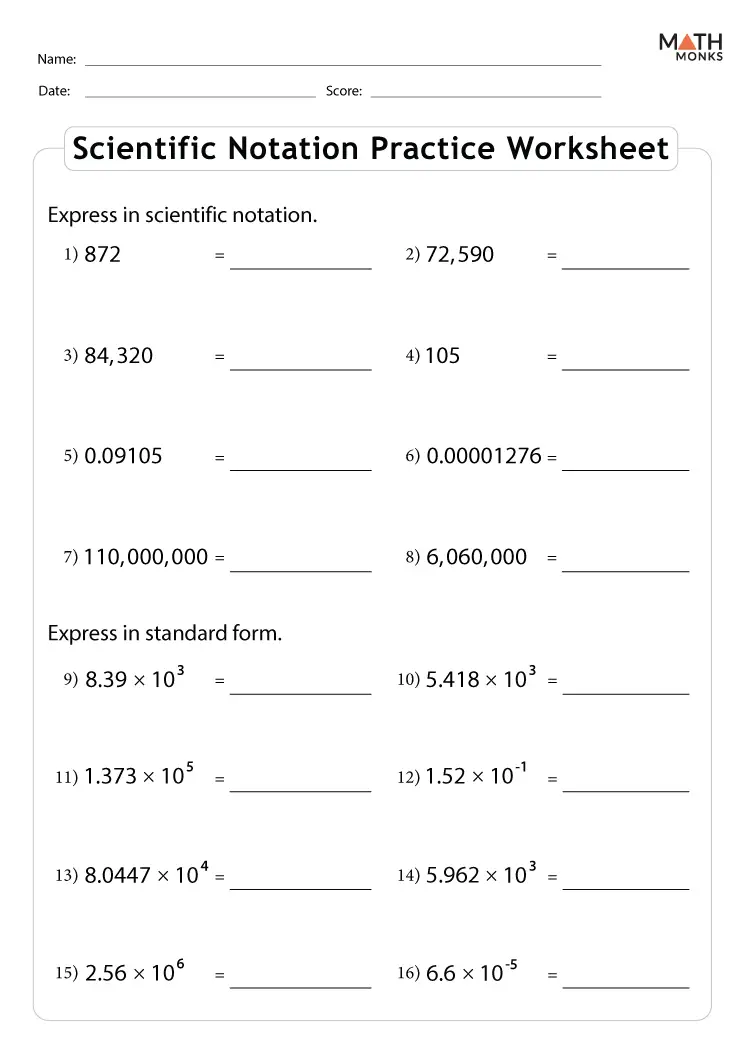
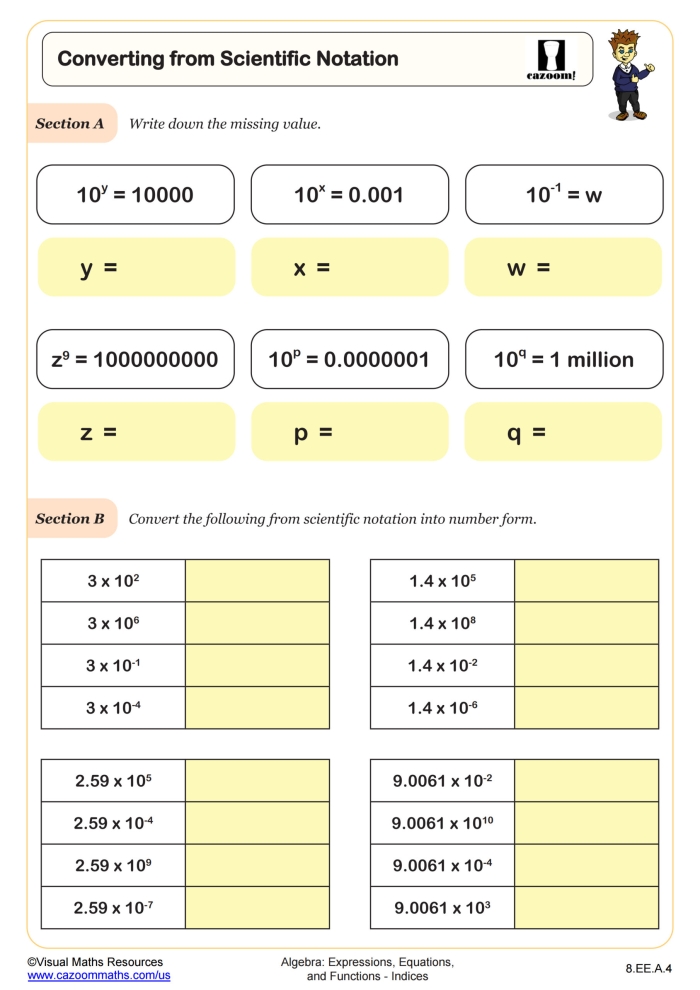
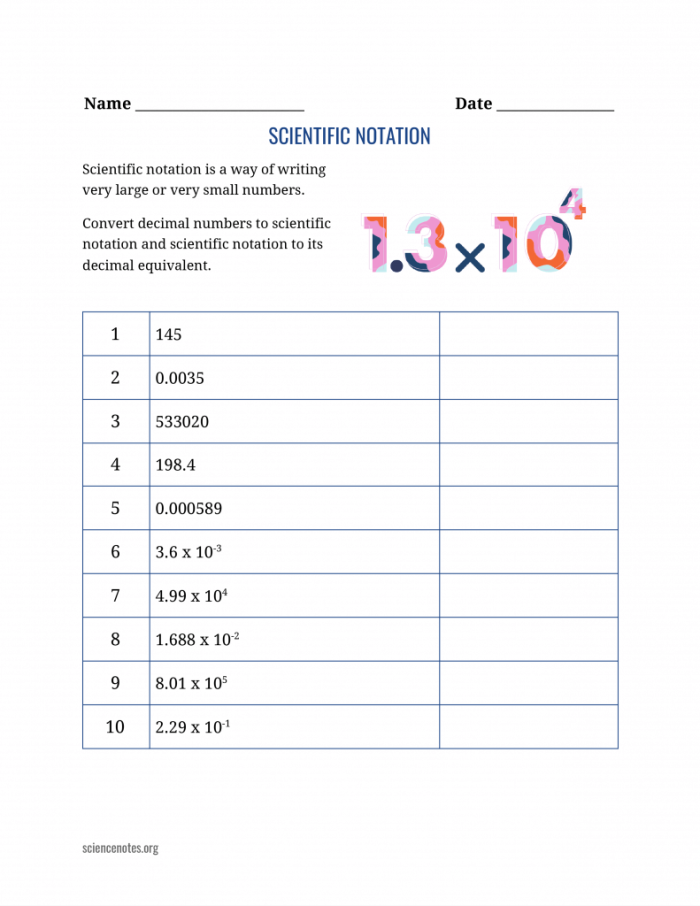
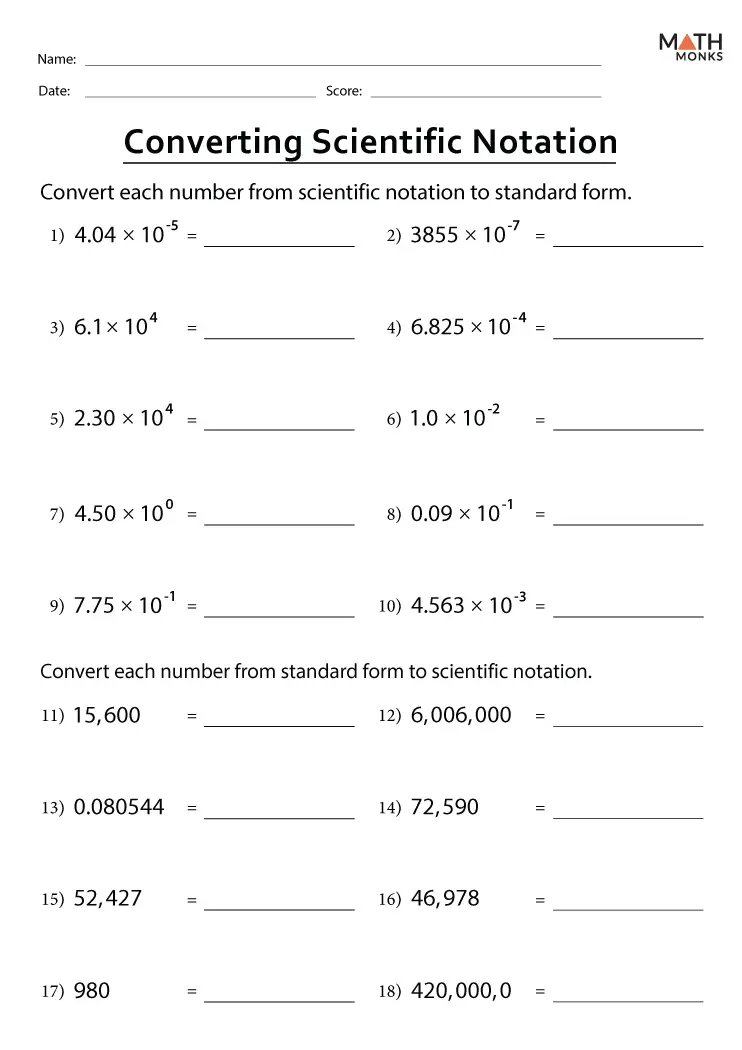
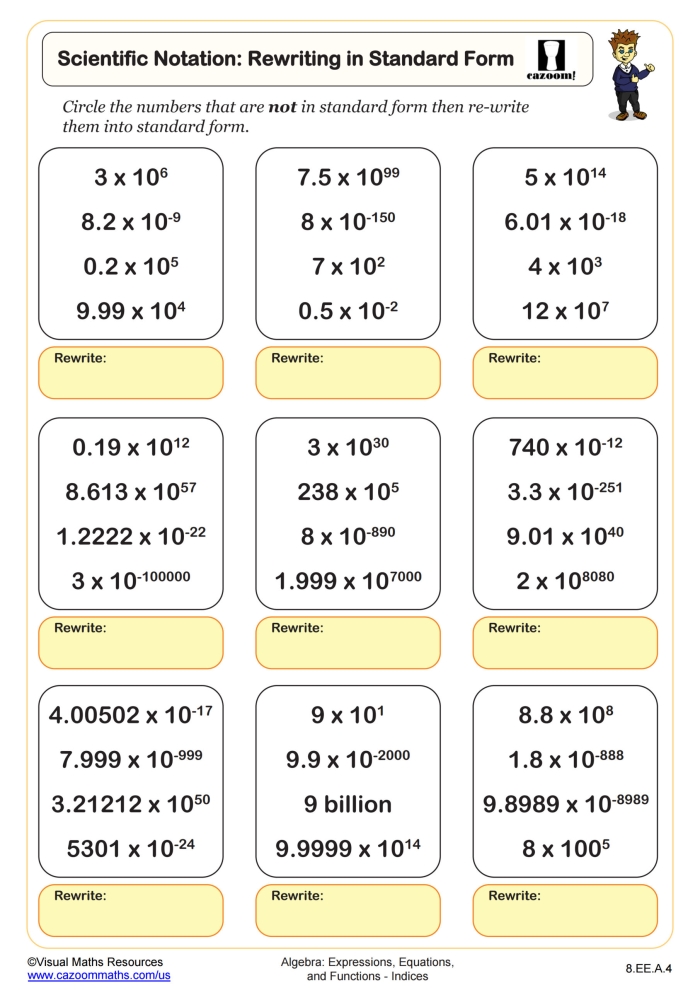
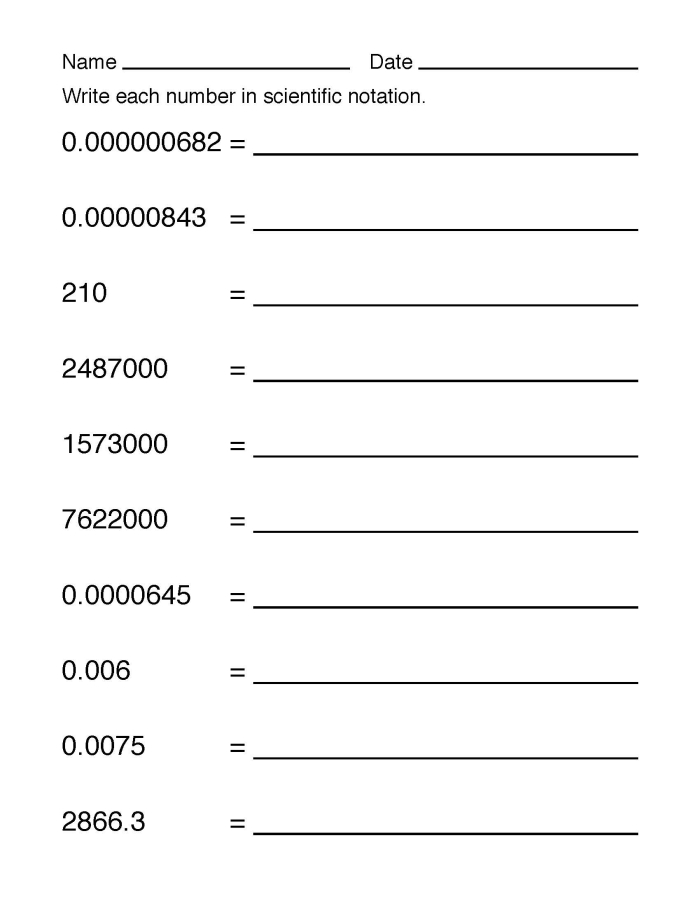
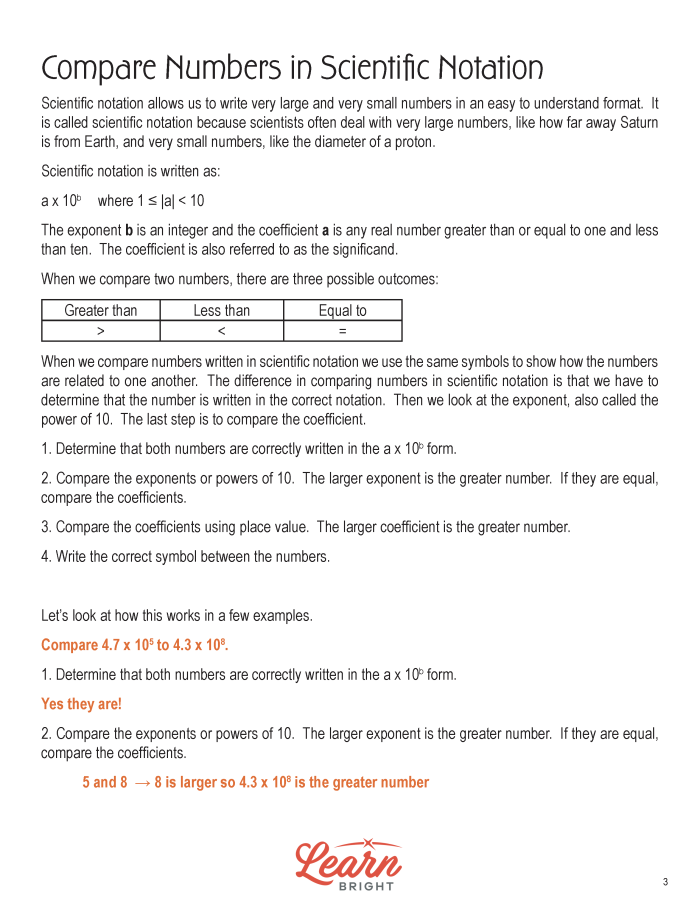
The conversion process itself breaks down into straightforward steps. Moving from standard form to scientific notation requires identifying where the decimal point belongs so that only one non-zero digit appears before it, then counting how many places the decimal moved to determine the exponent. The reverse process, converting scientific notation back to standard form, simply reverses these steps. Students who practice this skill develop intuition about magnitude and develop stronger number sense overall.
Eighth grade represents the ideal time for this instruction because students have already mastered basic exponents and understand place value deeply enough to see why the system works. Many educators pair these conversion exercises with real-world contexts like astronomy distances or microscopic measurements, which helps students see beyond the mechanics.
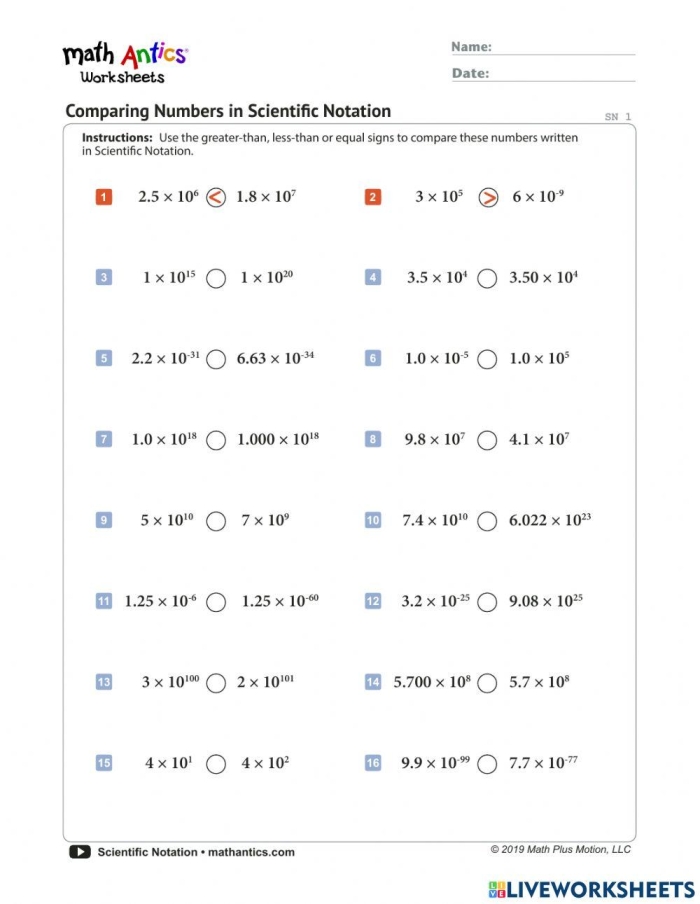
Worksheets designed for place value practice often include conversion problems mixed with other operations. Some students benefit from structured practice where they work through similar problems repeatedly, while others need varied contexts to maintain engagement. Resources that combine algebraic thinking with numerical practice can reinforce how scientific notation connects to broader mathematical concepts.
The goal isn’t memorization of rules but genuine understanding of how the decimal system works at different scales. When eighth graders can move fluidly between 0.000045 and 4.5 × 10⁻⁵, they’ve internalized something meaningful about how numbers function.
Practice with These Worksheets