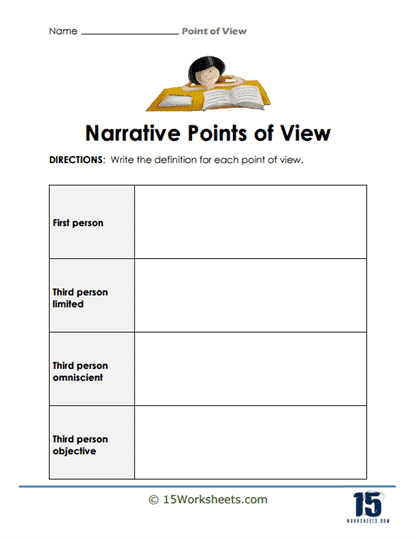
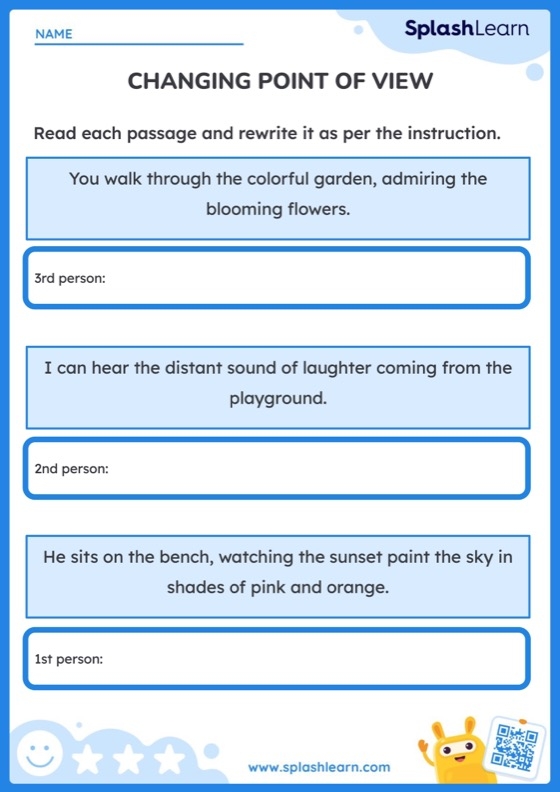
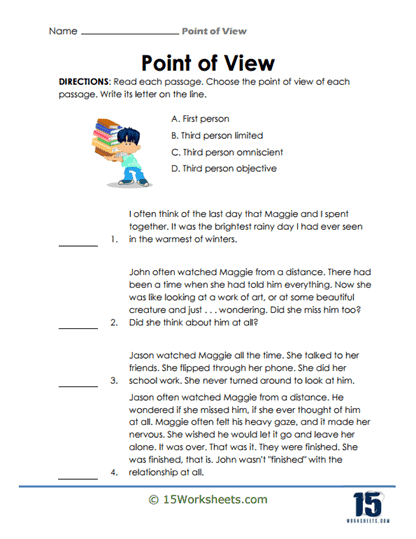
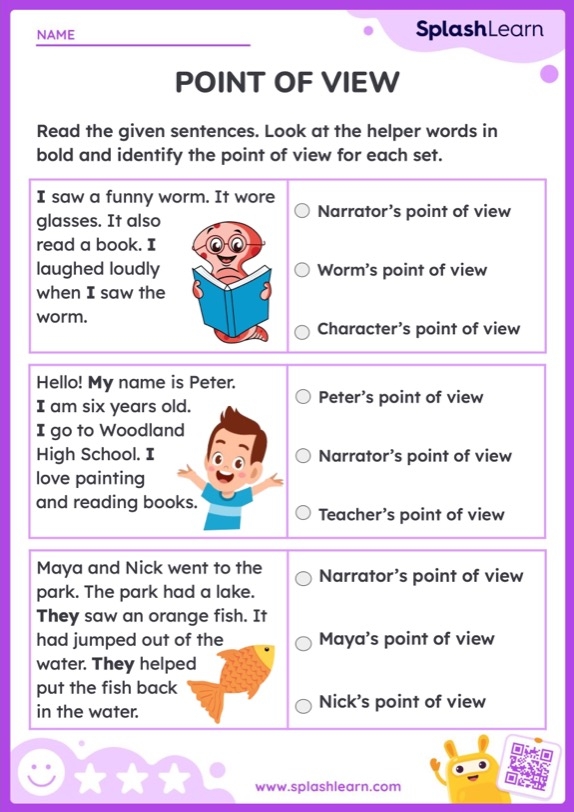
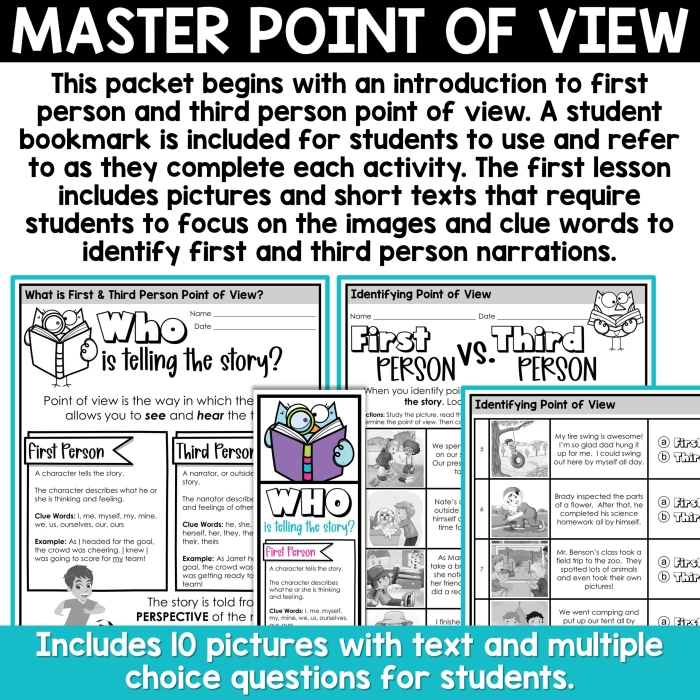
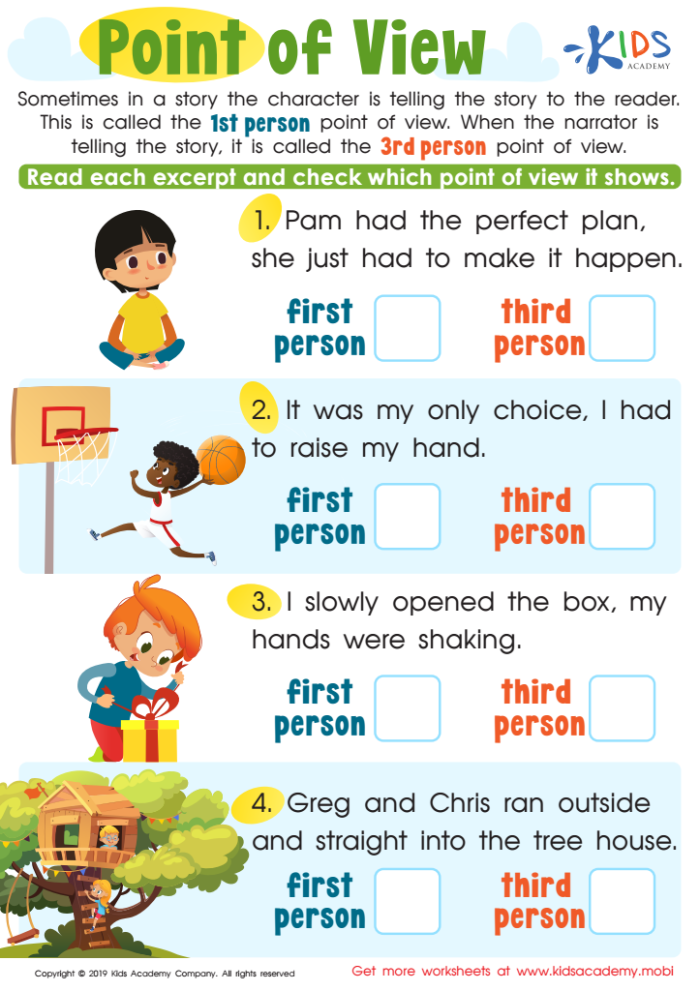
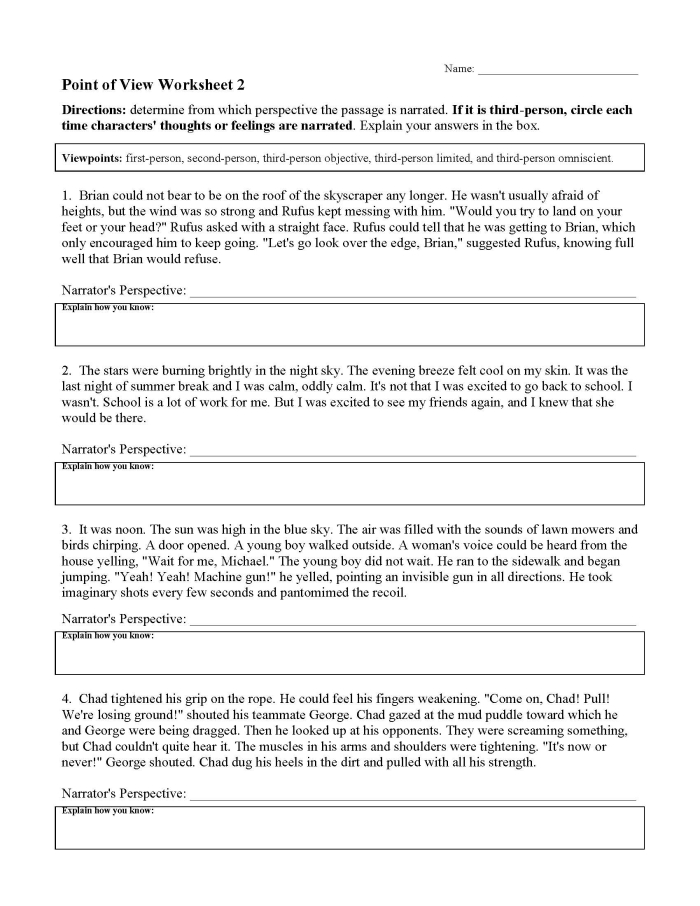
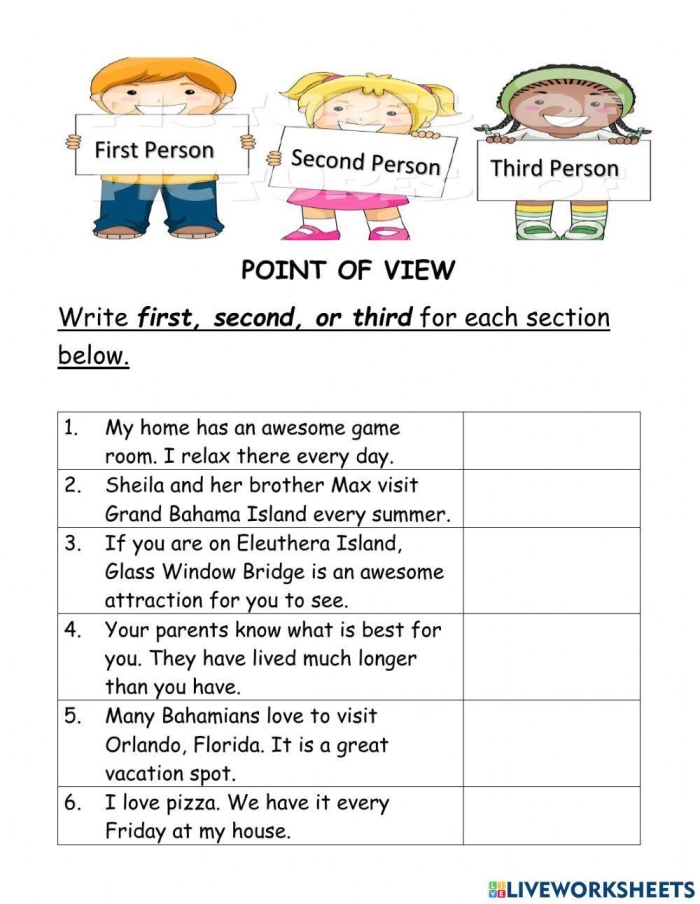
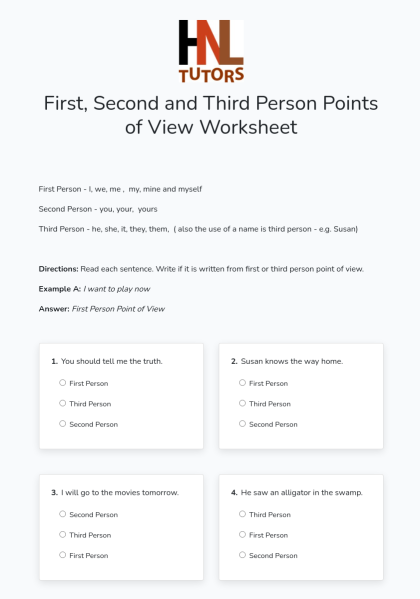
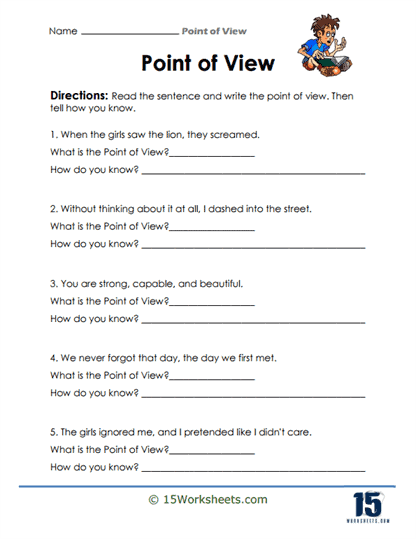
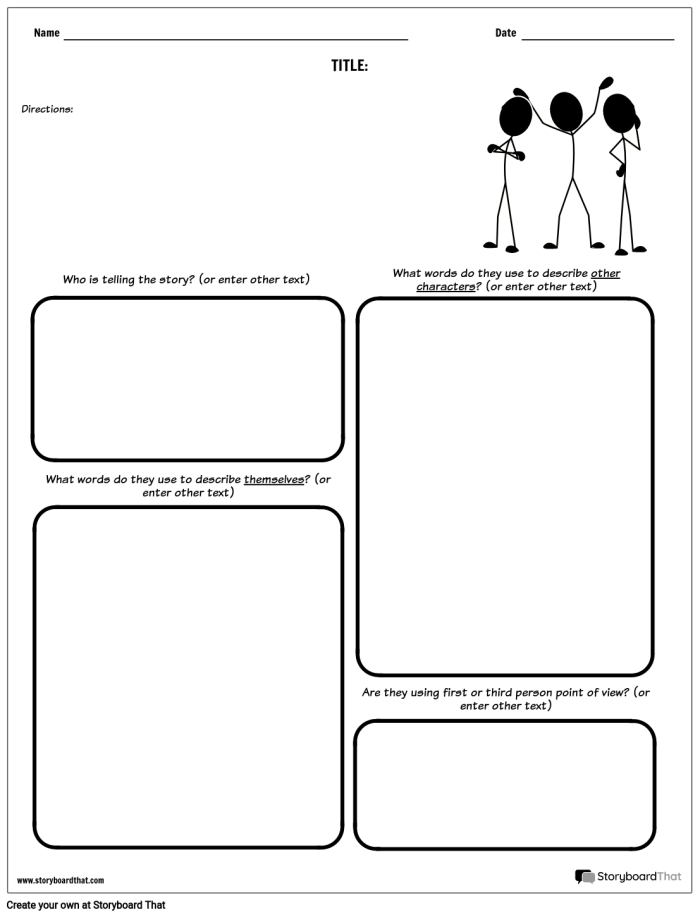
Understanding whose voice tells a story matters more than most young readers realize. When fourth grade students learn to identify point of view, they gain a tool that transforms how they read and understand texts. This literacy worksheet guides students through the process of recognizing whether a narrator speaks from a first-person, second-person, or third-person perspective, and what that choice reveals about the story itself.
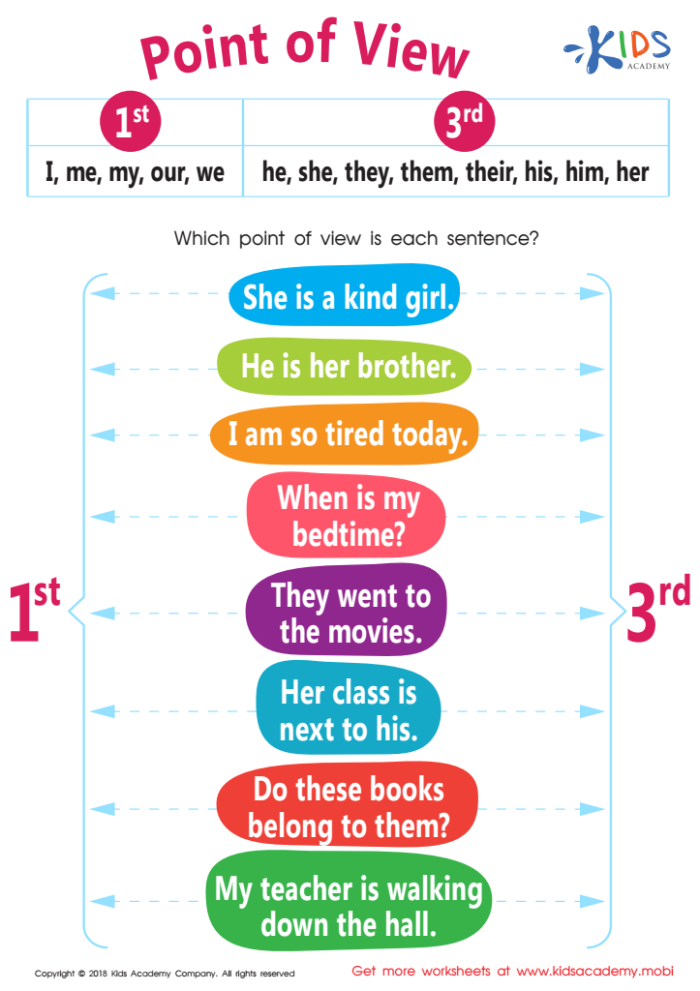
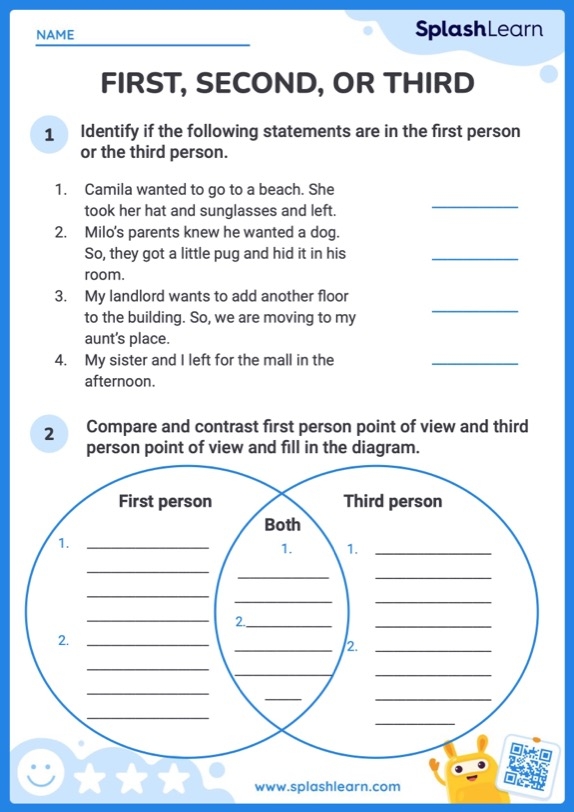
Point of view shapes everything in a narrative. When a character says “I discovered the treasure,” the reader experiences the story through that character’s eyes and emotions. Compare this to “She discovered the treasure,” and suddenly the reader becomes an observer rather than a participant. Fourth graders benefit from hands-on practice distinguishing these perspectives because it builds reading comprehension skills they’ll use across all subjects, including when they work with finding the theme in stories or analyzing how information is presented in different texts.
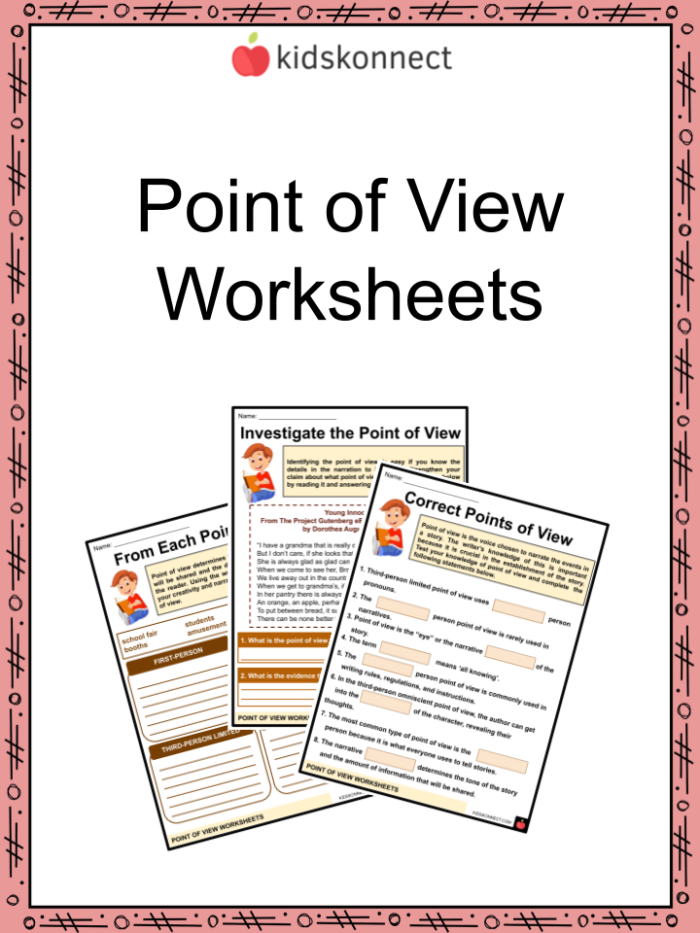
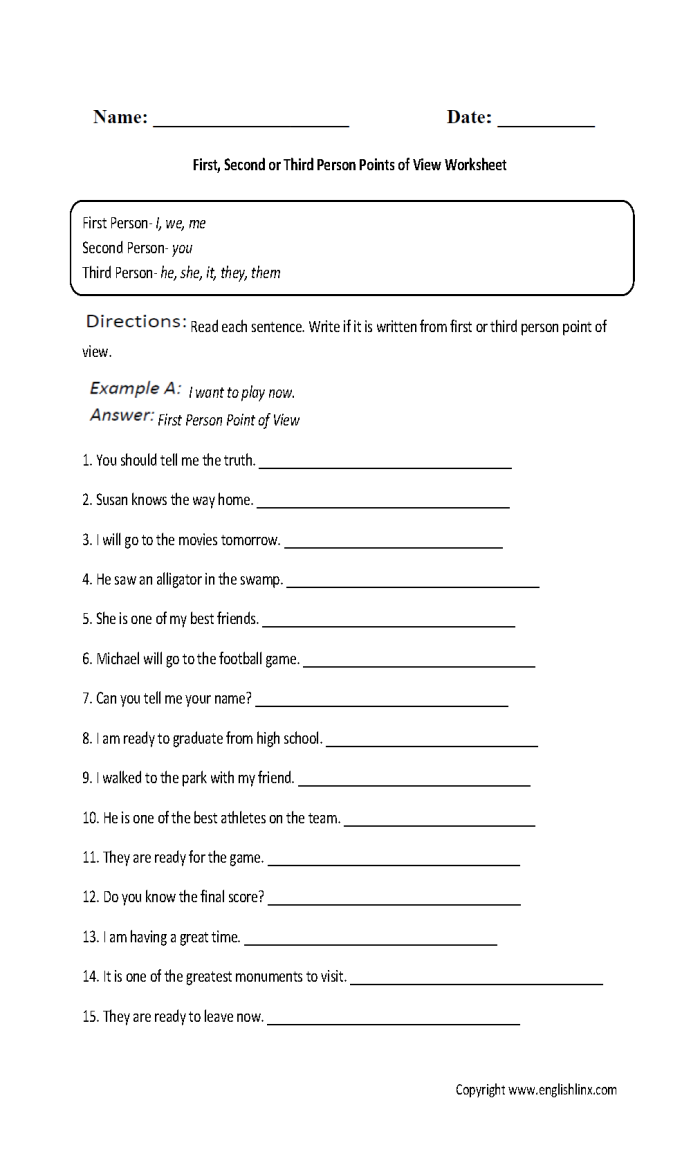
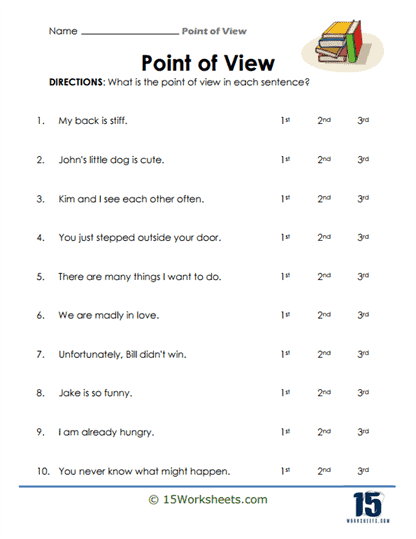
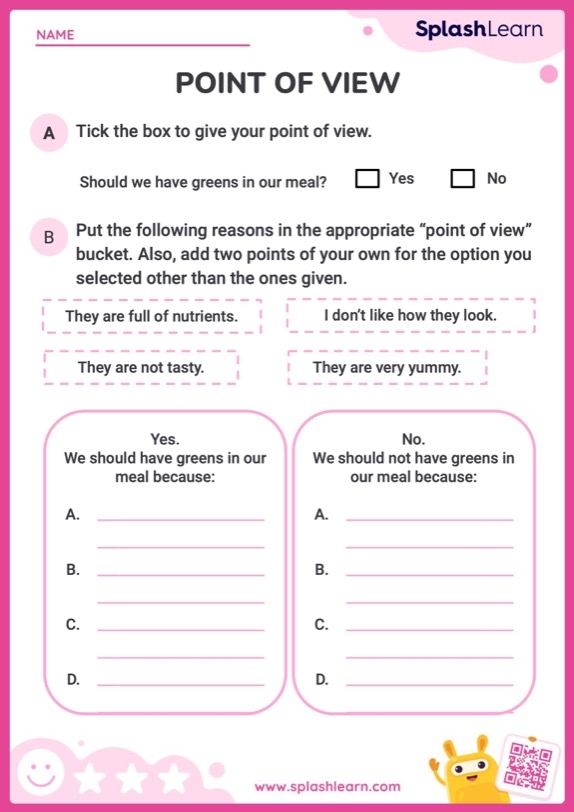
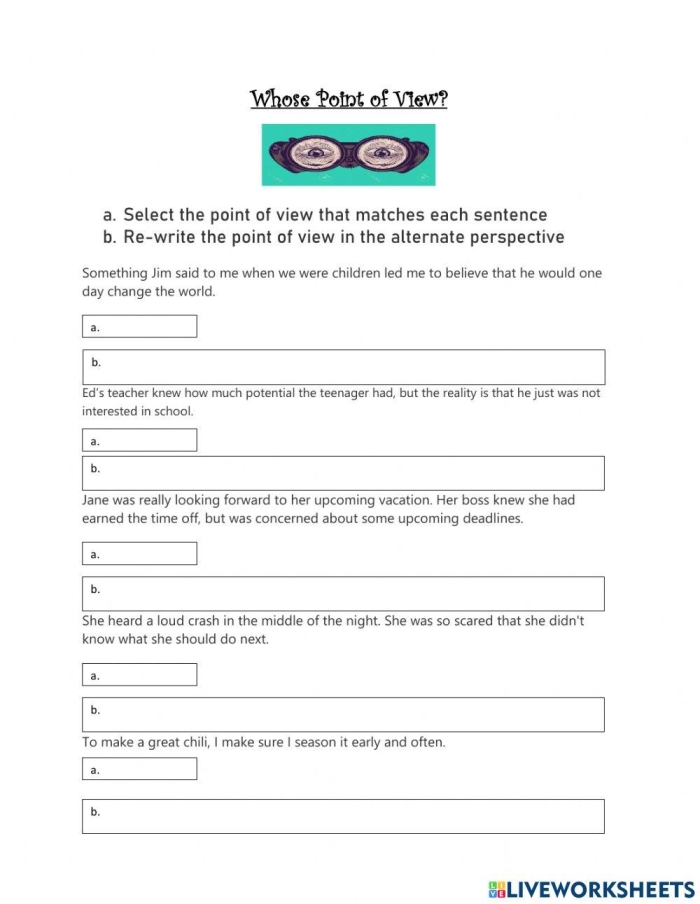
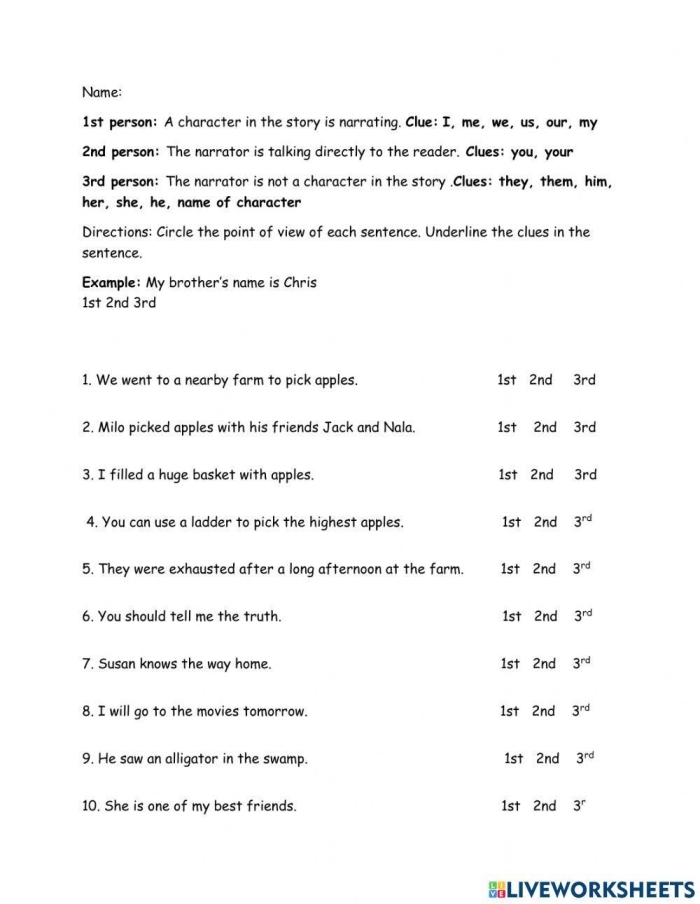
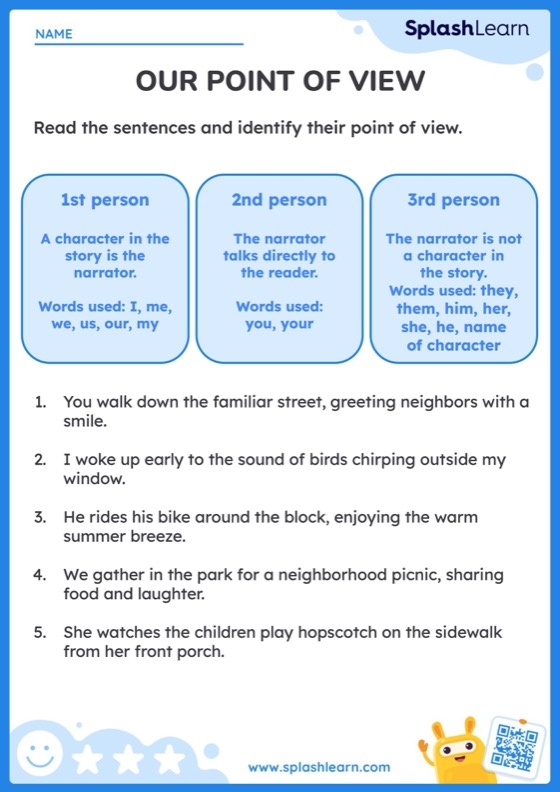
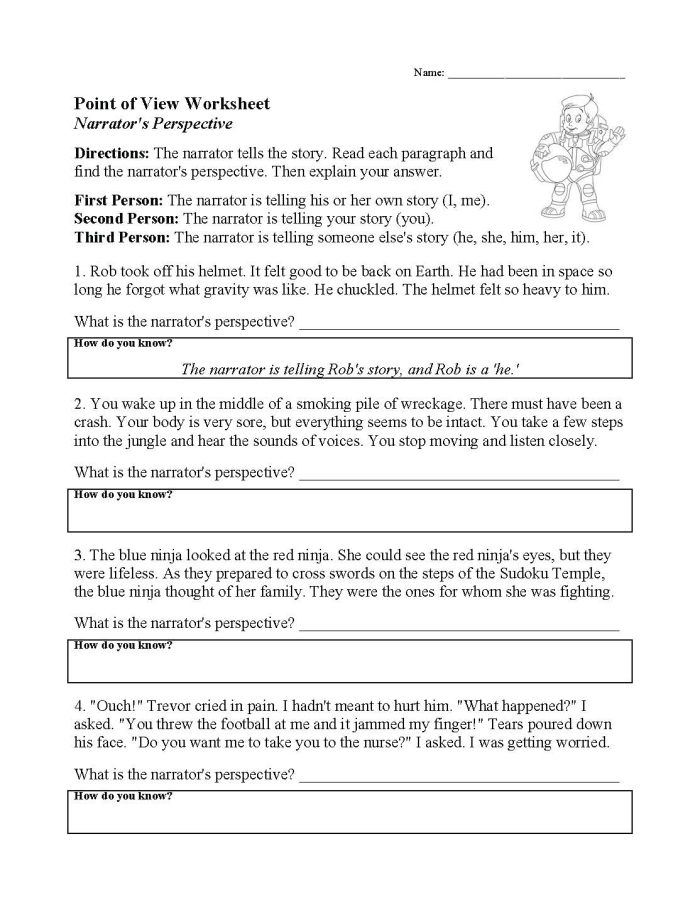
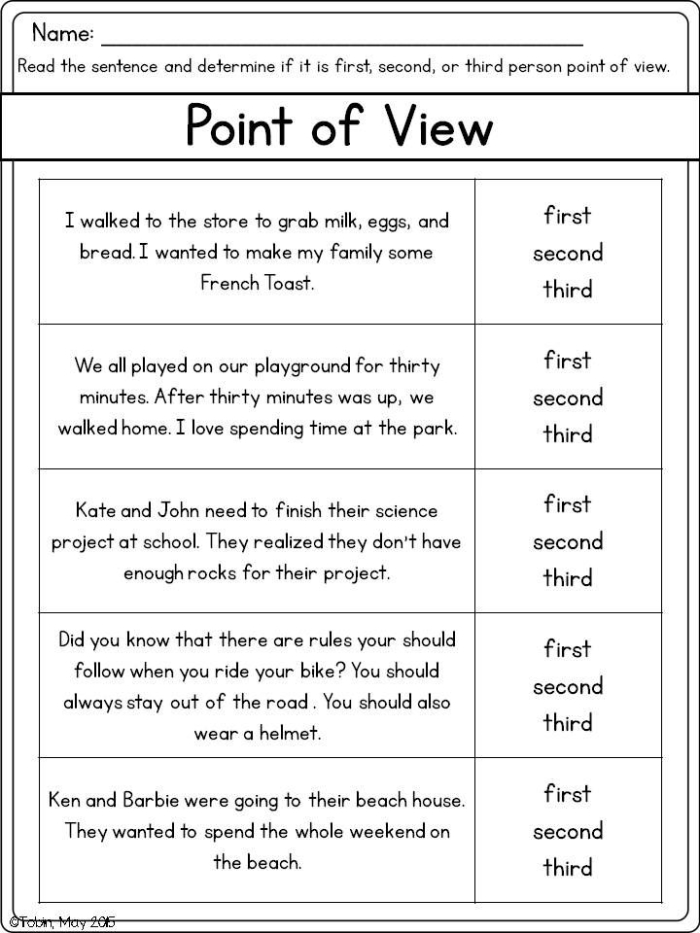
This worksheet presents short passages and asks students to identify the narrator’s perspective. Students read sentences, mark the point of view, and explain what clues helped them decide. The activity reinforces that pronouns like “I,” “you,” and “he/she/it” serve as signposts. Beyond grammar mechanics, recognizing point of view connects to broader literacy skills. When students understand perspective, they can better predict what a character might do next or question why the author chose to tell the story this way.
The worksheet also helps students see that point of view isn’t random. Authors choose perspectives deliberately to create specific effects. A mystery feels more suspenseful in first person because readers only know what the main character knows. This understanding extends into other learning areas as well, such as when students encounter different perspectives in informational texts.
Printable point of view worksheets like this one provide the repetition and variety that helps concepts stick. Fourth graders who practice identifying narrative voice develop stronger reading skills that serve them well as texts become more complex.
Try These Printable Worksheets