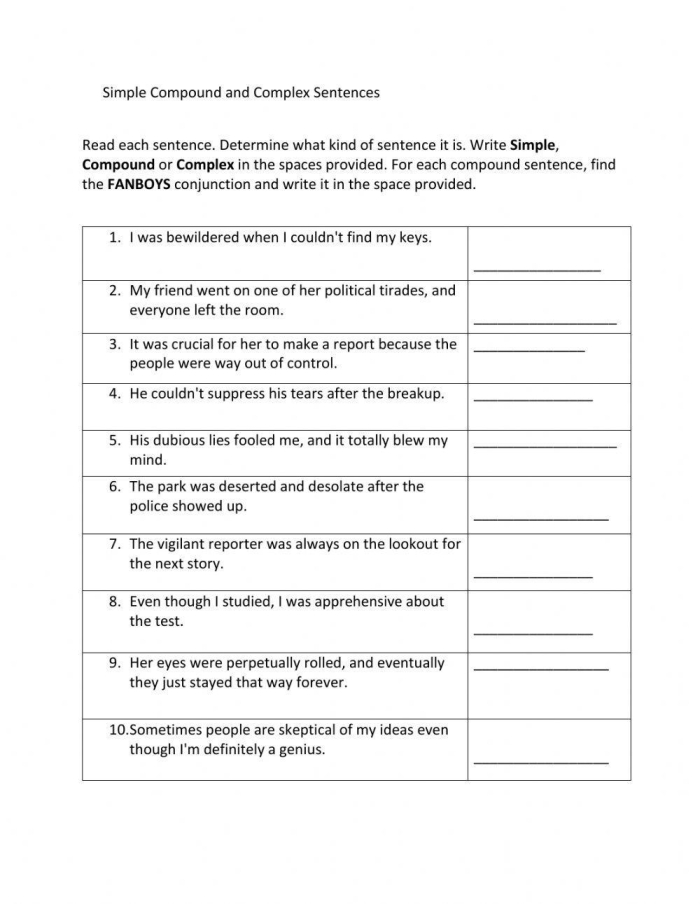
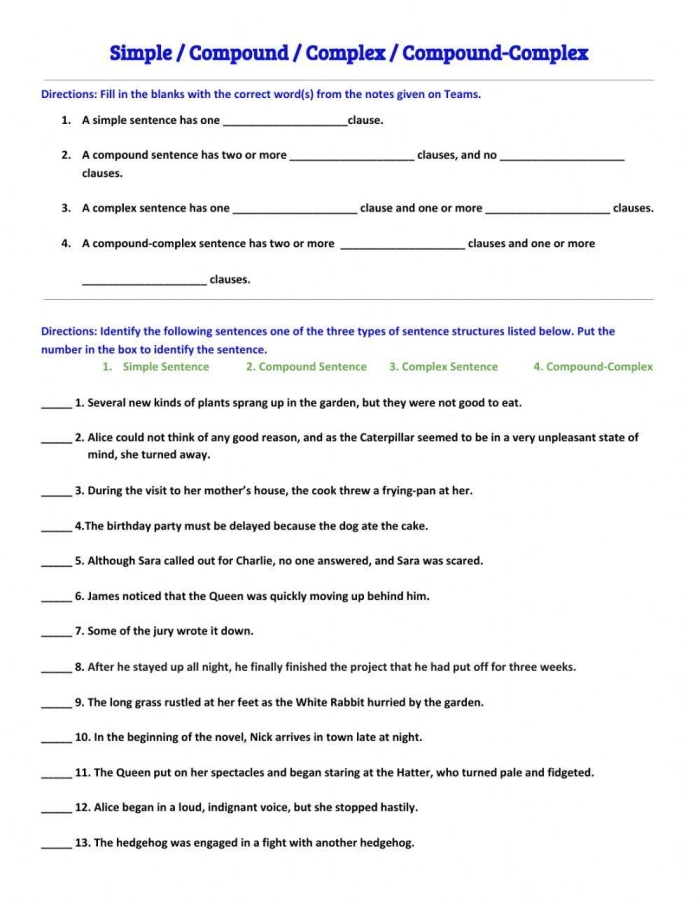
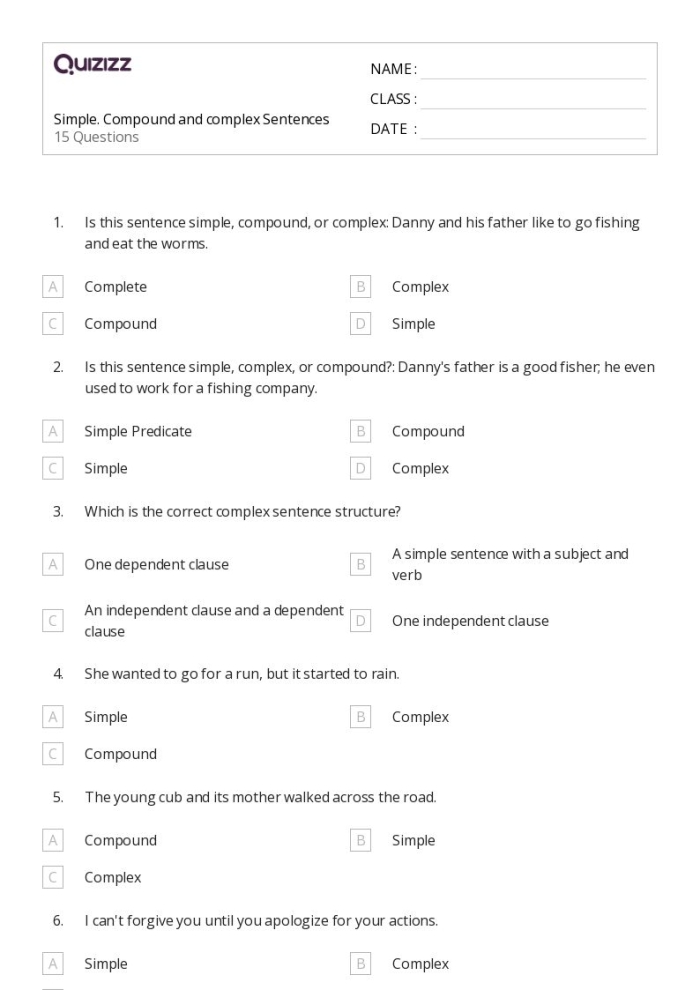
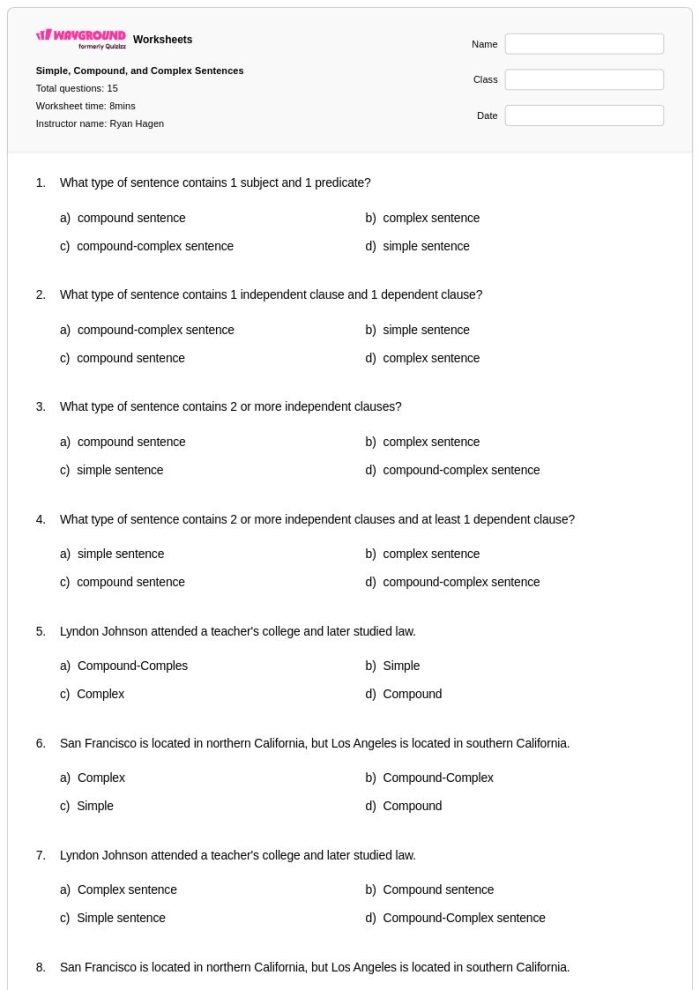
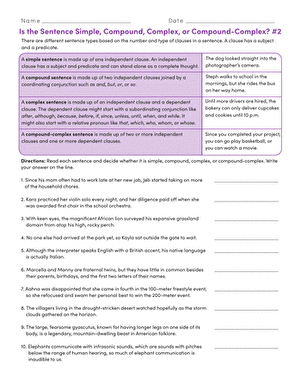
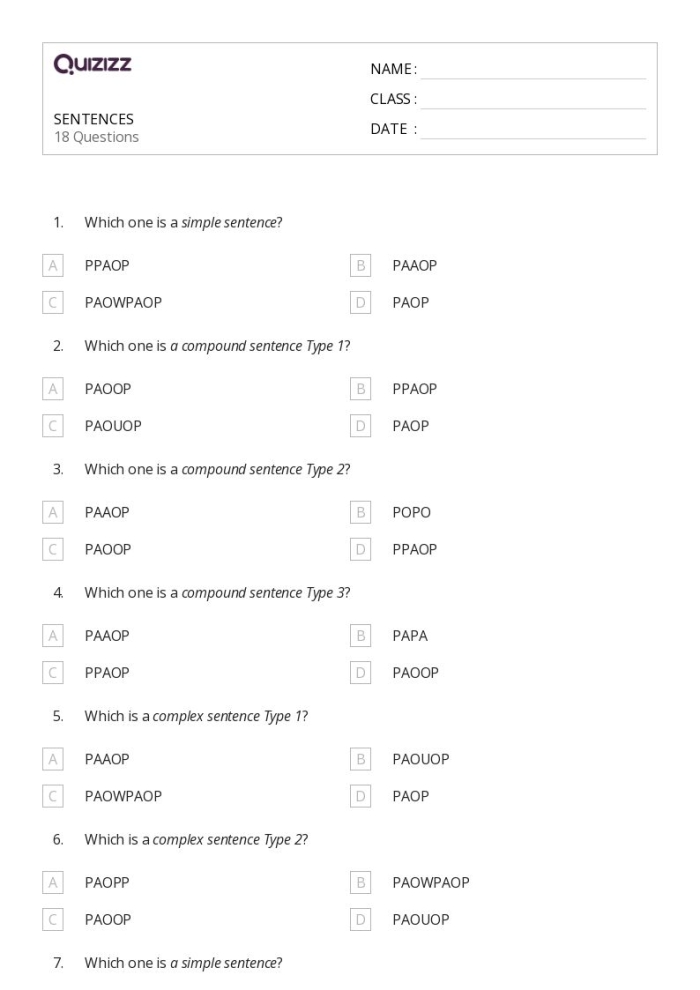
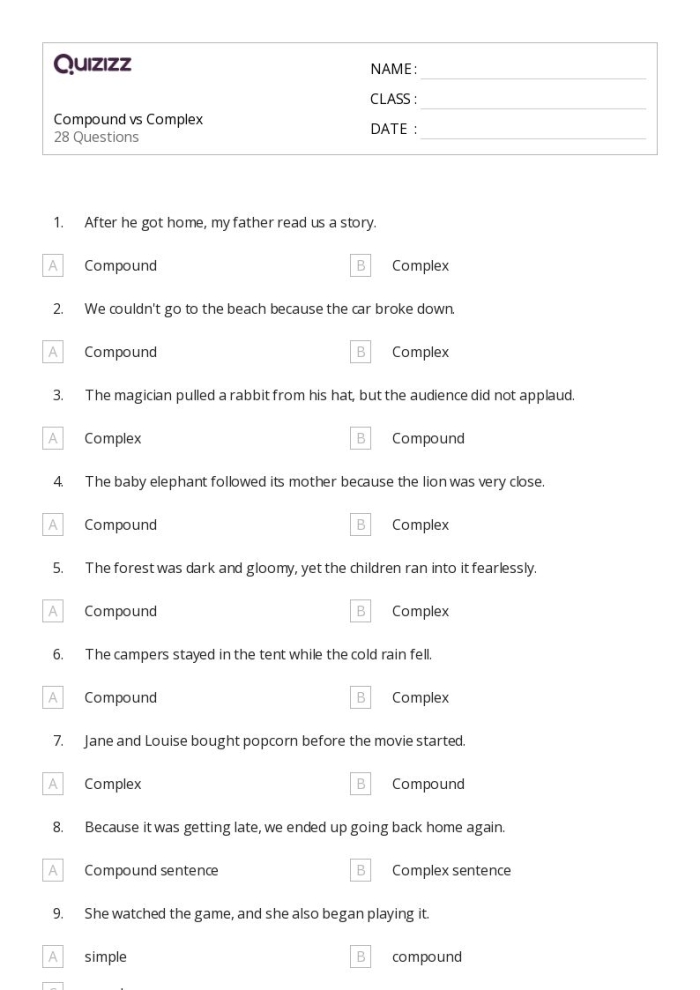
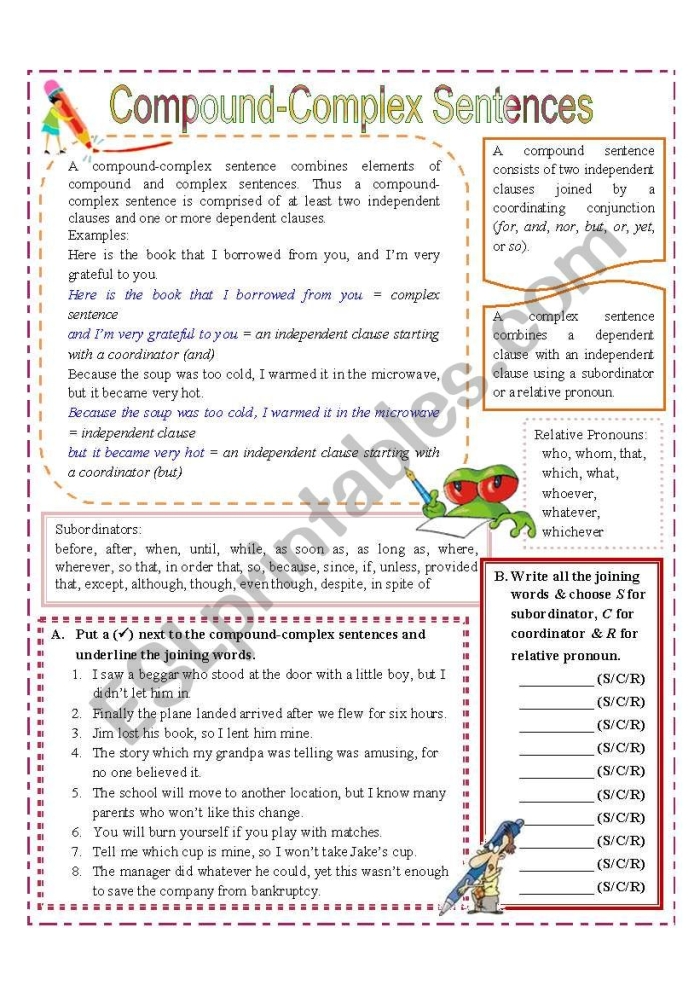
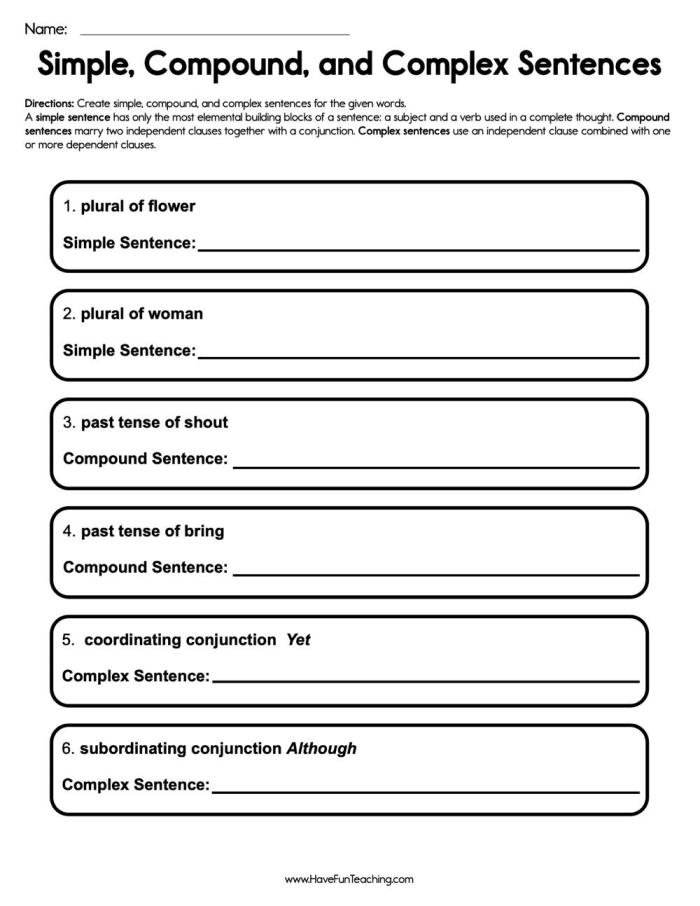
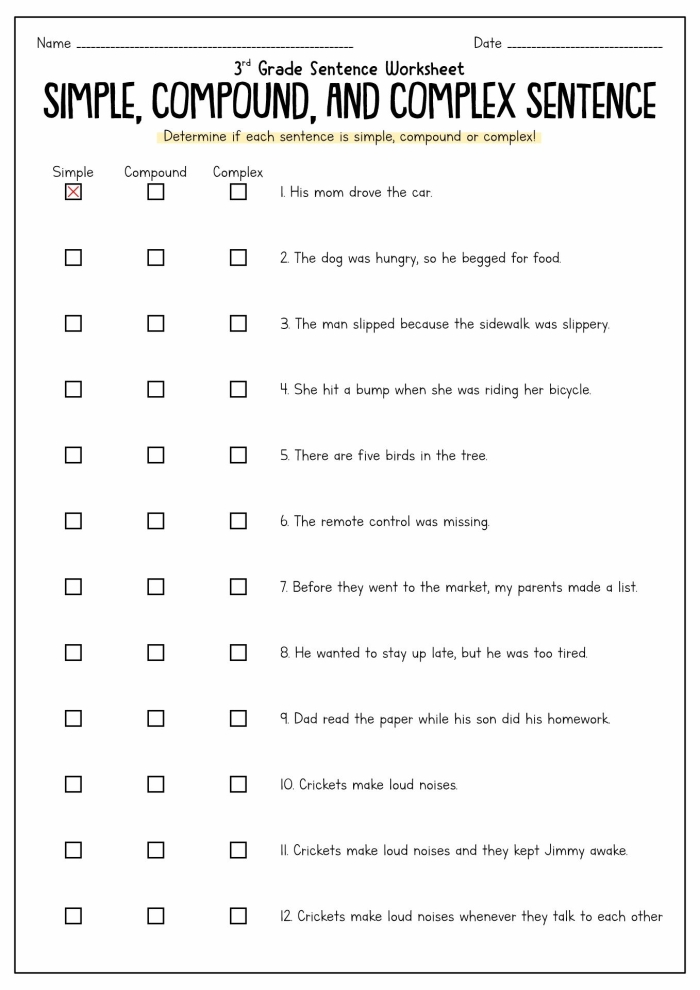
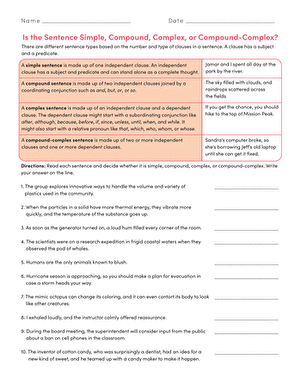
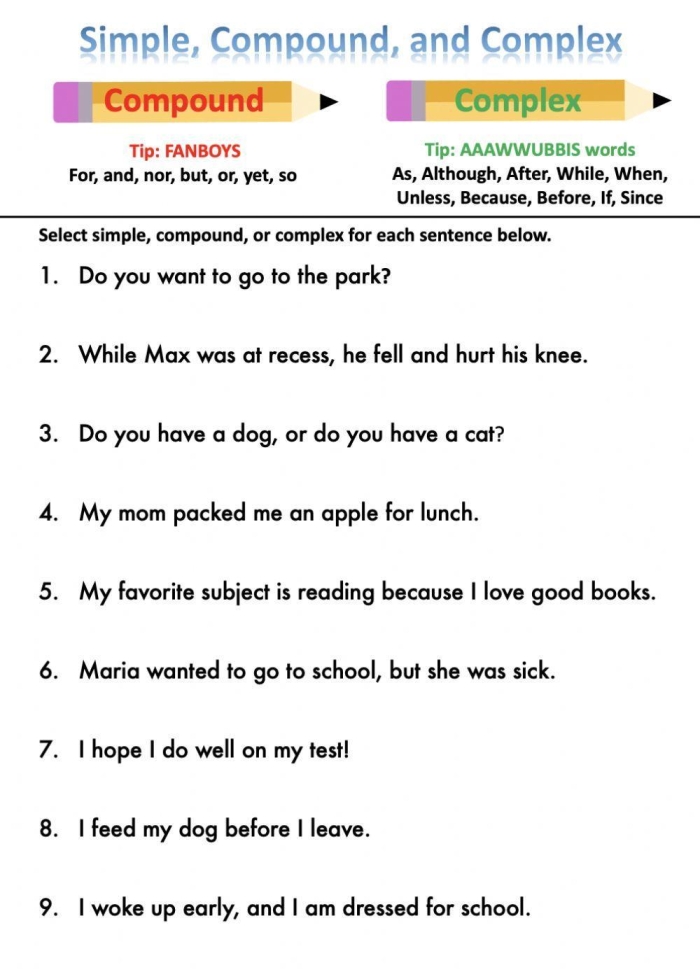
Seventh grade is when students start breaking down sentence structure in ways that actually matter for their writing. A worksheet focused on identifying simple, compound, complex, and compound-complex sentences gives them the foundation they need to understand how thoughts connect on a page.
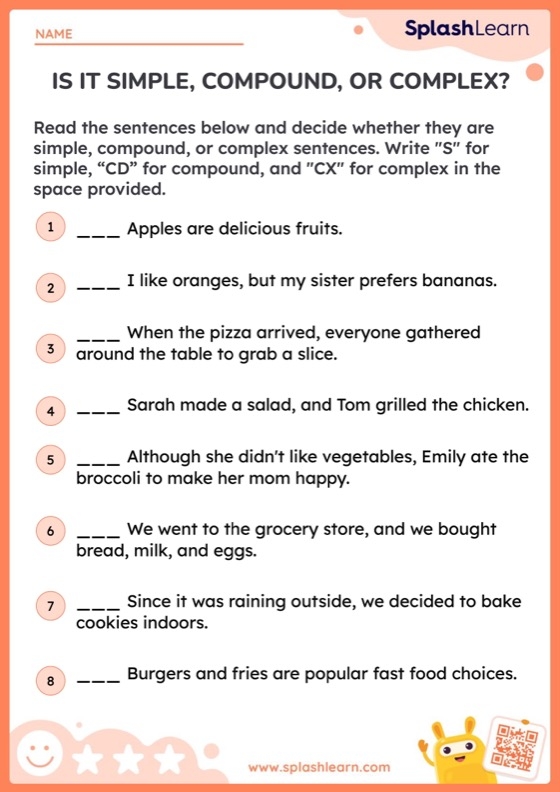
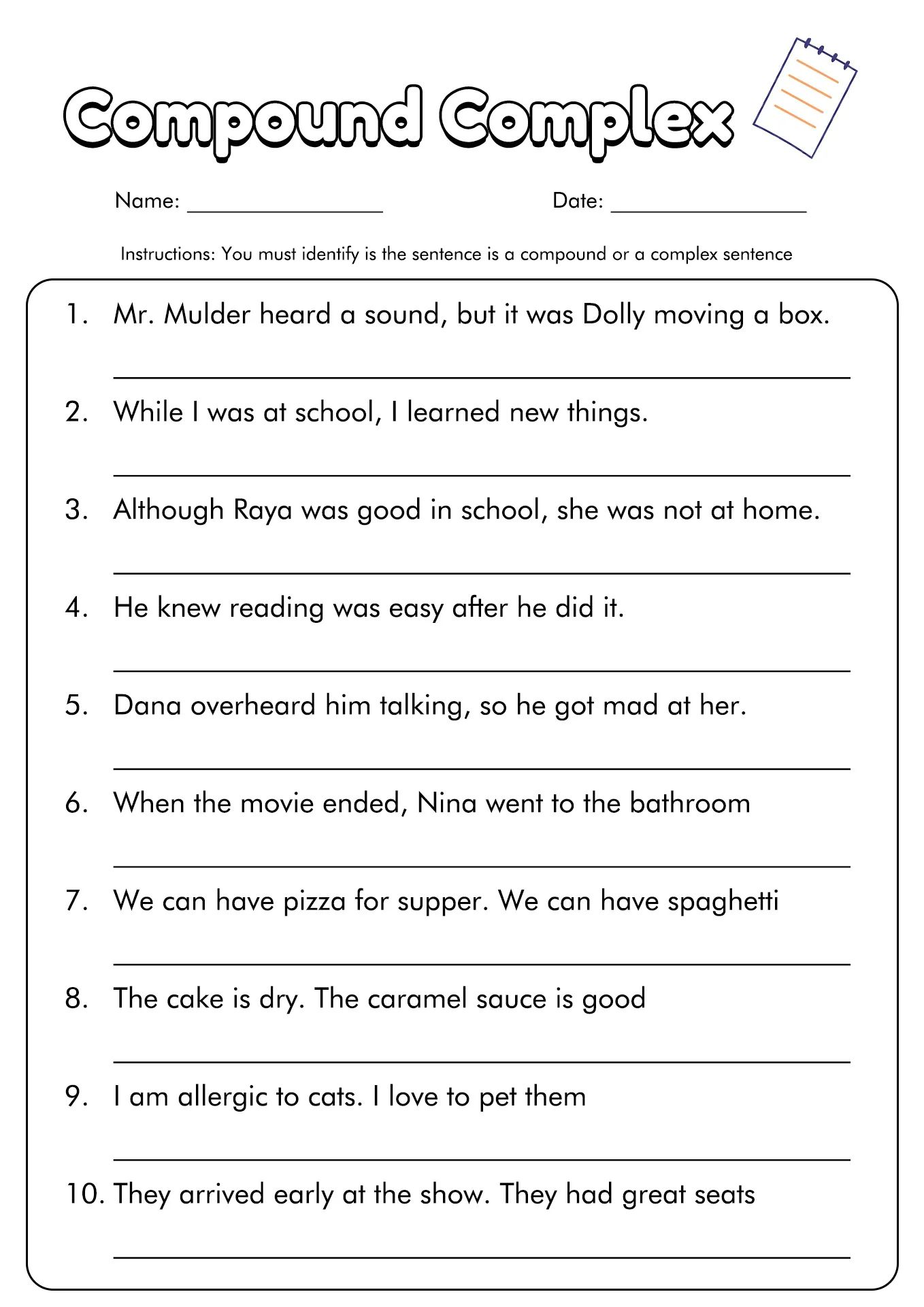
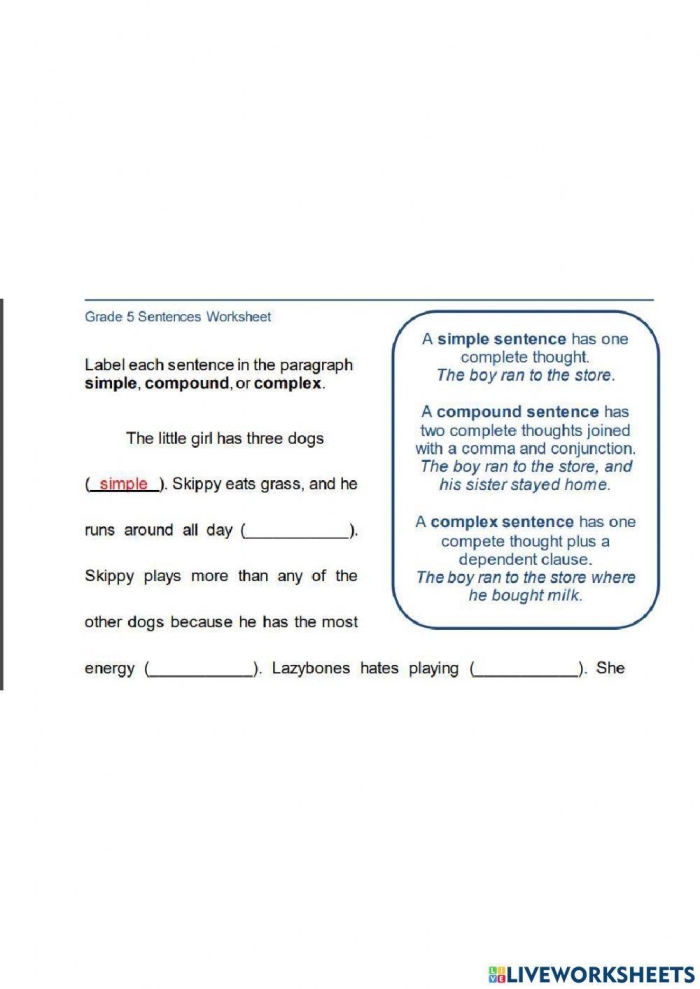
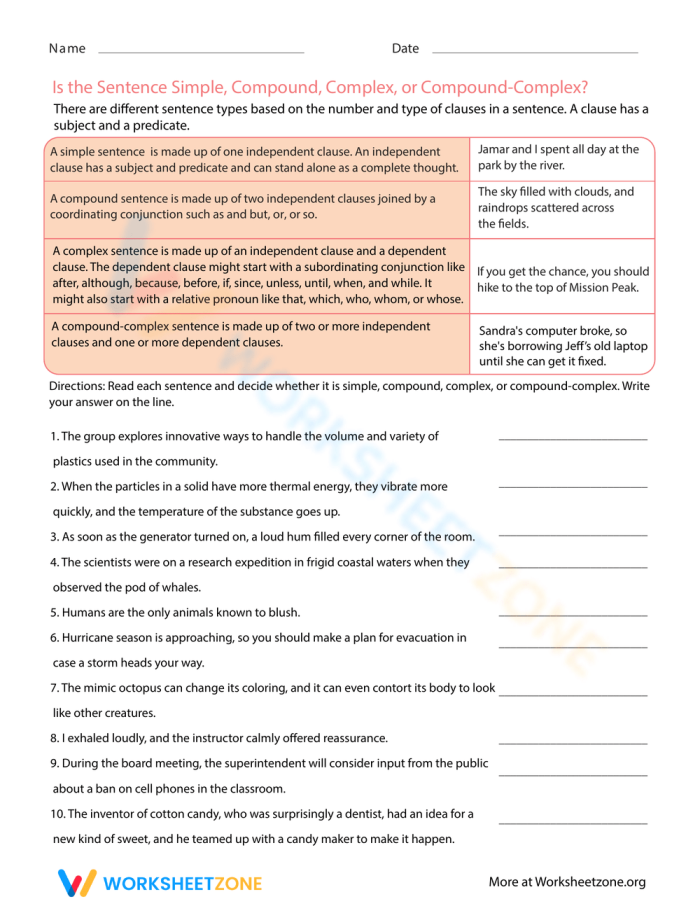
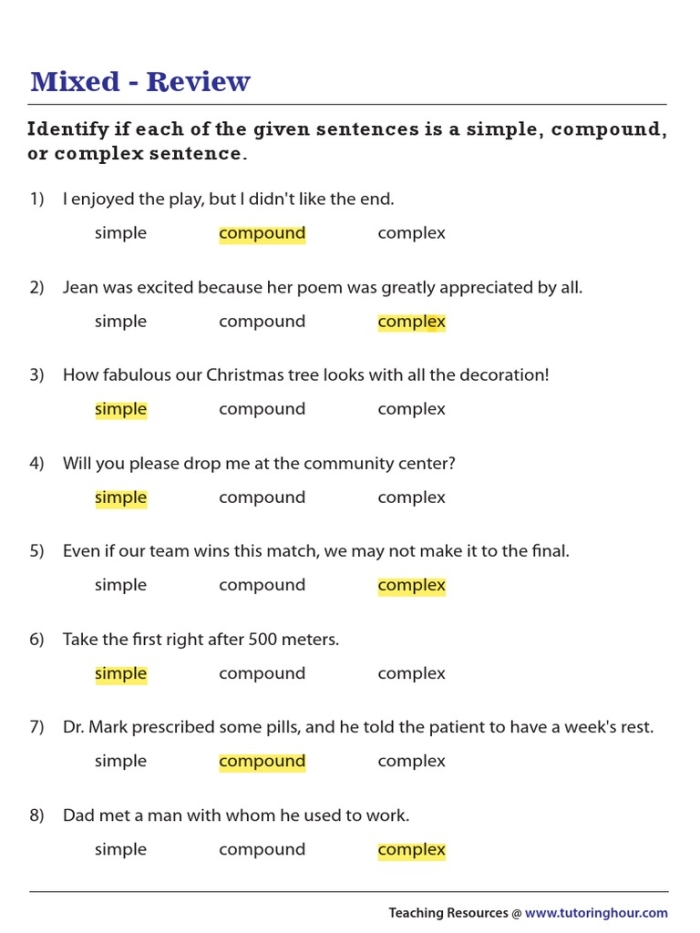
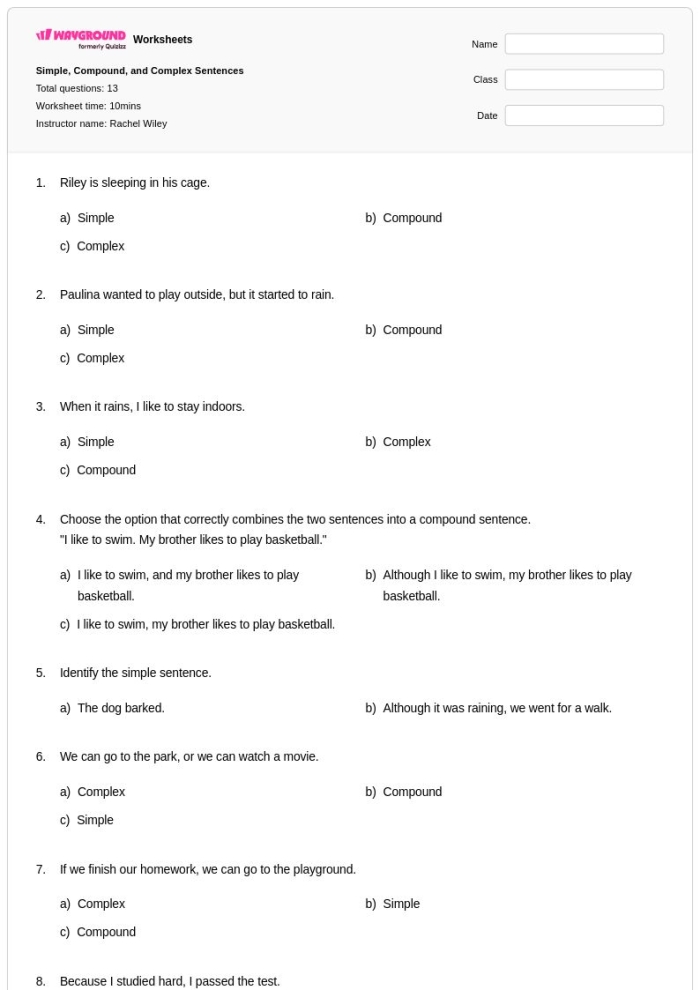
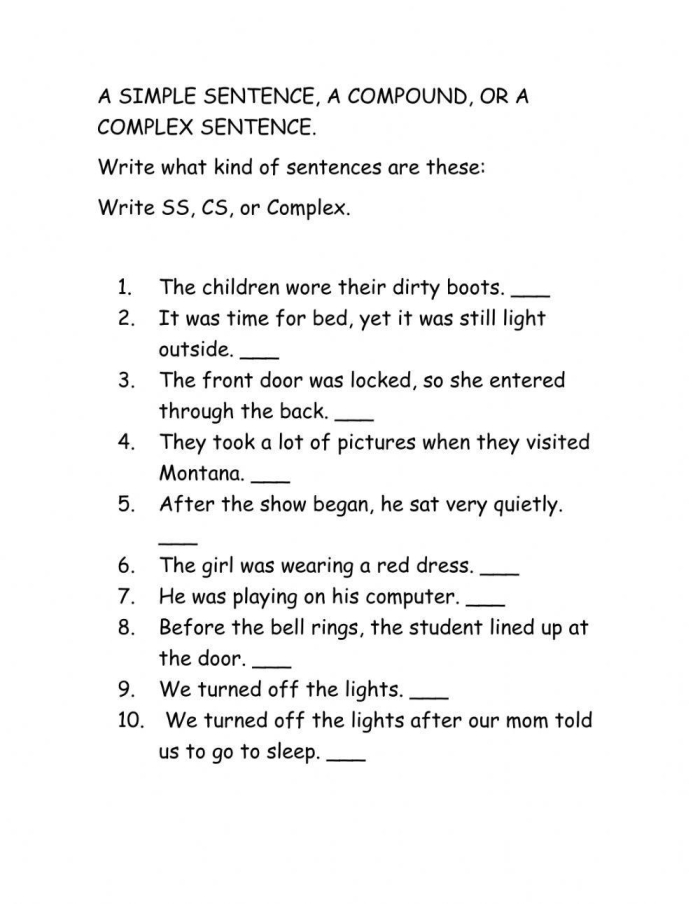
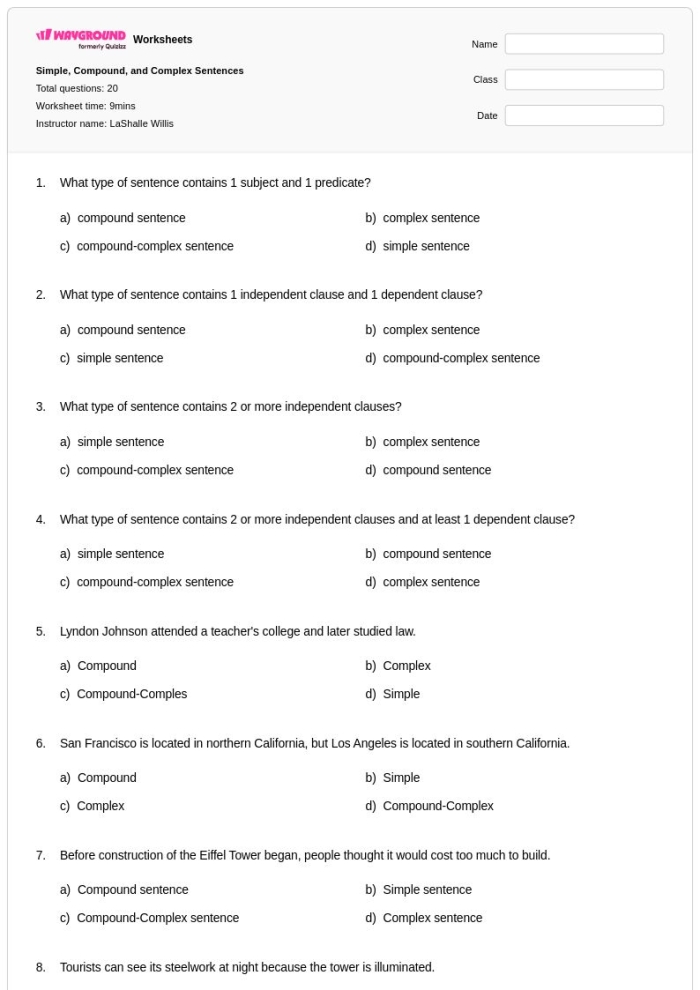
The difference between these sentence types comes down to clauses. A simple sentence contains one independent clause, which means it has one subject and one verb working together. “The cat sleeps” works as a simple sentence. A compound sentence joins two independent clauses using a conjunction like “and,” “but,” or “or.” For example: “The cat sleeps, but the dog barks.” Both parts could stand alone as complete thoughts.
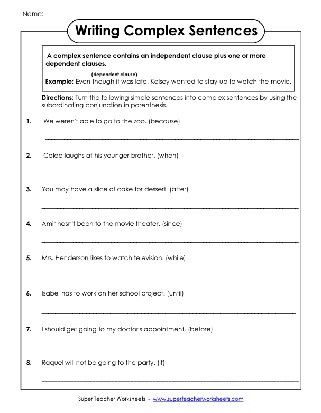
Things get more interesting with complex sentences. These combine one independent clause with at least one dependent clause, which cannot stand alone. “When the cat sleeps, the dog barks” shows this pattern. The dependent clause “when the cat sleeps” needs the independent clause to make sense. Finally, a compound-complex sentence blends both patterns: multiple independent clauses plus at least one dependent clause. “When the cat sleeps, the dog barks, but the bird sings.”
Working through these distinctions helps seventh graders recognize how writers build more sophisticated ideas. When students practice with concrete examples, they develop an ear for sentence rhythm and purpose. This skill extends beyond grammar lessons into all their writing assignments throughout the year.
Pairing this work with other grammar practice, such as identifying prepositional phrases, strengthens their overall command of sentence construction. Adding activities like winter analogies also keeps grammar work fresh and engaging for students at this level.
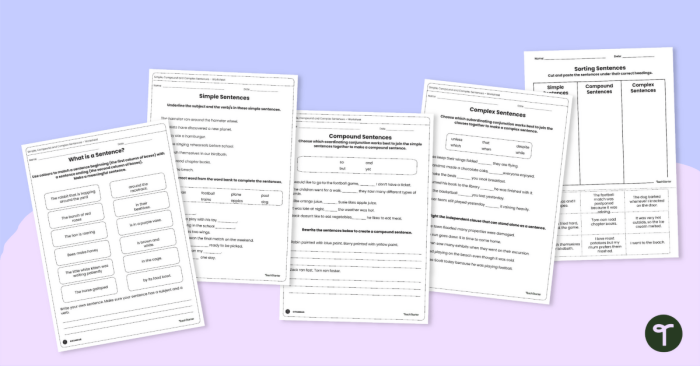
Download These Worksheets for Practice