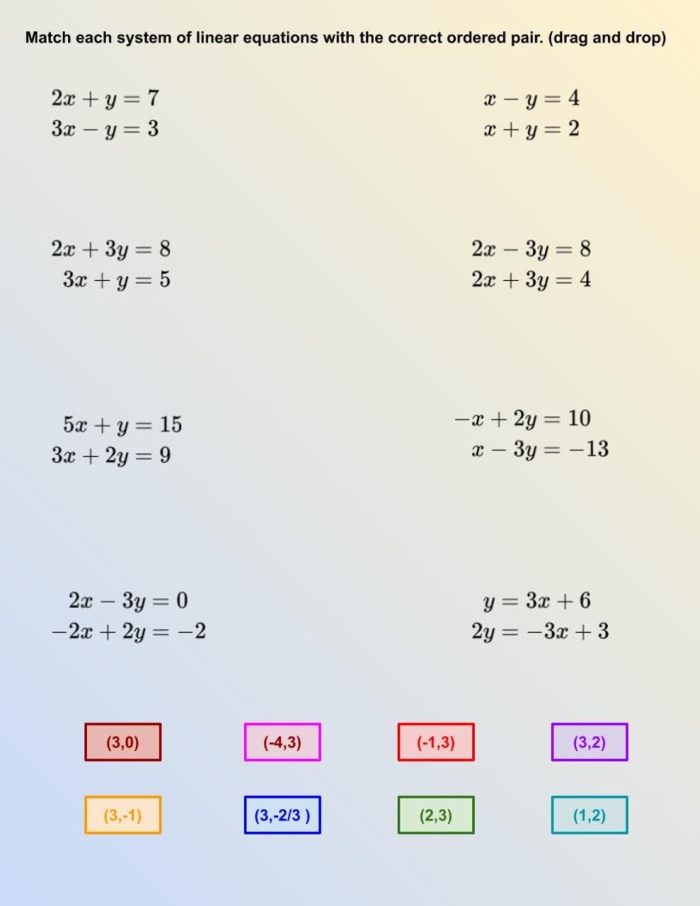
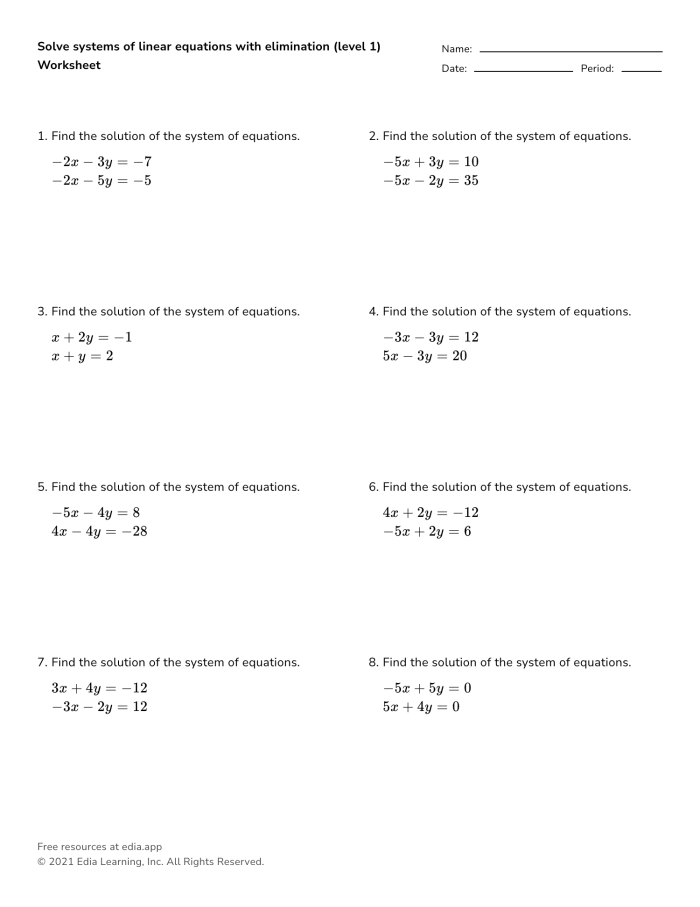
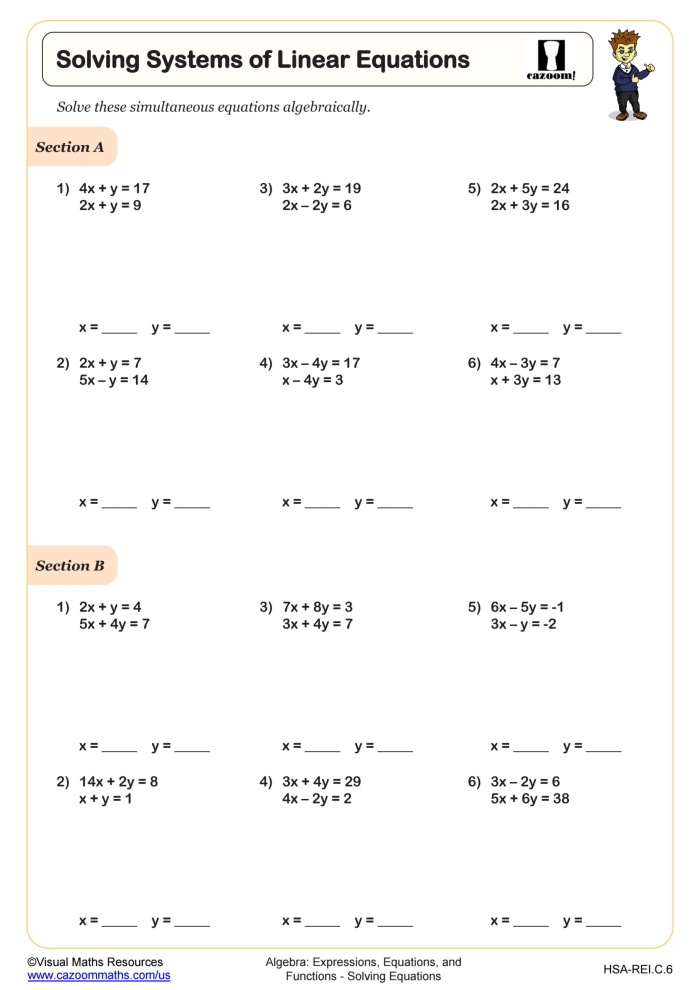
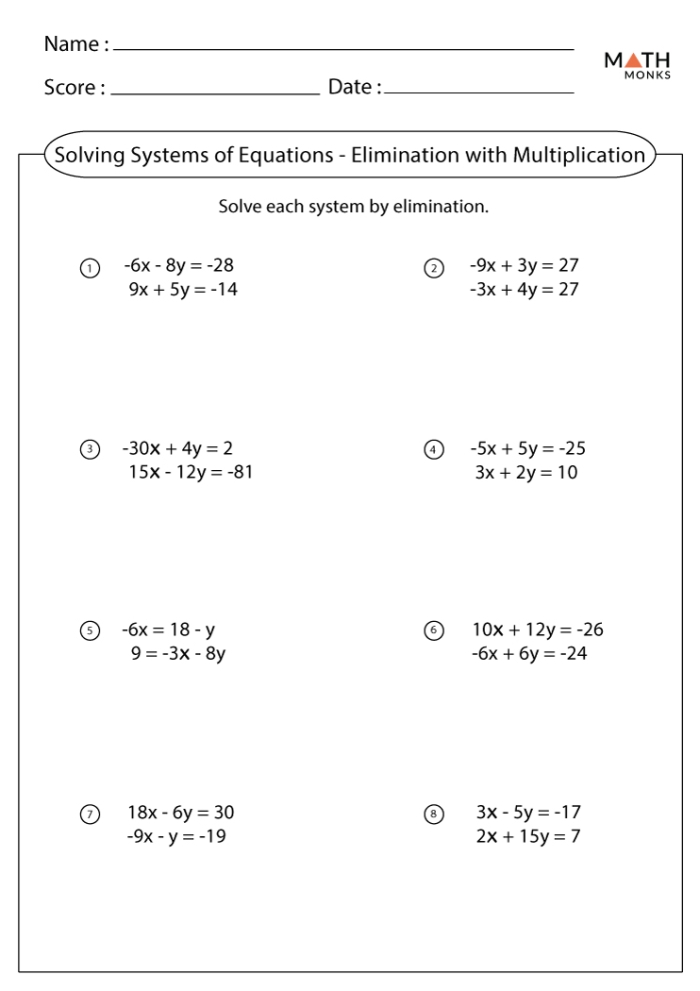
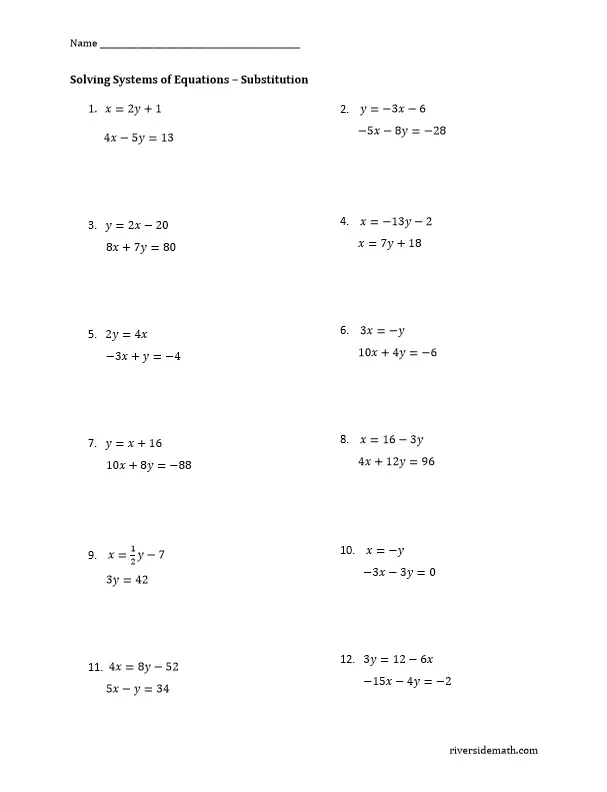
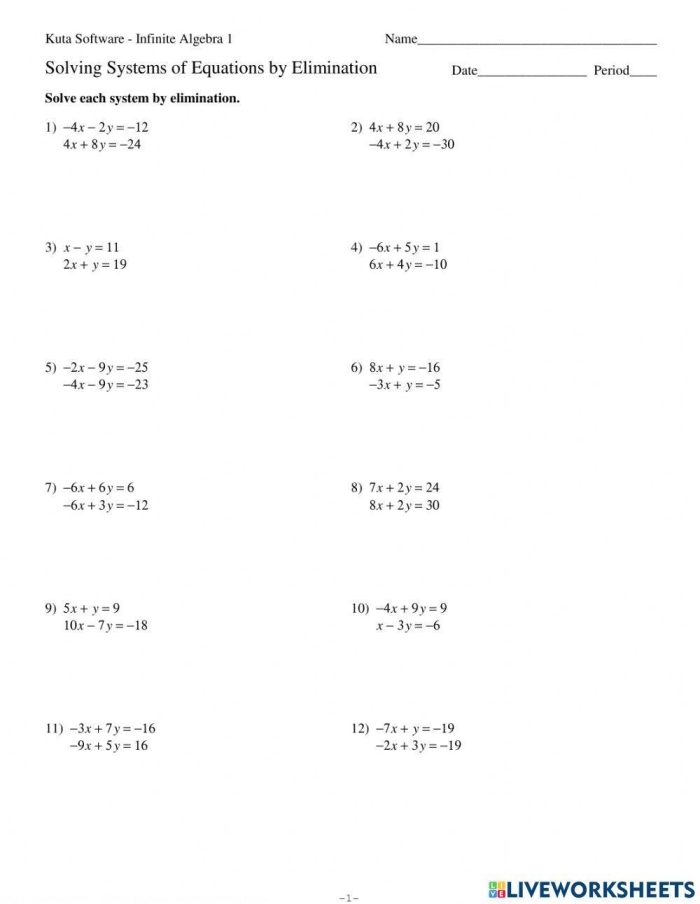
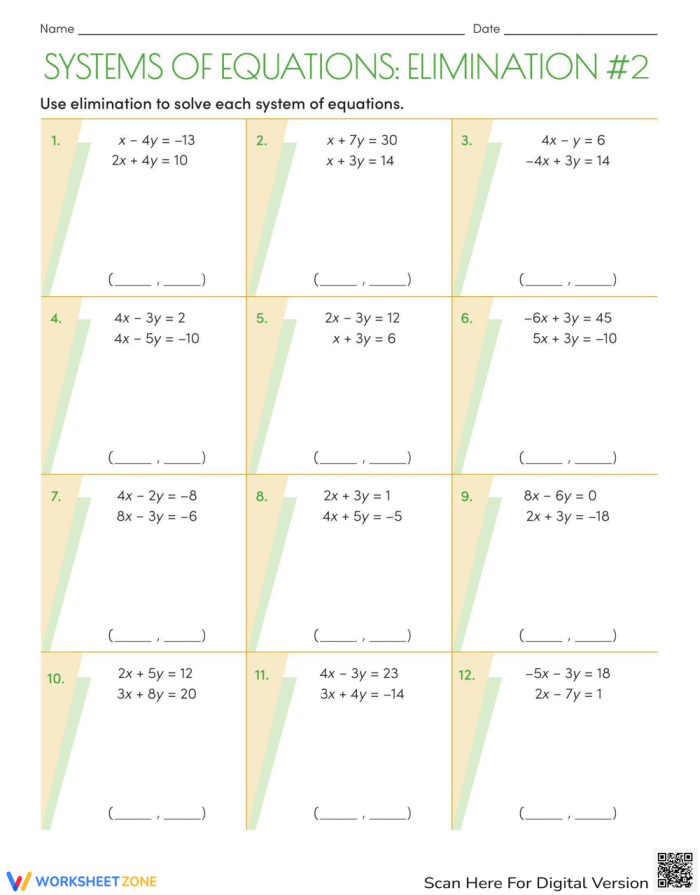
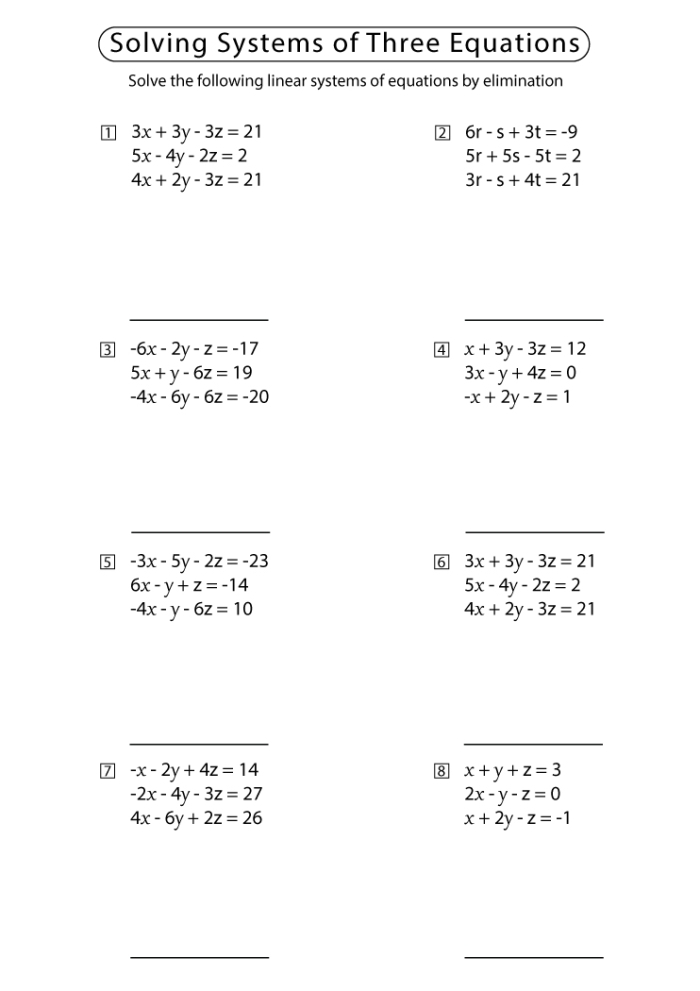
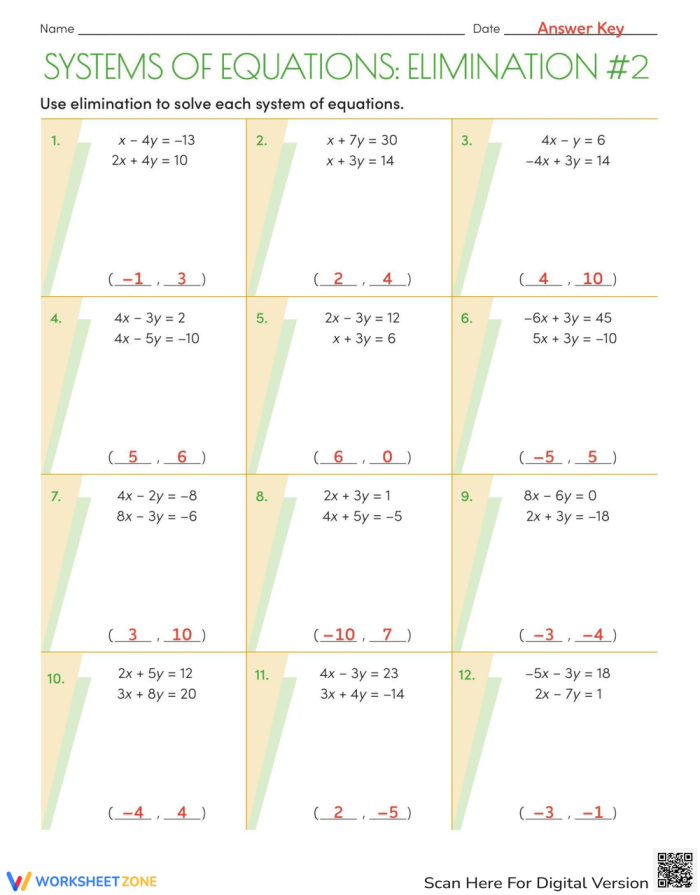
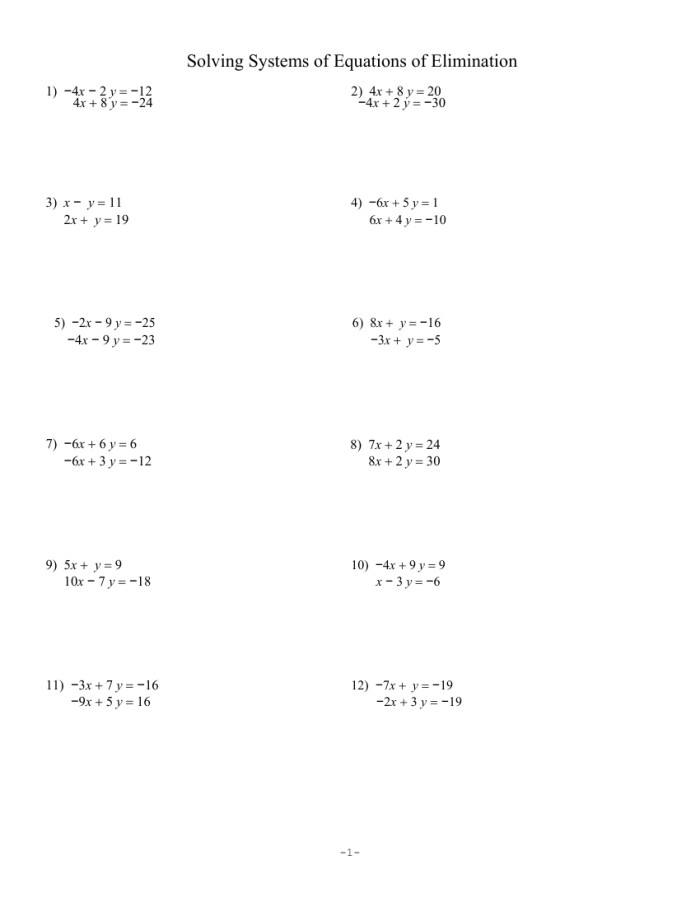
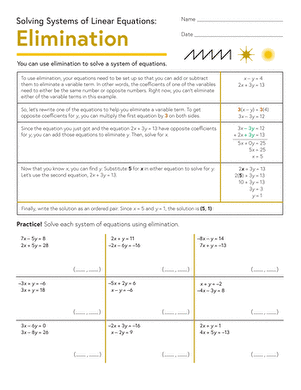
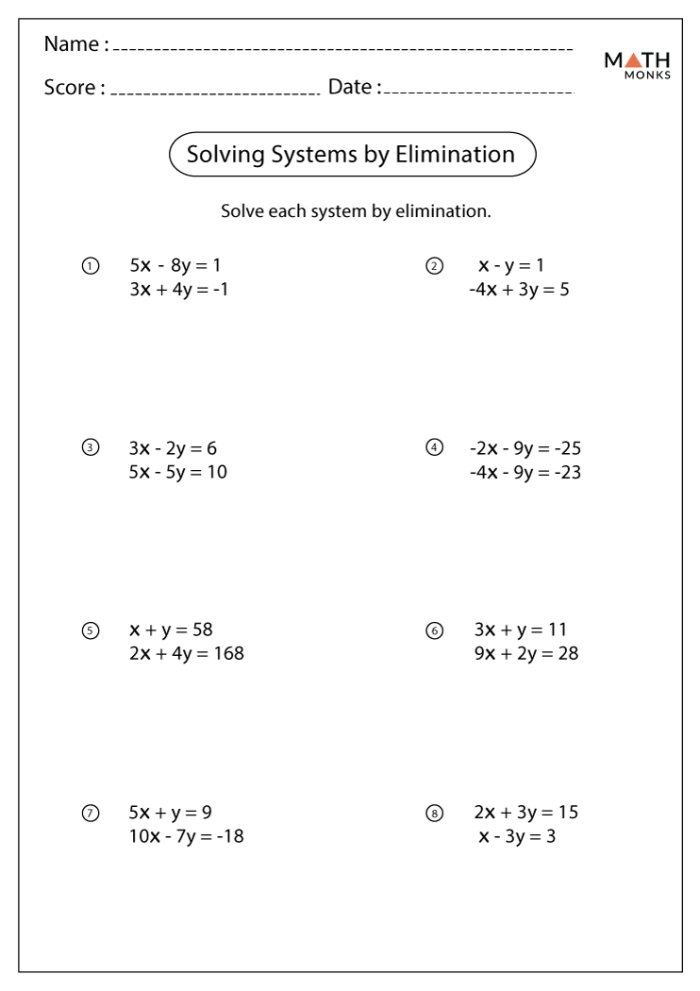
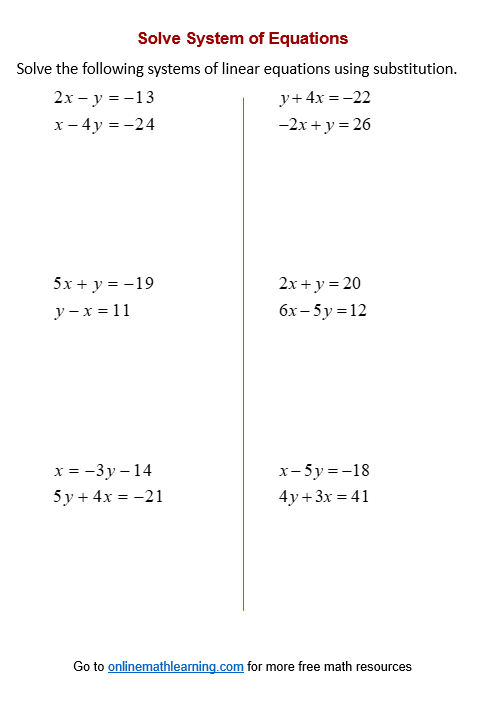
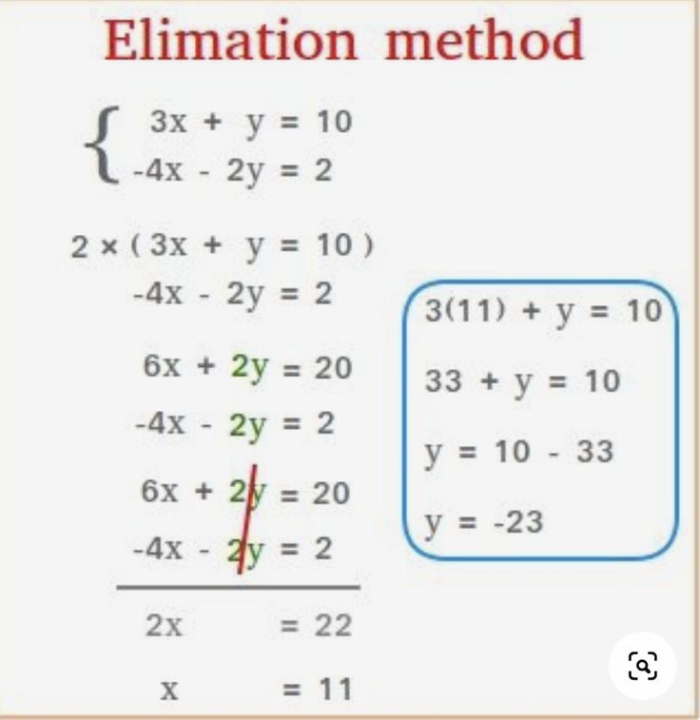
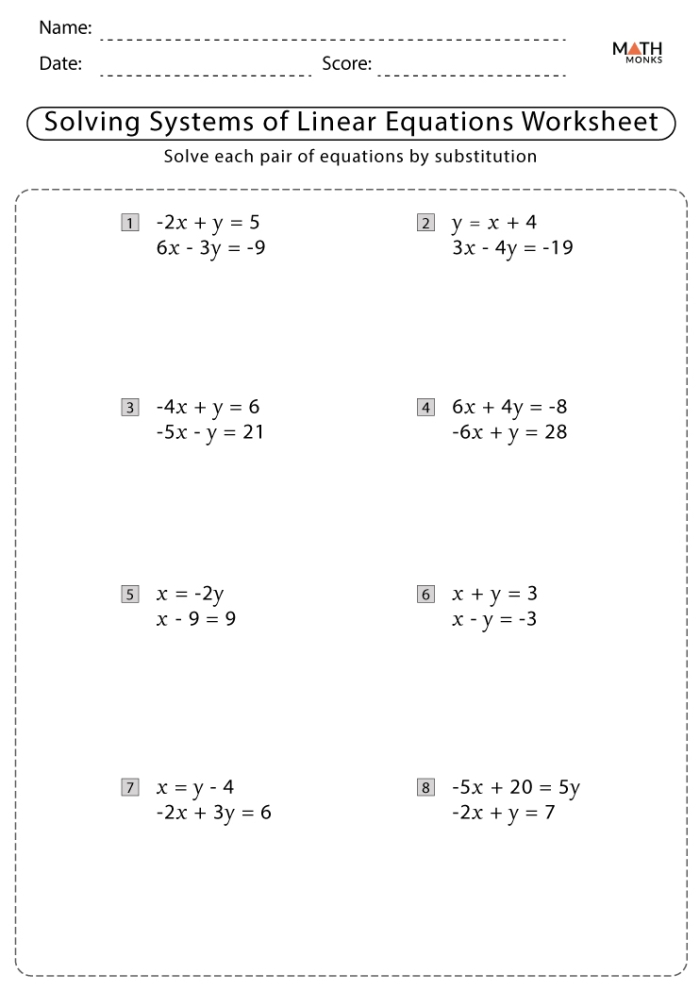
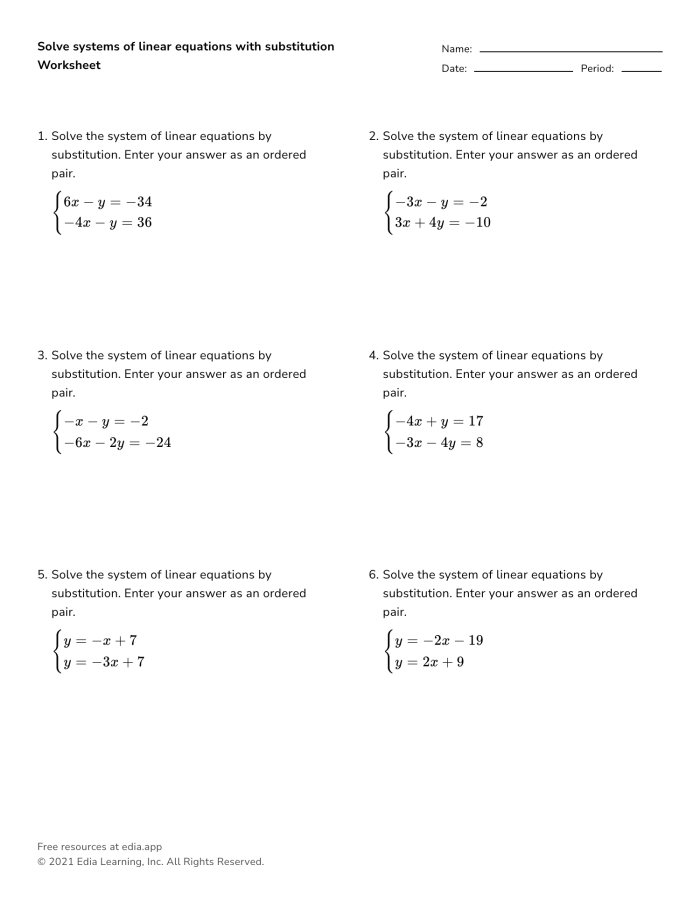
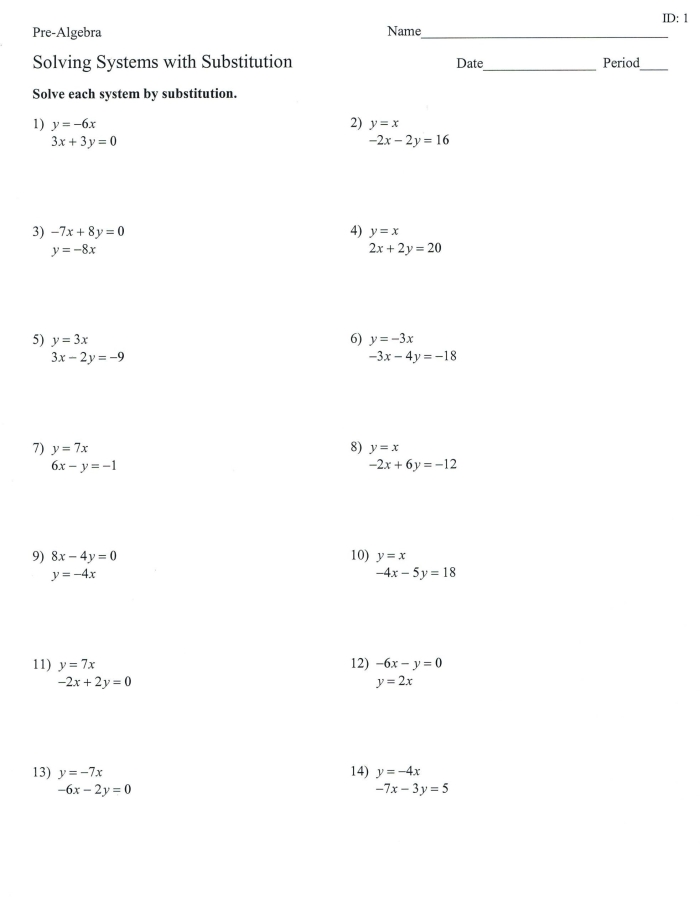
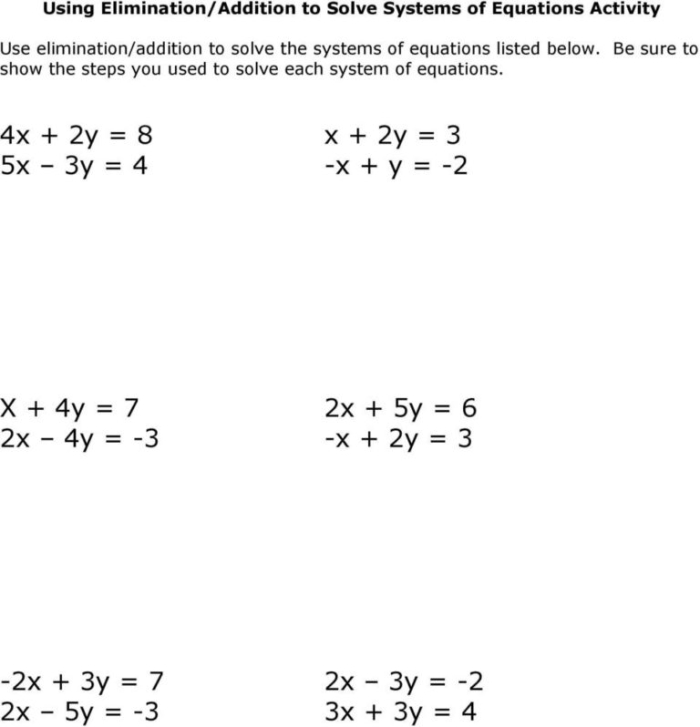
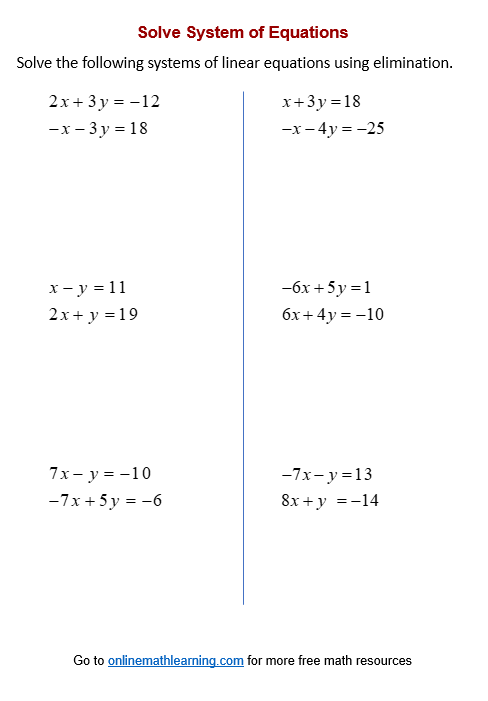
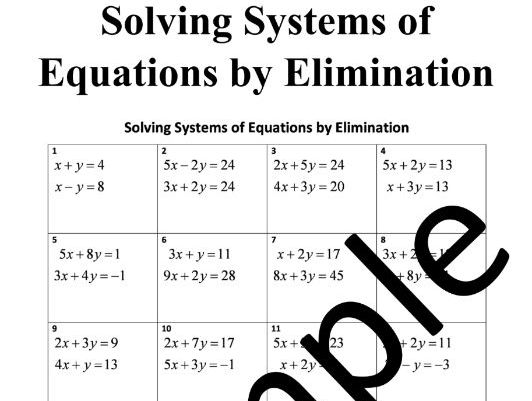
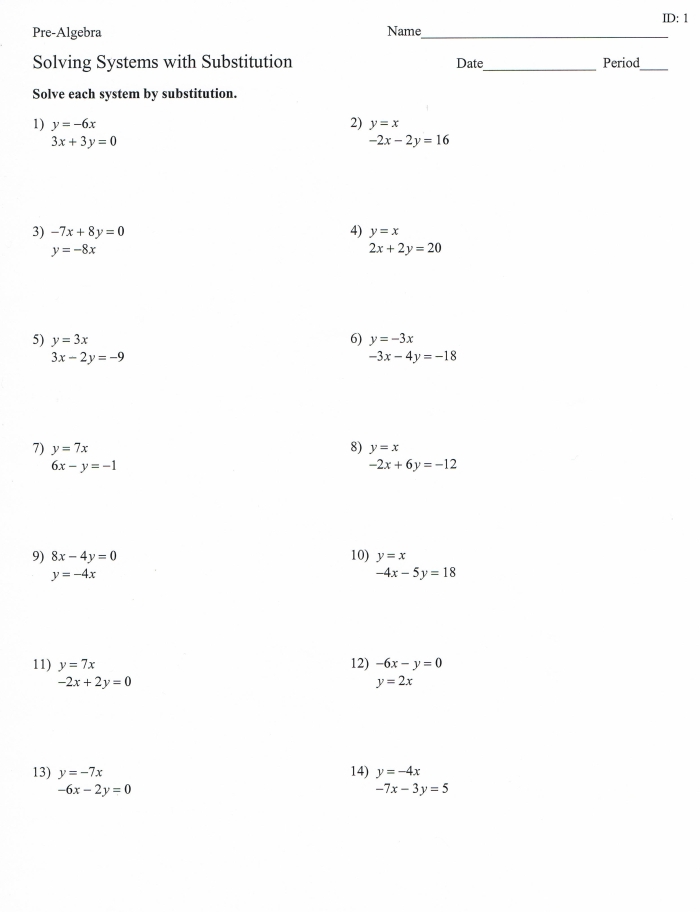
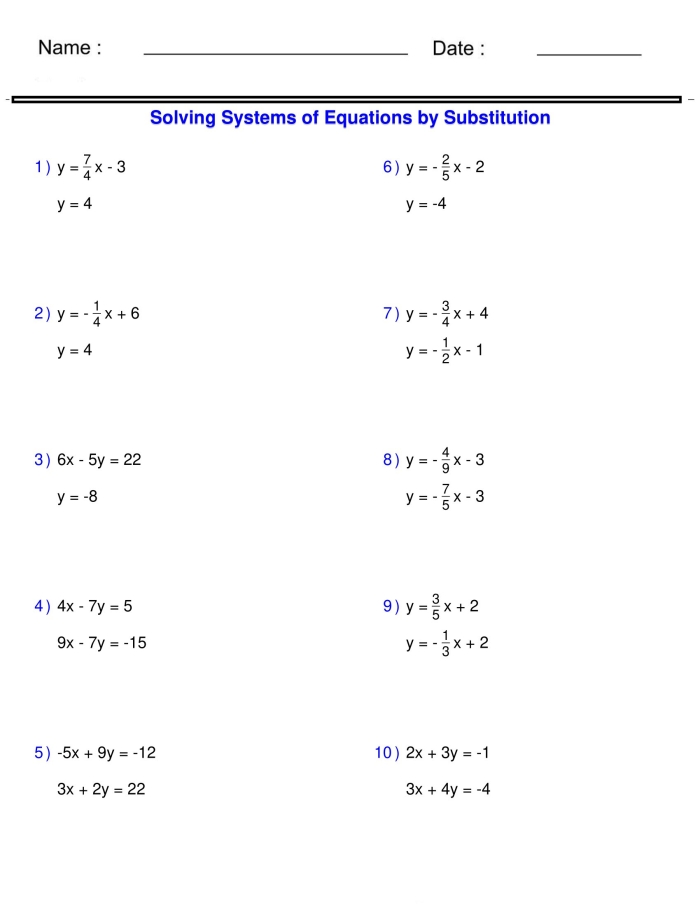
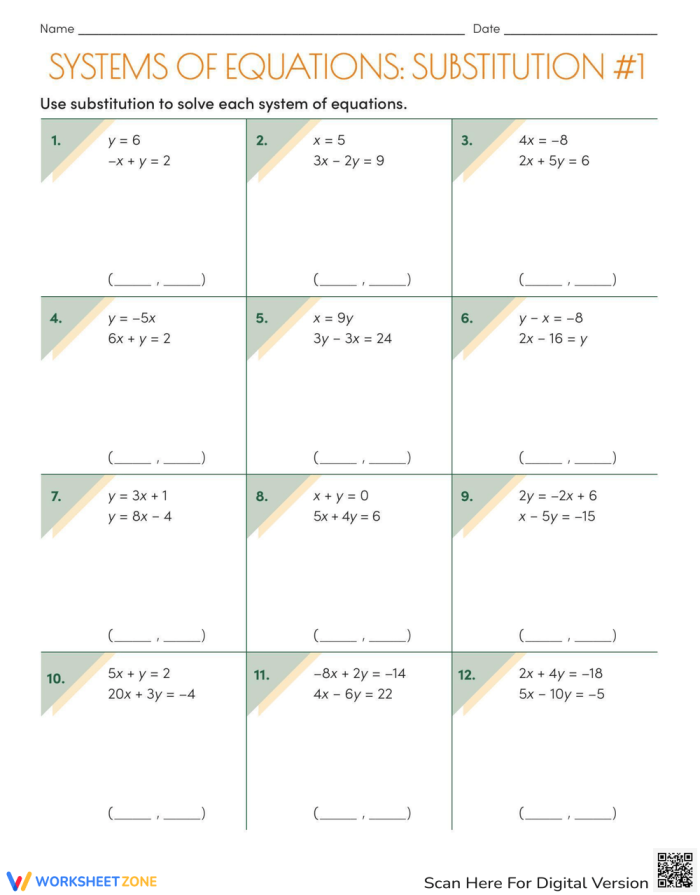
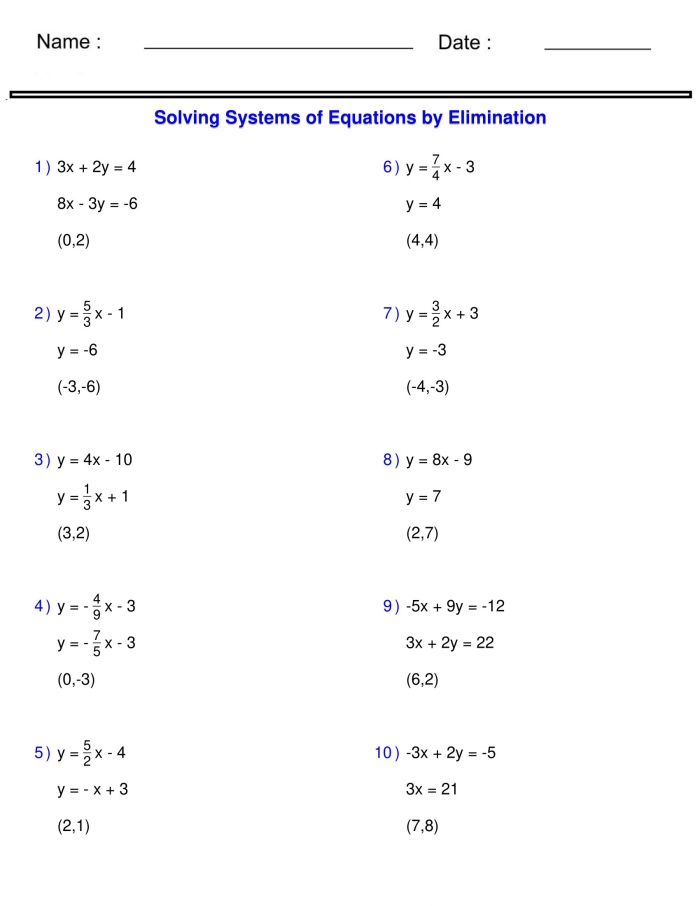
The elimination method stands out as one of the most efficient techniques for solving systems of linear equations, and eighth-grade students benefit enormously from hands-on practice with structured worksheets. This approach teaches students to add or subtract equations strategically to eliminate one variable, leaving a single equation they can solve directly.
When students first encounter systems of equations, the elimination method feels abstract. A well-designed worksheet changes that by walking them through concrete examples step by step. Students learn to multiply one or both equations by constants to make coefficients match, then combine equations to remove a variable entirely. This requires careful attention to detail and reinforces fundamental multiplication skills that eighth graders are still developing.
The beauty of elimination lies in its reliability. Unlike substitution, which works best when one variable already has a coefficient of one, elimination handles messier equations with confidence. Students discover they can tackle problems like 3x + 2y = 12 and 5x – 2y = 8 without frustration when they follow the method systematically. Each problem builds their algebraic reasoning and prepares them for more complex mathematics ahead.
Worksheet practice also helps students recognize patterns. They notice when to multiply by negative numbers to create opposite coefficients, when to add equations versus subtract them, and how to check their answers by substituting back into the original equations. This pattern recognition extends beyond algebra into other mathematical skills, similar to how function tables teach younger students to identify relationships between numbers.
The elimination method remains a cornerstone of eighth-grade algebra curricula because it builds problem-solving confidence. Students who master this technique develop the persistence and logical thinking they need for high school mathematics and beyond.
Practice with These Worksheets