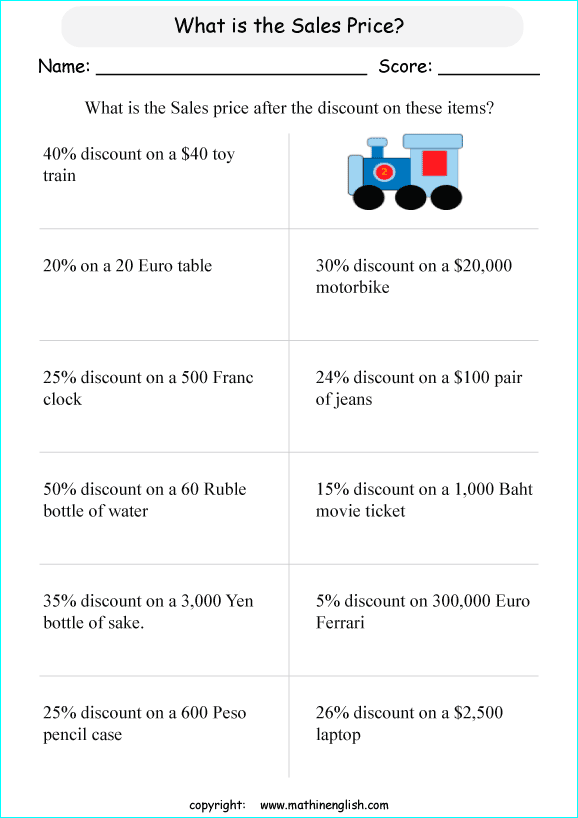
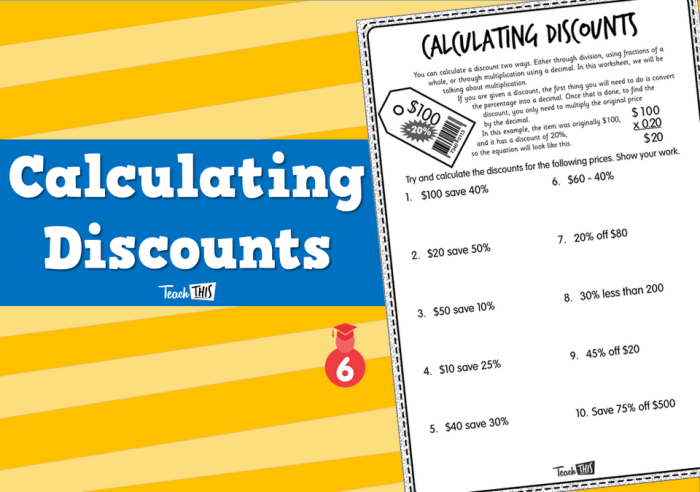
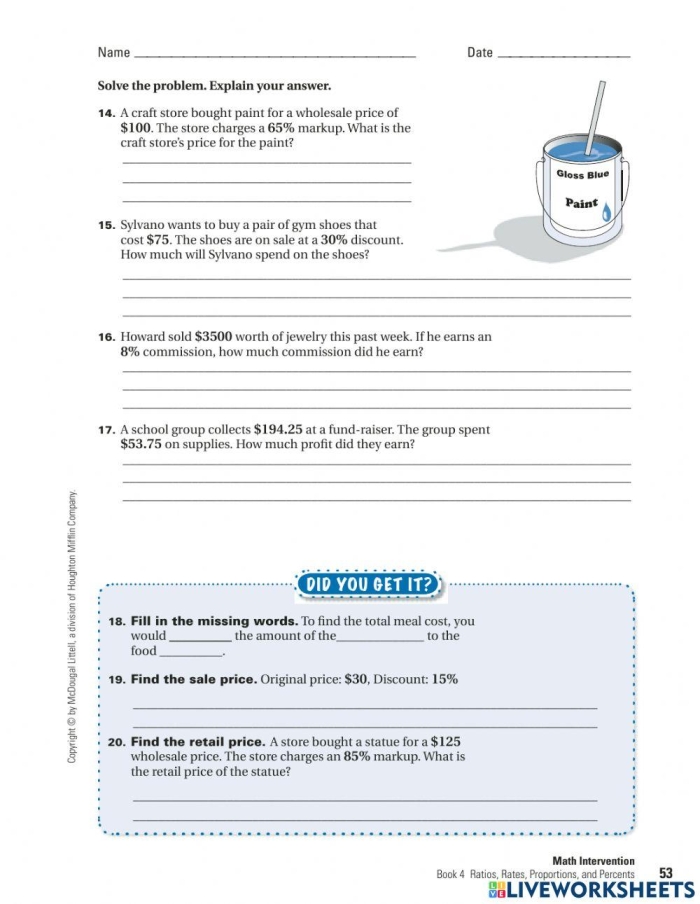
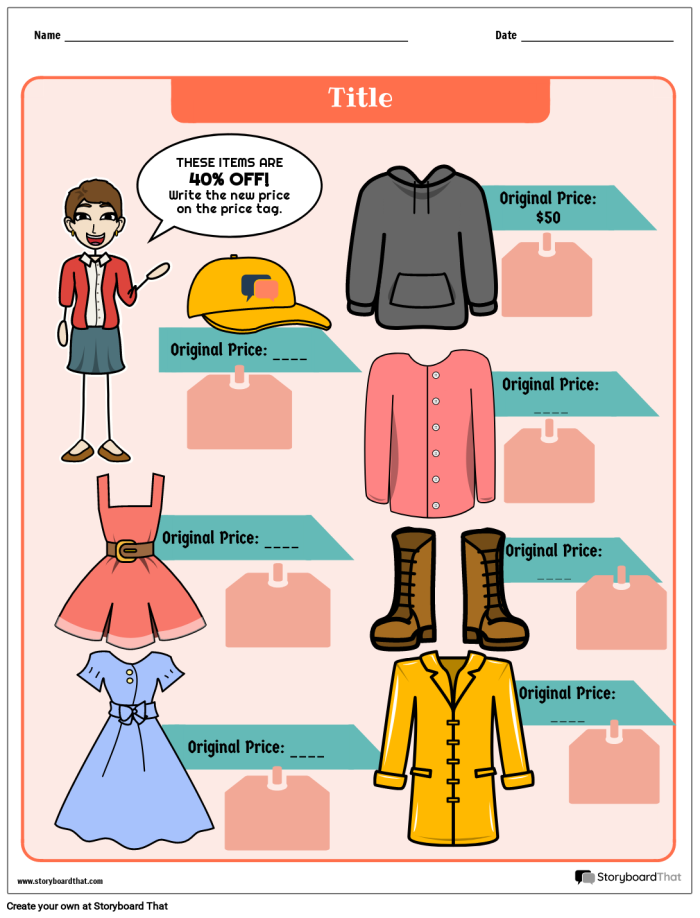
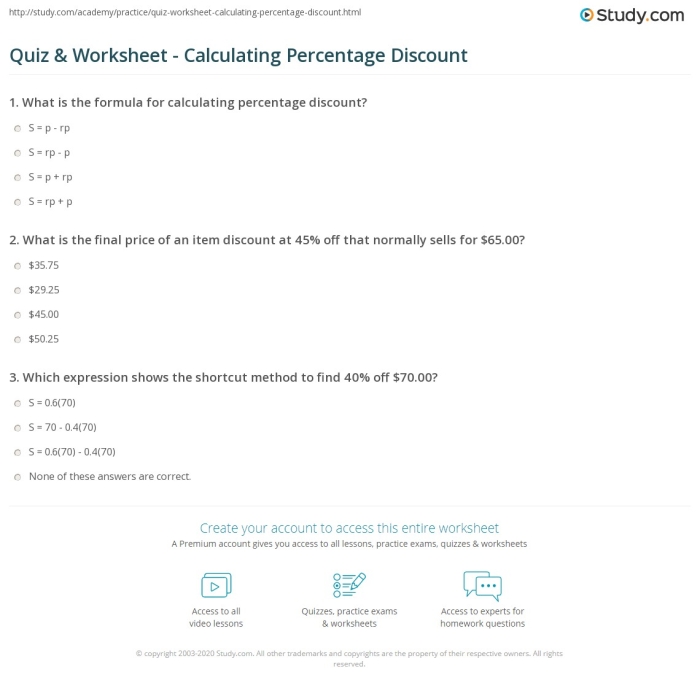
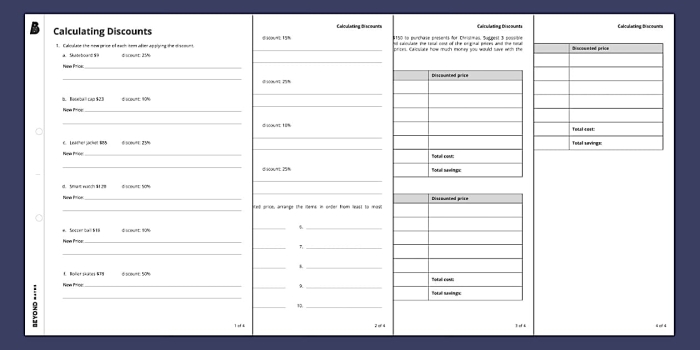
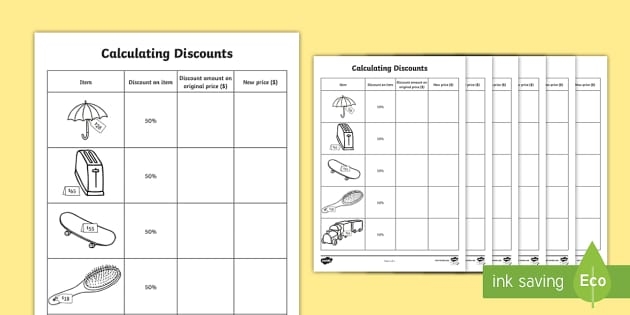
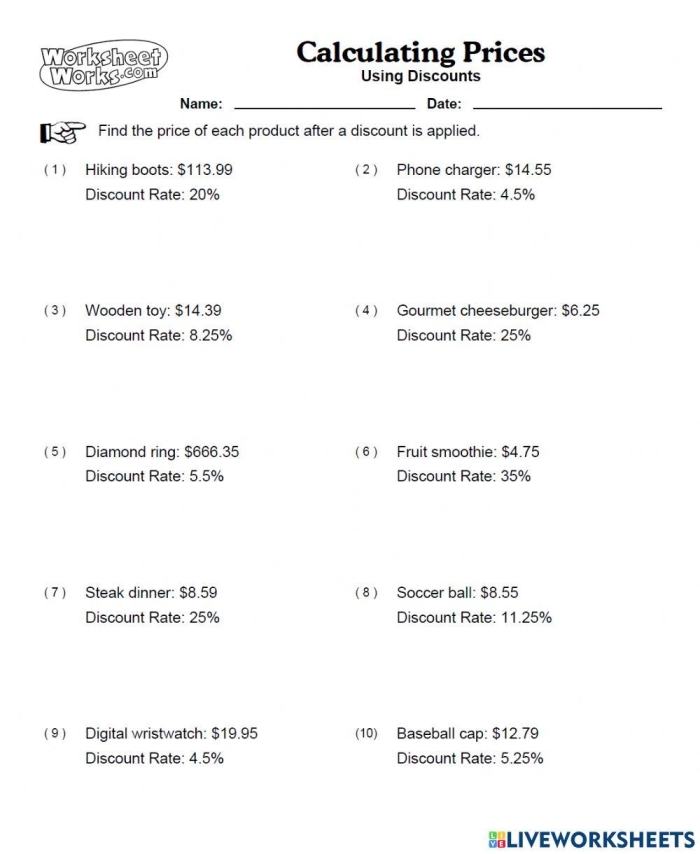
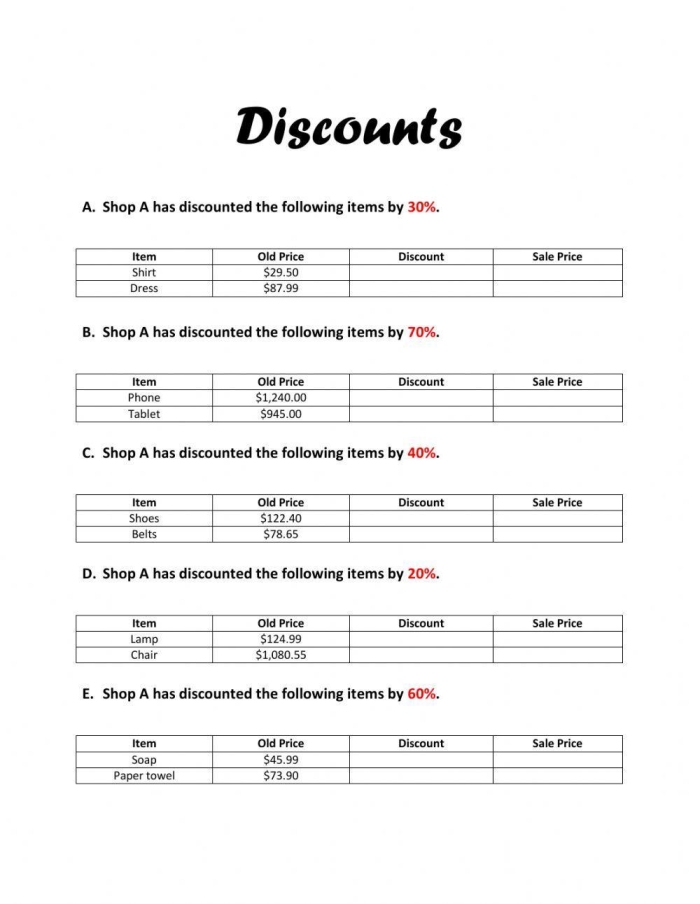
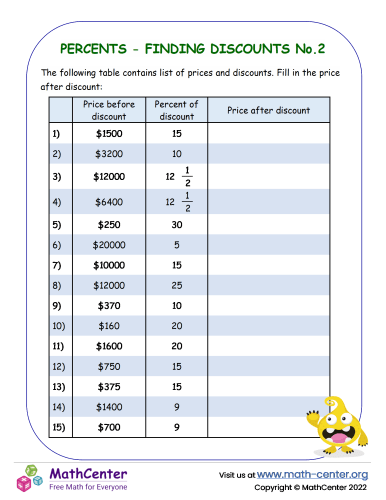
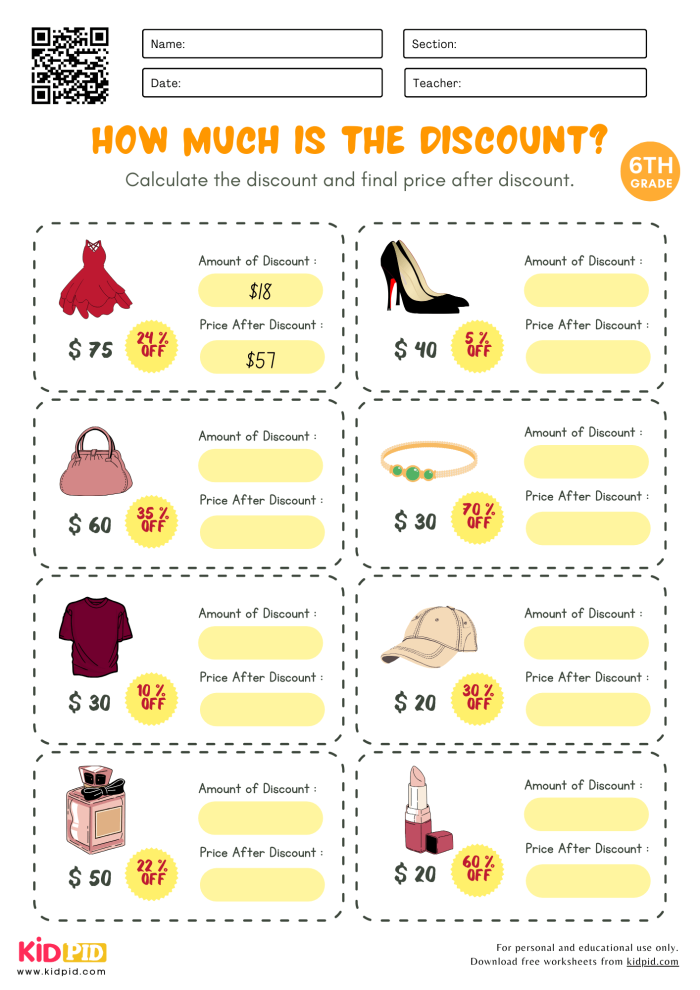
Calculating discounts can seem tricky, but with a good grasp of percentage and decimal math, it becomes much easier. Understanding how to calculate discounts is a vital skill, especially for sixth graders learning addition and practical math applications. Let’s break it down step by step.
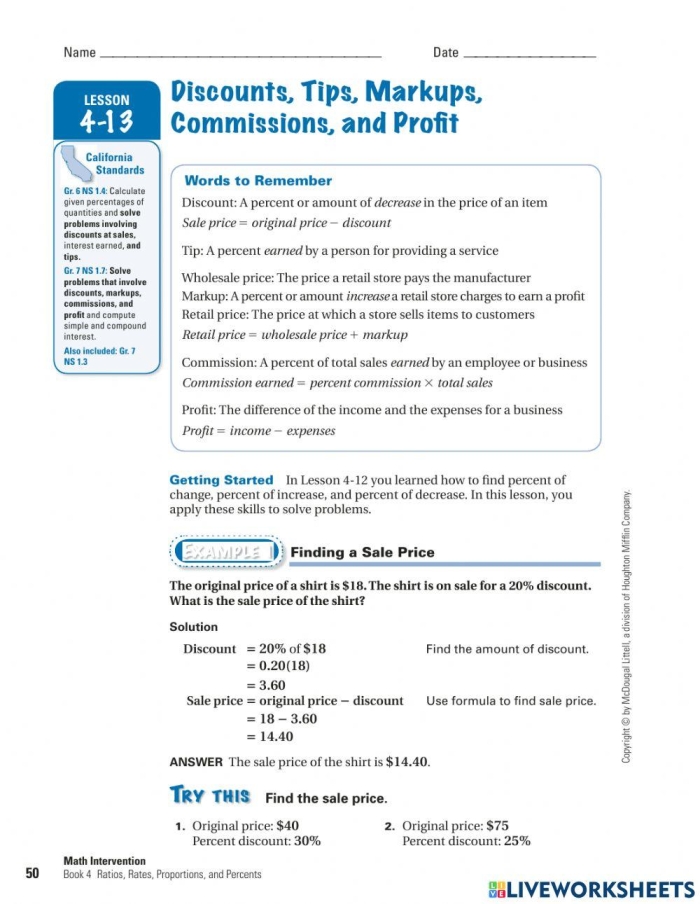
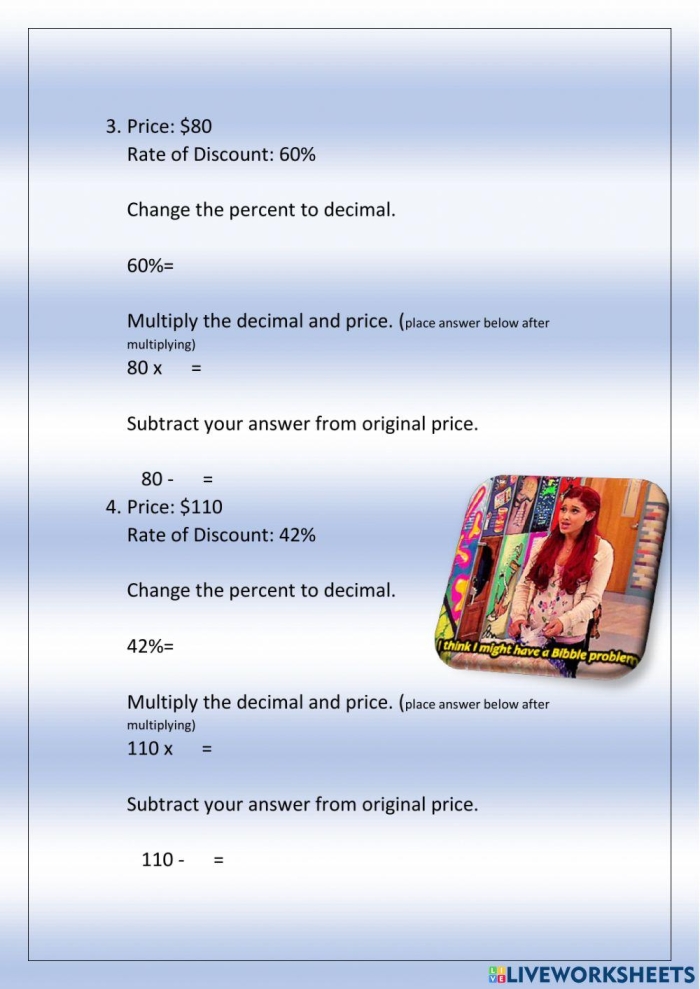
First, you need to know the original price of the product and the discount percentage. For instance, if a shirt costs $50 and there’s a 20% discount, you start by converting the percentage into a decimal for easier calculations. To do this, divide the percentage by 100. So, 20% becomes 0.20.
Next, multiply the original price by the decimal. In our example, you would calculate:
$50 × 0.20 = $10
This means the discount on the shirt is $10. To find the final price after applying the discount, subtract the discount amount from the original price:
$50 – $10 = $40
Now you know the shirt costs $40 after the discount. This method works for any product and any percentage, making it a handy tool for shopping.
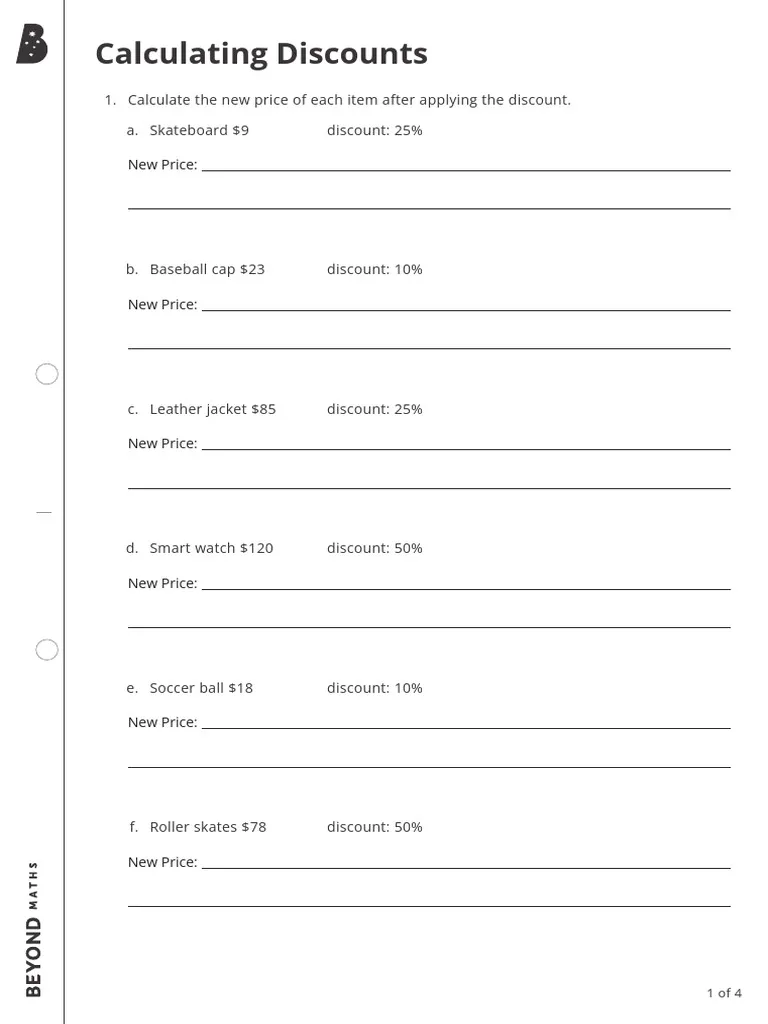
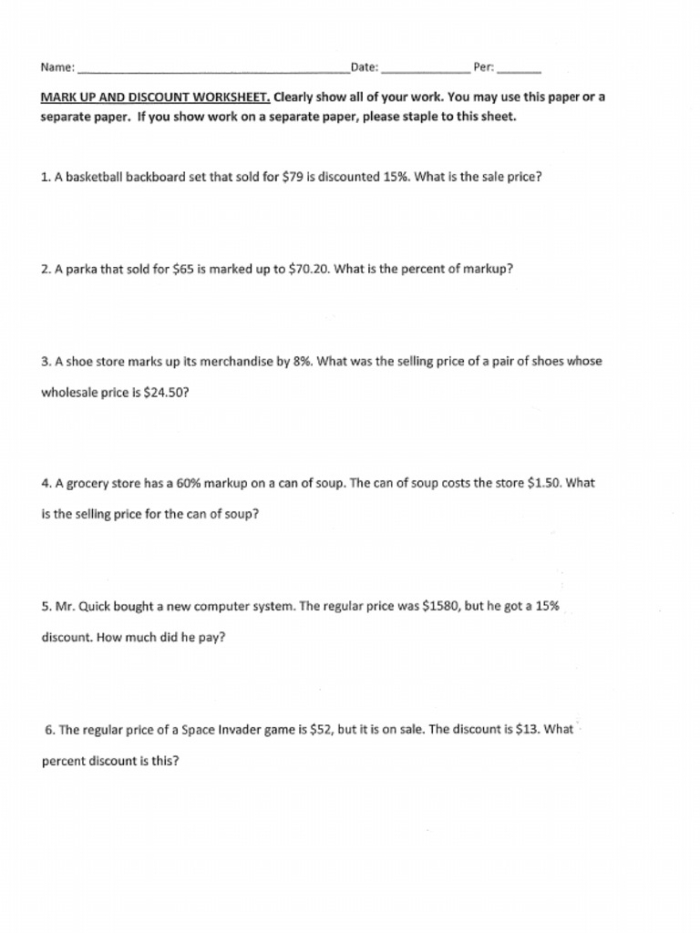
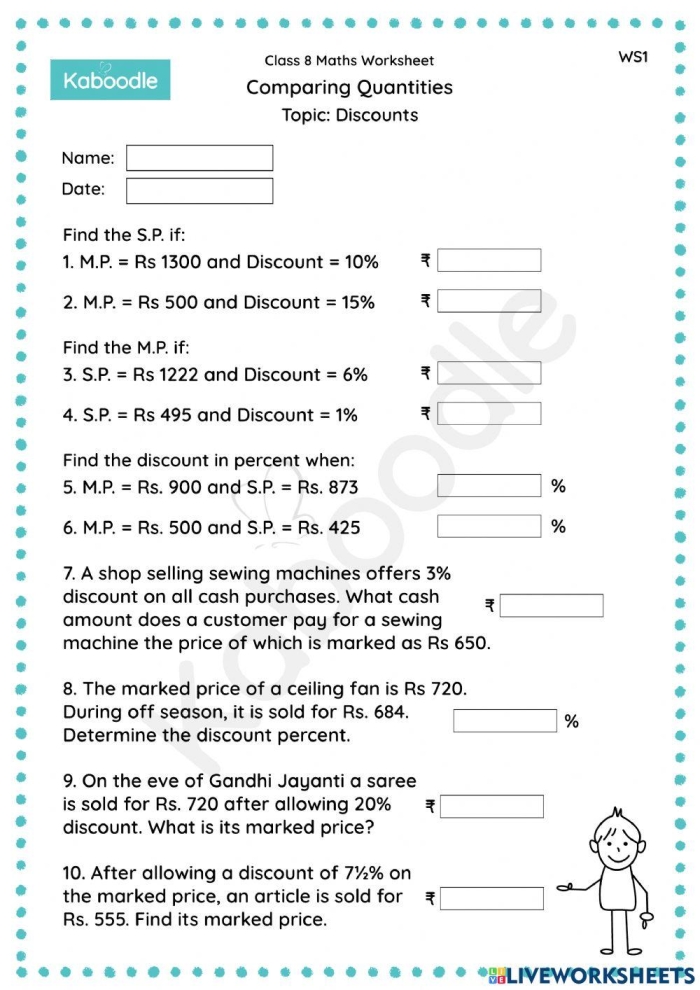
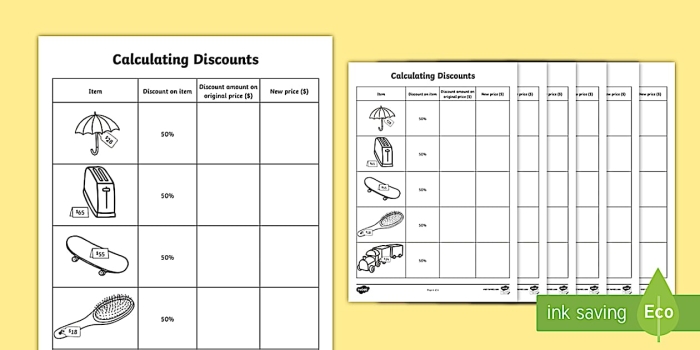
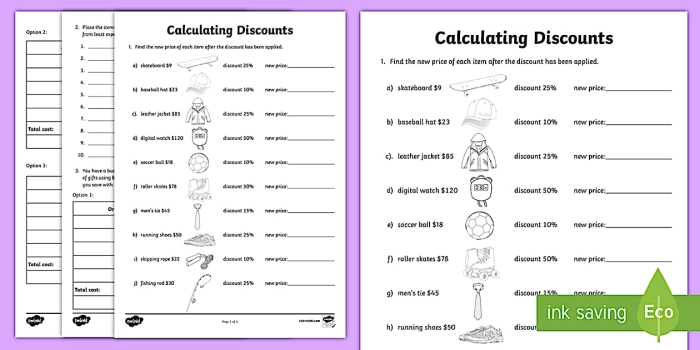
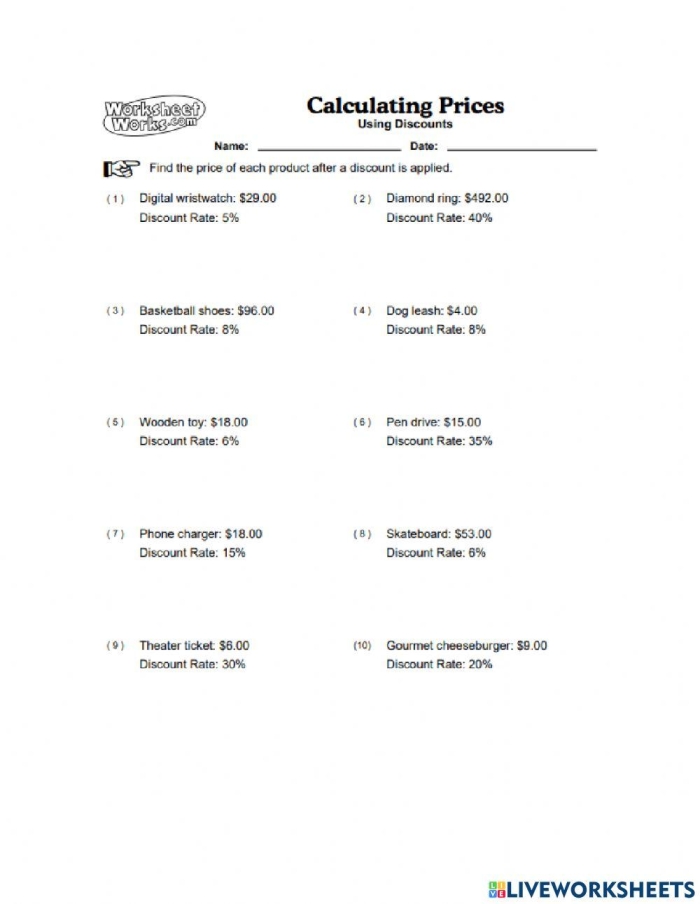
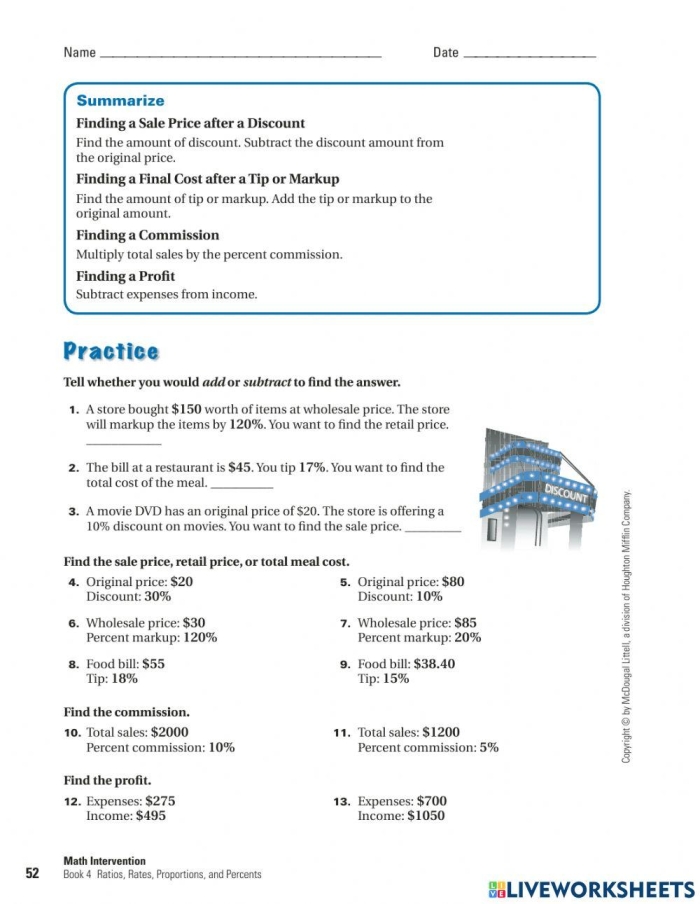
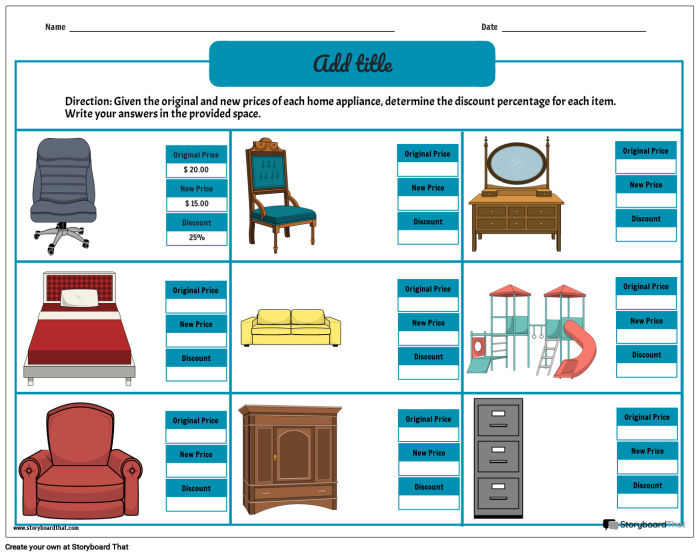
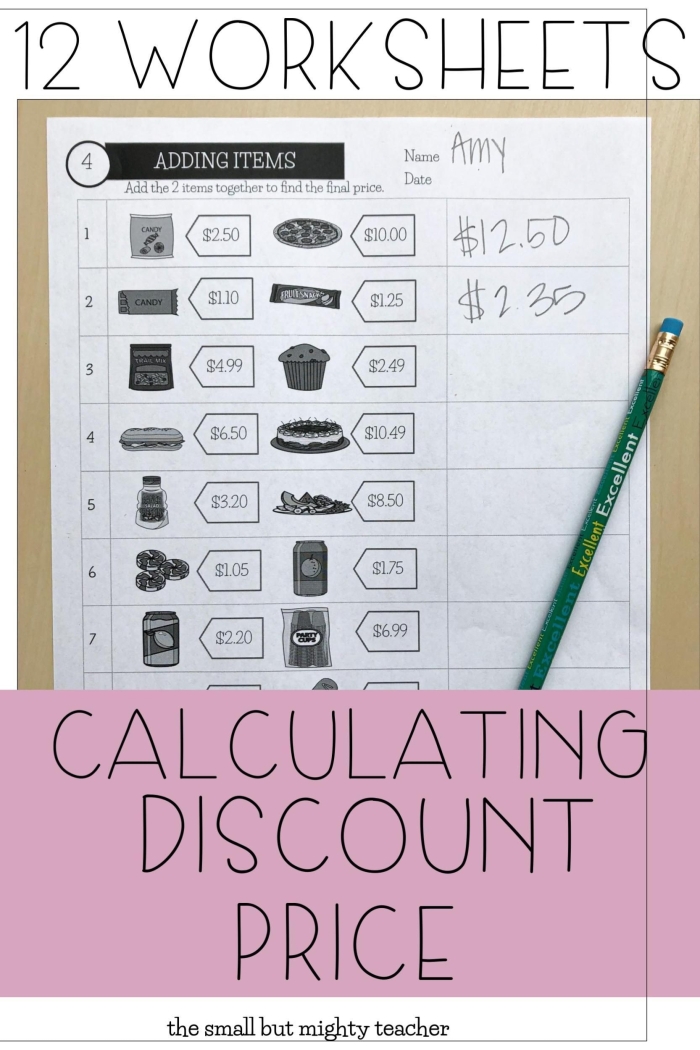
Practicing these calculations can help solidify understanding of addition and decimals. Printable worksheets, like those found at Lumina Works, can provide great exercises for sixth graders looking to improve their math skills in a practical way.
For more advanced practice, students can also explore worksheets that involve polynomials and other mathematical concepts. Understanding how to calculate discounts not only prepares students for future financial literacy but also enhances their overall confidence in math.
Remember, with a little practice, calculating discounts can be straightforward and even fun. This skill will serve students well in everyday situations, from shopping to budgeting.
Printable Worksheets for Practice