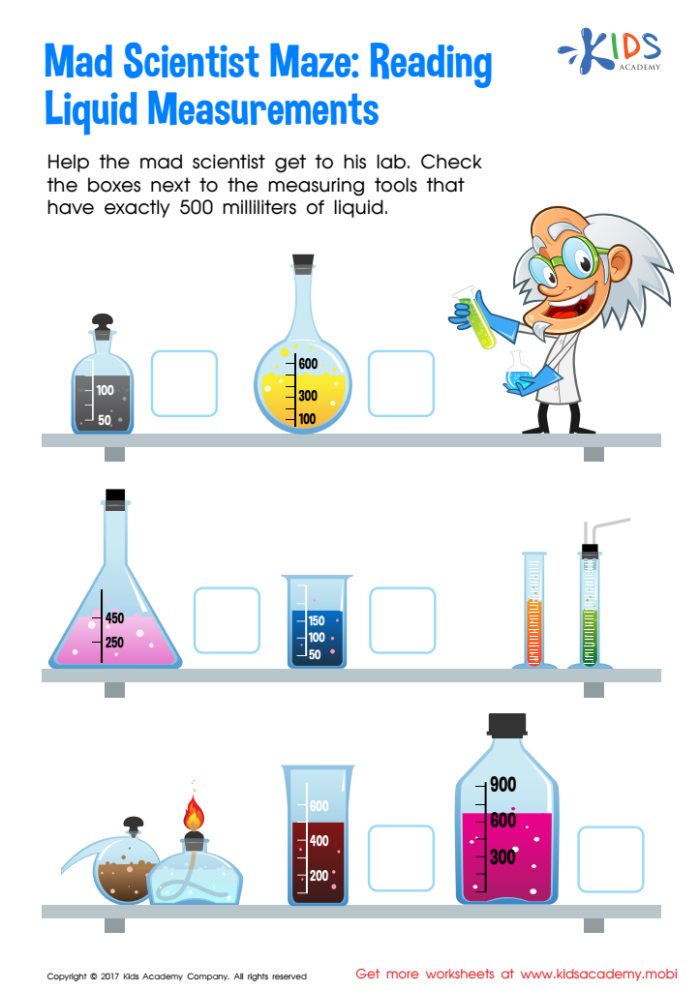
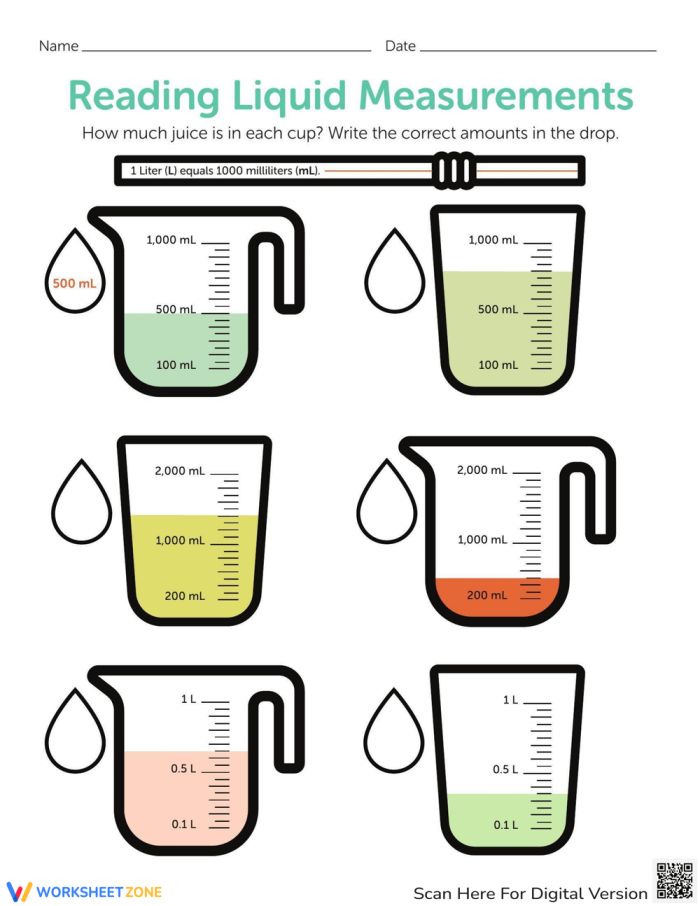
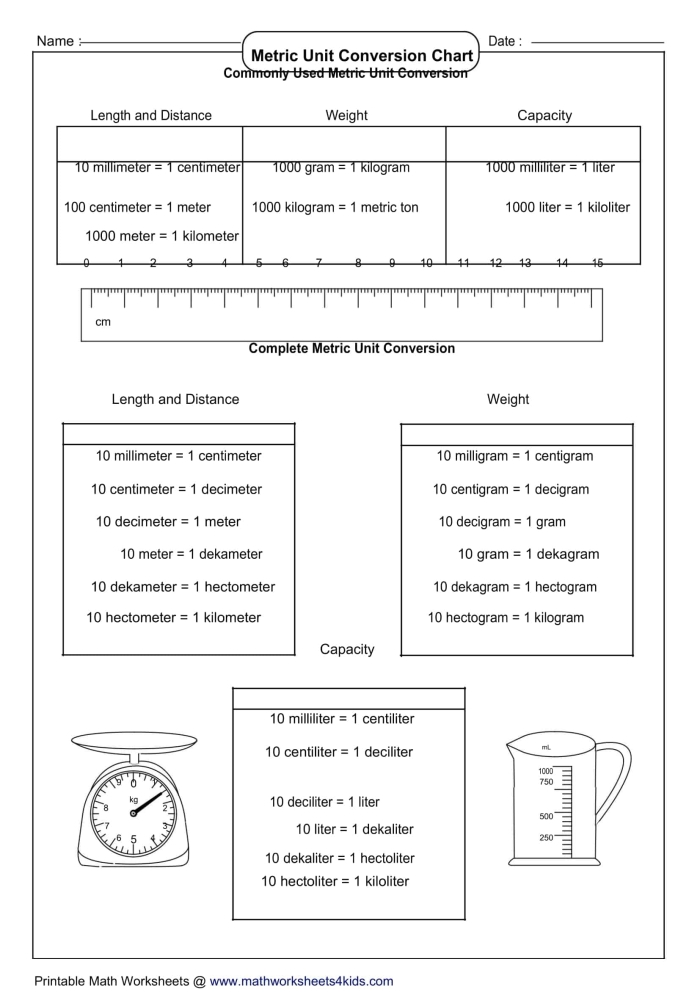
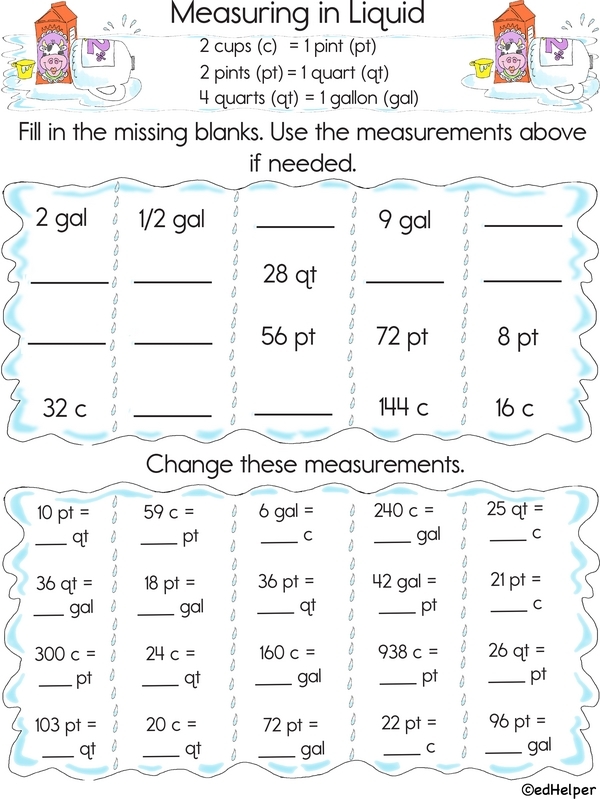
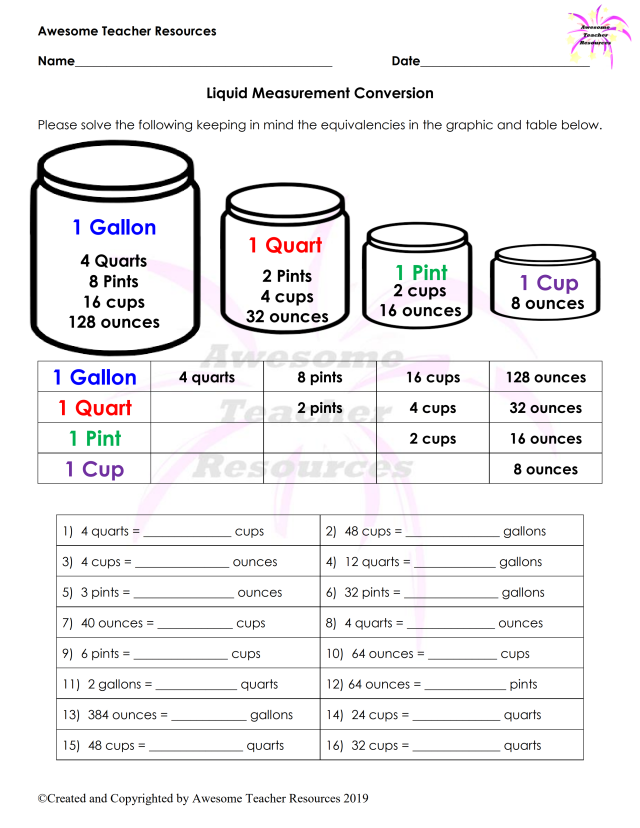
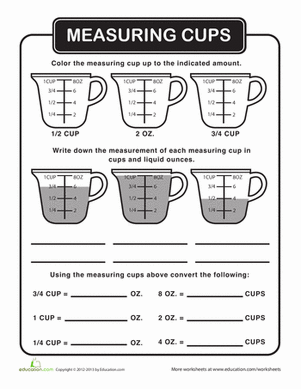
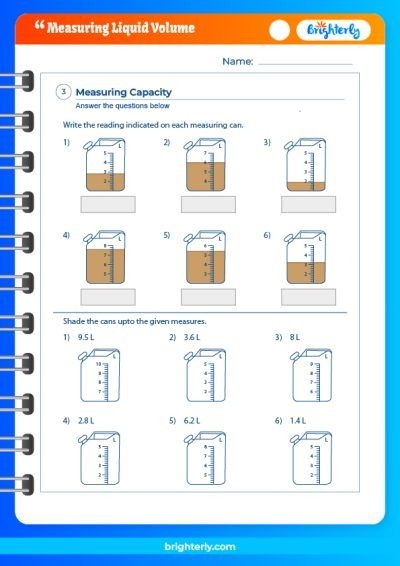
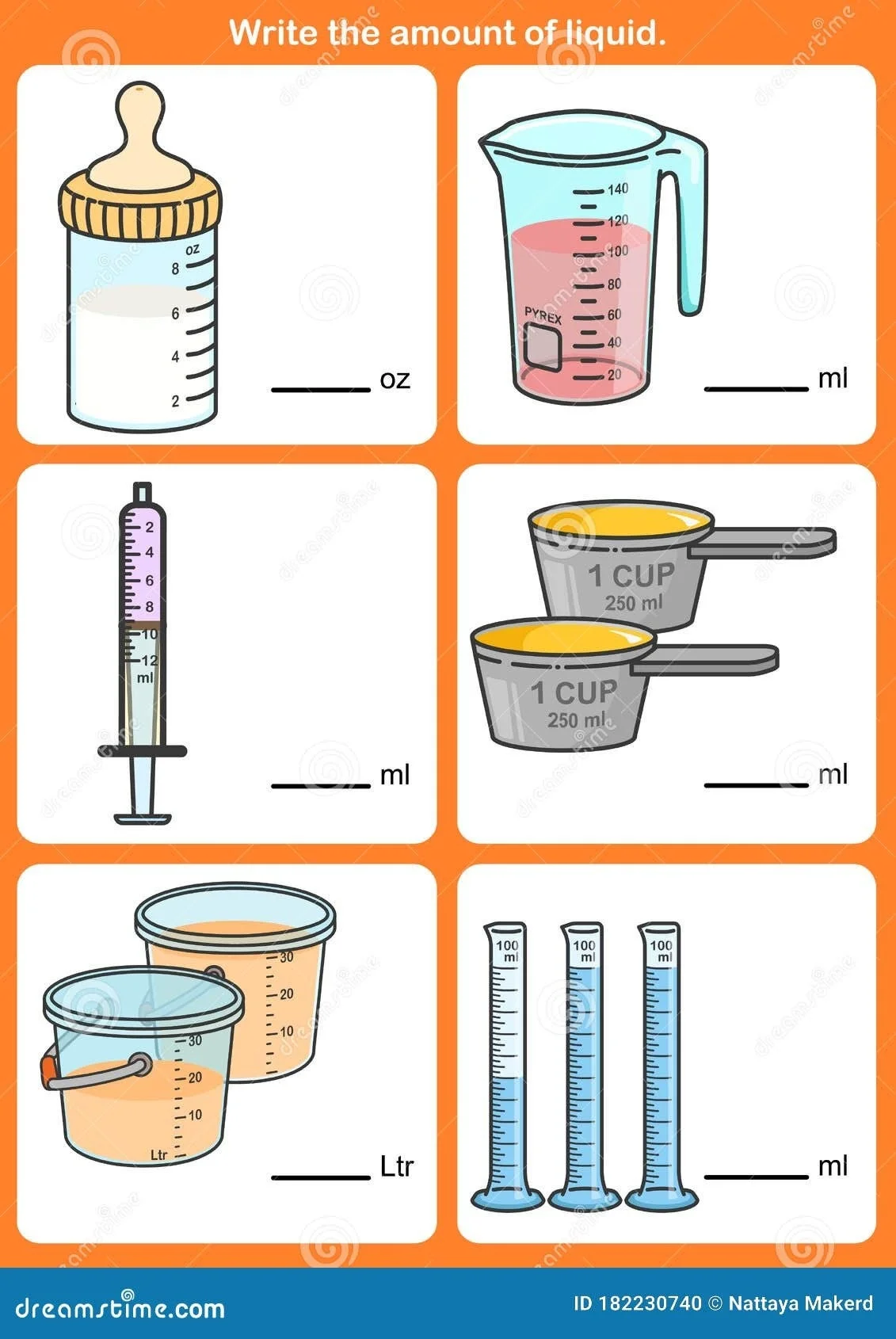
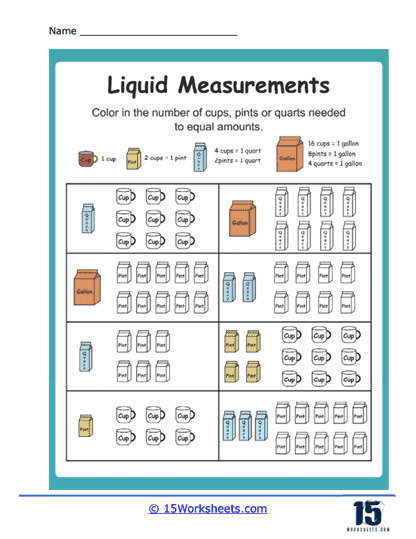
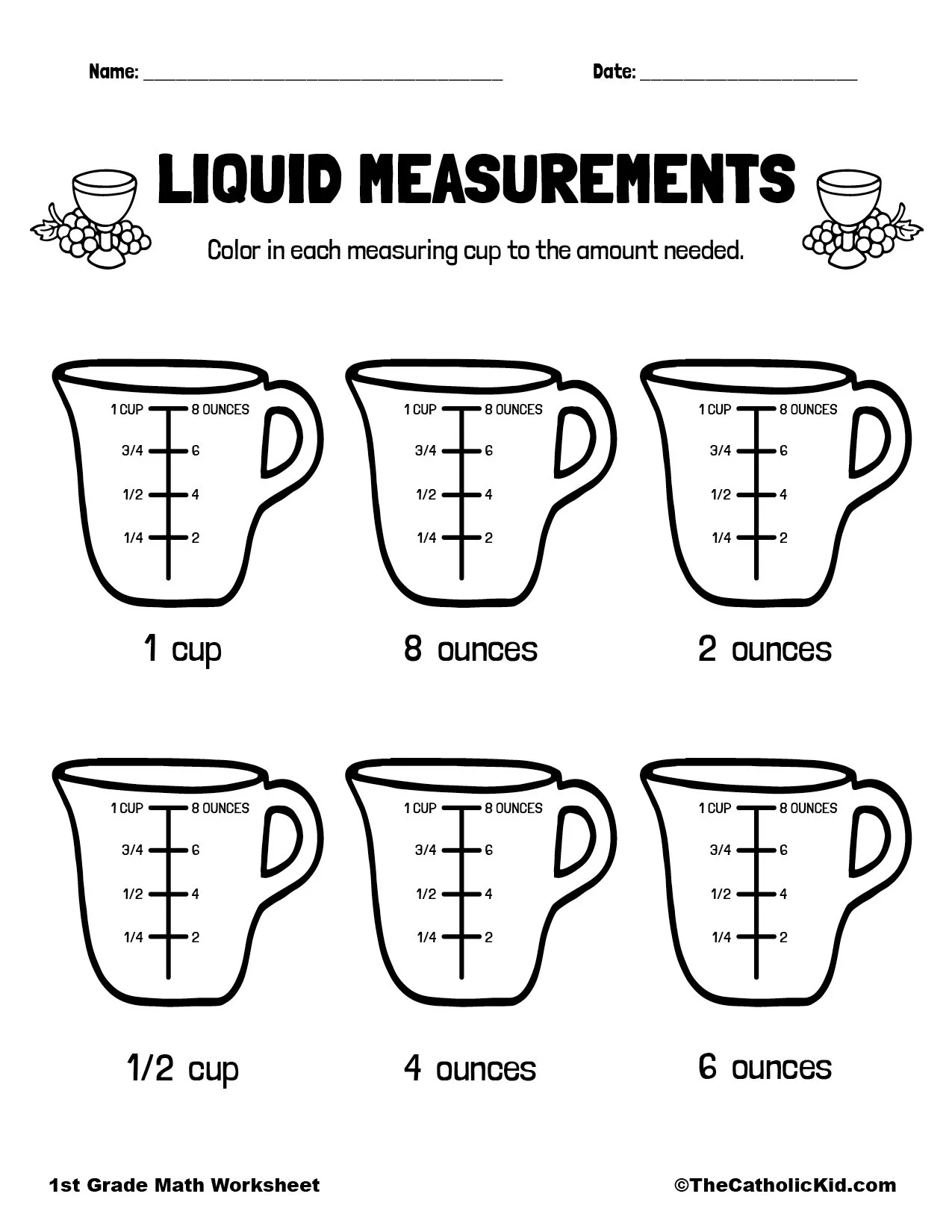
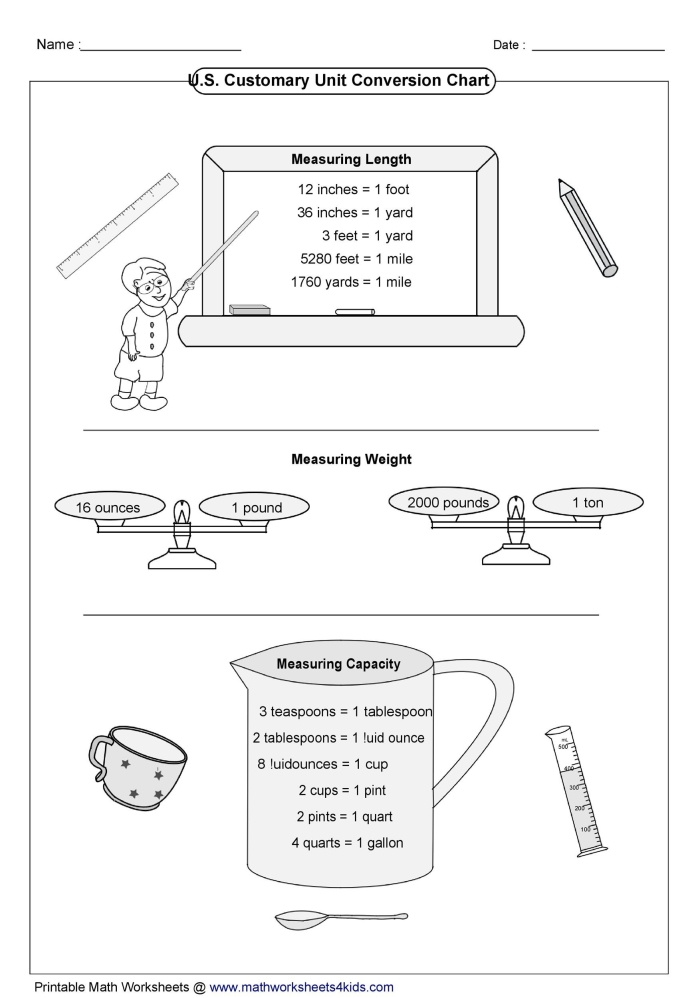
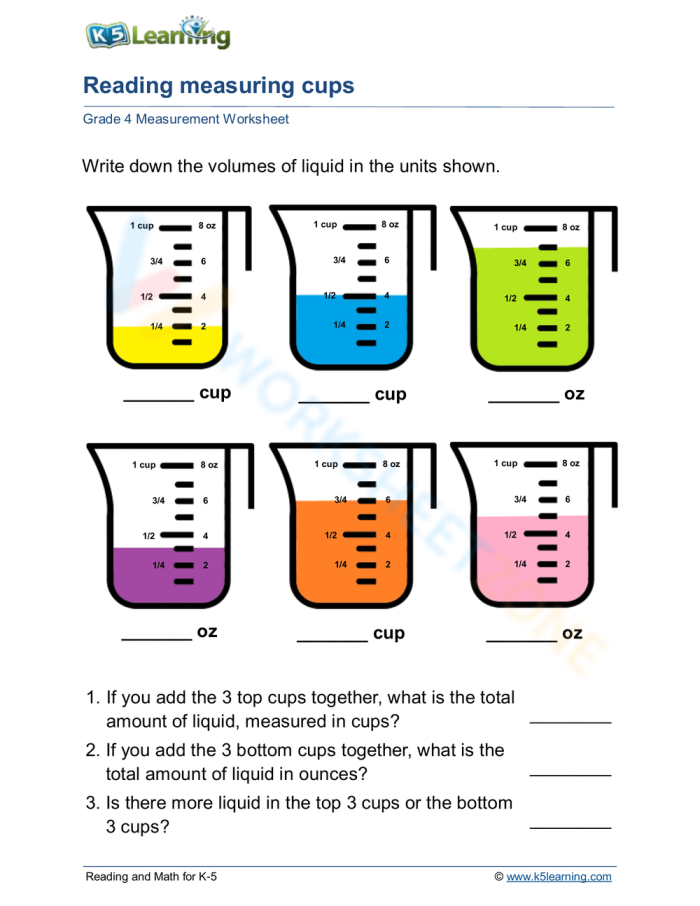
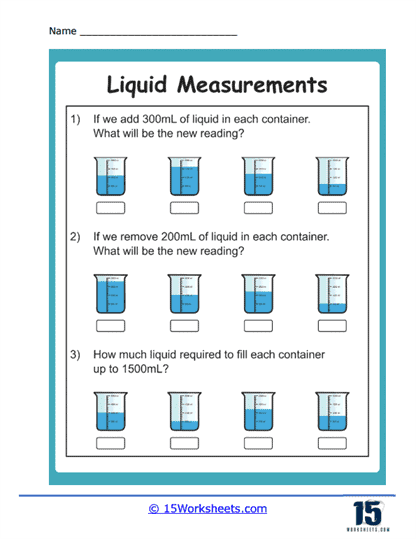
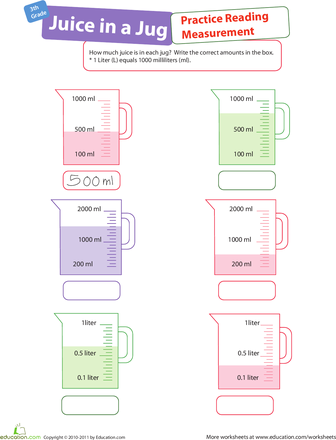
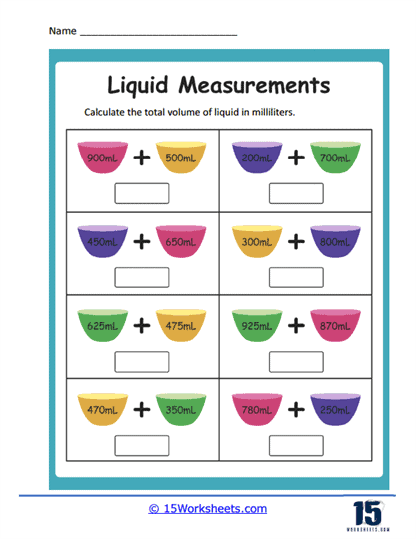
Understanding liquid measurements is a crucial skill for third graders, particularly when they learn to differentiate between liters and milliliters. This math worksheet offers an engaging way for children to practice reading liquid measurements in a fun and appealing format. It’s designed not just to teach, but to make learning an enjoyable experience.
Many daily activities involve liquid measurements, from cooking to science experiments. For example, when making a recipe, knowing how to measure ingredients accurately can make all the difference. Children will find practical applications for these skills when they encounter real-life scenarios where they need to read or convert between liters and milliliters. This worksheet includes various exercises that challenge students to apply their knowledge, ensuring they grasp the concepts fully.
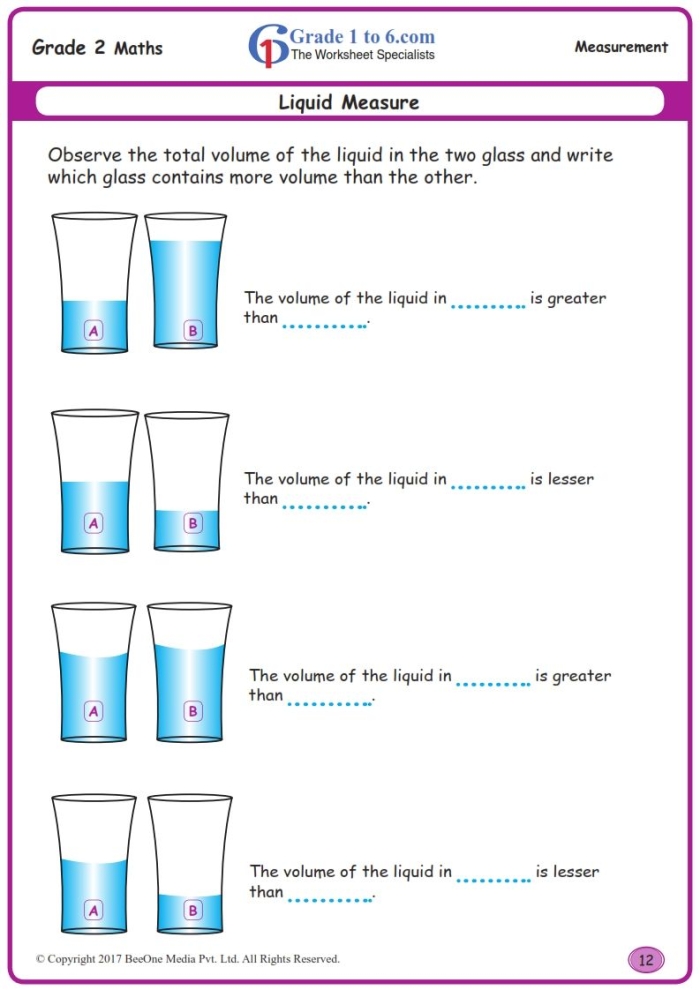
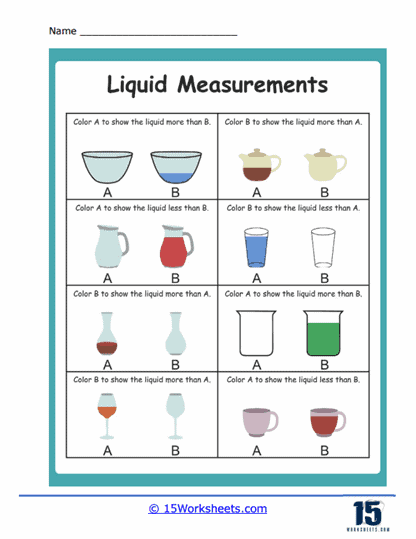
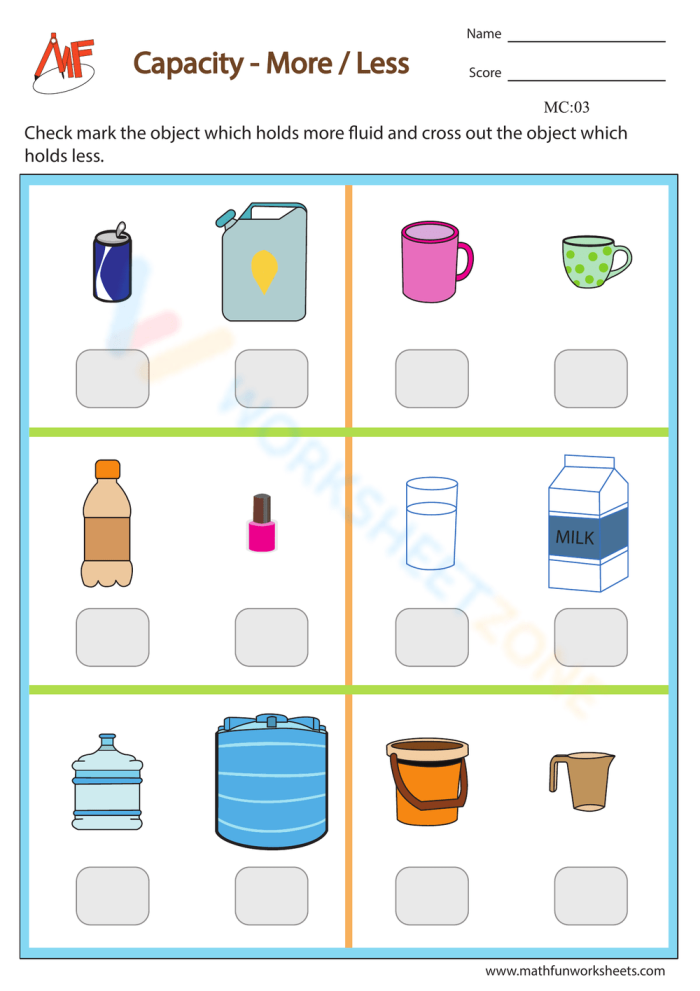
One of the standout features of this worksheet is its emphasis on visual learning. Children can see liquid measurements represented in different contexts, which helps to solidify their understanding. For instance, students might be asked to compare the volume of a soda can (usually measured in milliliters) with a water jug (measured in liters). Such comparisons not only make the math relatable but also enhance their comprehension of the metric system.
Integrating this worksheet into a third-grade math curriculum can be beneficial in multiple ways. It aligns with algebraic thinking by encouraging students to solve problems involving measurements. Additionally, it reinforces the importance of precision in measurements, a skill that will serve them well throughout their education.
To further enhance learning, consider exploring additional resources, such as perimeter worksheets or division worksheets. Each resource aims to build foundational skills in a fun, engaging way, ensuring that students not only learn but also enjoy the process.
Hands-On Worksheet Activities