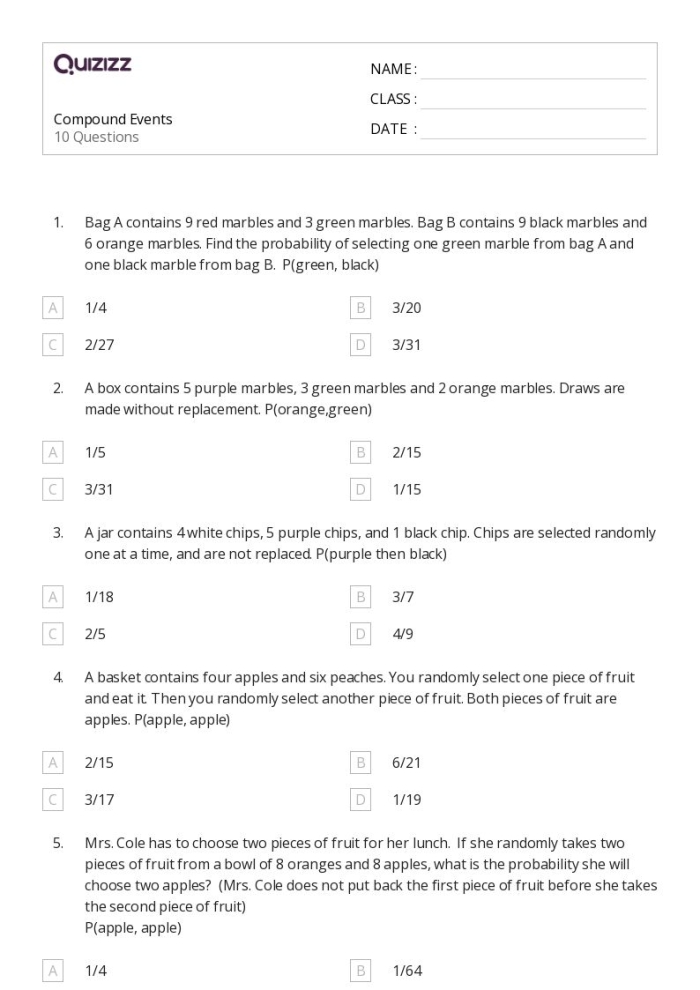
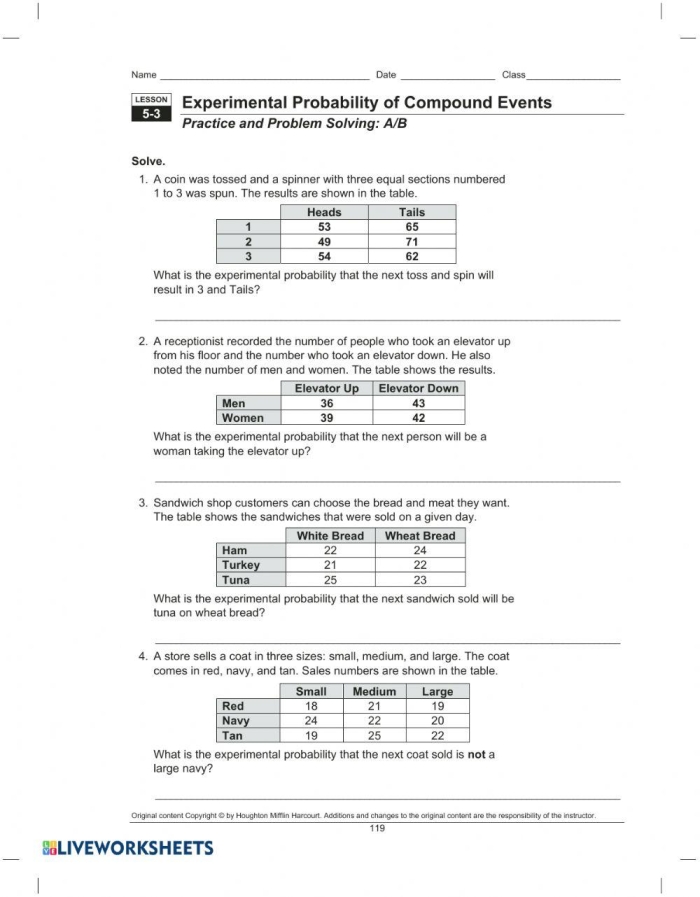
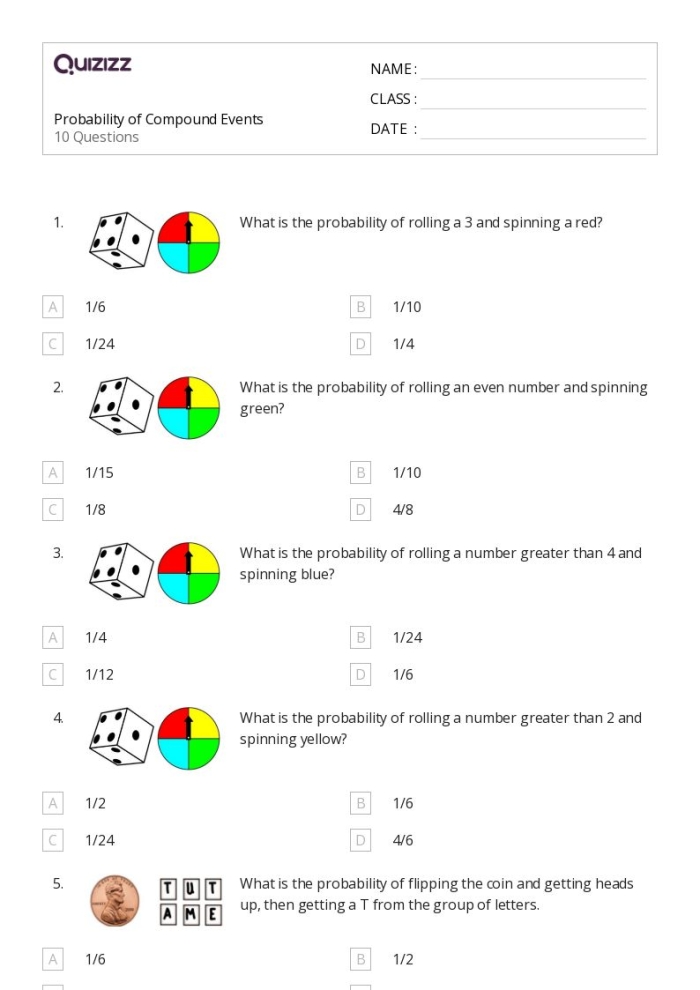
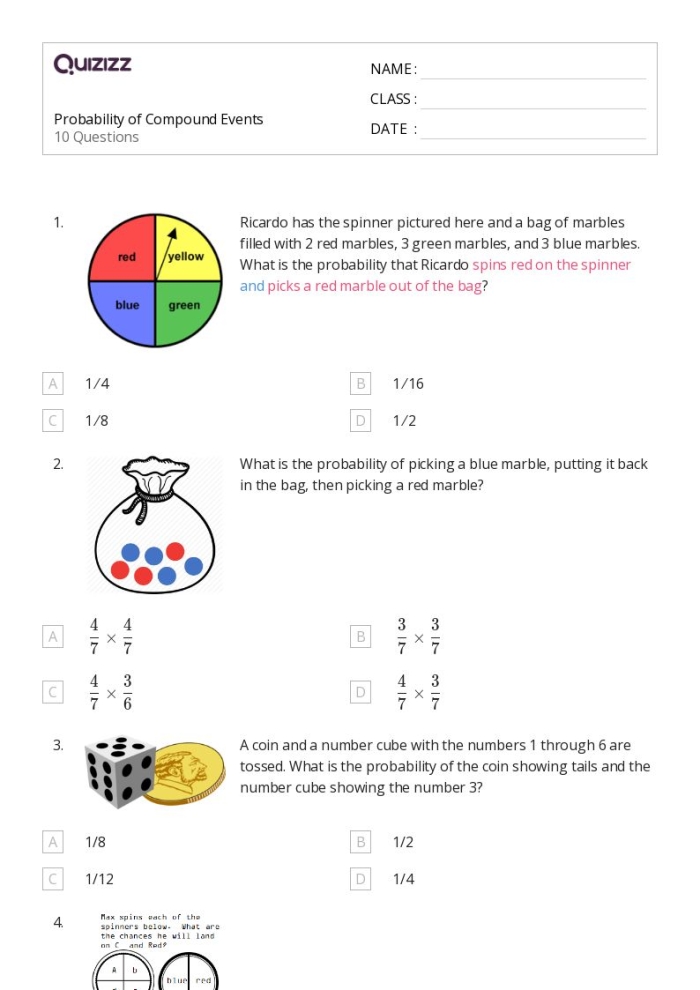
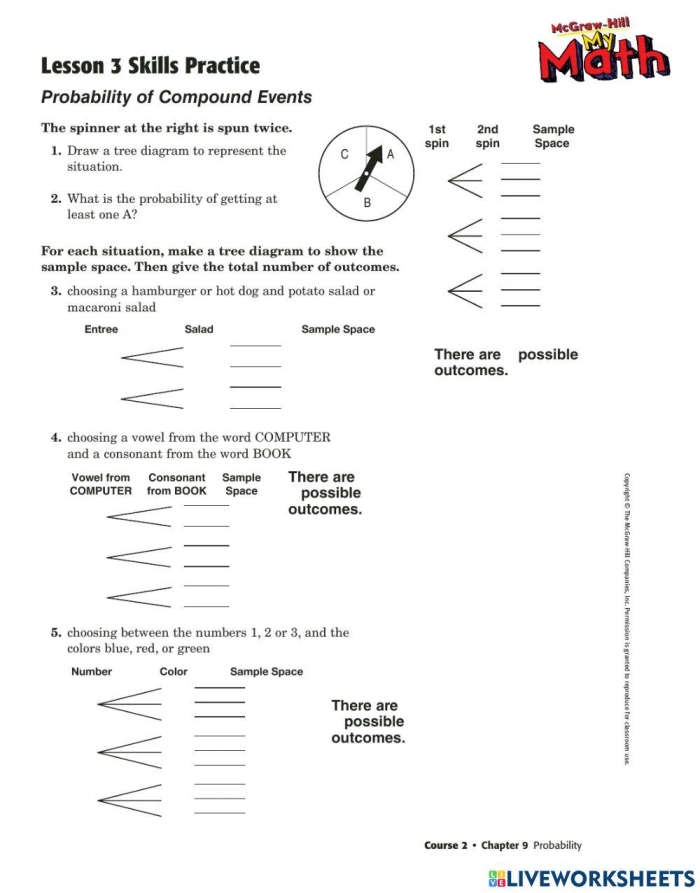
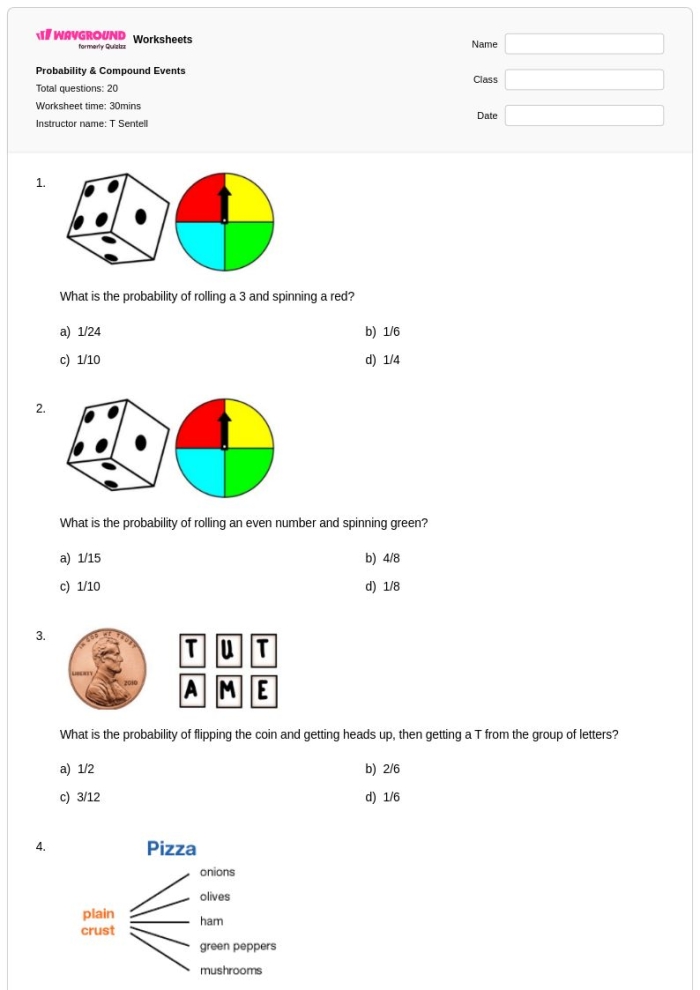
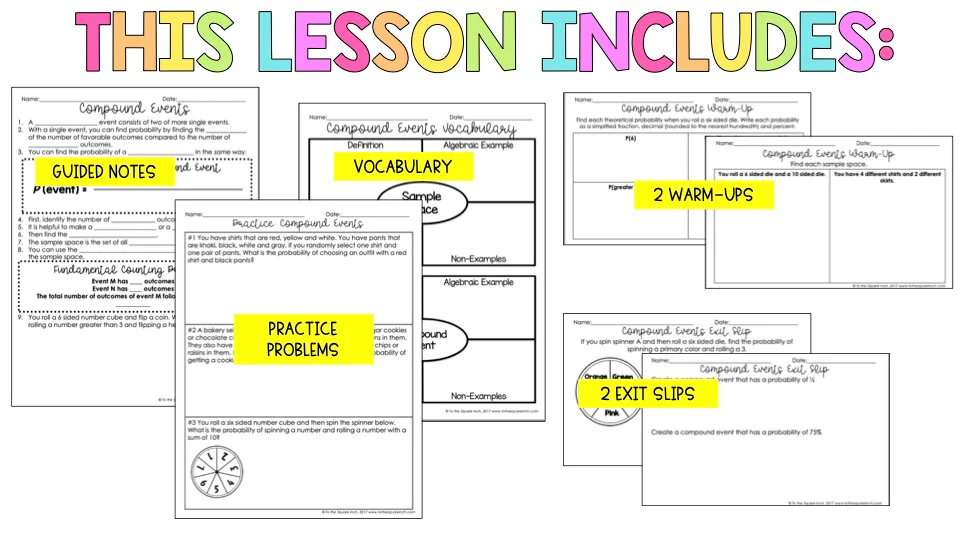
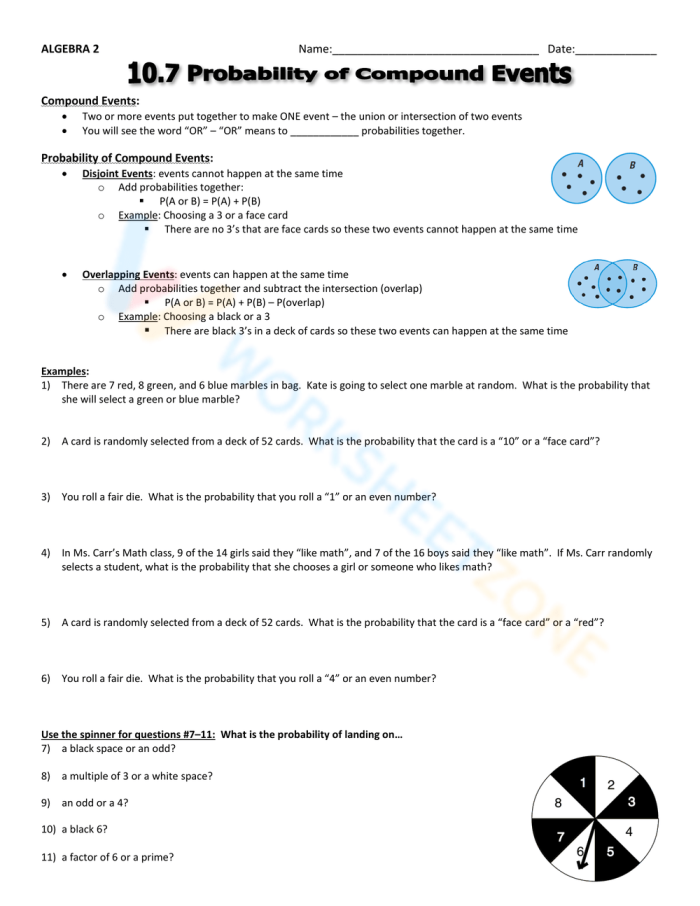
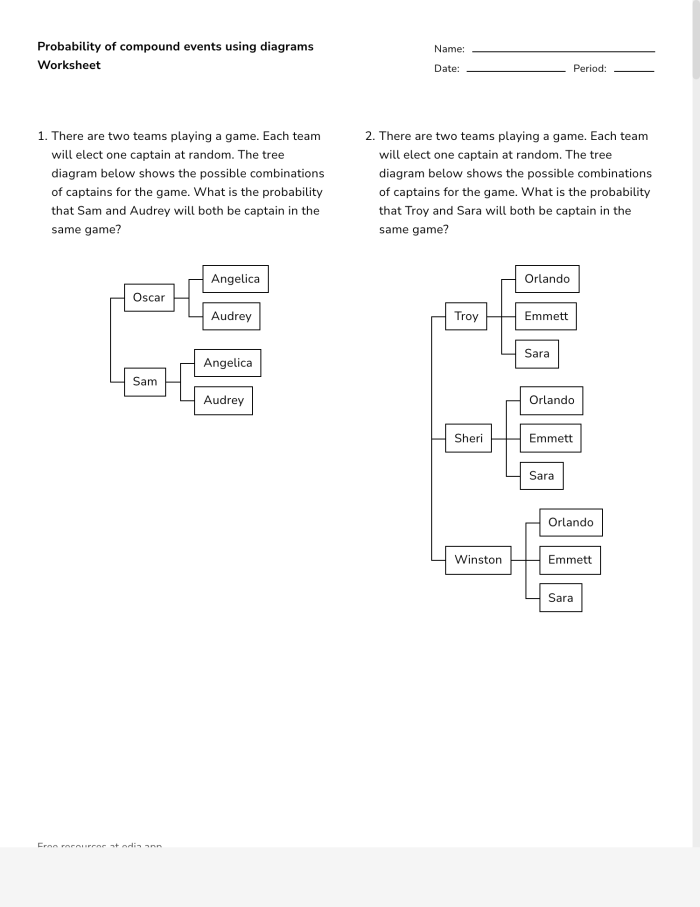
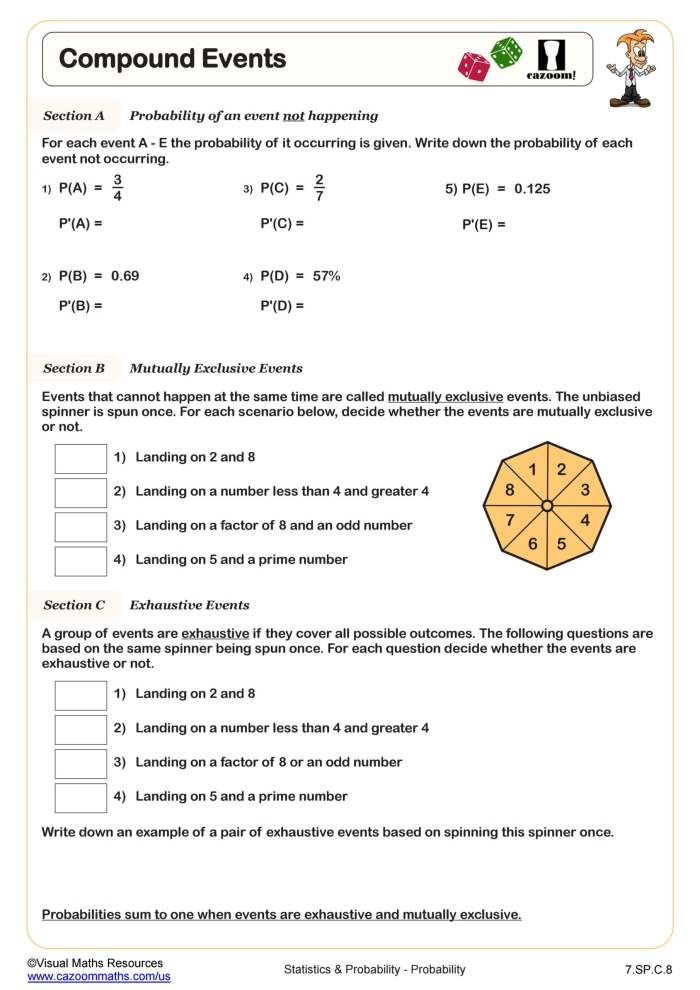
Understanding the sample space of compound events is crucial for seventh-grade students as they navigate the world of probability. This seventh-grade math worksheet is designed to make this concept accessible and engaging. By guiding students through the process of identifying and listing all possible outcomes of compound events, it builds a strong foundation in probability.
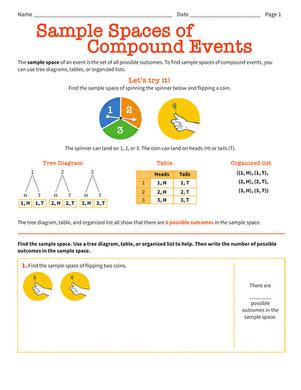
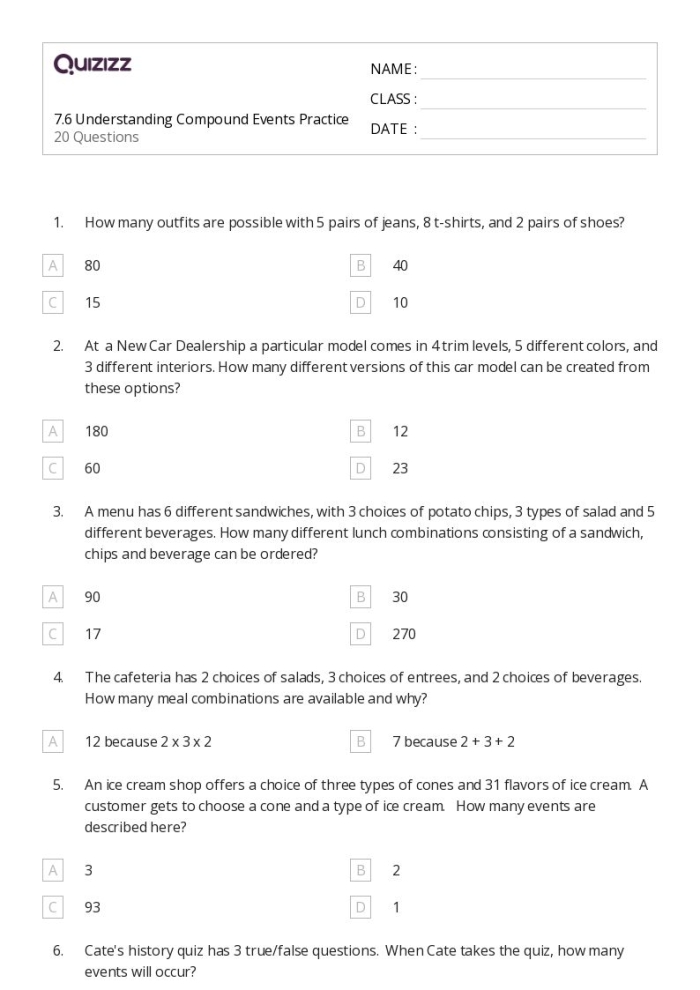
To begin, it’s essential to explain what a sample space is. In simple terms, the sample space is the set of all possible outcomes of a particular experiment. For instance, if you were to roll two dice, the sample space would include all combinations of the numbers that can appear, from (1,1) to (6,6). This worksheet encourages students to visualize these outcomes, which is a vital step in understanding more complex probability concepts in the future.
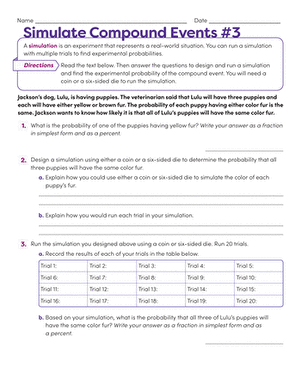
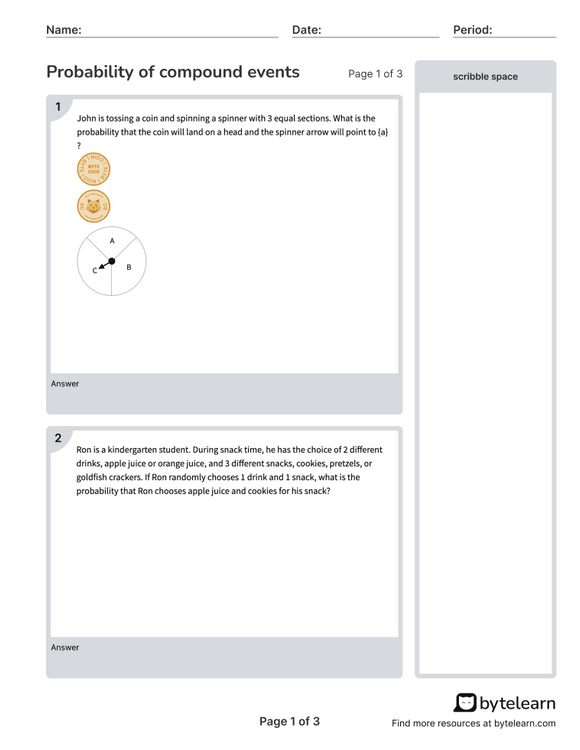
One practical exercise included in the worksheet involves flipping a coin and rolling a die simultaneously. Students will be asked to determine the sample space for this compound event. The sample space would consist of pairs such as (Heads, 1), (Heads, 2), and so on, covering all combinations. This hands-on approach not only reinforces the concept but also makes learning fun, as students can physically manipulate coins and dice to see the outcomes firsthand.
In addition to enhancing their understanding of sample spaces, students can benefit from practicing related skills. They might explore topics such as subtracting linear expressions or working with rational numbers, which can be found in other seventh-grade worksheets. Engaging with these various subjects helps solidify their overall math skills.
As they work through this worksheet, students will gain confidence in their ability to tackle probability problems. This foundational knowledge will serve them well as they progress in their math education, especially in areas like statistics and more advanced probability concepts.
Practice with These Worksheets