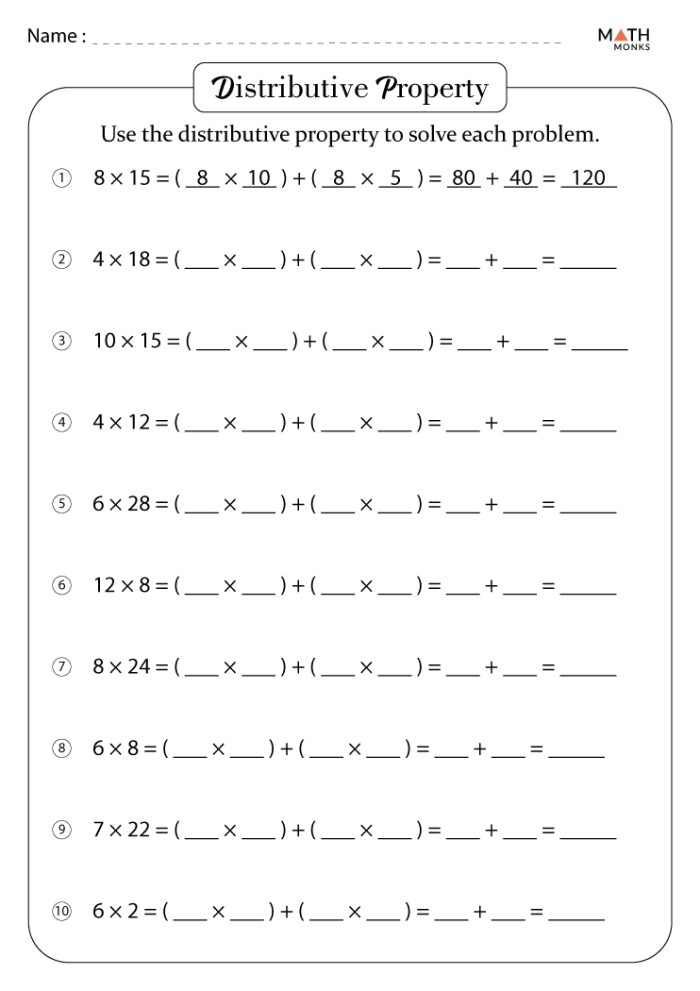
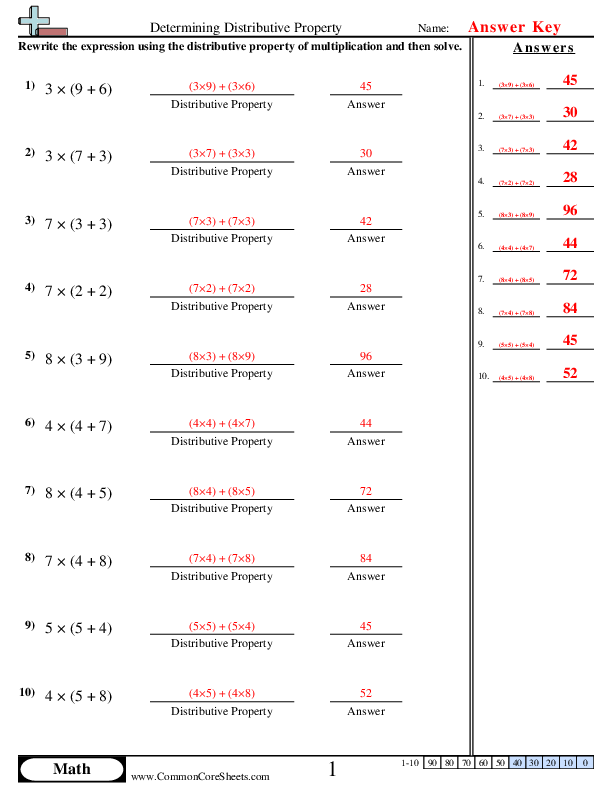
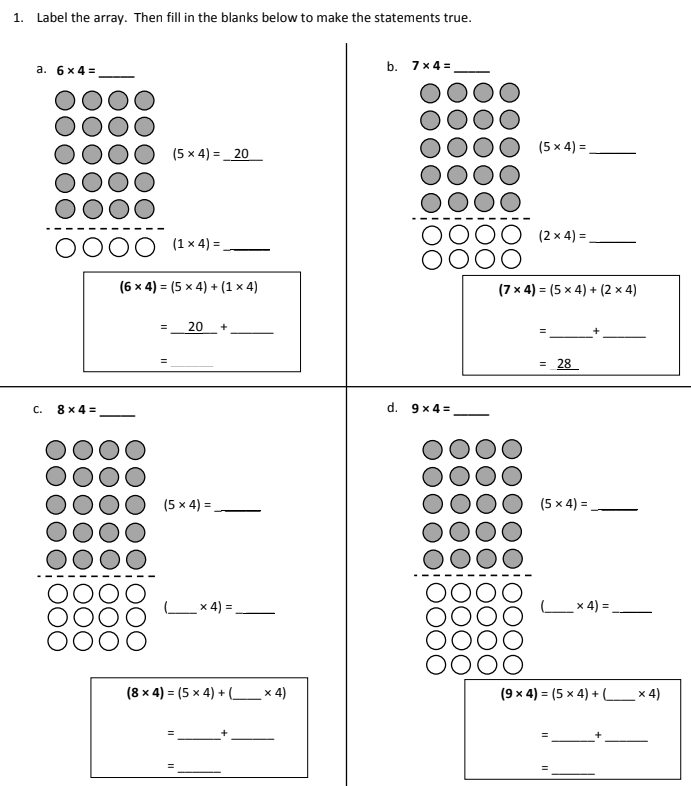
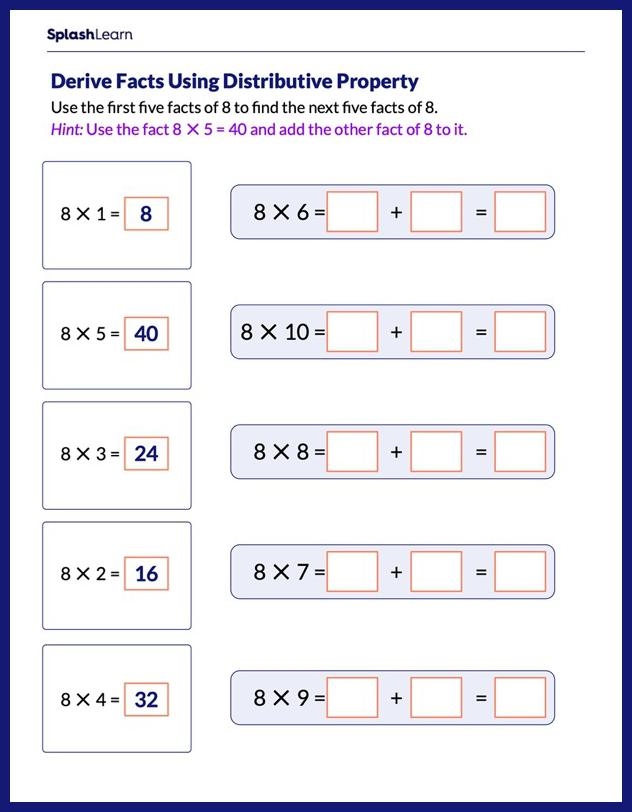
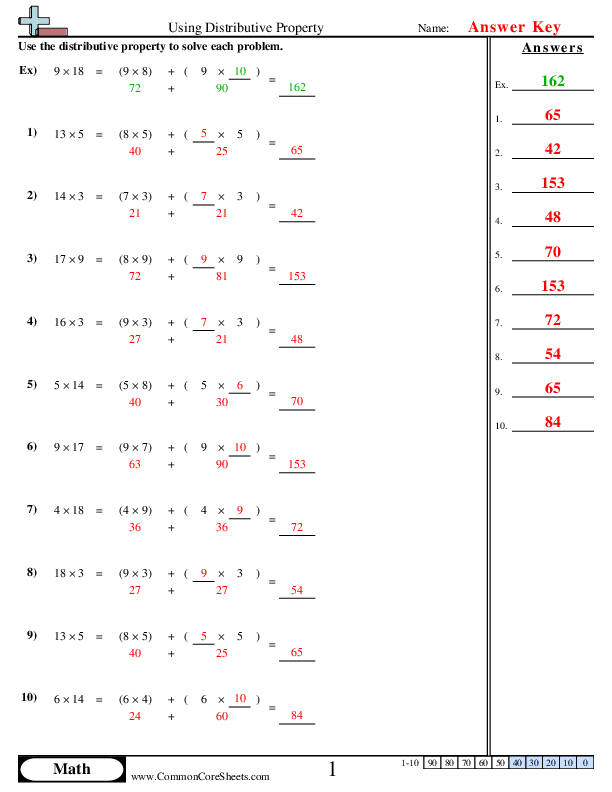
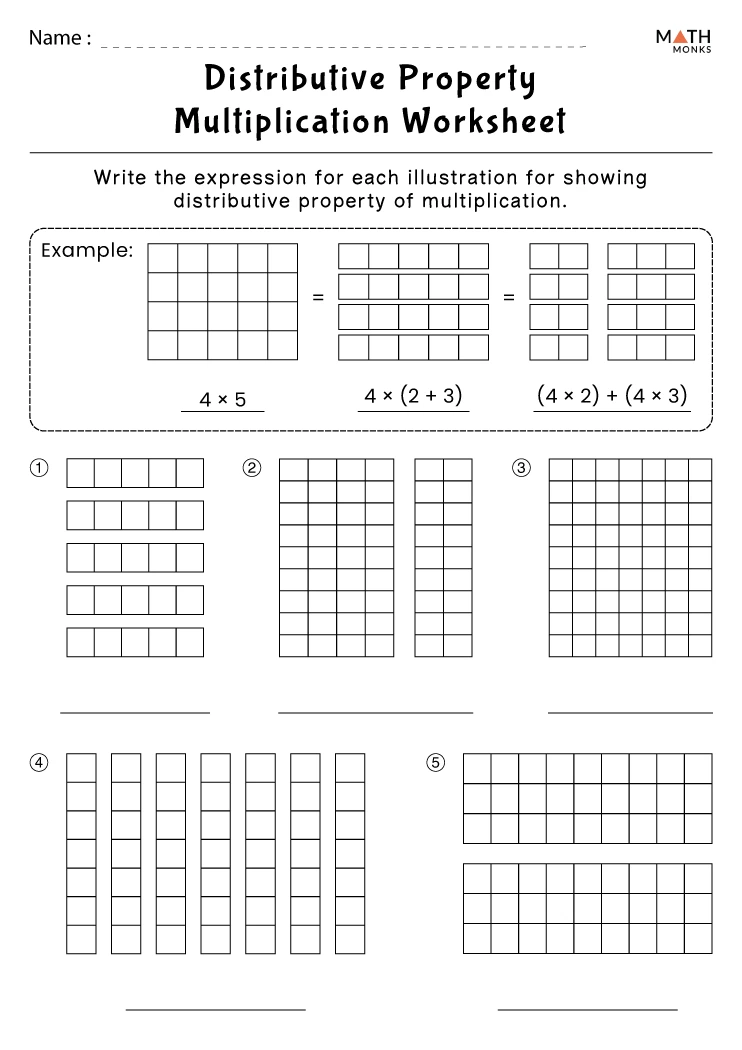
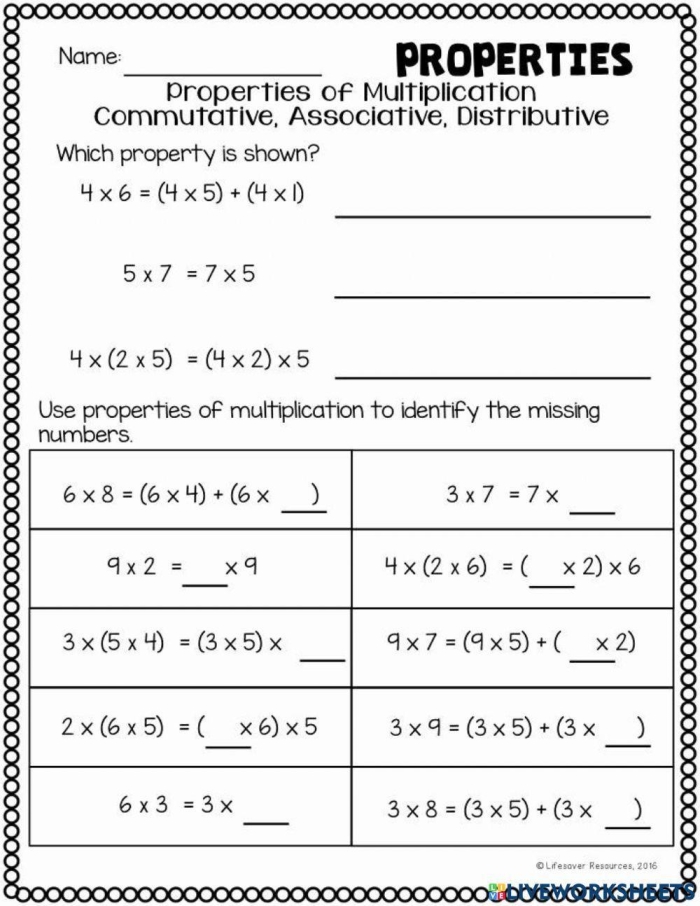
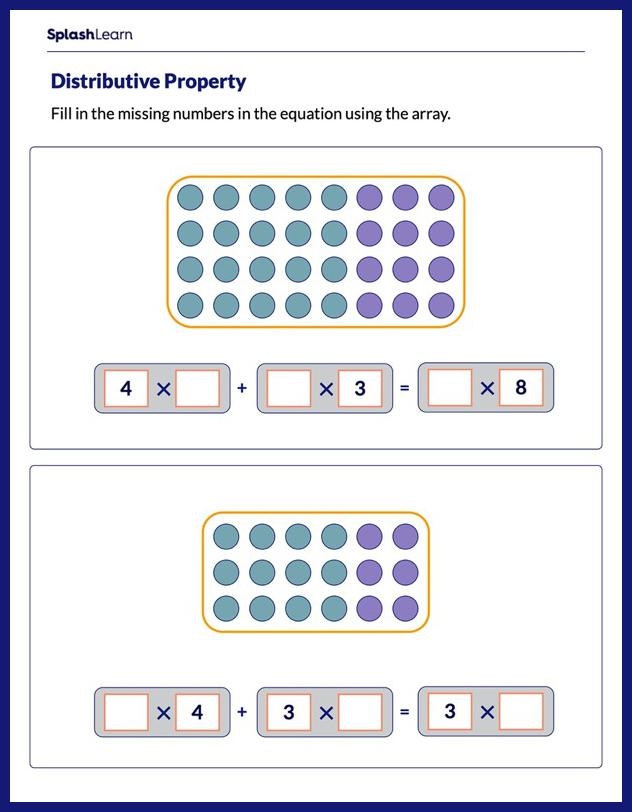
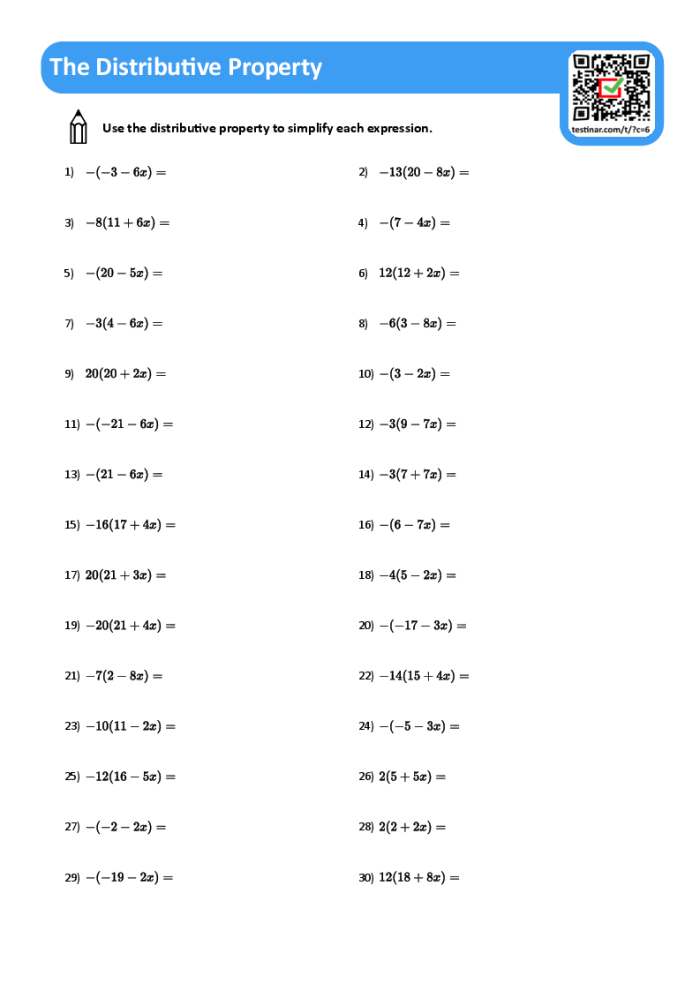
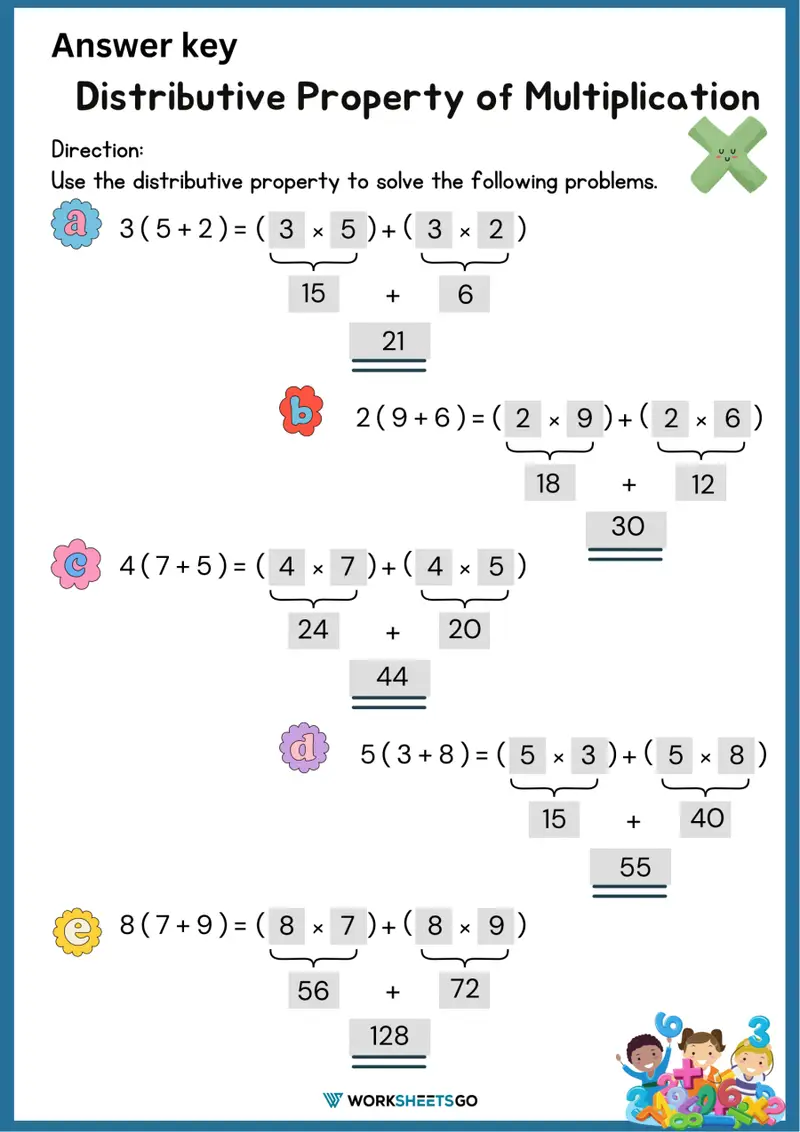
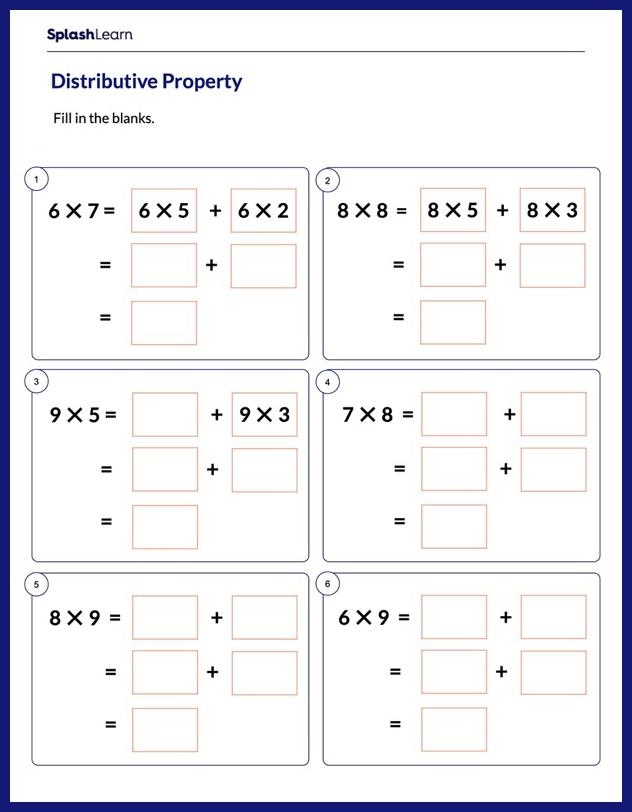
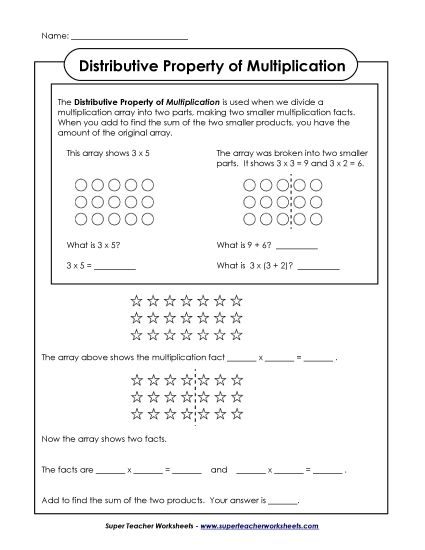
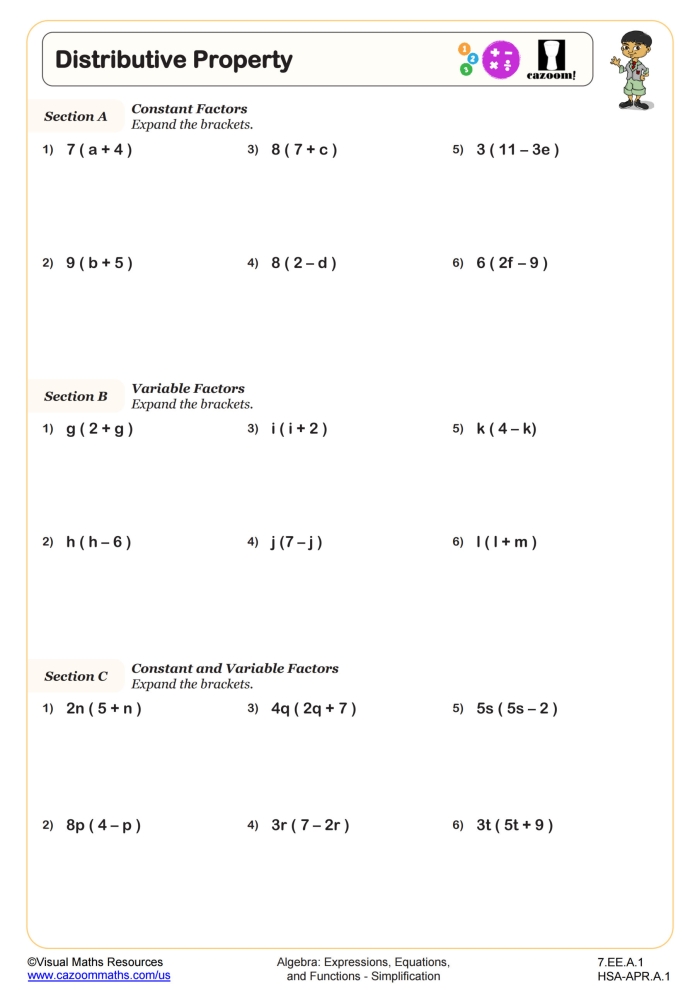
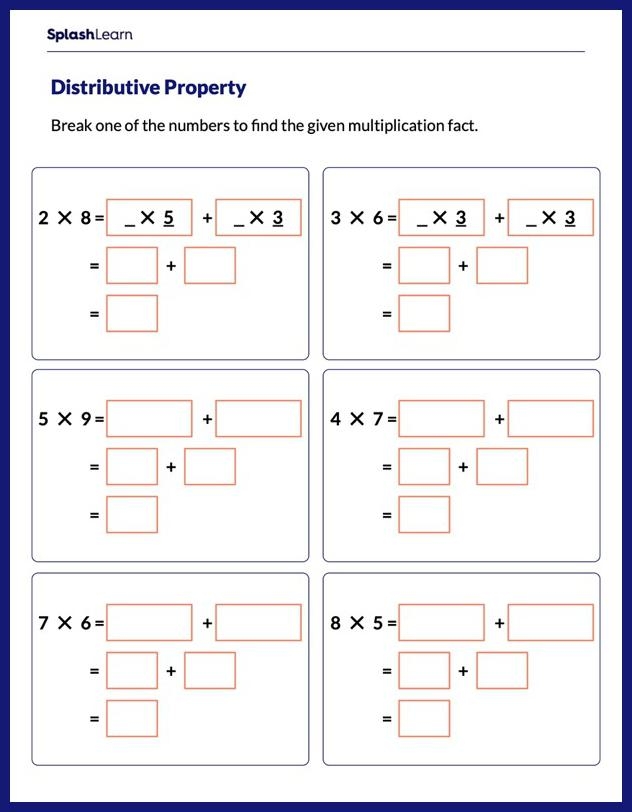
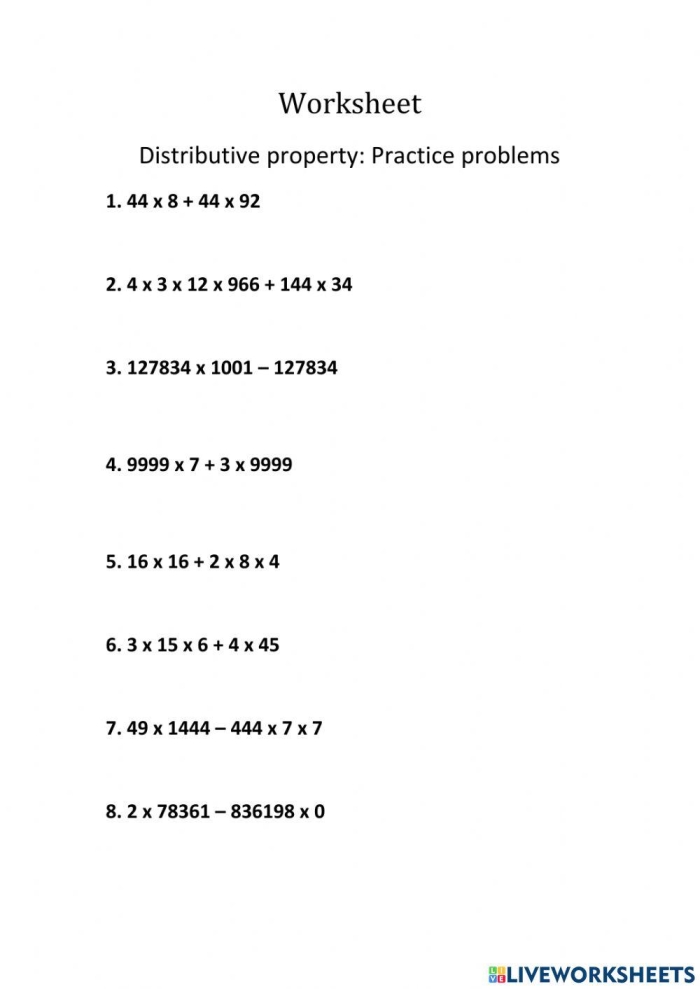
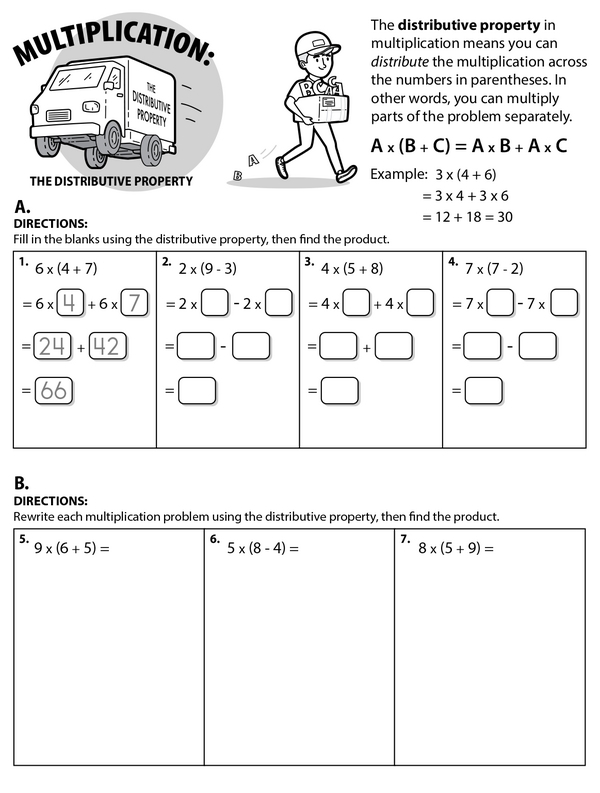
The distributive property of multiplication is a fundamental concept that every third grader should grasp. This property states that multiplying a number by a sum is the same as multiplying each addend separately and then adding the results. For example, if you need to calculate 3 x (4 + 5), you can distribute the 3 to both 4 and 5, resulting in 3 x 4 + 3 x 5, which simplifies to 12 + 15, equaling 27.
Practicing this property is vital for developing a strong mathematical foundation. It can help your child understand how numbers work together, making more complex calculations easier in the long run. Engaging your third grader with hands-on activities can make learning fun. Try using everyday objects, like fruits or toys, to illustrate the concept. For instance, if you have 2 bags of apples, each containing 3 apples and 4 bananas, you can show them how to calculate the total fruit using the distributive property: 2 x (3 + 4) = 2 x 3 + 2 x 4.
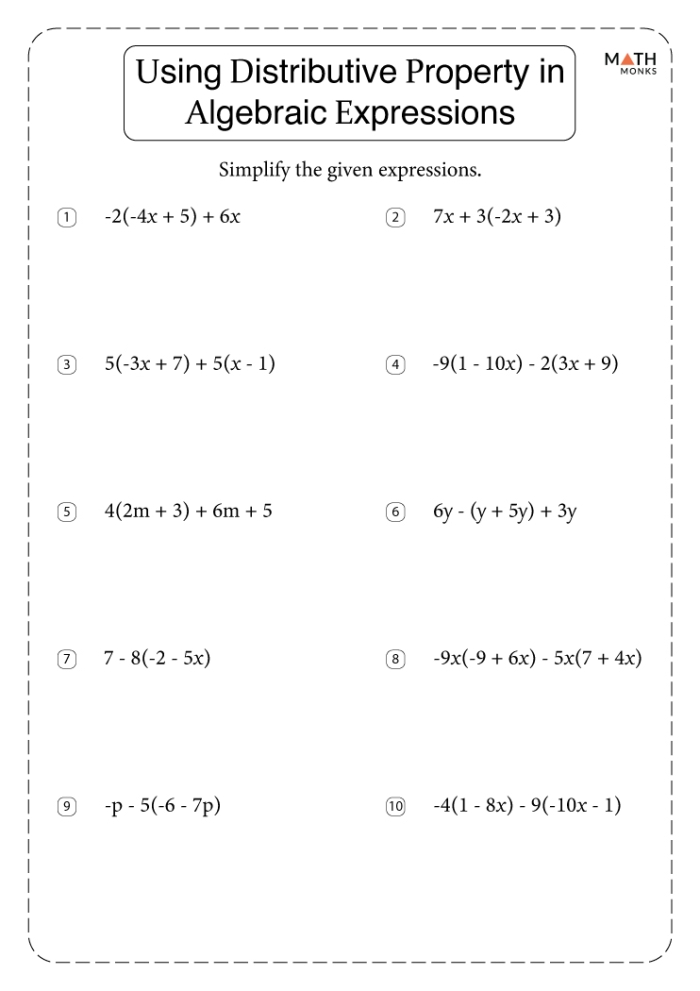
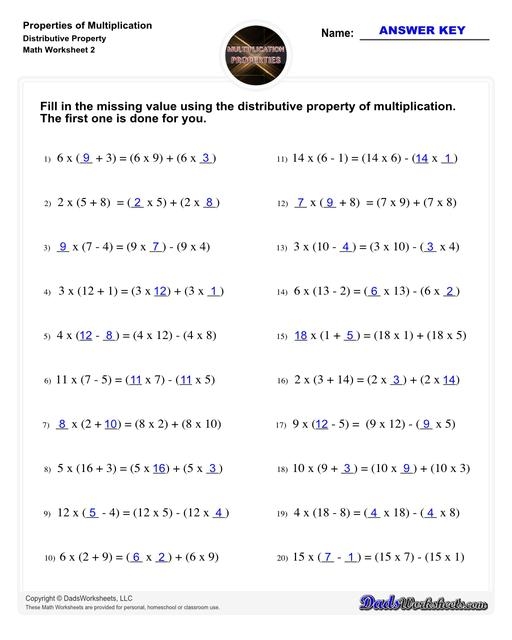
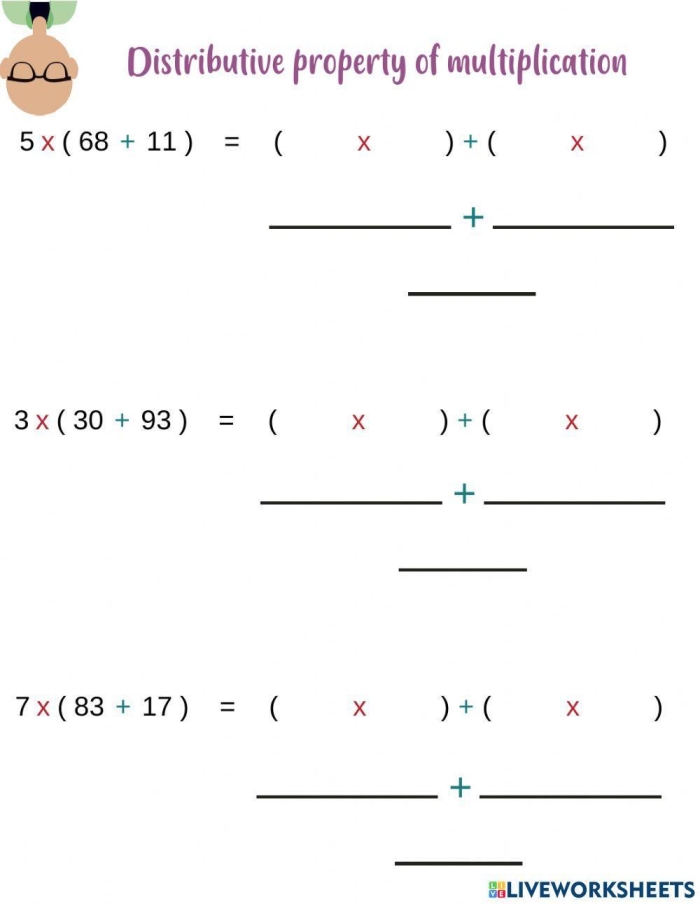
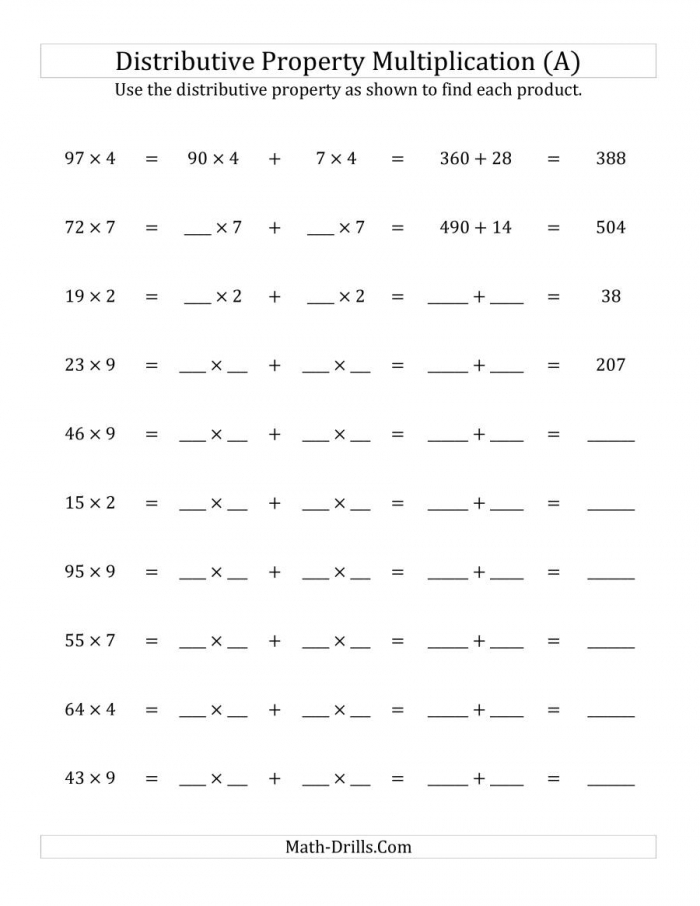
Printable worksheets can also provide great opportunities for practice. You can find useful resources, such as analogies worksheets or pictograph activities, that encourage reading while reinforcing math skills. These materials can complement discussions about the distributive property, making it easier for your child to connect concepts.
Moreover, incorporating games and challenges related to the distributive property can spark your third grader’s interest in math. You might create simple timed quizzes or play math-related card games that require them to apply the property in various scenarios. The more they practice, the more confident they will become in their abilities.
Helping your child master the distributive property is an investment in their education. It not only strengthens their multiplication skills but also builds their confidence in tackling more complex math problems as they progress through school.
Download These Worksheets for Practice