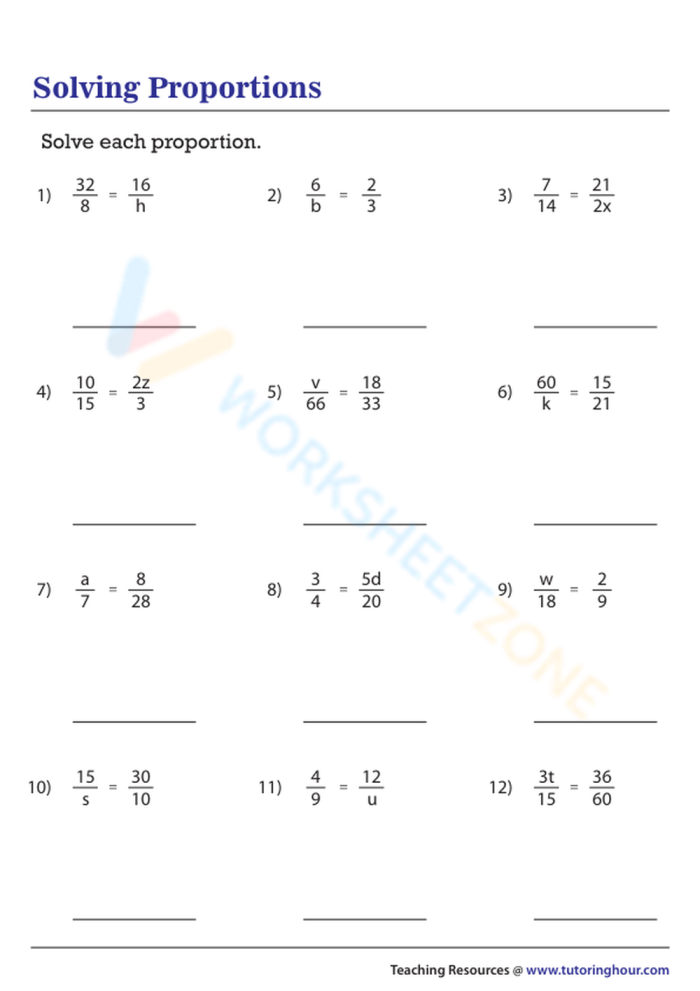
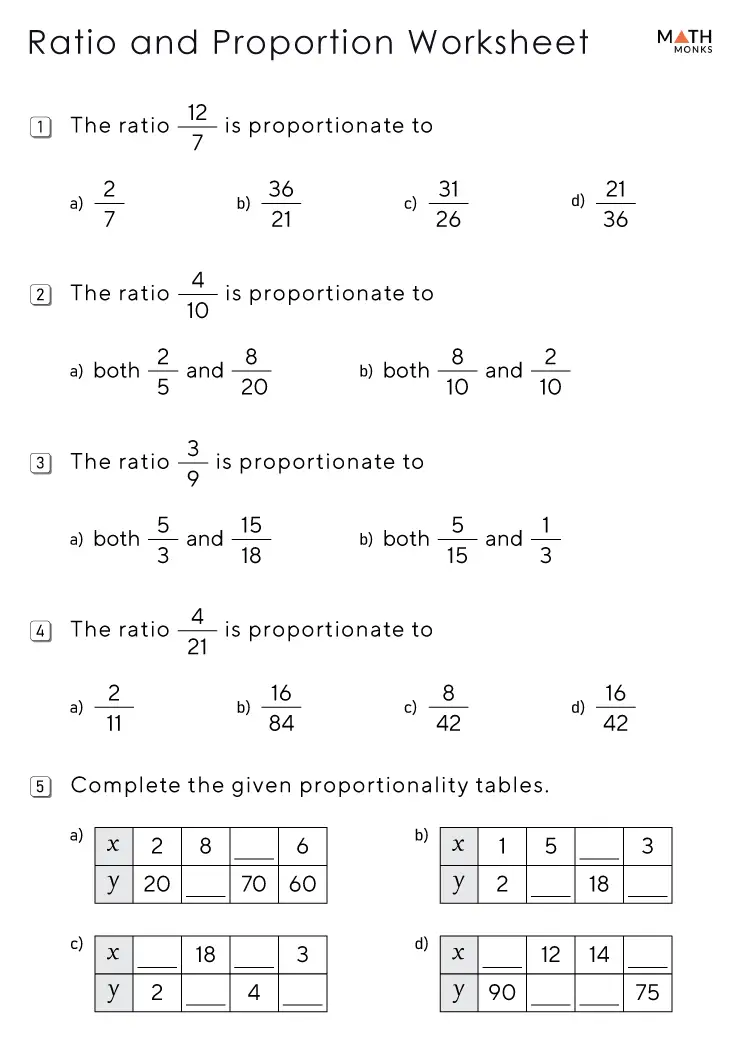
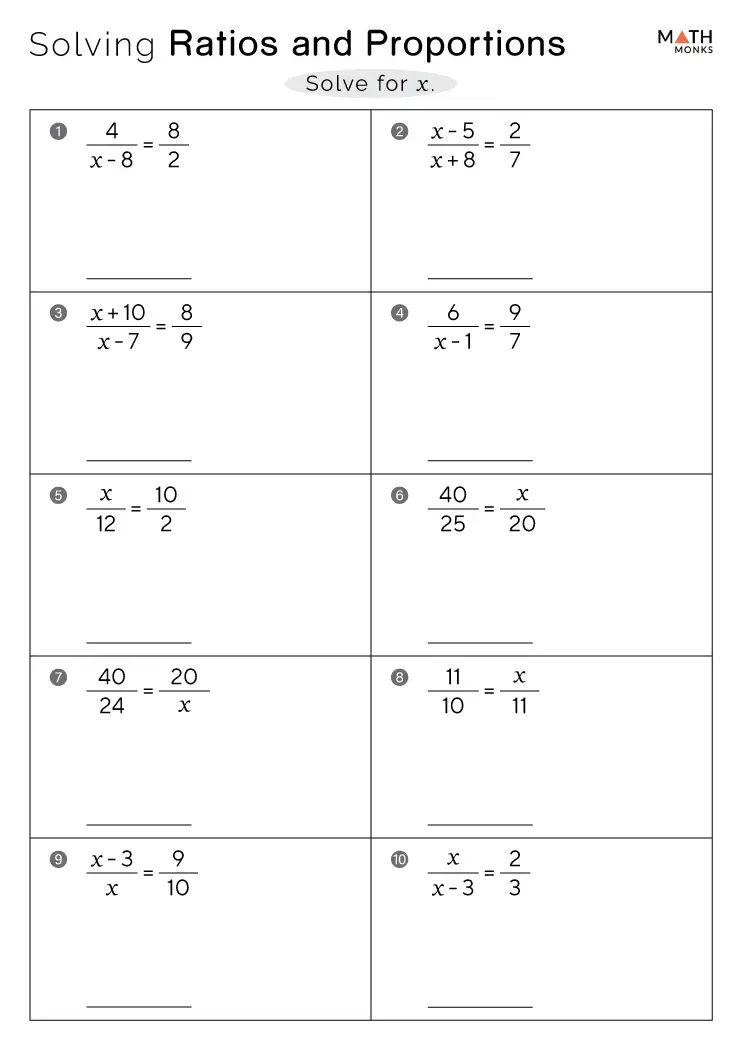
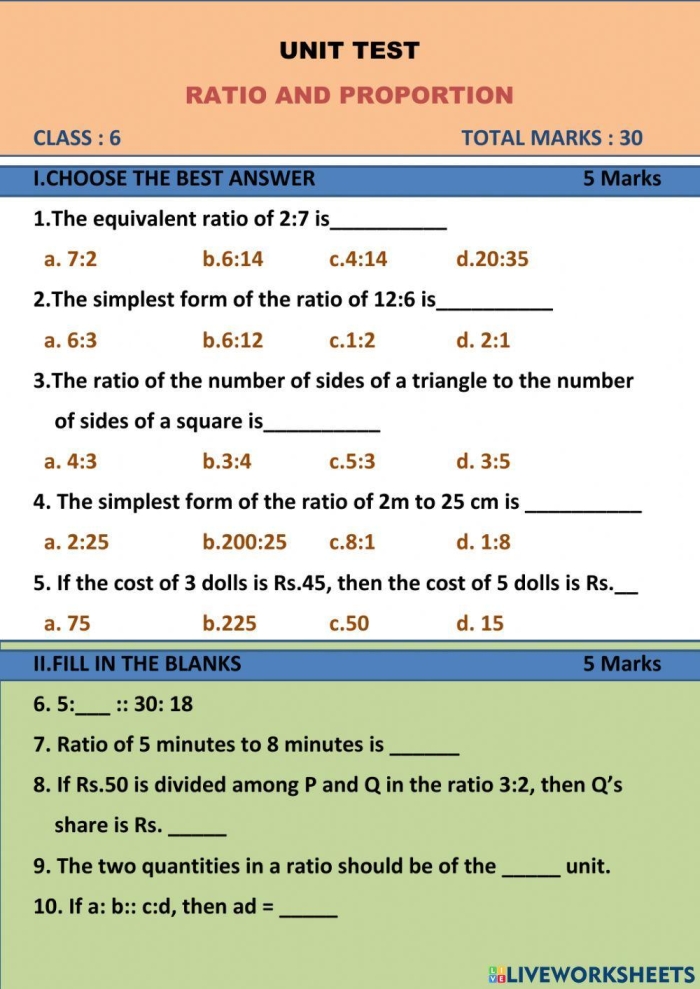
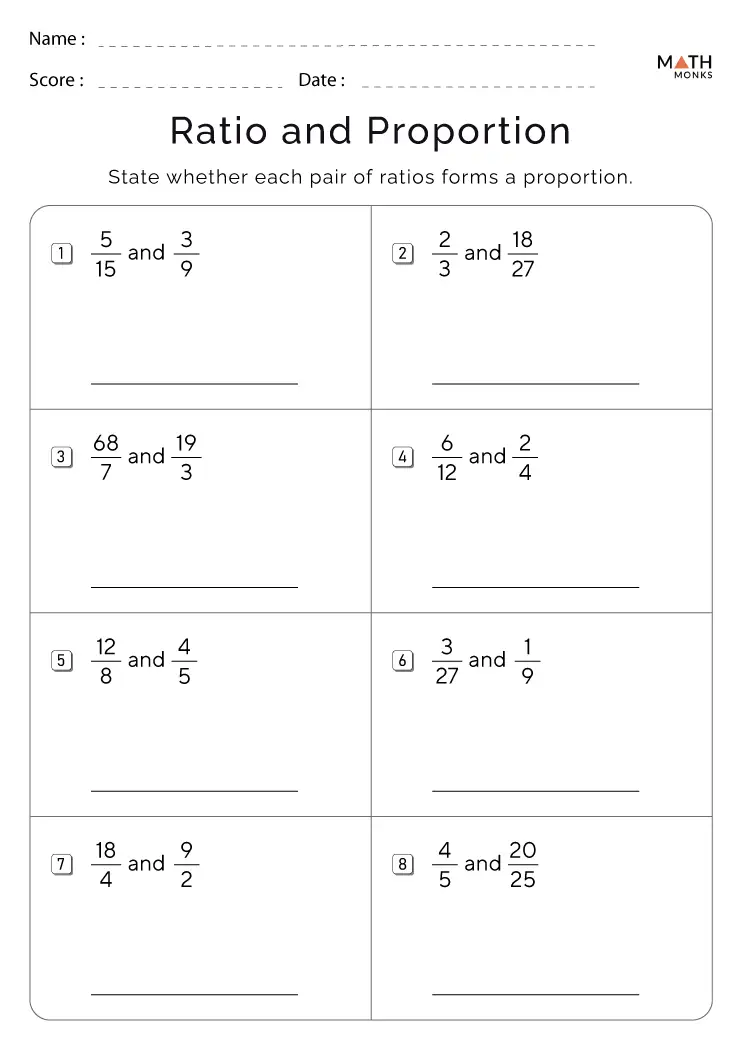
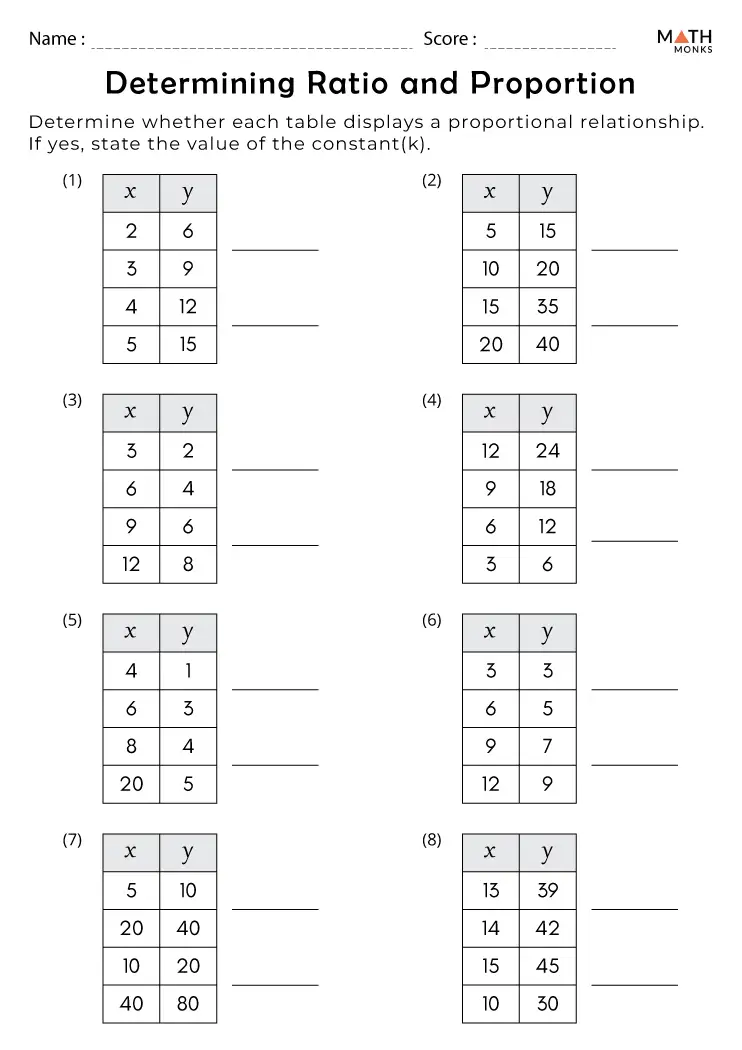
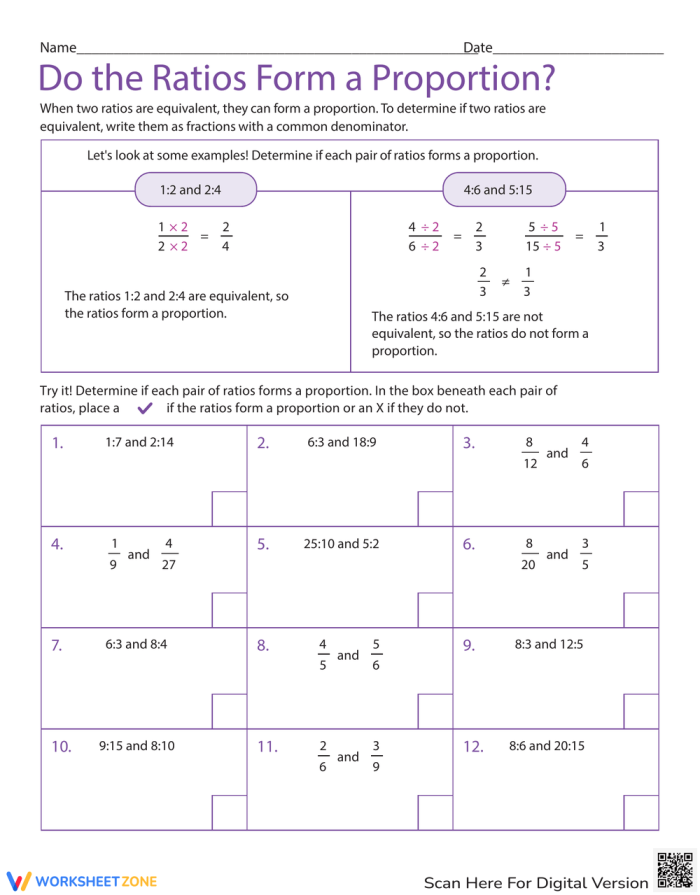
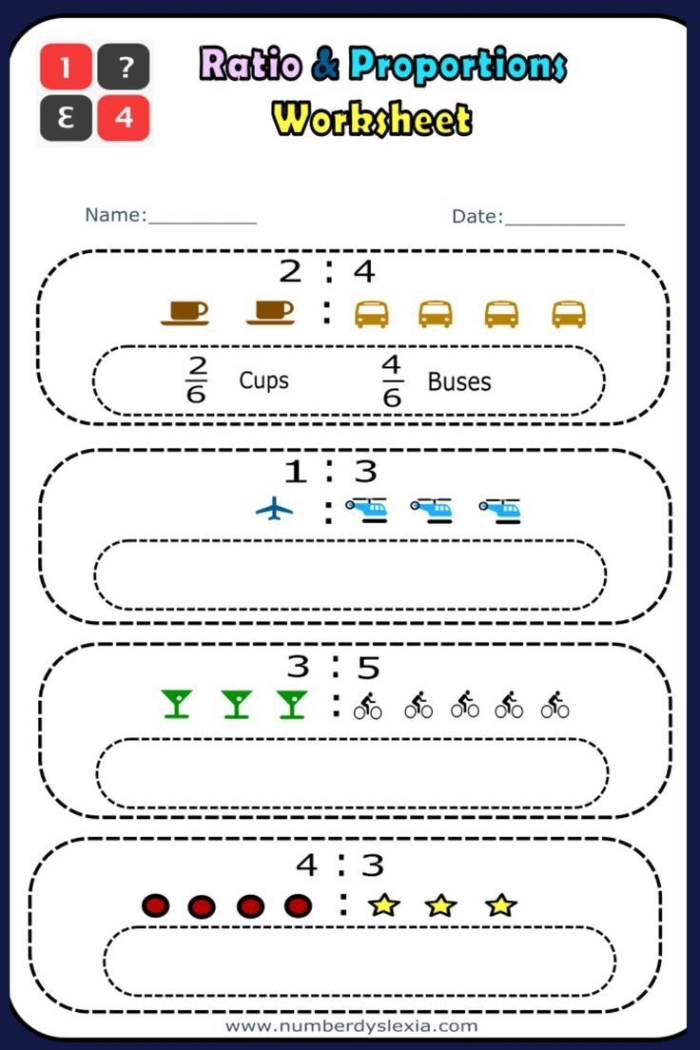
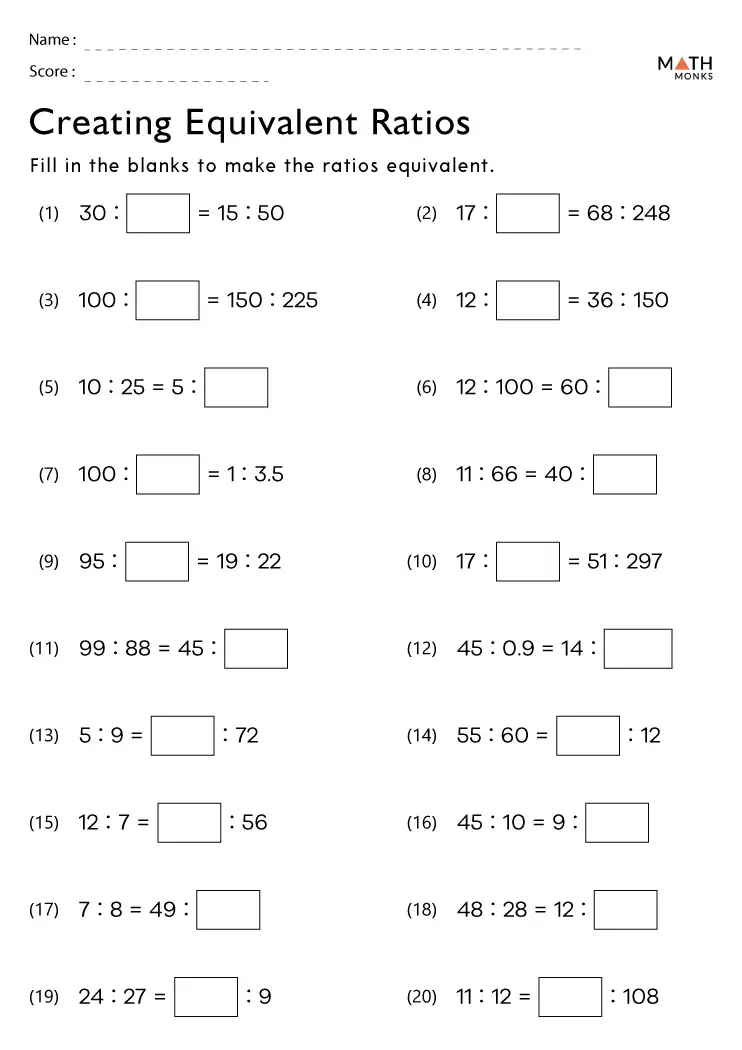
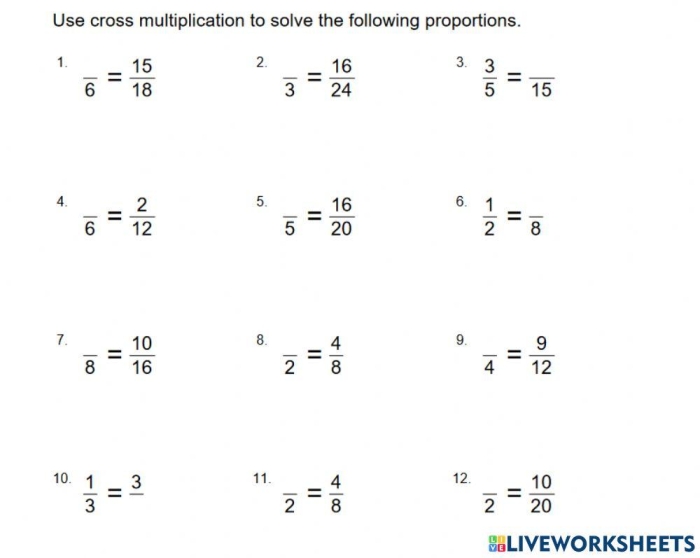
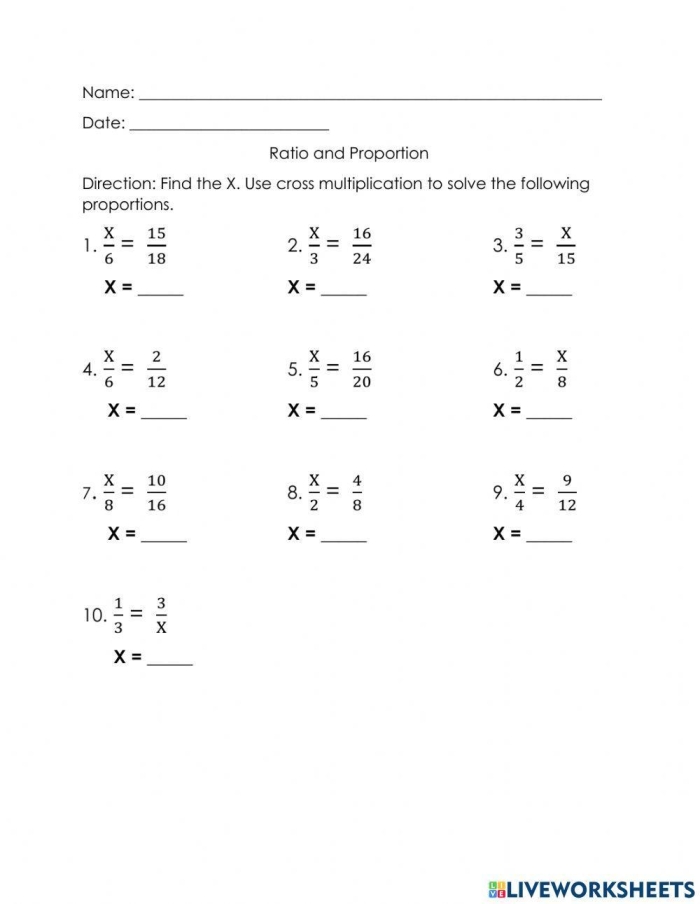
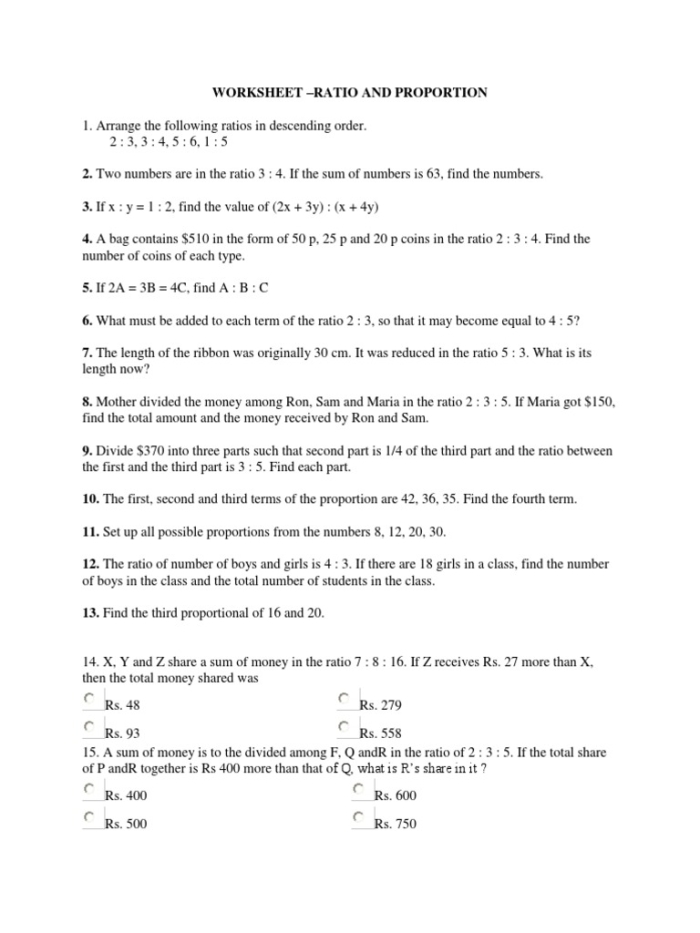
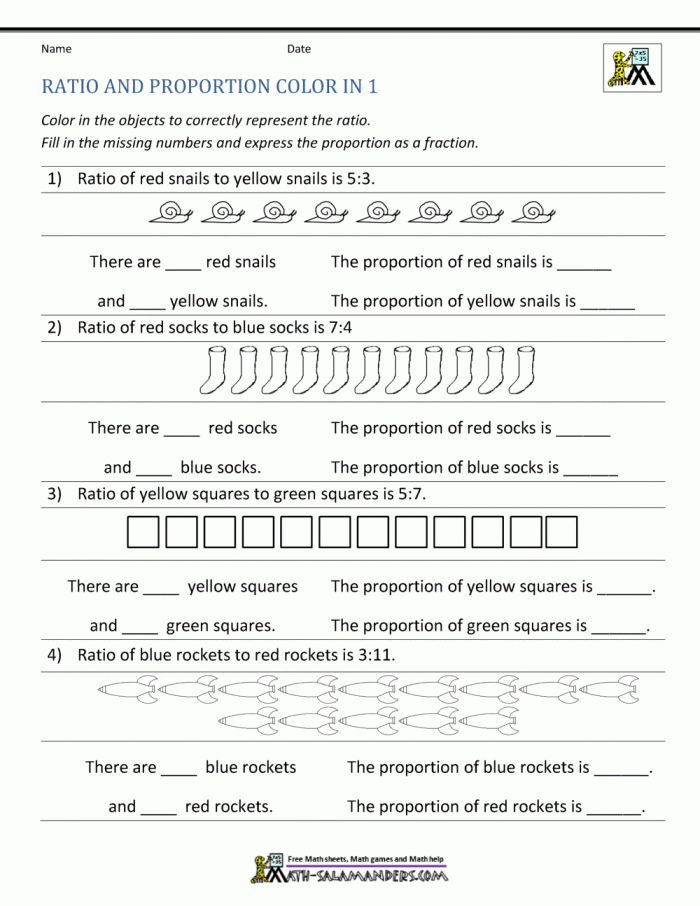
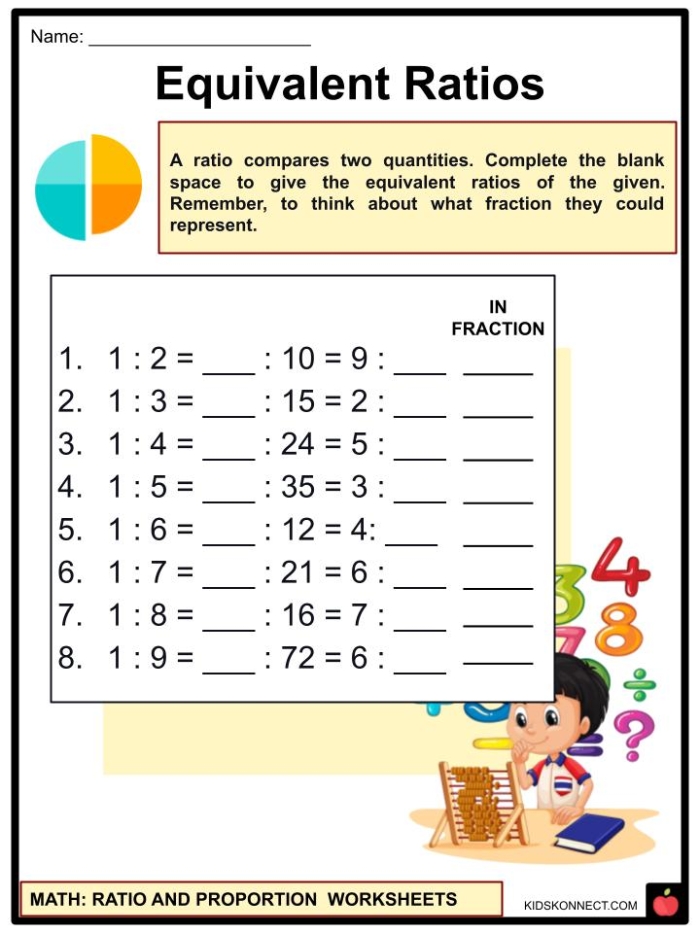
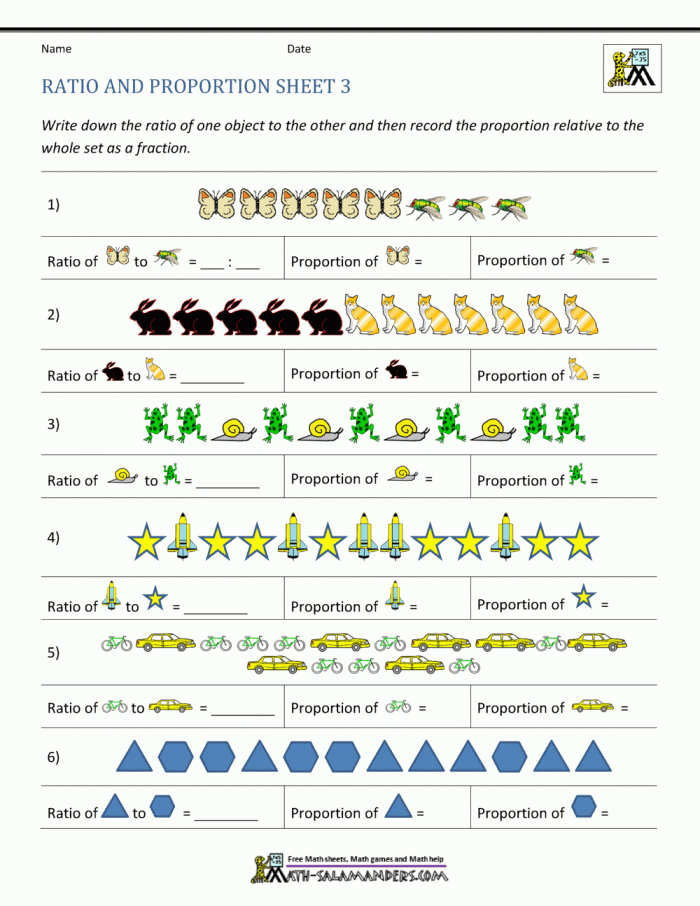
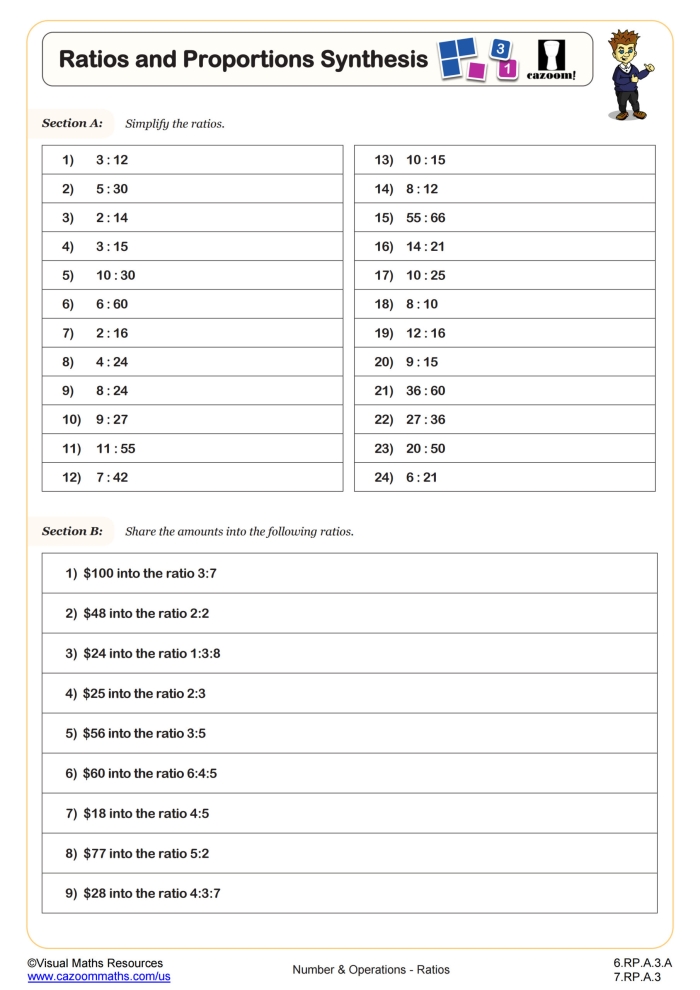
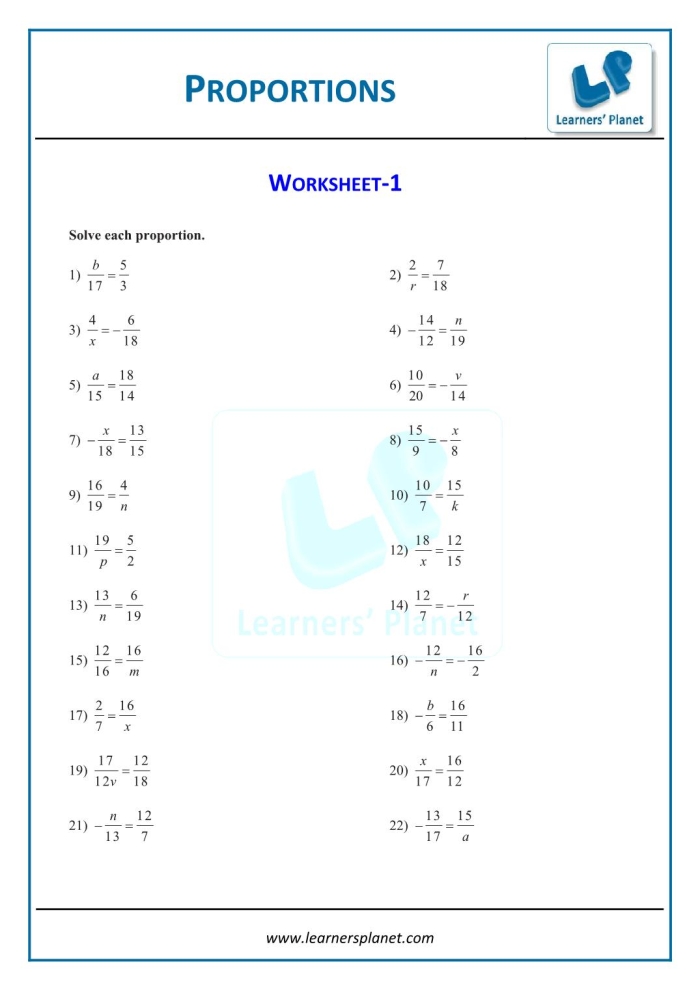
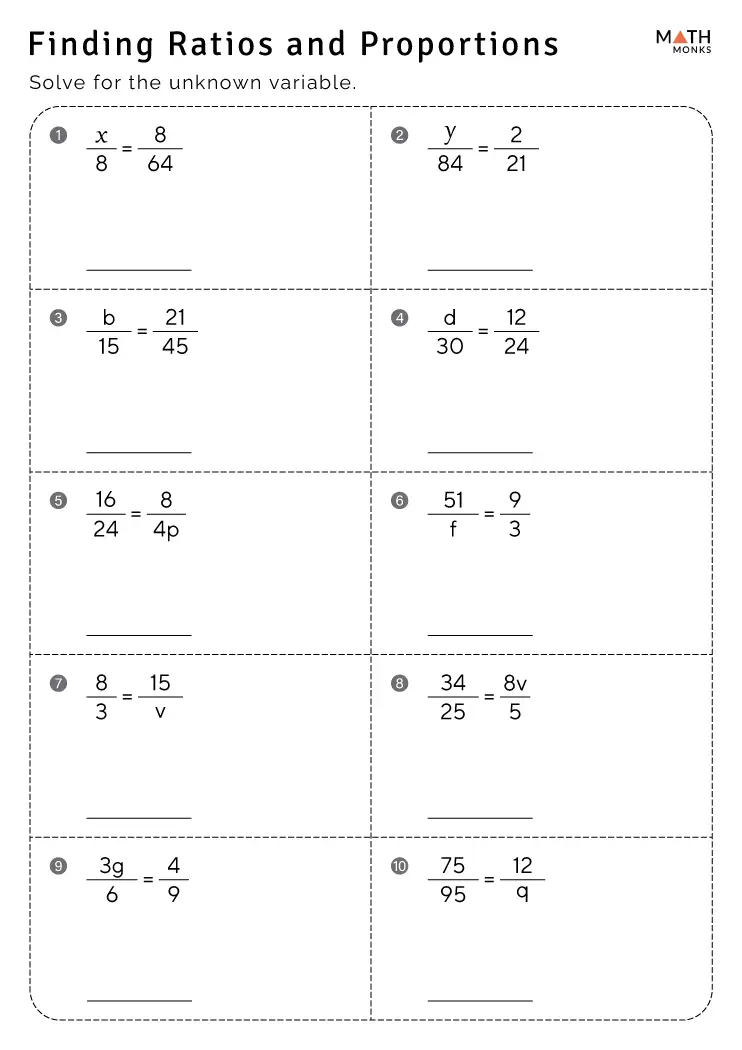
Recognizing equivalent ratios and understanding how they form proportions is a fundamental skill in sixth-grade mathematics. This essential concept not only helps students in their current studies but also lays the groundwork for more advanced topics in fractions and ratios later on. A practical way to reinforce this learning is through a focused, one-page practice worksheet designed to guide students through the process of identifying equivalent ratios.
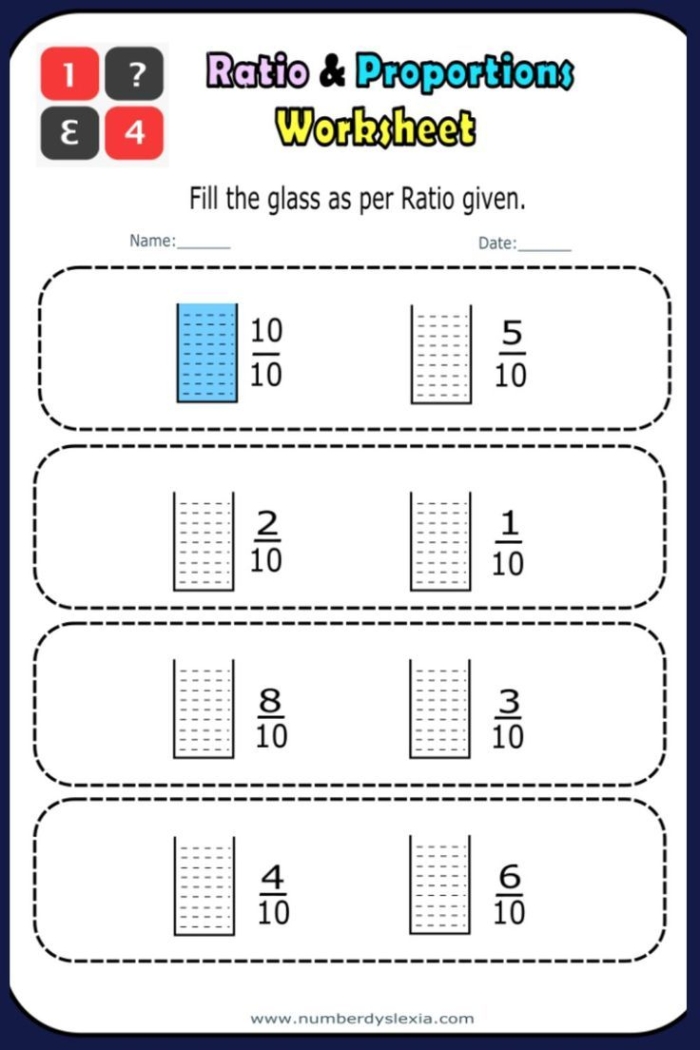
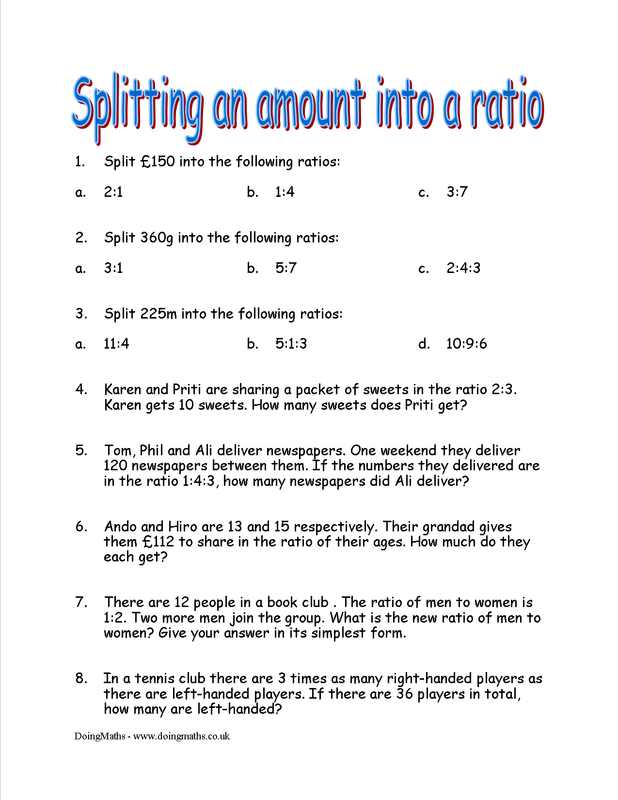
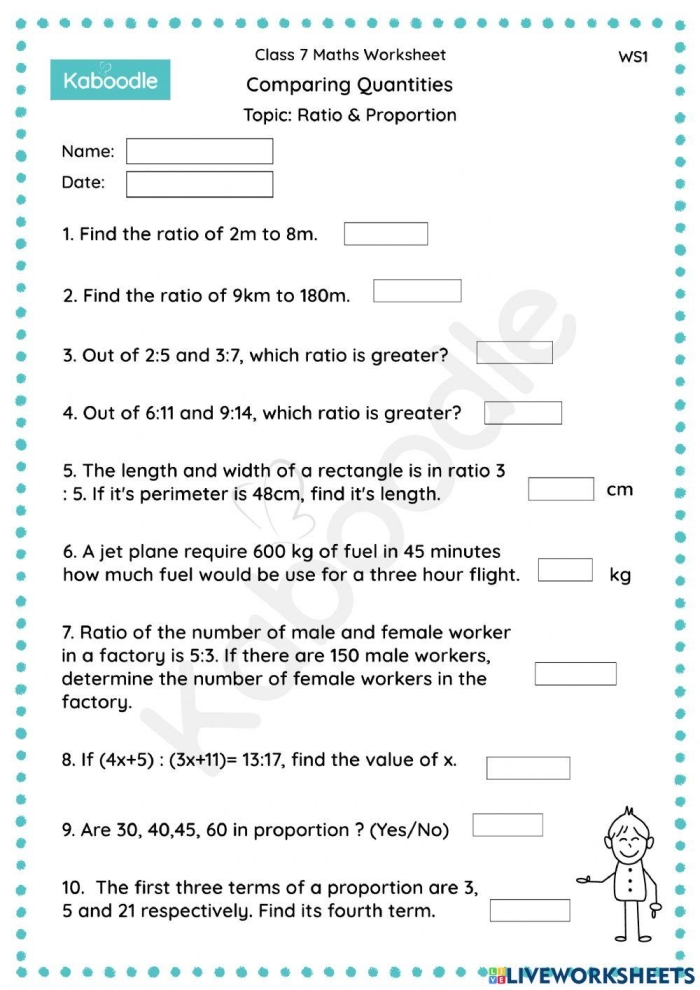
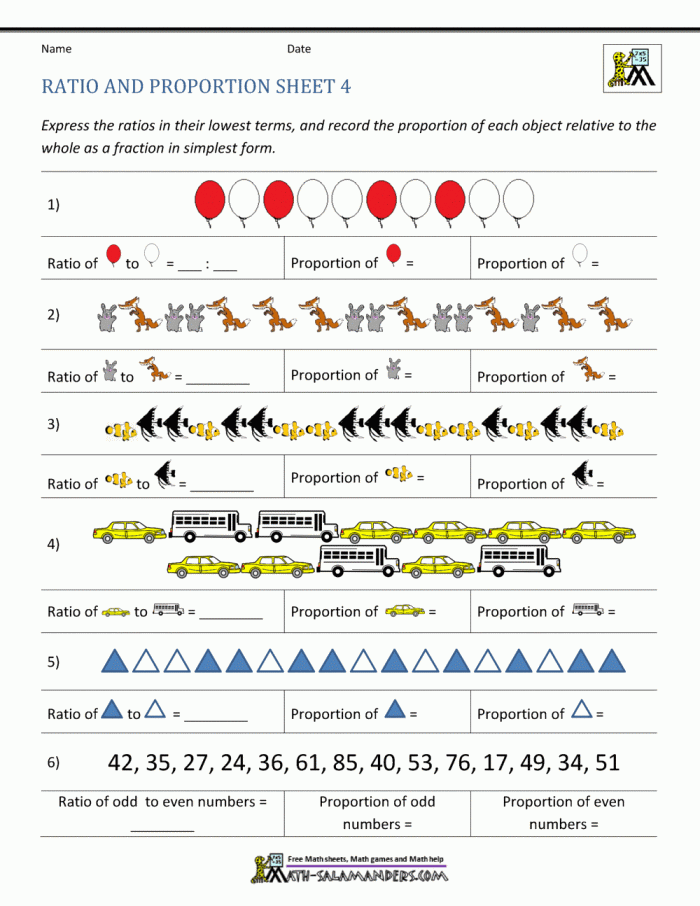
Effective worksheets should include a variety of exercises where students can analyze different sets of ratios. For example, if they are given the ratios 2:3 and 4:6, they can see that these are equivalent because both can be simplified to the same fraction. By working through such examples, students begin to develop a deeper understanding of how to recognize patterns in numbers. This skill is crucial as they encounter real-world problems that require proportional thinking.
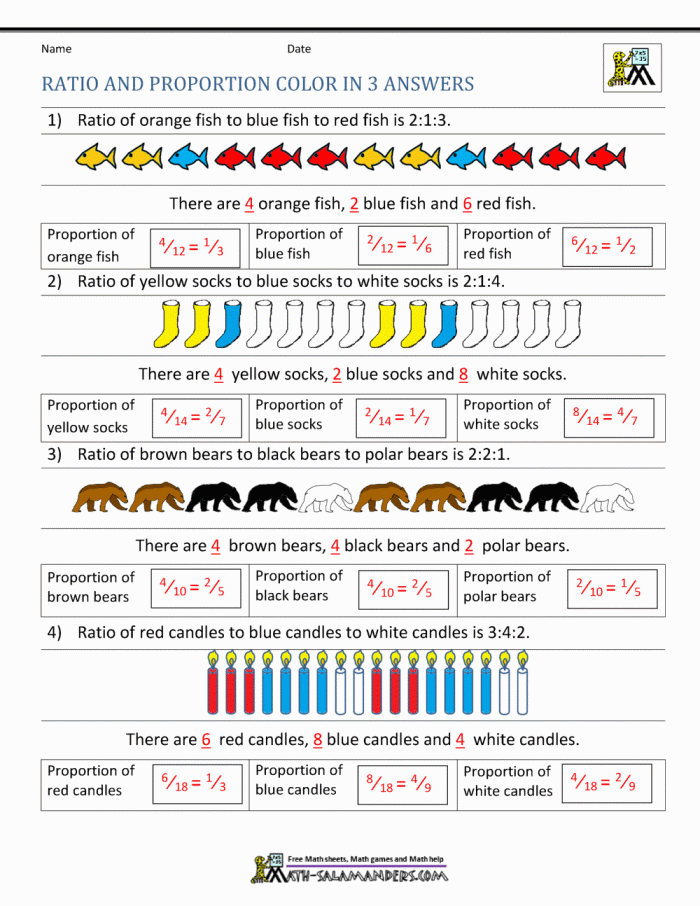
Incorporating visual aids can also enhance comprehension. Diagrams or graphs that illustrate these ratios can make the abstract concepts more tangible. Engaging students with practical scenarios, such as cooking or scaling a recipe, can further solidify their understanding. When students see how ratios apply to everyday situations, they are more likely to grasp the importance of the concept.
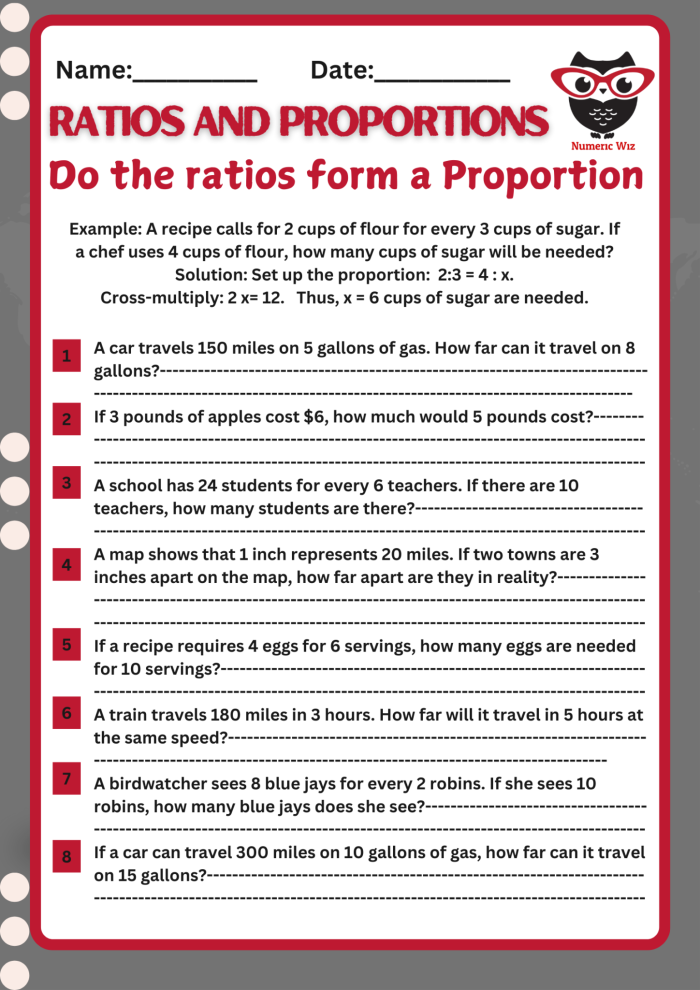
For additional practice, worksheets focused on solving word problems can be particularly beneficial. For instance, students might work on problems that require them to write and solve equations based on given ratios. Resources like the Write and Solve Equations from Word Problems worksheet provide excellent opportunities for students to apply their skills in a structured manner.
Ultimately, mastering the concept of equivalent ratios and proportions is a stepping stone for sixth graders. With targeted practice, students can gain confidence in their mathematical abilities, setting them up for success in future mathematical endeavors.
Boost Skills with These Worksheets