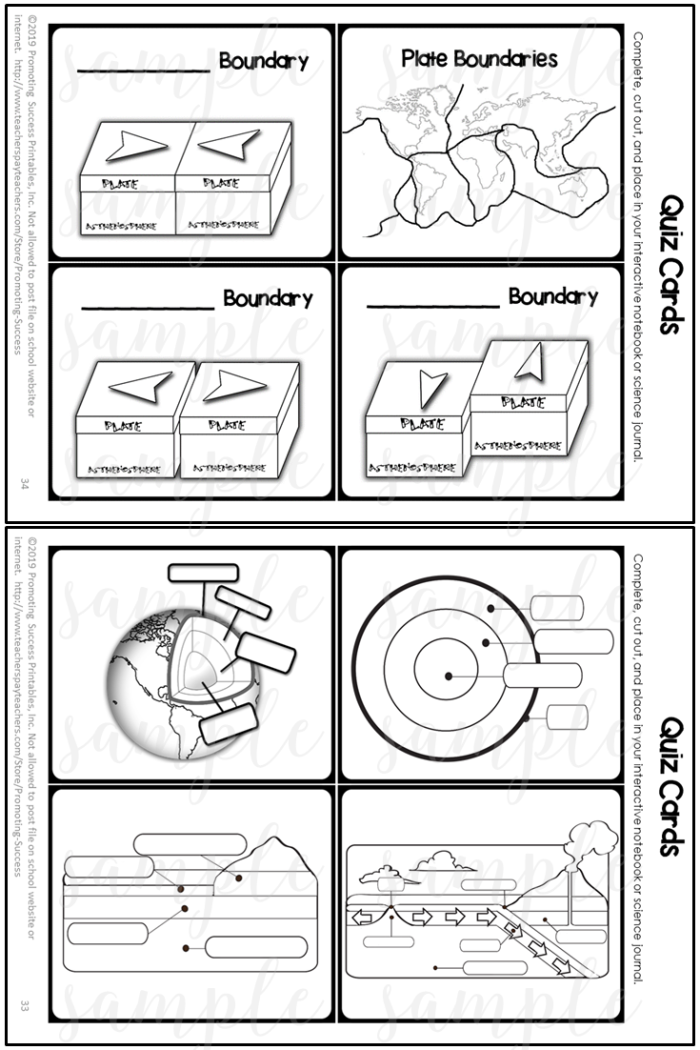
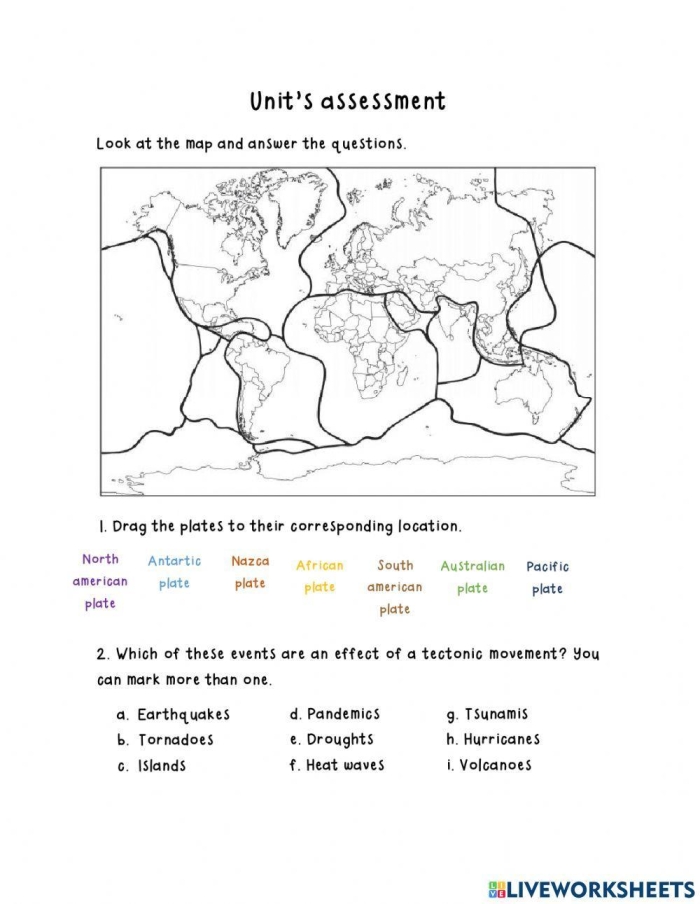
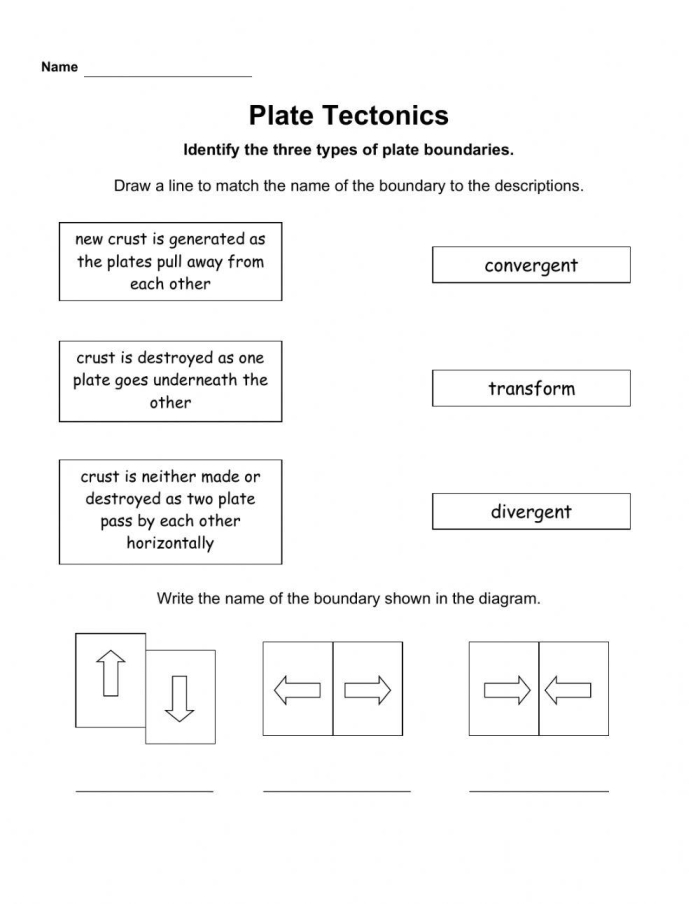
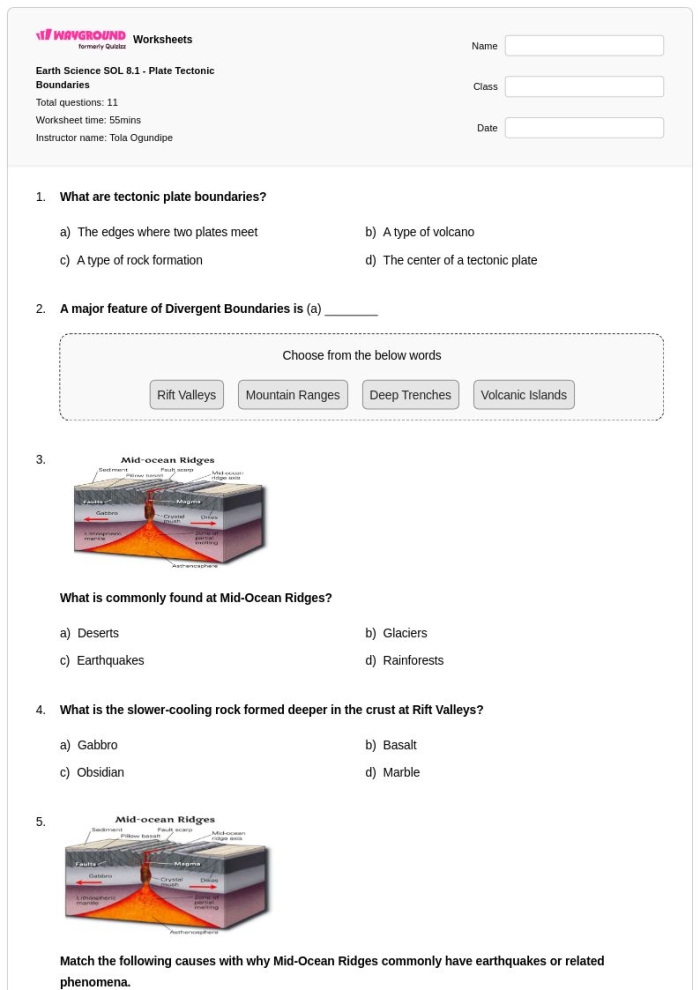
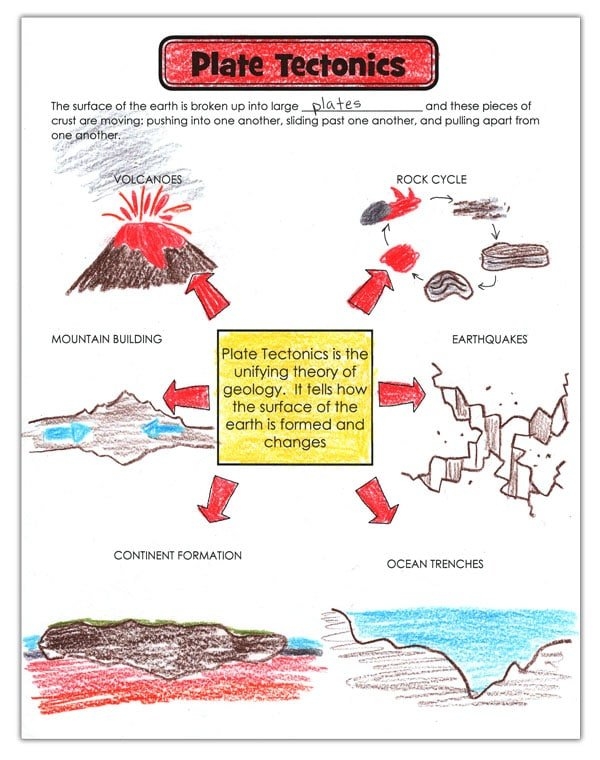
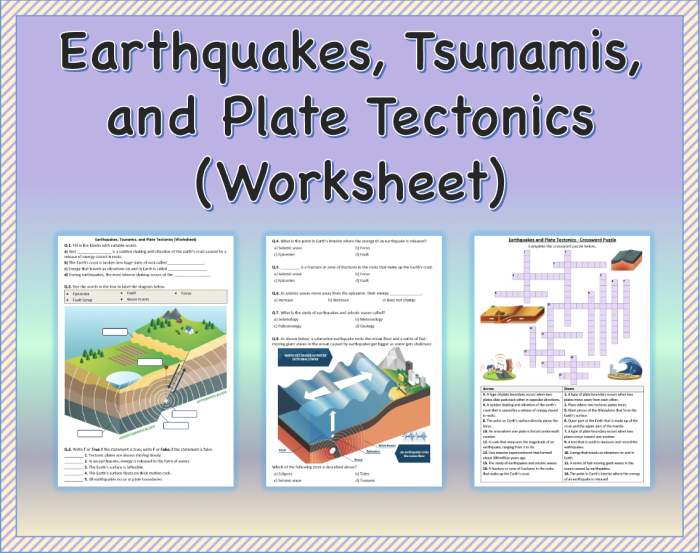
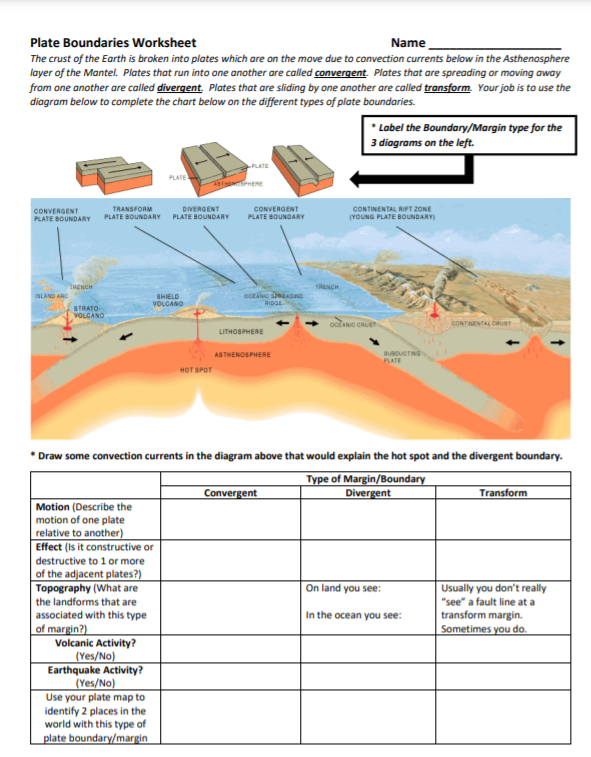
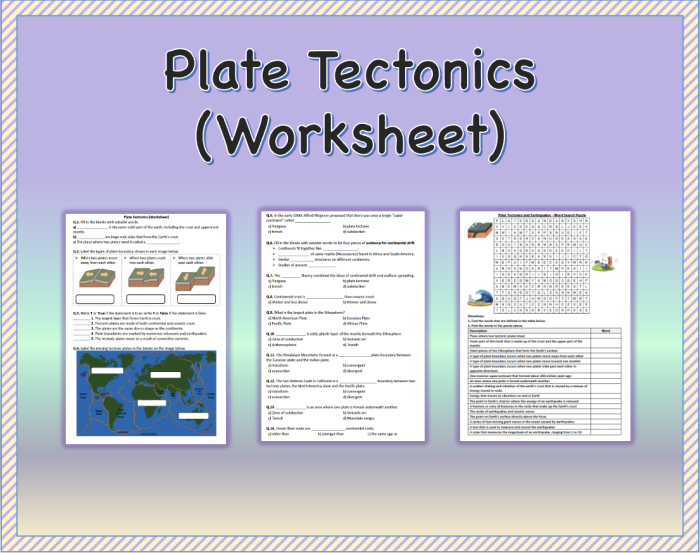
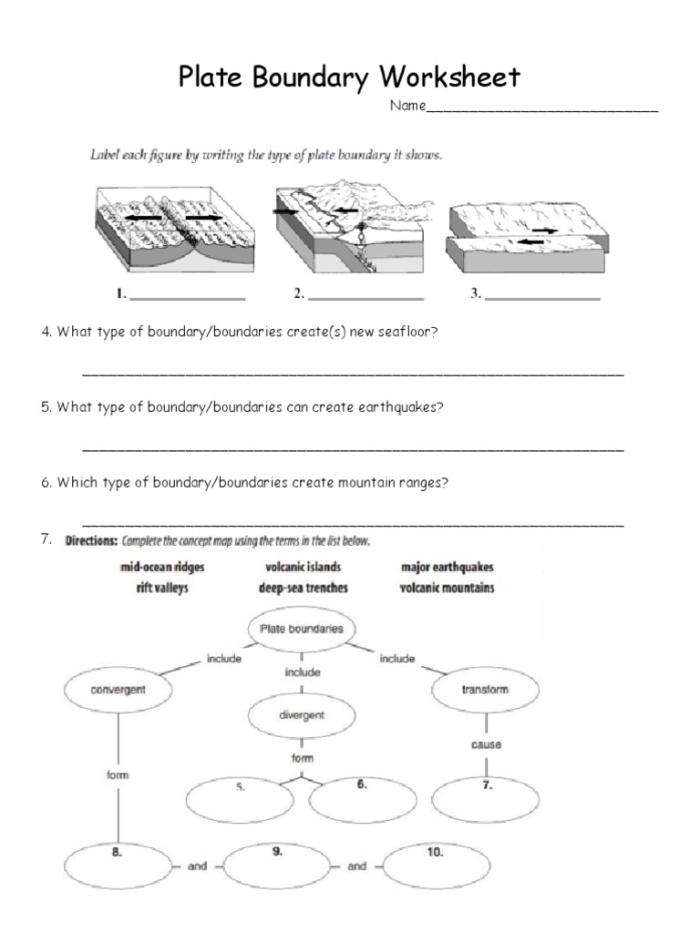
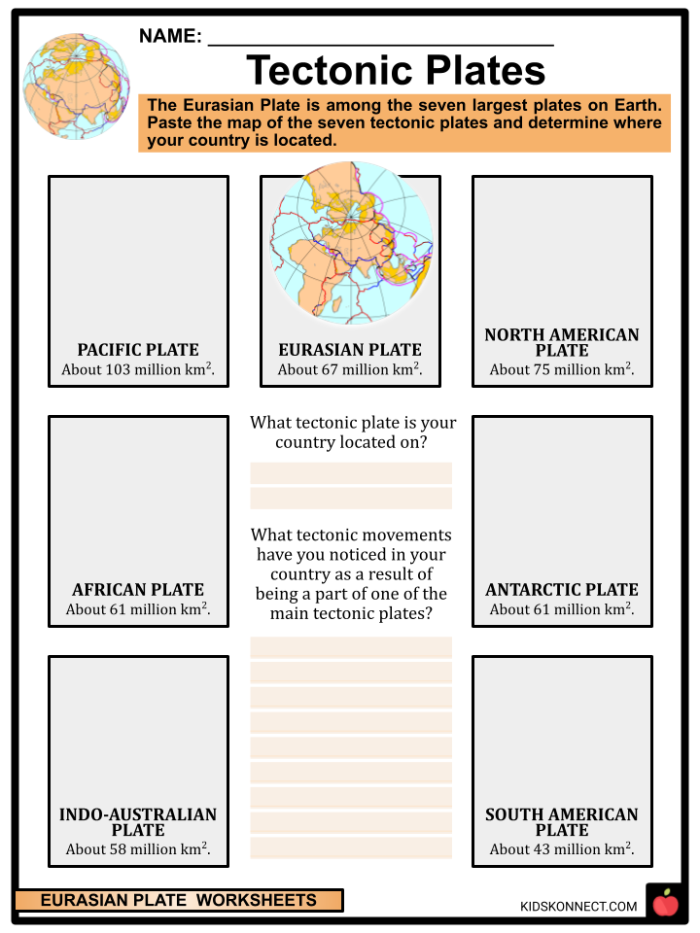
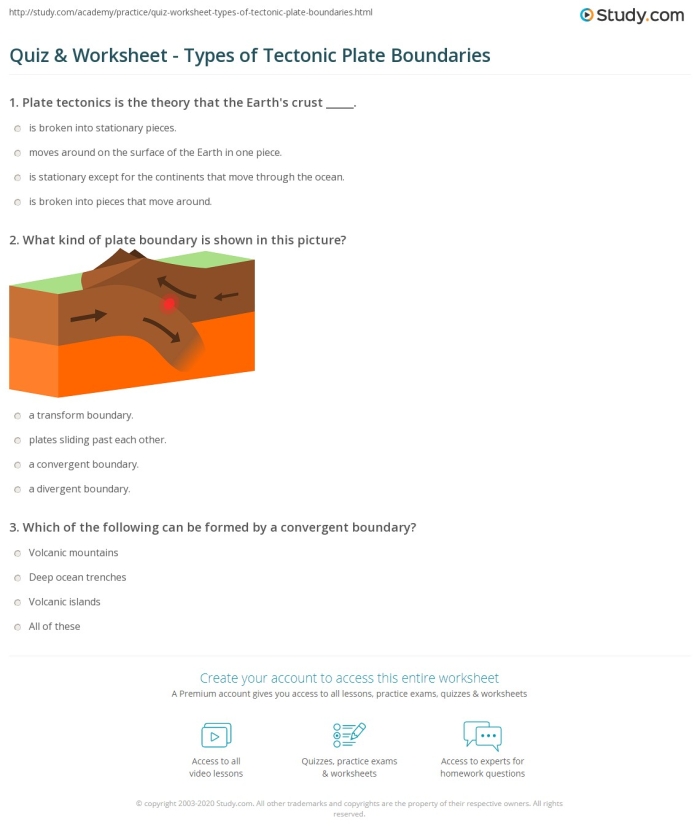
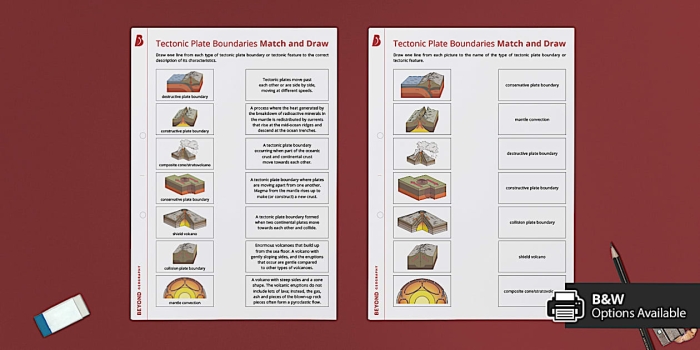
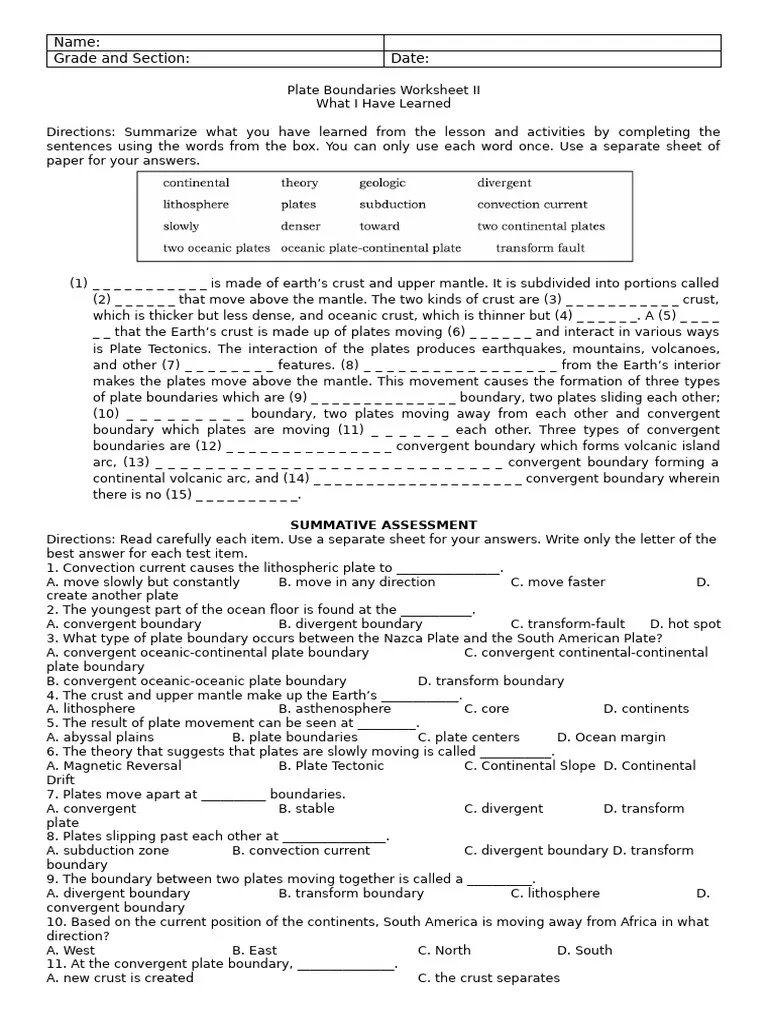
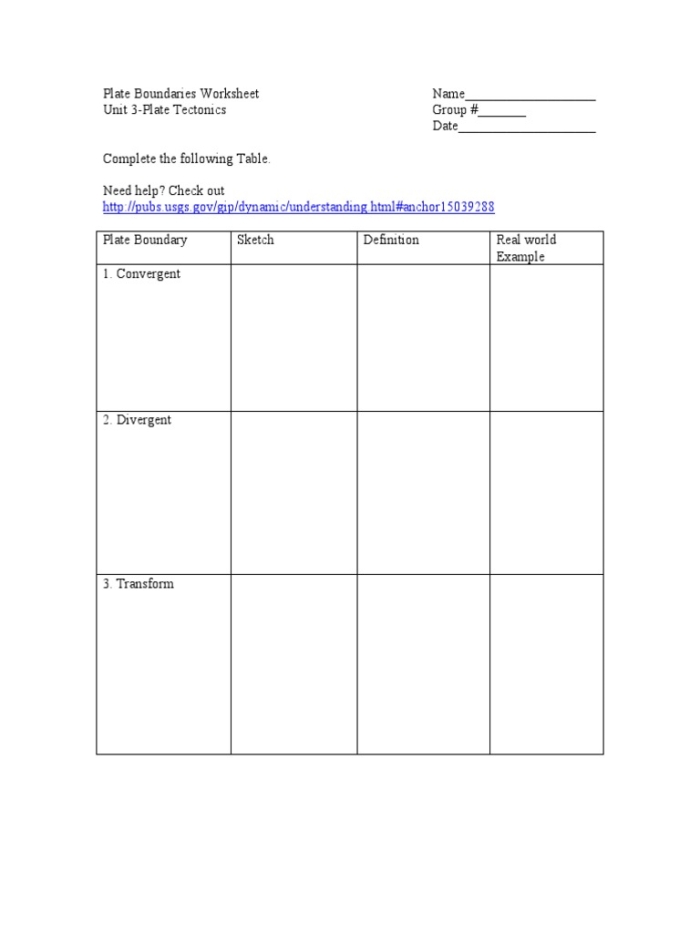
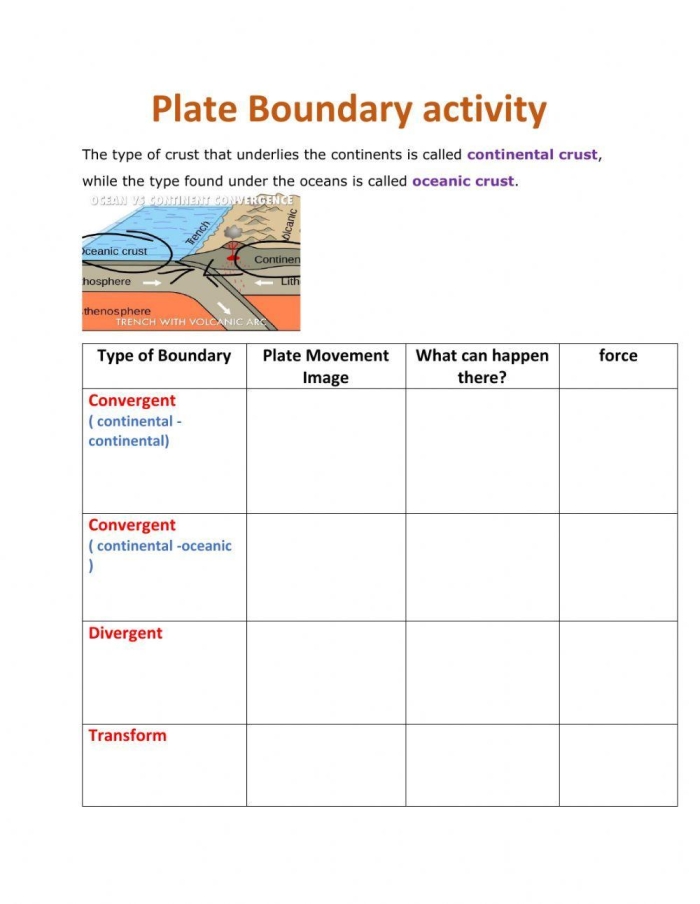
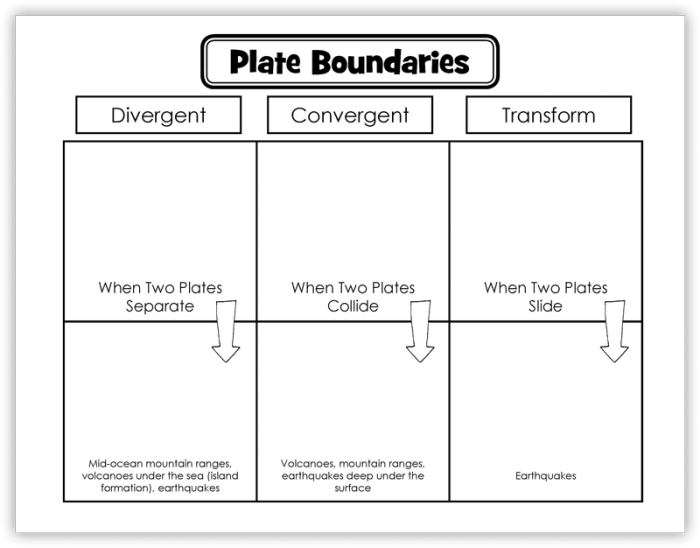
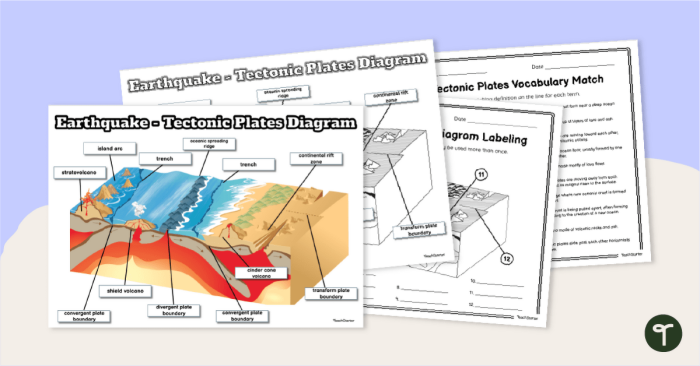
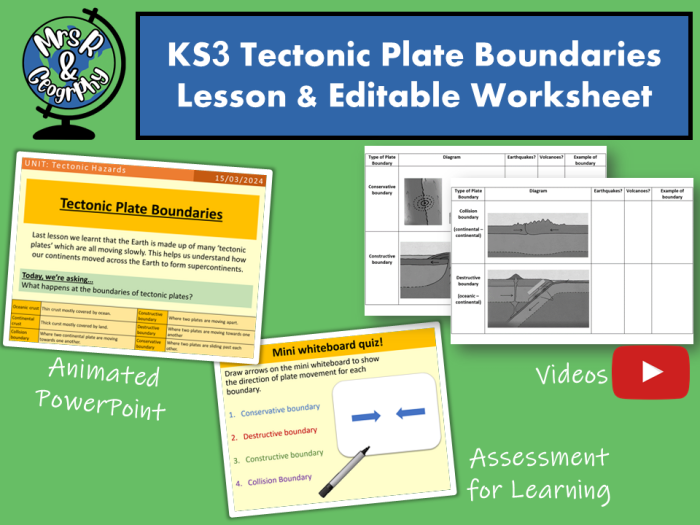
Understanding tectonic plate boundaries is crucial for grasping how our planet works. This printable worksheet provides an excellent opportunity for sixth-grade students to compare and contrast the various types of tectonic plate boundaries: divergent, convergent, and transform. Each boundary type leads to distinct geological phenomena that shape the Earth’s surface.
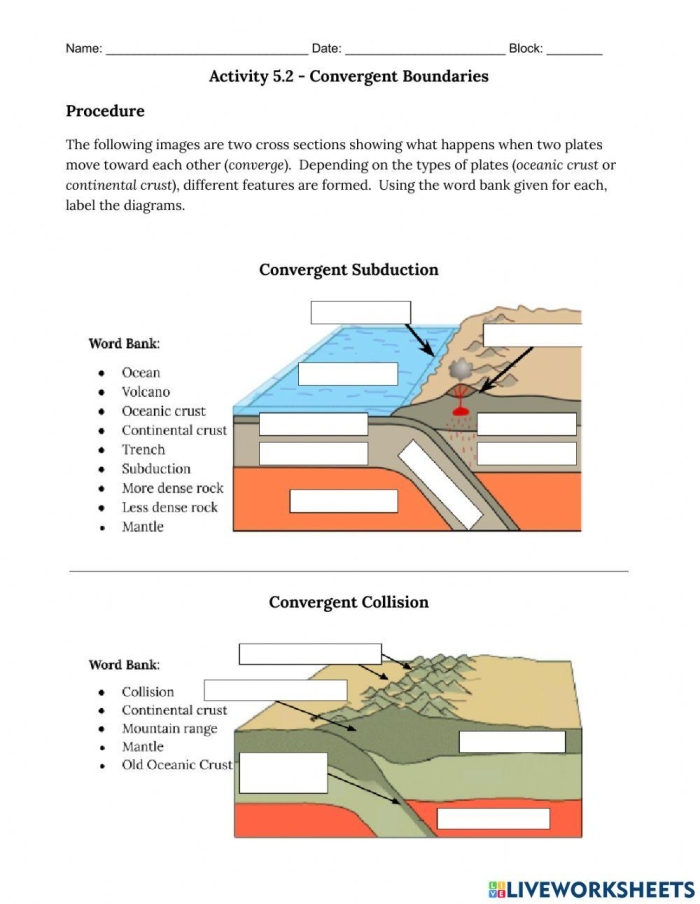
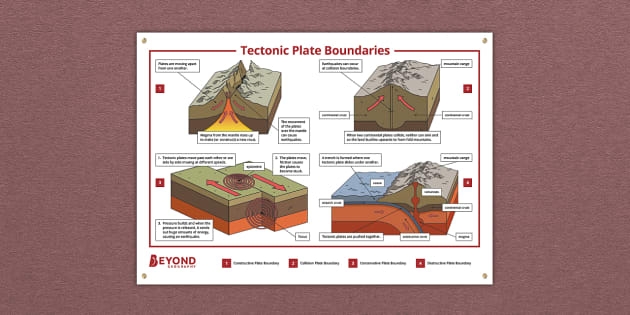
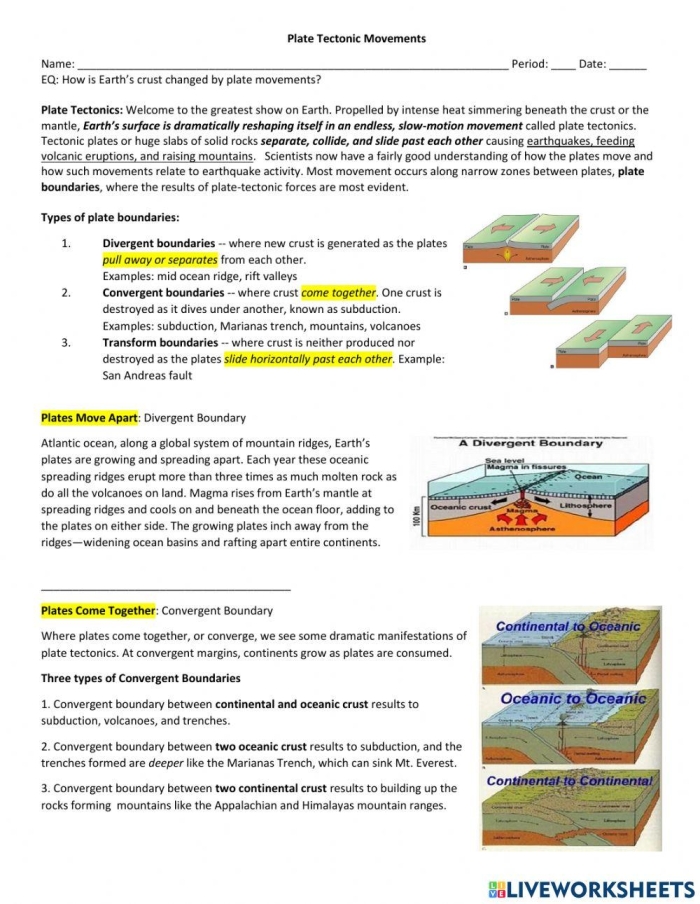
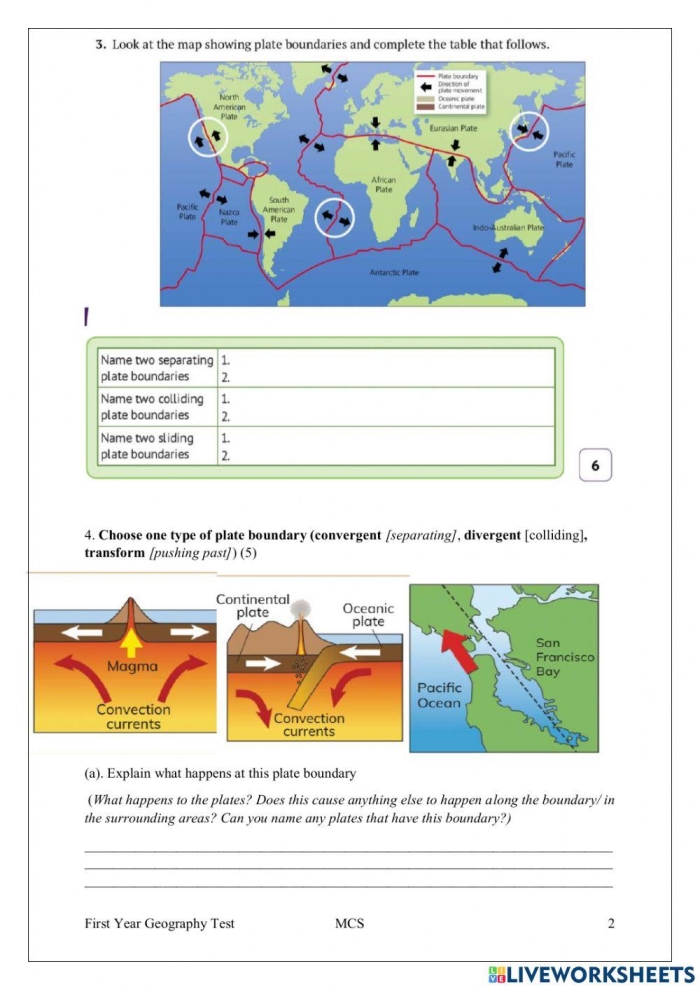
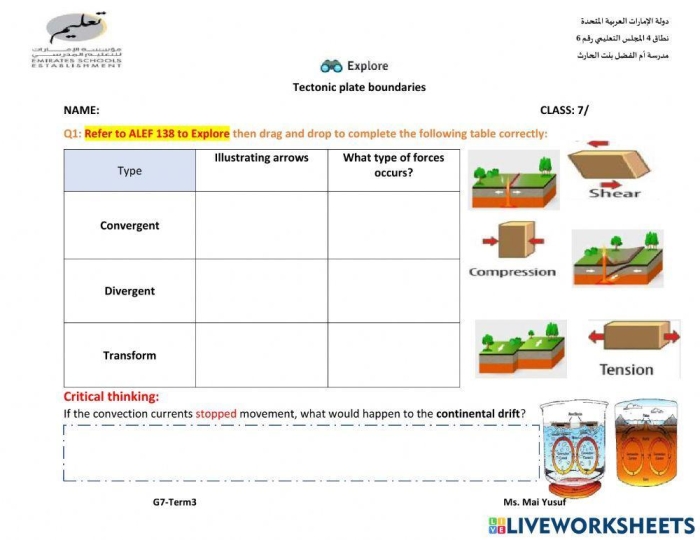
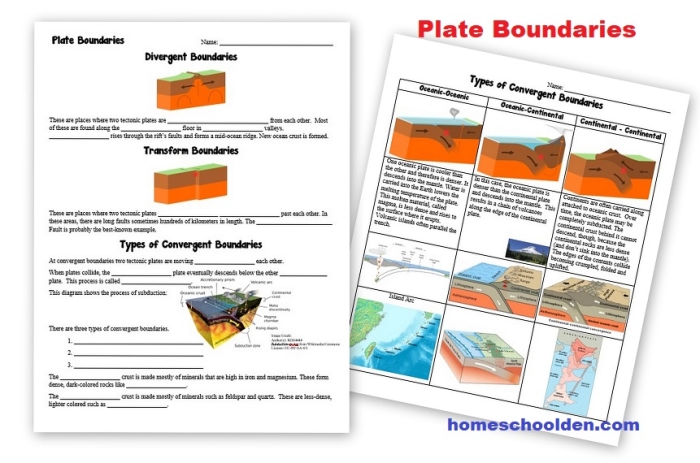
Divergent boundaries occur where two plates move away from each other. This movement can create new crust as magma rises from below the Earth’s surface, often forming mid-ocean ridges. This process is responsible for the formation of features like the Mid-Atlantic Ridge. In contrast, convergent boundaries happen when plates push against each other, leading to one plate being forced beneath another in a process known as subduction. This action can result in powerful earthquakes and the formation of mountain ranges, as seen in the Himalayas.
Transform boundaries, on the other hand, involve plates sliding past one another horizontally. This movement can lead to significant seismic activity, particularly along faults like the San Andreas Fault in California. Students can use the worksheet to examine these boundaries, understand their characteristics, and analyze the resulting geological events.
By engaging with this worksheet, students gain hands-on experience with an essential earth science concept while developing critical thinking skills. They will not only learn about tectonic plate boundaries but also how these movements influence natural disasters, landscapes, and ecosystems. For additional resources, check out the reflection prompt worksheets or explore other engineering design process activities that encourage students to think critically about scientific concepts.
Incorporating this worksheet into your curriculum will enhance your students’ understanding of tectonic activity and its implications, providing a solid foundation for further study in earth sciences.
Use These Worksheets Today