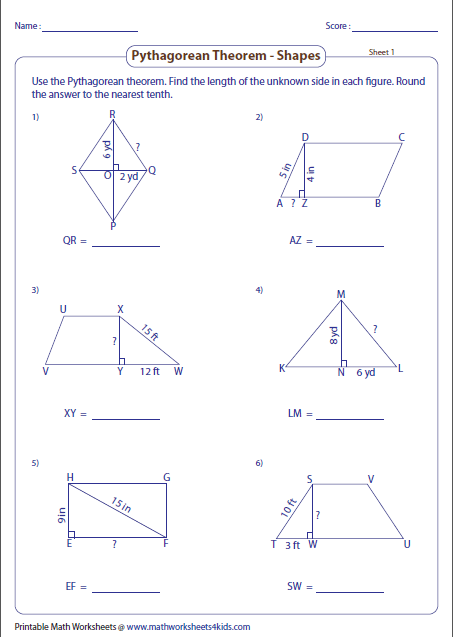
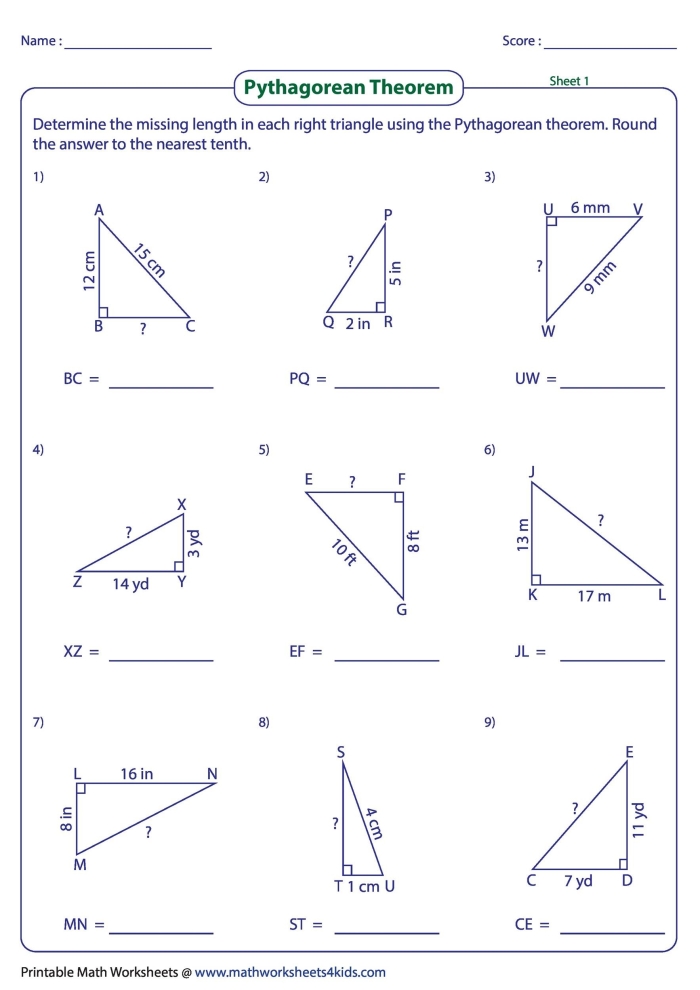
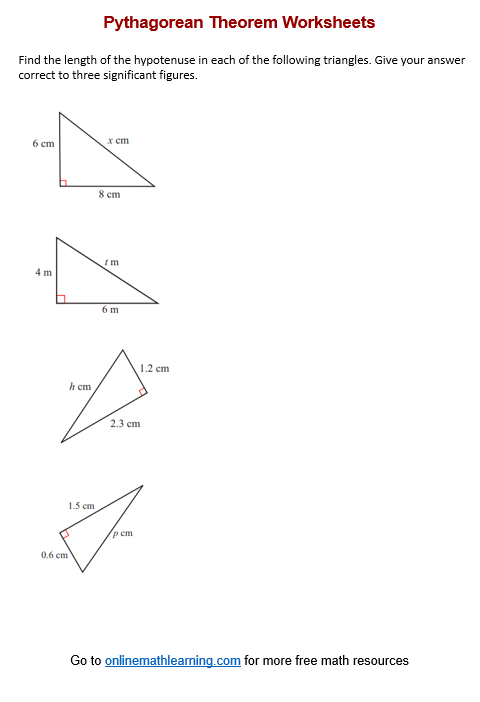
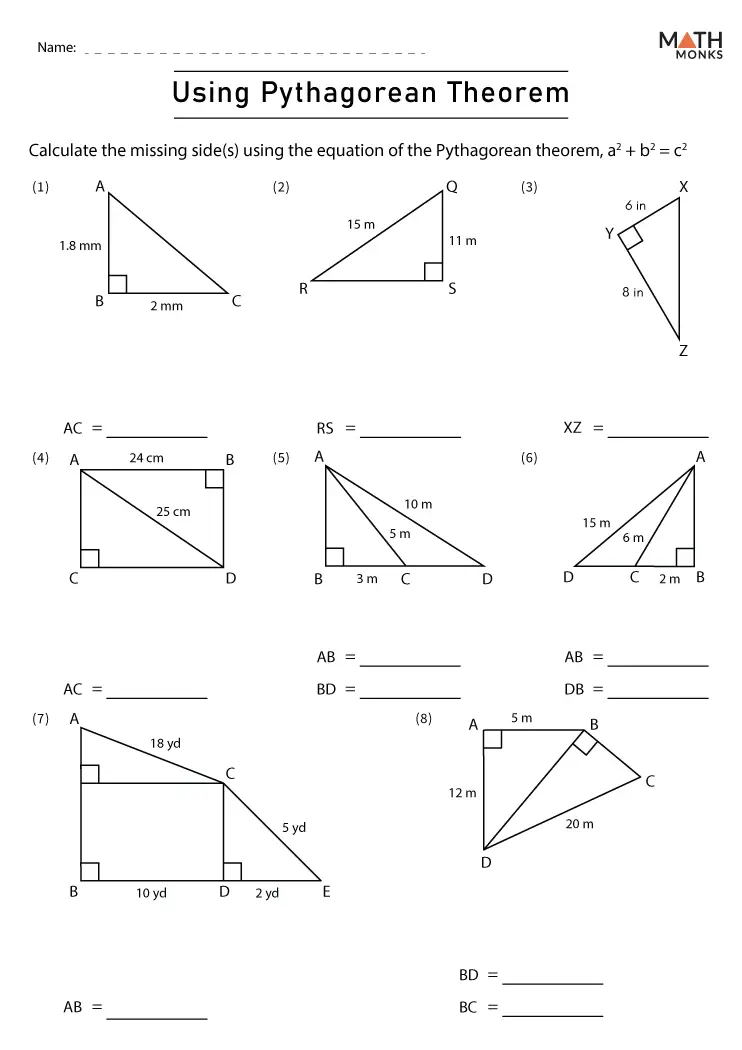
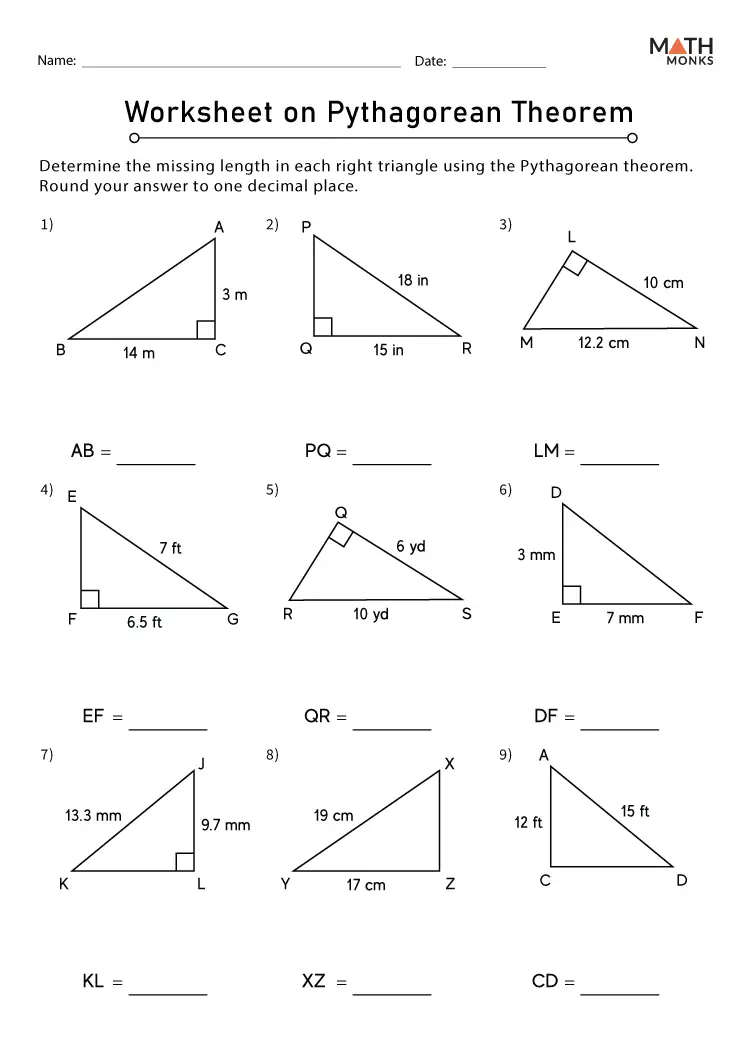
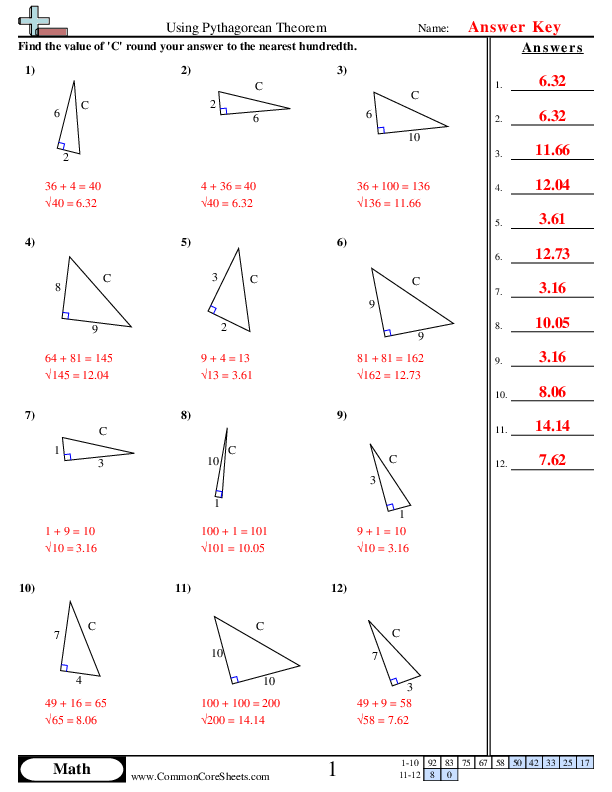
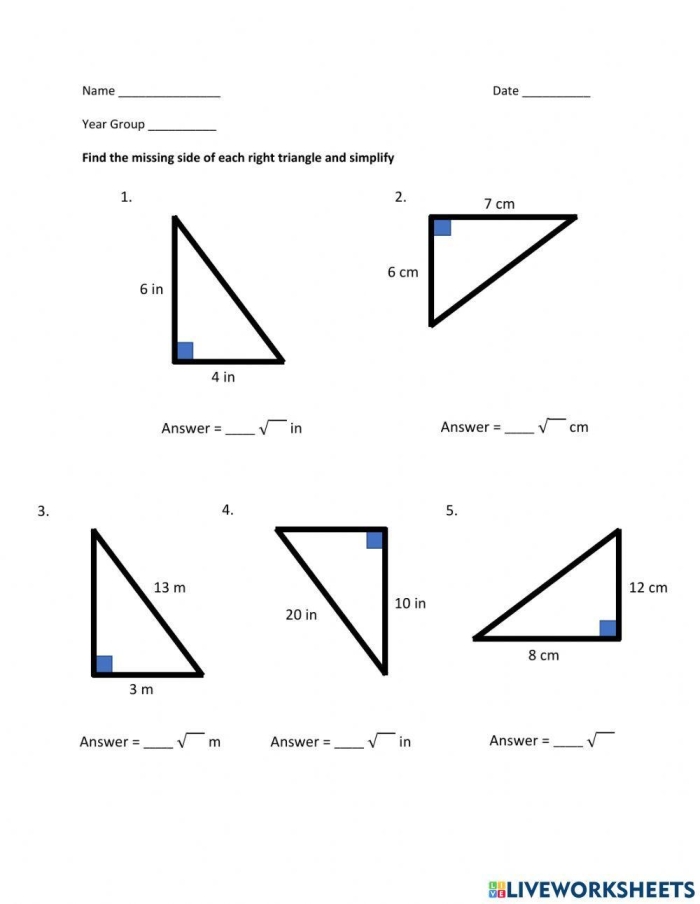
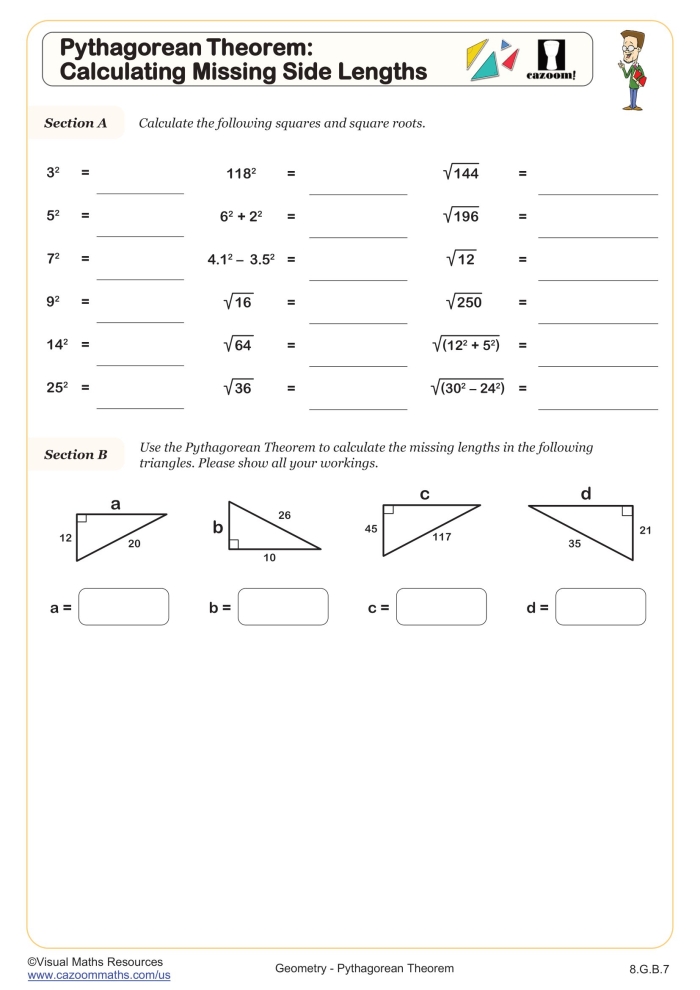
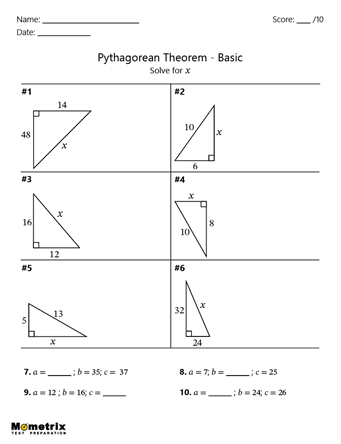
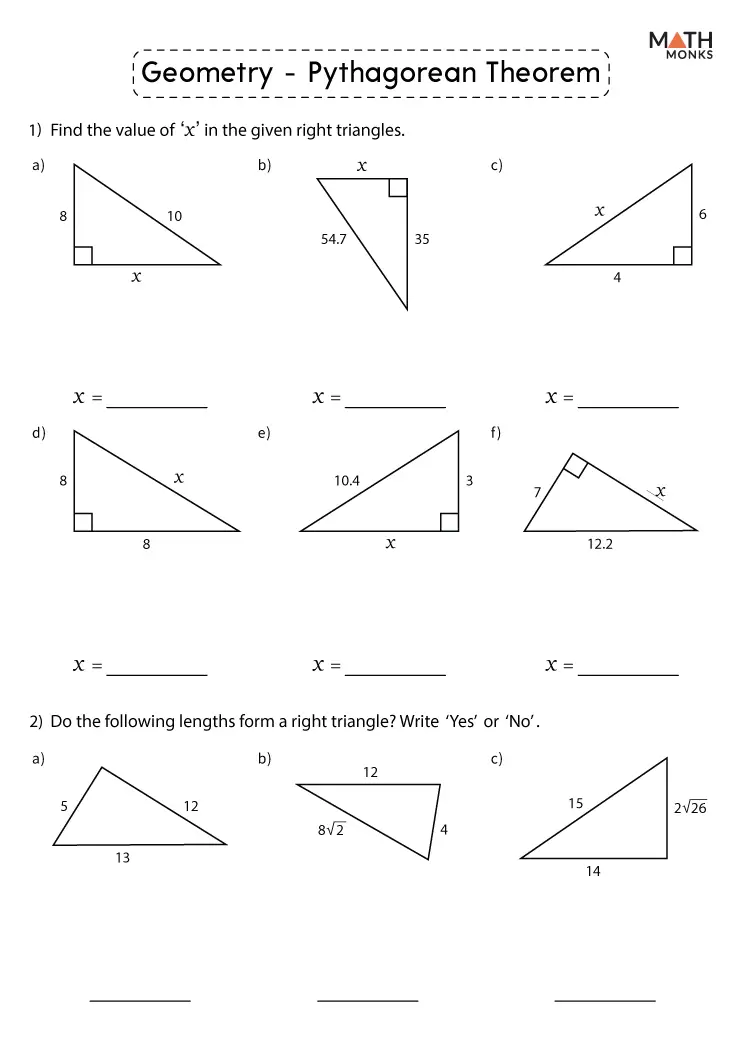
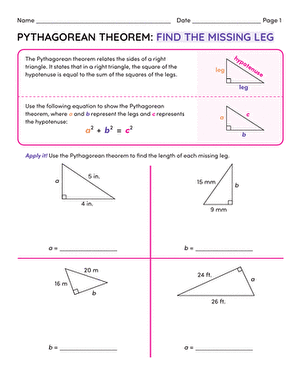
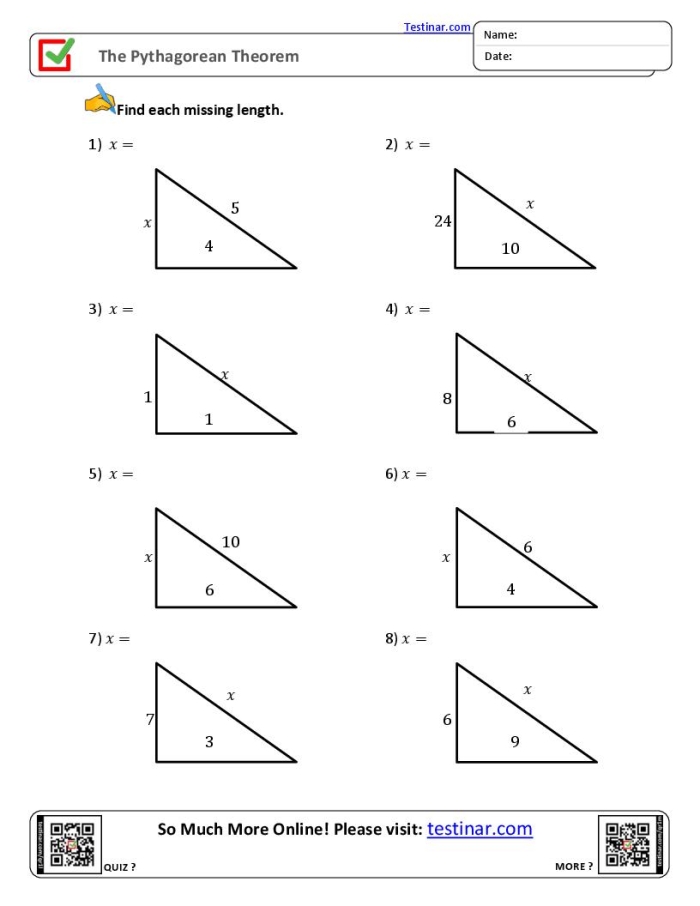
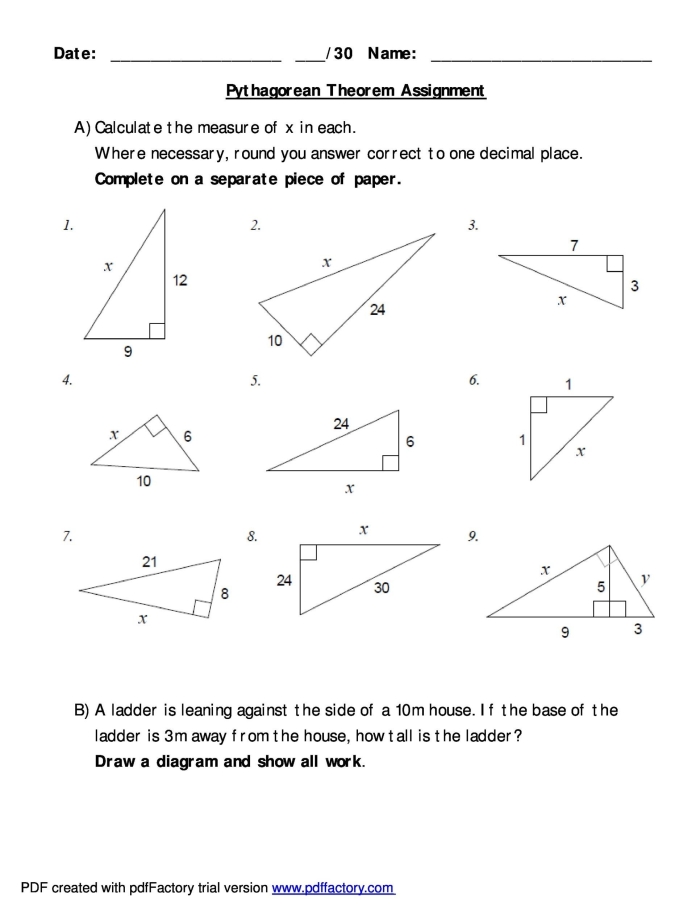
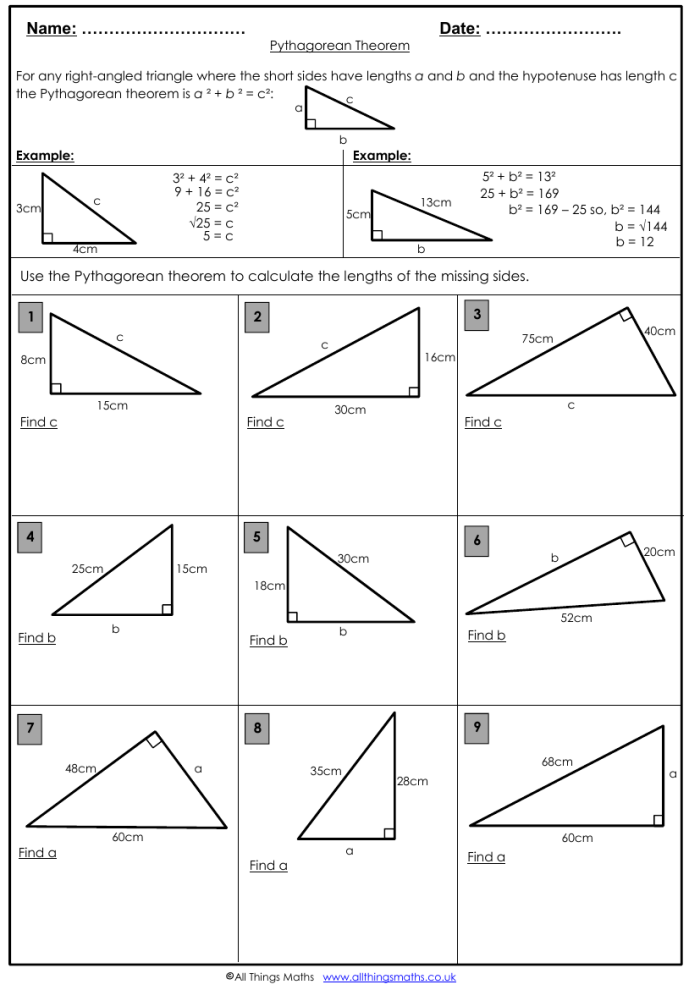
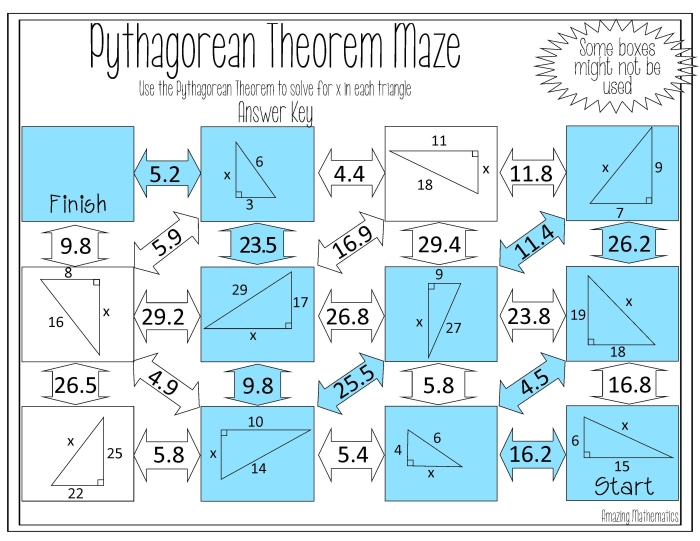
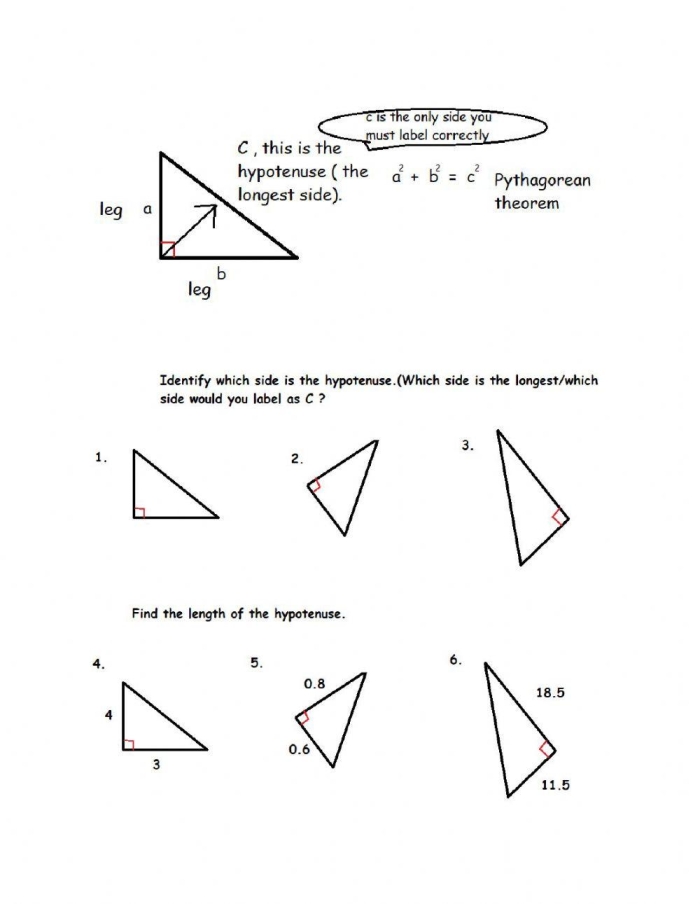
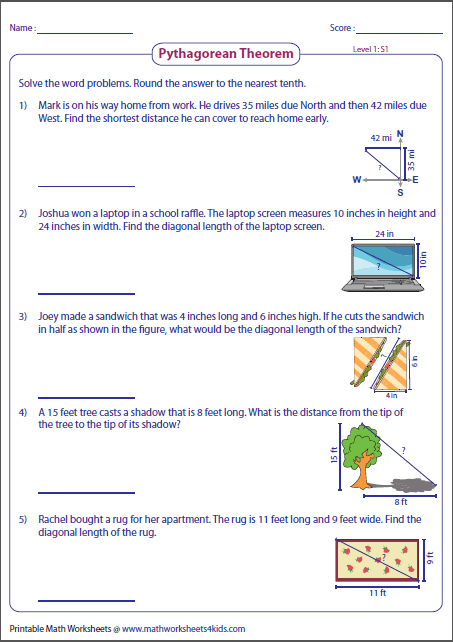
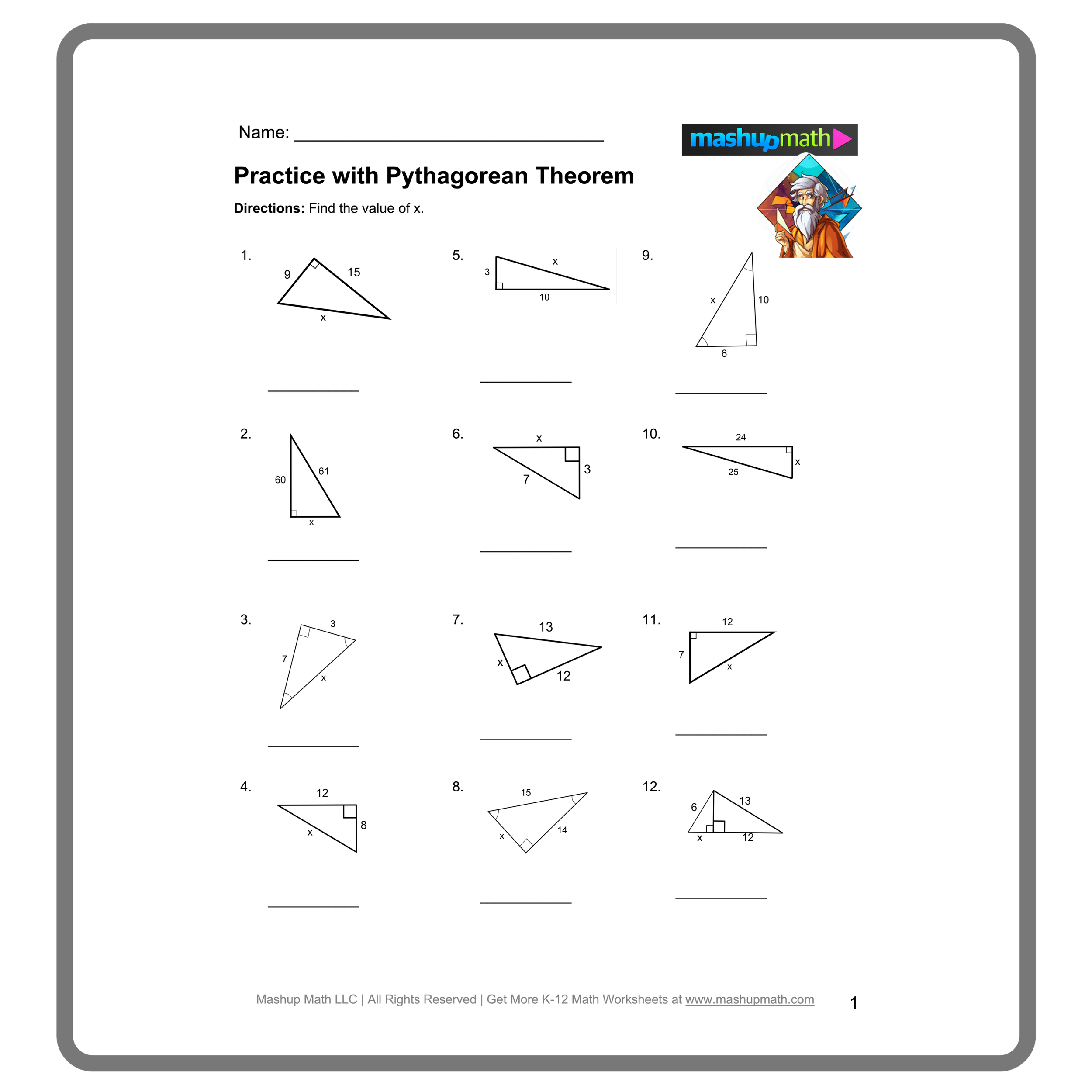
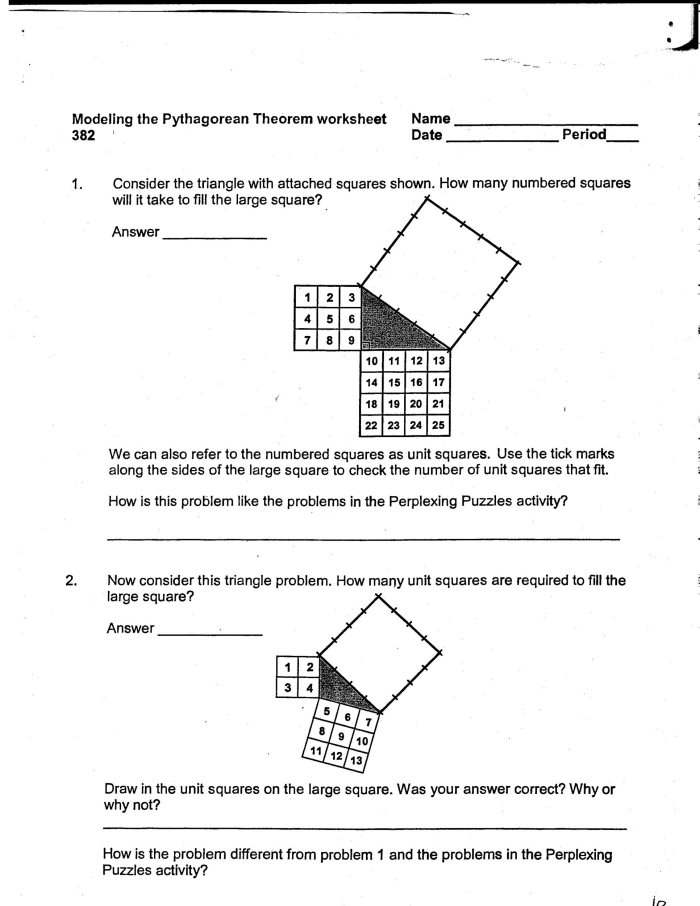
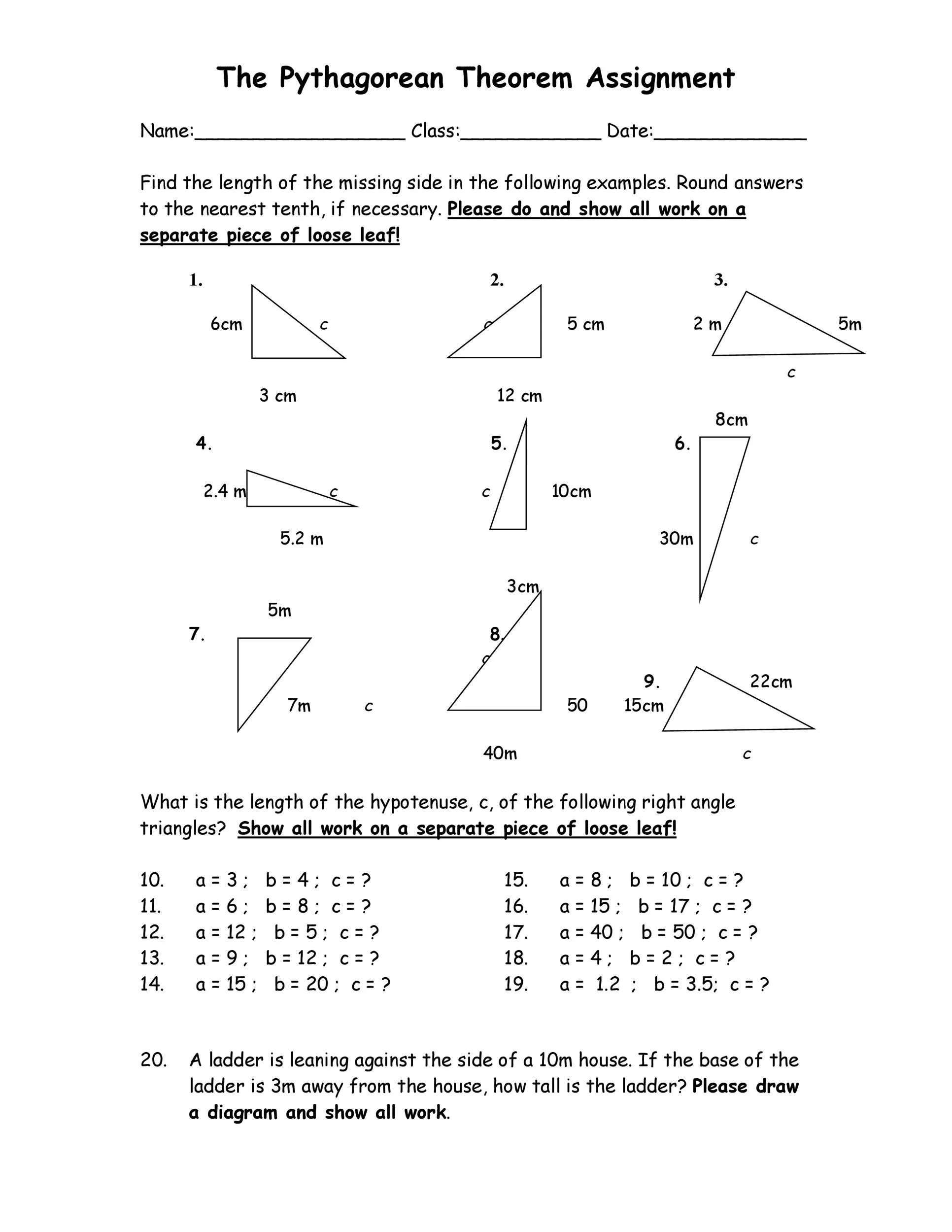
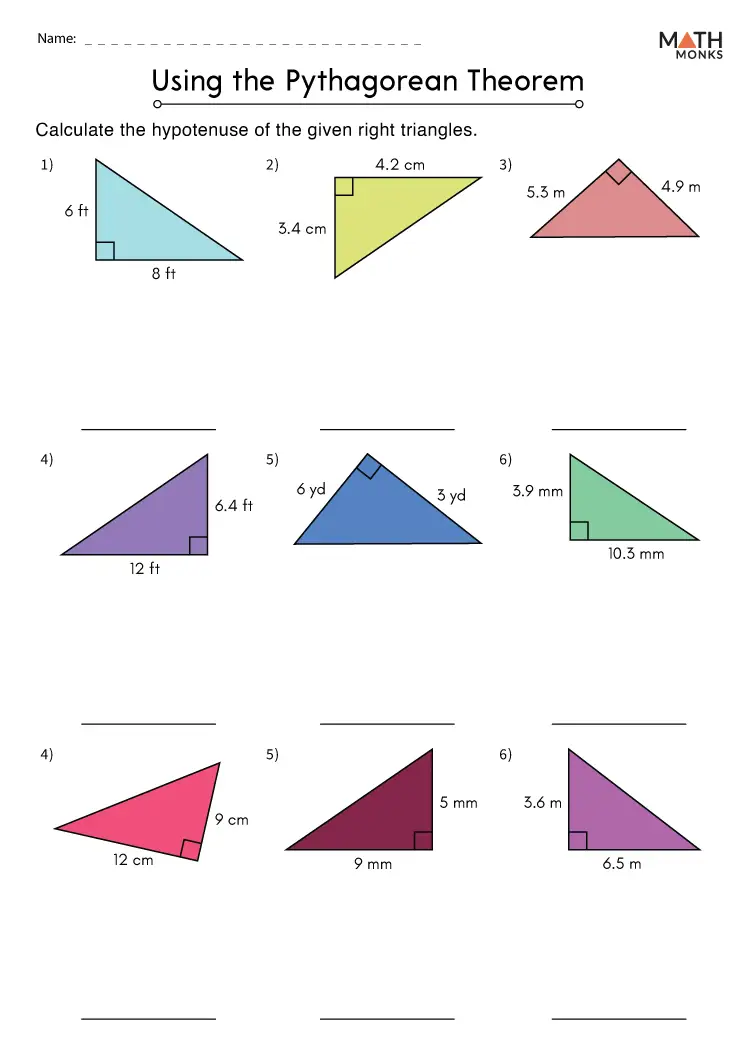
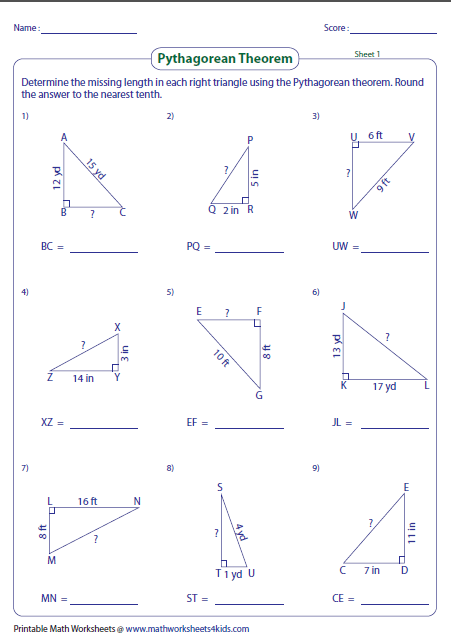
Understanding the Pythagorean theorem is essential for eighth-grade students exploring geometry. This theorem helps us find the missing lengths of the legs in right triangles, a skill that builds a strong foundation for more complex mathematical concepts. In this two-page geometry worksheet, students will practice these skills by solving various problems where they need to apply the theorem to determine missing leg lengths.
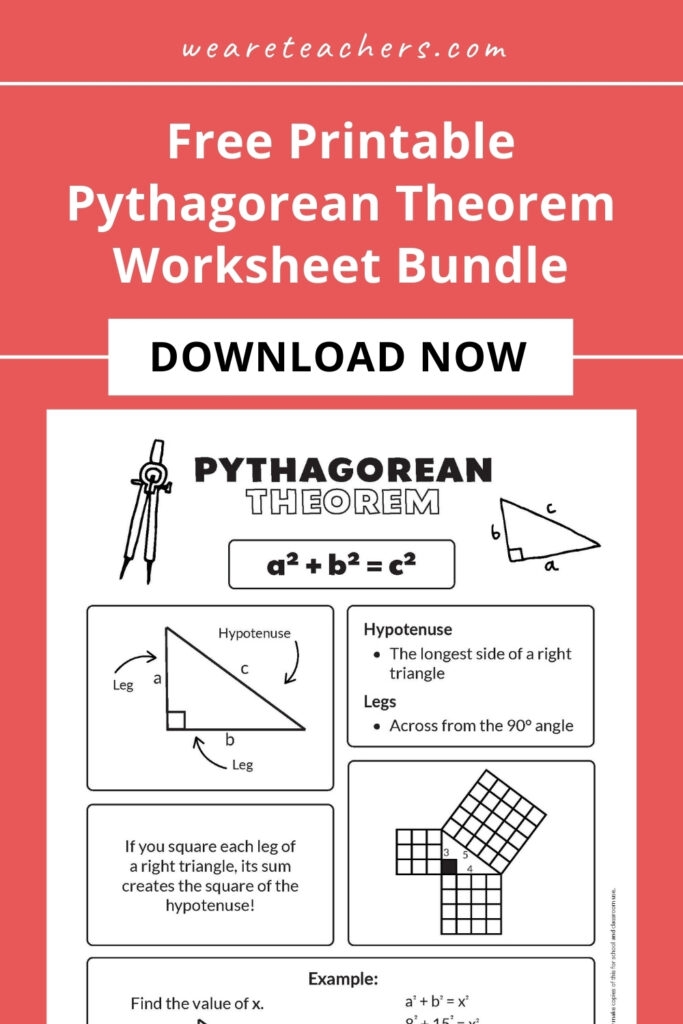
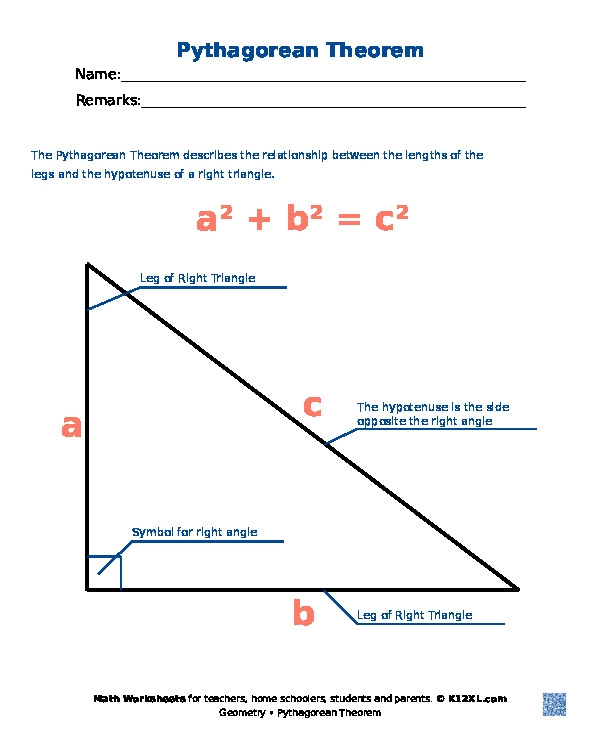
The Pythagorean theorem states that in a right triangle, the square of the length of the hypotenuse (the side opposite the right angle) is equal to the sum of the squares of the lengths of the other two sides. This can be expressed with the formula a² + b² = c², where c represents the hypotenuse, and a and b are the lengths of the legs. By rearranging this formula, students can easily find any missing leg length when given the other two sides.
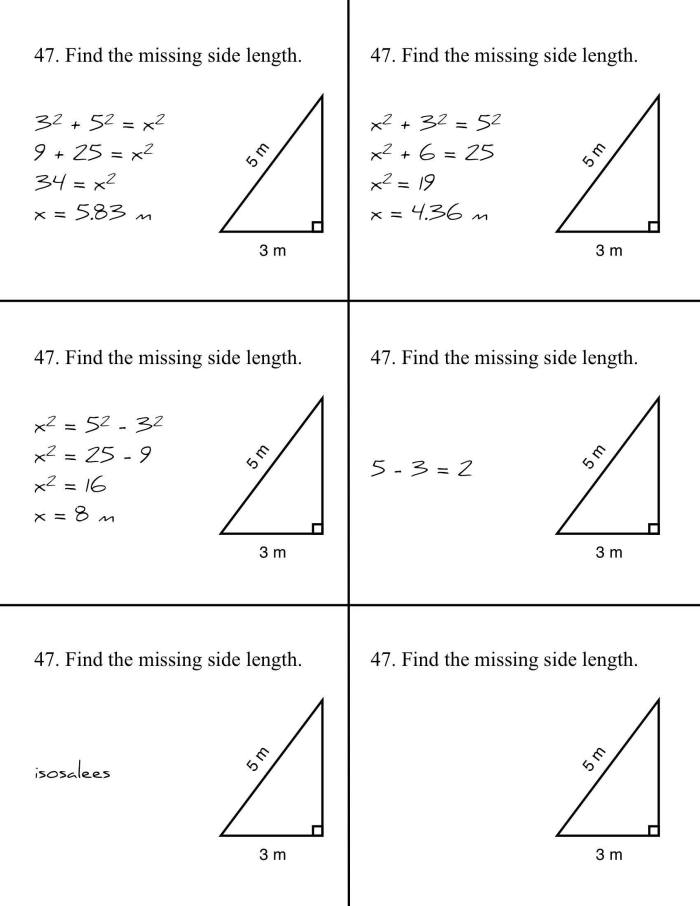
For instance, suppose a right triangle has one leg measuring 3 units and the hypotenuse measuring 5 units. Students can substitute these values into the formula: 3² + b² = 5². Solving this equation helps them find the missing leg length, reinforcing their understanding of the relationship between the sides of a triangle.
This hands-on activity not only aids in mastering the Pythagorean theorem but also fosters critical thinking and problem-solving skills applicable in real-world scenarios. Moreover, these printable worksheets are an excellent resource for eighth-grade students, allowing them to practice and hone their abilities in a structured manner. For those interested in reinforcing their learning further, exploring additional resources like the distance between two points worksheets can provide more practice in related mathematical concepts.
Ultimately, mastering the Pythagorean theorem is a stepping stone in a student’s mathematical journey, enhancing their confidence and competence in geometry.
Start Practicing with These Worksheets