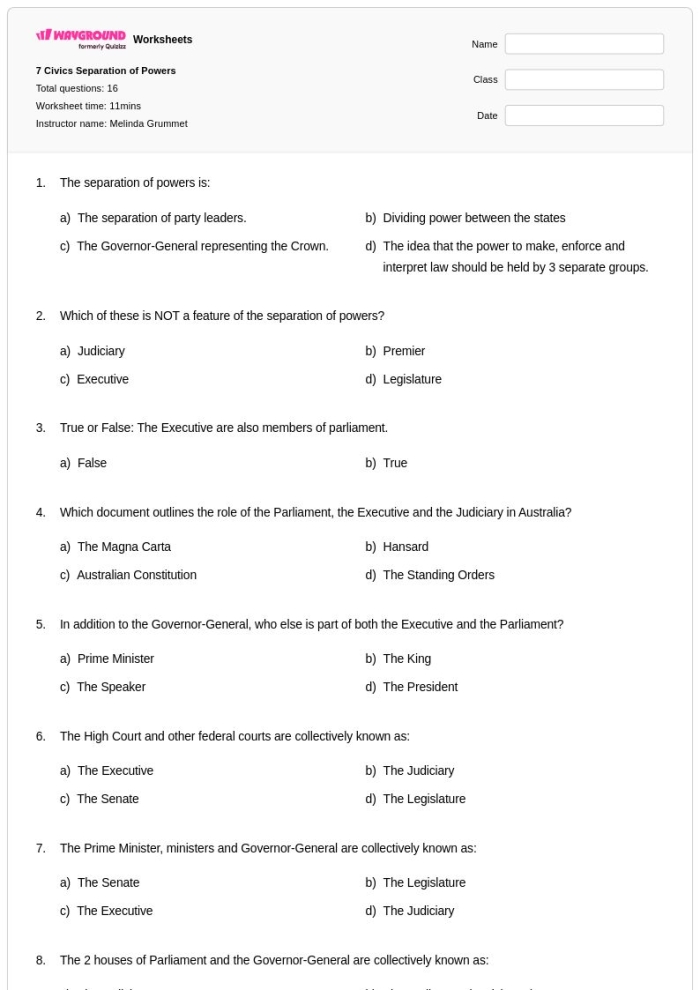
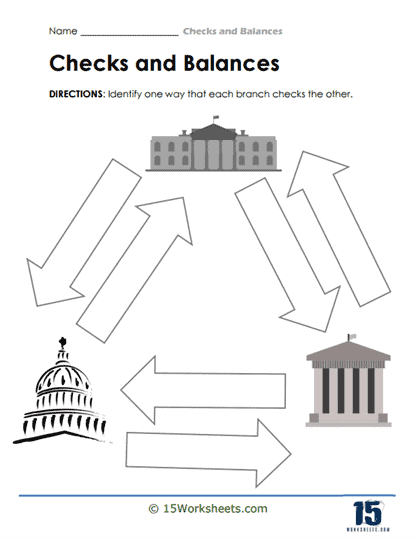
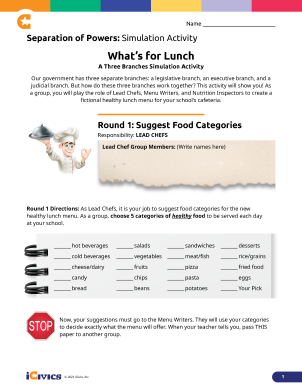
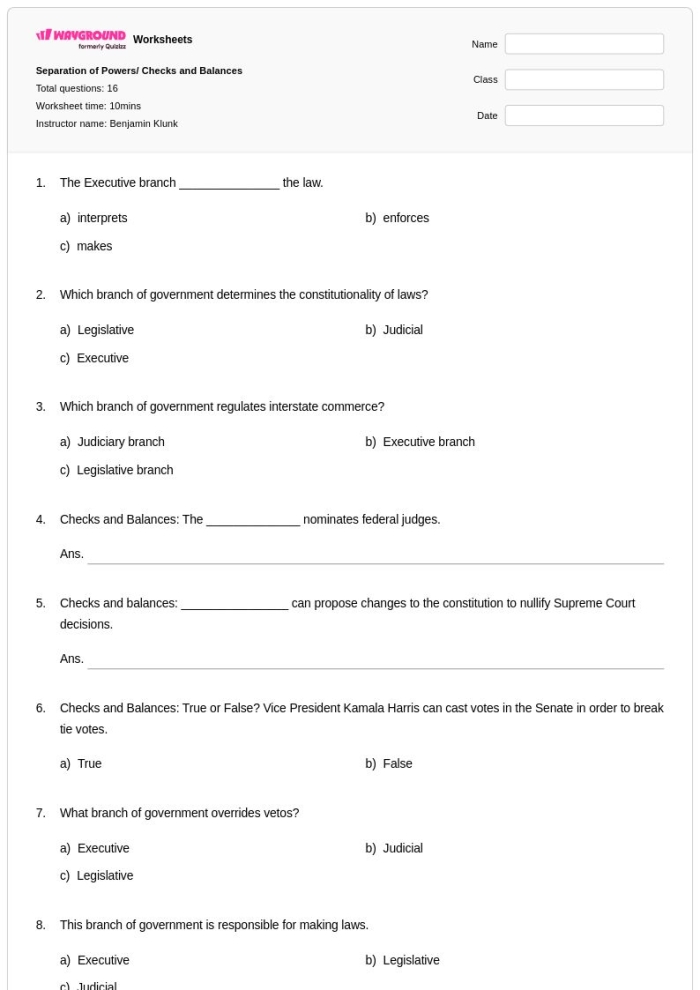
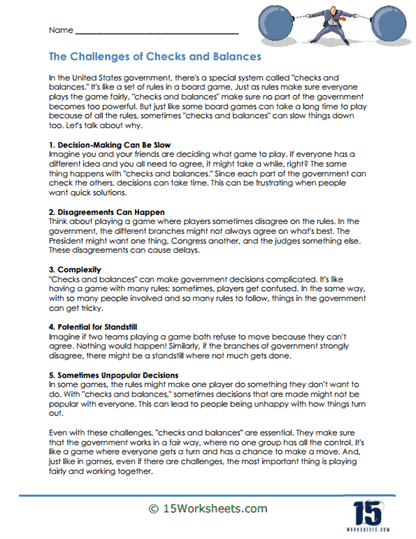
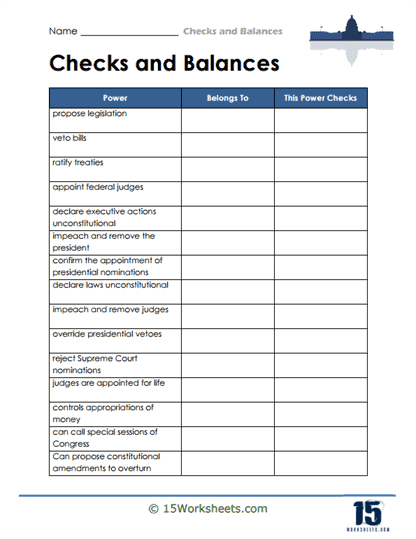
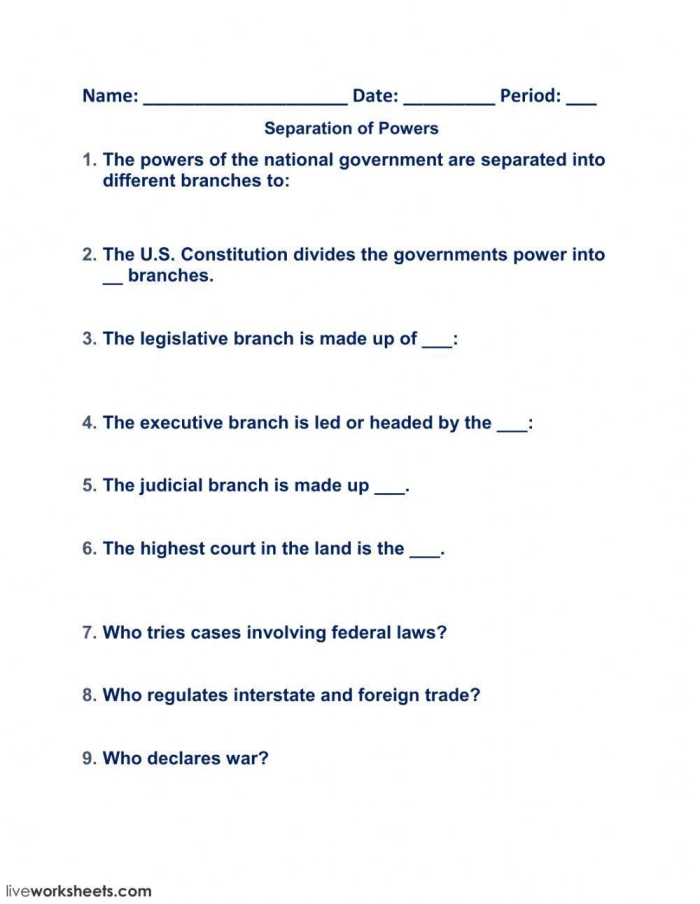
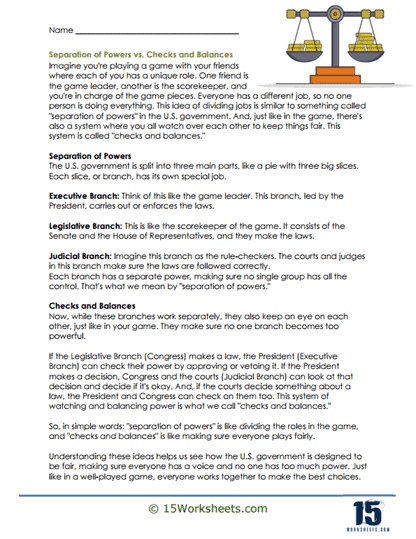
Understanding the separation of powers is crucial for sixth graders learning about the U.S. government. This concept ensures that no one branch becomes too powerful, and it helps students grasp the importance of checks and balances in democracy. Through engaging worksheets, students can explore how the legislative, executive, and judicial branches interact and hold one another accountable.
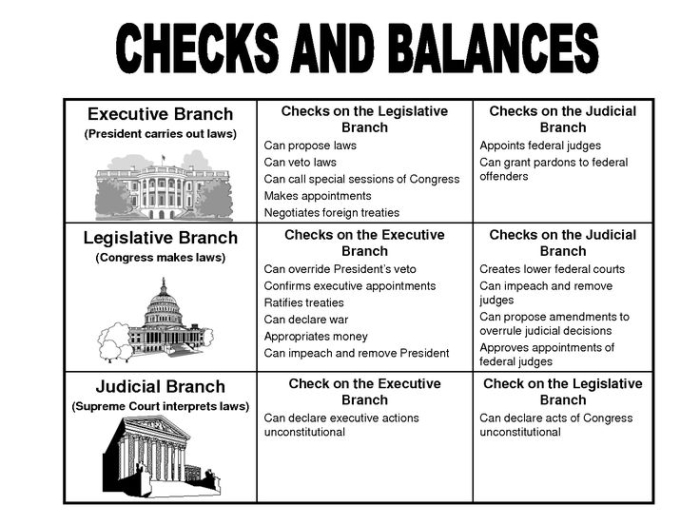
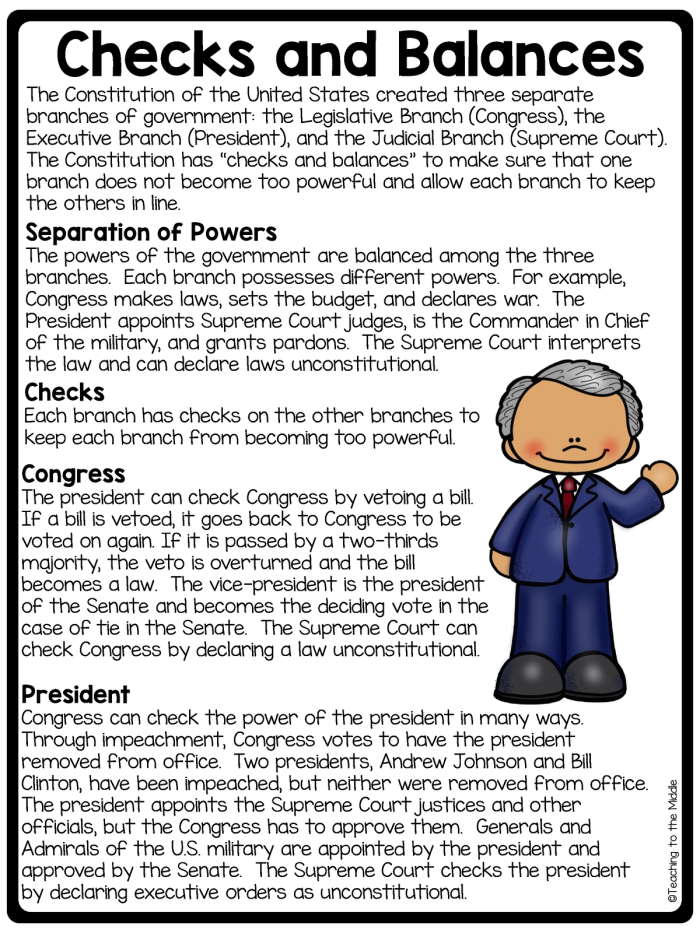
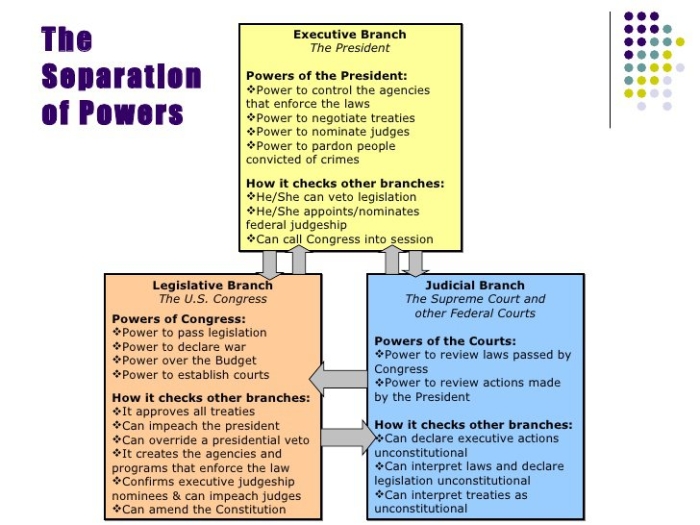
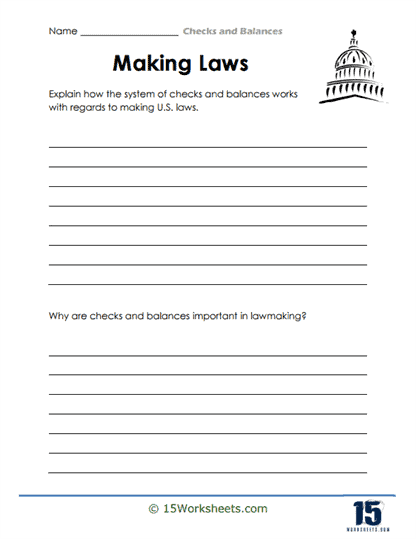
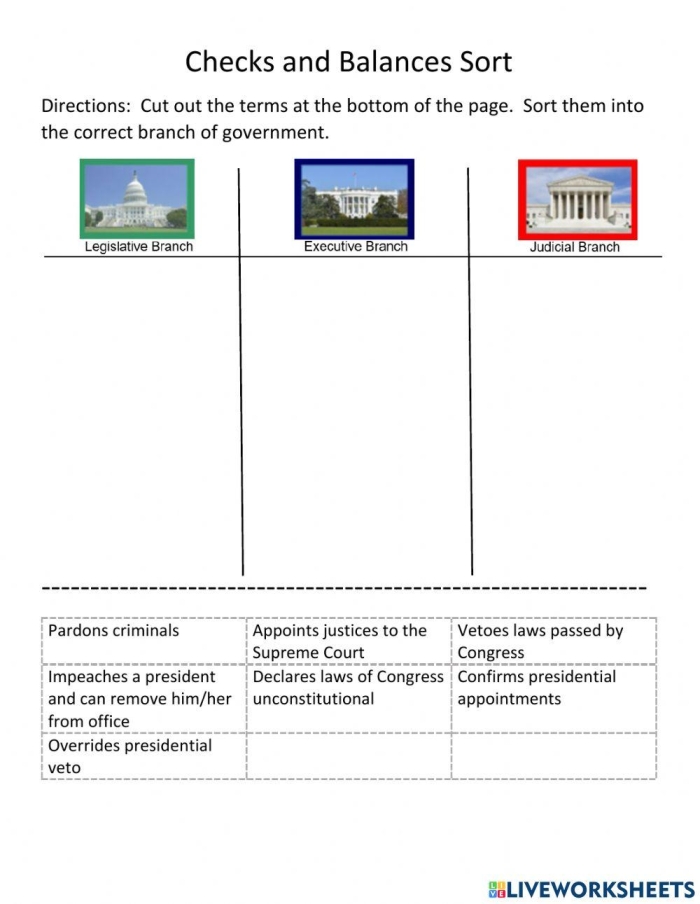
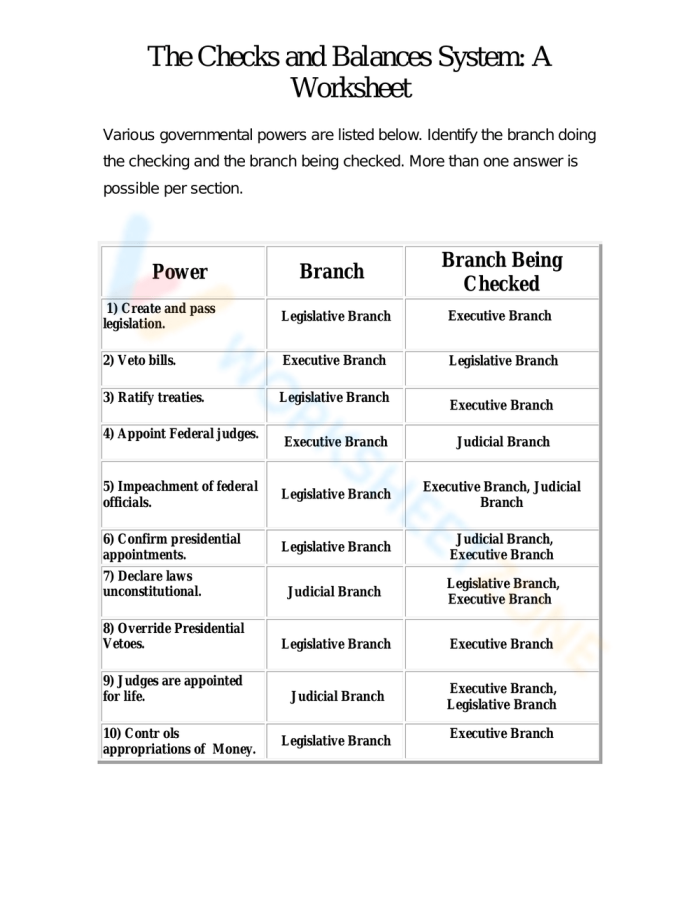
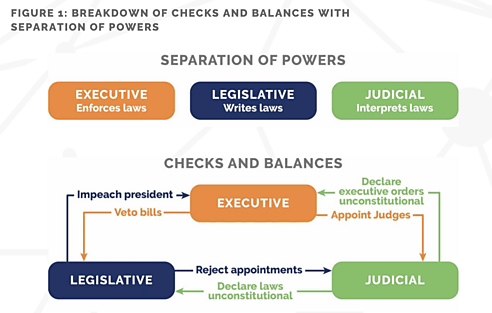
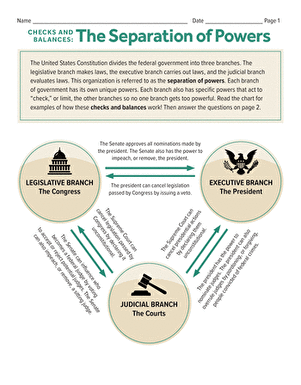
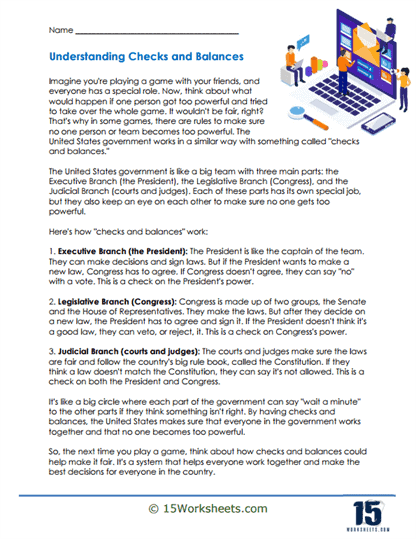
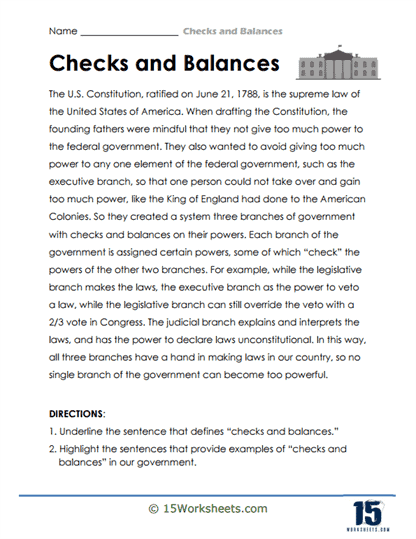
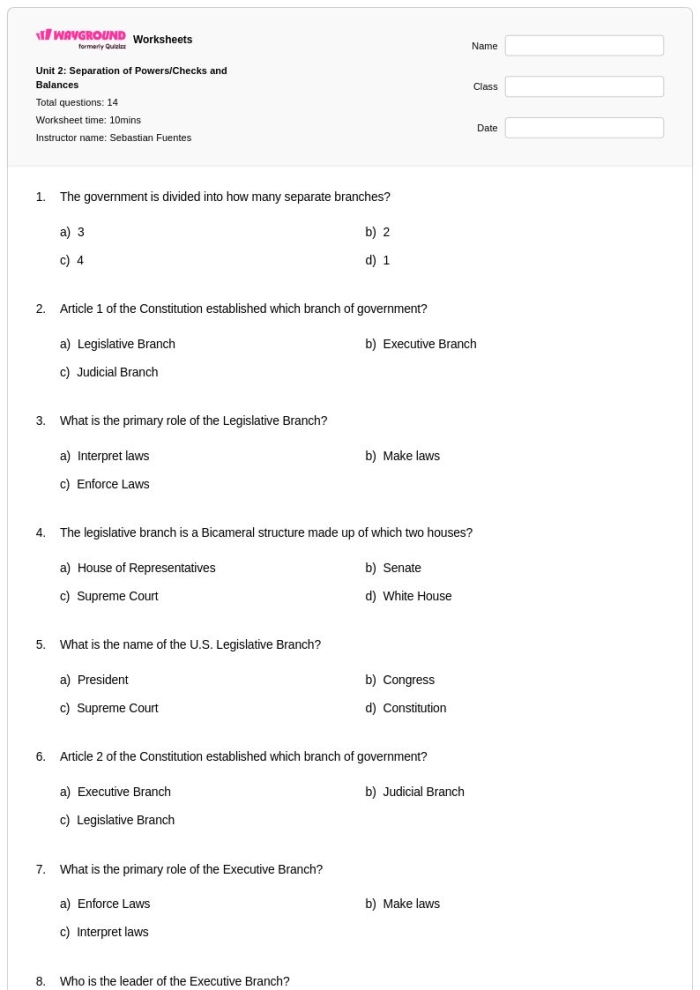
The U.S. government is divided into three branches: the legislative branch creates laws, the executive branch enforces them, and the judicial branch interprets them. Each branch has specific powers and responsibilities, but they also have the ability to limit each other’s powers. For instance, while Congress can pass laws, the President can veto them, and the Supreme Court can declare laws unconstitutional. This interplay highlights the importance of checks and balances, ensuring that power is distributed and that each branch functions effectively.
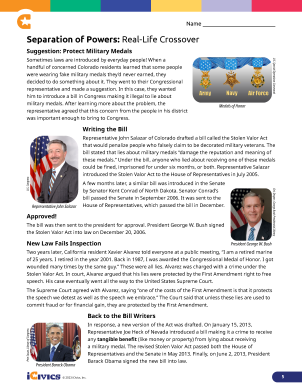
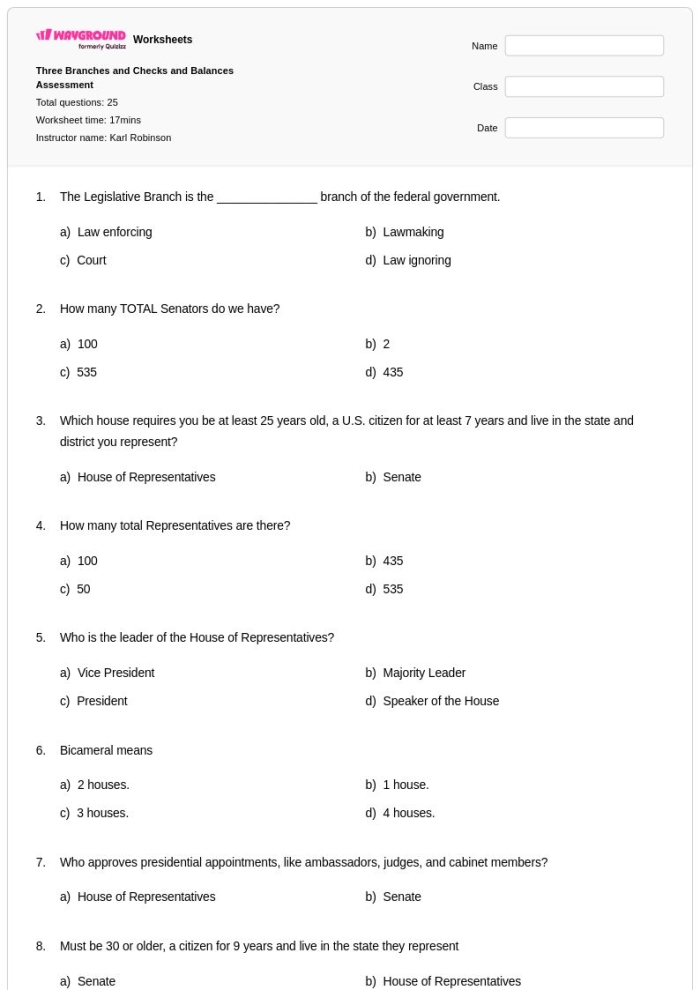
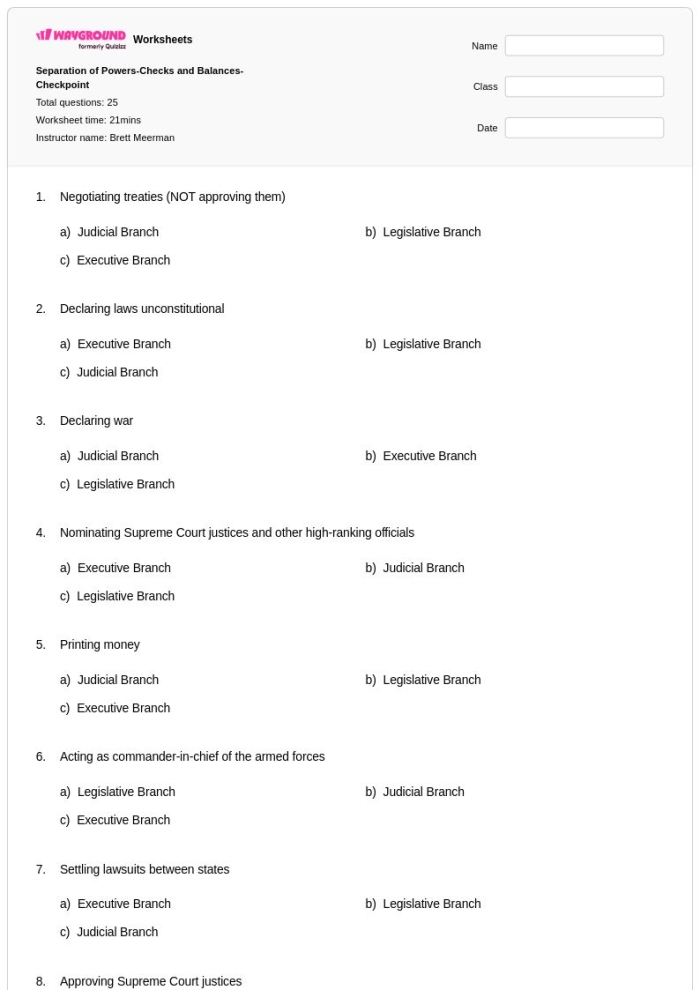
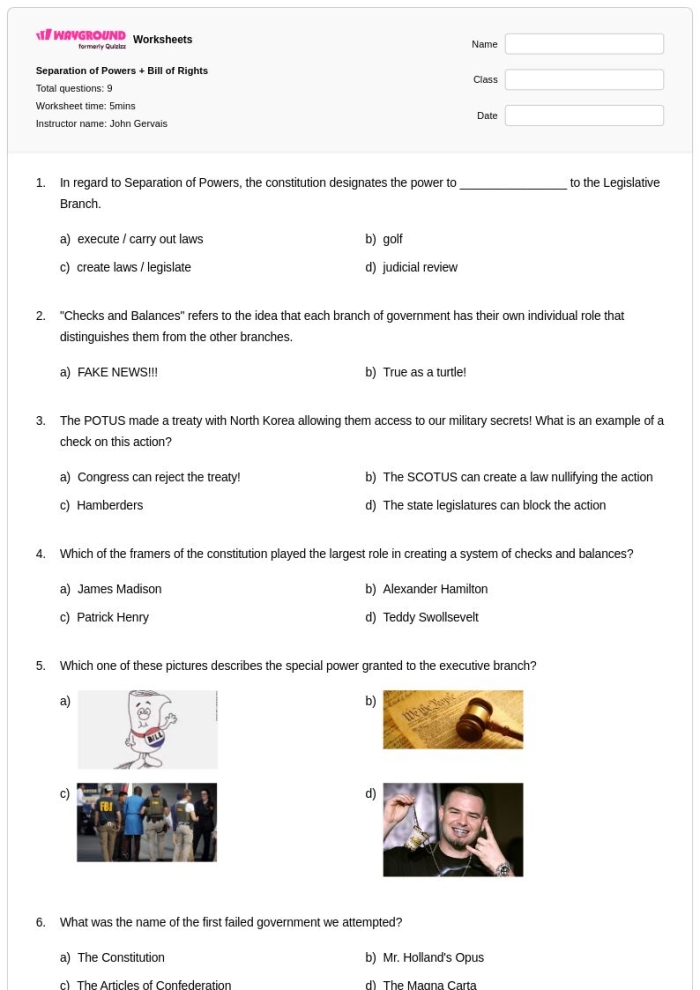
In the civics worksheet, students will have the opportunity to investigate real-world examples of this system in action. They might look at landmark Supreme Court cases or recent legislation to see how these checks and balances work in practice. This hands-on approach not only reinforces their learning but also encourages critical thinking about how government functions.
By engaging with this topic, students not only fulfill curriculum requirements but also gain a deeper understanding of their rights and responsibilities as citizens. Moreover, learning about the checks and balances within the U.S. government cultivates informed young citizens who can participate in civic discussions. For further exploration of related topics, students can check out resources like the U.S. Constitution guiding principles worksheets or the biography of George Washington Carver.
Ultimately, worksheets that focus on checks and balances serve as an essential tool for sixth graders to comprehend the mechanics of their government. Engaging with these materials not only supports their reading skills but also empowers them with knowledge that is vital for their future as active participants in democracy.
Hands-On Worksheet Activities