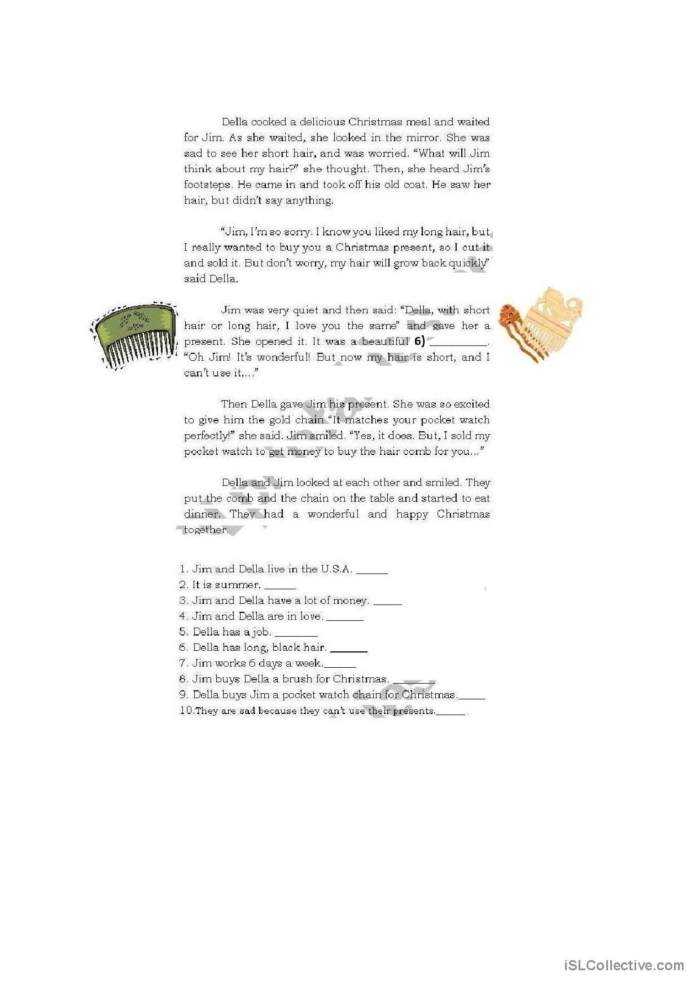
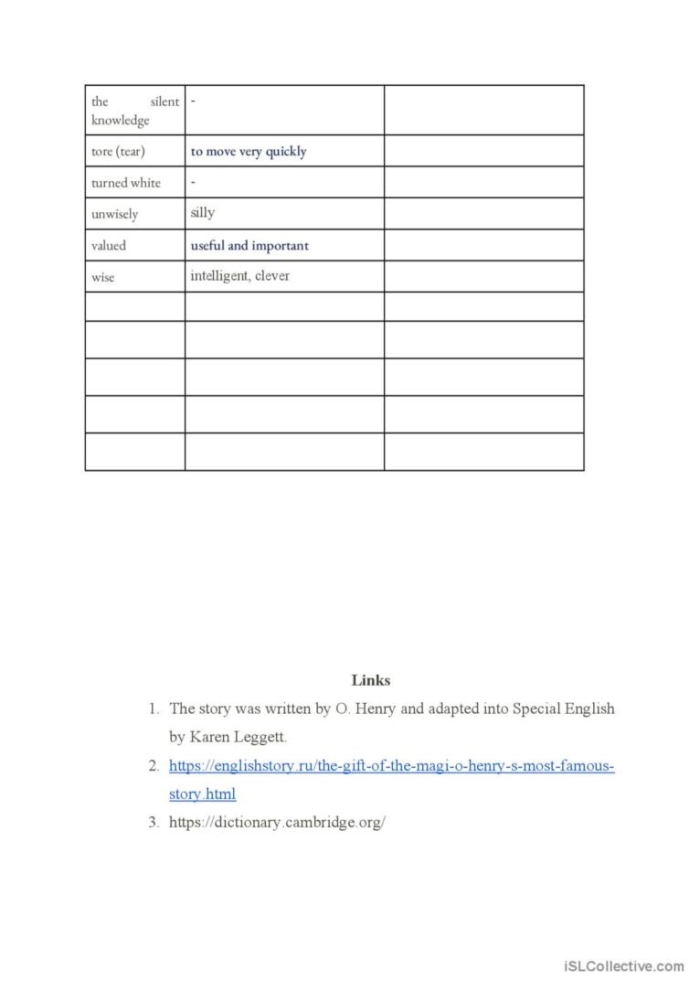
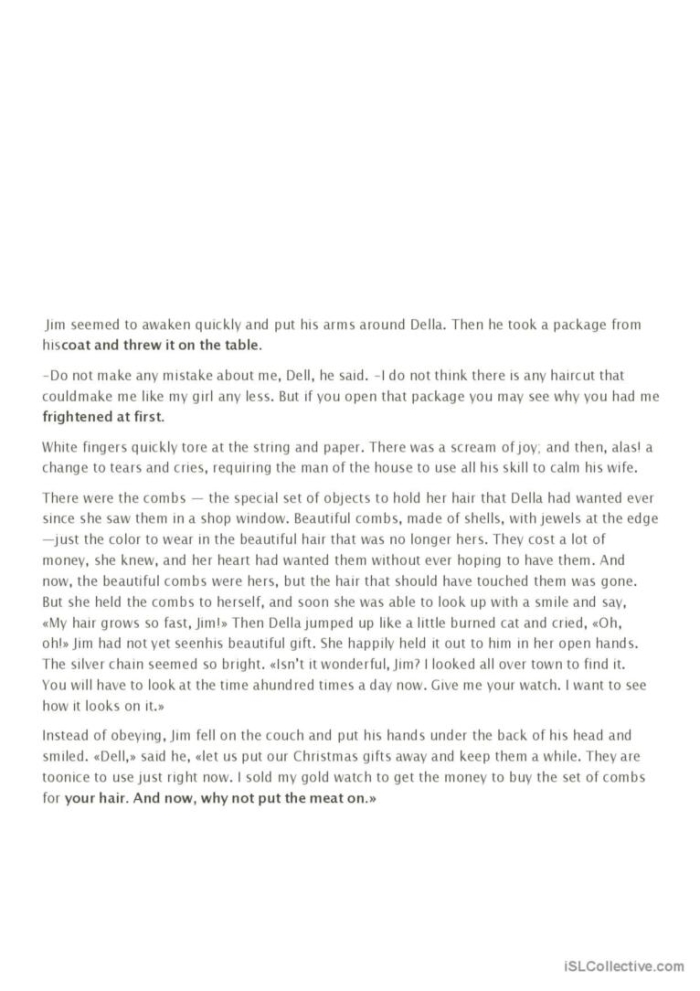
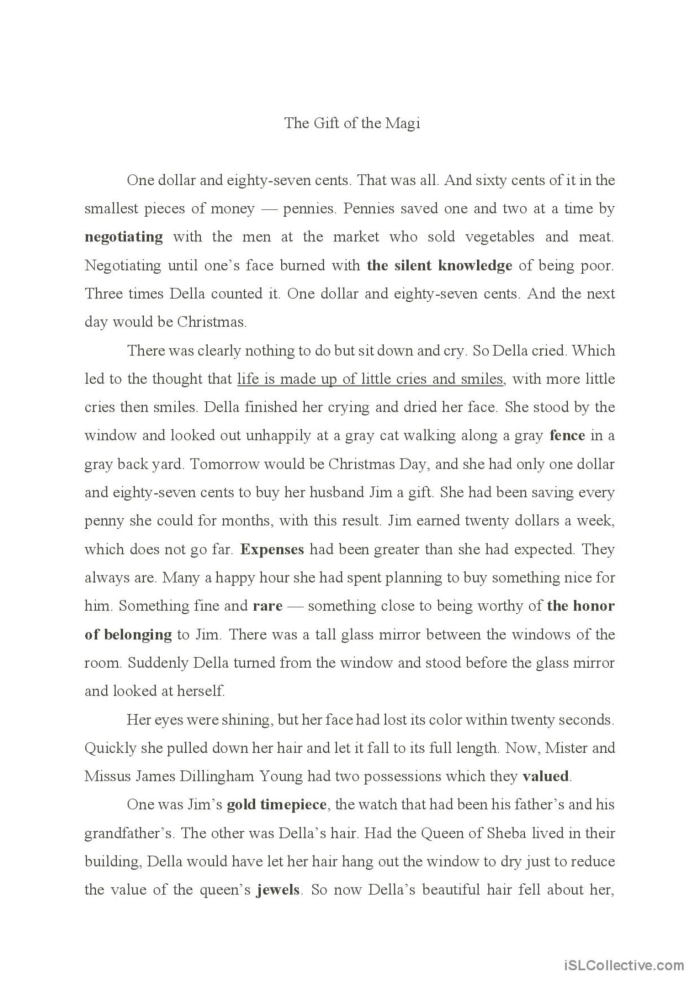
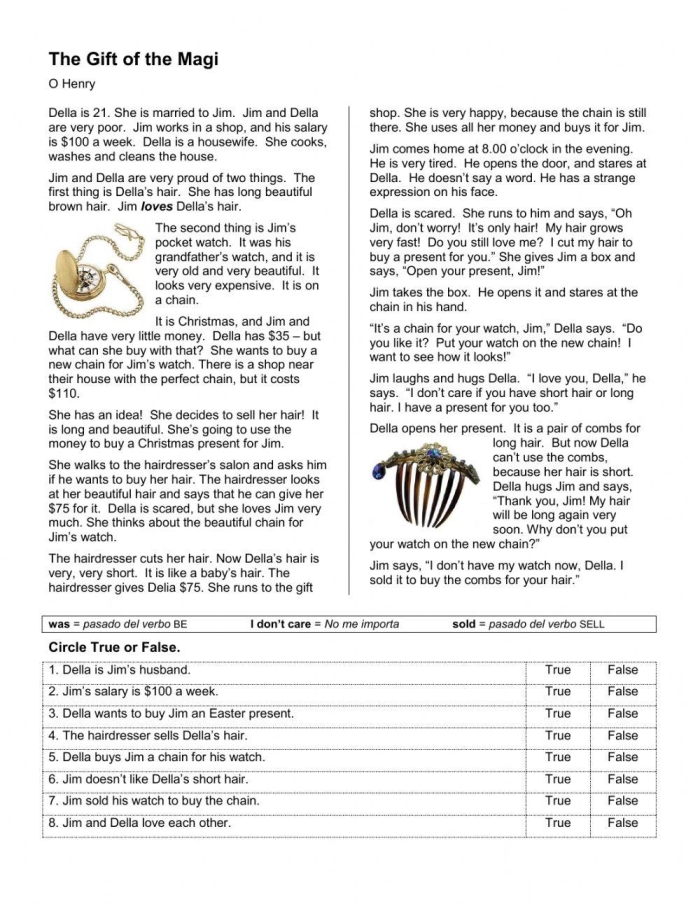
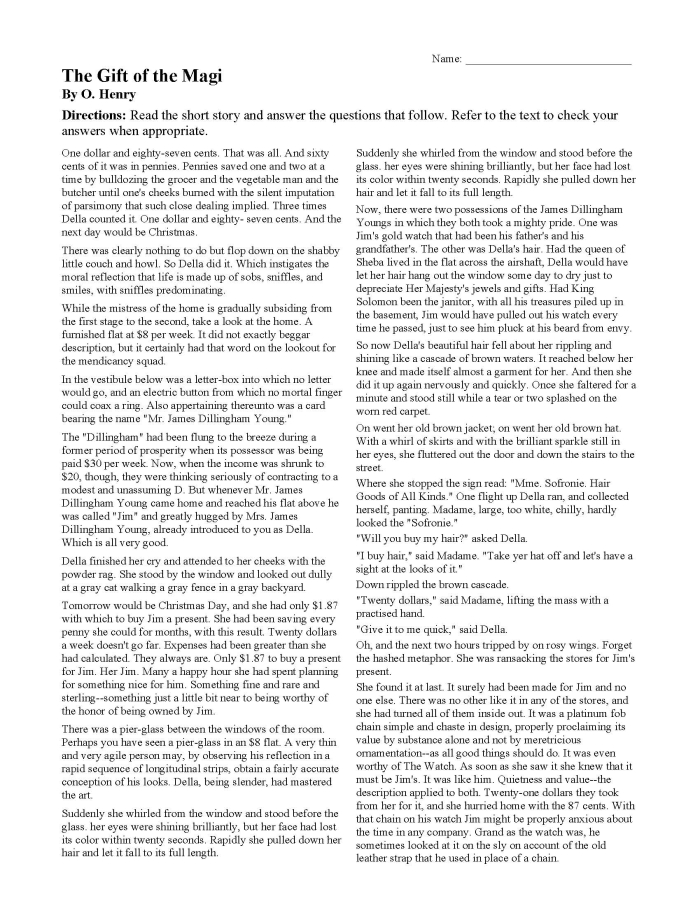
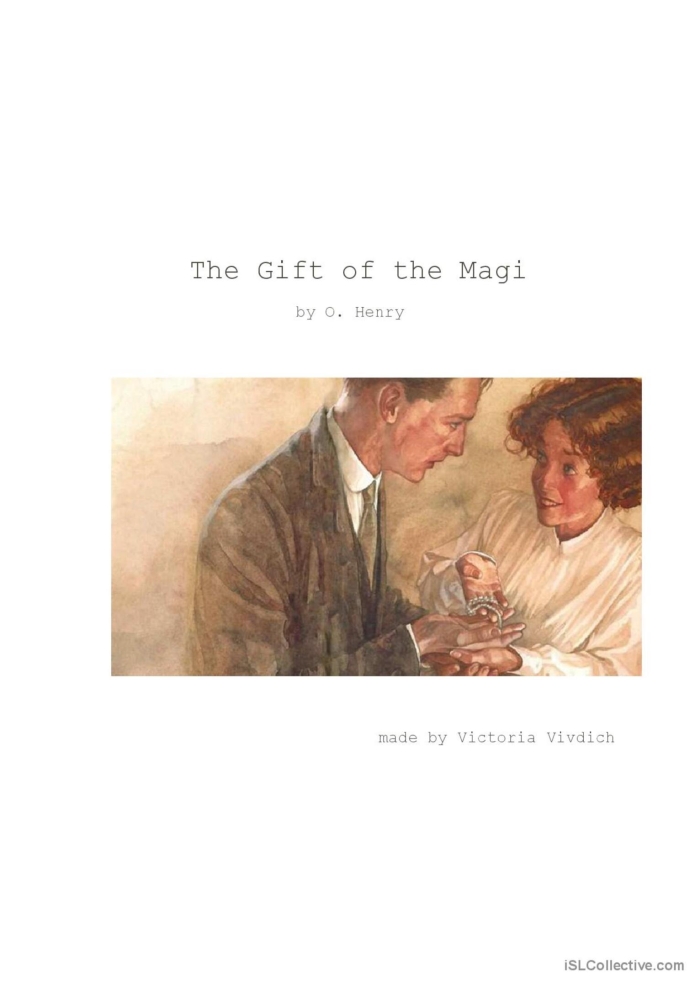
When seventh grade students encounter O. Henry’s “The Gift of the Magi,” they’re meeting one of literature’s most carefully constructed stories about sacrifice and irony. A two-page adaptation makes this 1905 classic accessible without losing the emotional punch that makes it worth reading in the first place.
The real learning happens when students move beyond simply following the plot. They need to notice how Henry uses figurative language to show us what his characters feel. When he describes Della’s hair as “falling about her like a cascade of brown waters,” that image does more than paint a picture—it shows us why she treasures this part of herself. Students who learn to identify prepositional phrases and their functions gain better control over understanding how writers build these descriptions layer by layer.
The literary devices in this story work together to create meaning. Henry’s use of situational irony (where the outcome contradicts expectations) forms the spine of the entire narrative. Both Della and Jim sacrifice their most prized possessions to buy gifts for each other, only to discover those gifts have become useless. Recognizing this pattern teaches students that irony isn’t just a clever trick—it’s a way to explore human nature and what we truly value.
Seventh grade reading at this level benefits from structured analysis. Students can examine Henry’s word choices, track how tension builds, and understand why the ending feels both sad and beautiful simultaneously. When they work through extended reading comprehension activities, they develop the habit of asking what the author chose to include and why those choices matter.
This story endures because it trusts readers to understand complexity. Seventh graders are ready for that challenge, and the two-page format gives them enough text to work with without overwhelming them. That balance between accessibility and depth makes “The Gift of the Magi” a perfect choice for serious literary study.
Start Practicing with These Worksheets