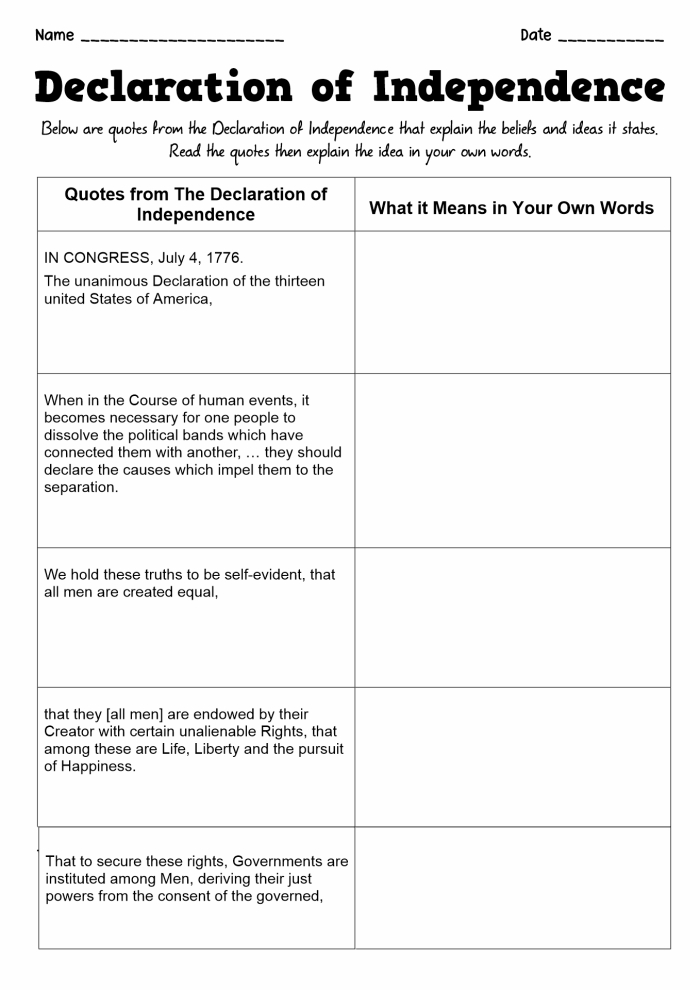
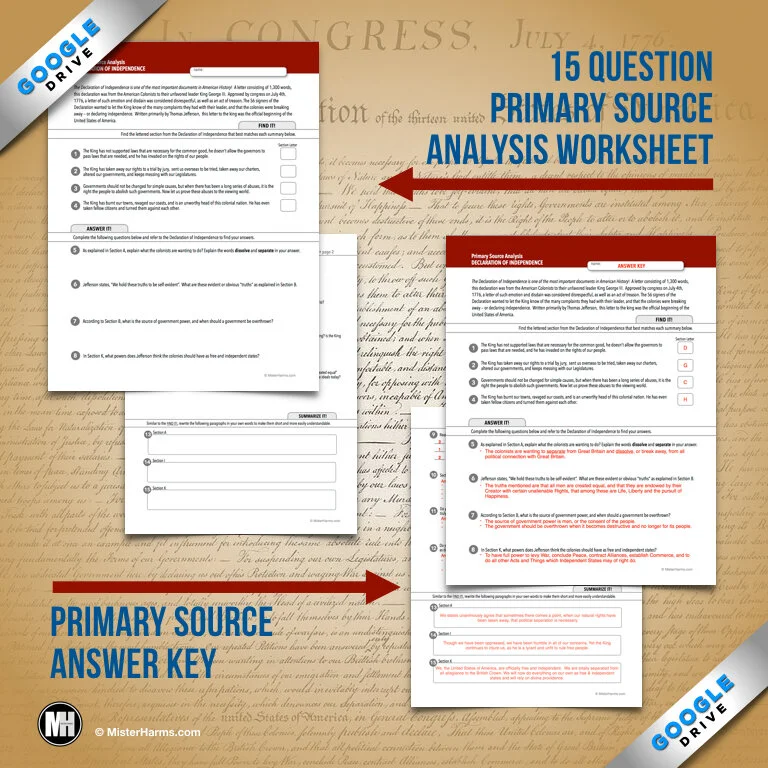
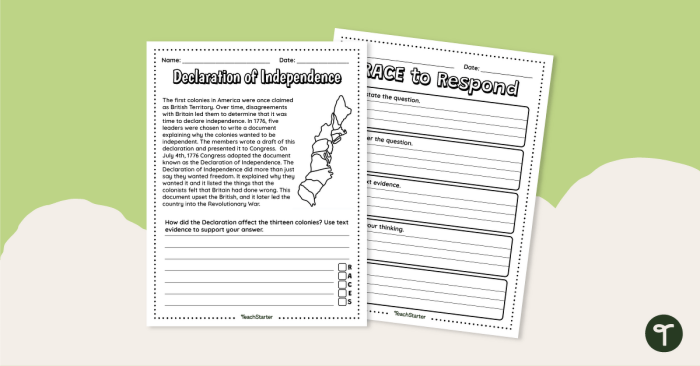
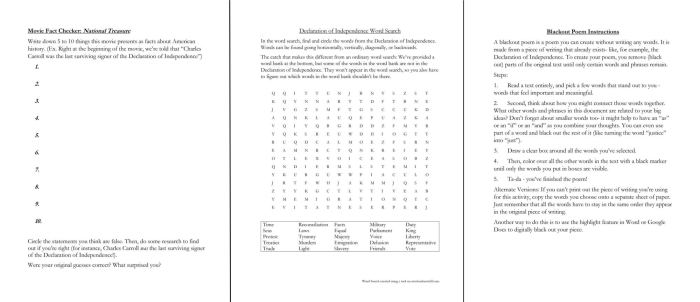
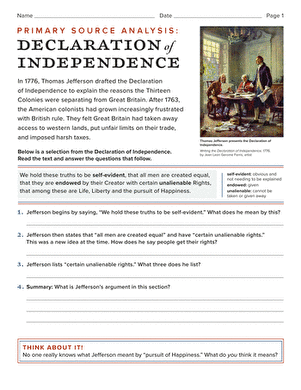
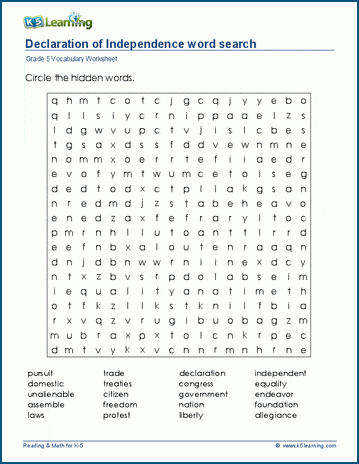
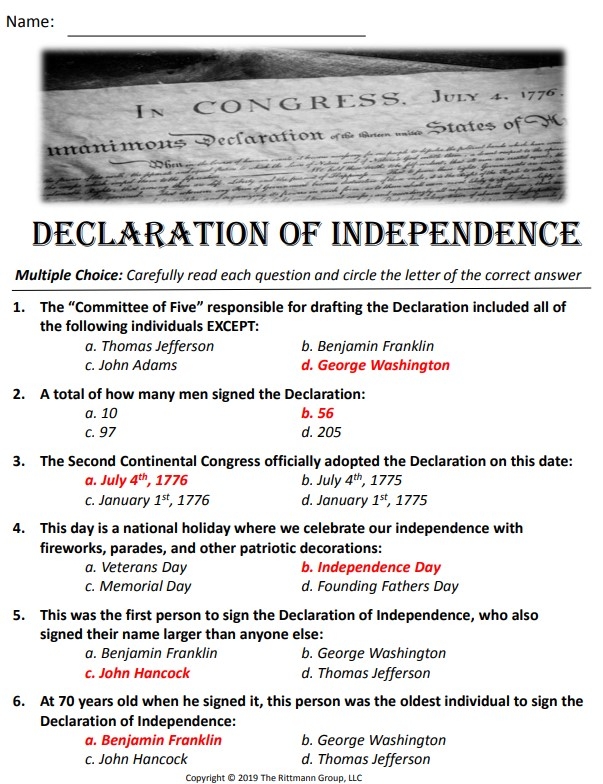
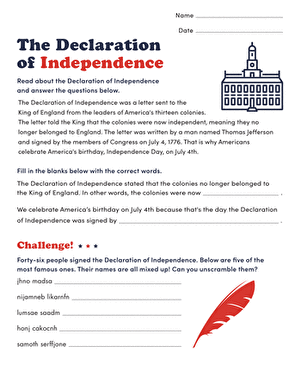
Middle school students often treat historical documents as distant artifacts, something to memorize for a test rather than actually read. A two-page primary source analysis worksheet focused on the Declaration of Independence changes that dynamic by putting the original text directly in front of sixth grade learners and asking them to engage with it on their own terms.
This approach works because students encounter the actual language Jefferson used, not a simplified summary. They see the structure of his arguments, the repetition of grievances, and the logical progression from complaint to declaration. When sixth graders work through the document themselves, they notice details that textbooks gloss over: the specific grievances against King George III, the way the colonists framed their complaint as reluctant rather than eager, and how they grounded their argument in universal principles.
The worksheet format keeps students focused. Rather than wandering through pages of dense 18th-century prose, they answer targeted questions that guide them back to specific passages. This scaffolding helps them build confidence with primary sources, a skill that transfers to analyzing other historical documents later in their education.
A well-designed worksheet also builds critical reading skills. Students learn to count and track recurring elements, like how many times certain phrases appear or how the document’s structure moves from one section to another. This kind of close reading mirrors the analytical work they do in other subjects, whether they’re identifying patterns in linear and nonlinear functions or examining word choice in writing assignments.
The two-page length matters too. It’s substantial enough to feel like real historical work but manageable enough that students can complete it in a single class period without losing focus. By the time they finish, they’ve actually read the Declaration of Independence, not just heard about it.
Practice with These Worksheets