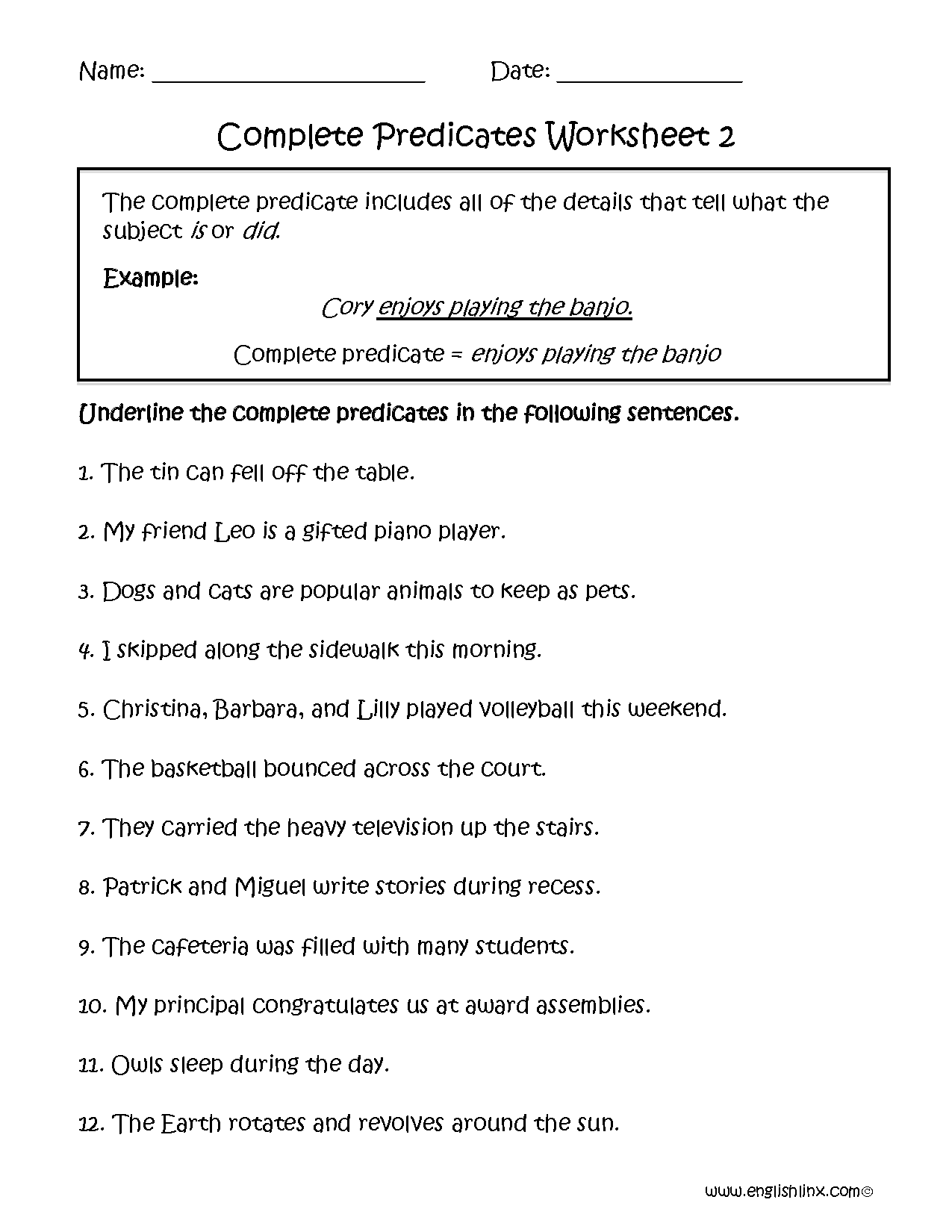
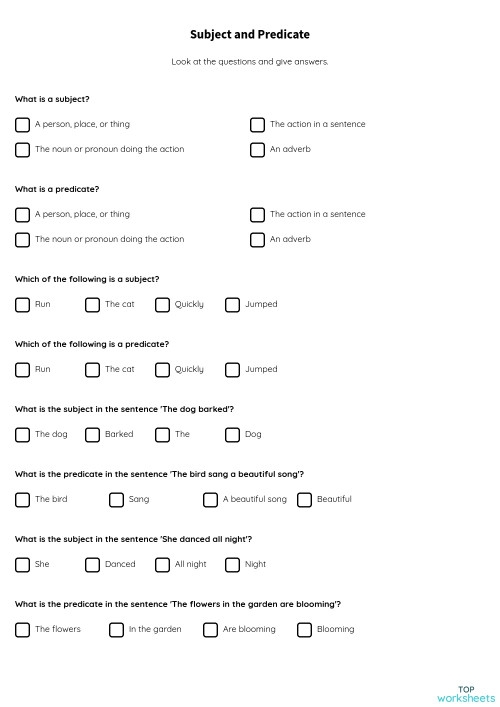
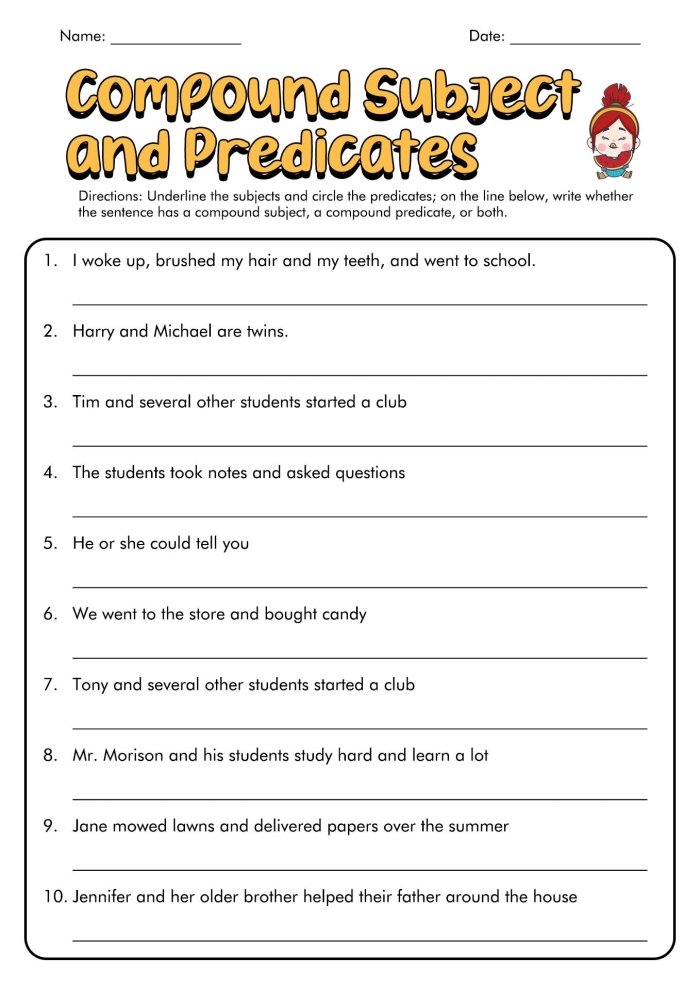
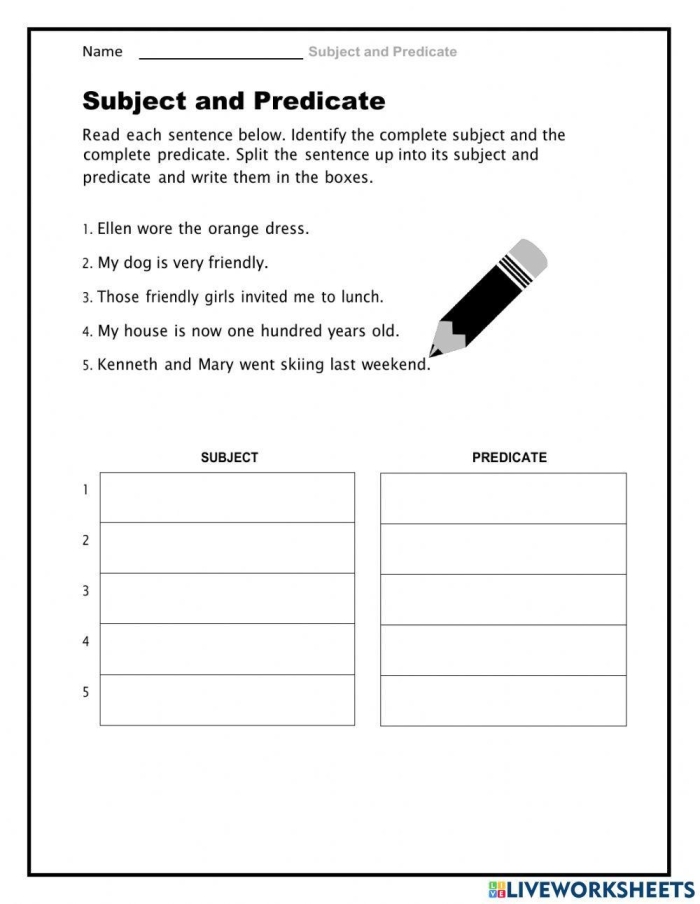
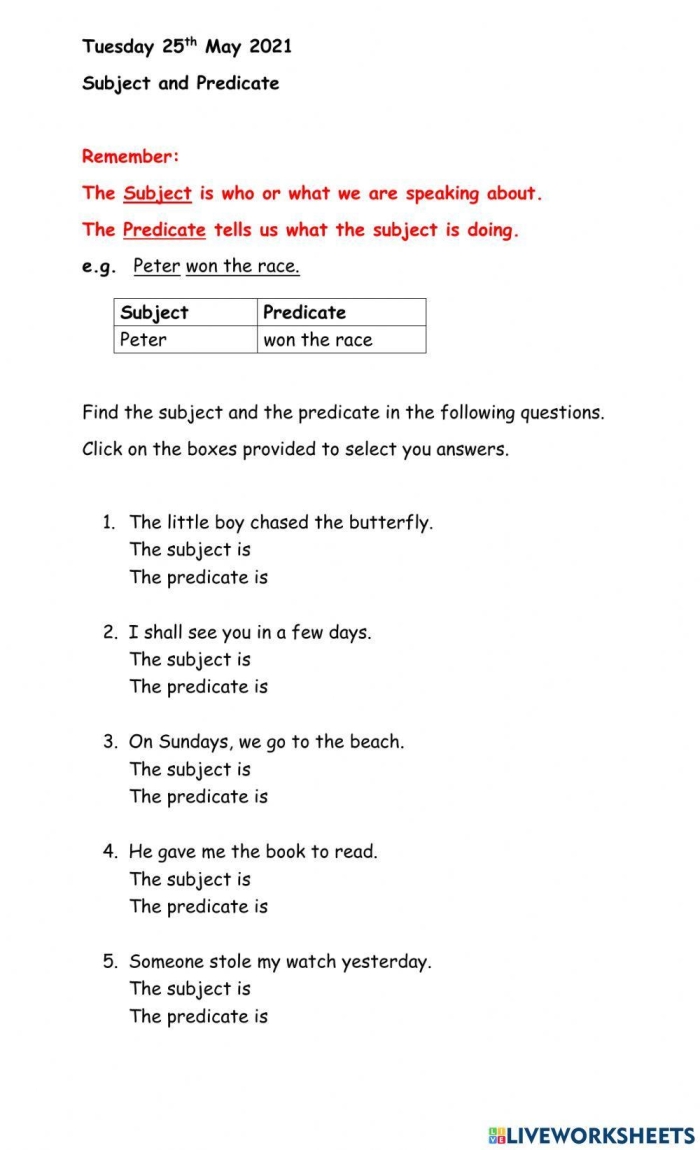
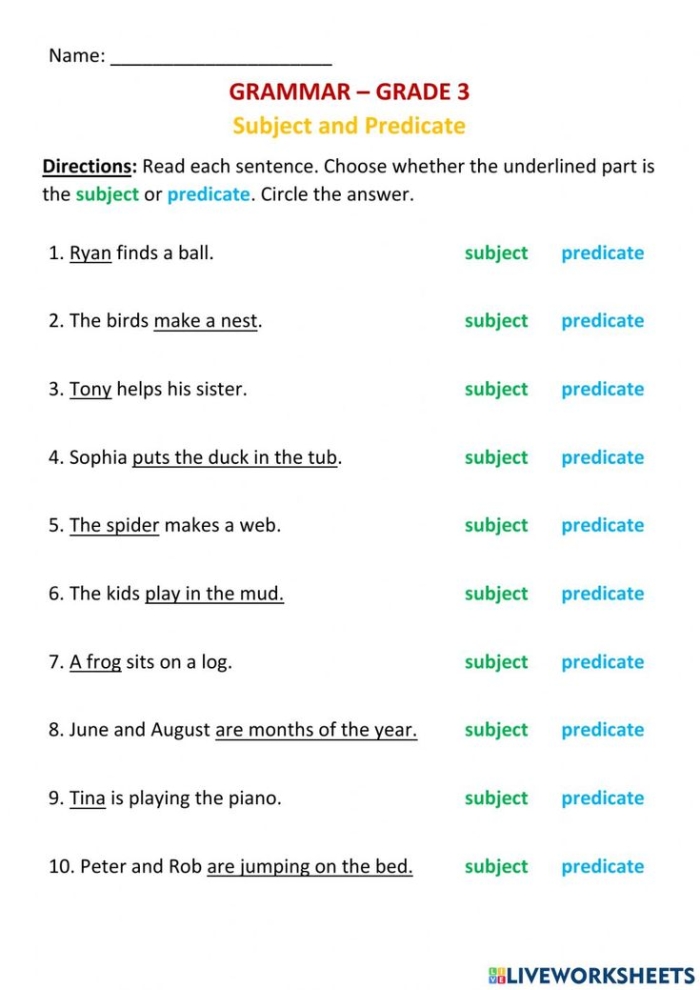
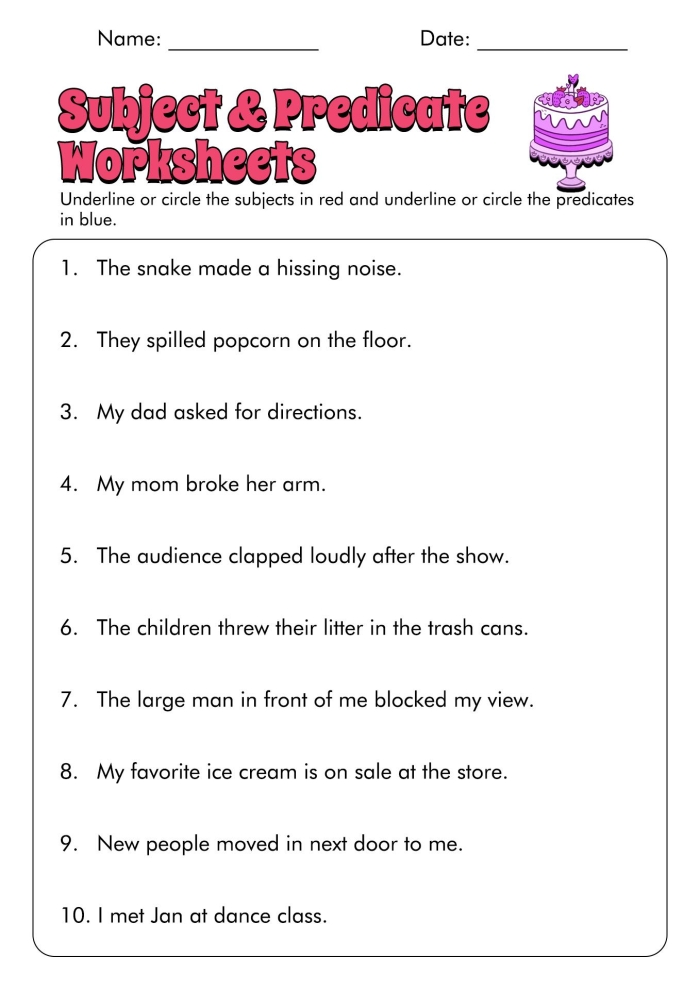
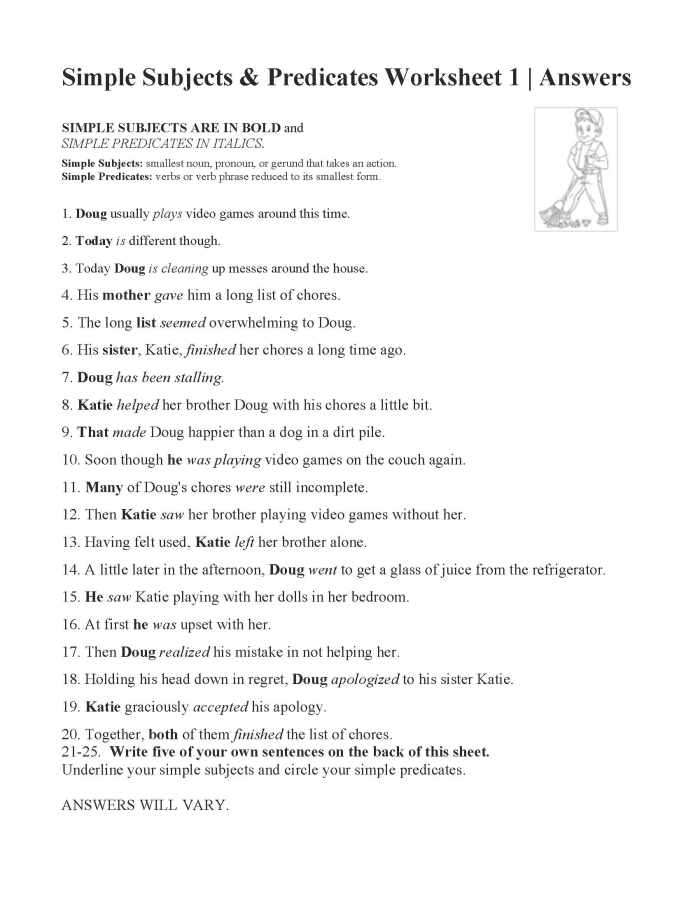
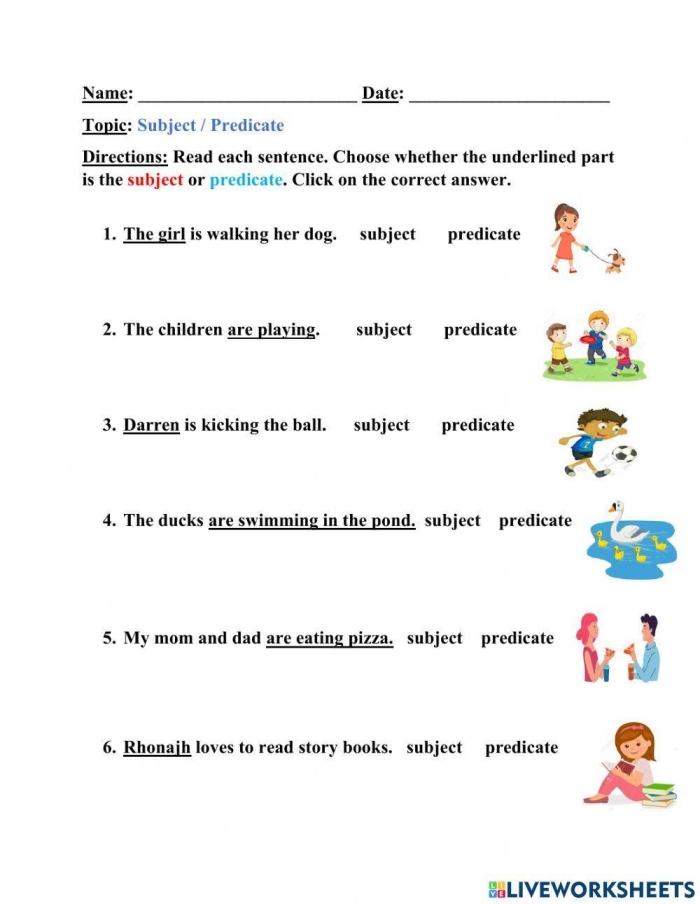
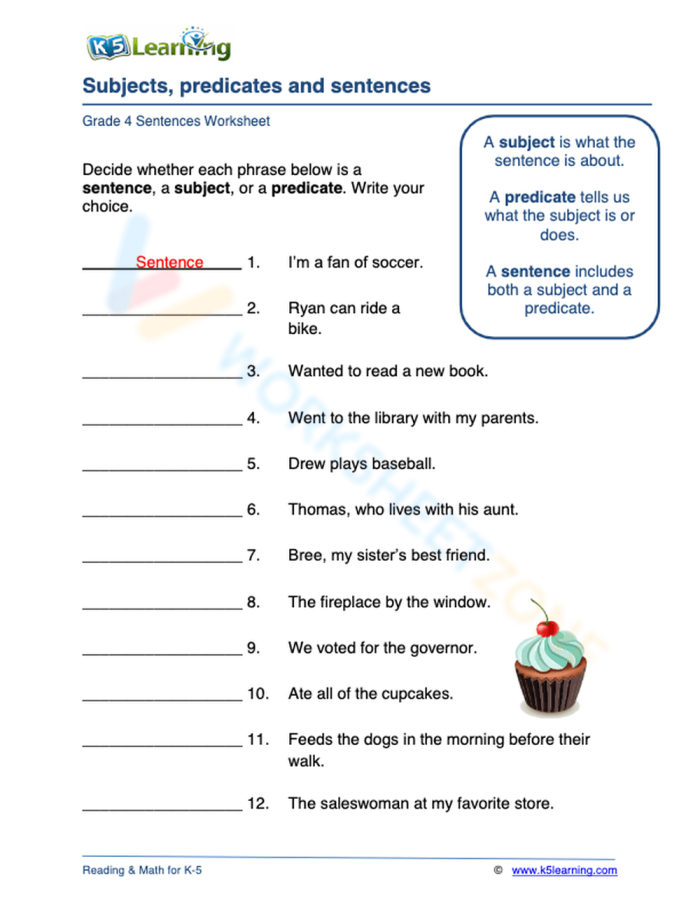
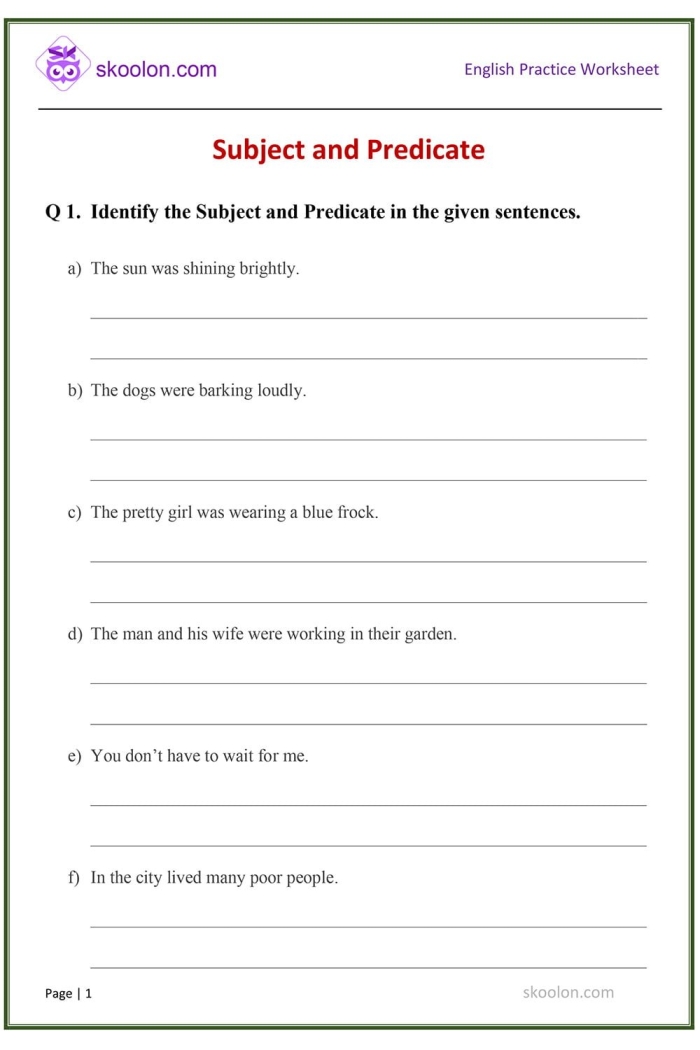
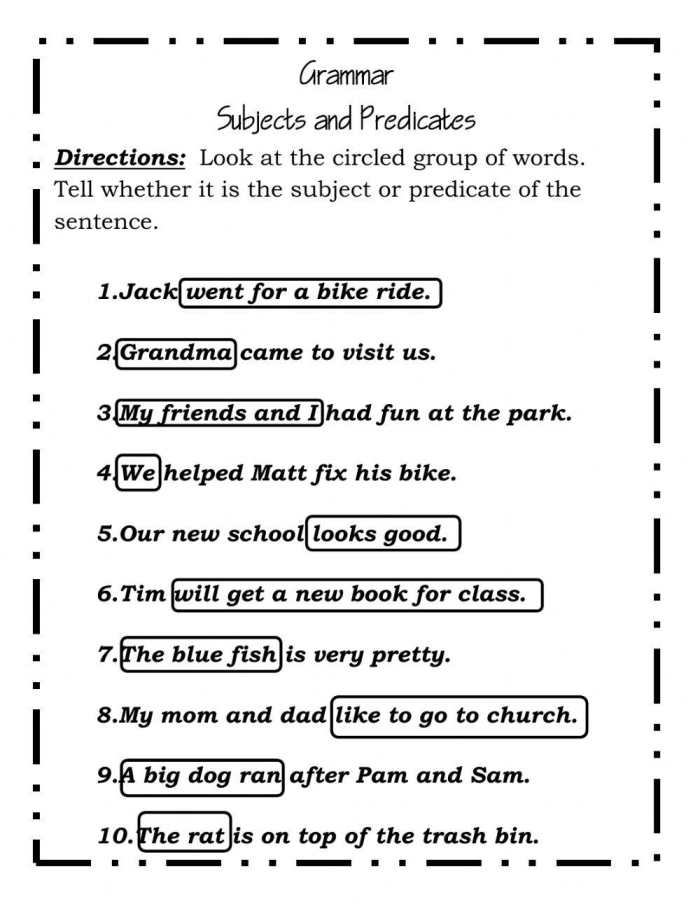
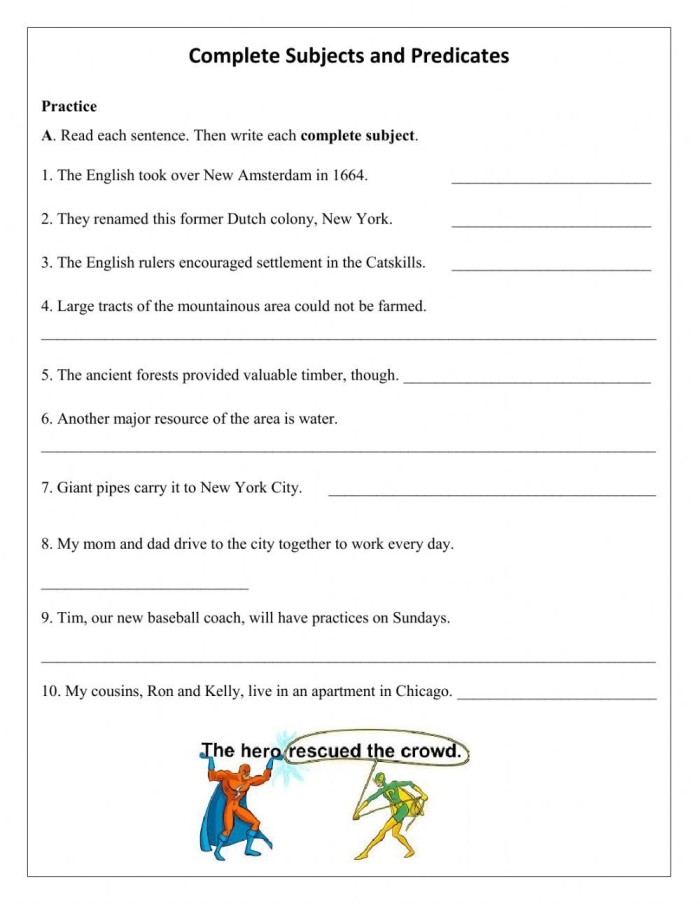
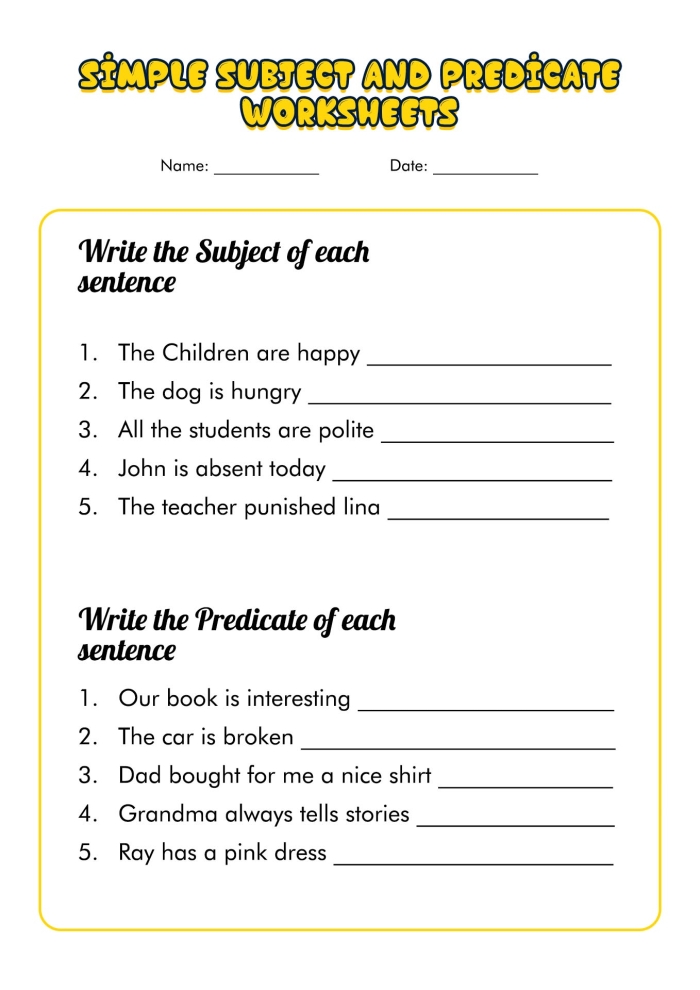
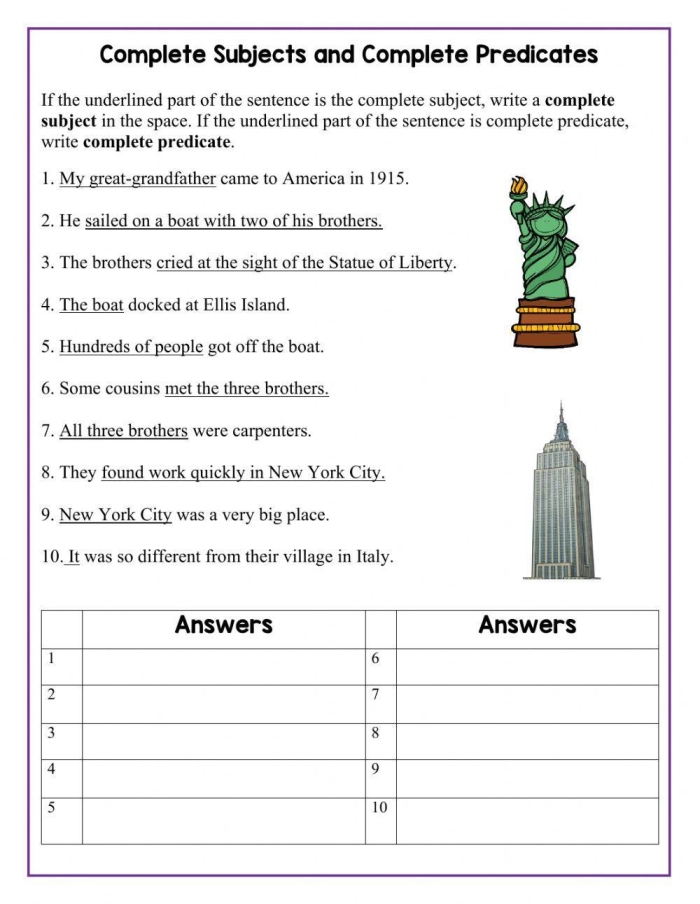
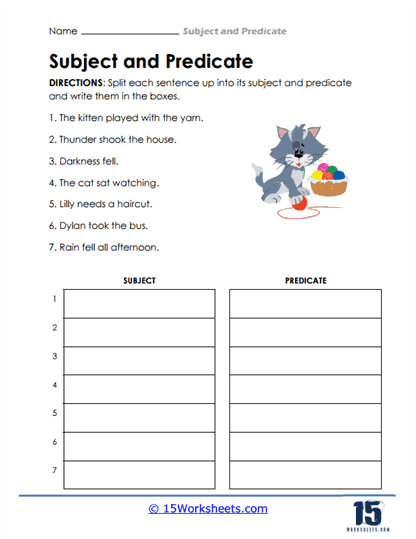
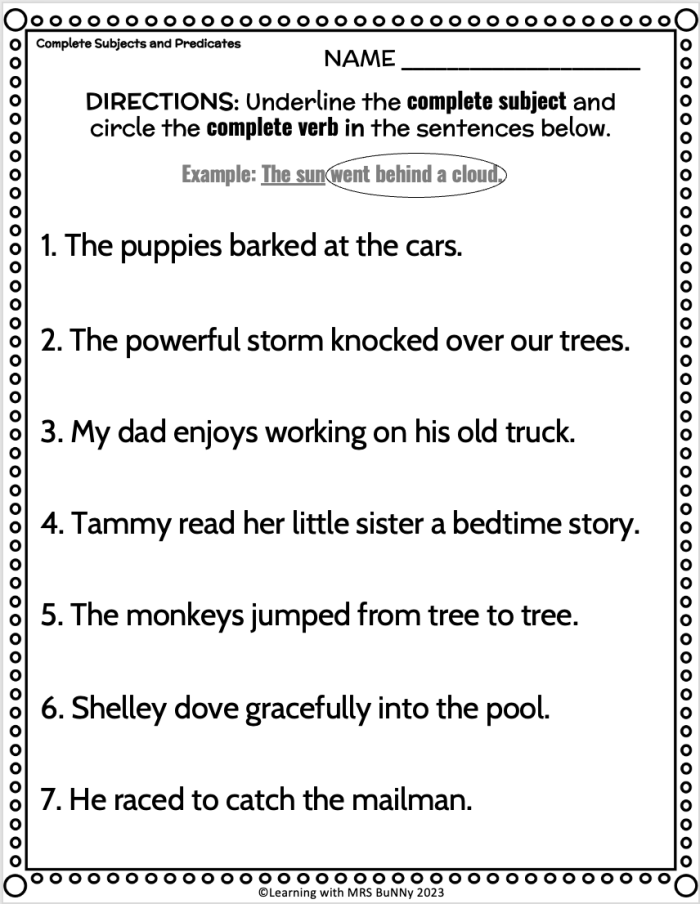
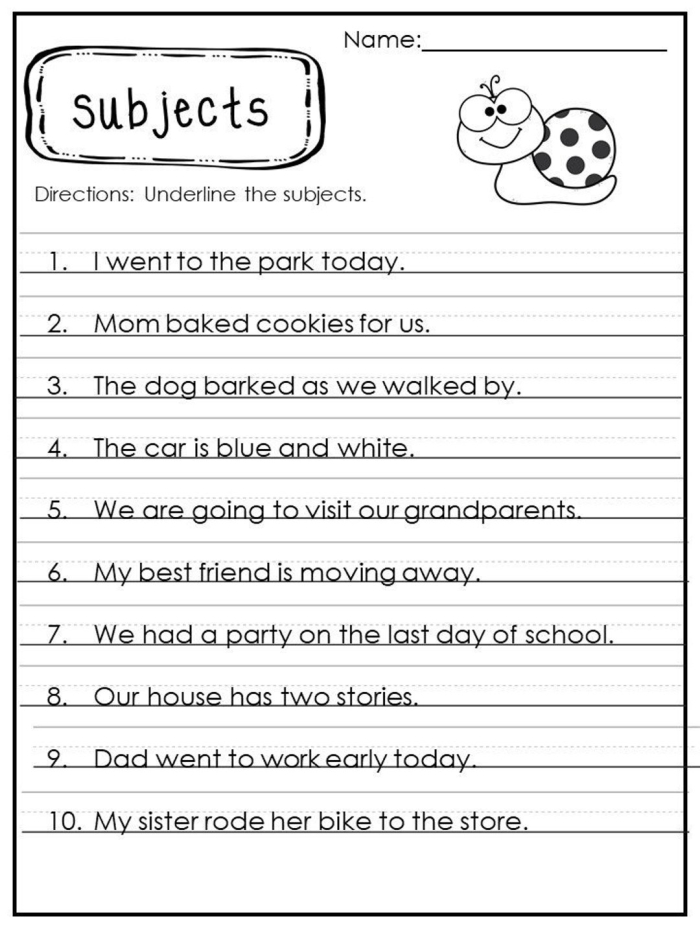
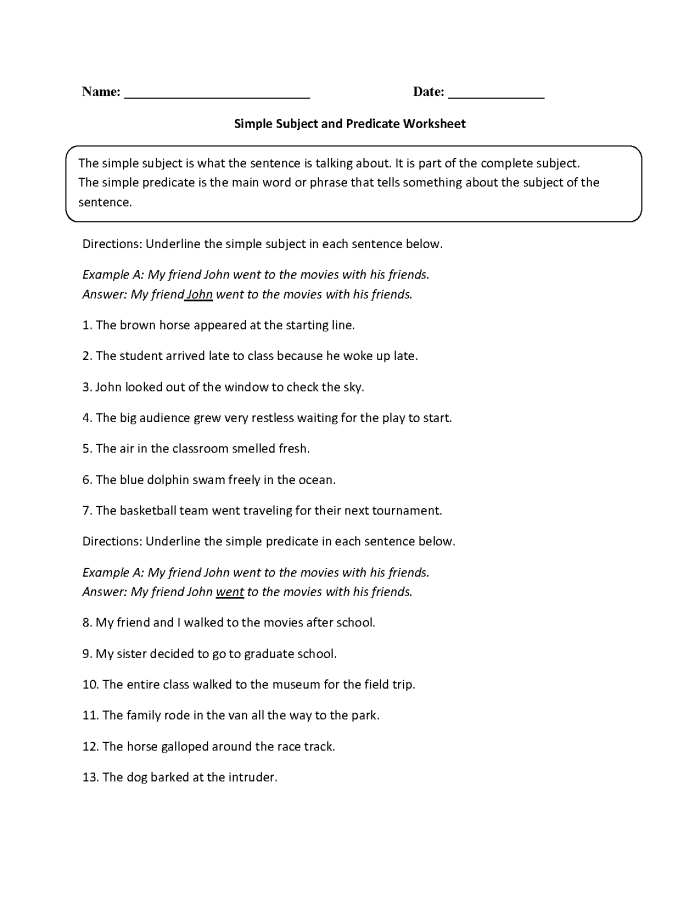
Getting third graders to understand subjects and predicates can feel like pulling teeth, but the right worksheet makes all the difference. A solid subject and predicate worksheet breaks down sentence structure in a way that actually clicks for kids, turning what seems like abstract grammar into something they can see and touch on paper.
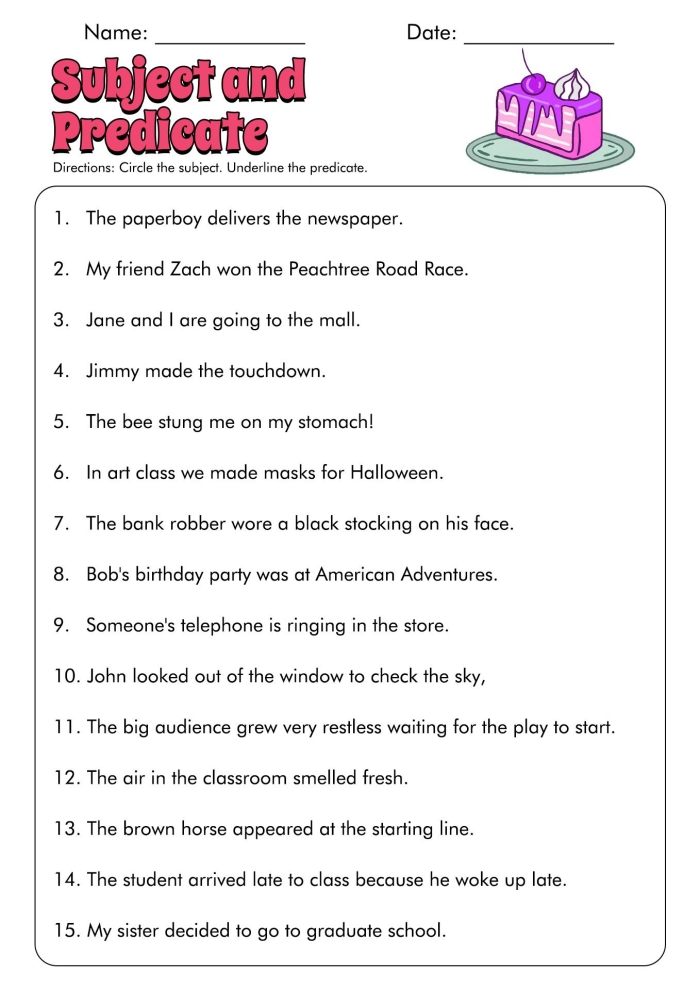
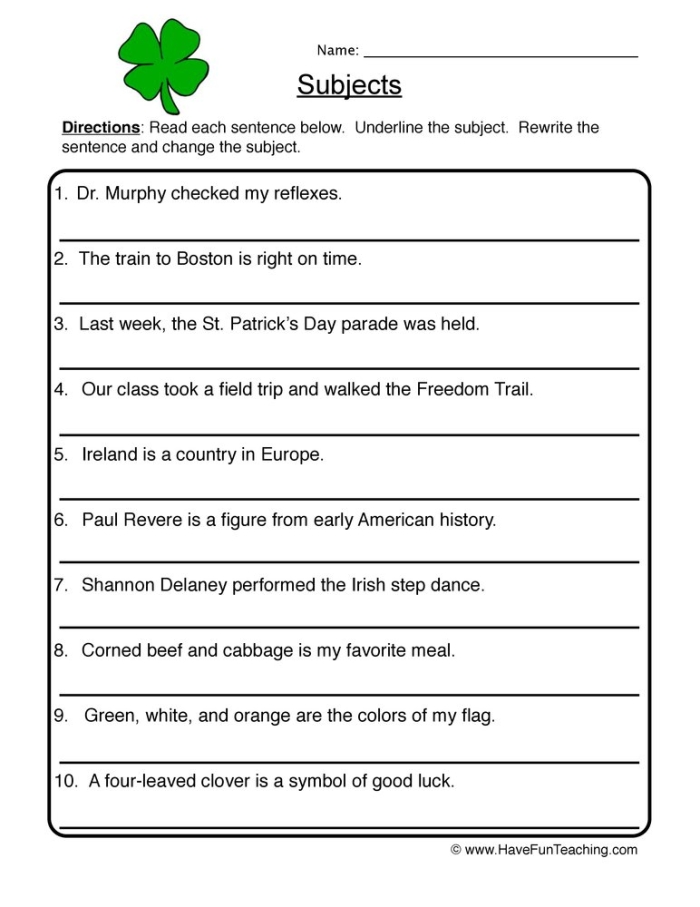
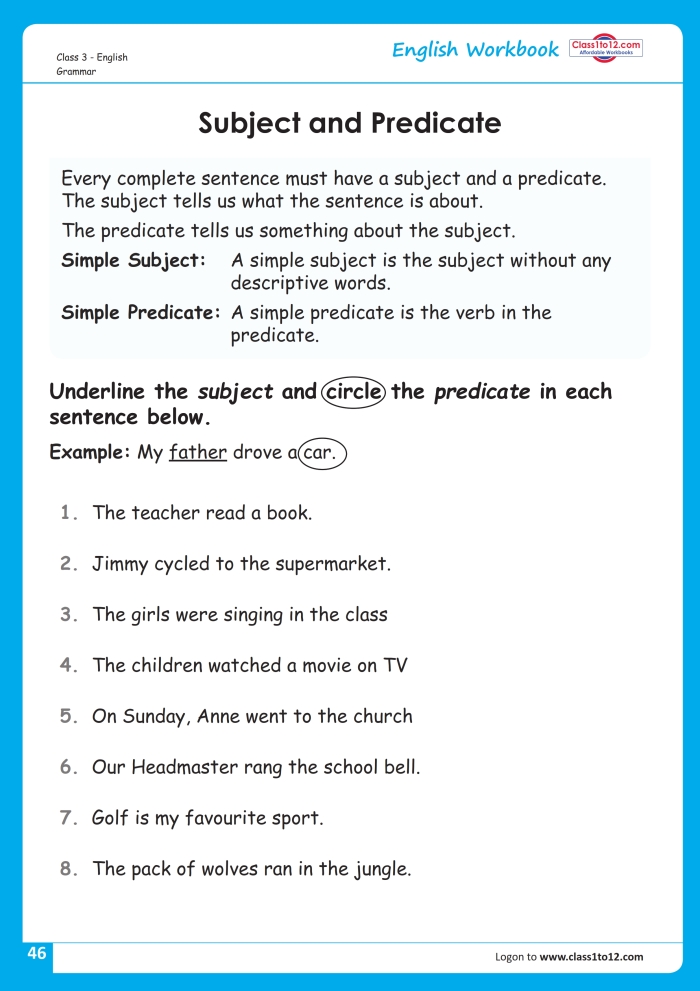
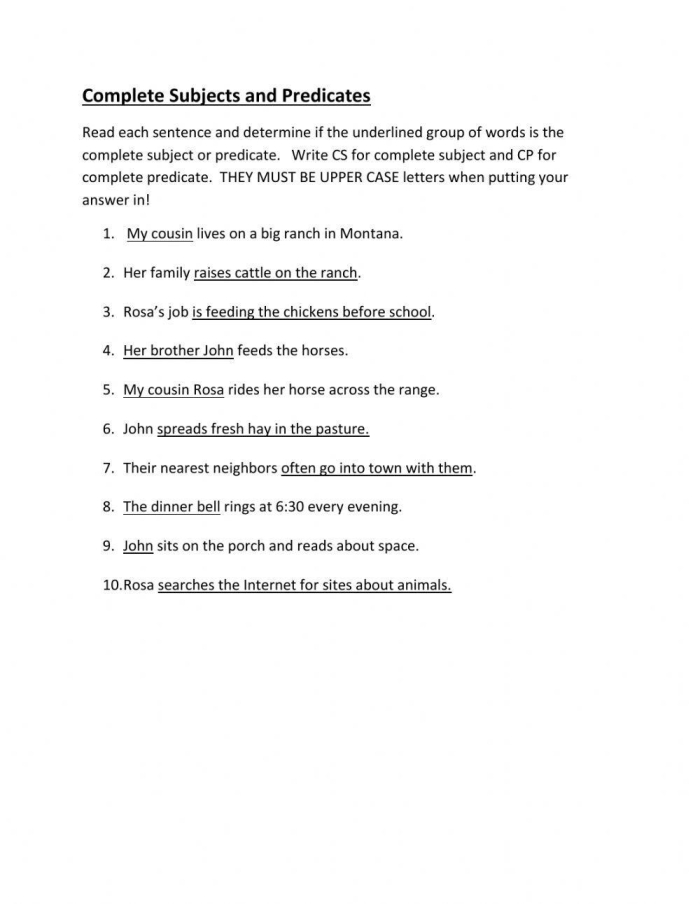
The core challenge with teaching this concept is that many children don’t naturally think about how sentences are built. They speak and write without consciously separating the “who or what” (subject) from the “what they’re doing” (predicate). A printable subject and predicate worksheet forces them to slow down and identify these two essential parts in real sentences. When kids actively hunt for subjects and predicates rather than just reading about them, the learning sticks.
What makes these worksheets effective for third grade learners is the repetition with variety. A good worksheet includes simple sentences alongside slightly more complex ones, letting kids build confidence gradually. For example, a sentence like “The dog runs” is straightforward, but “The dog with the spotted collar runs quickly through the park” requires them to identify that “the dog with the spotted collar” is still the subject, even when it’s longer.
Beyond basic subject and predicate identification, you might also work with your child on related grammar skills. Understanding different sentence types like declarative and interrogative sentences helps them see why subjects and predicates matter. Similarly, learning about incomplete sentences and run-ons shows what happens when subjects or predicates are missing or confused.
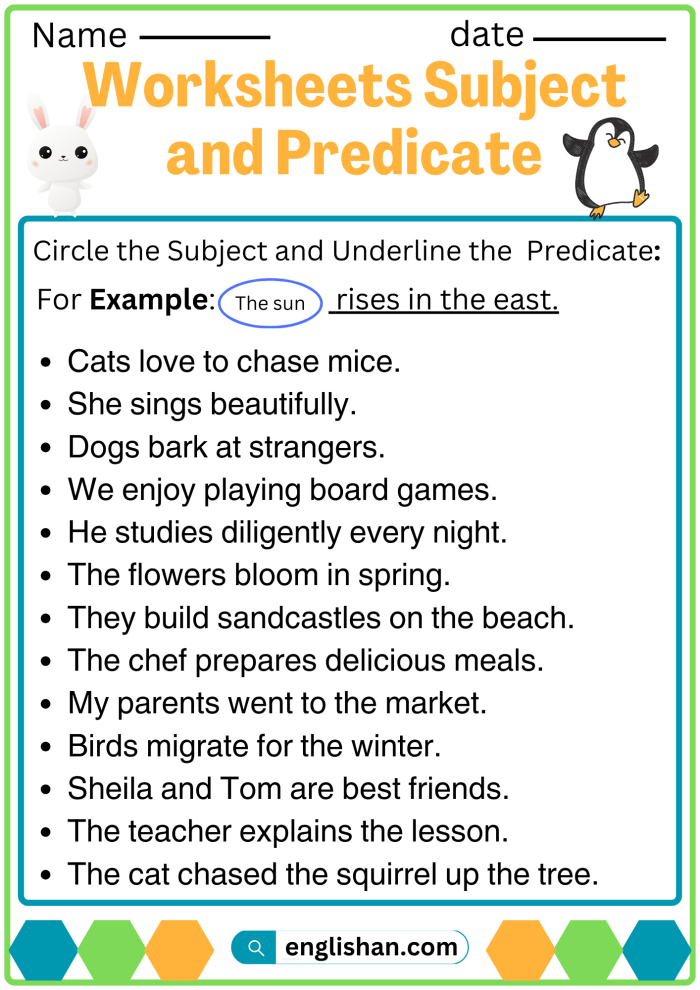
The best approach is consistent, low-pressure practice. Spend 10 to 15 minutes with your child working through the worksheet together, asking them to circle the subject in one color and underline the predicate in another. This visual separation helps cement the concept faster than just writing answers on a blank line.
Hands-On Worksheet Activities