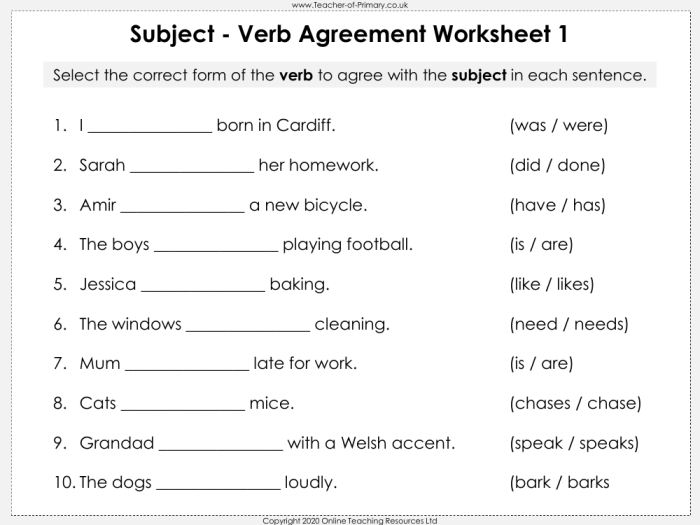
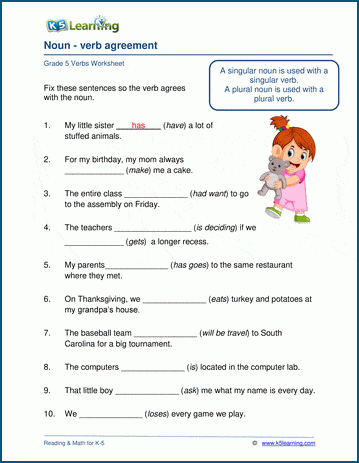
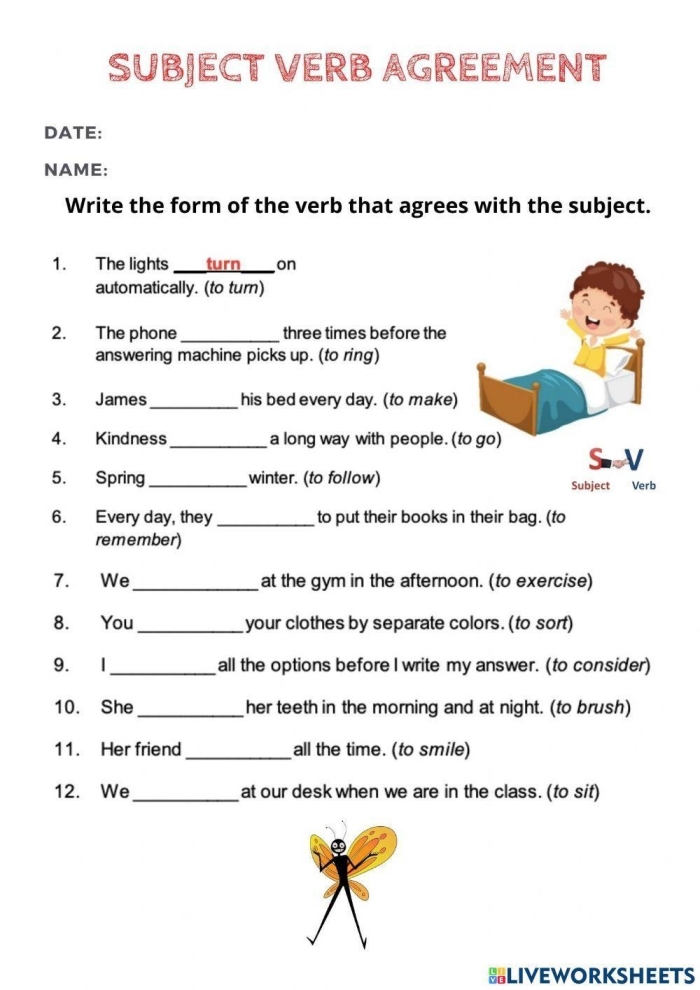
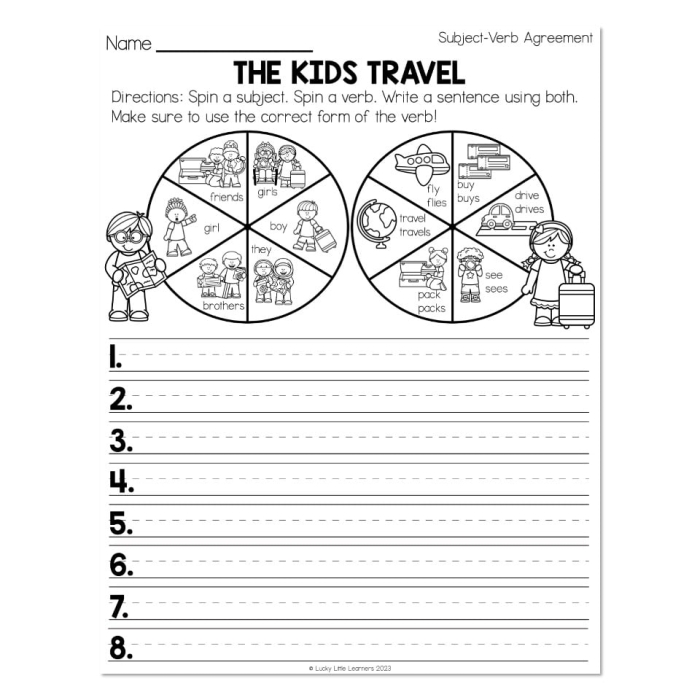
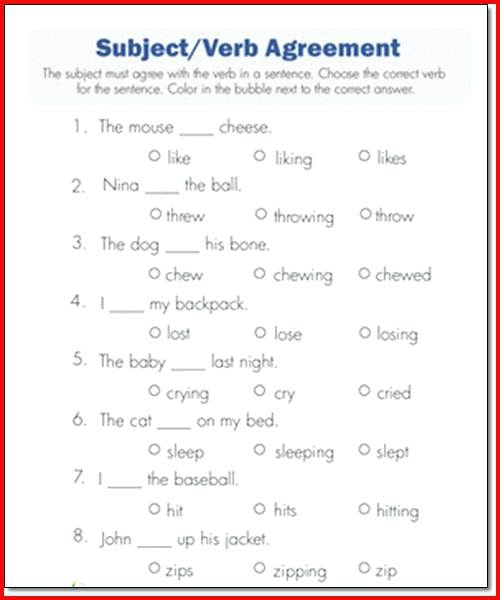
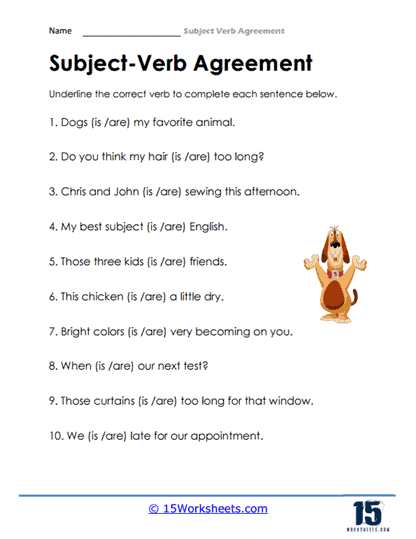
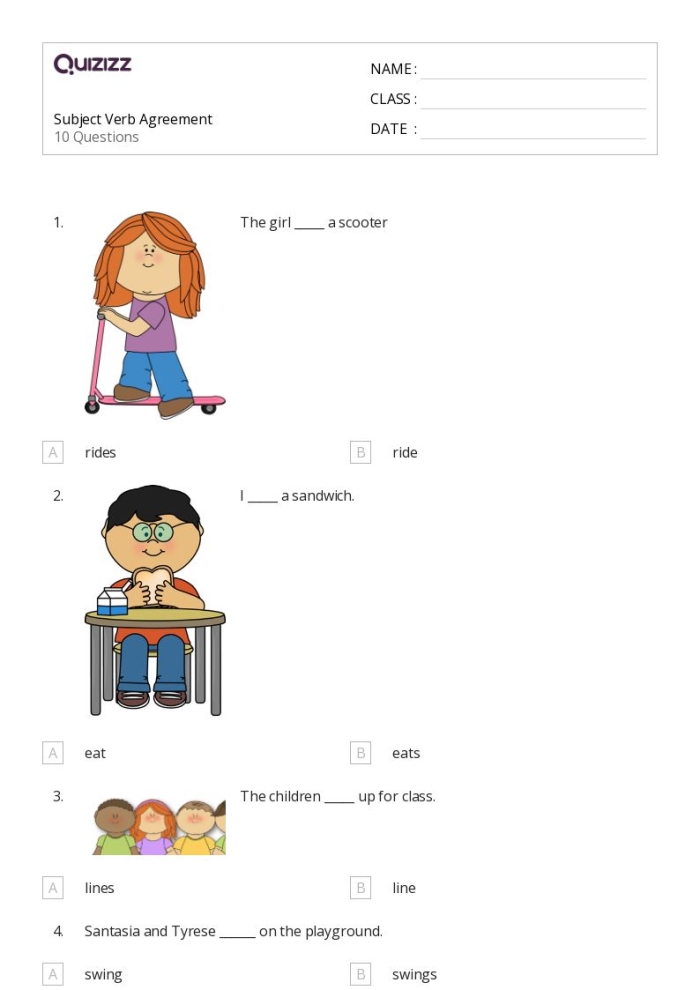
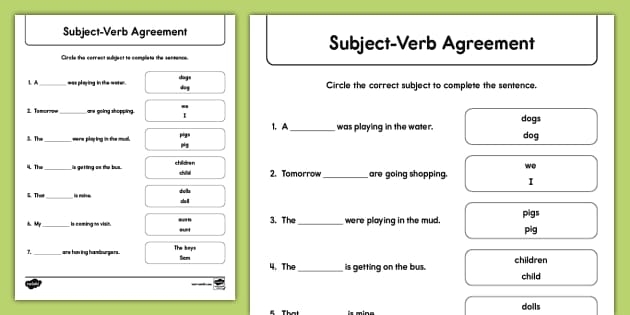
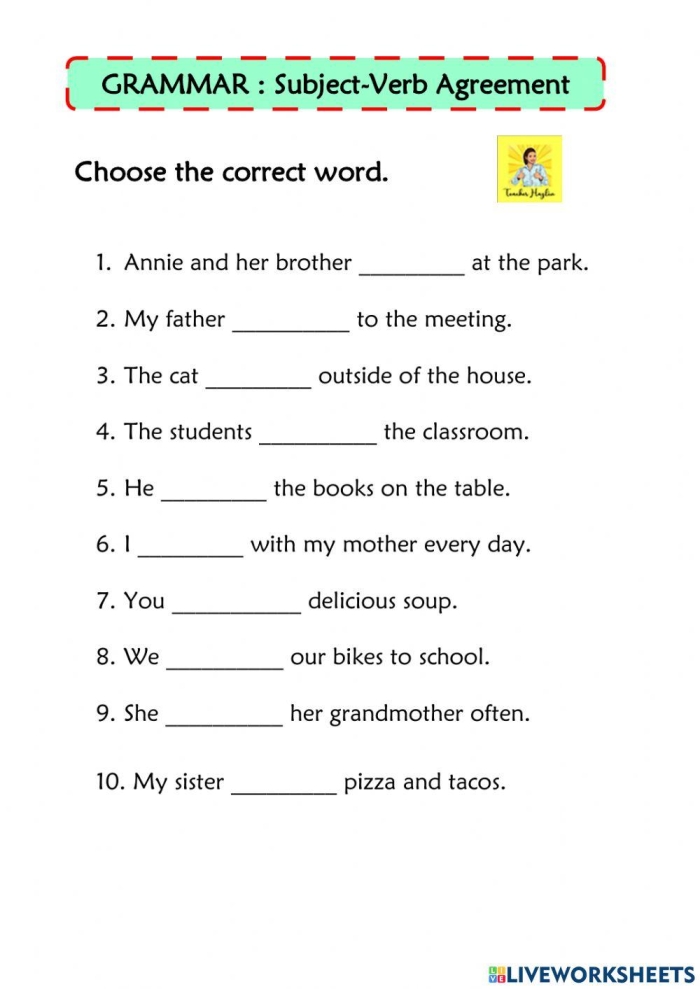
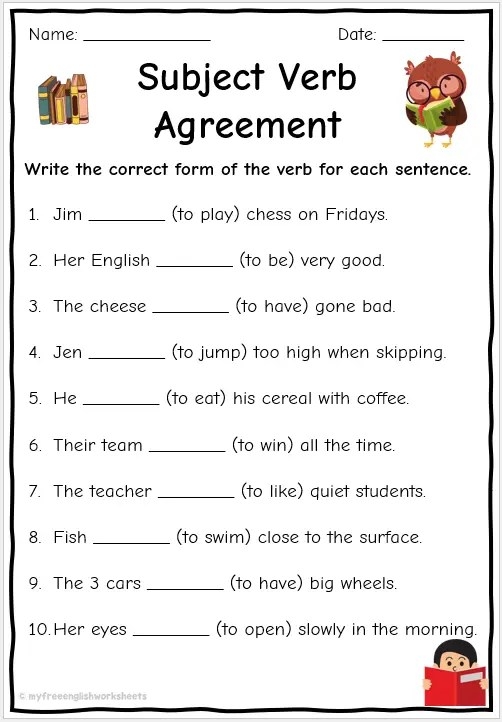
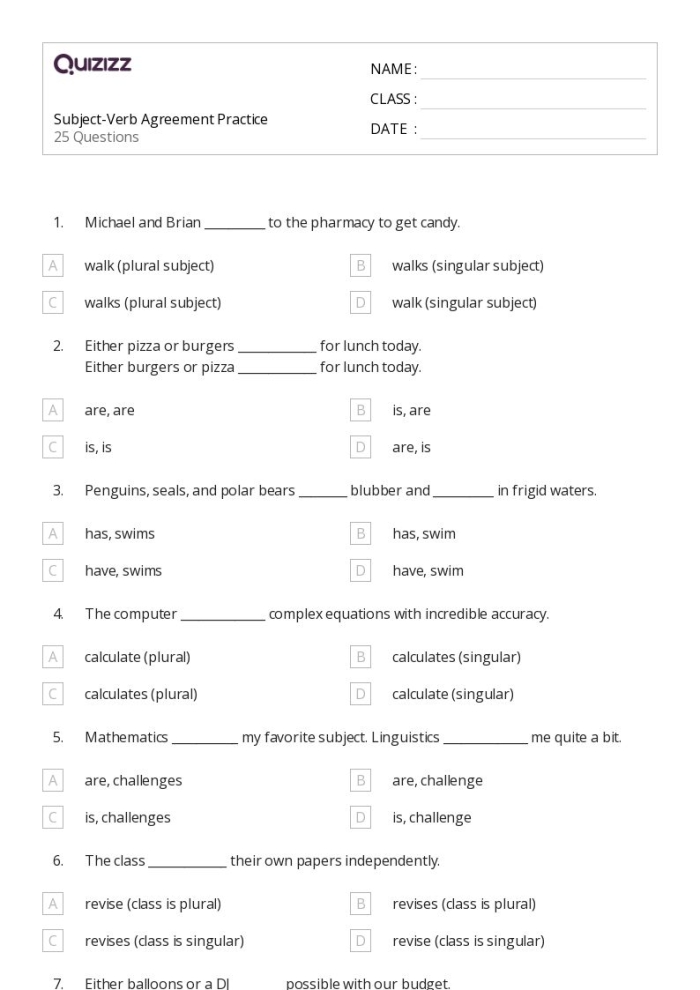
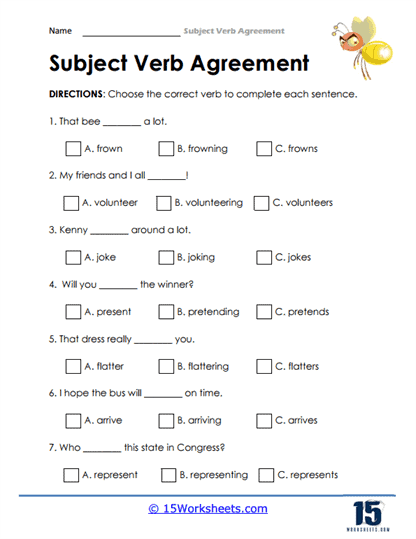
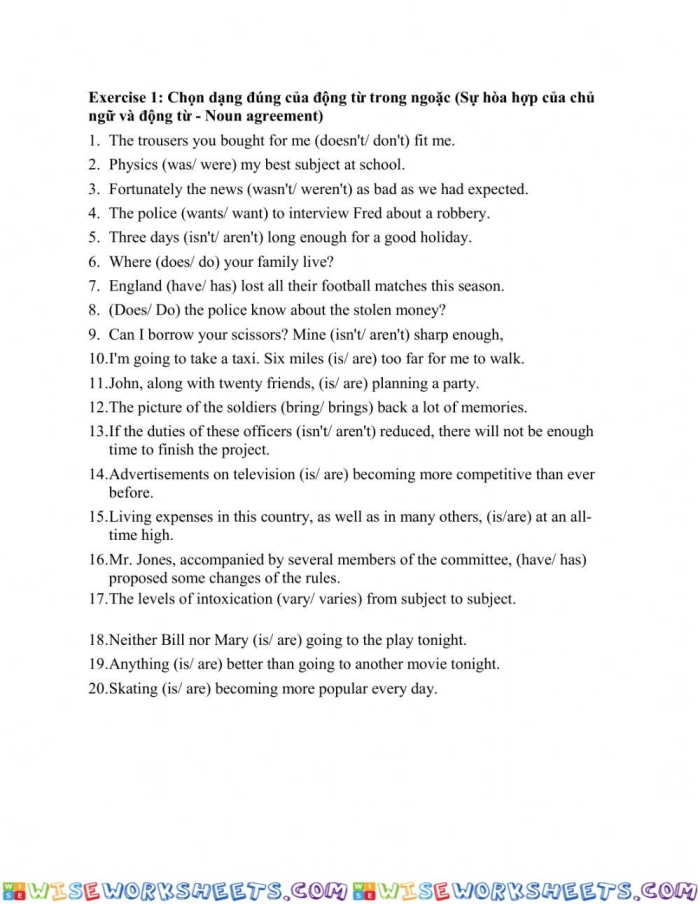
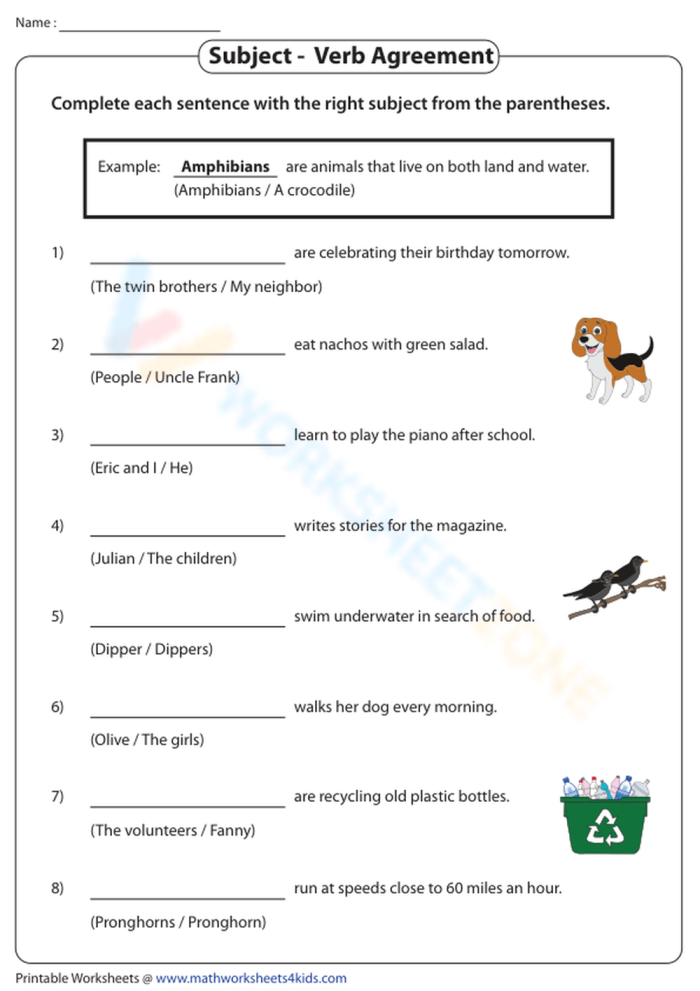
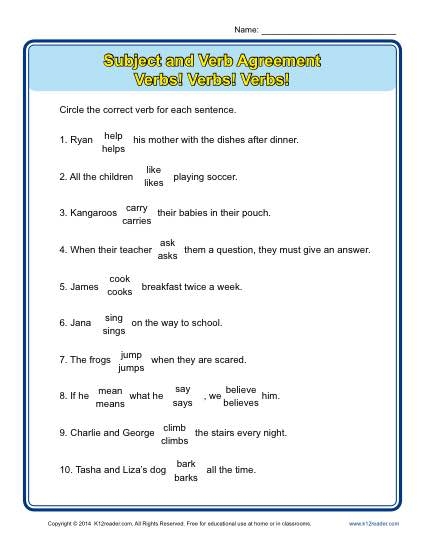
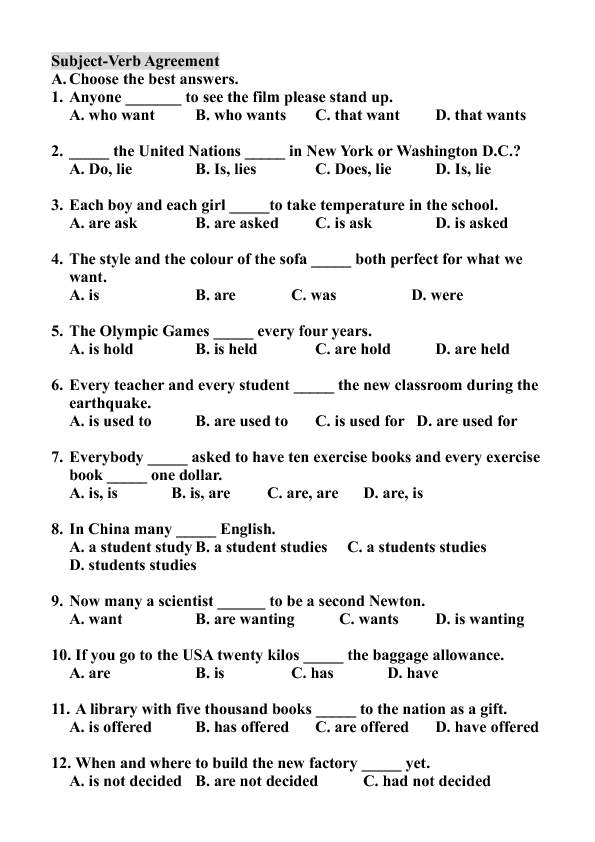
Subject-verb agreement trips up many fourth grade students because the rule seems straightforward until they encounter sentences where the subject and verb don’t match in number. A worksheet focused on this grammar skill gives children the chance to identify errors and practice writing sentences correctly, which builds confidence in their writing.
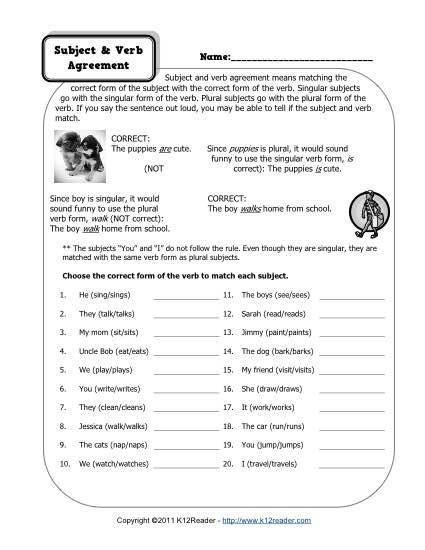
The core concept is simple: singular subjects need singular verbs, and plural subjects need plural verbs. “The dog runs” works, but “The dog run” doesn’t. Yet students often write sentences like “The dogs runs” or “She go to school,” mixing up singular and plural forms. These mistakes happen because children are still developing their understanding of how subjects and verbs work together in English.
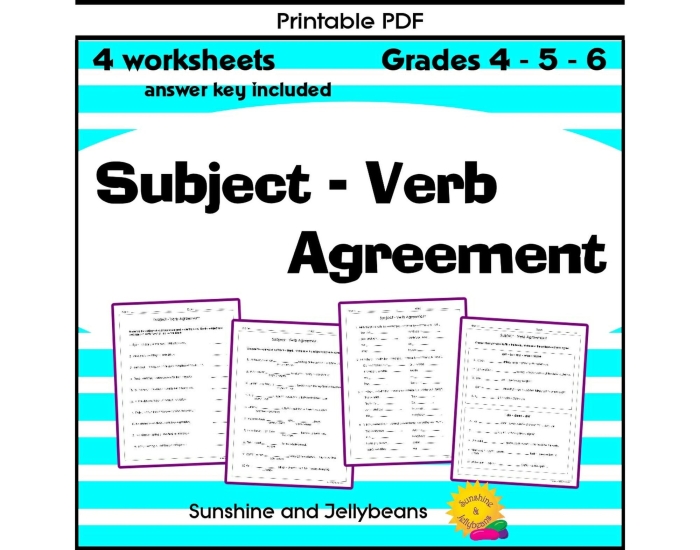
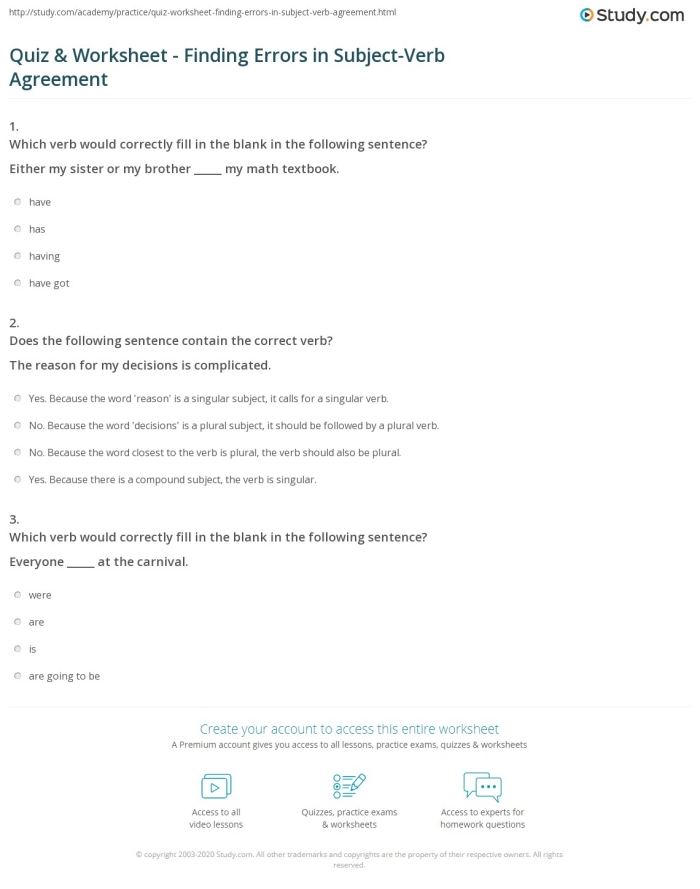
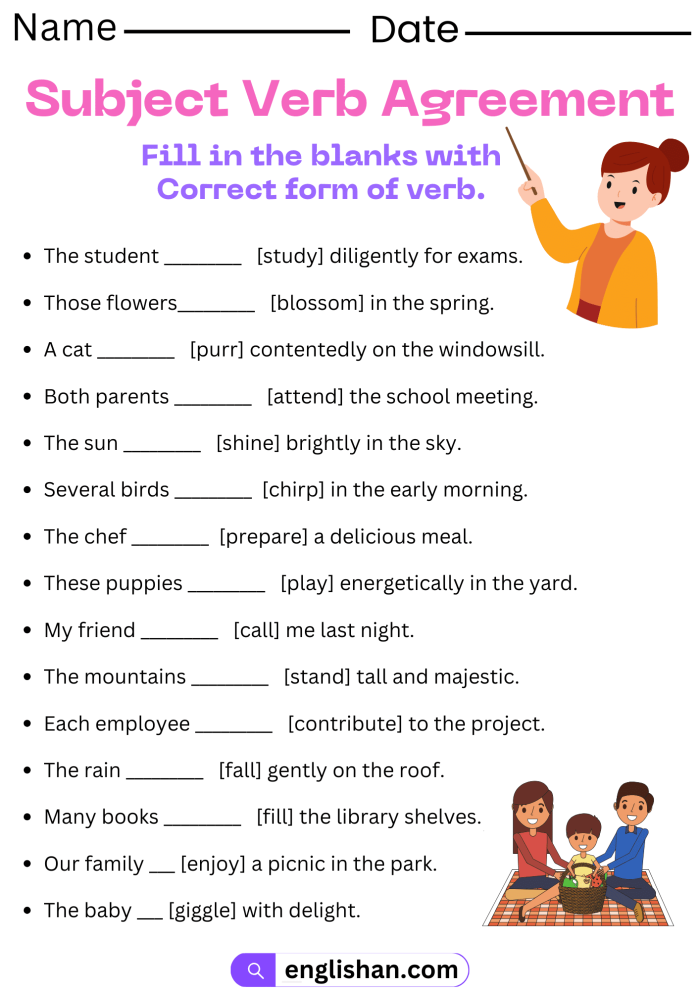
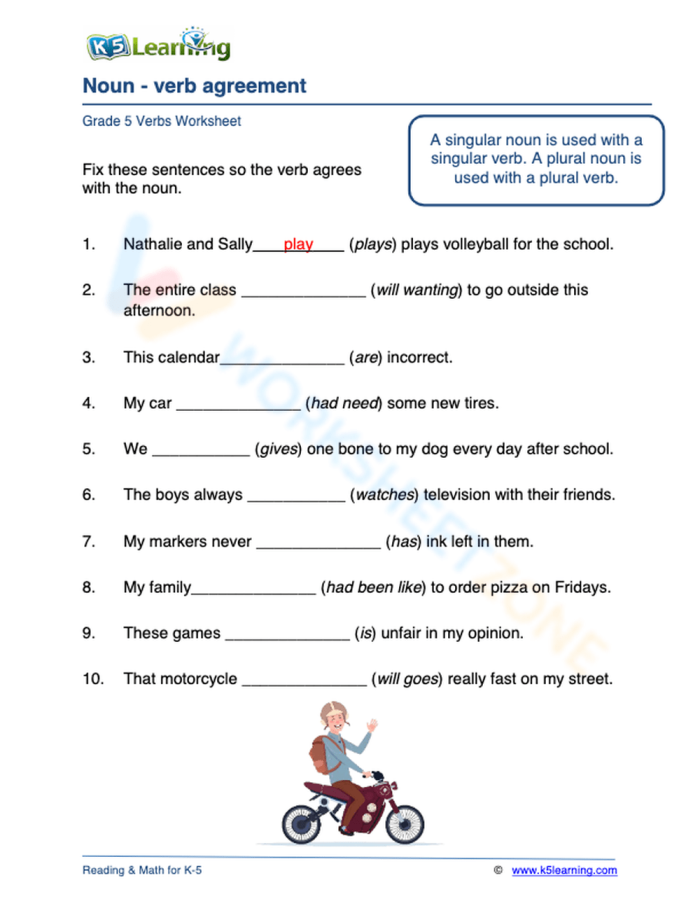
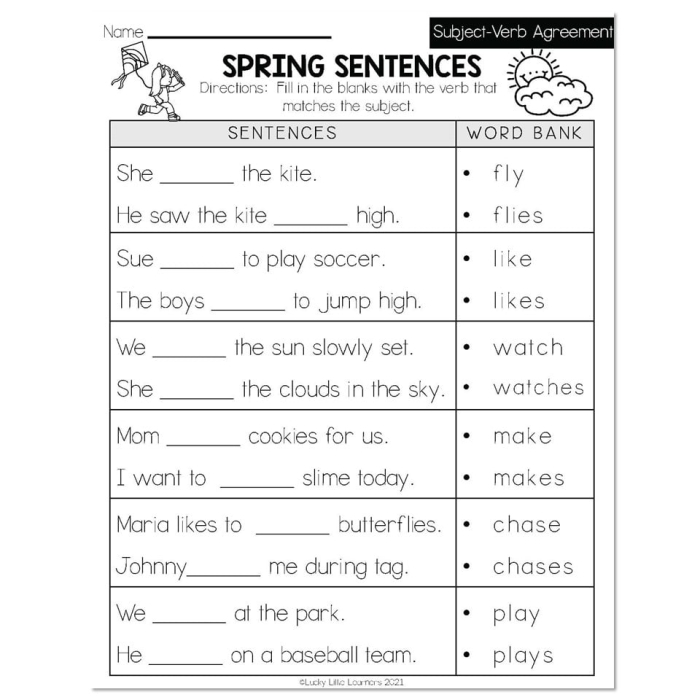
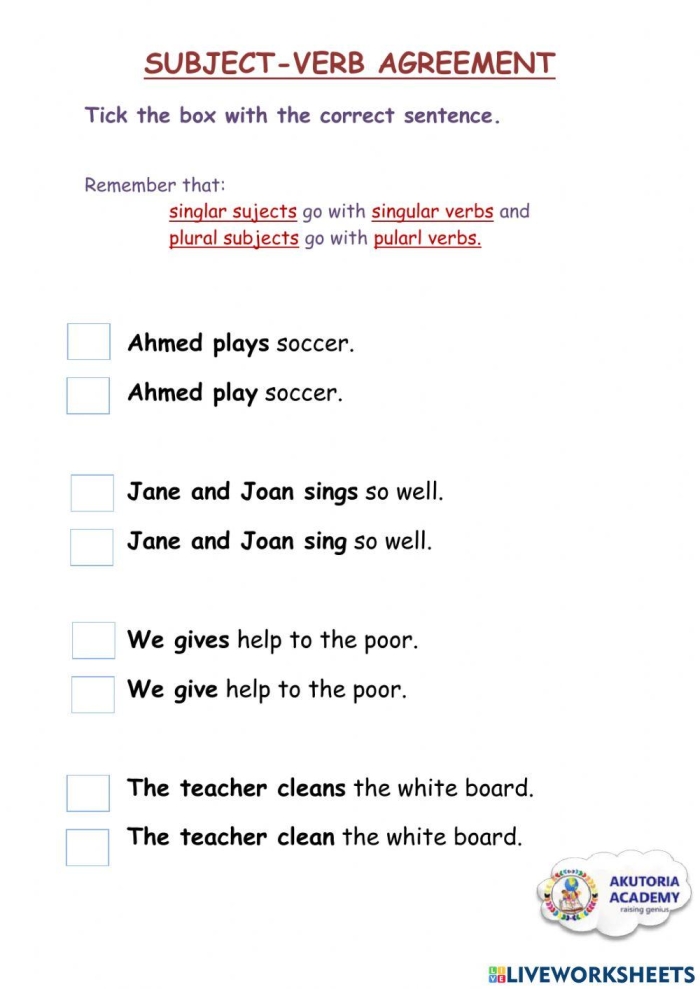
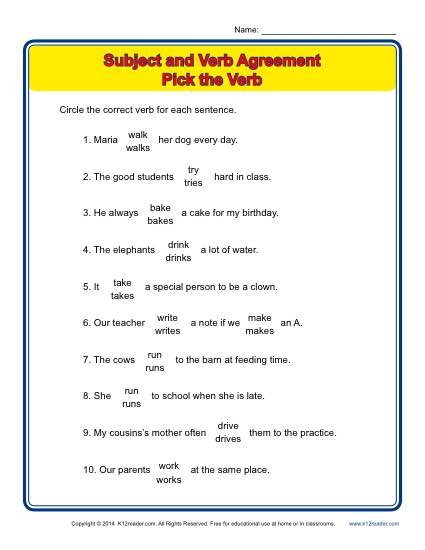
When fourth graders work through exercises that ask them to identify incorrect subject-verb pairs and then rewrite them correctly, they strengthen their grammar foundation. The practice format matters too. Rather than just reading grammar rules, actively writing the correct forms helps the brain retain the pattern. Some worksheets include a mix of simple sentences and more complex ones with compound subjects, which pushes students to think beyond basic agreement rules.
This type of practice connects to broader spelling and mechanics skills that fourth graders develop throughout the year. Understanding how verbs change form based on their subject is part of mastering written English. Students who grasp subject-verb agreement early typically have fewer mechanical errors in their longer writing assignments.
Pairing this practice with other grammar work, such as grammar and mechanics exercises about historical topics, can make the skill feel more connected to real writing. When children see grammar rules applied in context, they understand why the rules matter beyond the worksheet itself.
Worksheet Practice Section