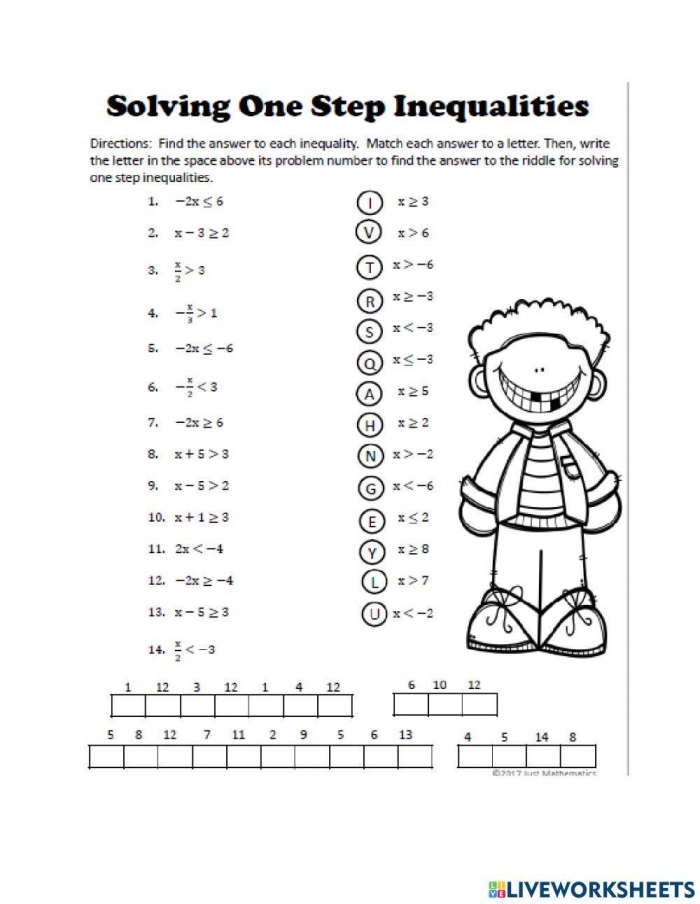
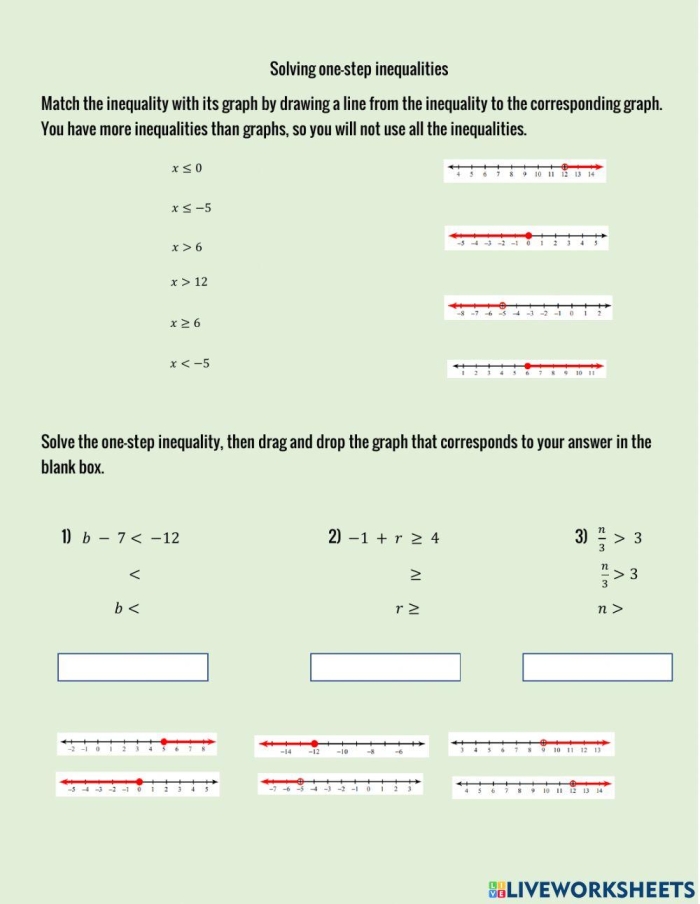
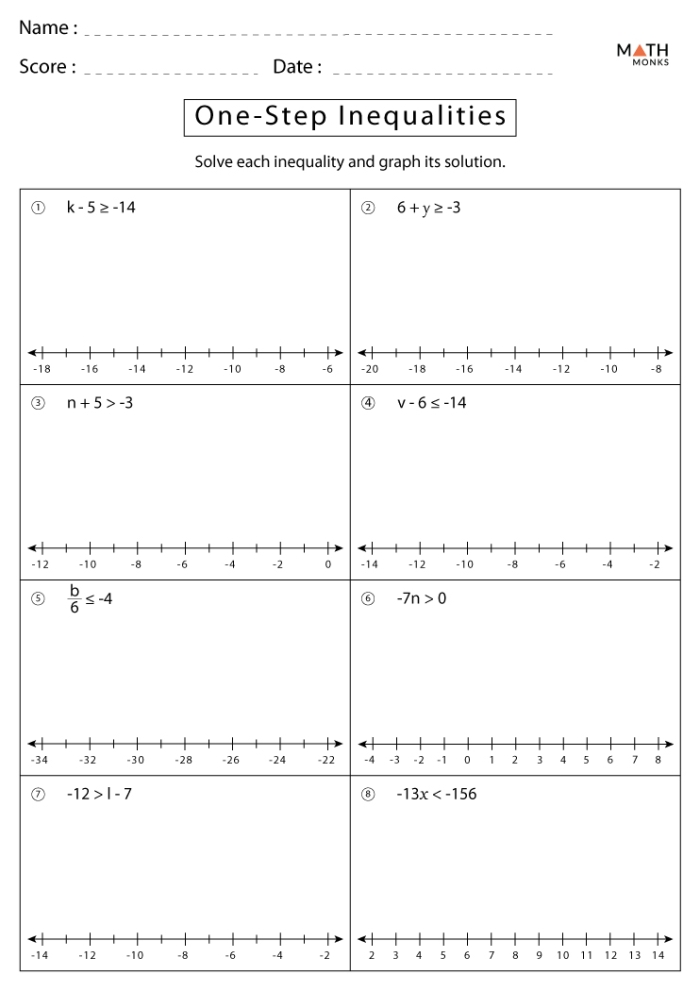
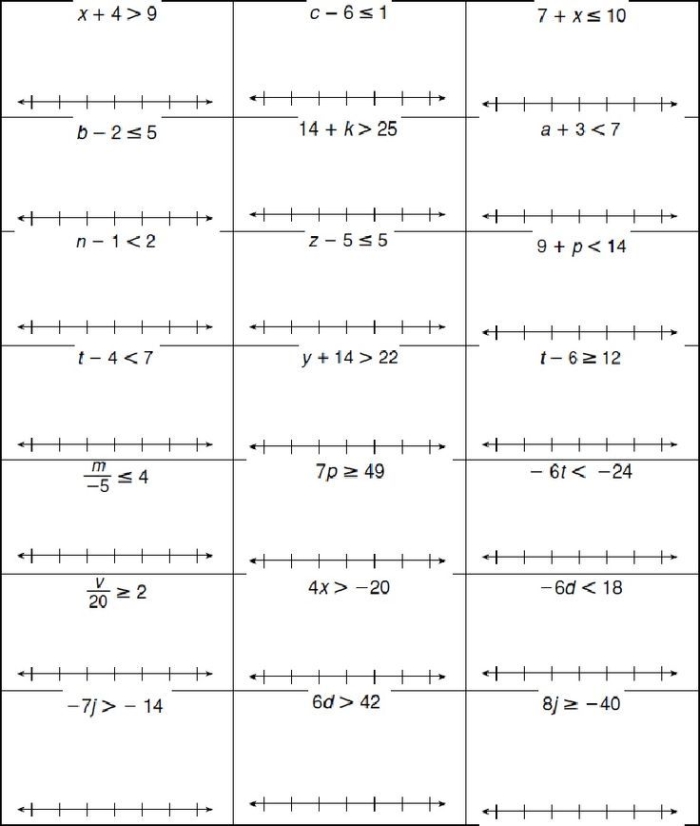
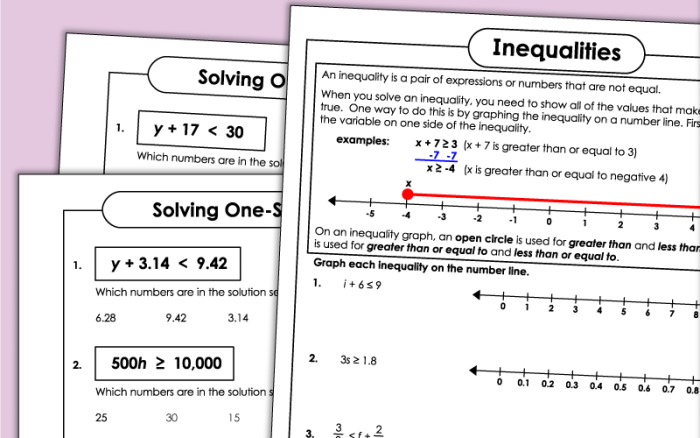
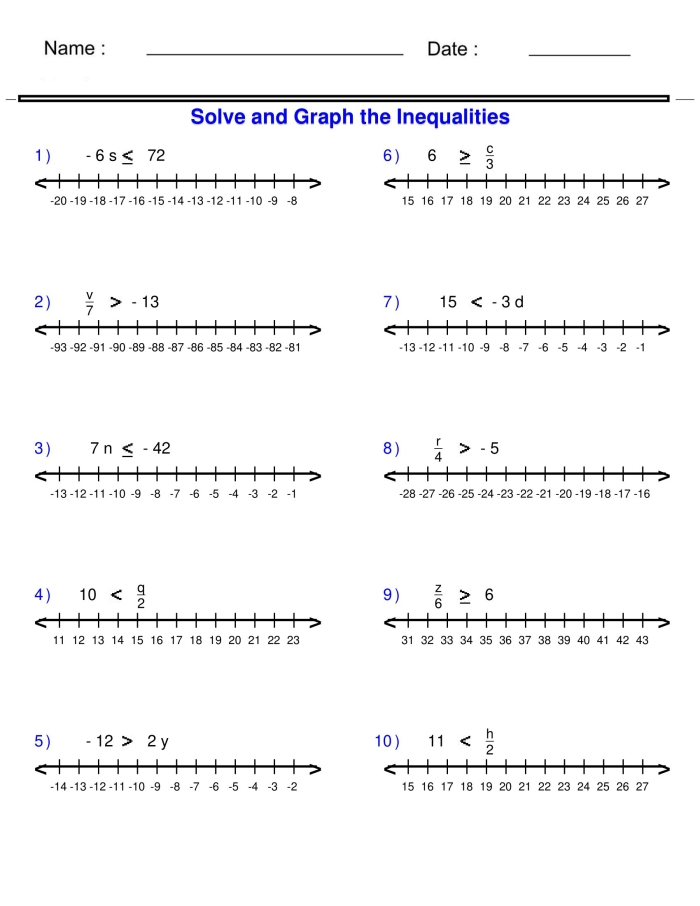
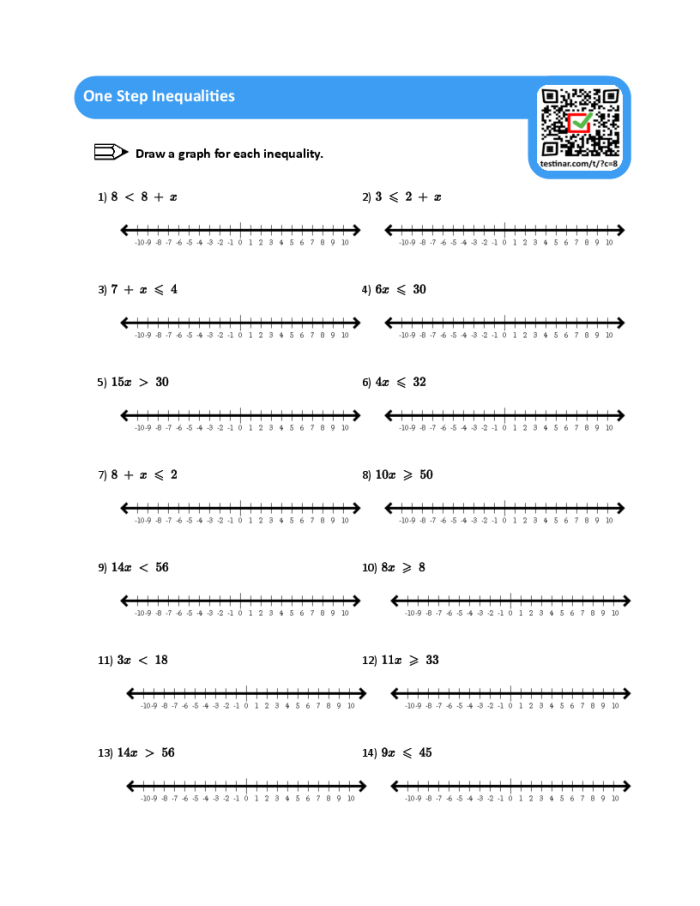
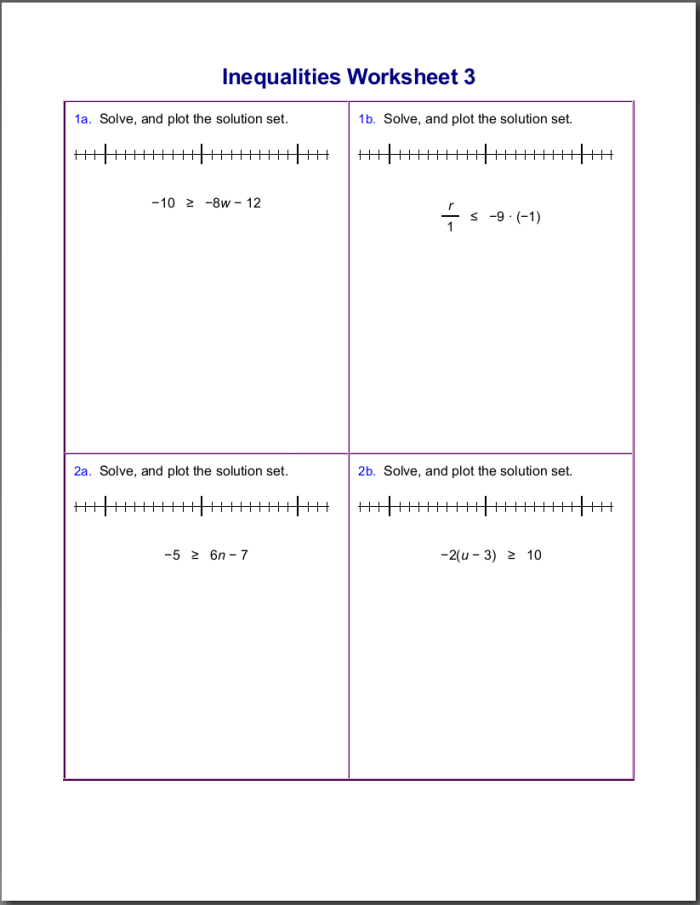
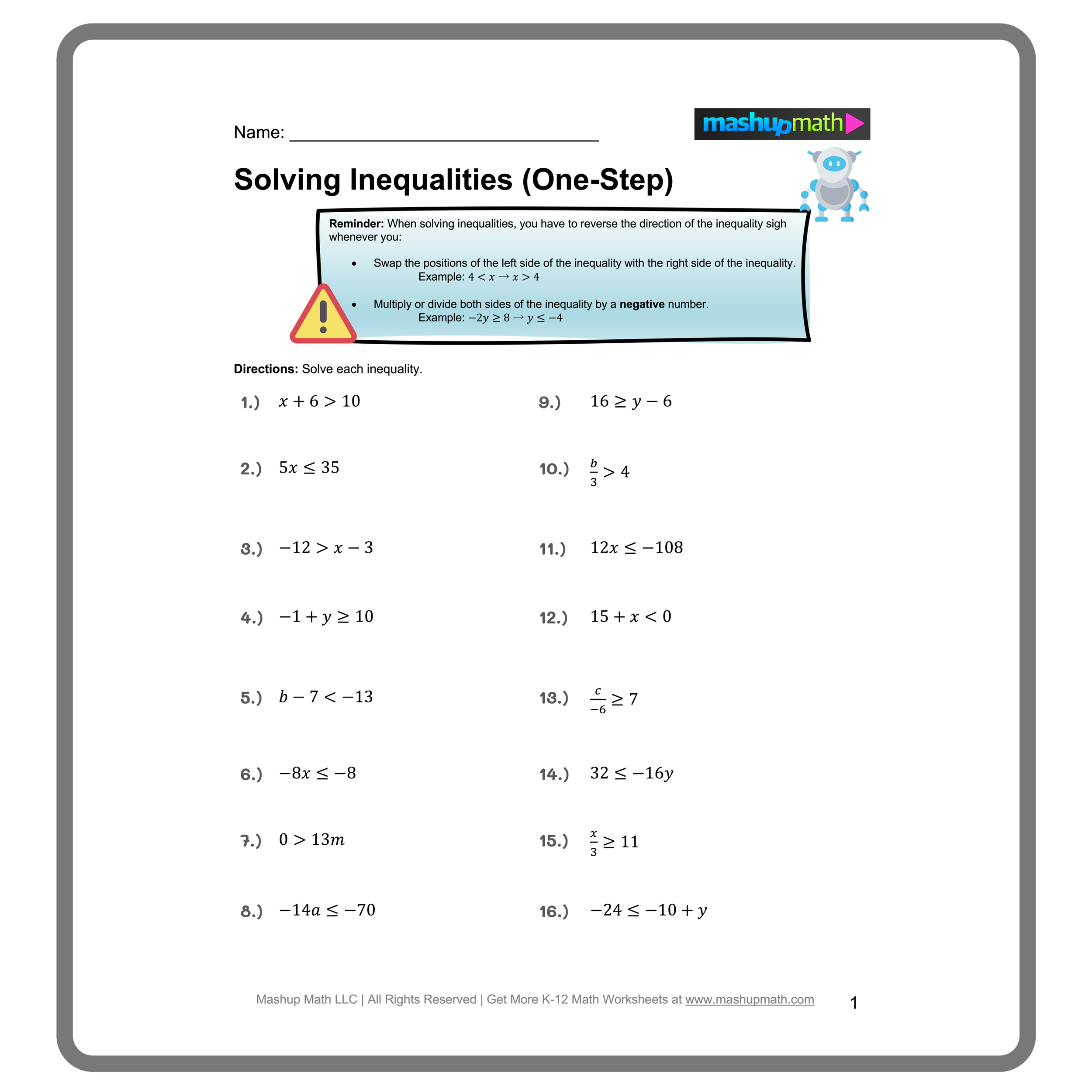
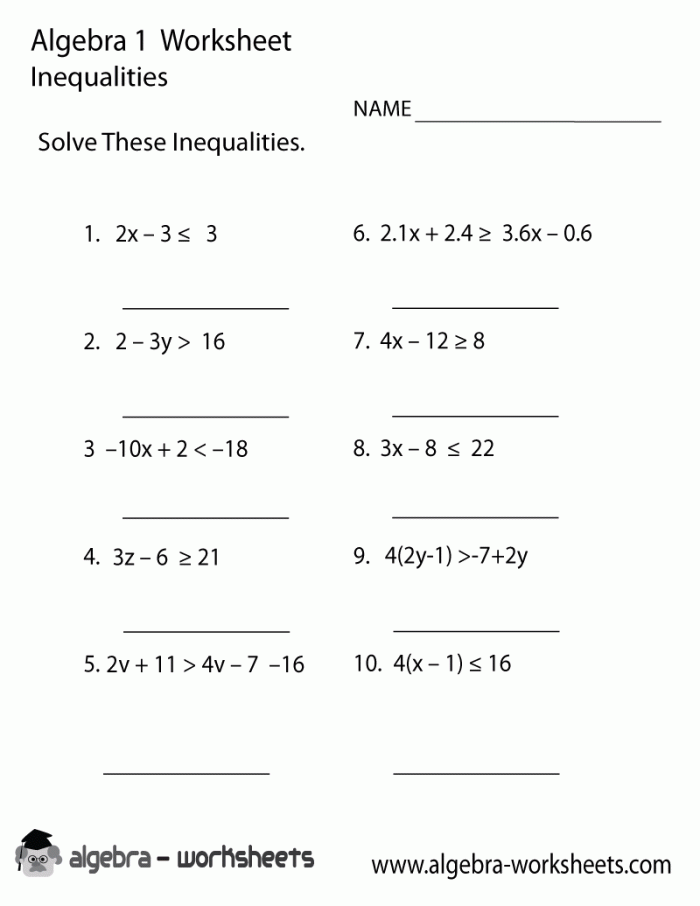
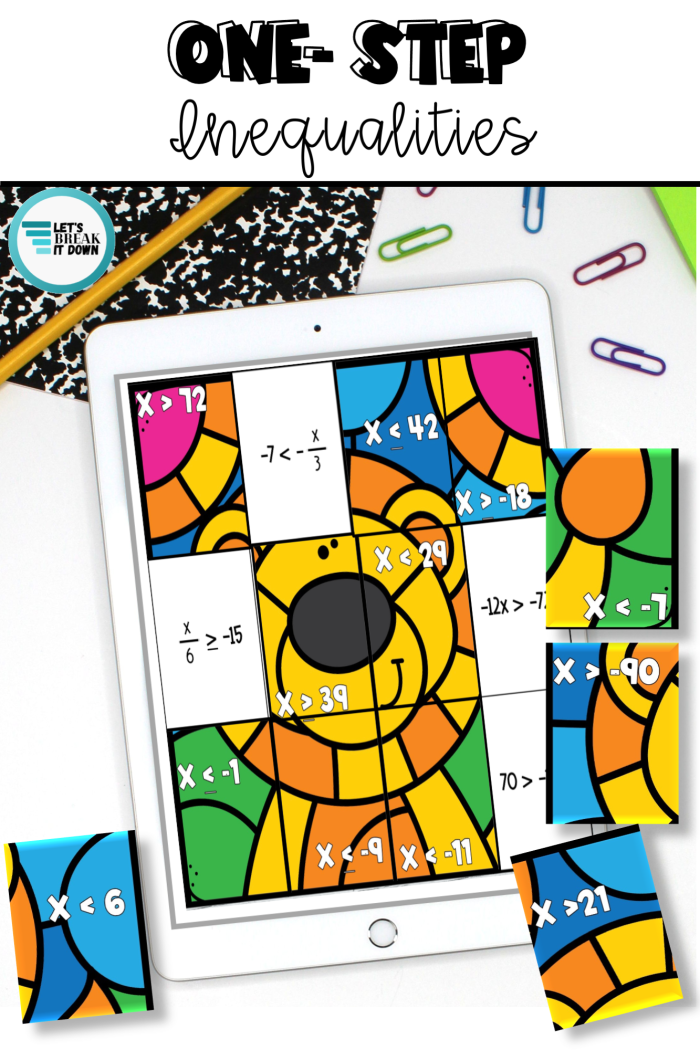
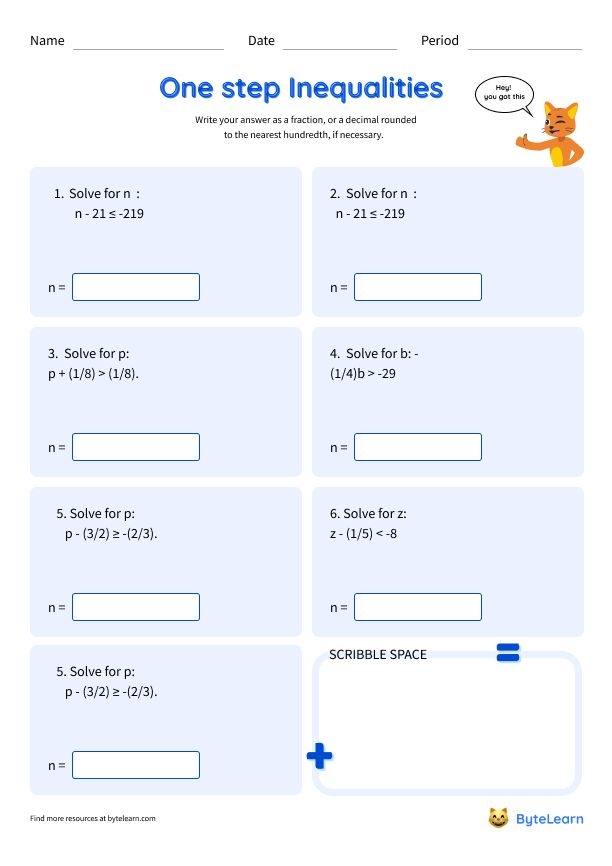
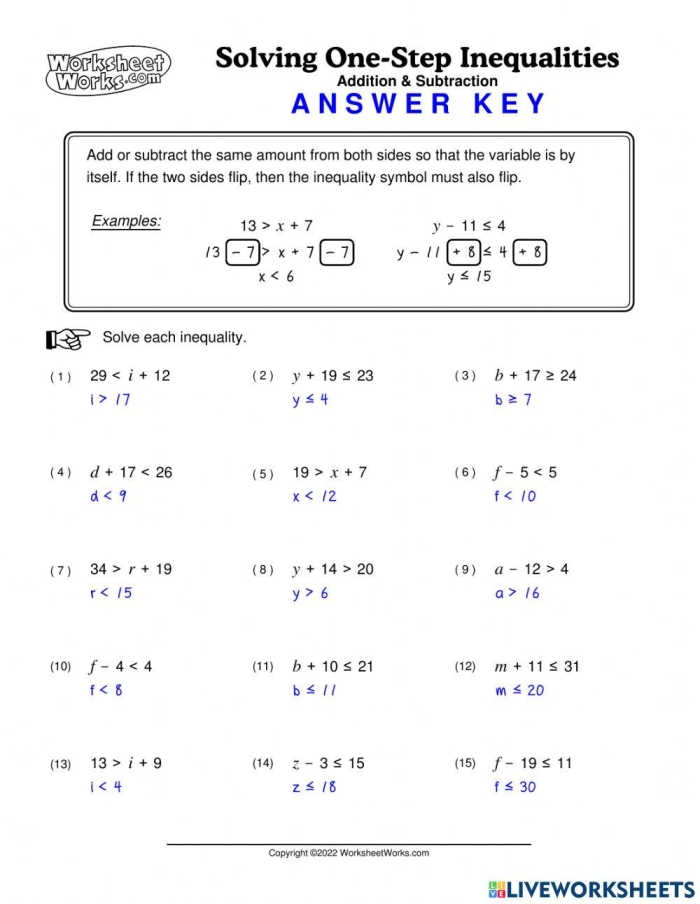
One-step inequalities often trip up seventh-grade students because they require understanding both algebraic thinking and the visual representation of solutions. The key to building confidence is giving students enough structured practice with inverse operations before asking them to graph their answers on a number line.
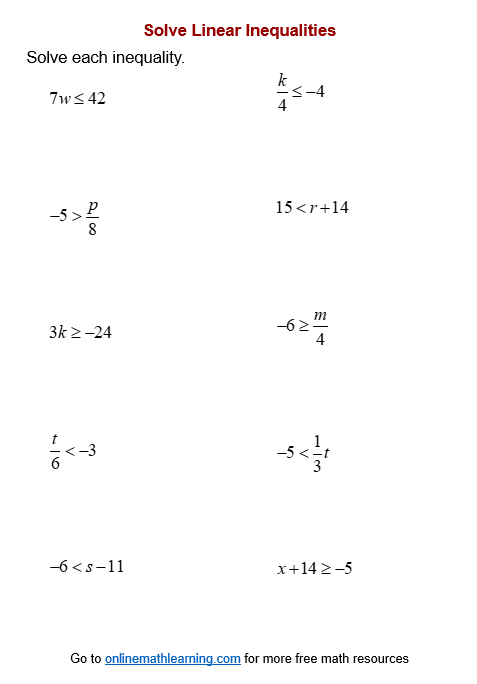
When students work through one-step inequalities, they’re applying the same inverse operation principles they’ve learned with equations, but with an added layer of complexity: the direction of the inequality symbol can flip depending on whether they multiply or divide by a negative number. This concept doesn’t stick after a single explanation. Students need repetition with clear, manageable problems that let them focus on the mechanics without getting lost in complicated arithmetic.
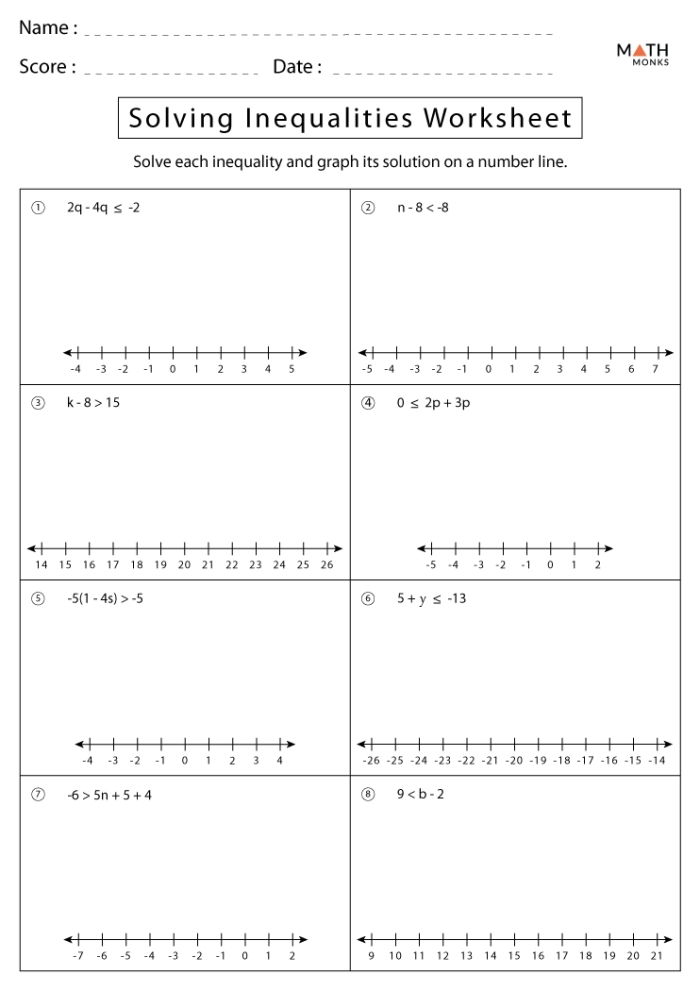
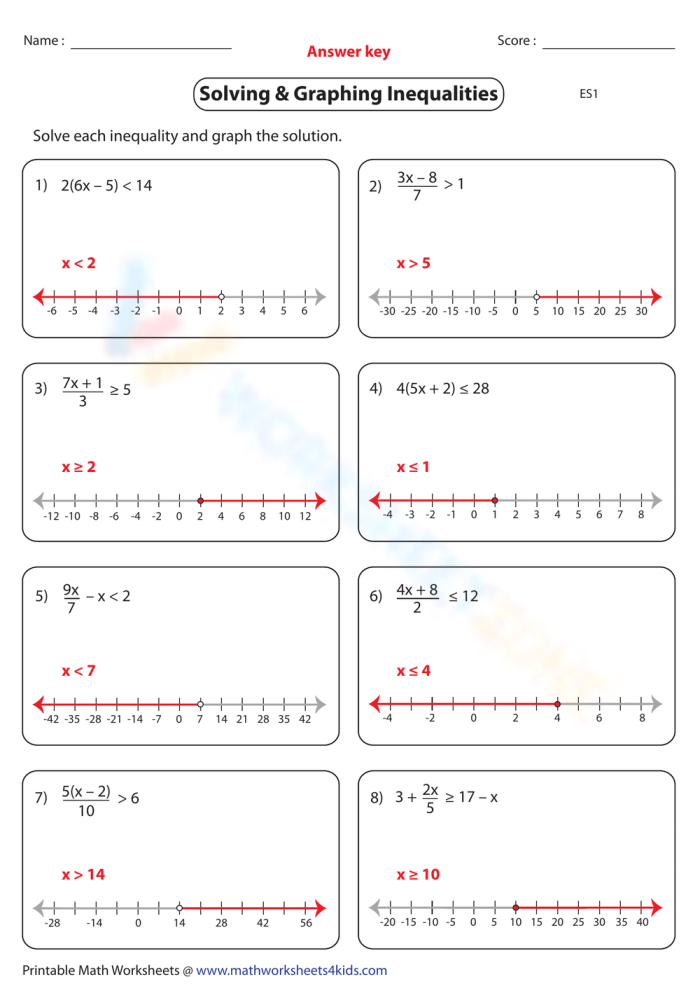
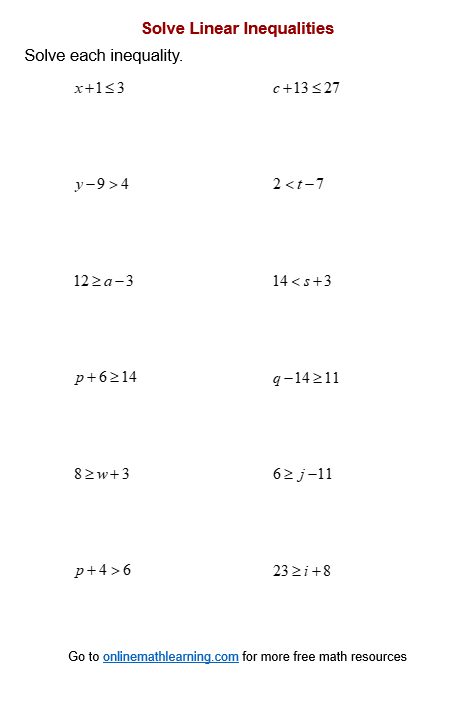
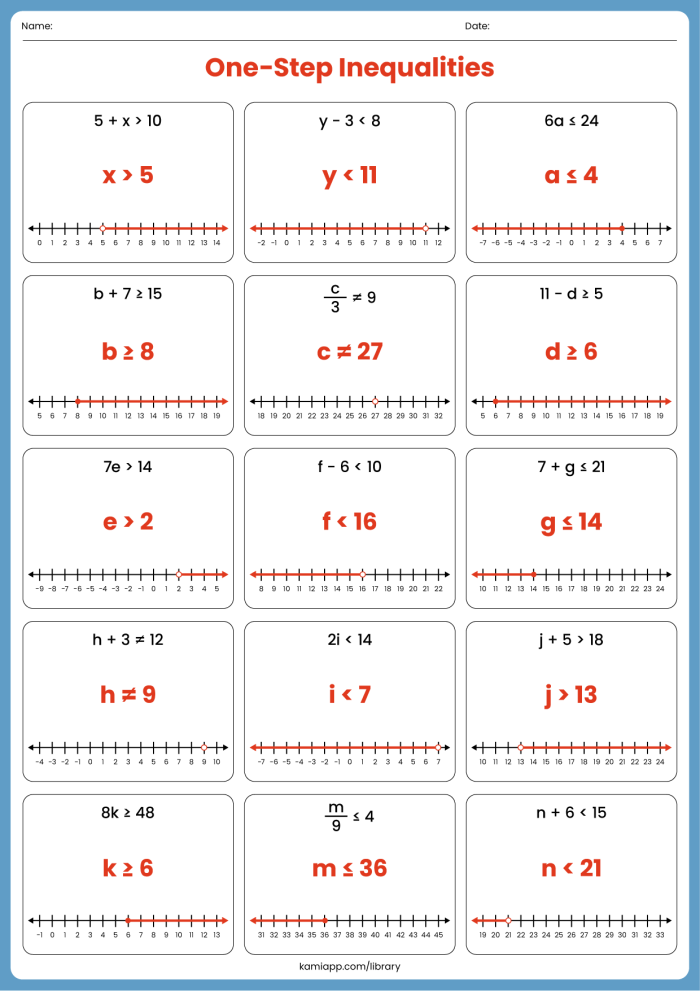
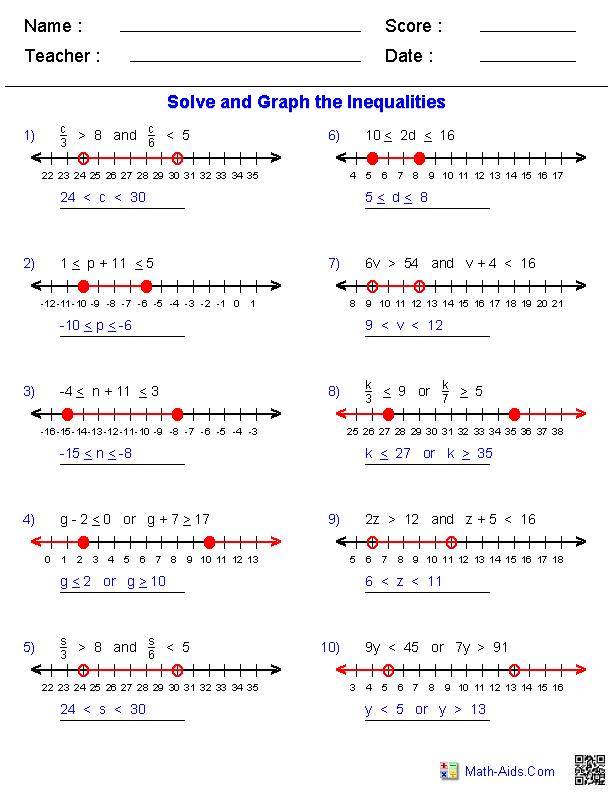
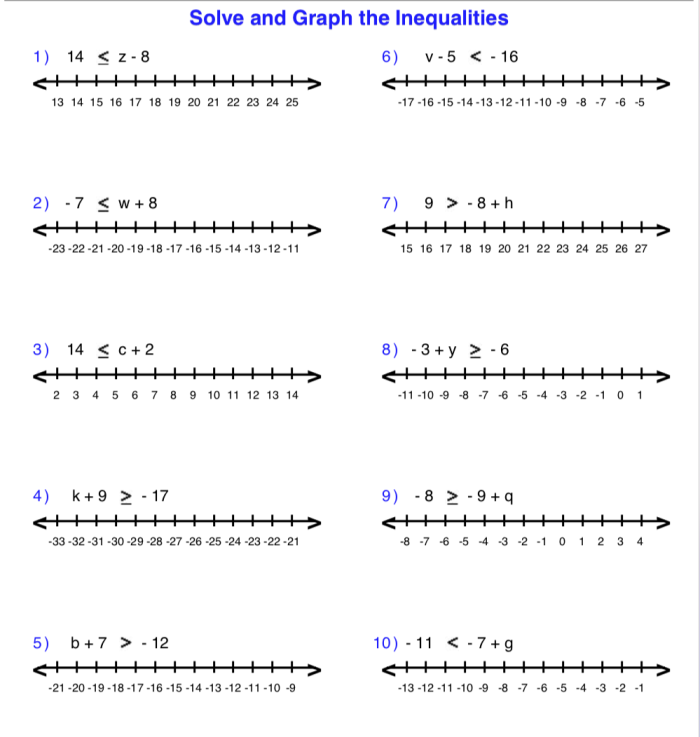
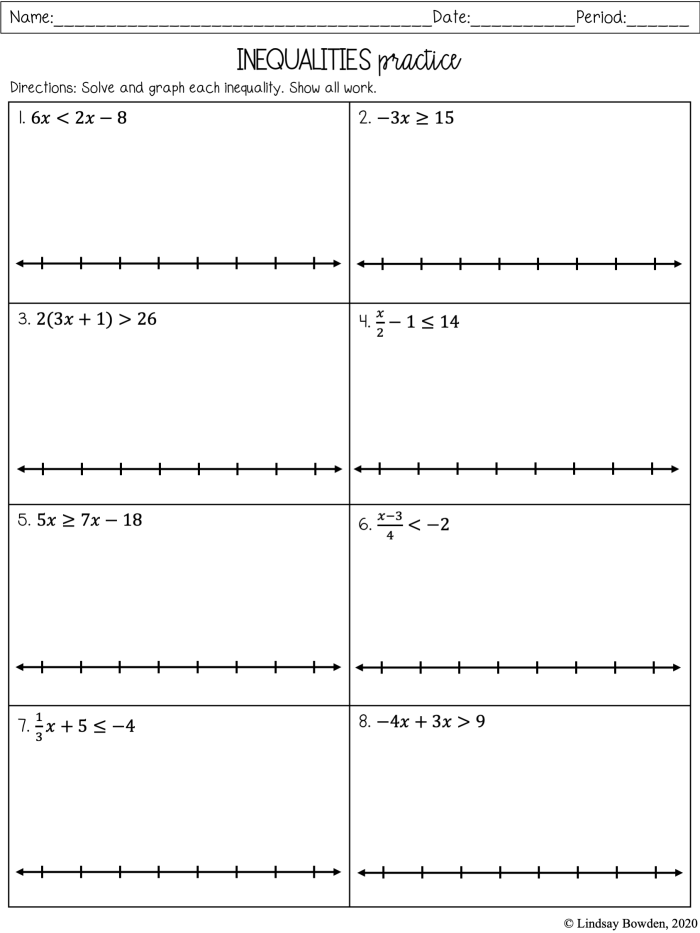
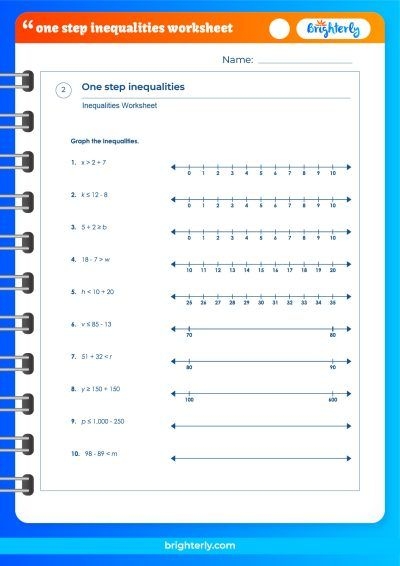
A solid worksheet should start with straightforward addition and subtraction problems like x + 5 > 12 or x – 3 < 8. Once students feel secure with those, the worksheet can introduce multiplication and division, including negative numbers. The real learning happens when students move from solving to graphing, because graphing forces them to think about what their answer actually means. Does the circle on the number line get filled in or left open? Does the arrow point left or right? These decisions matter, and they help cement understanding.
Pairing inequality practice with other seventh-grade algebra skills strengthens overall mathematical reasoning. Students who understand unit rates with fractions already have experience reasoning about proportional relationships, which transfers to understanding how operations affect inequality solutions.
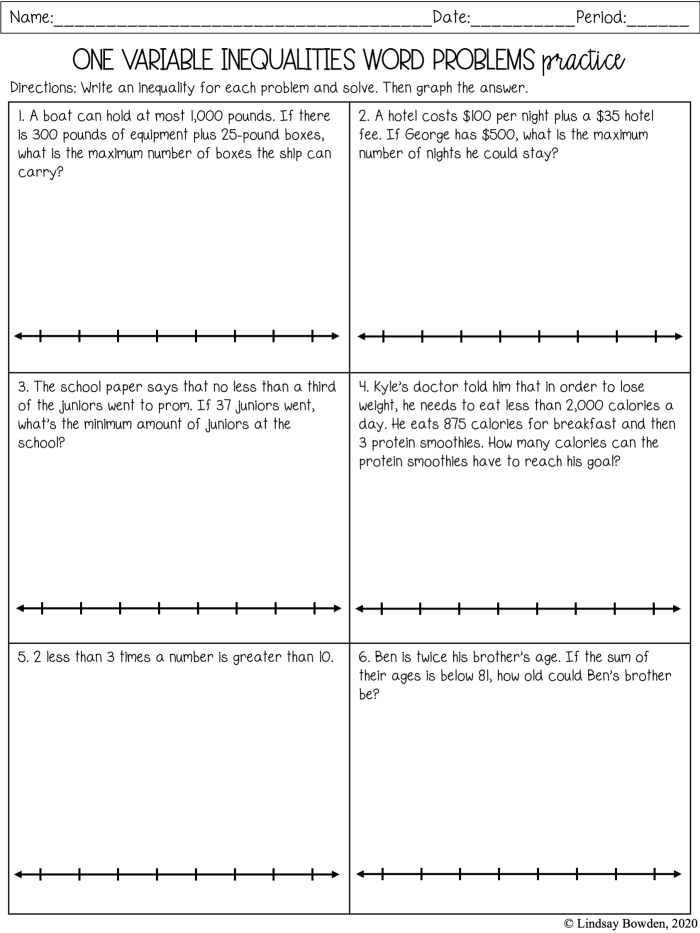
Worksheets that include both solving and graphing components give students the complete picture of what an inequality represents. This approach builds the foundation they’ll need for more complex algebraic thinking in eighth grade and beyond.
Boost Skills with These Worksheets