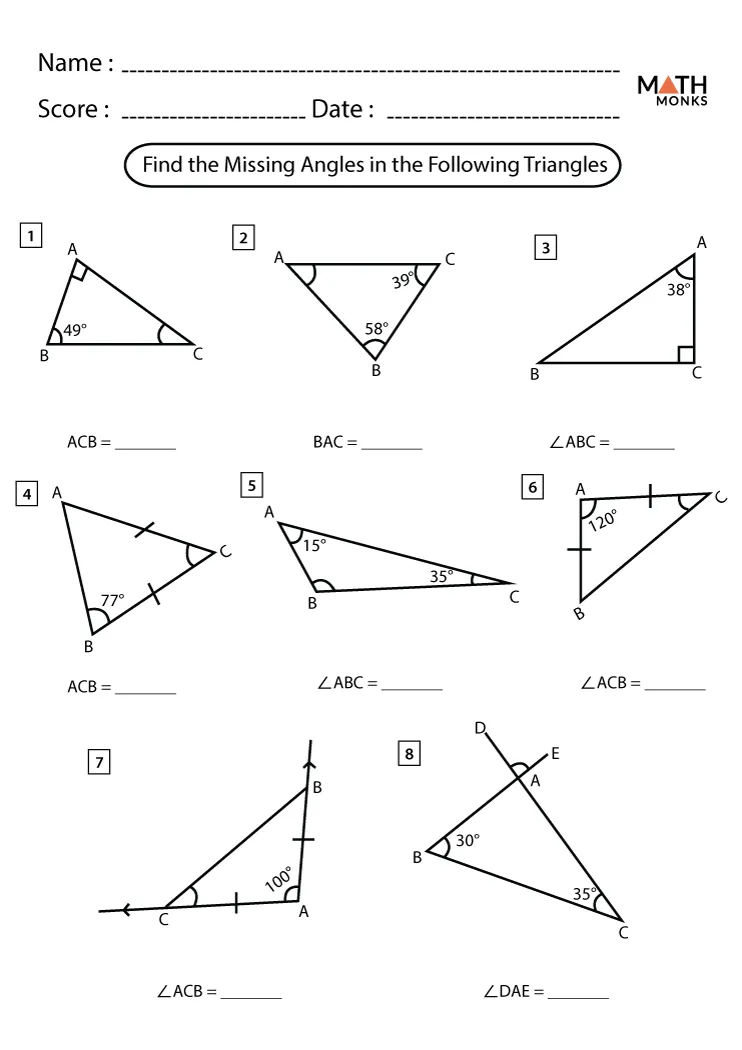
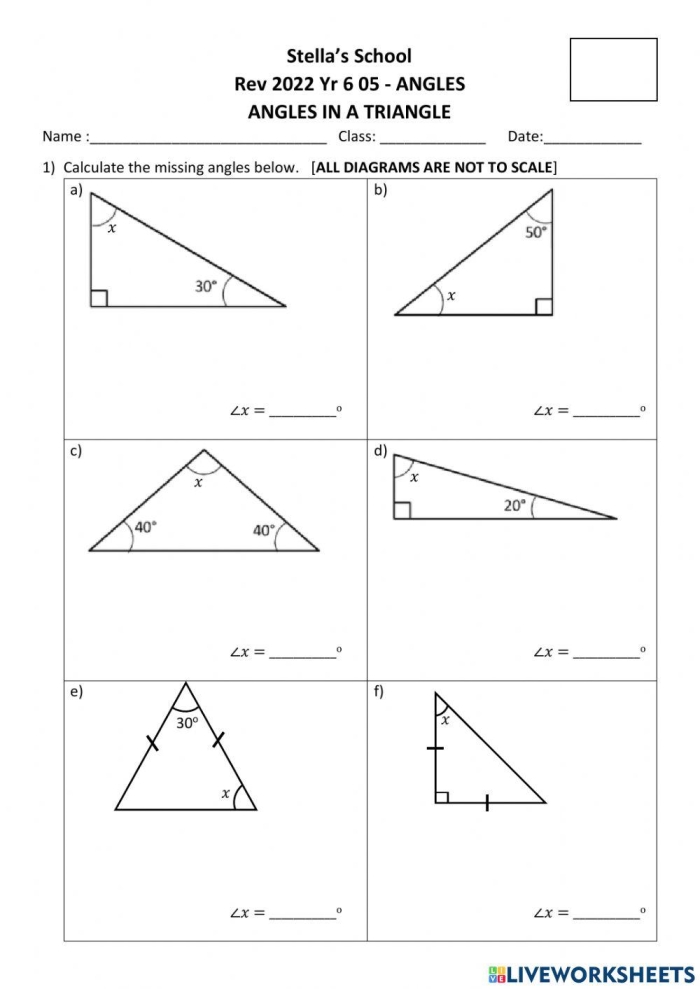
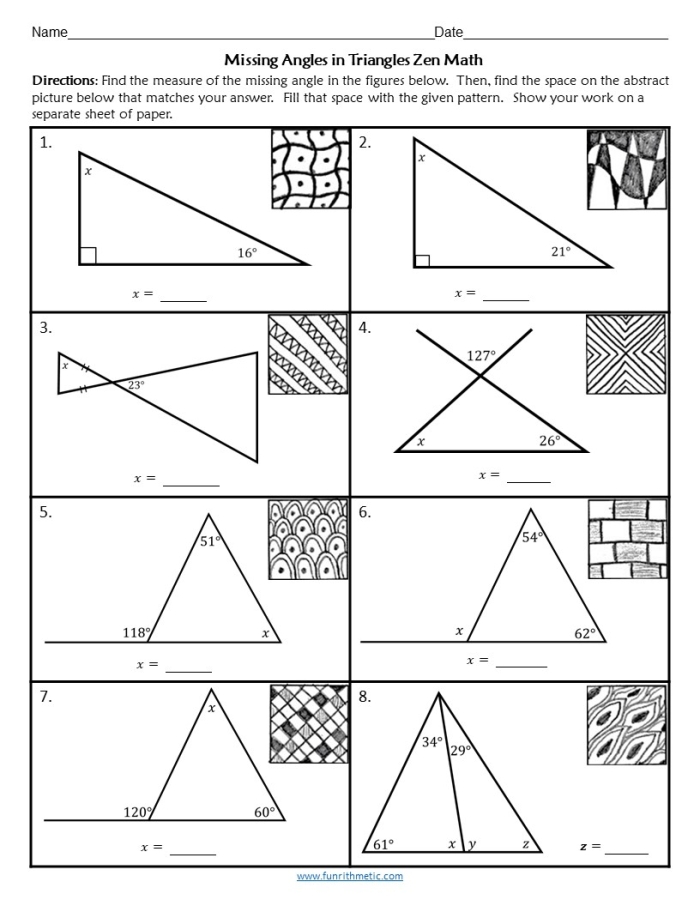
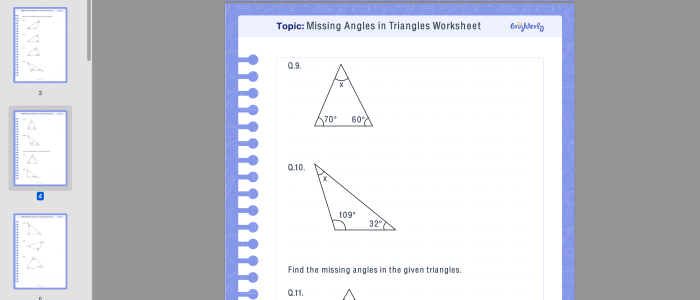
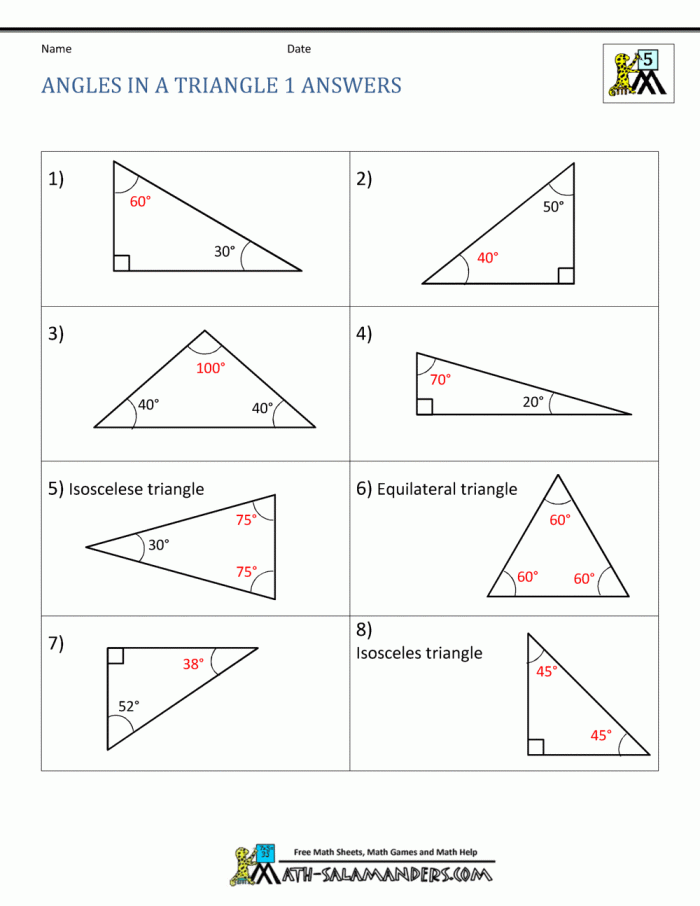
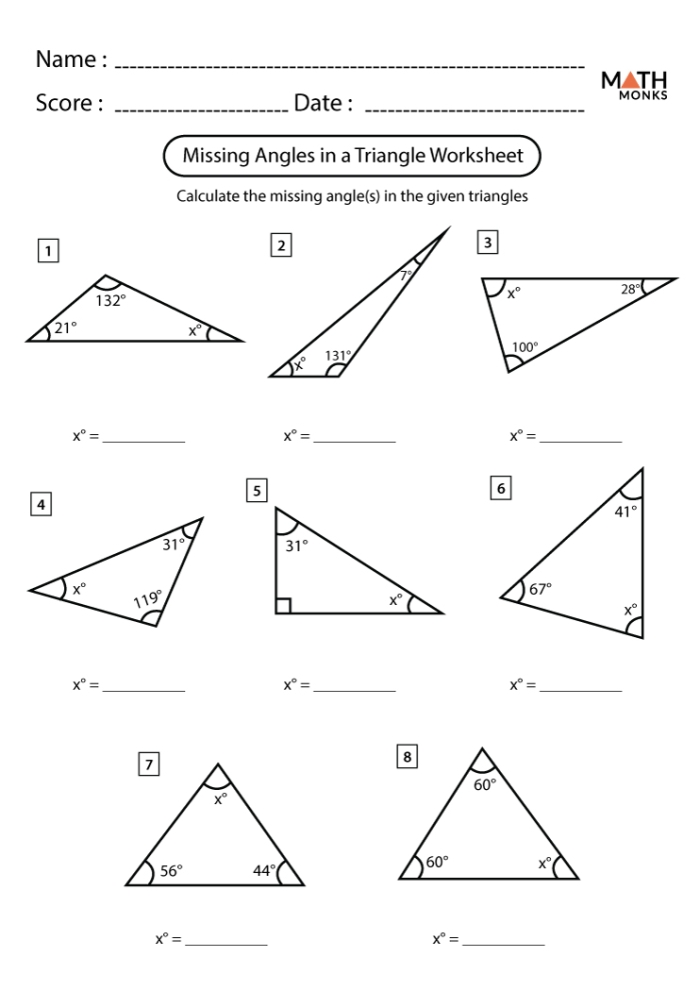
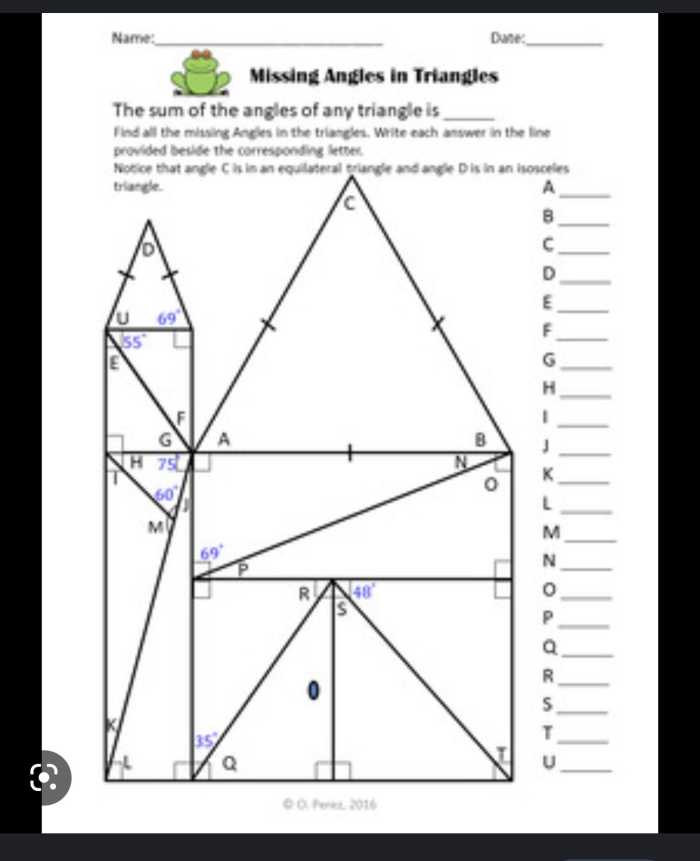
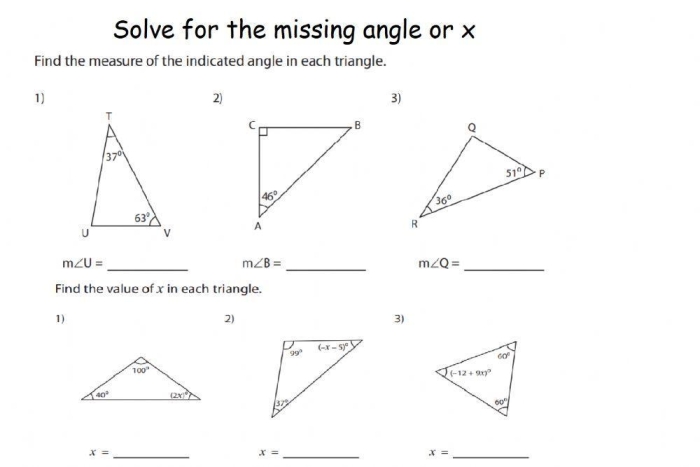
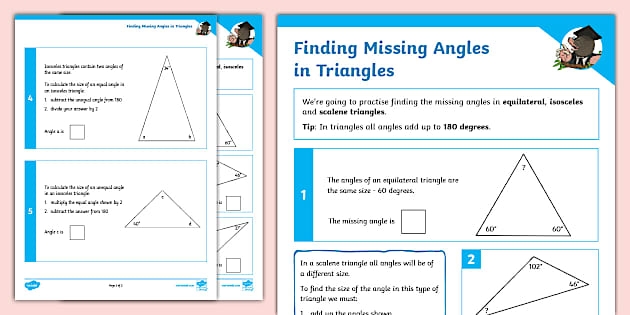
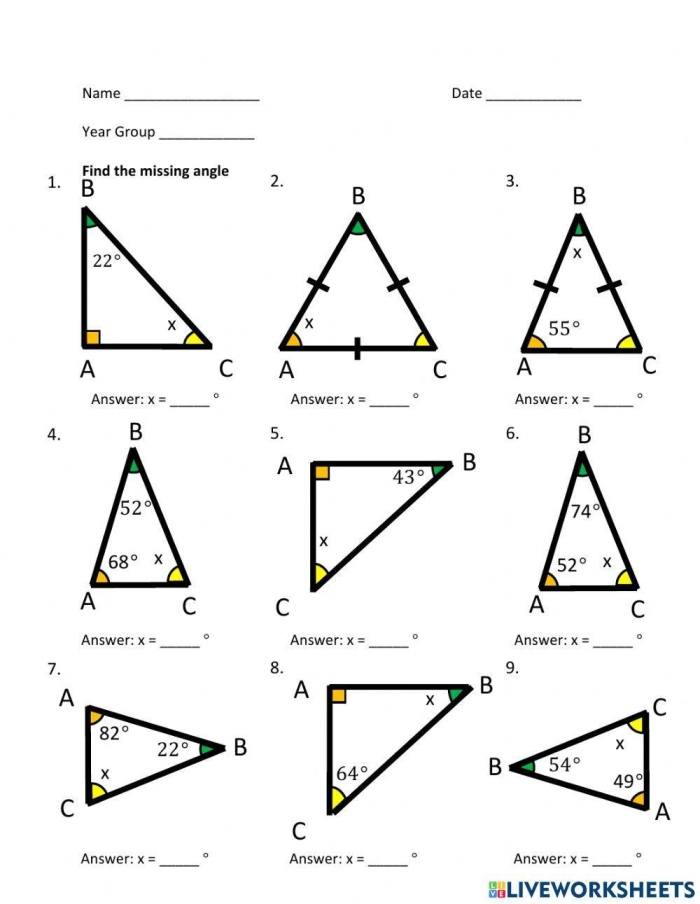
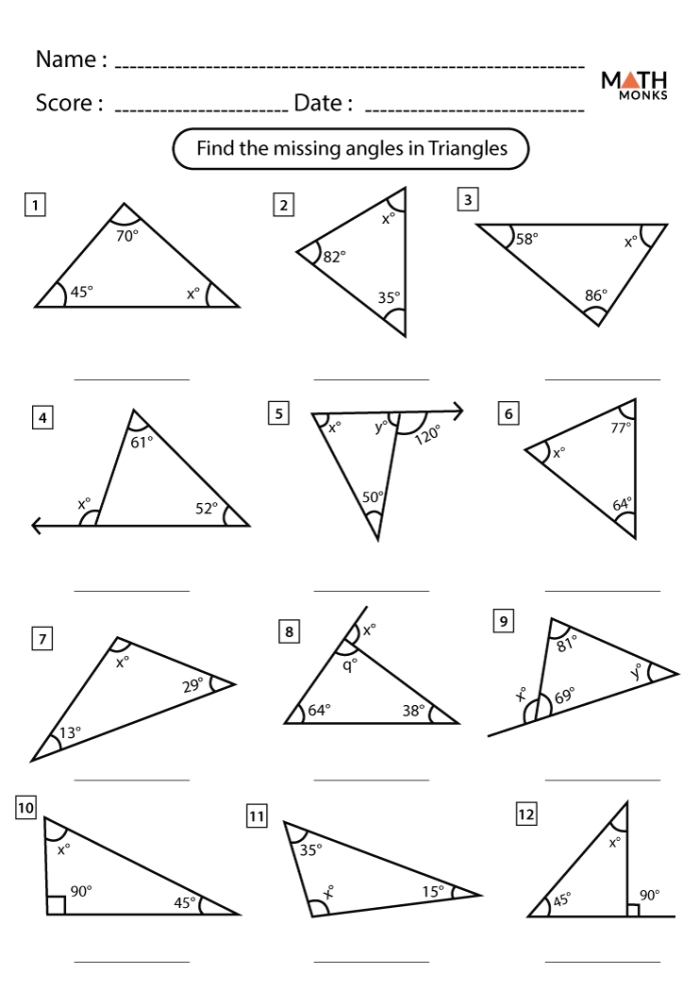
When eighth-grade students first encounter the Triangle Angle Sum Theorem, they’re learning one of geometry’s most reliable rules: the three interior angles of any triangle always add up to 180 degrees. This principle becomes the foundation for solving countless geometry problems, and a well-designed worksheet helps students move from understanding the concept to applying it confidently.
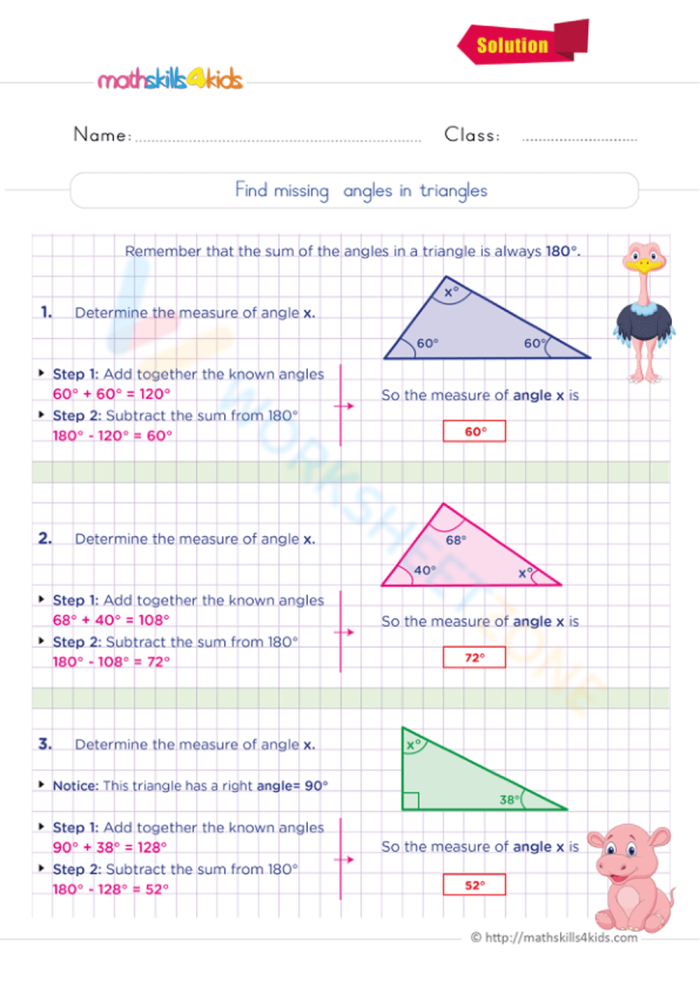
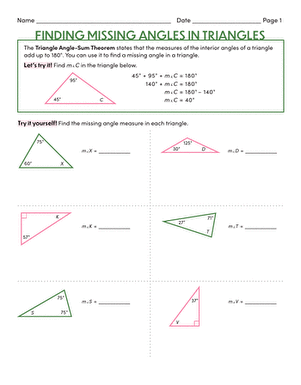
The beauty of this theorem lies in its simplicity and consistency. Once students grasp that all three angles must total exactly 180 degrees, they can find any missing angle if they know the other two. For example, if a triangle has angles measuring 50 degrees and 60 degrees, the third angle must be 70 degrees. The calculation is straightforward: 180 – 50 – 60 = 70. This direct approach makes it accessible for eighth-grade learners while building problem-solving skills they’ll use throughout their math education.
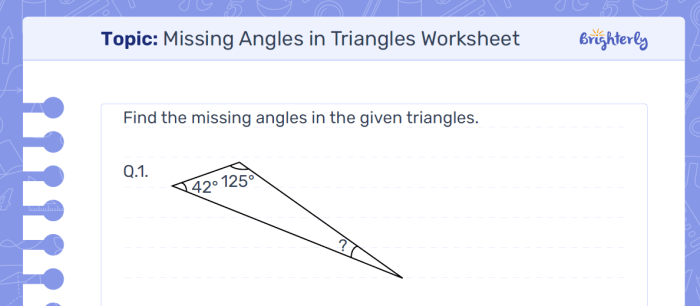
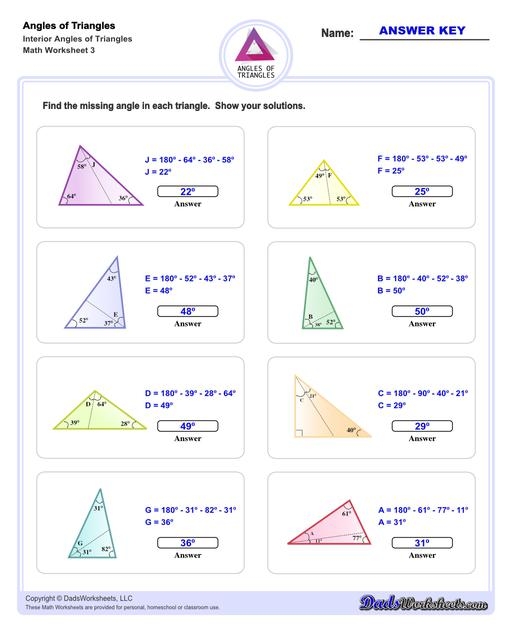
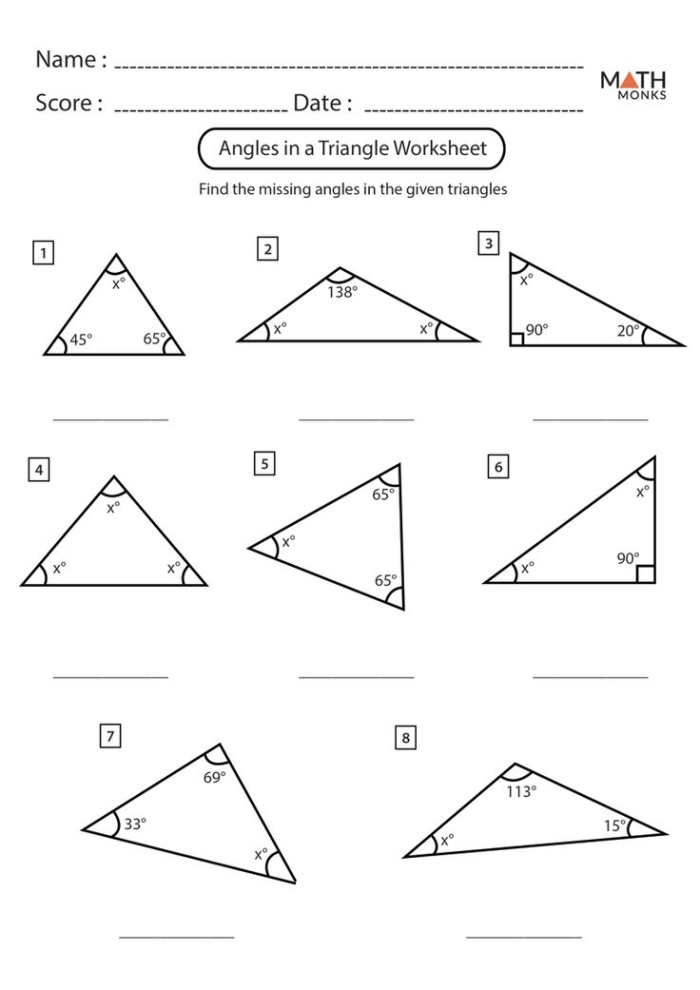
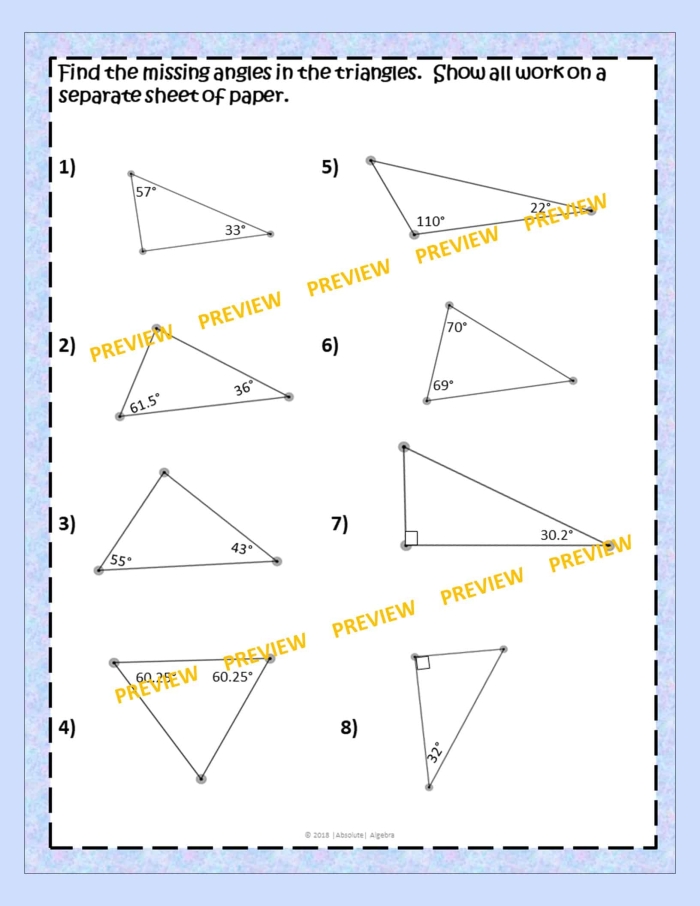
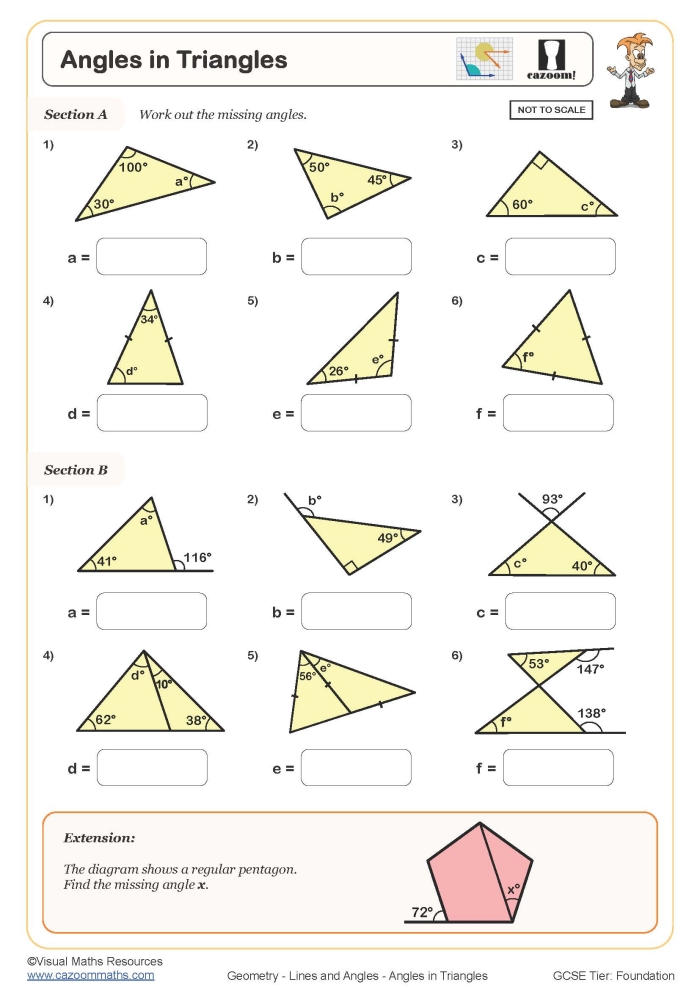
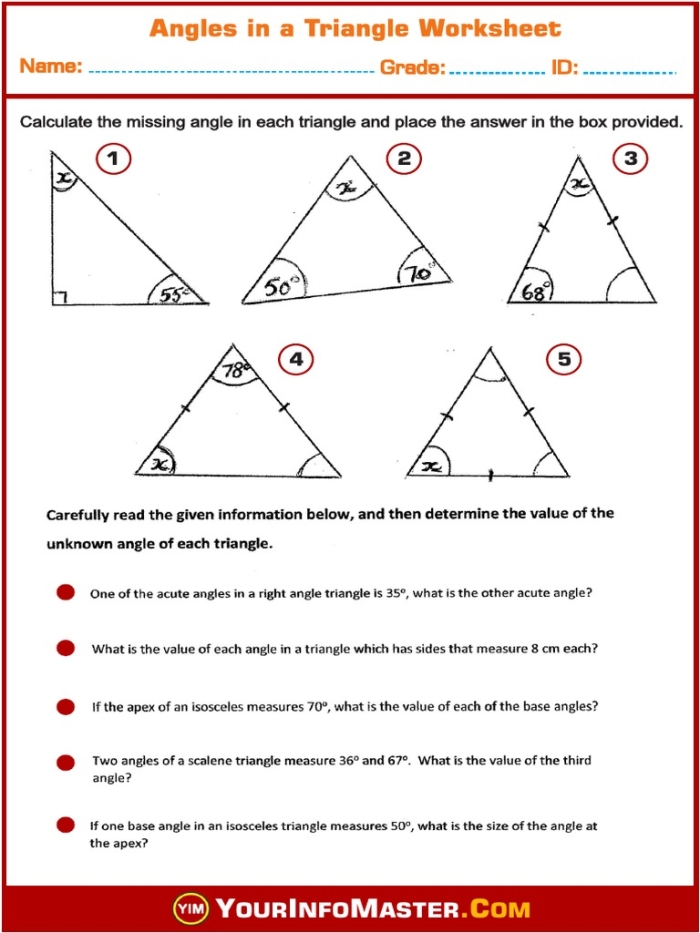
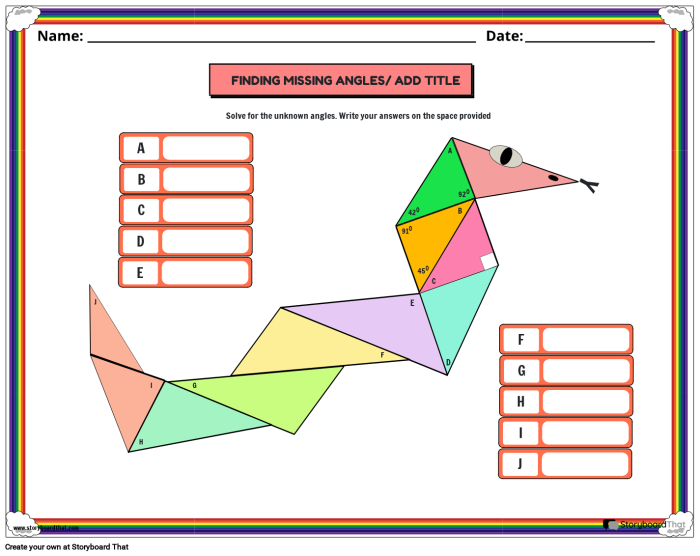
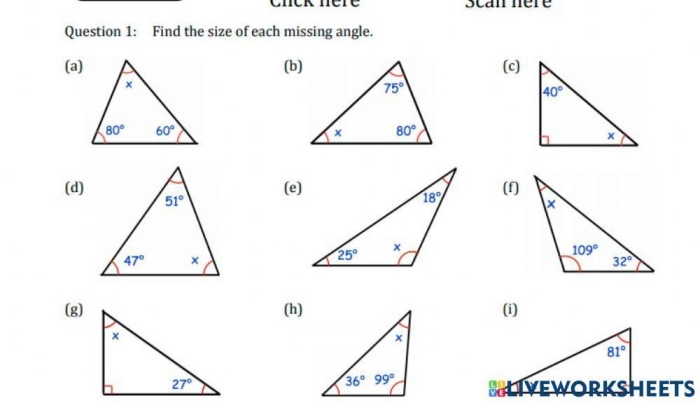
A solid eighth-grade geometry worksheet on this topic typically presents triangles with two known angles and asks students to calculate the missing one. Some worksheets vary the difficulty by including triangles with different orientations or by mixing in word problems that require students to set up equations before solving. This progression helps students move beyond rote calculation and develop deeper mathematical reasoning.
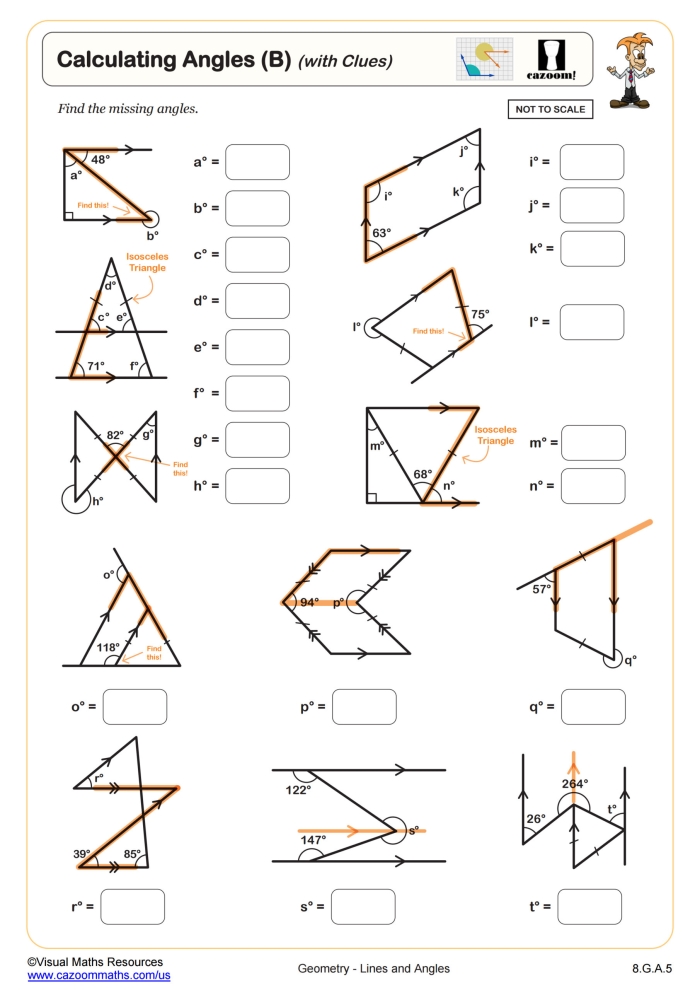
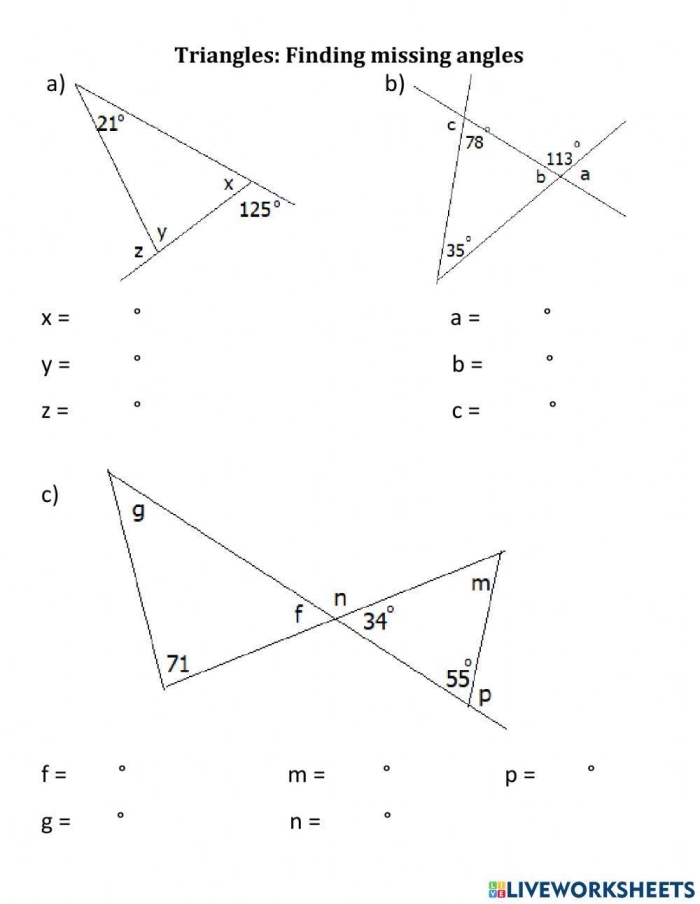
Understanding how to find missing angles in triangles connects to broader geometry concepts. Students who master this skill can tackle more complex problems involving parallel lines, exterior angles, and polygon properties. For those looking to strengthen related skills, exploring resources on finding missing angles in triangles provides targeted practice. Additionally, eighth-grade students benefit from reinforcing their understanding of linear and nonlinear functions to see how mathematical relationships work across different contexts.
The Triangle Angle Sum Theorem worksheet serves as a practical tool for building confidence and fluency with a fundamental geometric principle that students will reference repeatedly in their math courses.
Worksheet Practice Section