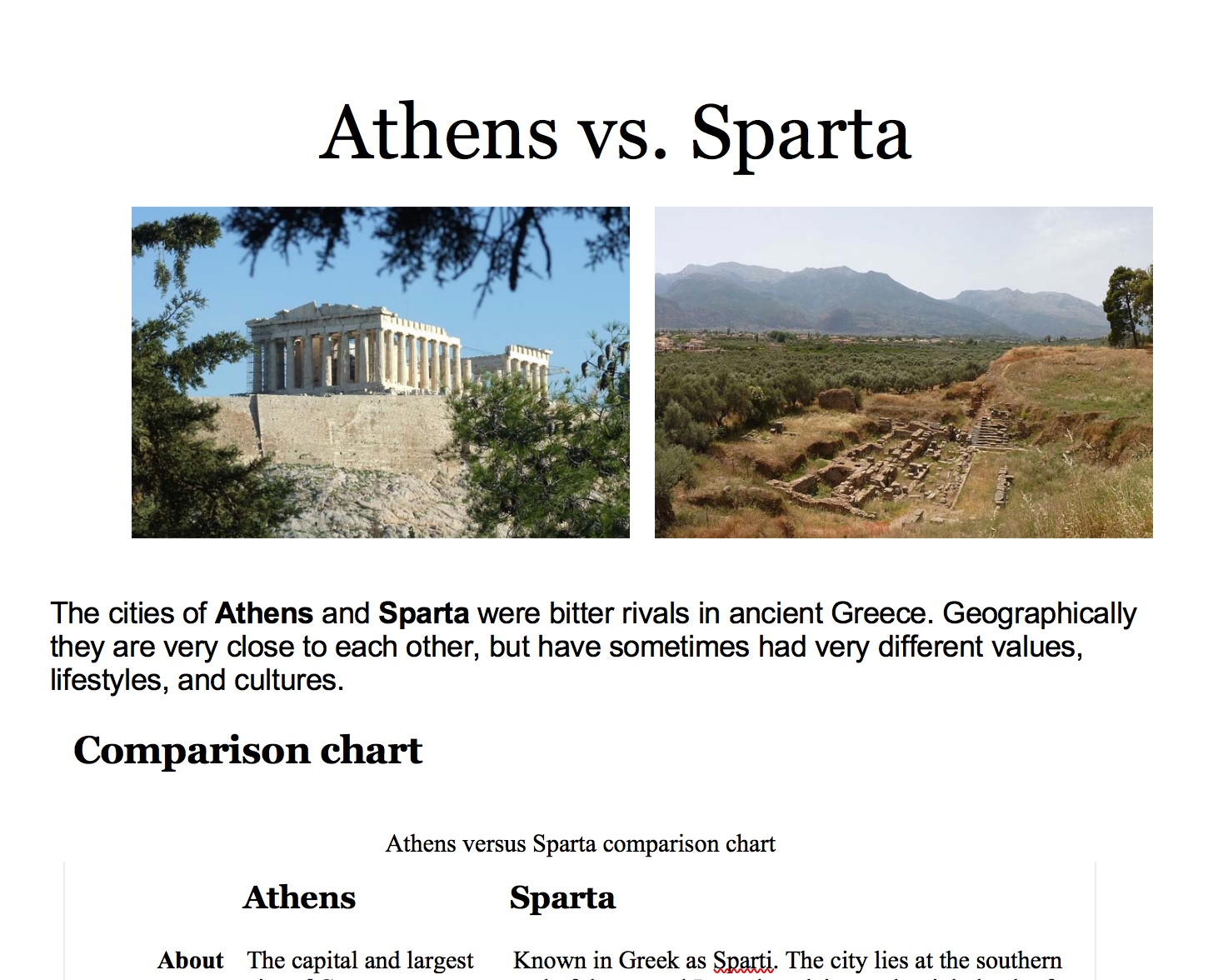
When sixth grade students first encounter ancient Greece, they often discover that not all Greek city-states operated the same way. Athens and Sparta, the two most powerful city-states, developed in strikingly different directions despite sharing the same language and religious beliefs. Understanding these contrasts helps readers grasp how geography, values, and leadership choices shaped entire civilizations.
Athens built its identity around democracy and intellectual achievement. Citizens participated directly in government decisions, debated in the agora (marketplace), and celebrated philosophy, drama, and art. The city attracted thinkers, artists, and merchants from across the Mediterranean. This openness to trade and ideas created a bustling urban center where innovation thrived. By the fifth century BCE, Athens had become the cultural heart of Greece.
Sparta chose a completely different path. Military strength and rigid discipline defined Spartan society. Boys trained for warfare from childhood, and the state controlled nearly every aspect of life. Citizens focused exclusively on combat readiness rather than artistic or intellectual pursuits. Sparta’s government relied on two kings and a council of elders, a structure far removed from Athenian democracy.
These differences extended to daily life. Athenian women had limited rights but more freedom than Spartan women, who trained physically and participated in public life. Athenian boys attended schools and learned music and philosophy alongside physical education. Spartan boys lived in military barracks starting at age seven.
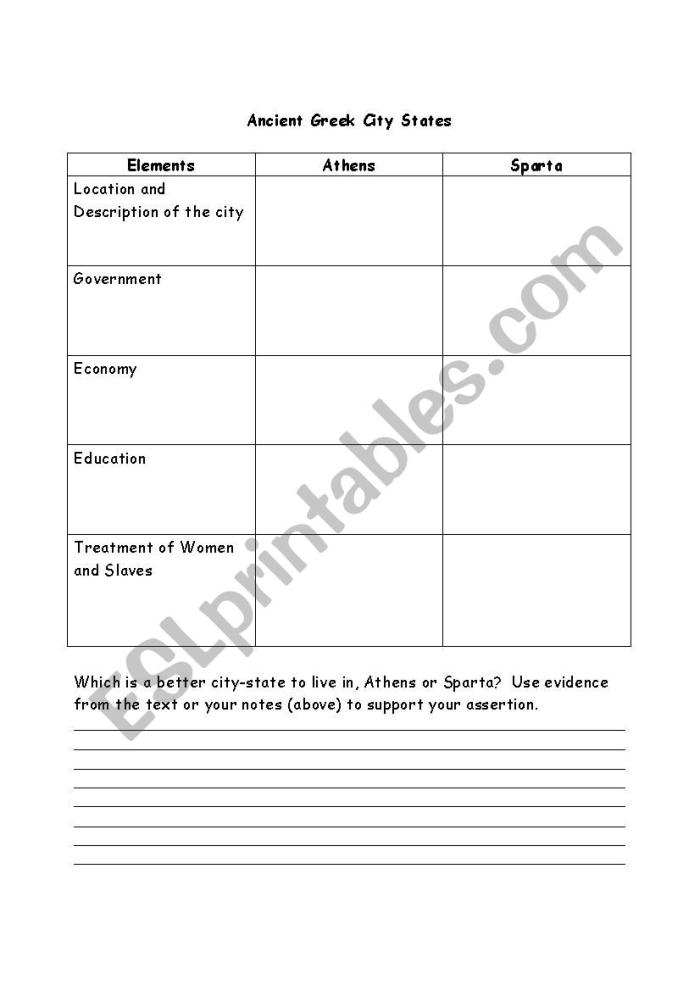
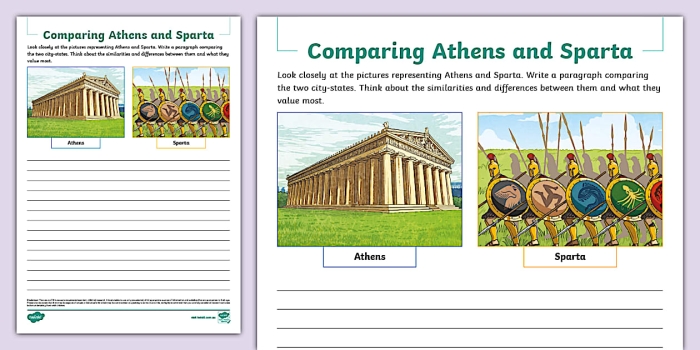
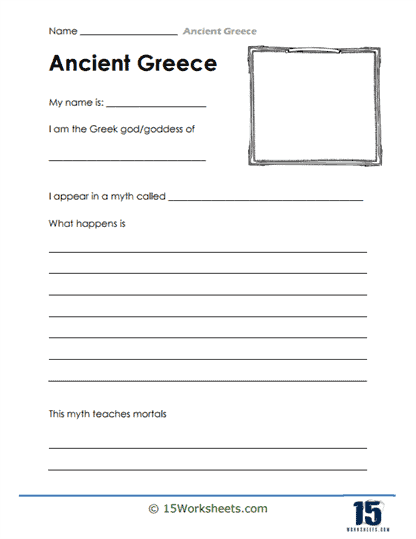
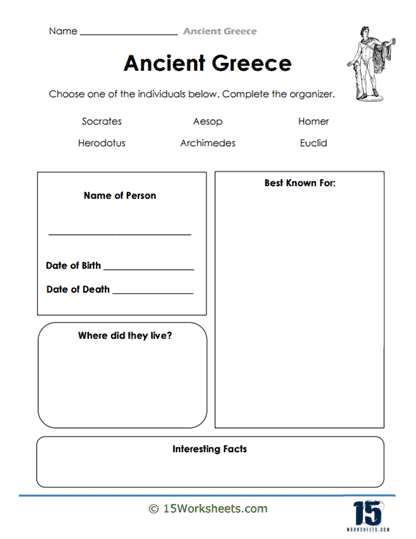
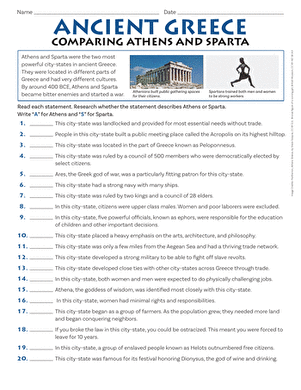
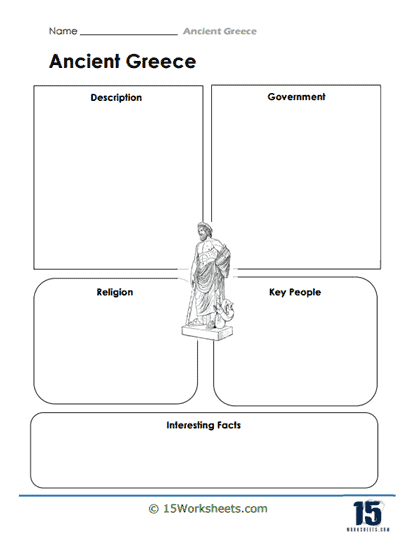
A printable worksheet comparing Athens and Sparta helps sixth grade readers organize these contrasts into clear categories. Students can track differences in government, education, gender roles, and values. This structured approach to reading comprehension makes the material stick. Pairing this activity with other sixth grade resources, such as worksheets on ancient Middle East civilizations and their lasting contributions, builds a broader understanding of how different societies developed unique solutions to similar challenges.
Start Practicing with These Worksheets