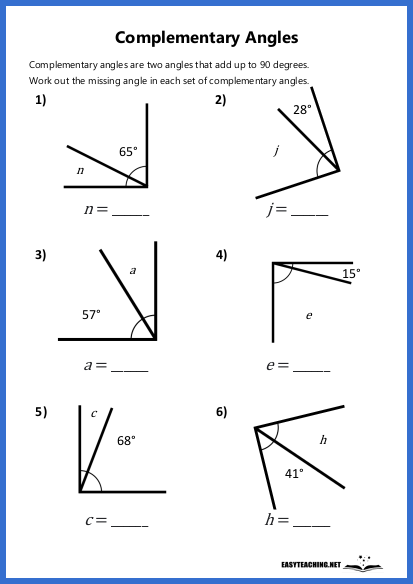
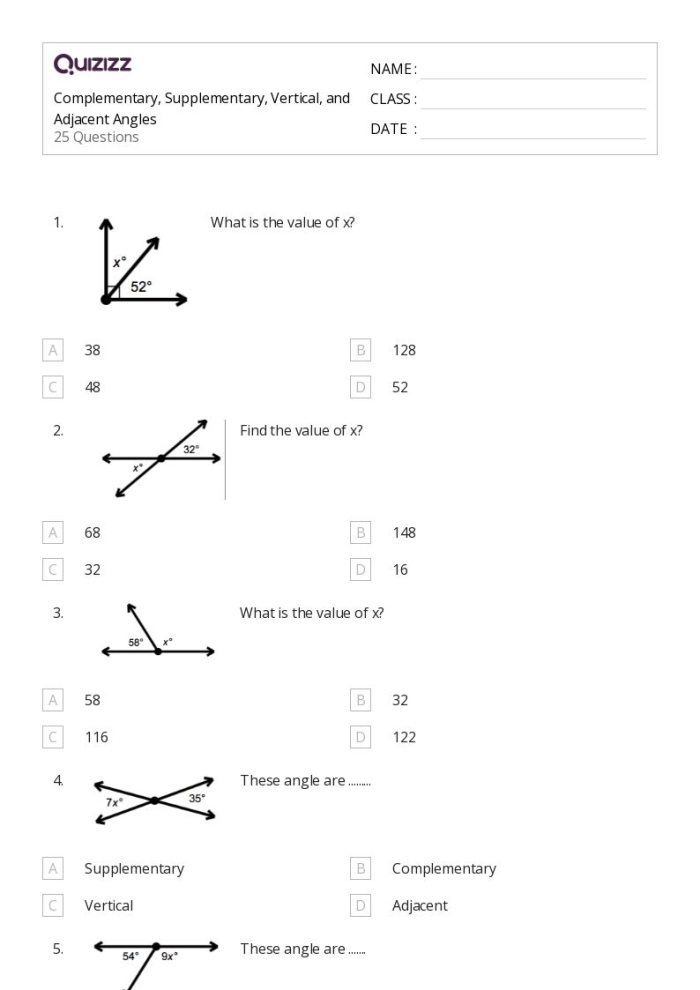
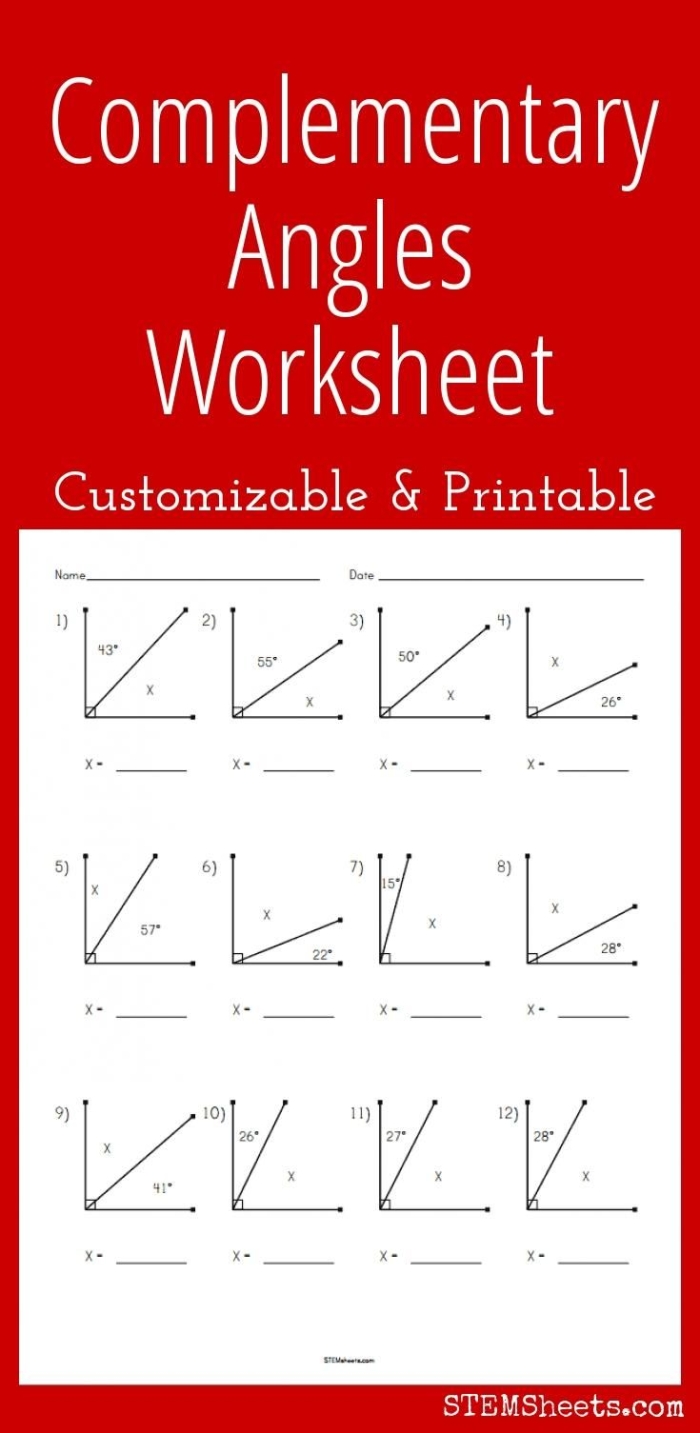
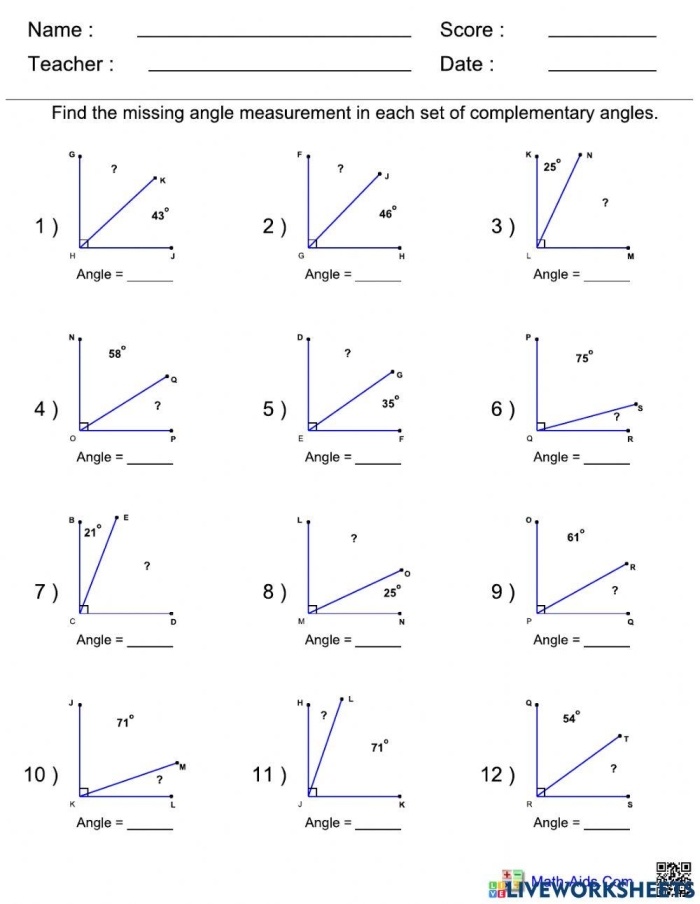
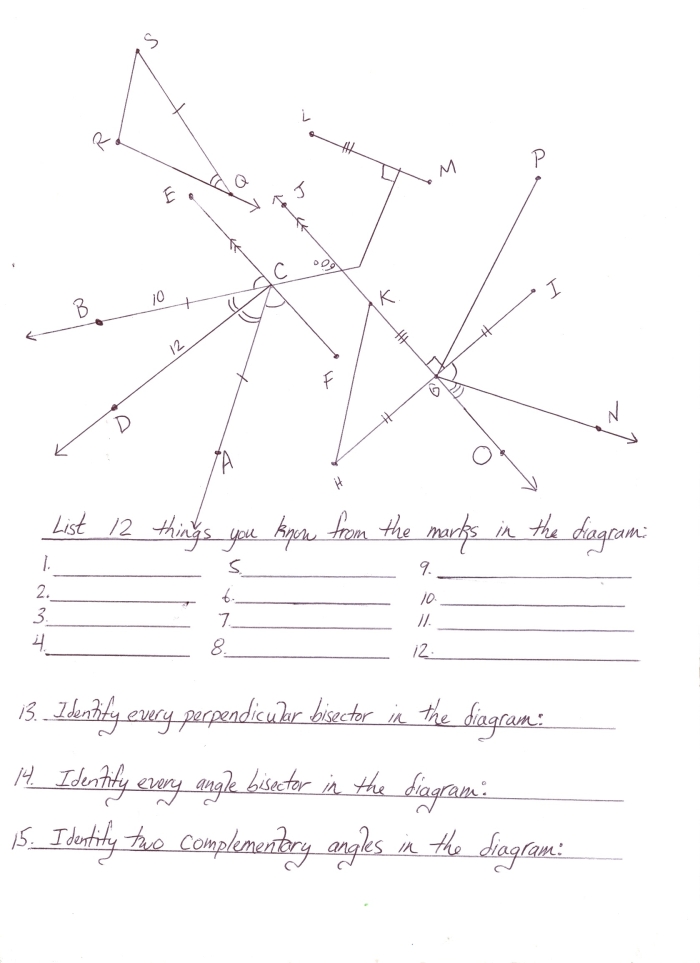
Complementary angles are one of those geometry concepts that clicks once you understand the core idea: two angles that add up to exactly 90 degrees. That’s it. No tricks, no exceptions. Once seventh grade students grasp this relationship, they can solve countless angle problems with confidence.
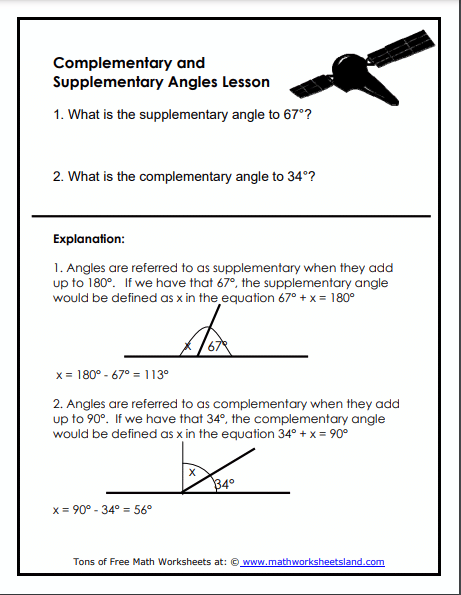
The beauty of complementary angles lies in their simplicity and practical application. If you know one angle measures 35 degrees, you instantly know its complement is 55 degrees. The math is straightforward subtraction: 90 minus your known angle gives you the missing piece. This predictability makes complementary angles excellent for building foundational measurement skills in seventh grade.
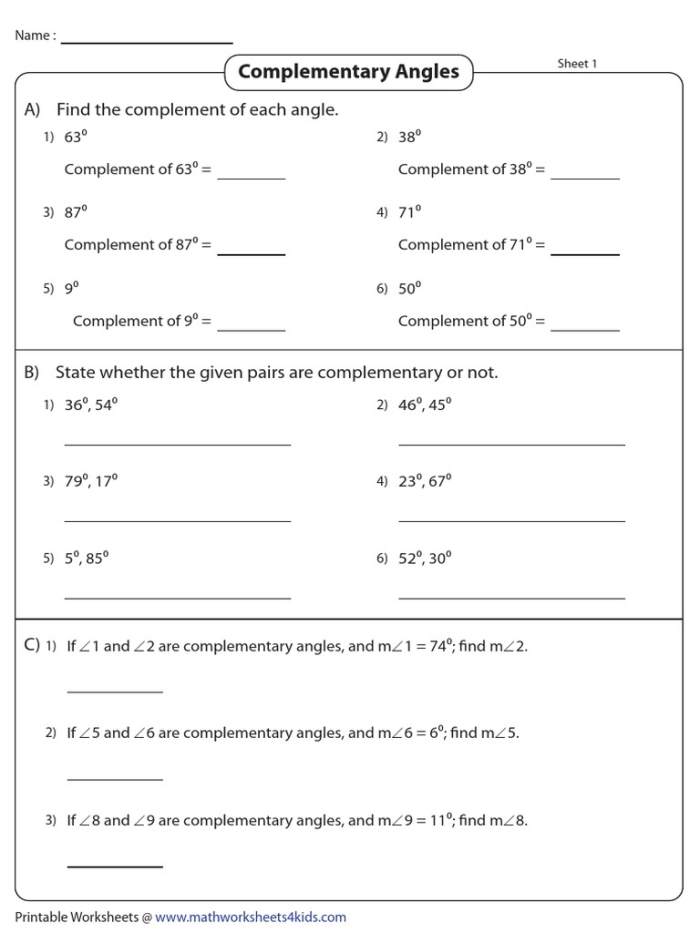
What makes practice sheets so valuable is that they force you to apply this rule repeatedly until it becomes automatic. Working through different angle pairs helps students recognize patterns and develop number sense around the 90-degree threshold. You start noticing that 45 and 45 are complements, then 30 and 60, then 20 and 70. These repeated exposures build intuition that textbook explanations alone cannot provide.
Complementary angles also connect to other measurement concepts you encounter in seventh grade. When you work with integer addition and subtraction problems, you’re using the same mental arithmetic. Similarly, understanding how angles combine helps when you tackle equivalent expressions in word problems.
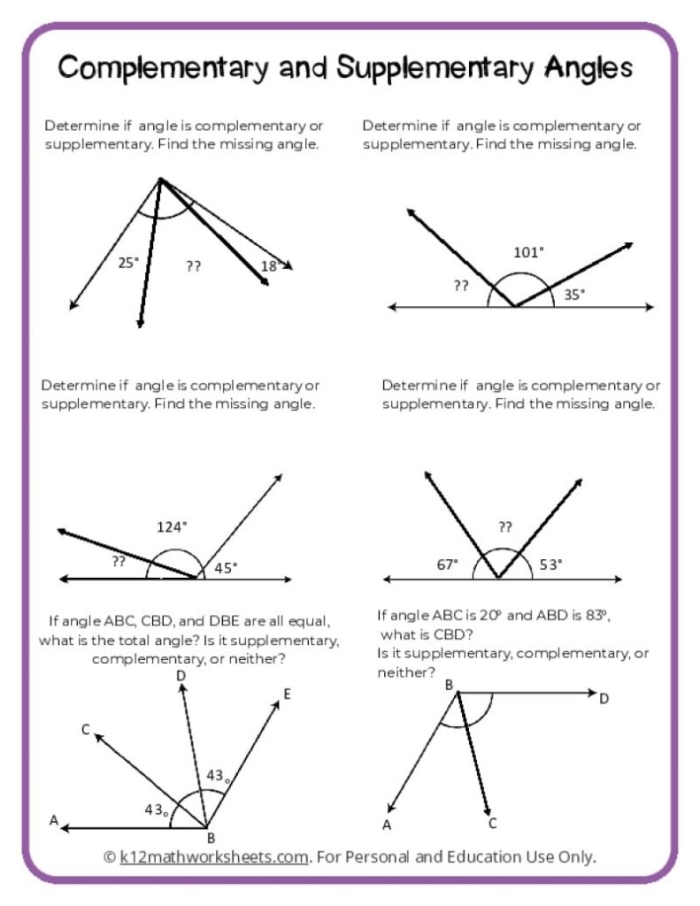
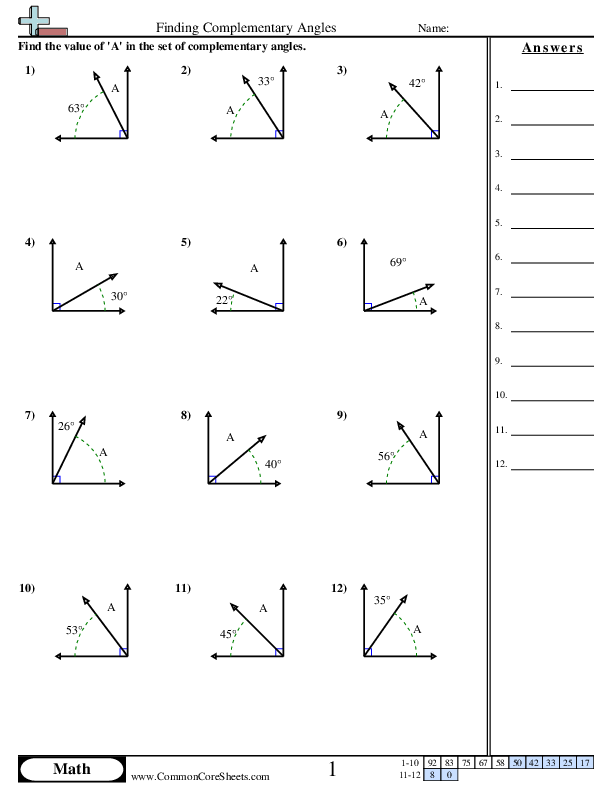
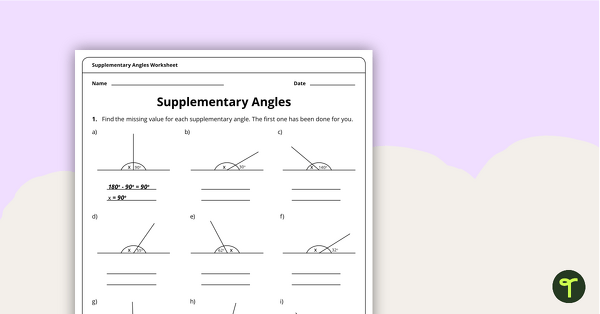
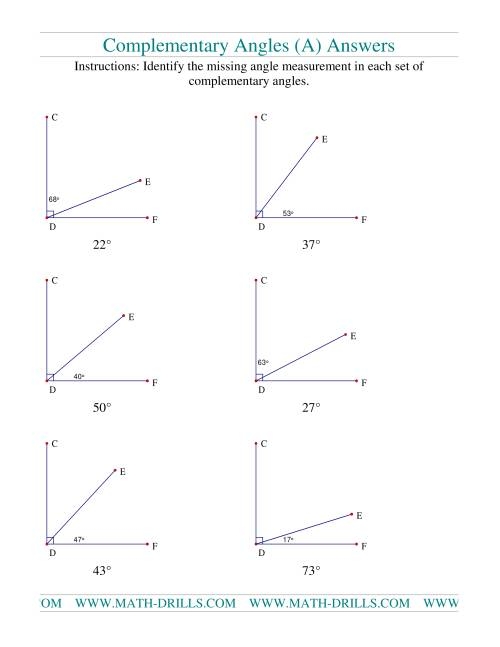
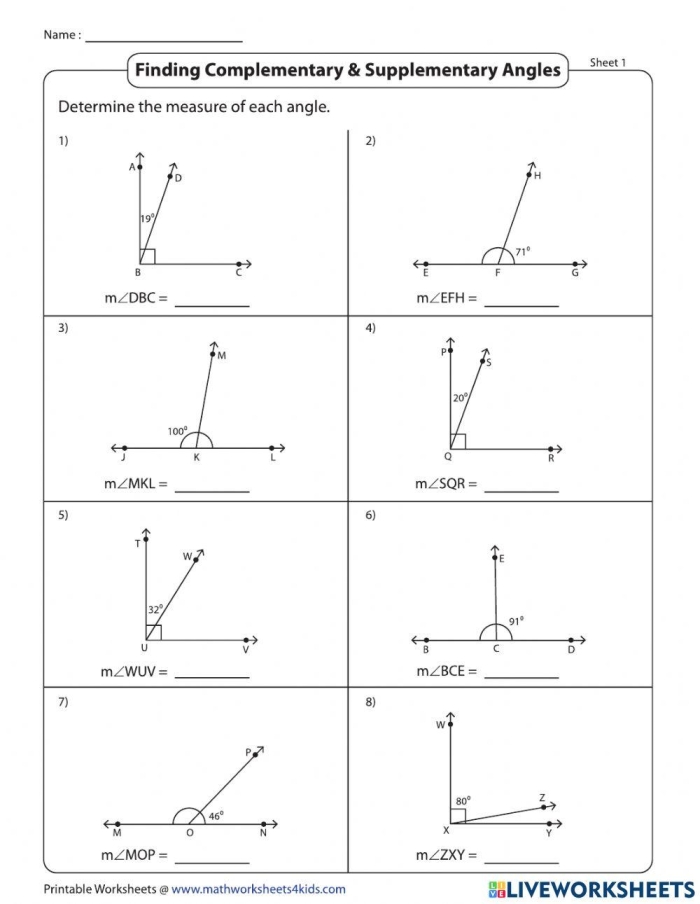
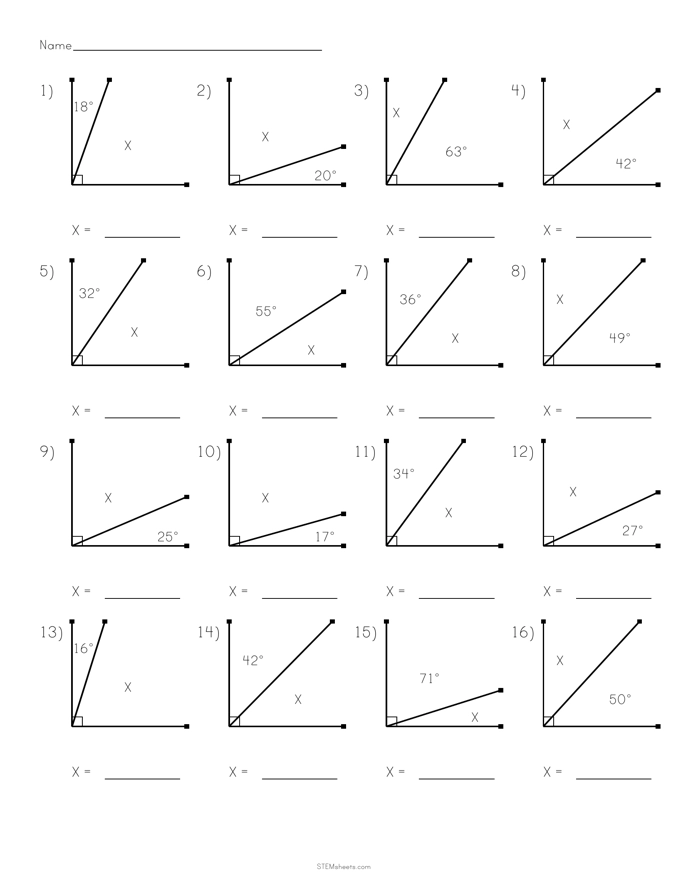
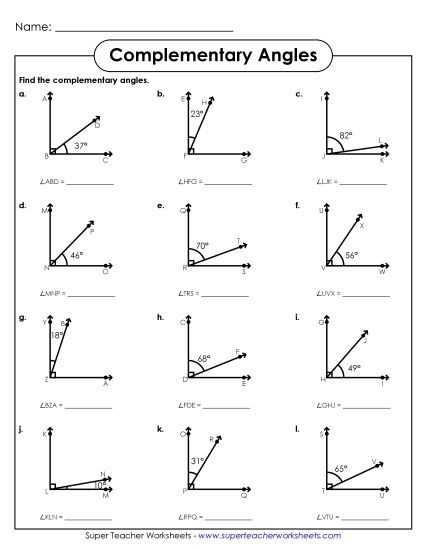
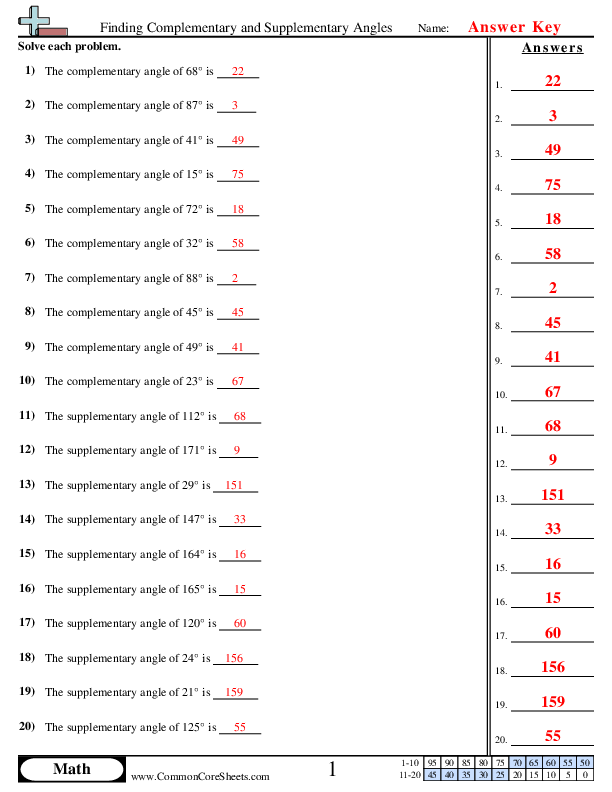
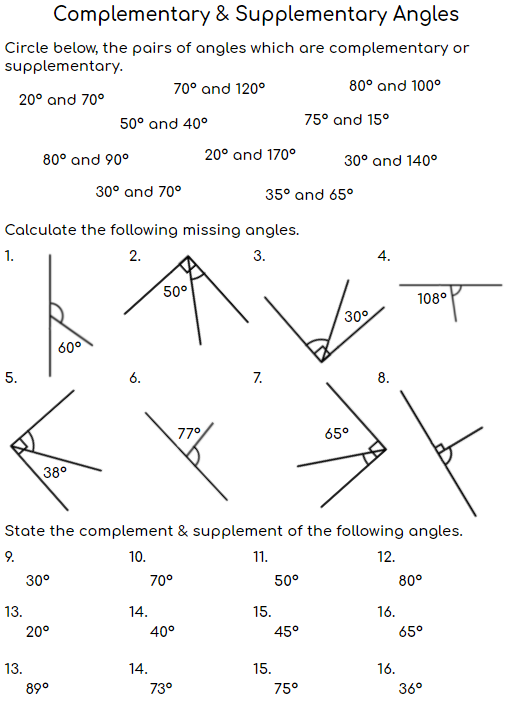
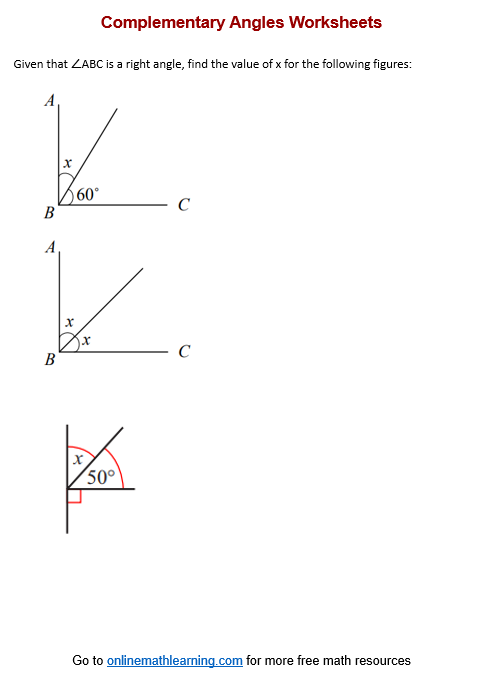
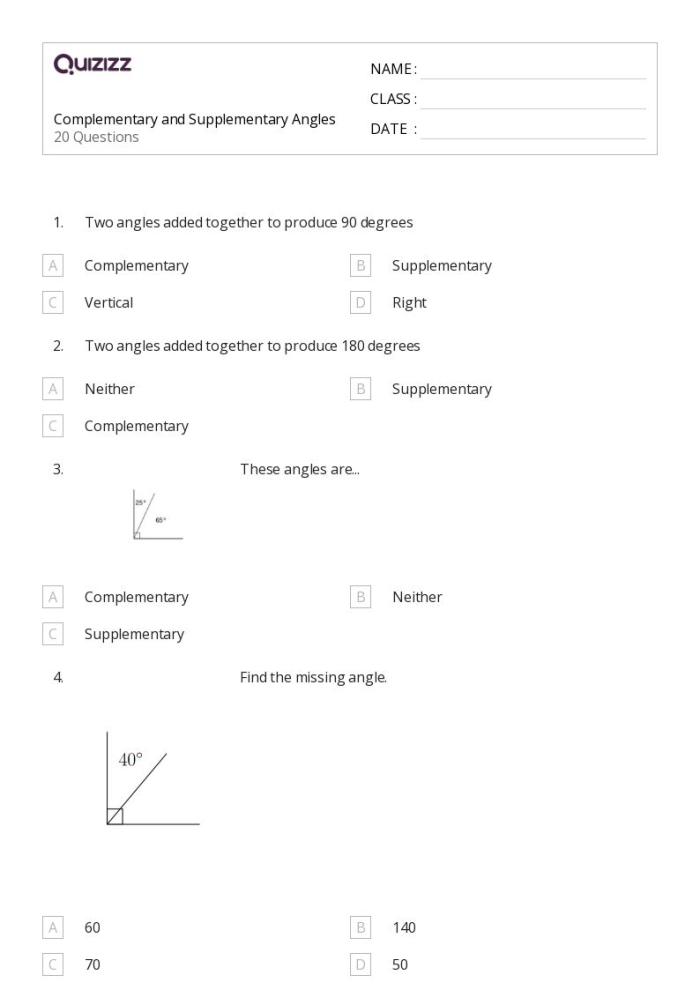
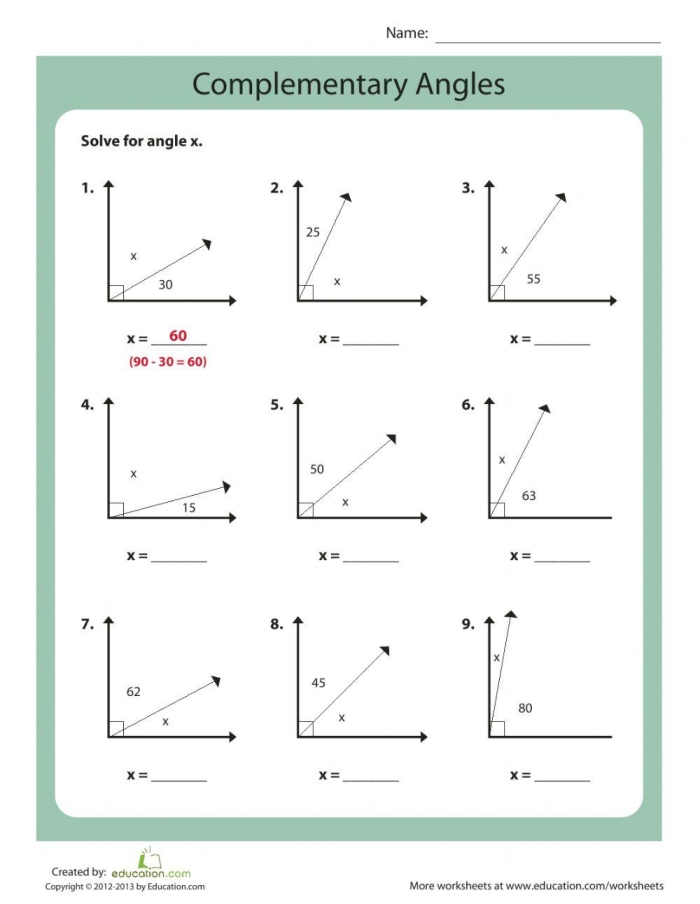
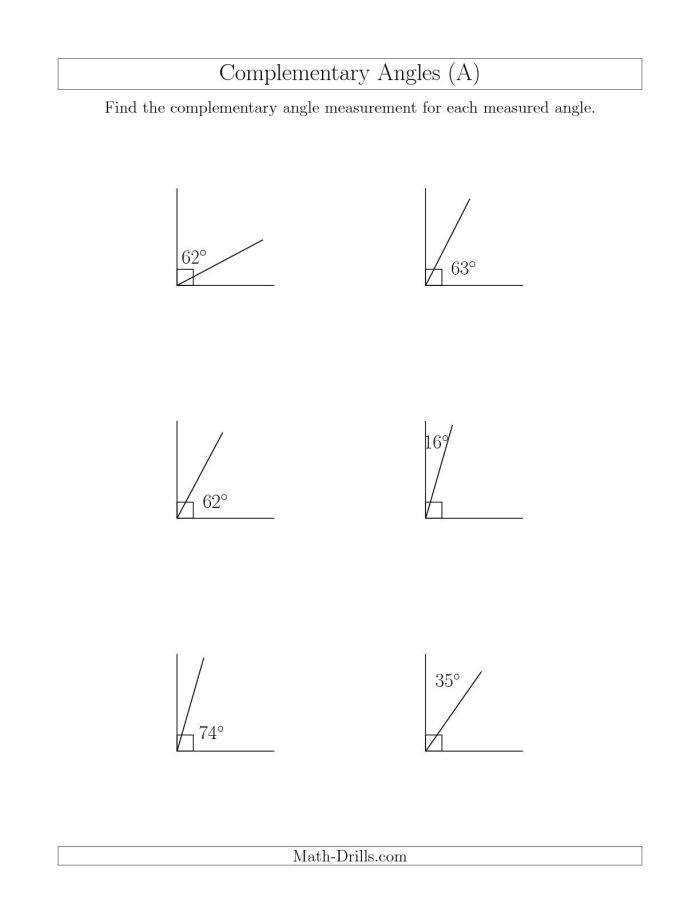
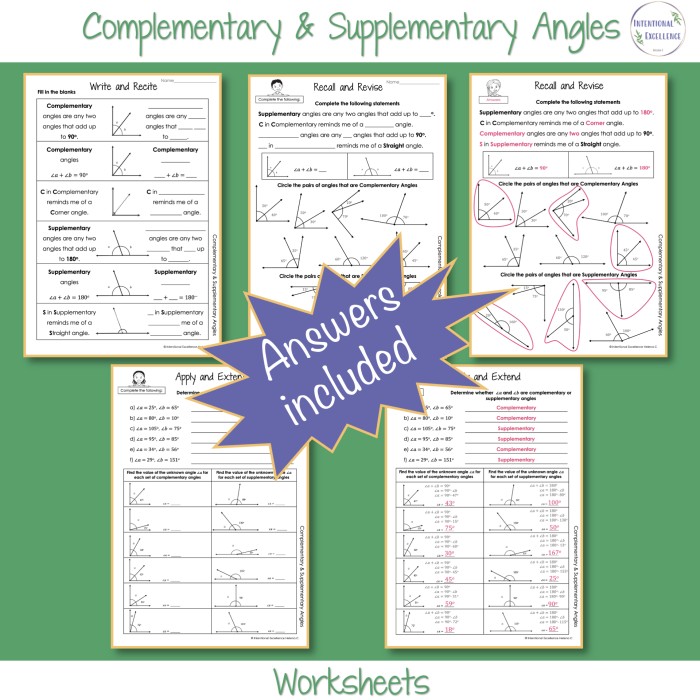
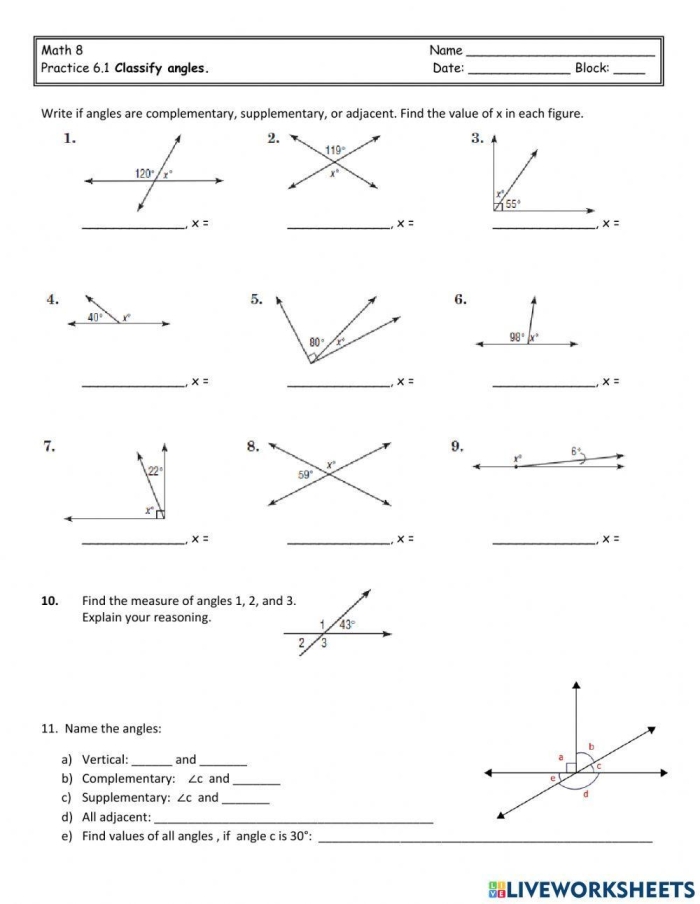
A solid practice sheet will present angles in various formats: some as simple numbers, others embedded in geometric diagrams. This variety ensures you’re not just memorizing answers but actually understanding the relationship. Start with the straightforward problems, then progress to scenarios where complementary angles appear within larger geometric figures.
The key is consistent practice. Work through enough examples and complementary angles stop feeling like a special rule you need to remember. They become as natural as knowing that 5 plus 5 equals 10.
Grab These Worksheets Now