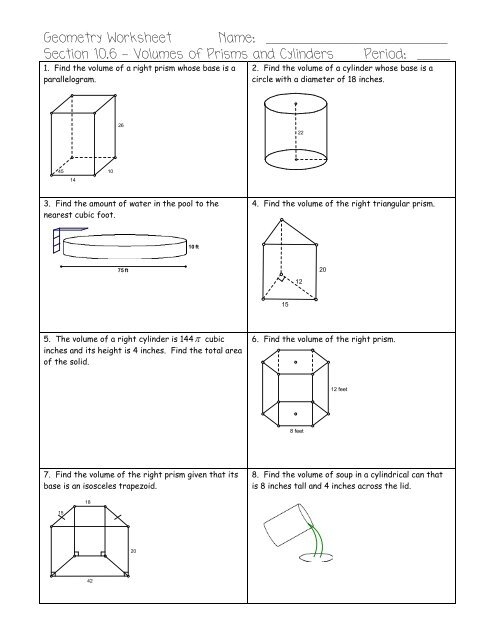
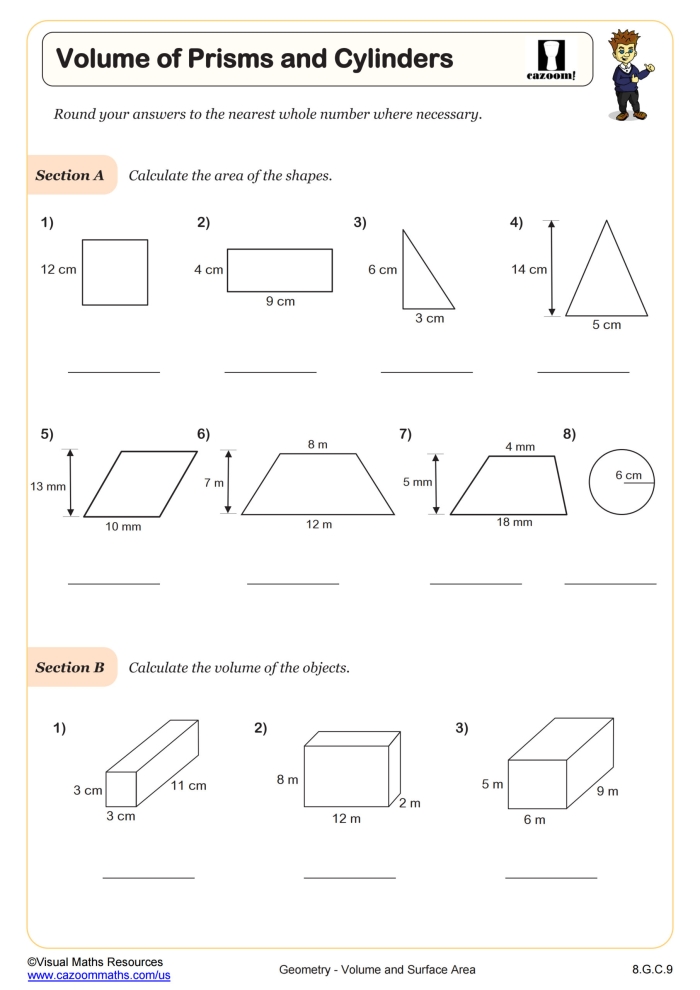
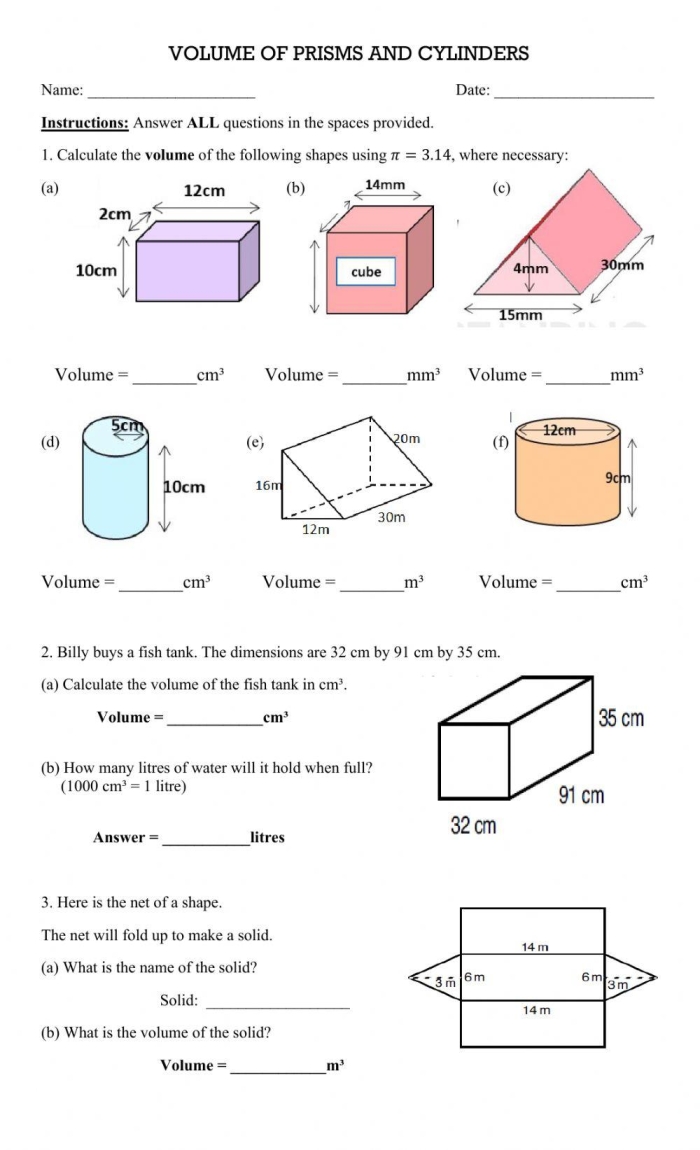
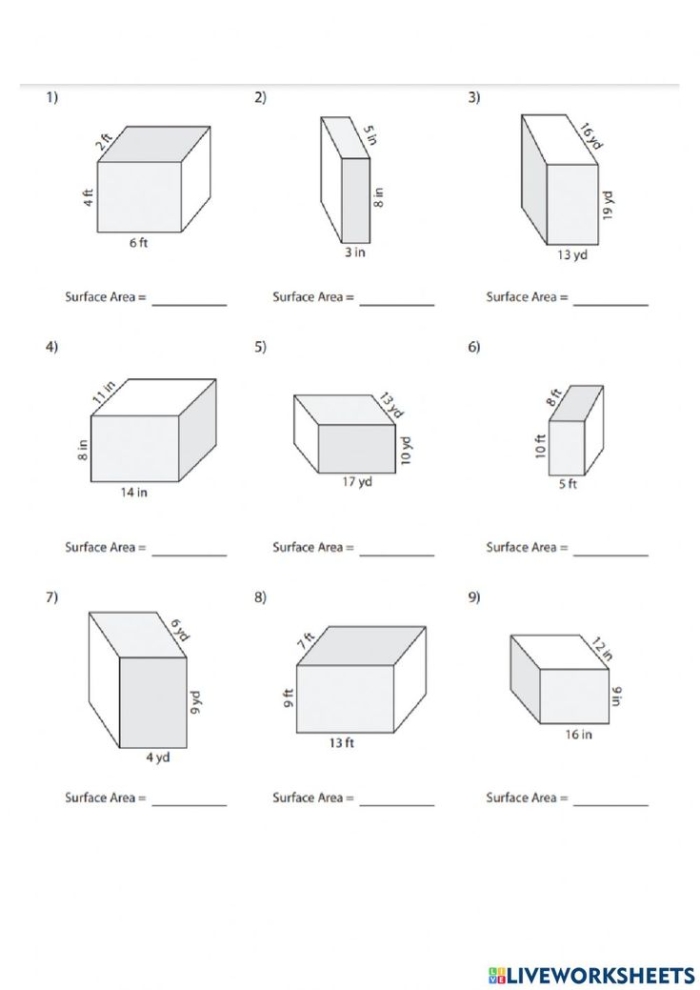
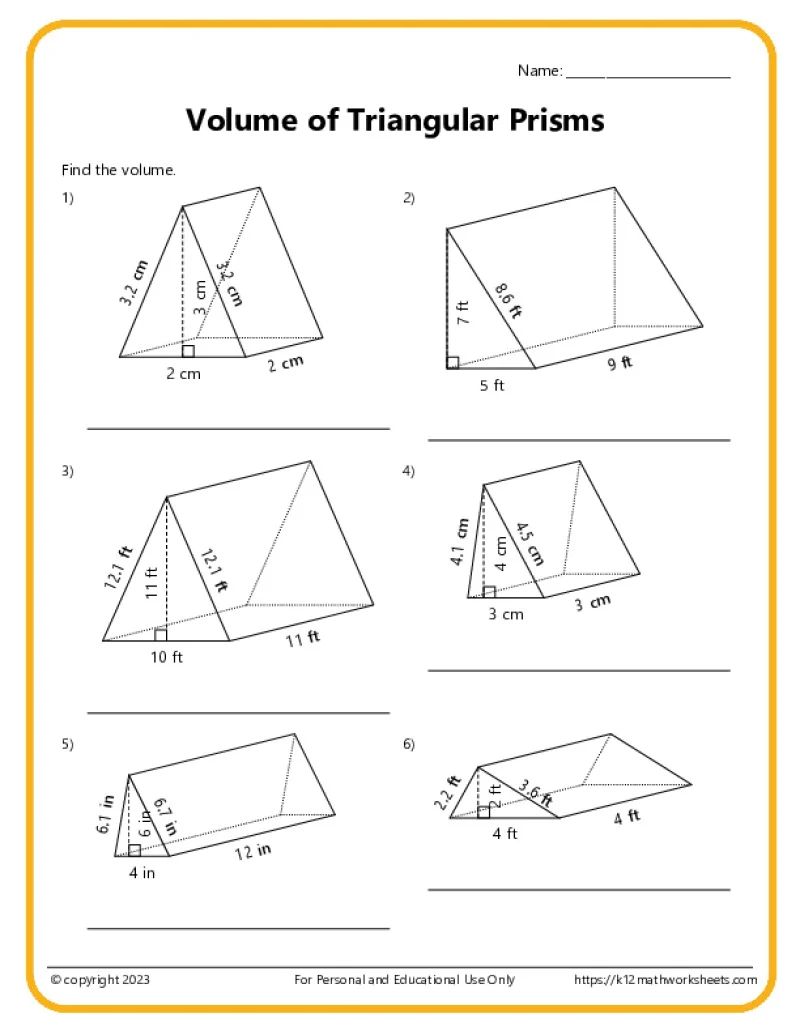
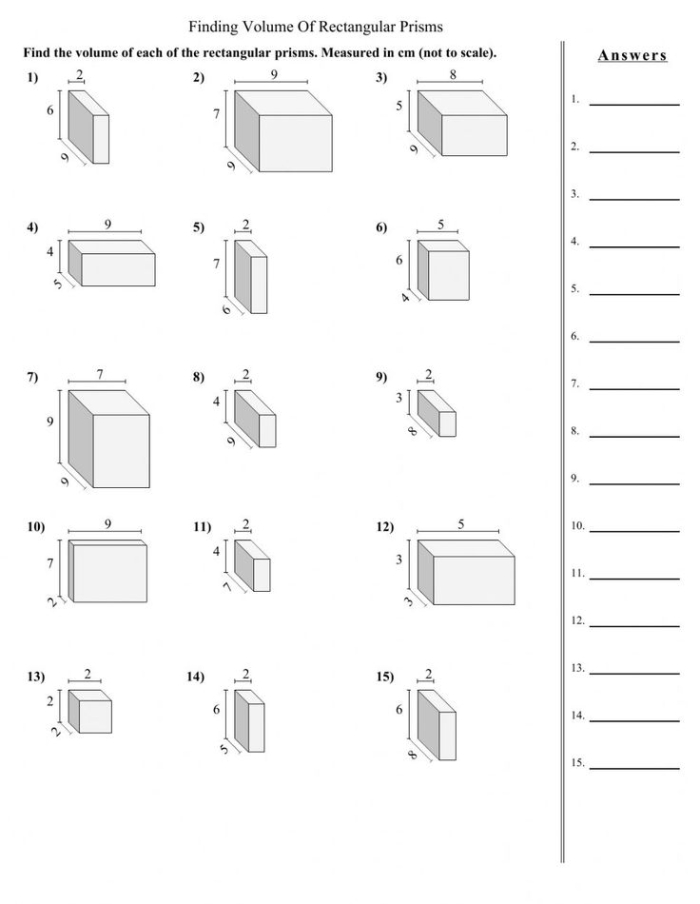
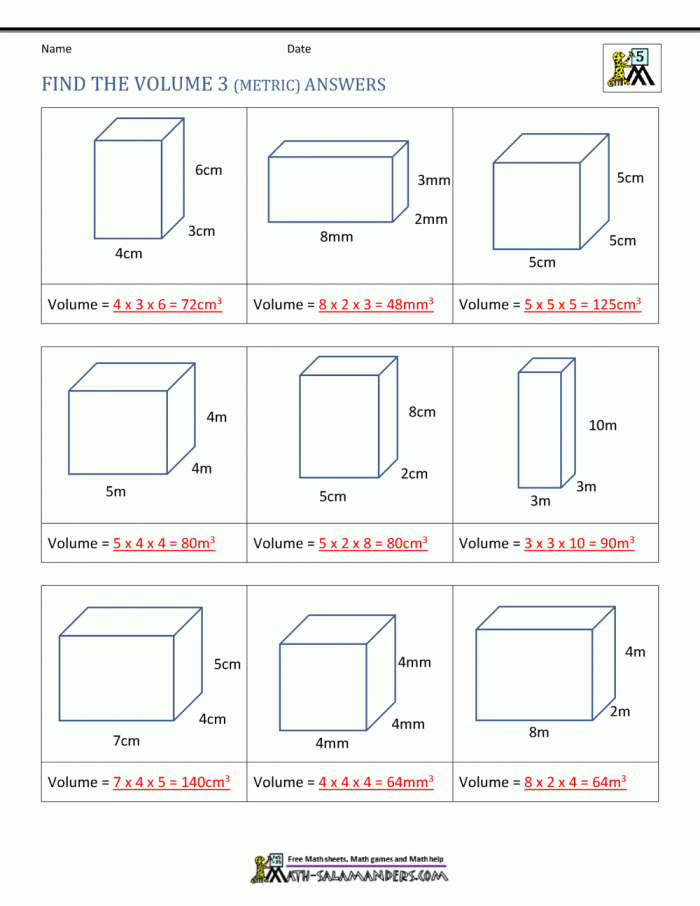
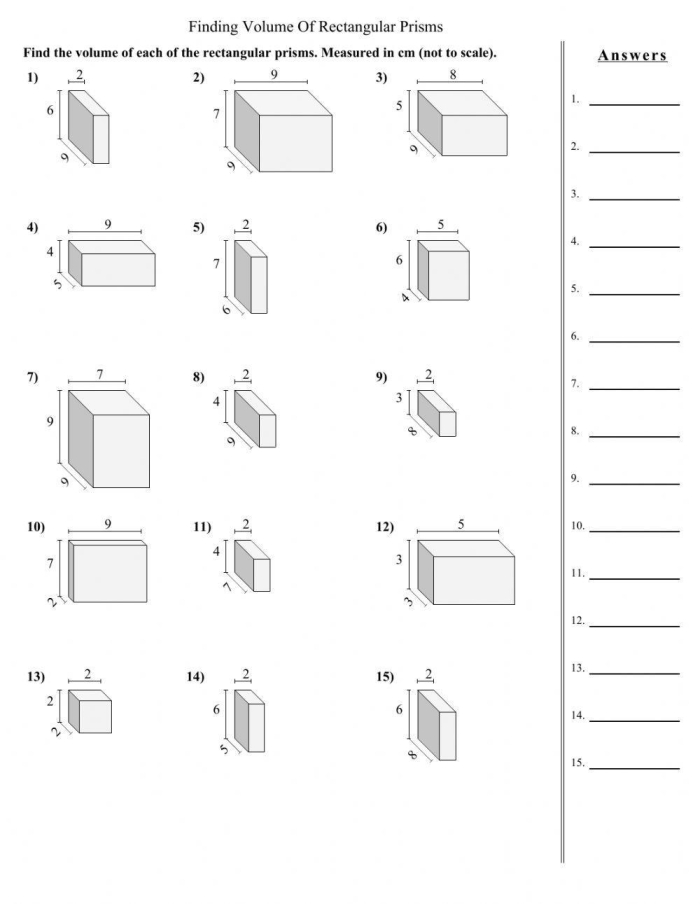
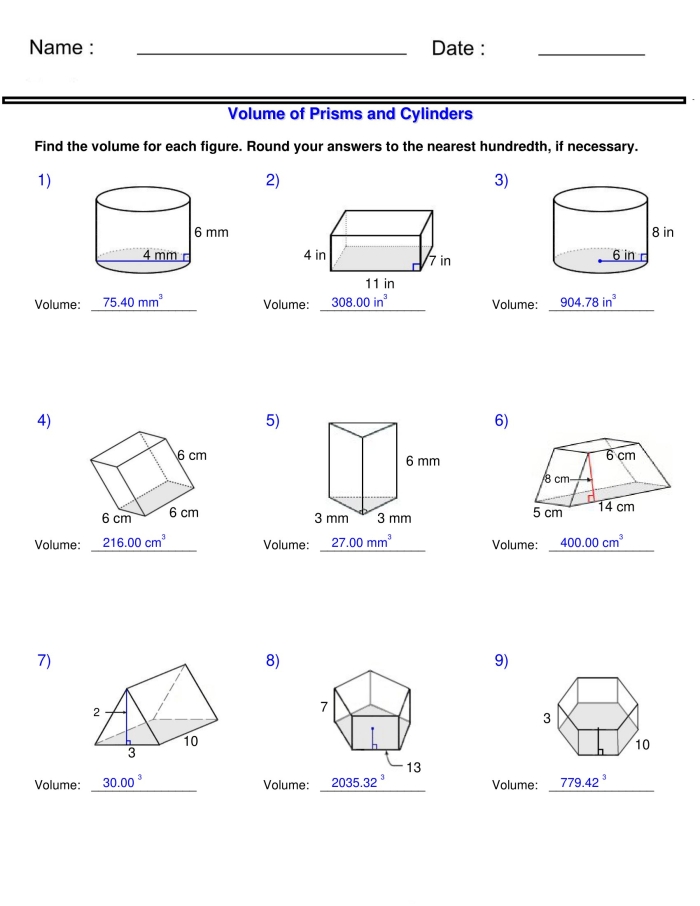
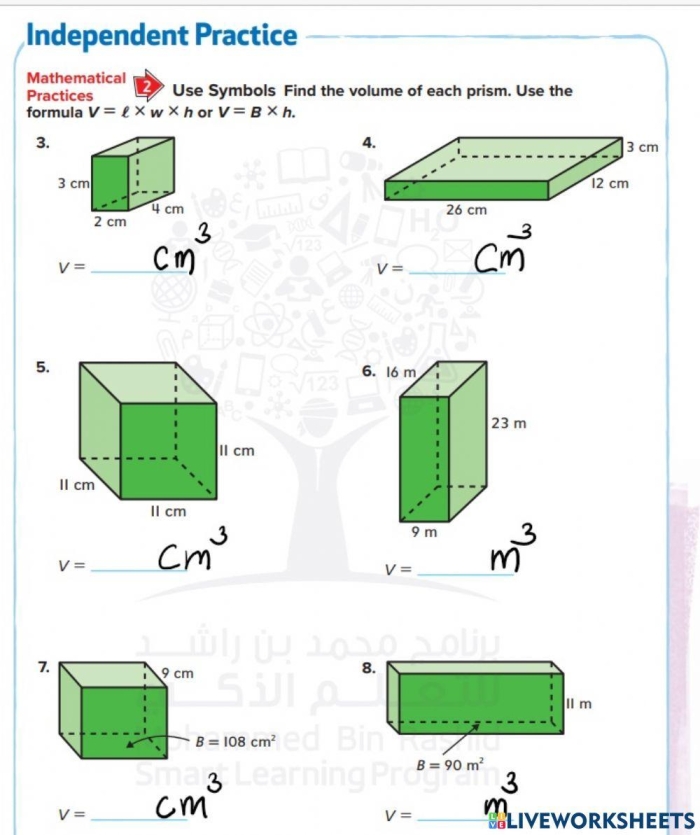
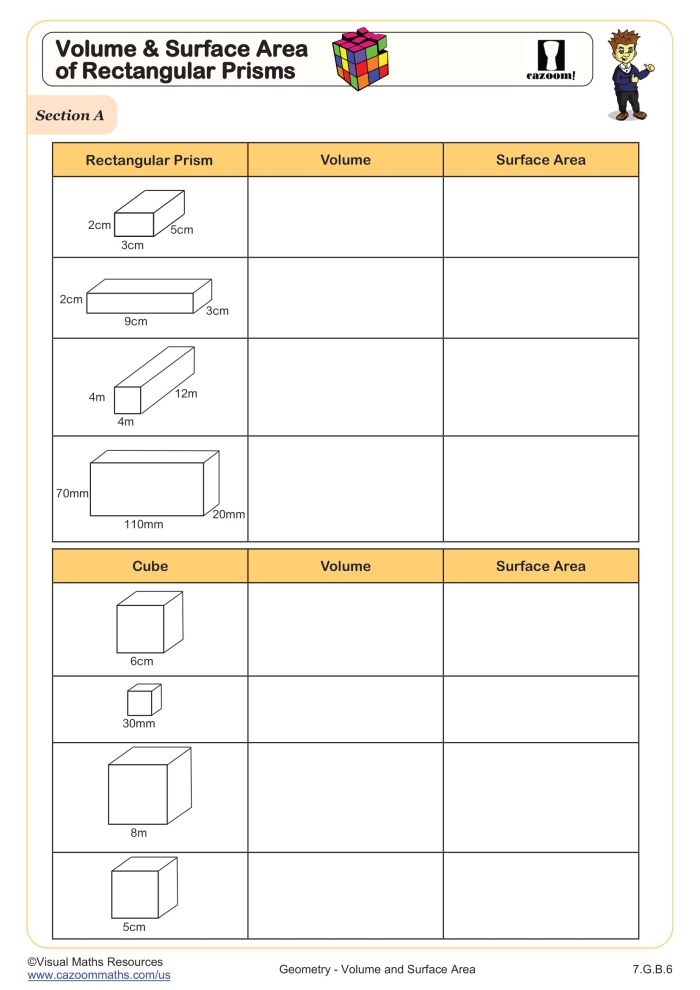
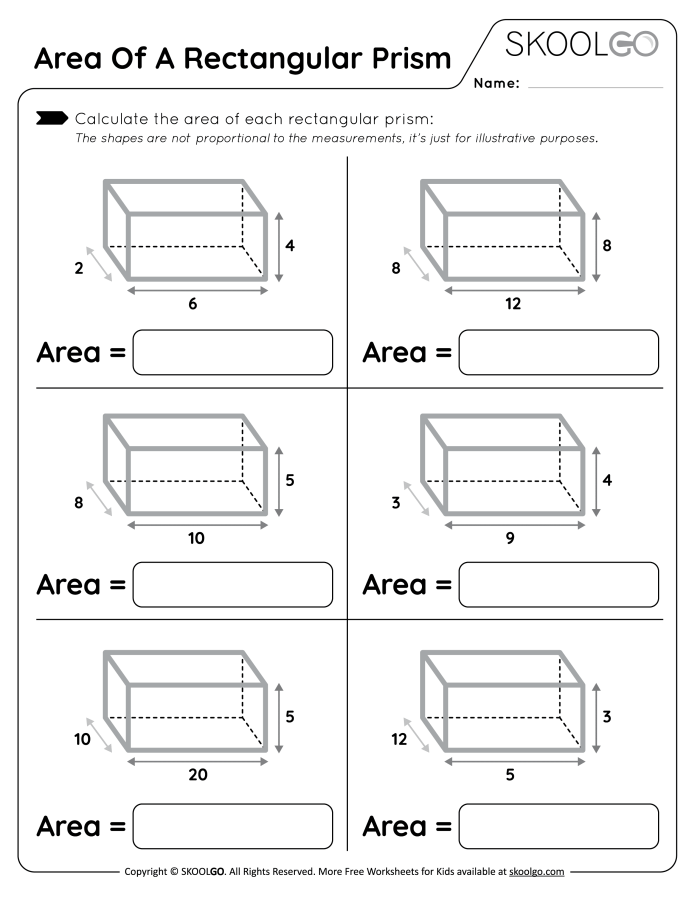
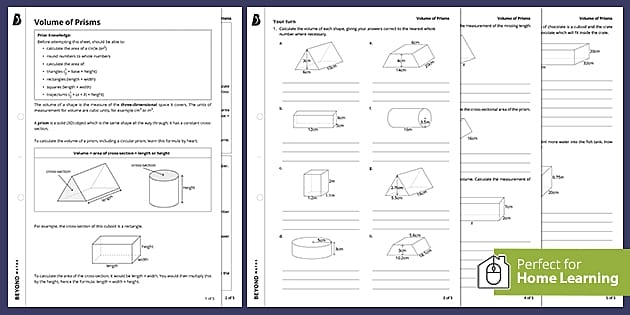
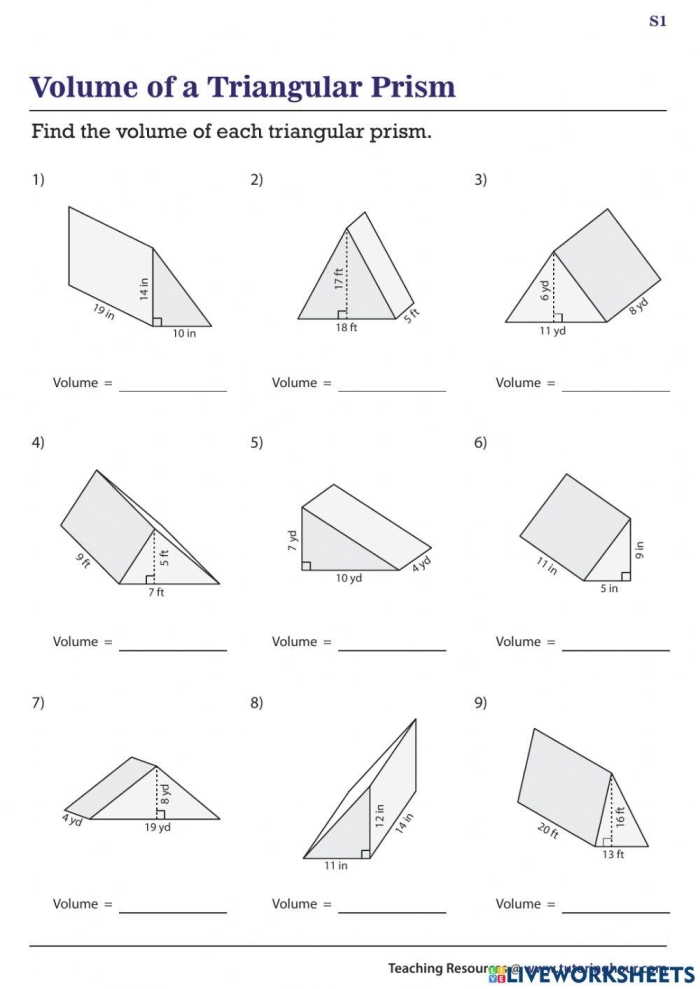
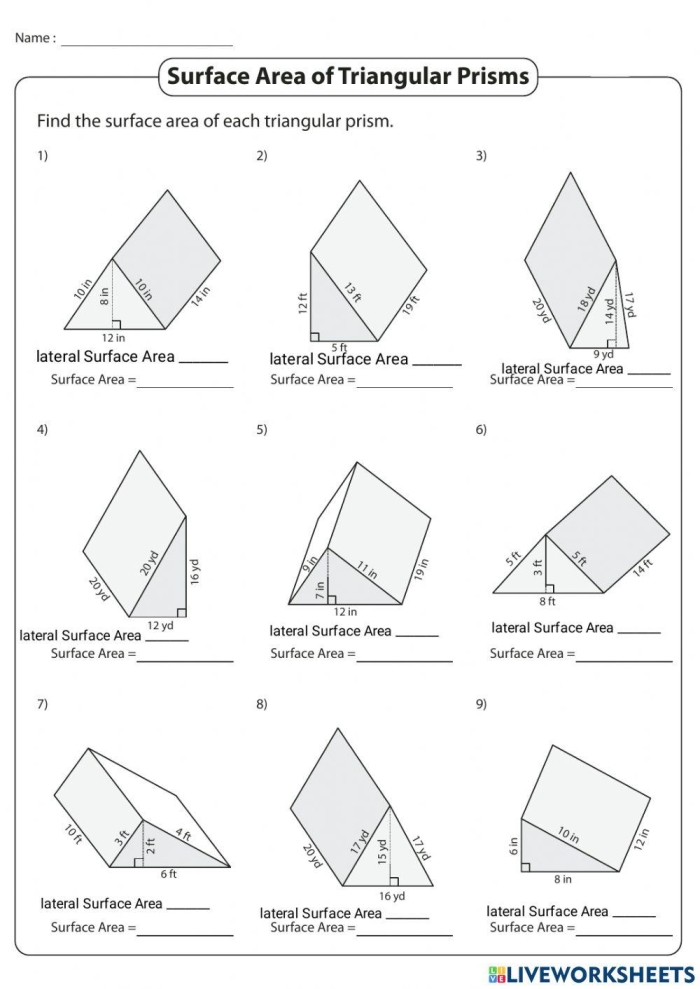
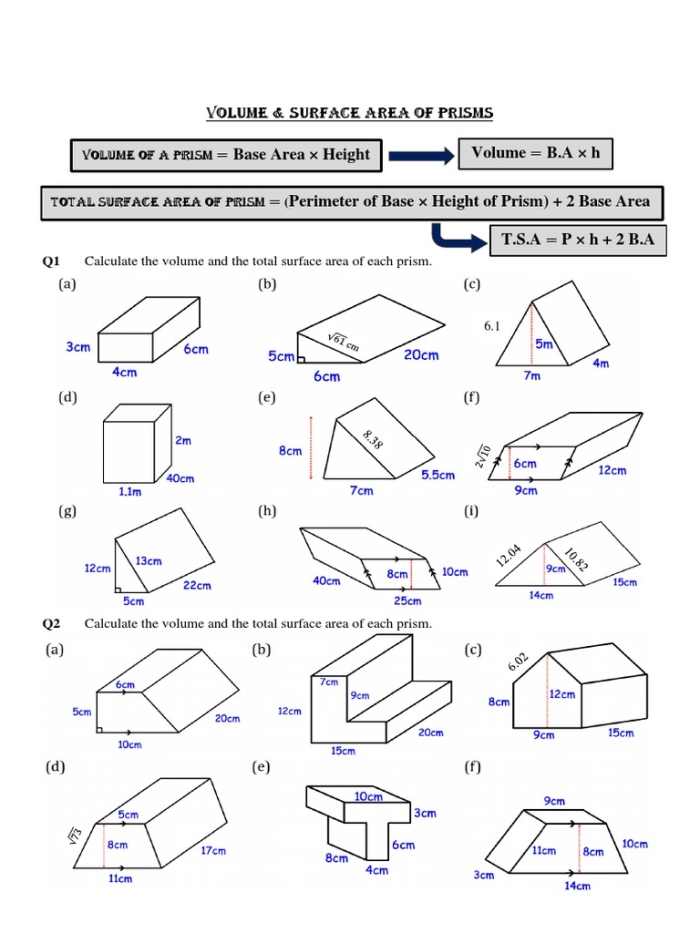
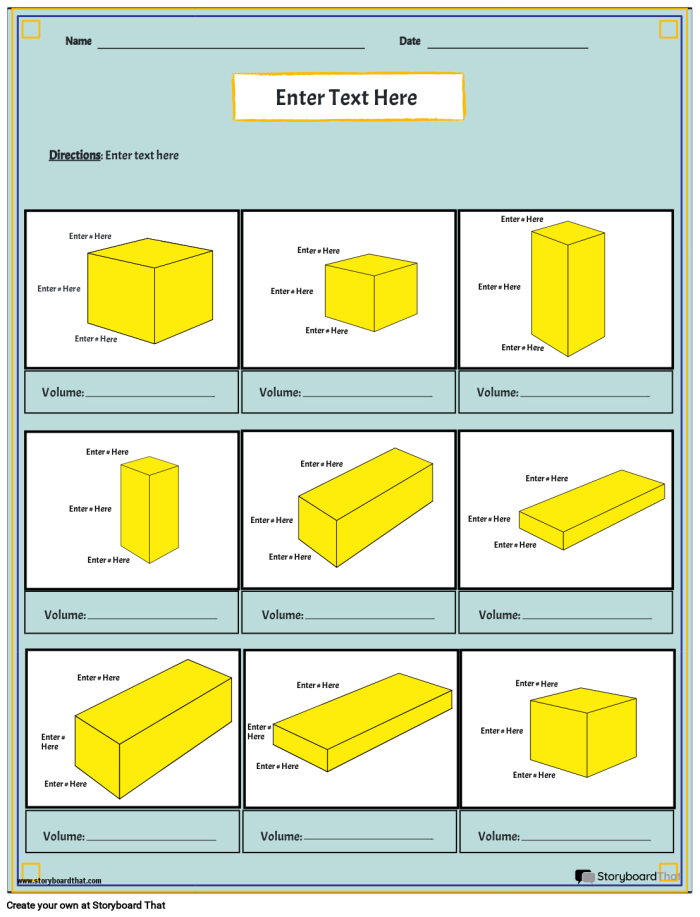
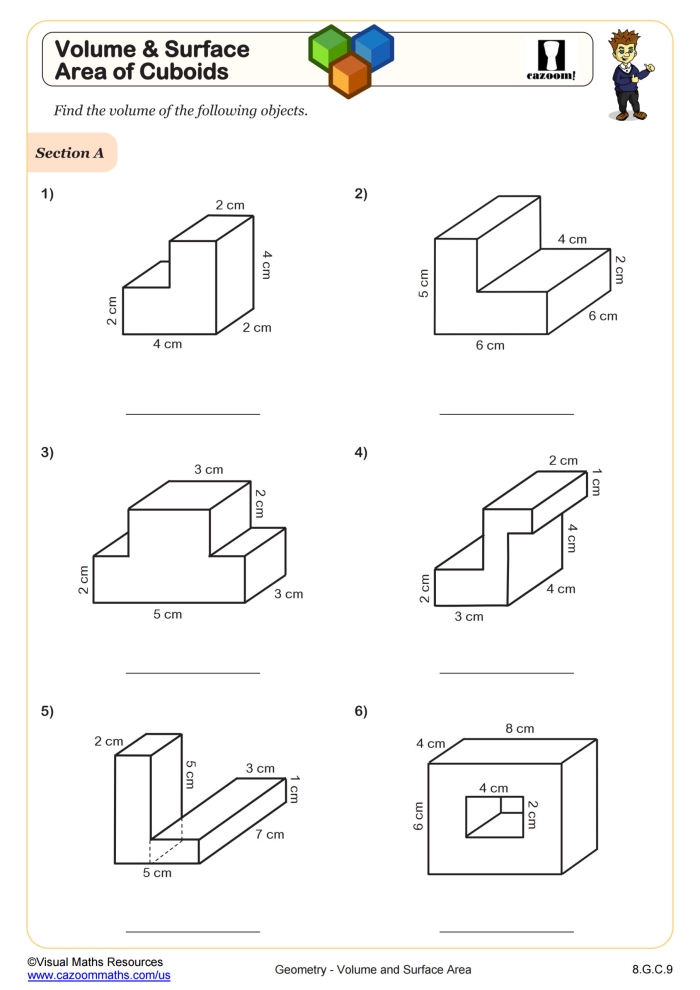
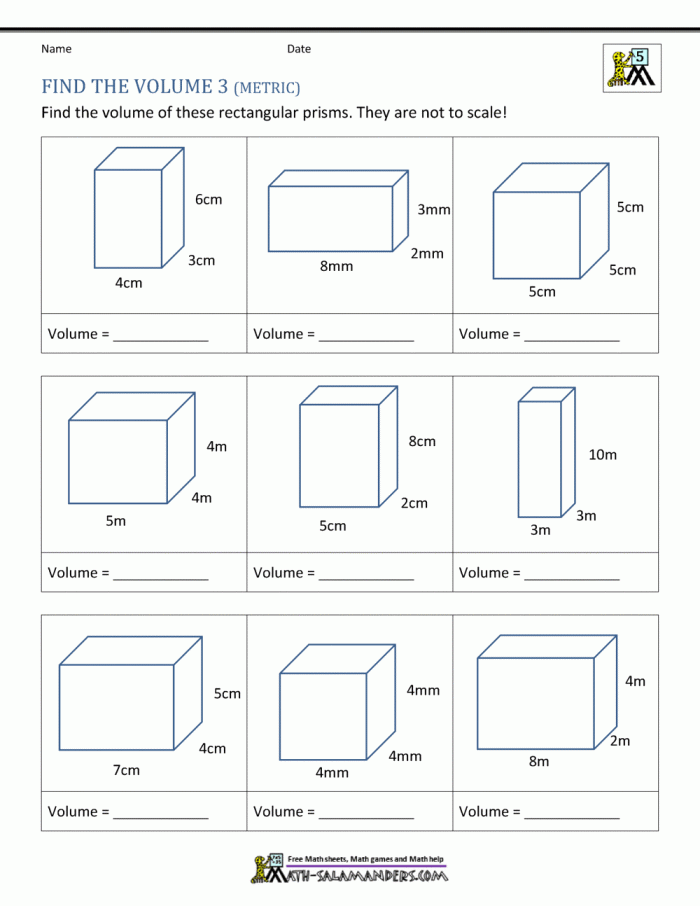
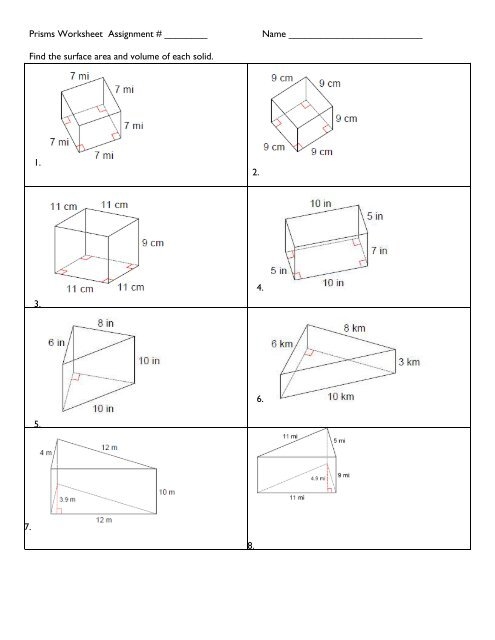
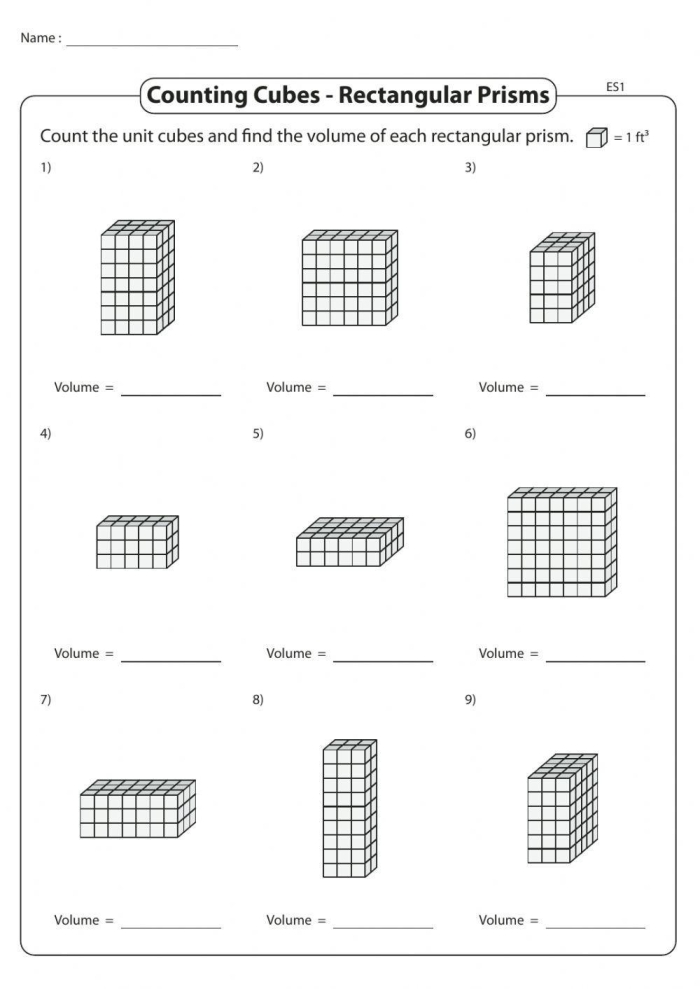
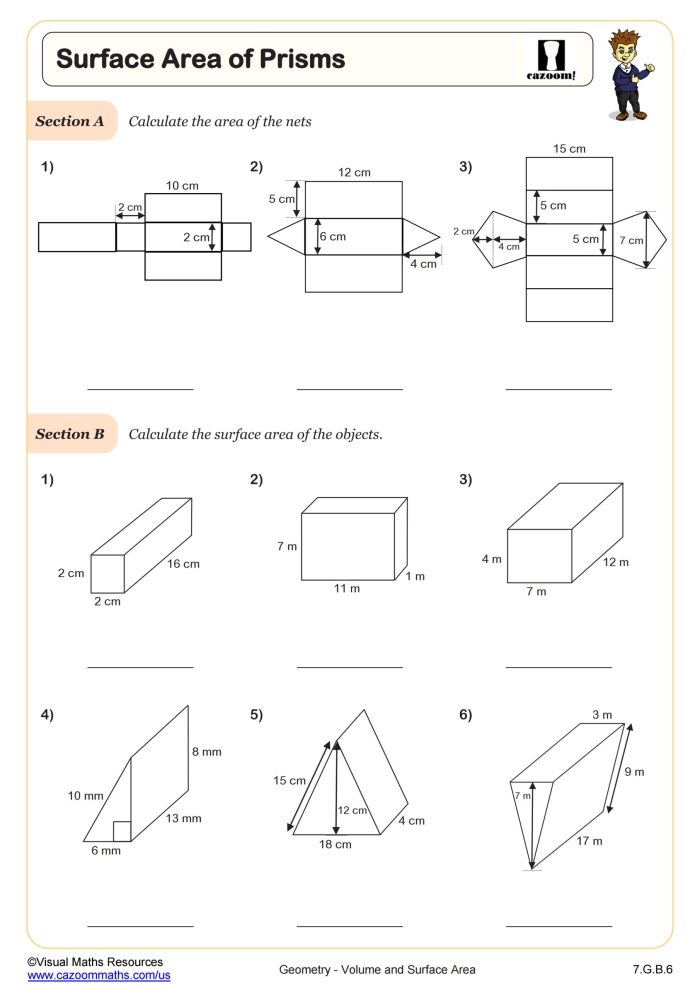
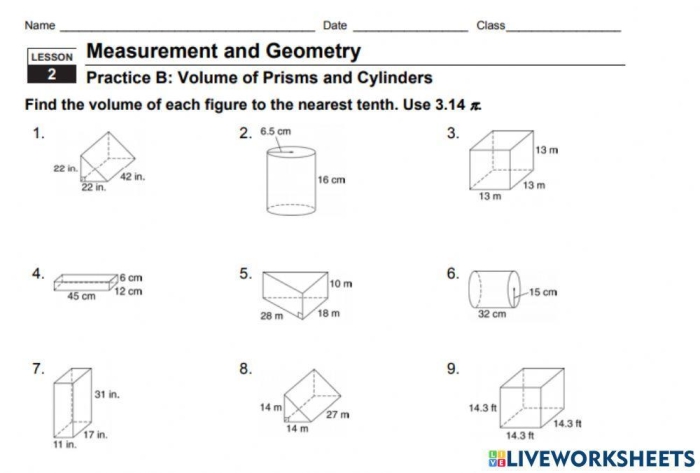
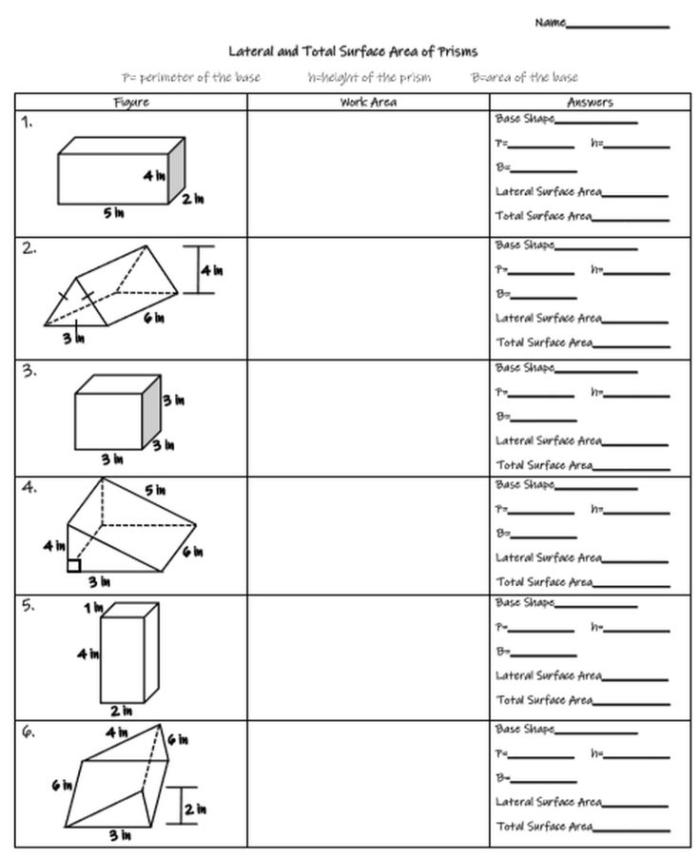
When seventh-grade students first encounter right prisms, they often struggle to visualize how to calculate the space inside these three-dimensional shapes. A solid worksheet focused on finding area across different prism types can transform that confusion into confidence. This kind of practice material helps students move beyond memorizing formulas and actually understand how base area and height work together.
Right prisms appear everywhere in real life, from cereal boxes to swimming pools to storage containers. When students work through problems involving rectangular prisms, triangular prisms, and pentagonal prisms, they’re building skills that connect to practical situations. The key is giving them enough varied examples so the concept sticks, rather than just one or two repetitive problems.
A well-designed geometry worksheet should include prisms with different base shapes. Students might start with simple rectangular bases before moving to triangular or irregular polygon bases. Each problem type reinforces the fundamental principle: multiply the area of the base by the height of the prism. When you’re teaching life science at the seventh-grade level, you can even connect this to how scientists measure capacity in biological containers or storage spaces.
The structure of these worksheets matters too. Clear diagrams showing which measurements represent the base and which represent the height prevent the confusion that often derails students. Including a mix of problems where students find the area when given all measurements, and problems where they solve for missing dimensions, keeps the work engaging rather than mechanical.
You might also consider pairing this with related material. Understanding volume of right prisms naturally follows area practice, and exploring integer subtraction rules helps when working with coordinate geometry. These connections help students see geometry as an interconnected system rather than isolated topics.
Practice with These Worksheets