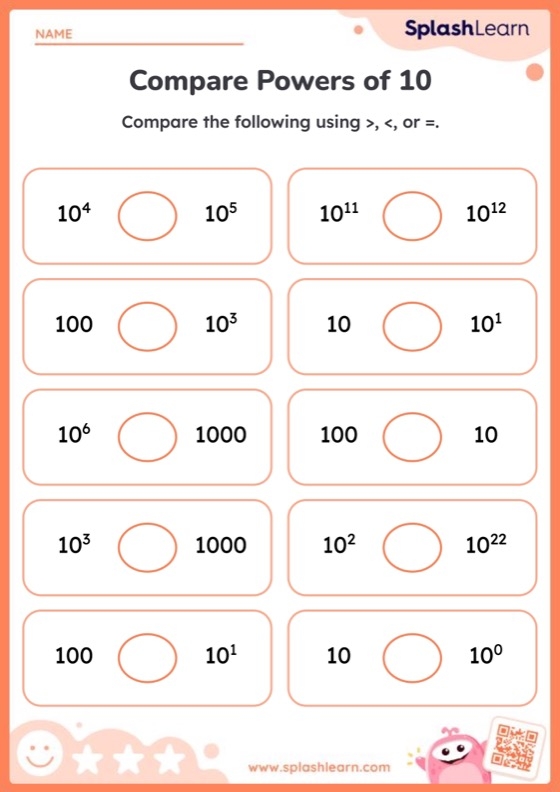
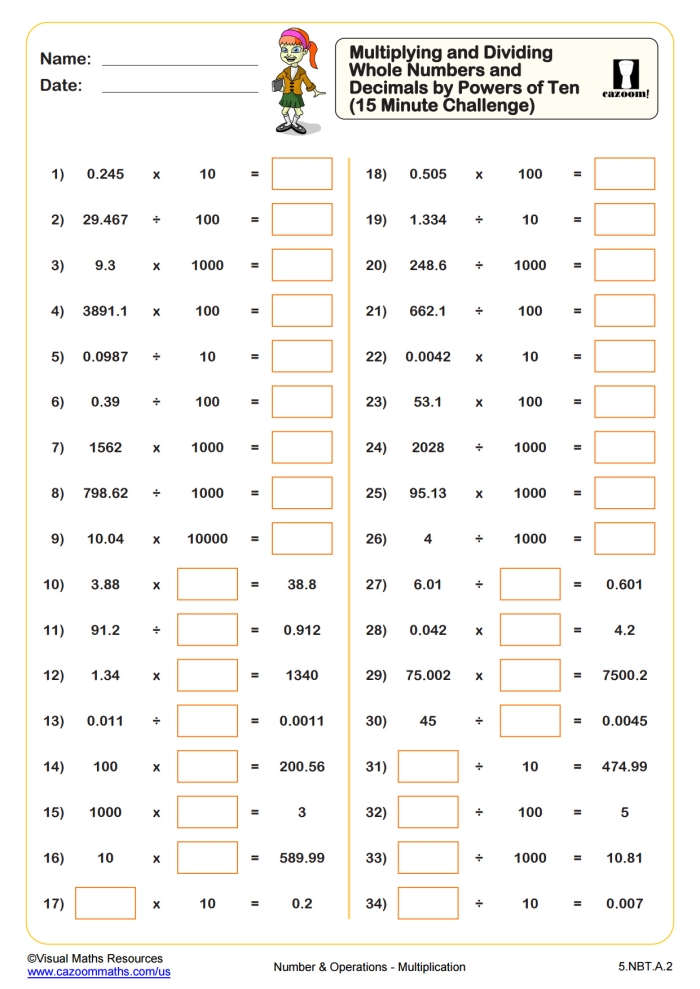
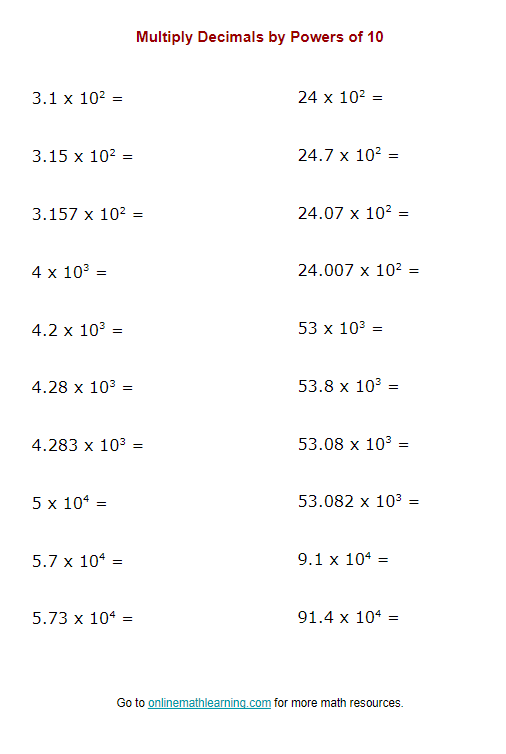
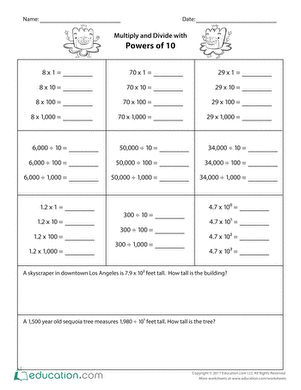
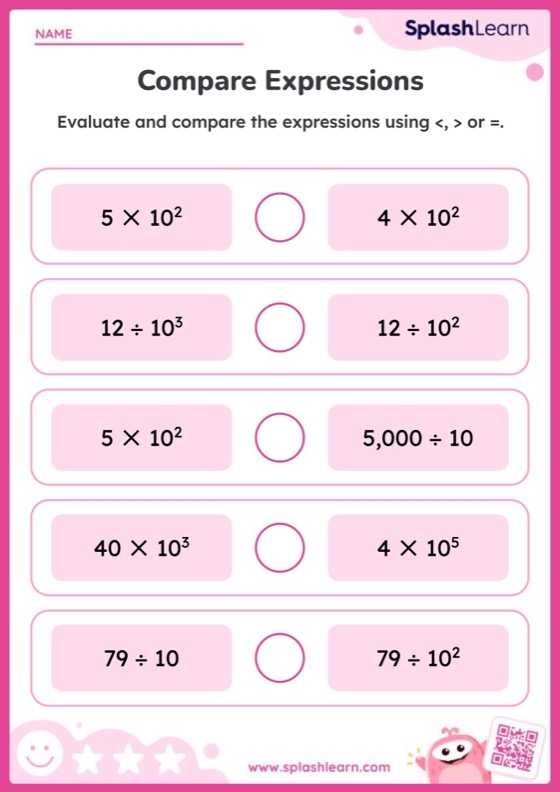
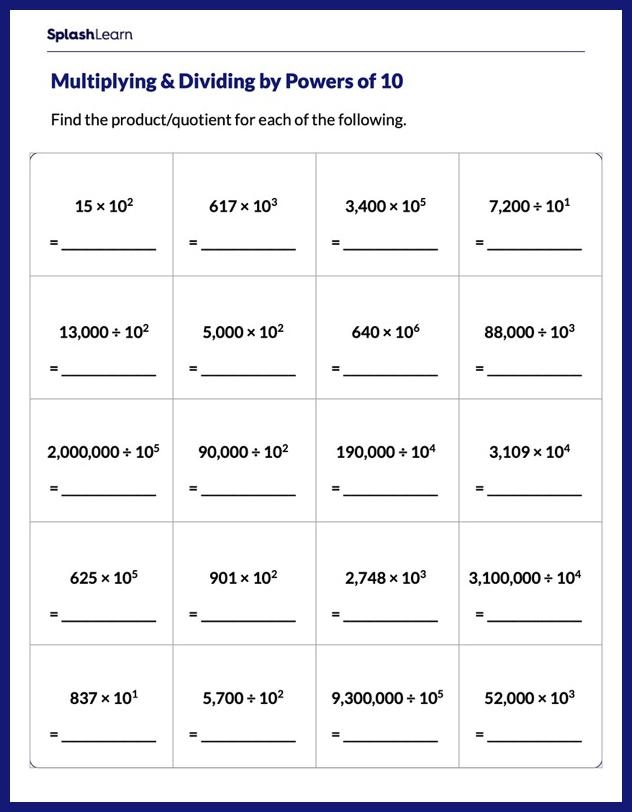
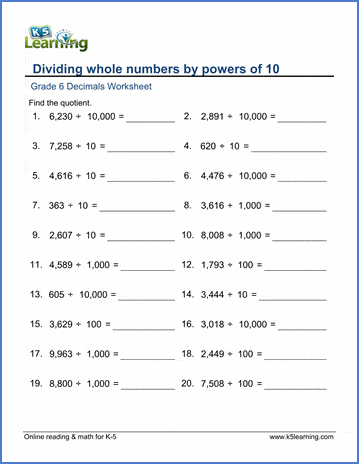
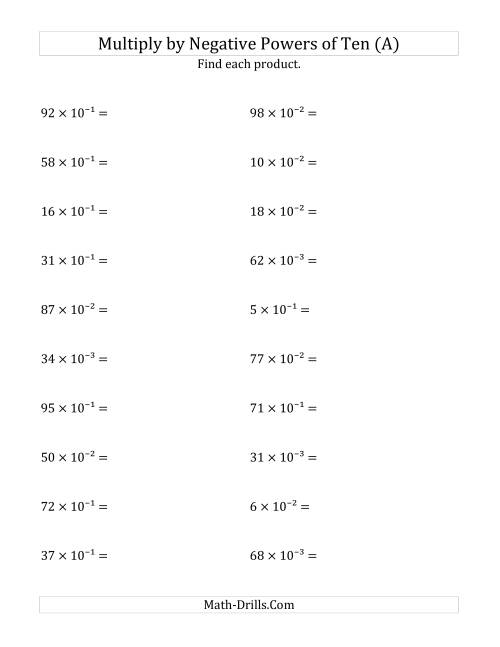
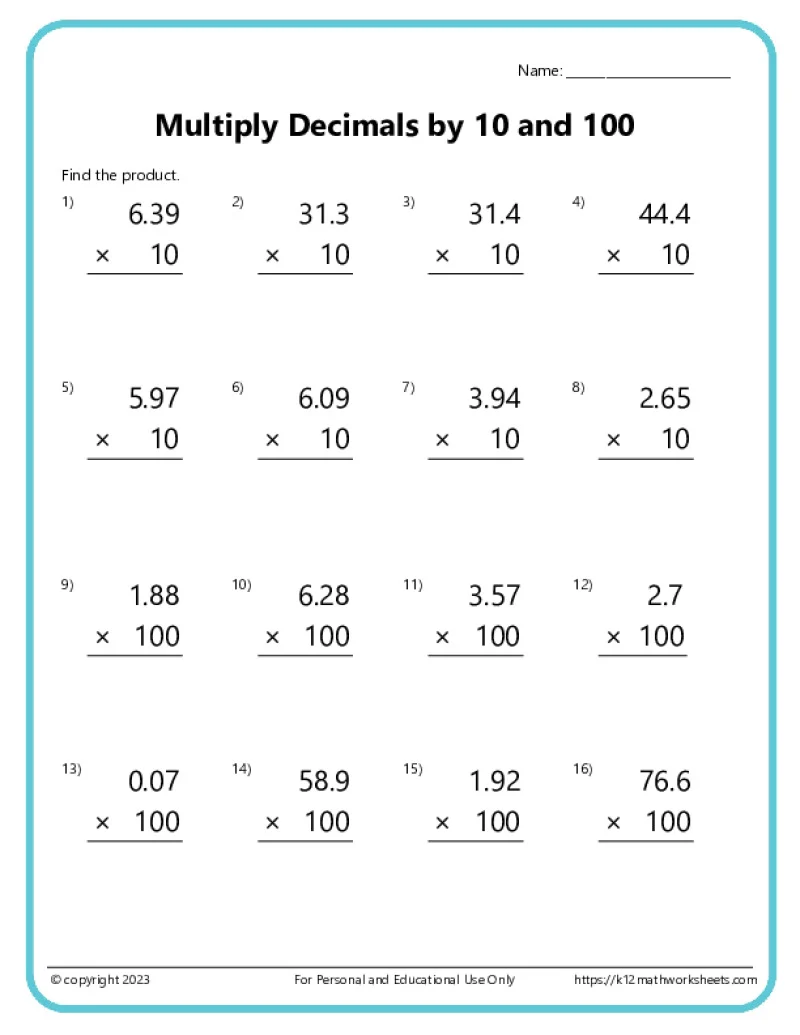
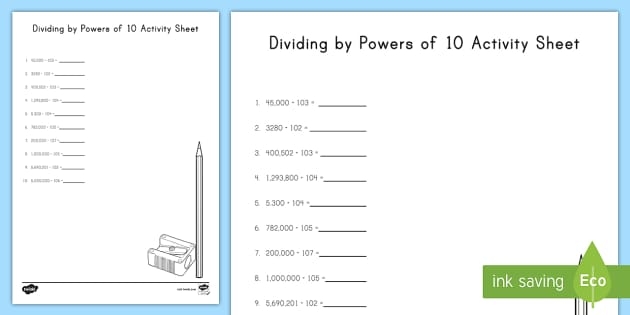
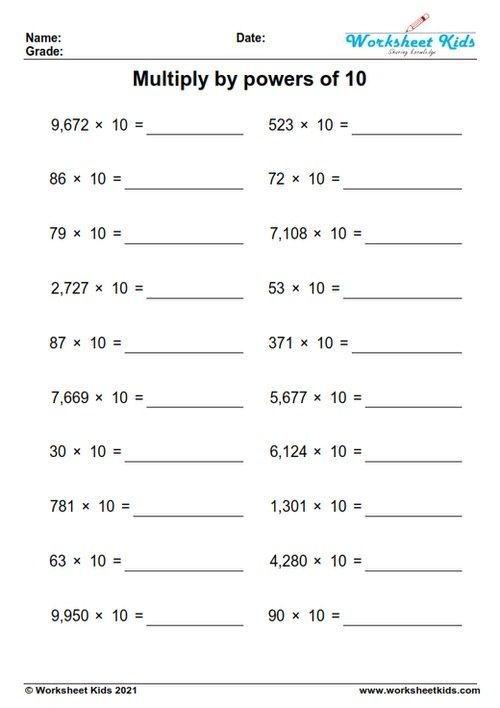
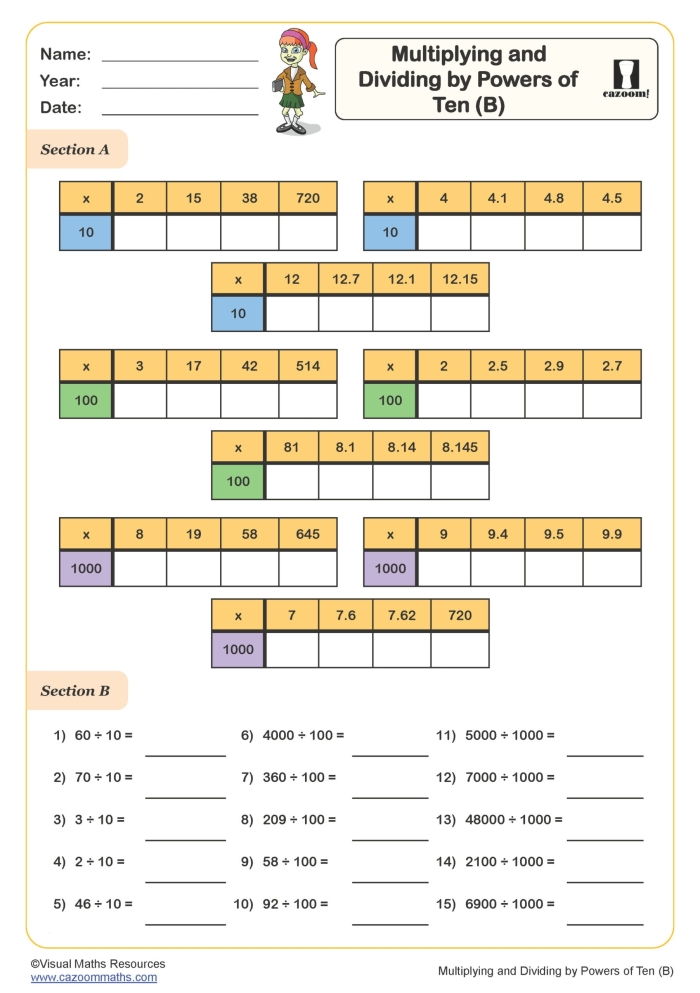
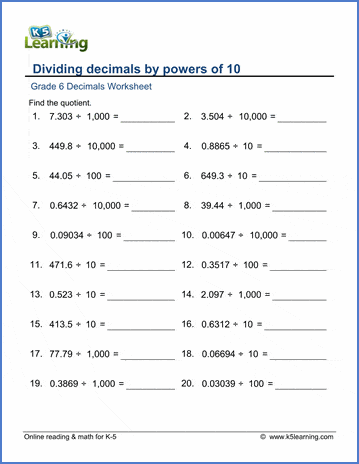
When fourth grade students first encounter powers of 10, many struggle to see the pattern. A multiplication worksheet that asks students to multiply the same number by 10, 100, and 1,000 forces them to notice something remarkable: the digits don’t change, only their position shifts. This is the core insight that makes understanding place value click into place.
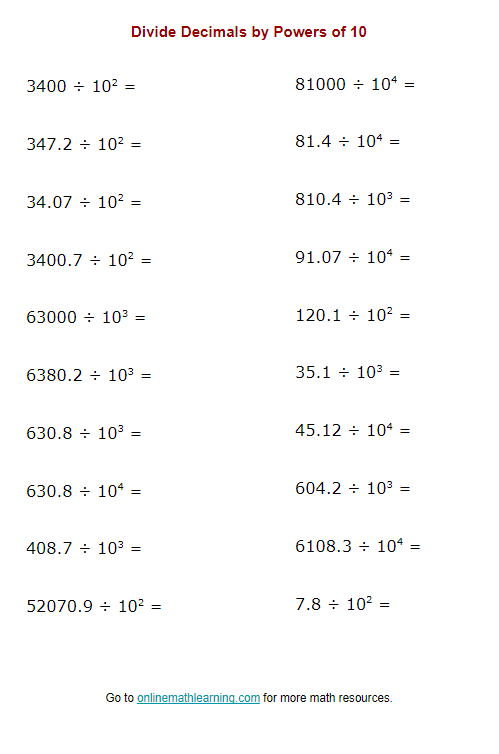
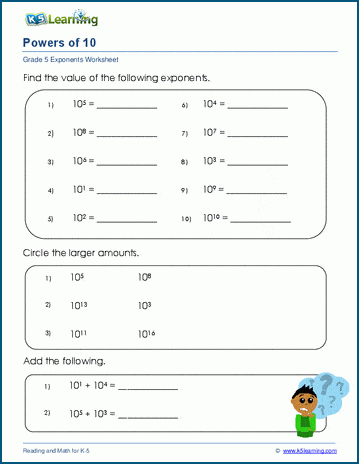
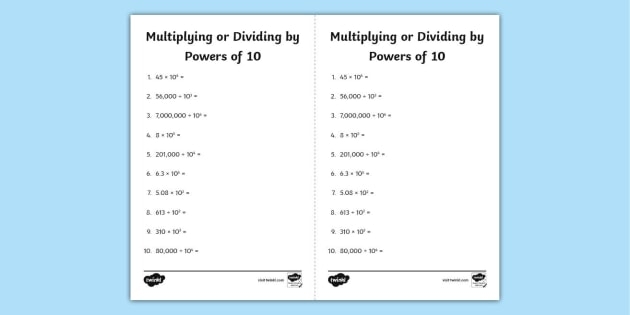
Working through multiply by powers of 10 practice problems builds genuine fluency with this concept. When a student multiplies 7 by 10 and gets 70, then multiplies 7 by 100 and gets 700, they begin to internalize how our number system actually works. The repetition across different power levels cements the pattern in ways that a single example never could.
The beauty of this approach lies in its efficiency. Rather than treating each multiplication separately, students see it as one coherent system. They’re not memorizing isolated facts. They’re discovering a rule that applies consistently, which builds confidence and reduces cognitive load. Fourth grade is precisely when this kind of structural thinking becomes developmentally appropriate.
These worksheets also serve a practical purpose in the classroom. They provide focused, repetitive practice without overwhelming students. Teachers can assign them as independent work while addressing other skills like subtraction with regrouping with small groups. The format keeps students productive and engaged without requiring constant supervision.
Beyond multiplication, this foundation matters for everything that follows. Students who understand powers of 10 find decimal operations, scientific notation, and even basic algebra more accessible. What appears to be a simple worksheet is actually scaffolding for years of mathematical thinking ahead.
Grab These Worksheets Now