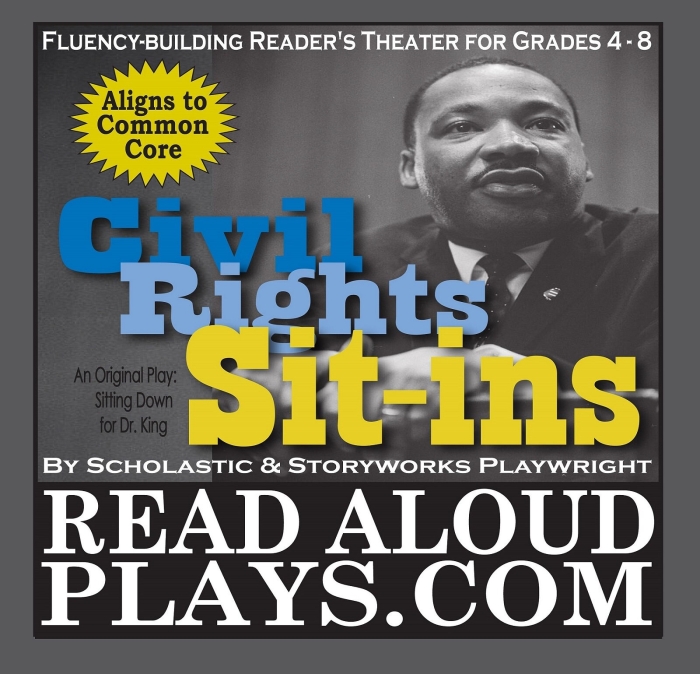
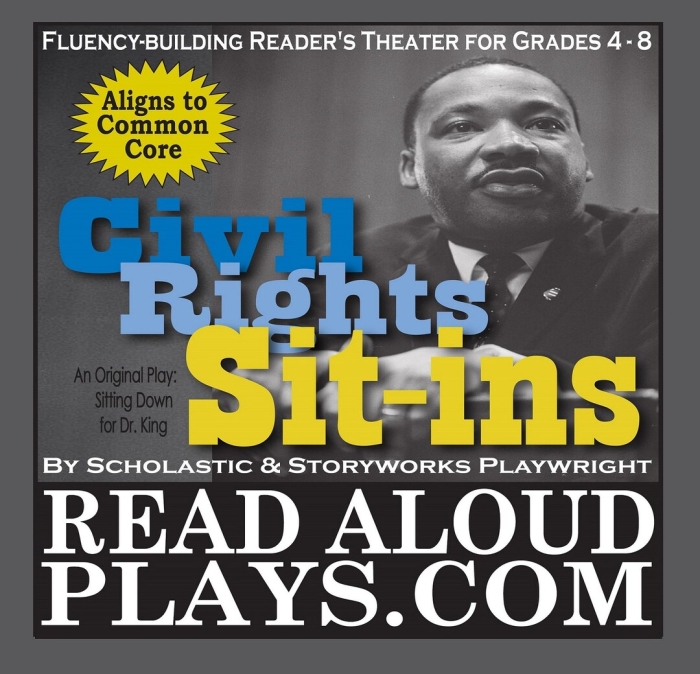
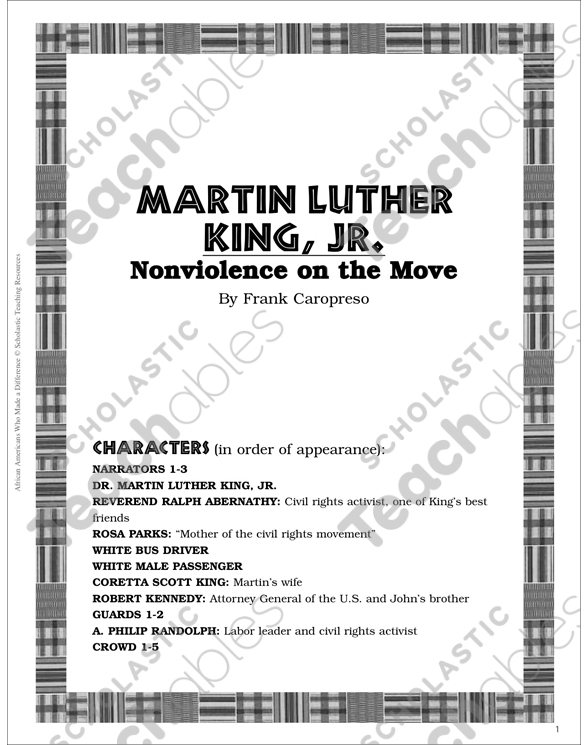
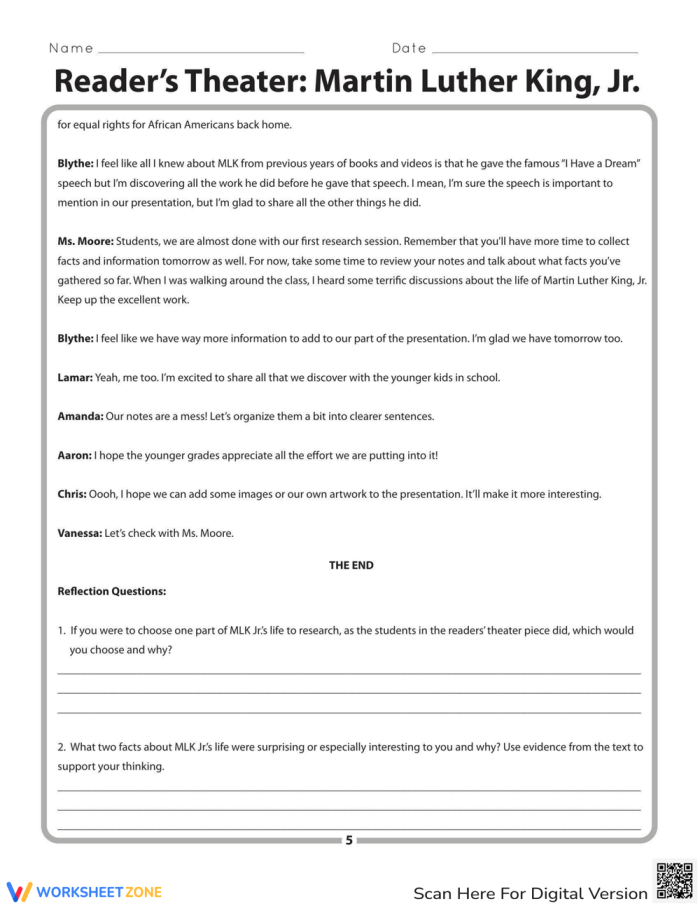
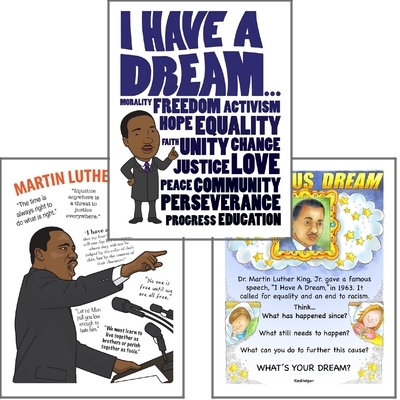
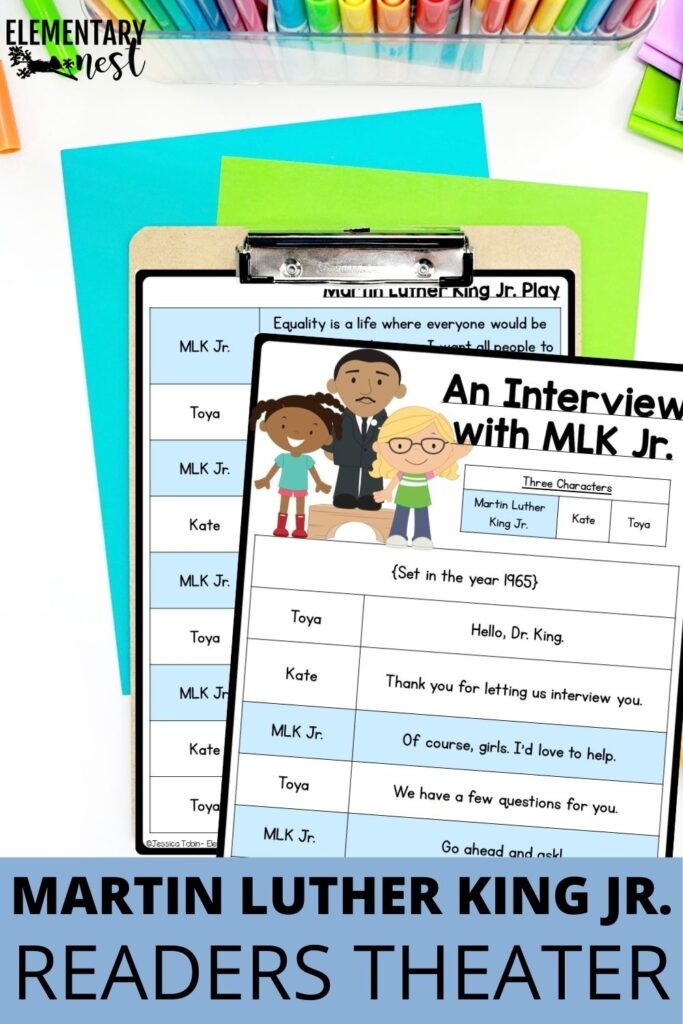
Reader’s theater brings Martin Luther King, Jr.’s story to life in a way that static textbooks simply cannot. When fourth graders perform scenes from his speeches and pivotal moments in the civil rights movement, they don’t just read about history—they step into it, feel it, and understand it on a deeper level.
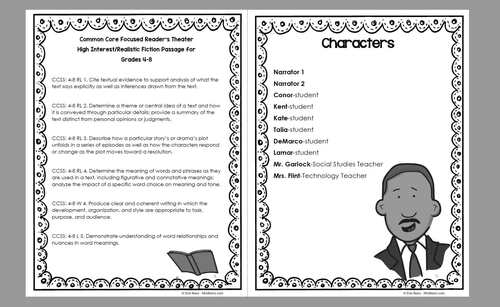
This teaching approach works because it combines performance with learning. Students take on different roles, from King himself to journalists, fellow activists, and people affected by segregation. As they practice their lines and deliver them with expression, they absorb the emotional weight of what King accomplished and why his message still matters today. The format naturally encourages fourth grade students to think about tone, emphasis, and how words carry meaning, making it a natural fit for grammar and mechanics instruction alongside social studies.
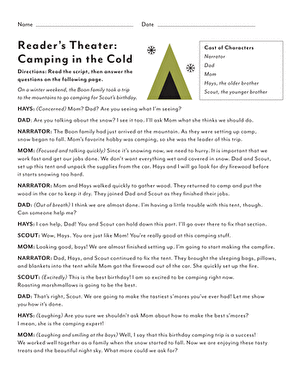
The beauty of reader’s theater is that it requires minimal props or staging. Students can perform from their seats with just a script in hand, which keeps the focus on the language itself. This setup makes it accessible for any classroom and any group of learners. Some students might struggle with traditional reading comprehension, but when they’re acting out a scene, the story becomes tangible and memorable.
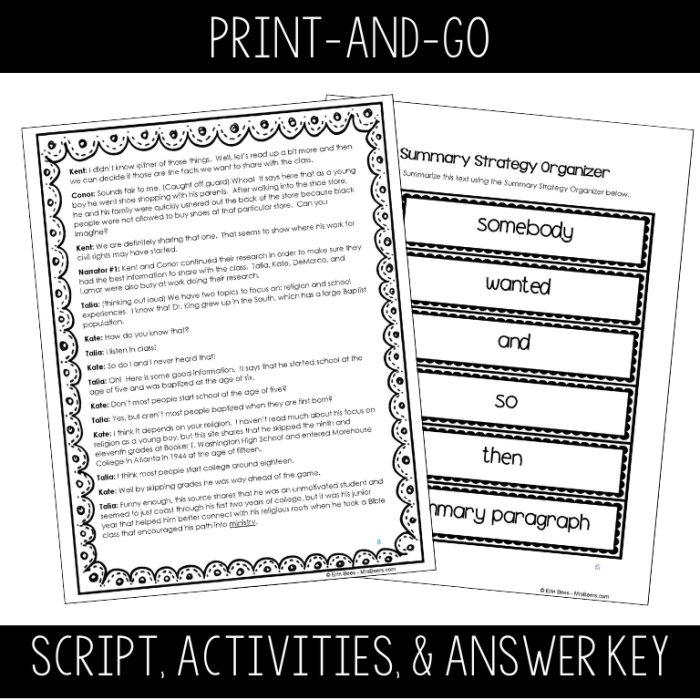
To support this activity, you can use structured worksheets that help students analyze the text they’re performing. Tools like three-sentence summary exercises help students capture the main ideas from each scene. You might also incorporate sentence revision practice to show how King’s powerful words were carefully chosen for impact.
When students perform reader’s theater about Martin Luther King, Jr., they’re learning history, developing public speaking skills, and strengthening their understanding of how language shapes meaning. It’s an engaging, interactive way to honor his legacy while meeting classroom learning goals.
Printable Worksheets for Practice