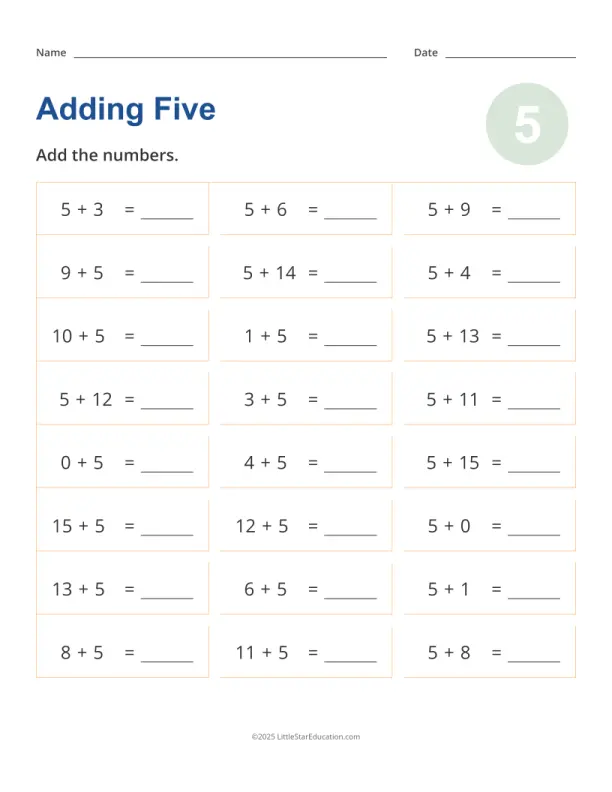
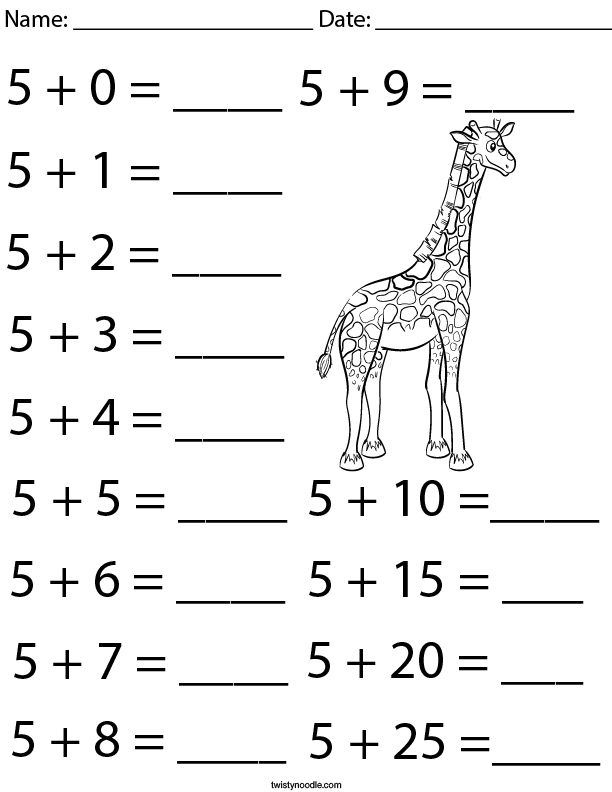
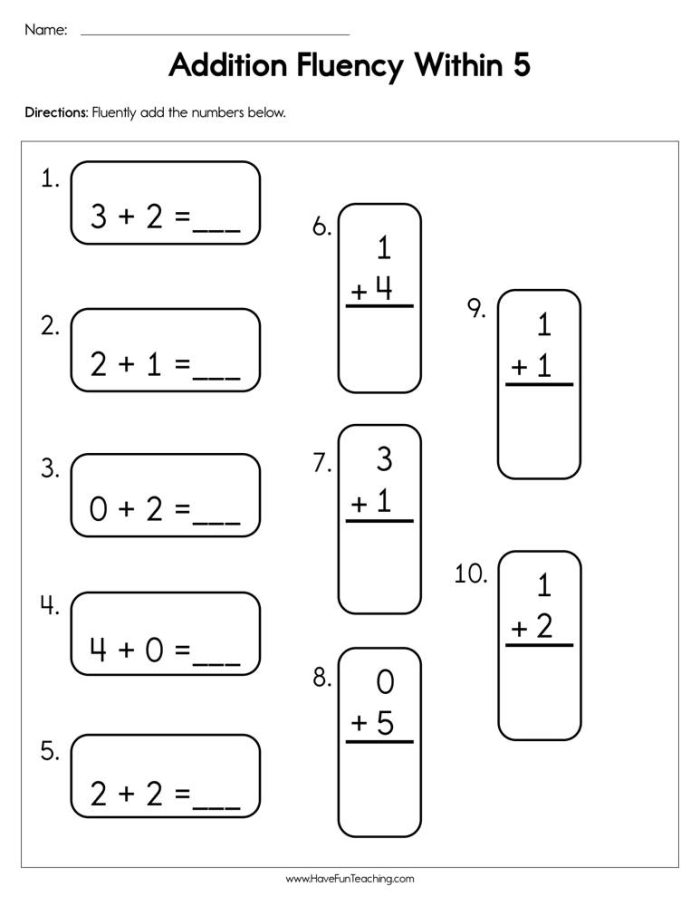
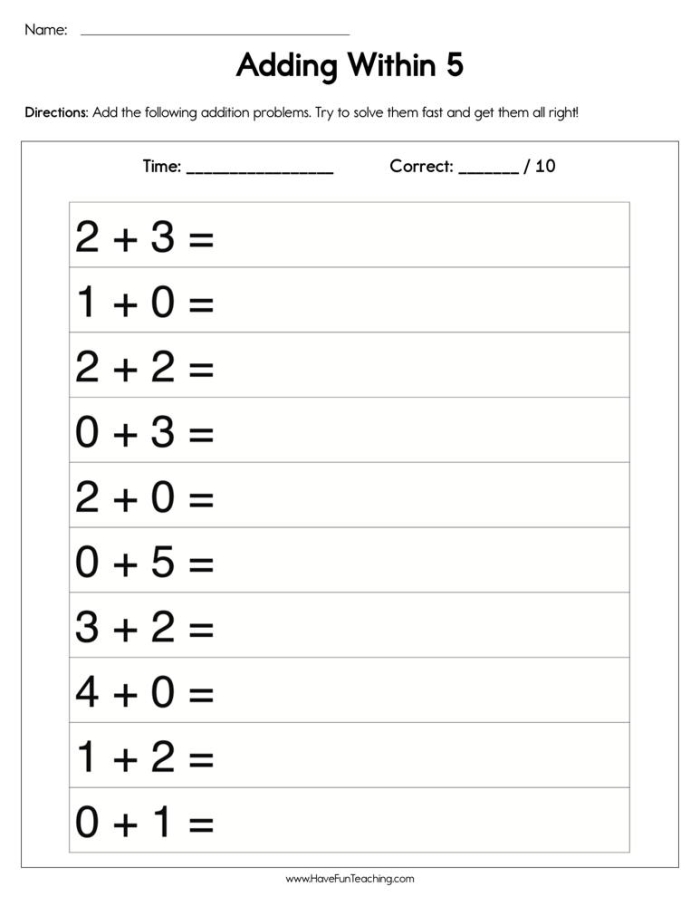
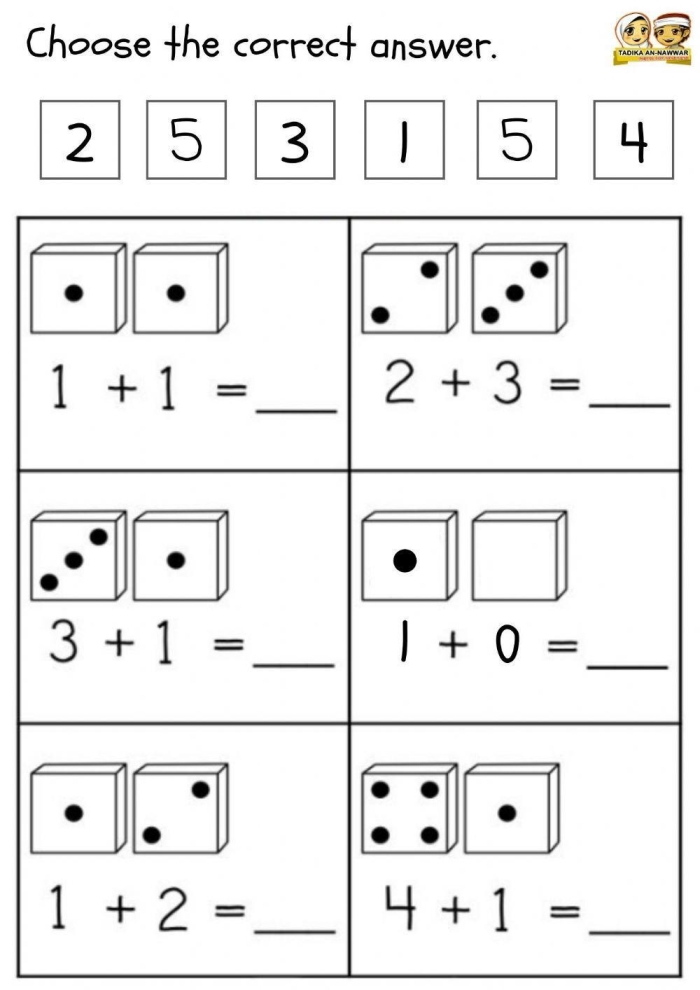
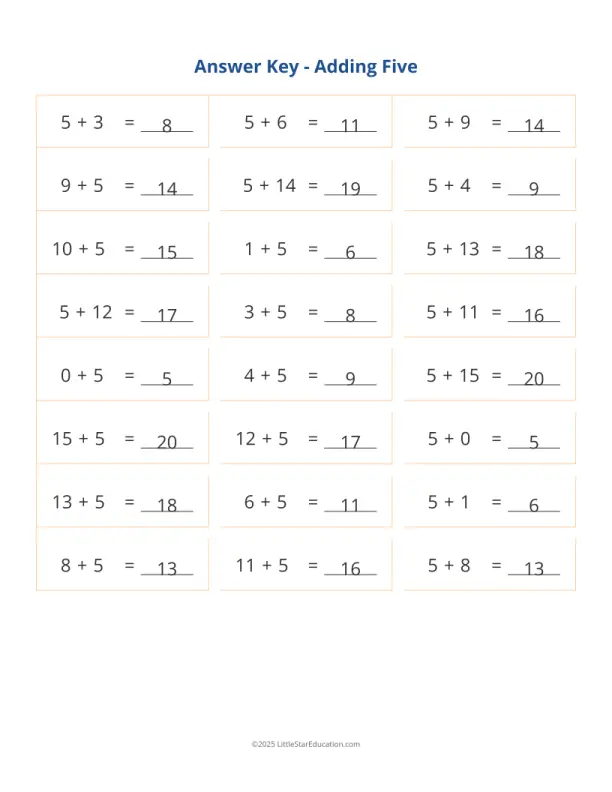
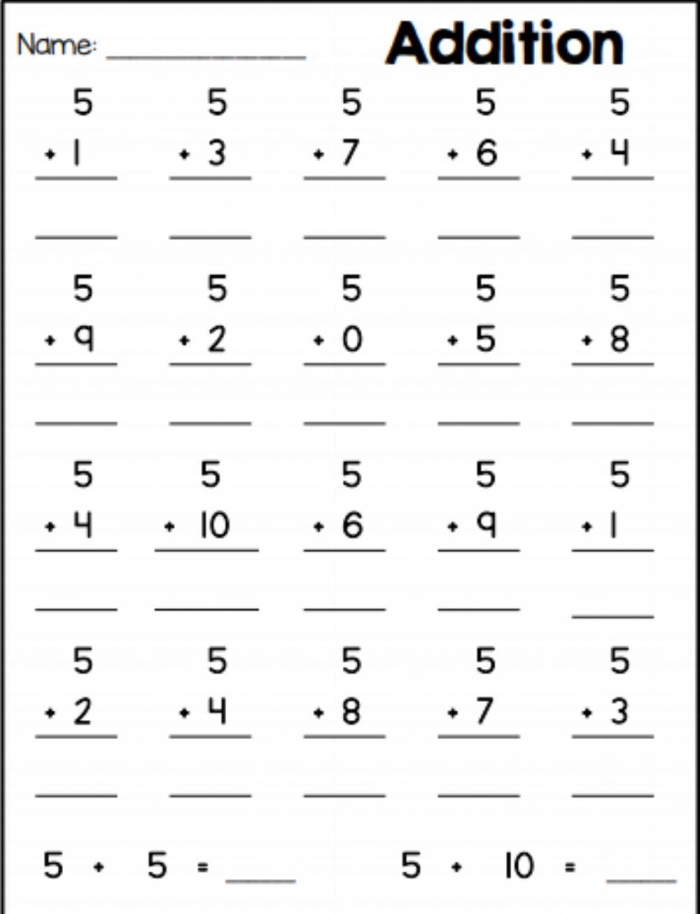
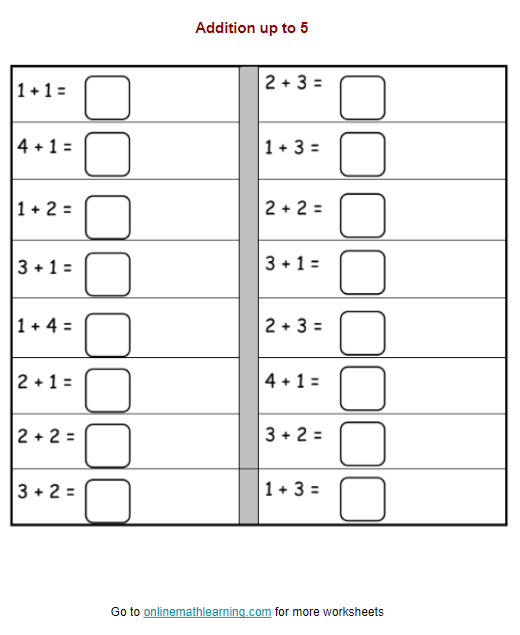
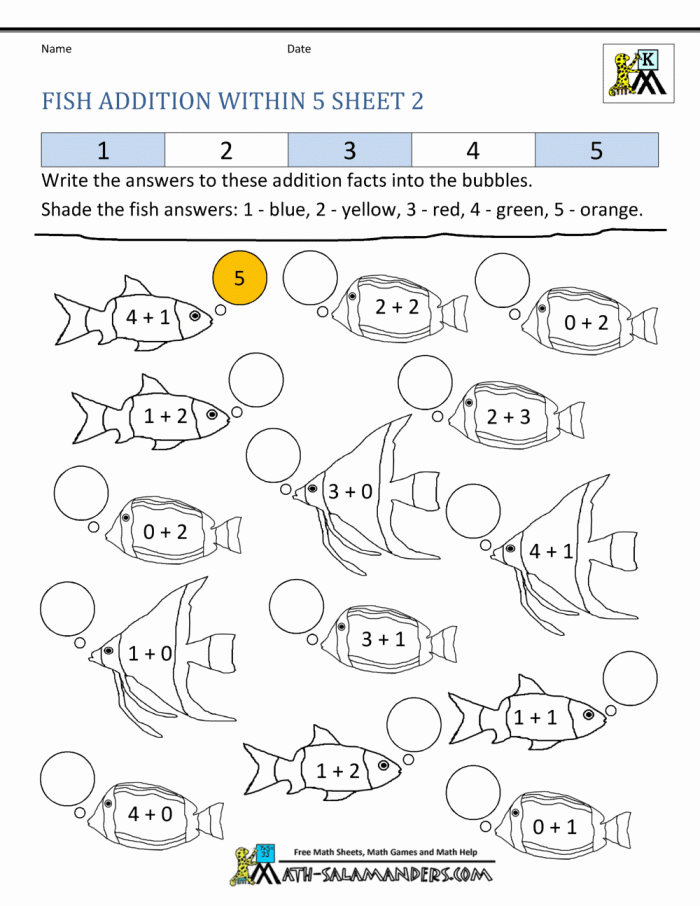
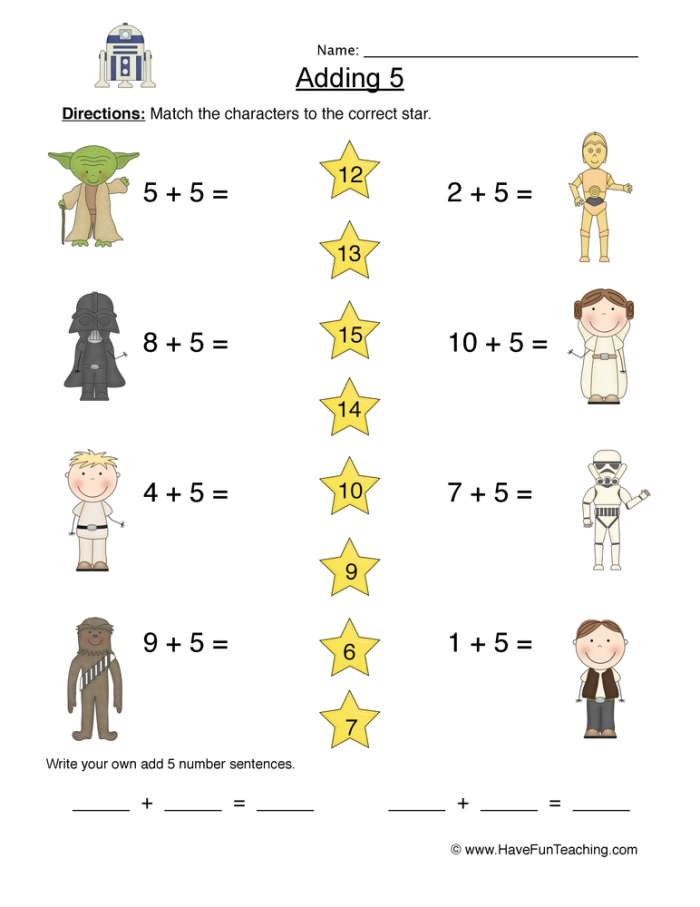
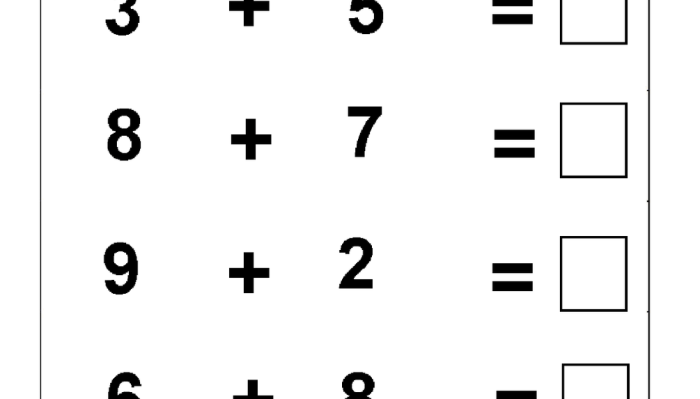
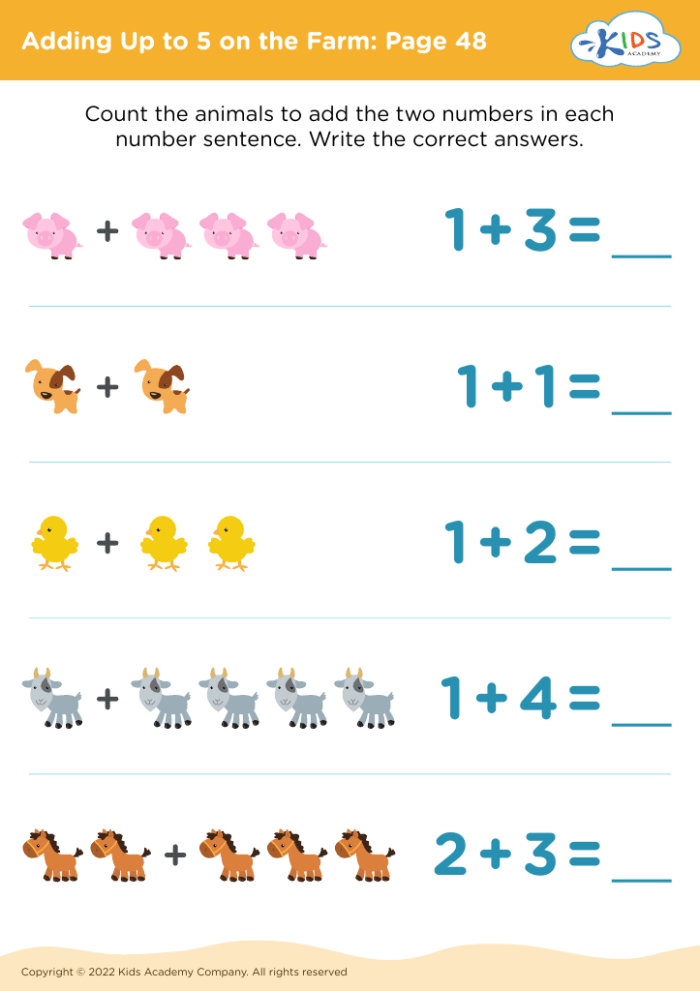
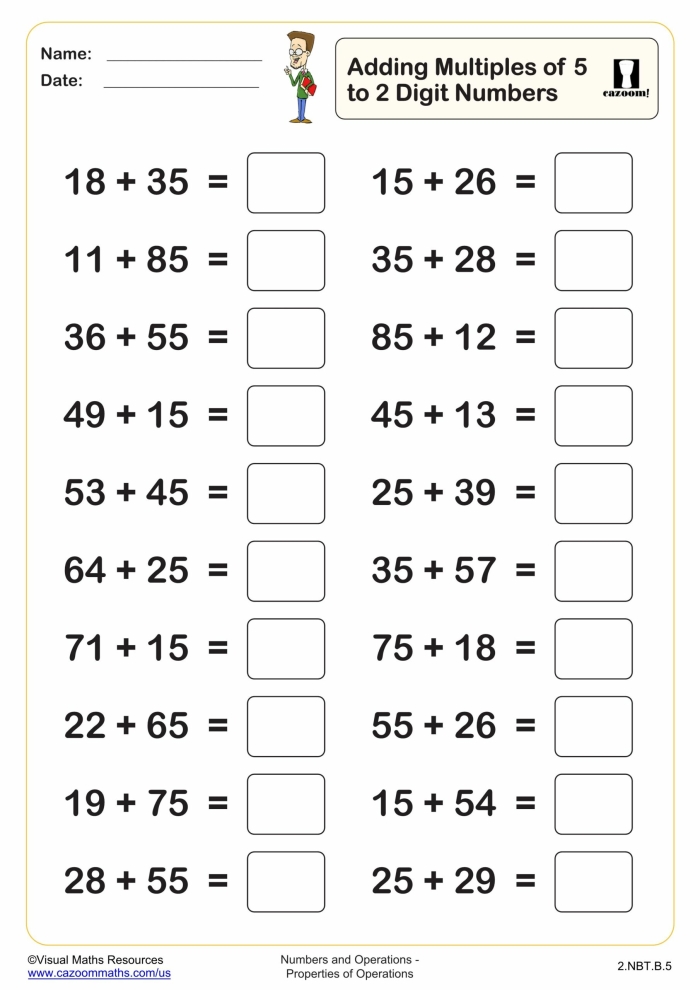
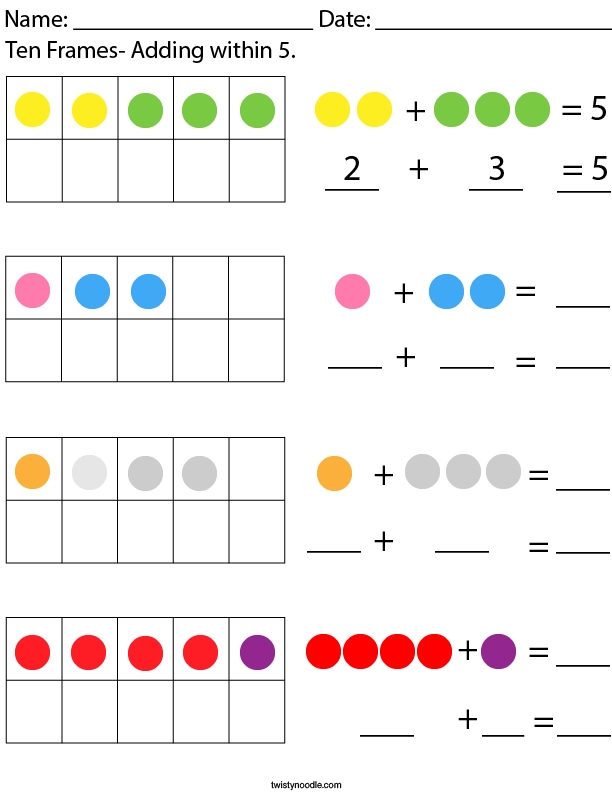
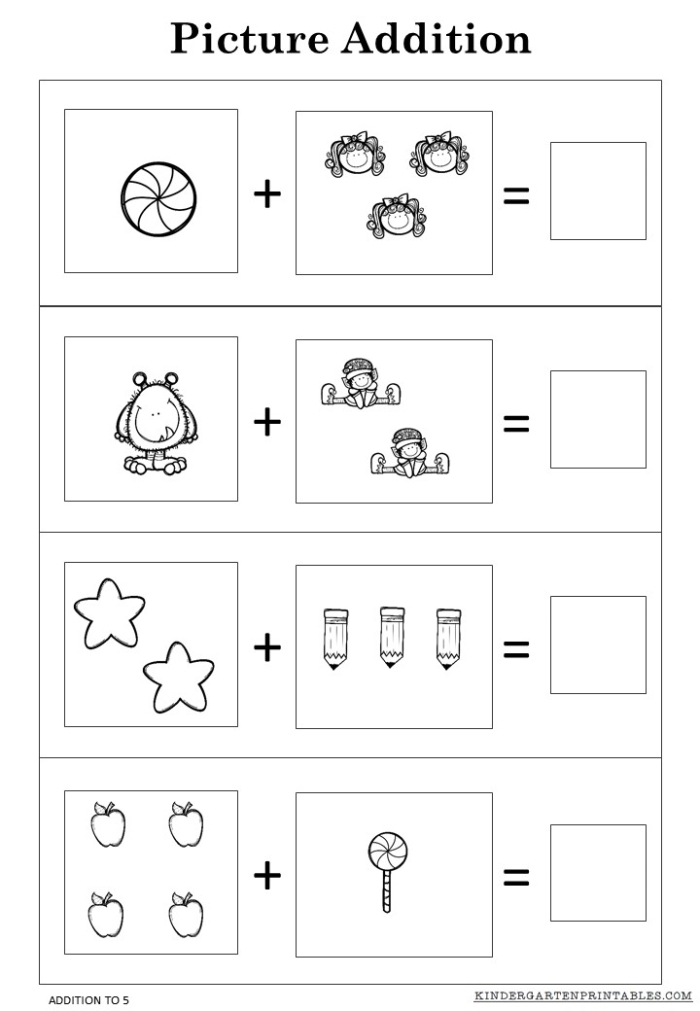
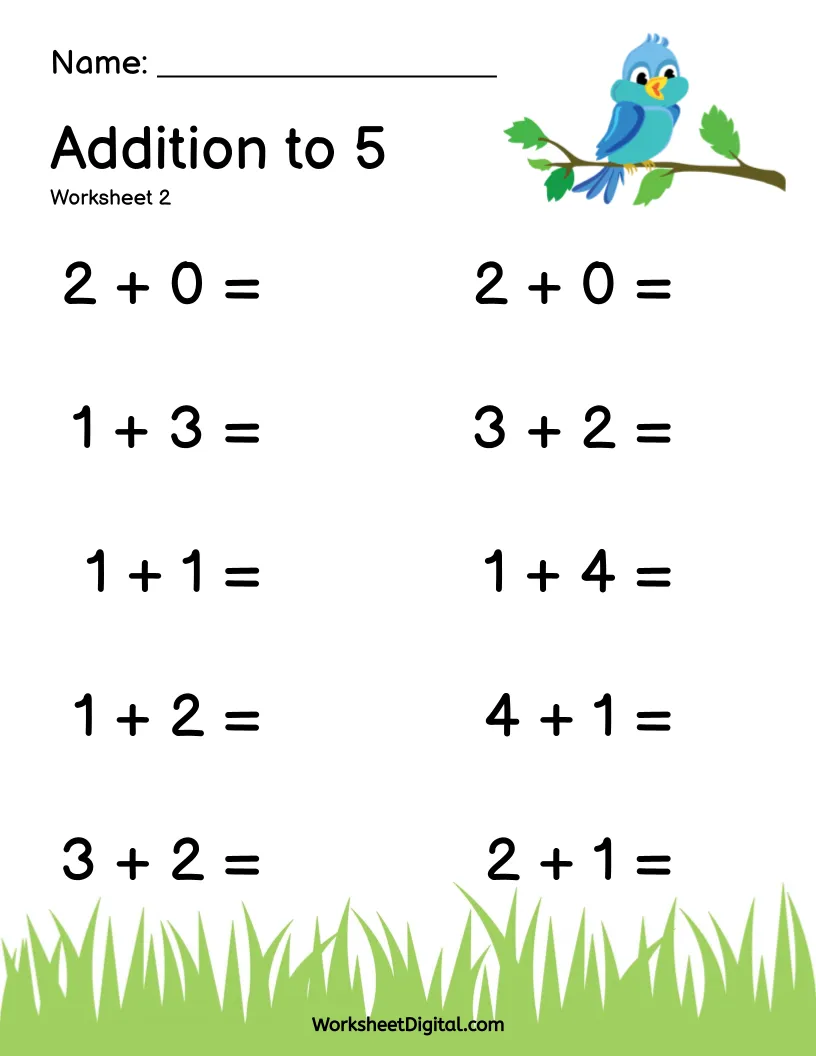
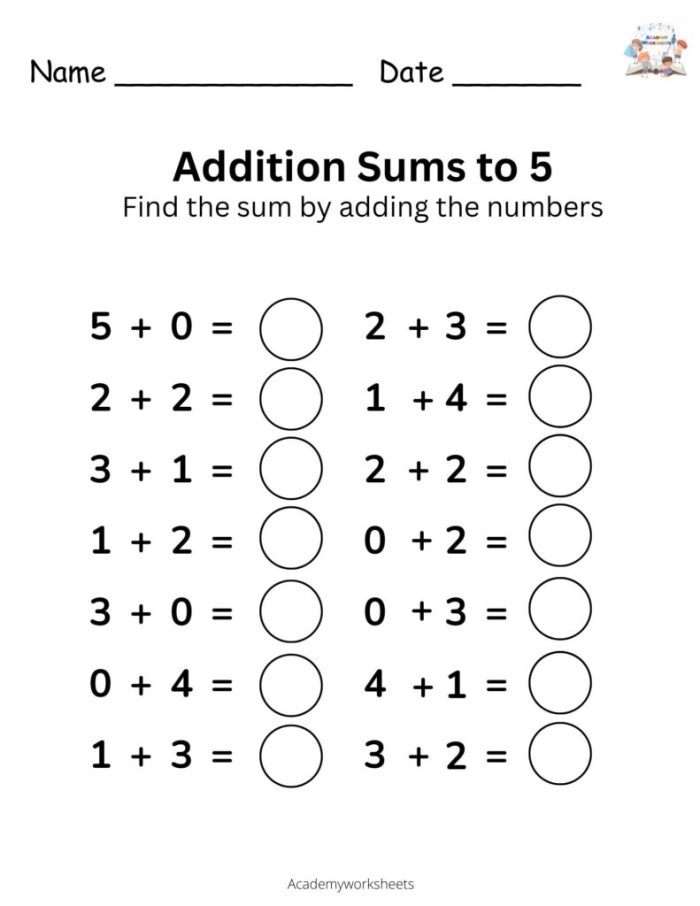
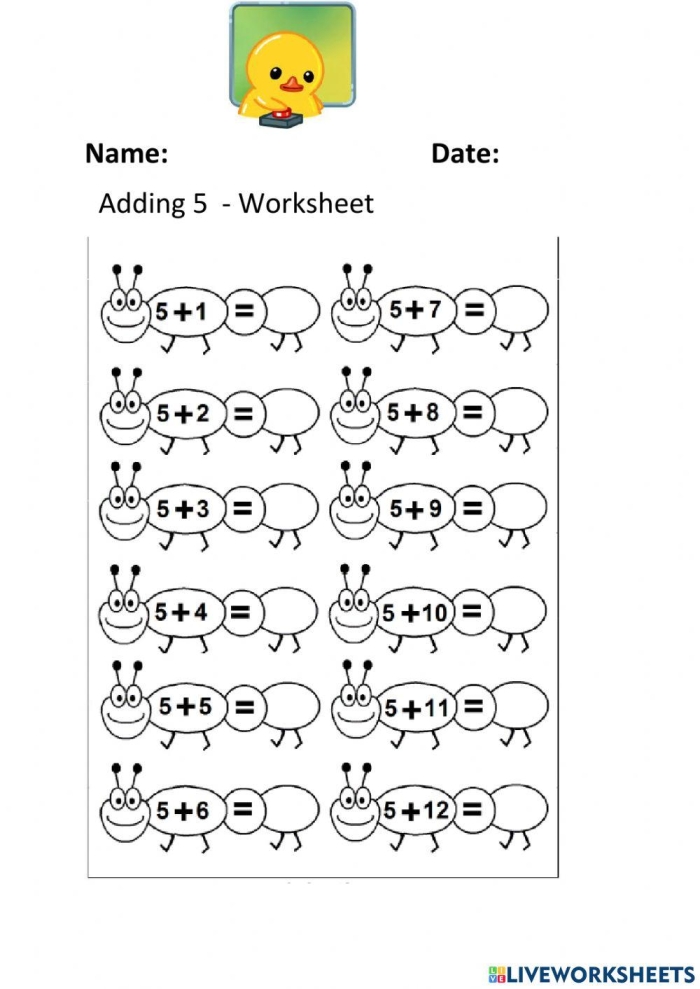
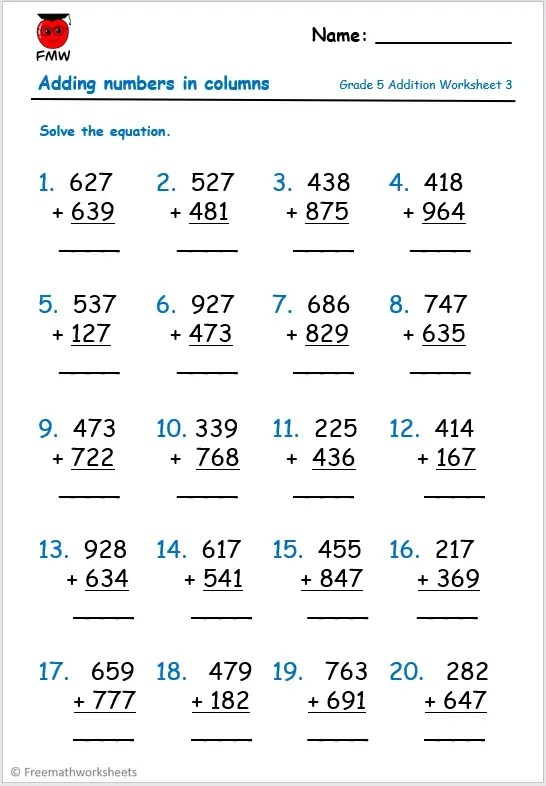
When first graders start mastering single-digit addition, adding five becomes a natural stepping stone that builds real confidence. This worksheet focuses on that specific skill, helping students practice adding five to numbers within 10 until the process becomes automatic rather than something they need to count out on their fingers.
The beauty of targeting addition with five is that it creates a pattern students can recognize and internalize. Once a child understands that 3 + 5 = 8, they’re not just memorizing an isolated fact. They’re beginning to see how numbers relate to each other, which strengthens their overall number sense. This kind of fluency work removes the cognitive load from more complex math later on, making room for deeper problem-solving skills.
Repetition through worksheets works because it gives students the safe space to practice without pressure. Unlike a timed test or classroom activity where a child might feel rushed, worksheet practice lets them move at their own pace. They can use manipulatives, draw pictures, or count if they need to, then gradually internalize the facts through repeated exposure.
For first grade reading and math integration, pairing this kind of worksheet with story problems that use familiar contexts makes the practice stick better. If you’re looking to expand beyond simple addition facts, worksheets like addition facts within 10 offer similar scaffolding. You might also explore spring-themed addition and subtraction activities for seasonal variety, or try mixed operations worksheets once students show solid fluency with adding five.
The key is consistency. A few minutes of focused practice several times a week builds automaticity faster than cramming. By the end of first grade, adding five should feel as natural as counting itself.
Practice with These Worksheets