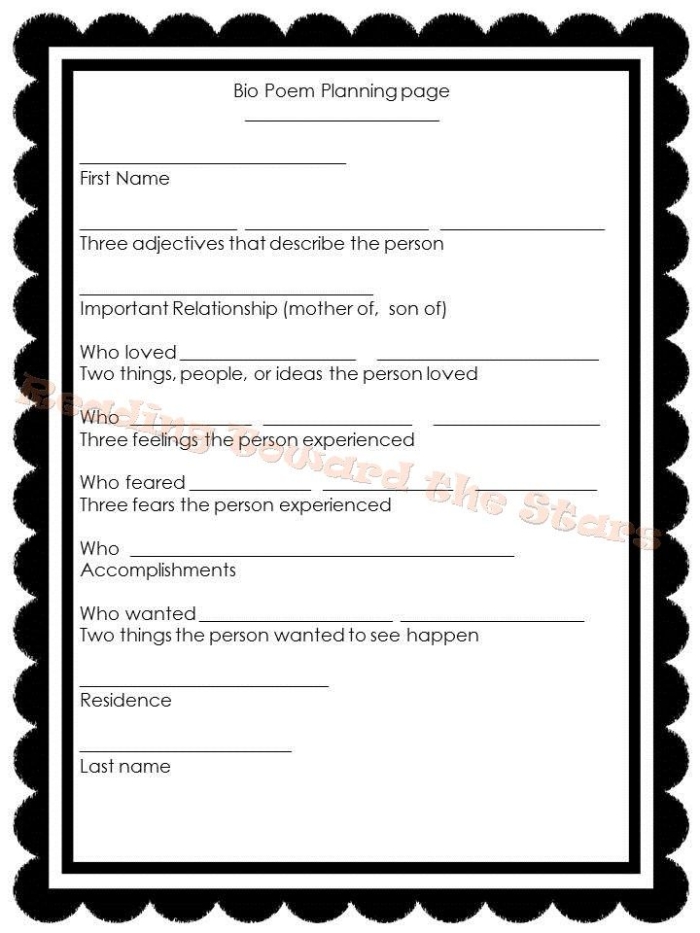
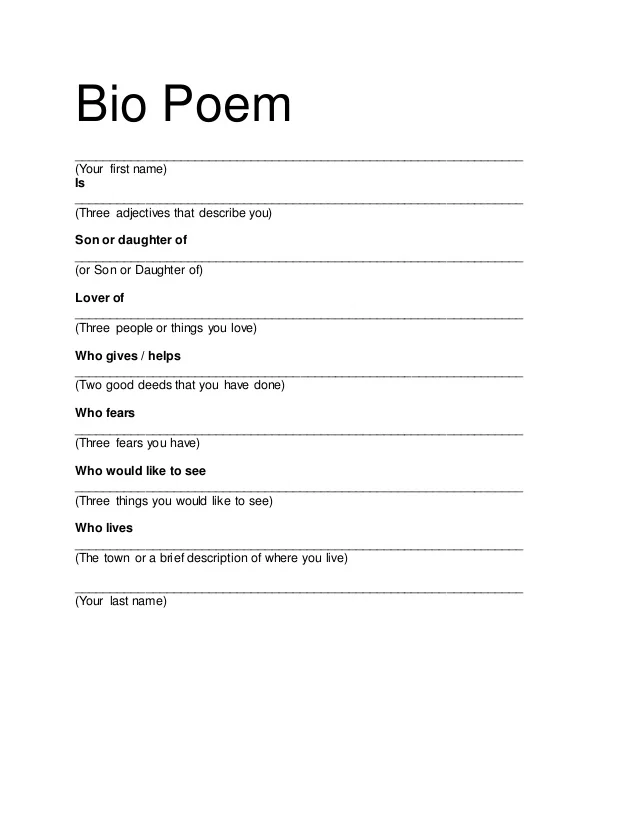
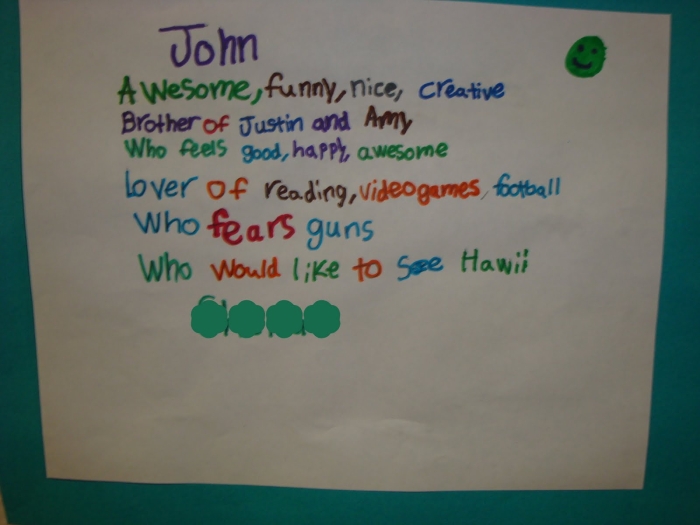
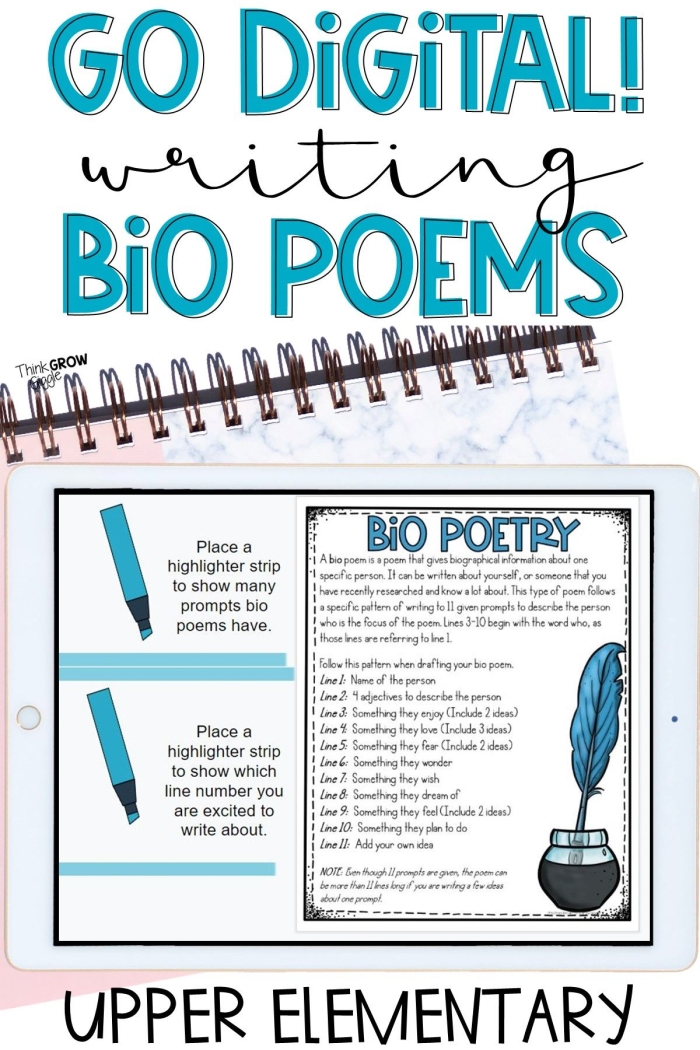
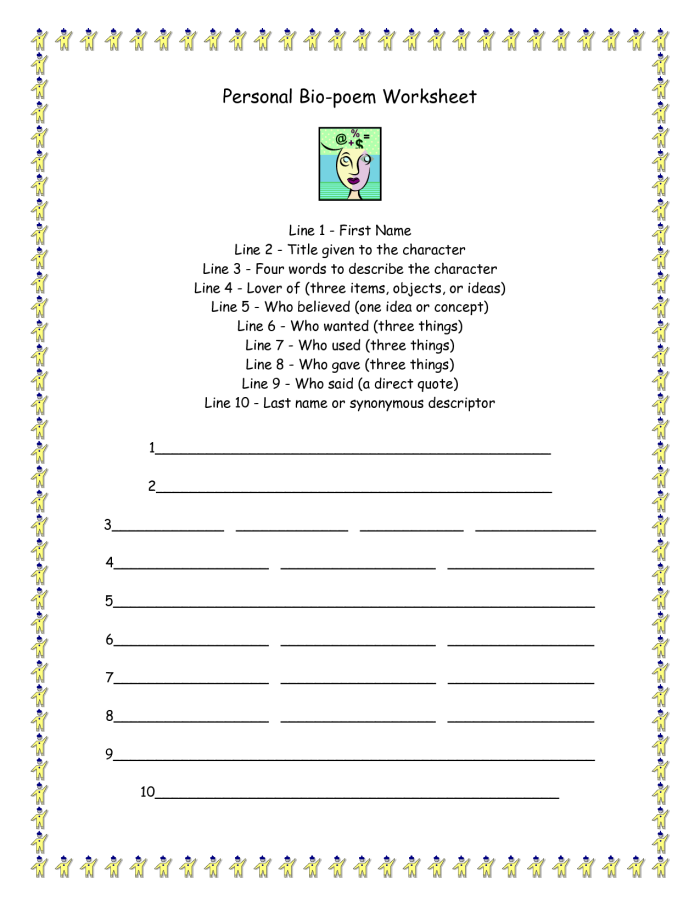
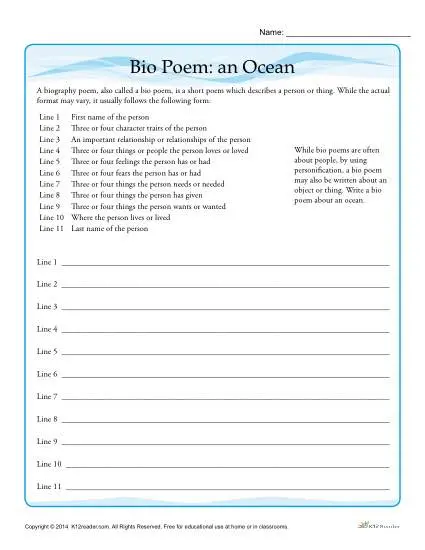
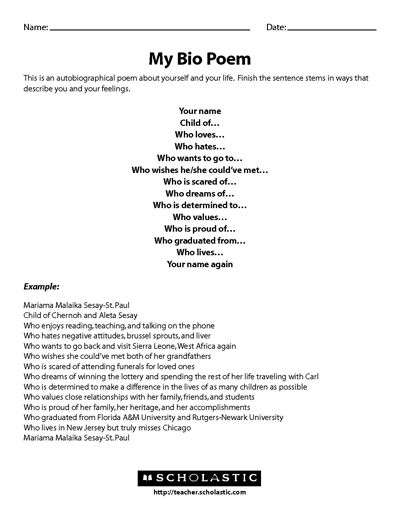
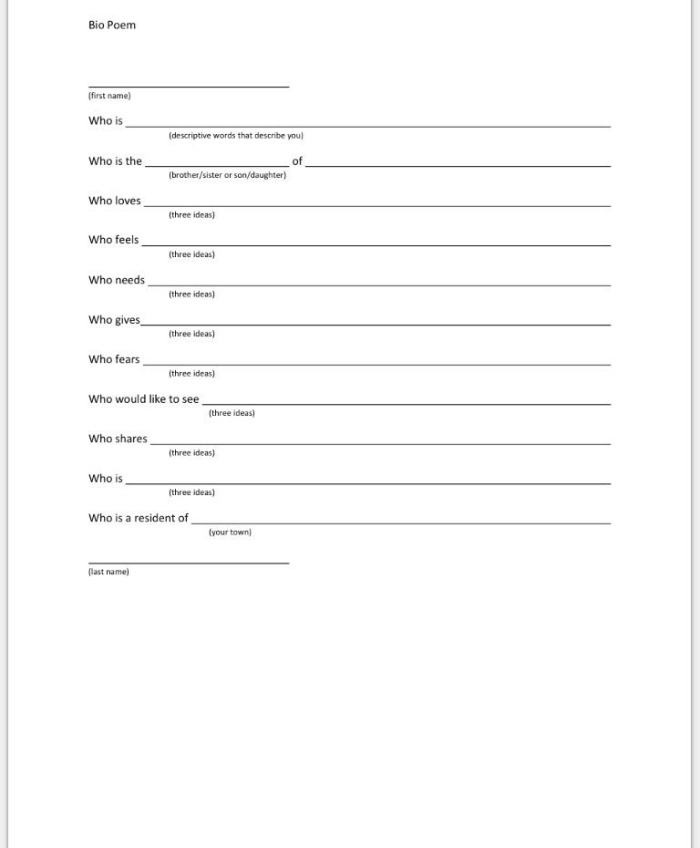
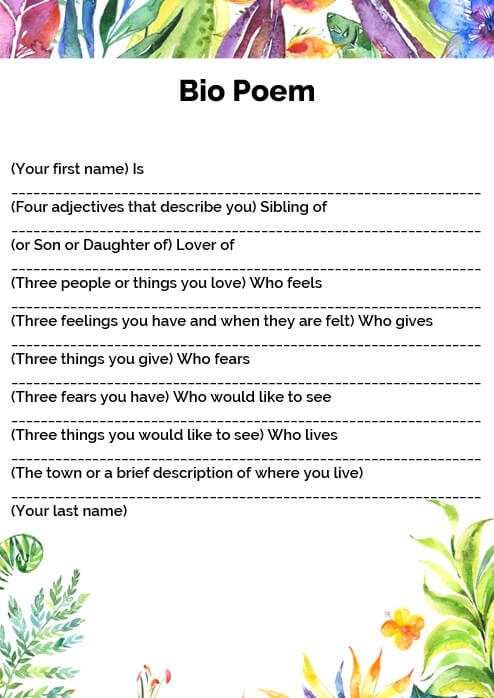
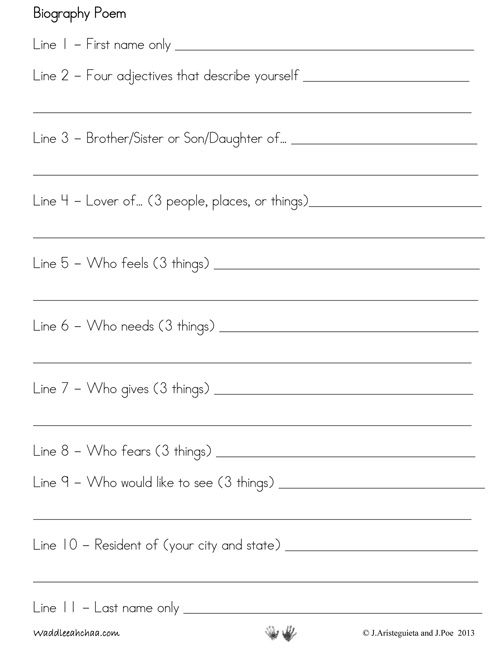
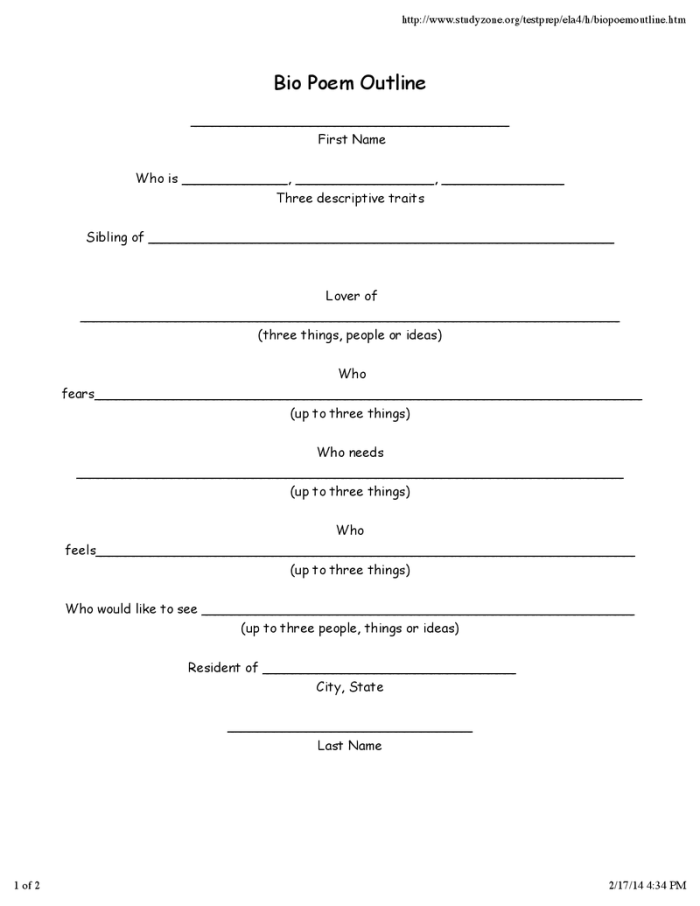
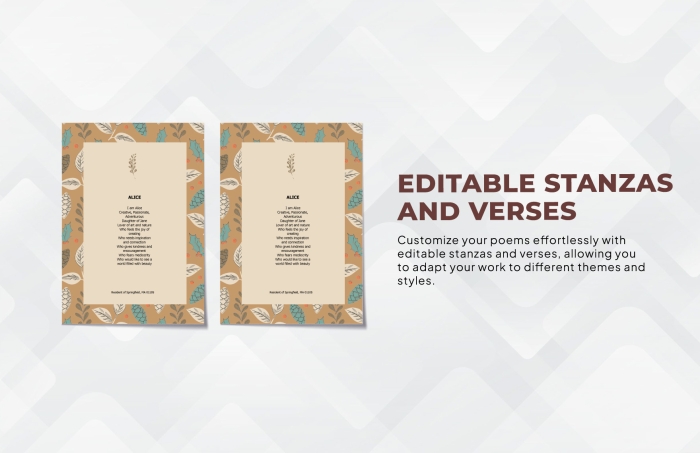
This worksheet introduces third graders to bio poems by walking them through a concrete example before they write their own. The model uses Thelonious Monk, the innovative jazz pianist, to show how biographical details transform into poetic form. Rather than asking children to memorize facts, this approach lets them see how a person’s life becomes language, which naturally strengthens their grasp of descriptive writing.
The structure works because it removes the blank-page anxiety. Children read Monk’s bio poem first, noticing how each line captures something different: his name, his characteristics, his passions, what he created. This scaffolding mirrors how teachers approach cause and effect for kids, where understanding the pattern comes before applying it independently.
After studying the example, students then choose their own subject. This could be a family member, a historical figure, a community helper, or anyone meaningful to them. The open-ended prompt respects that children have different interests and knowledge bases. A third grader fascinated by athletes will write differently from one who loves scientists, and that variation strengthens the assignment.
The bio poem format itself is forgiving. It doesn’t require perfect rhyme or meter, which means students can focus on word choice and meaning rather than wrestling with technical constraints. They’re building confidence in expression while learning that poetry is accessible, not something locked behind complex rules.
This worksheet also connects to broader literacy skills. Like work with prepositions in writing, bio poems teach students to be intentional about language placement. Every word matters in a poem, so children become more deliberate writers overall. The assignment proves that creative writing isn’t separate from skill-building—it’s where skills actually take root.
Practice with These Worksheets