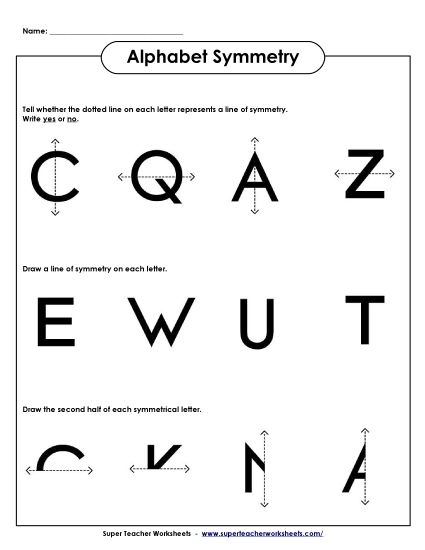
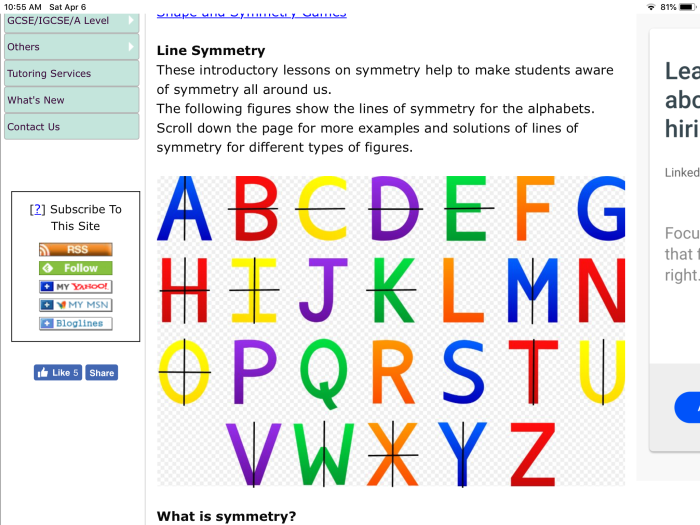
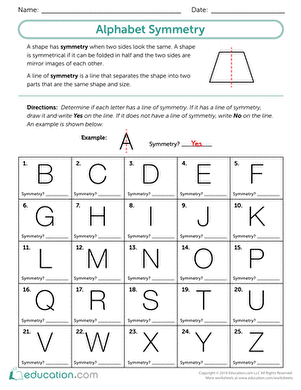
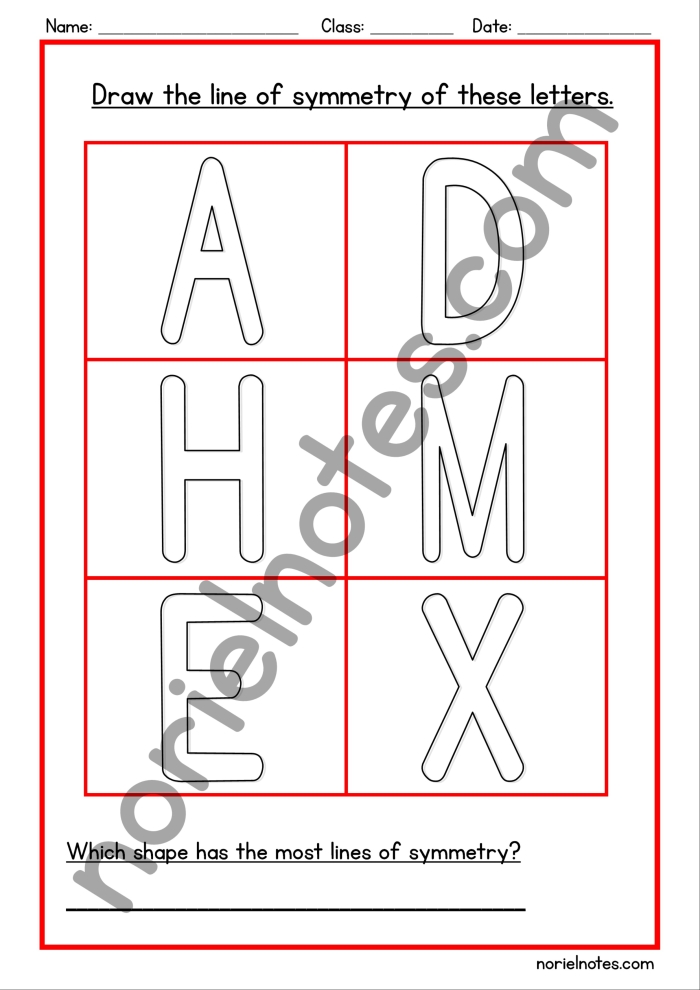
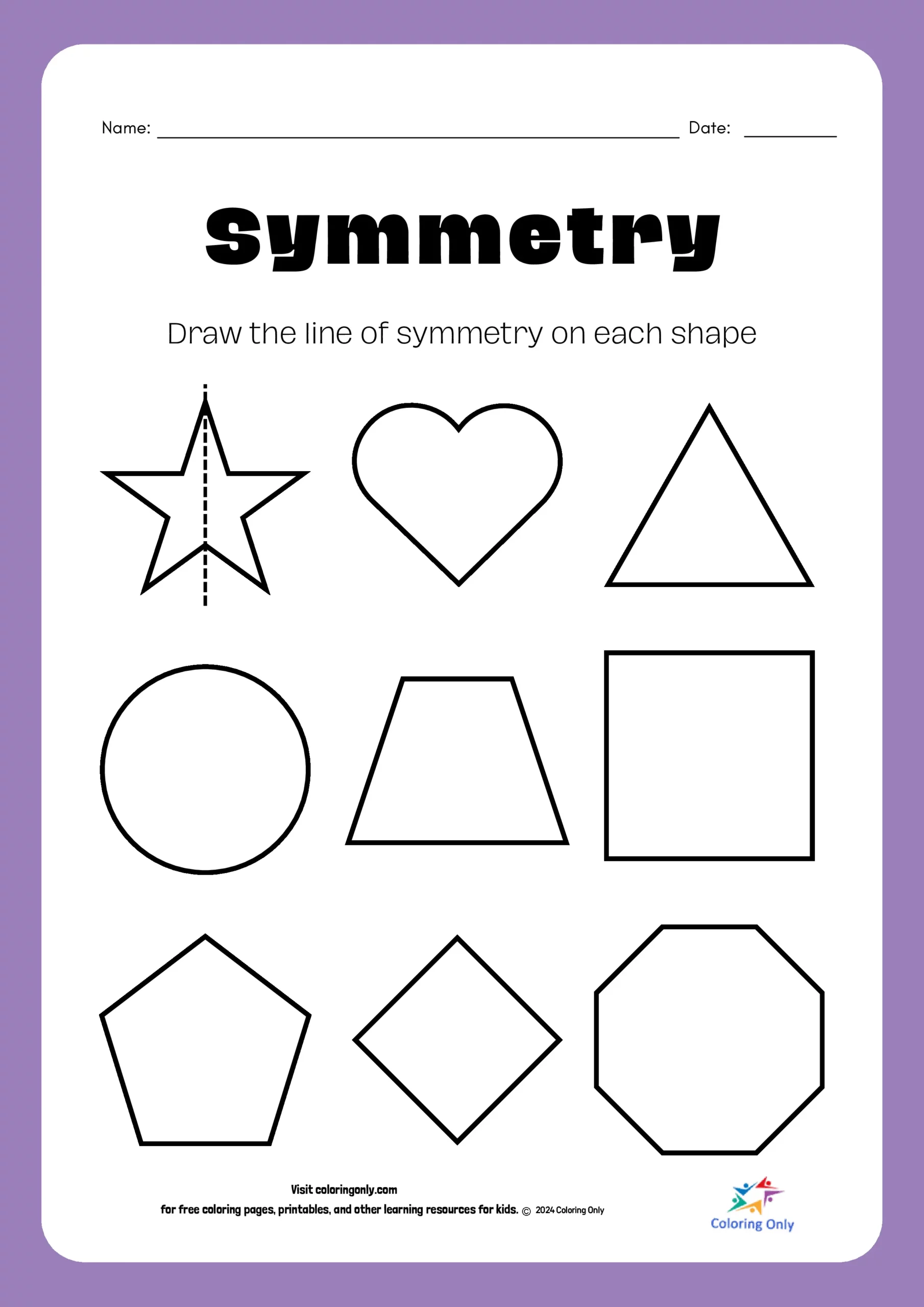
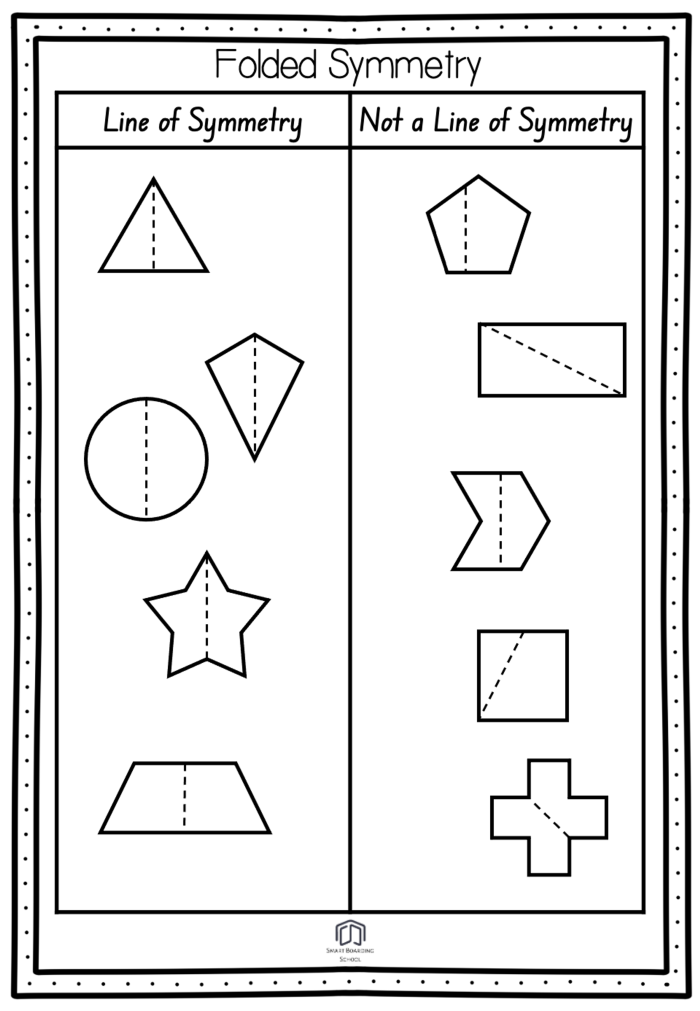
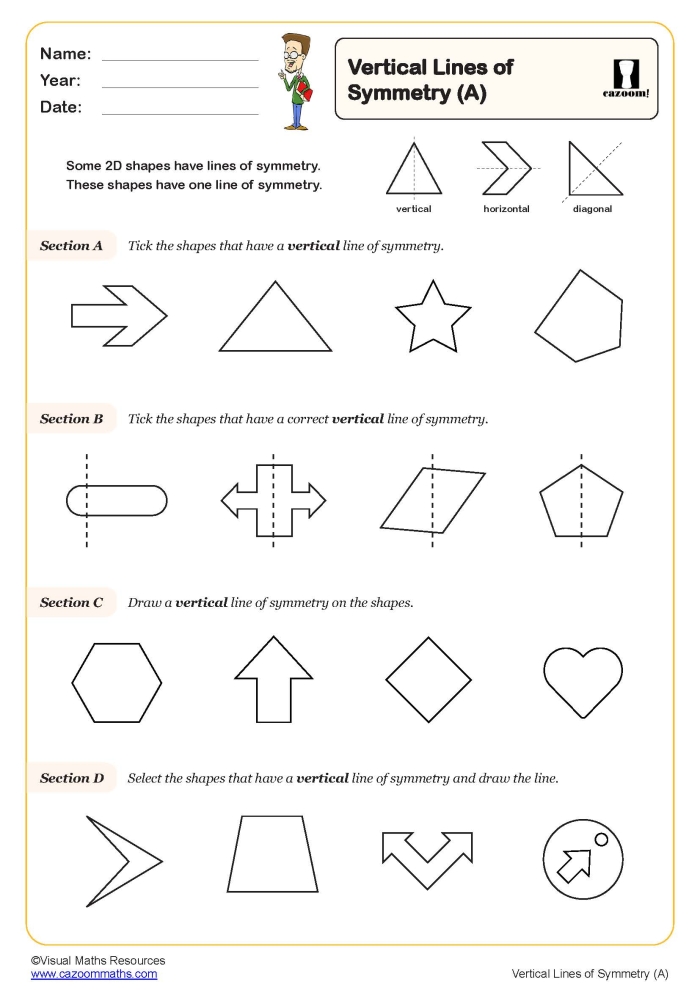
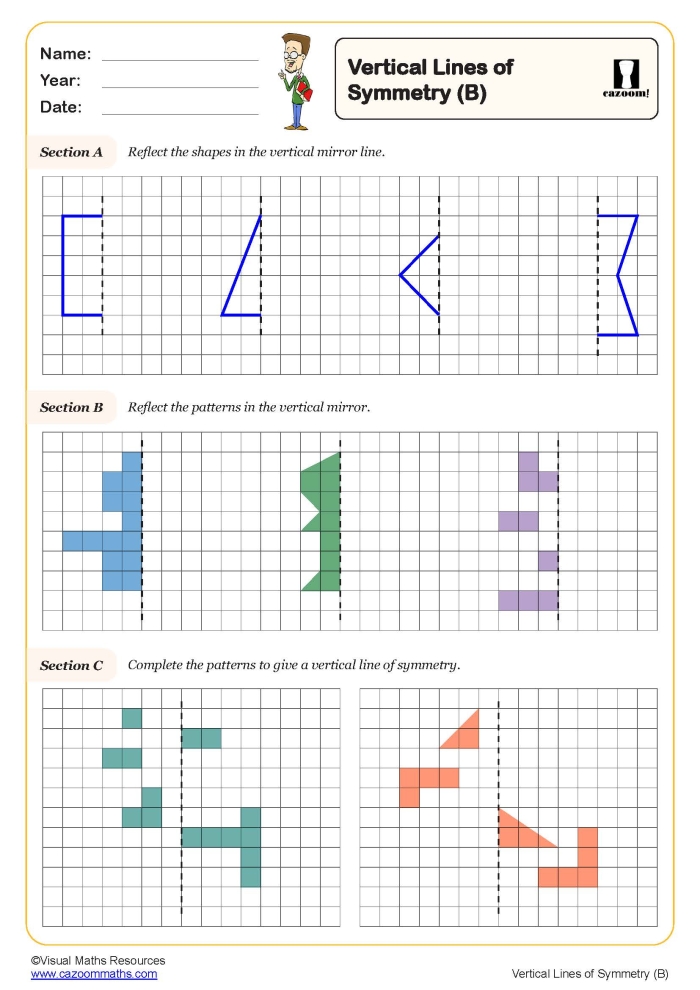
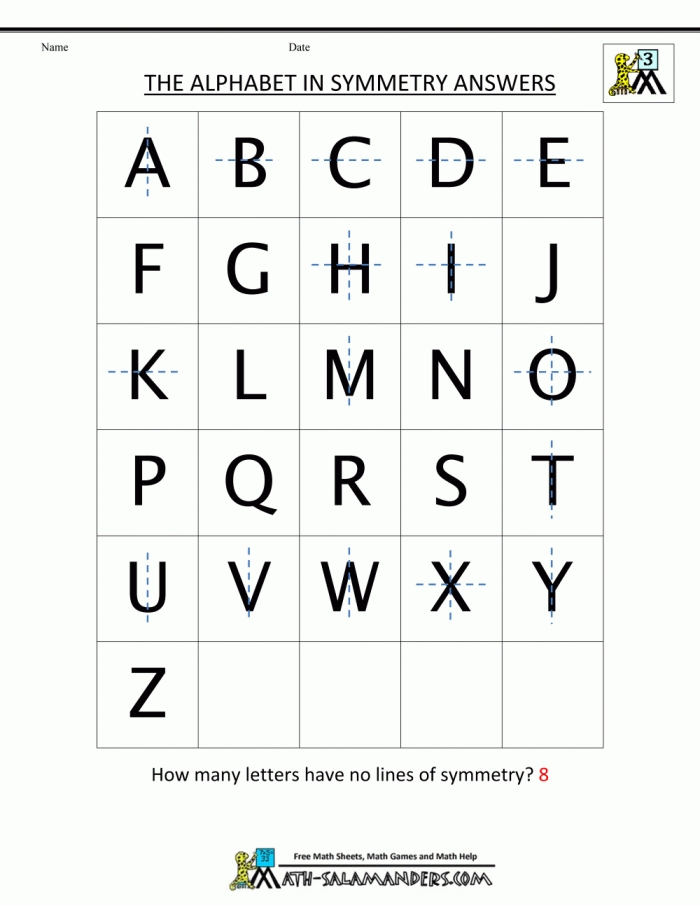
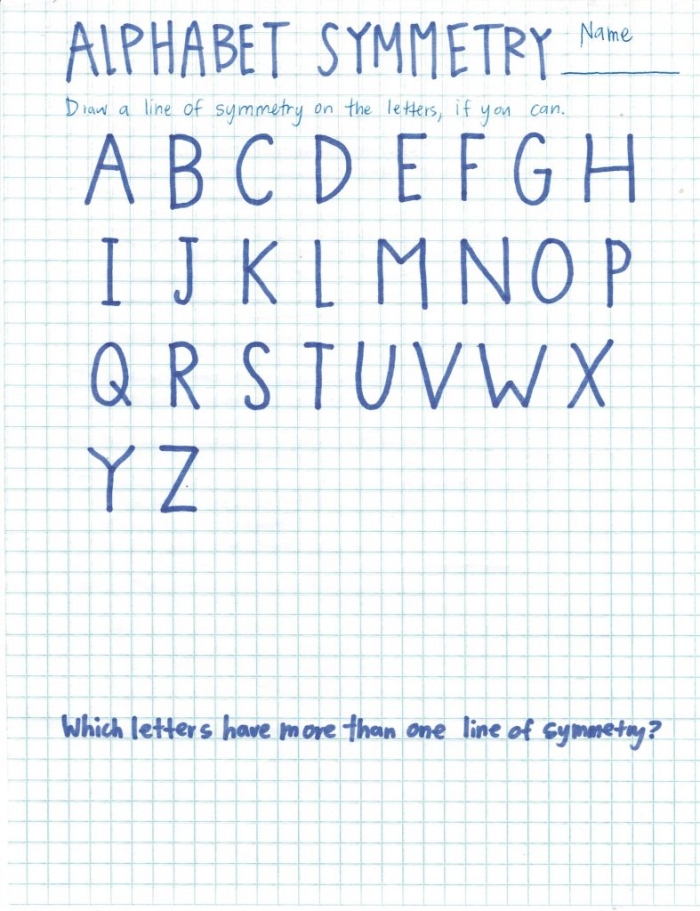
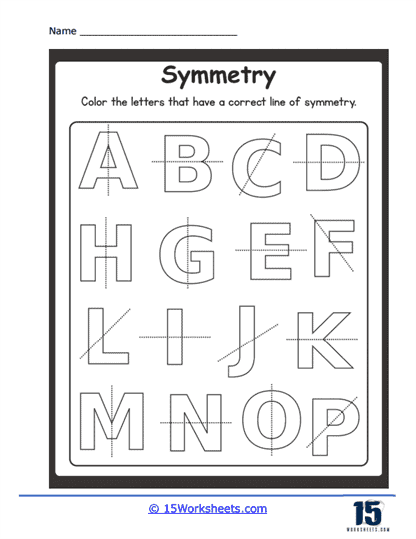
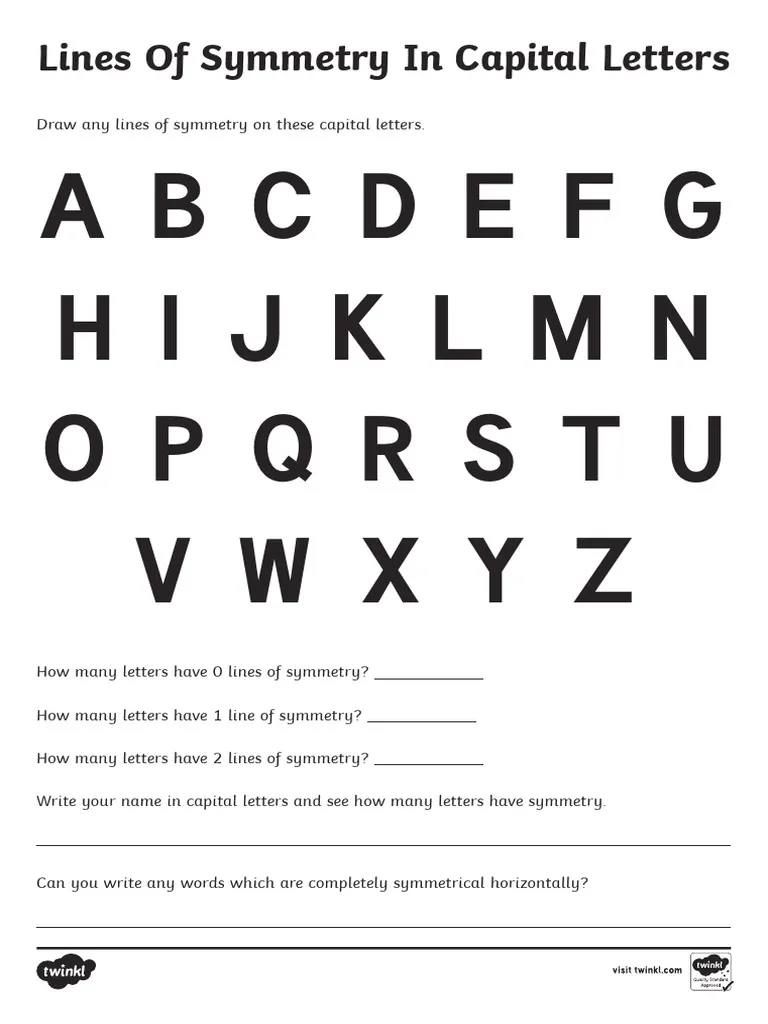
Your students probably don’t realize that the letter A has a vertical line of symmetry running straight down its middle, or that the letter B is symmetrical when you fold it horizontally. Symmetry hides in plain sight within the alphabet, and discovering it can turn a routine grammar lesson into an engaging geometry exercise.
When third grade students start exploring alphabet symmetry, they’re doing more than just identifying mirror images. They’re developing spatial reasoning skills that connect directly to their understanding of shapes, patterns, and mathematical thinking. This hands-on approach works particularly well because letters are familiar objects that children interact with every single day through reading and writing.
To get started, have your students sort the capital letters of the alphabet into categories: those with vertical lines of symmetry (like A, H, I, M, O, T, U, V, W, X, Y), those with horizontal lines of symmetry (like B, C, D, E, K), and those with no symmetry at all (like F, G, J, L, N, P, Q, R, S, Z). Some letters, like B and H, might surprise them by having multiple lines of symmetry depending on how you look at them.
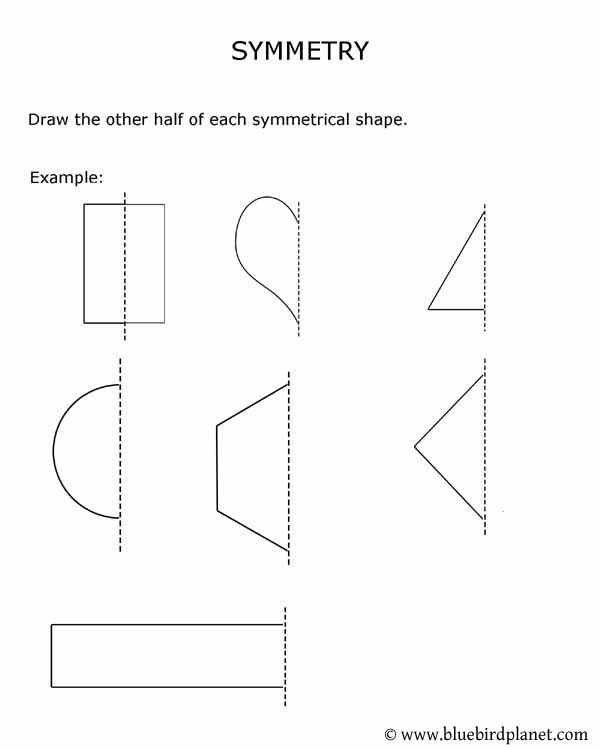
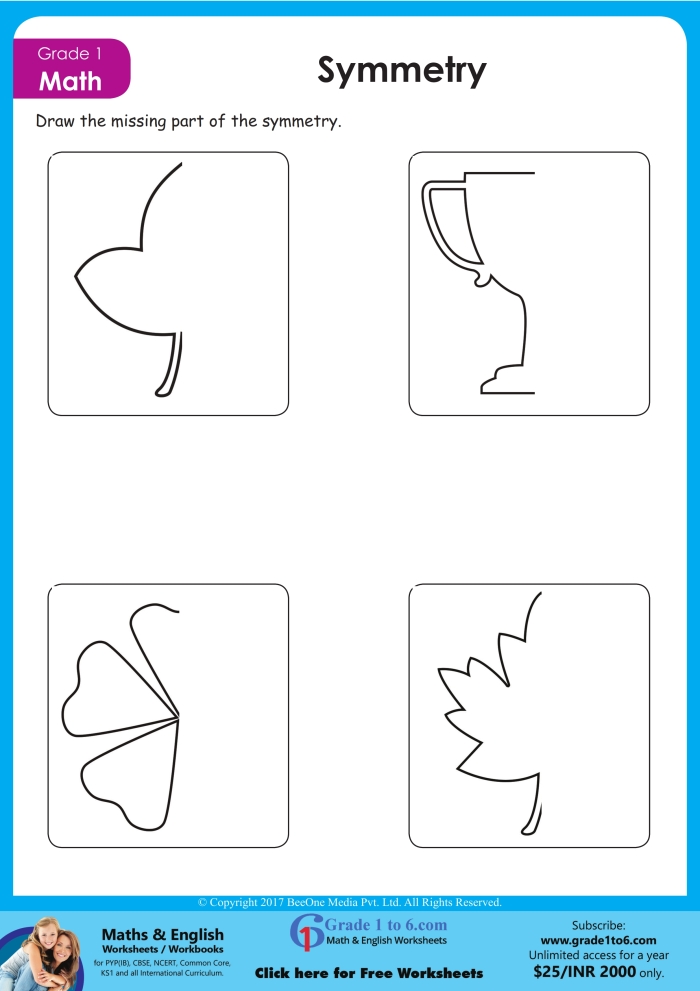
Pairing this activity with step-by-step word puzzle worksheets gives students the chance to apply their newfound symmetry skills in different contexts. You can also reinforce the concept by having them draw their own symmetrical letter designs or create words where most letters share the same type of symmetry.
The beauty of this exercise is that it combines grammar and mechanics with visual learning. Students see how language itself contains mathematical properties, making abstract concepts feel concrete and connected to their everyday world.
Printable Worksheets for Practice