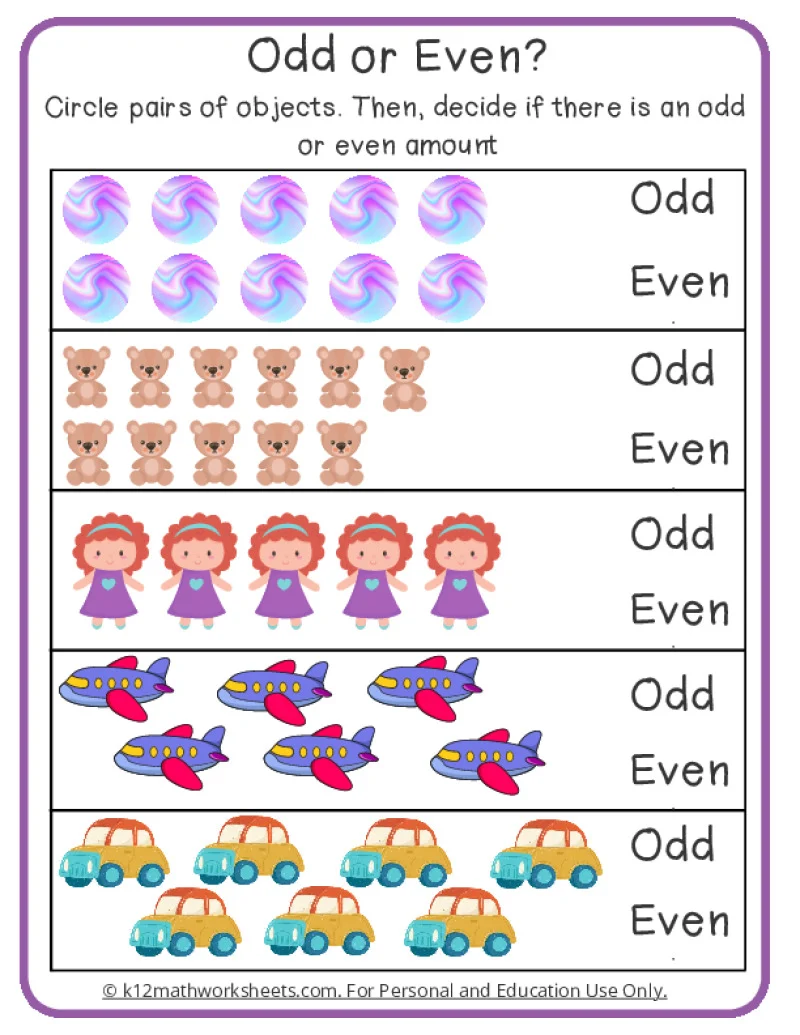
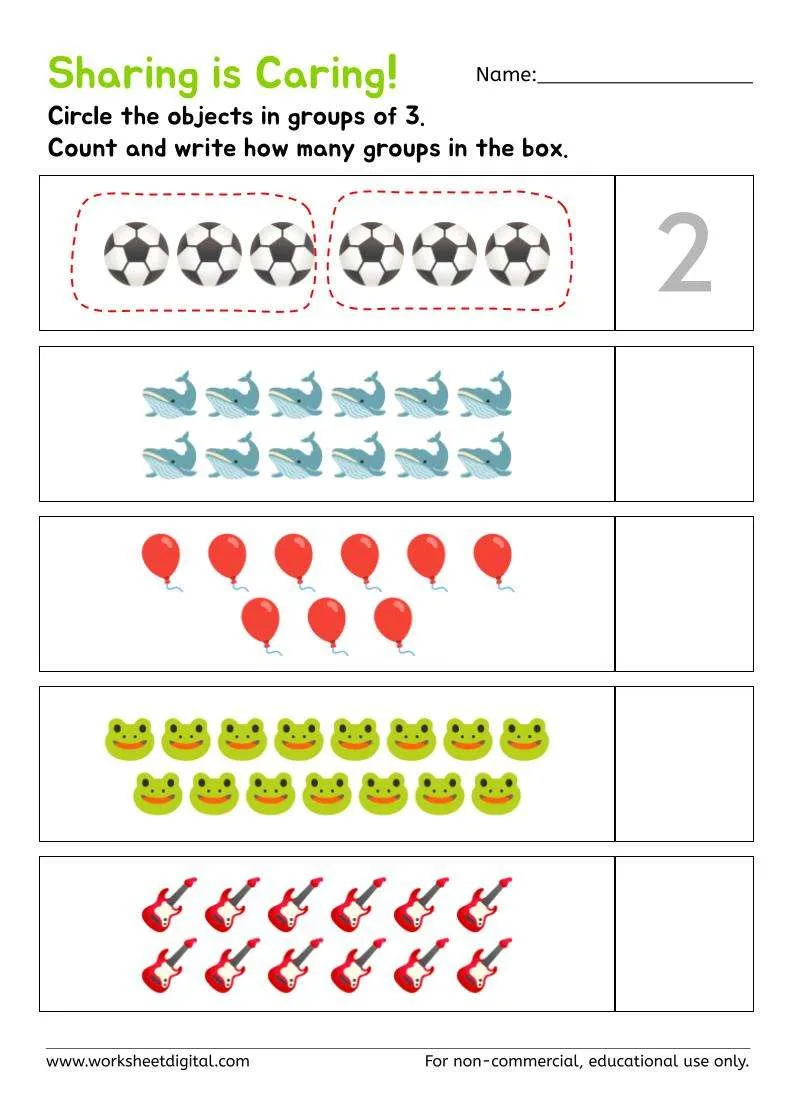
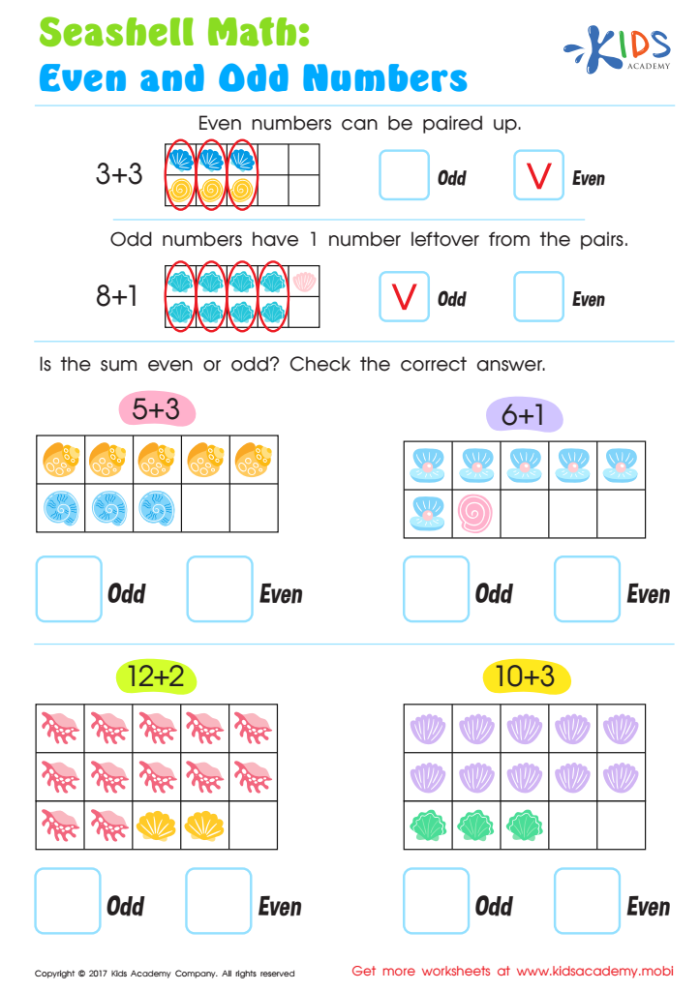
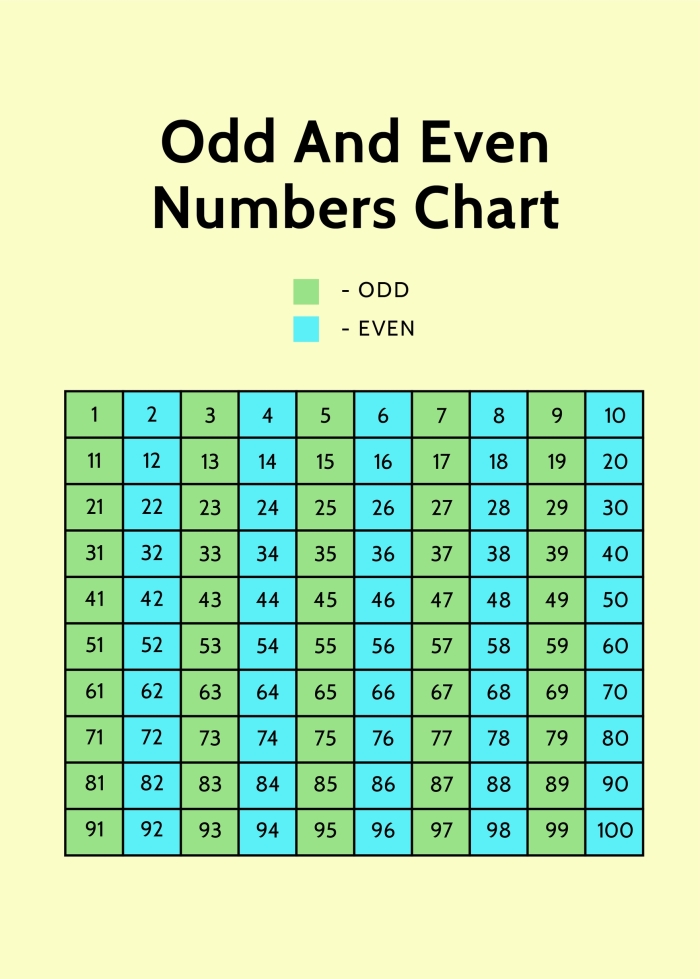
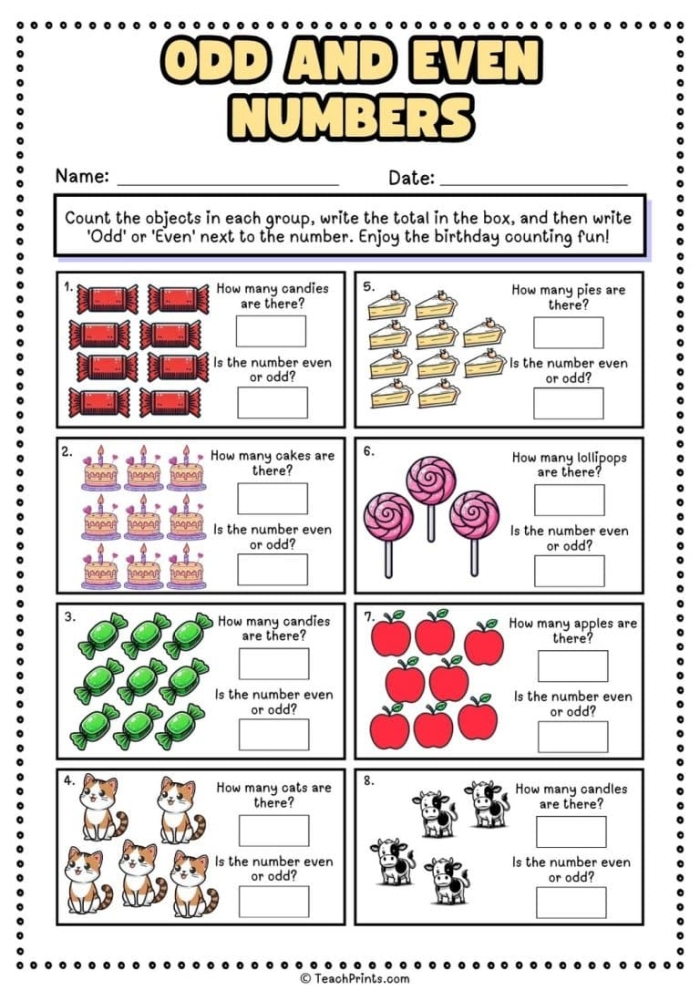
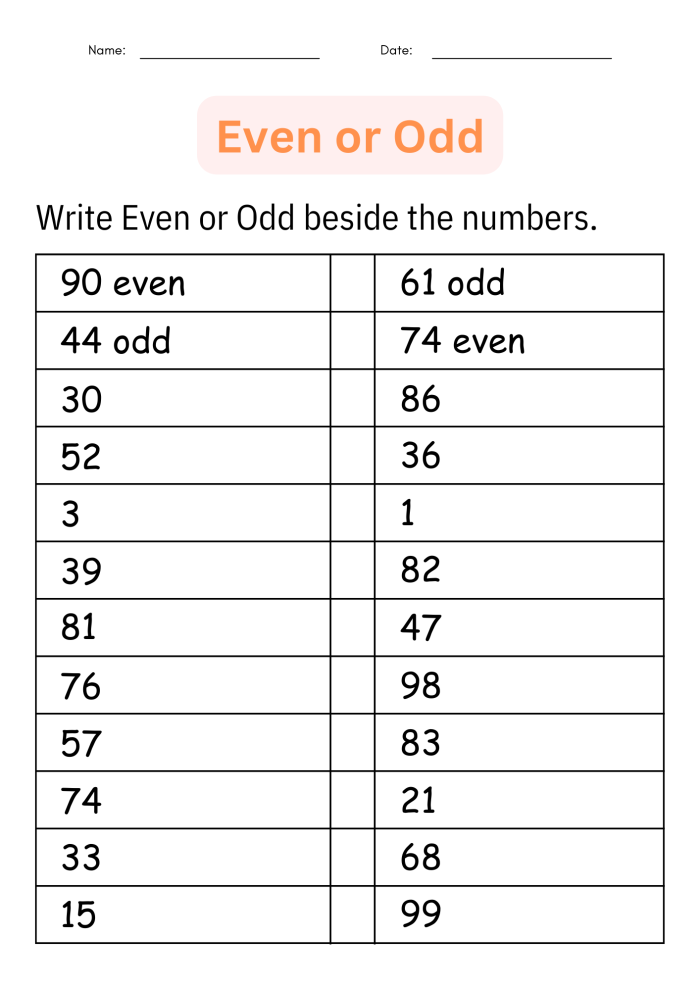
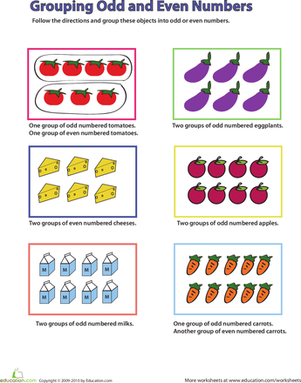
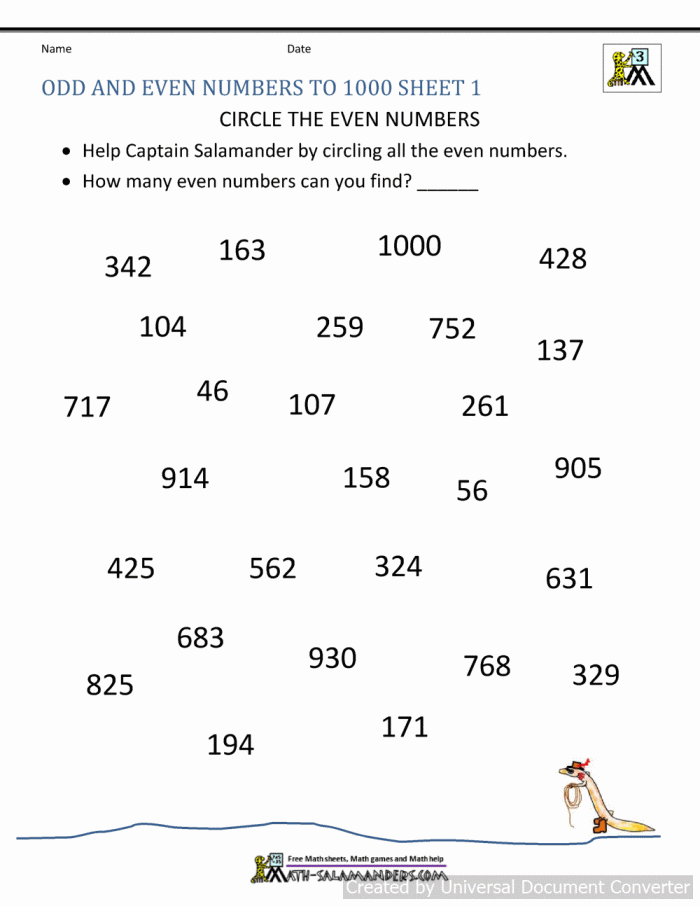
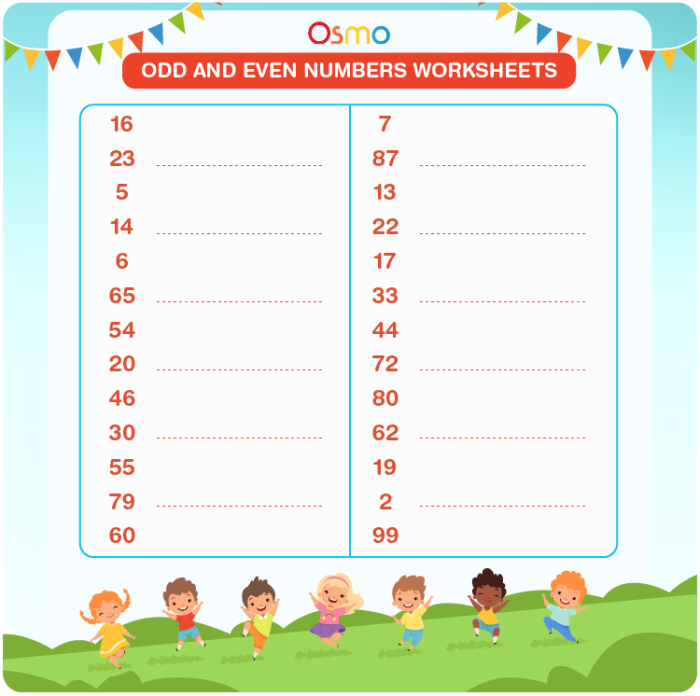
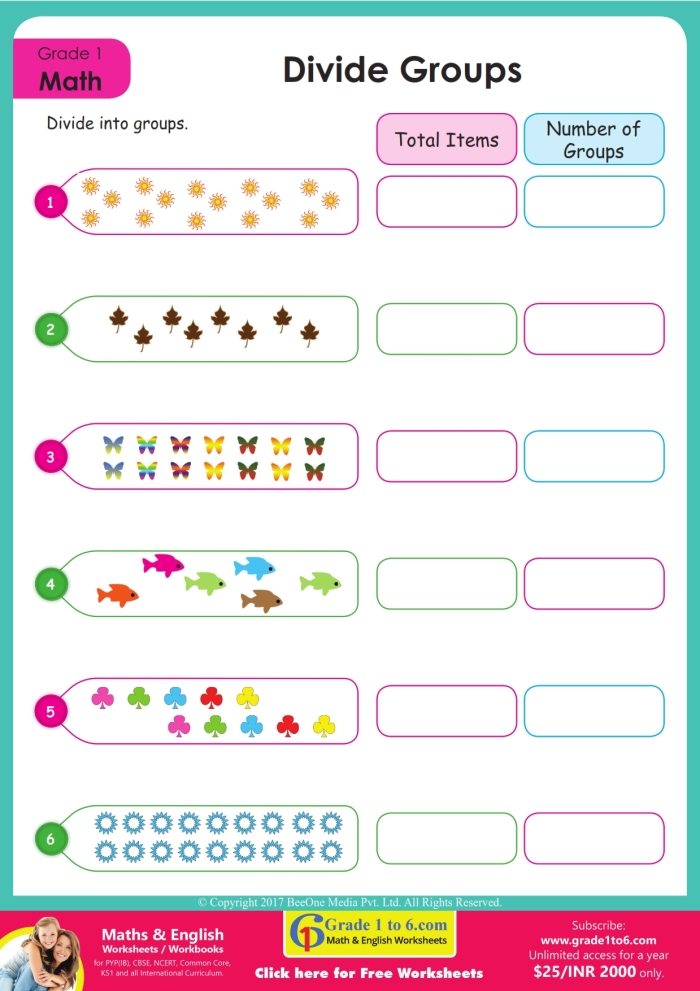
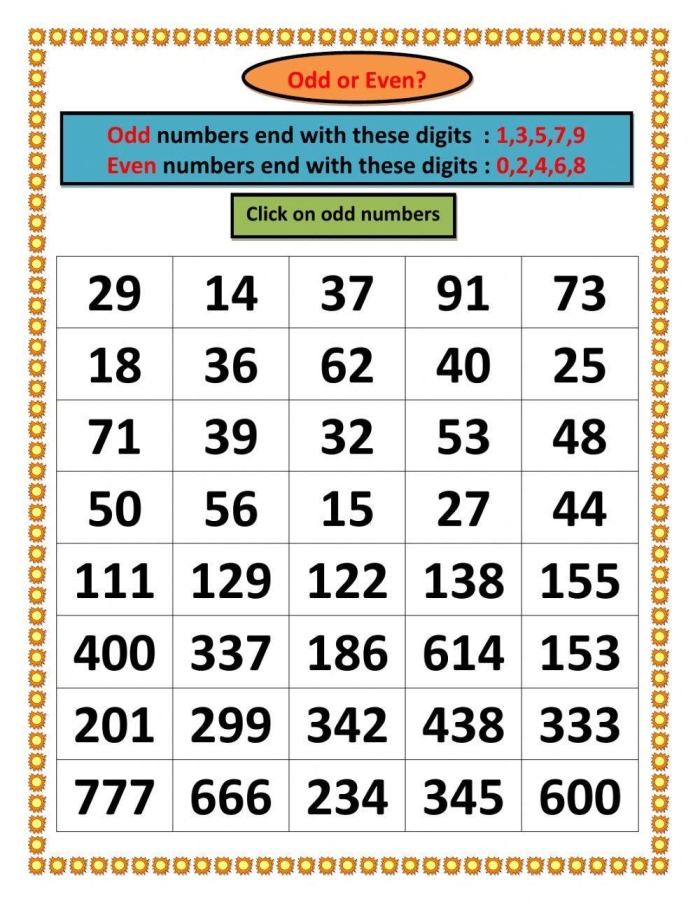
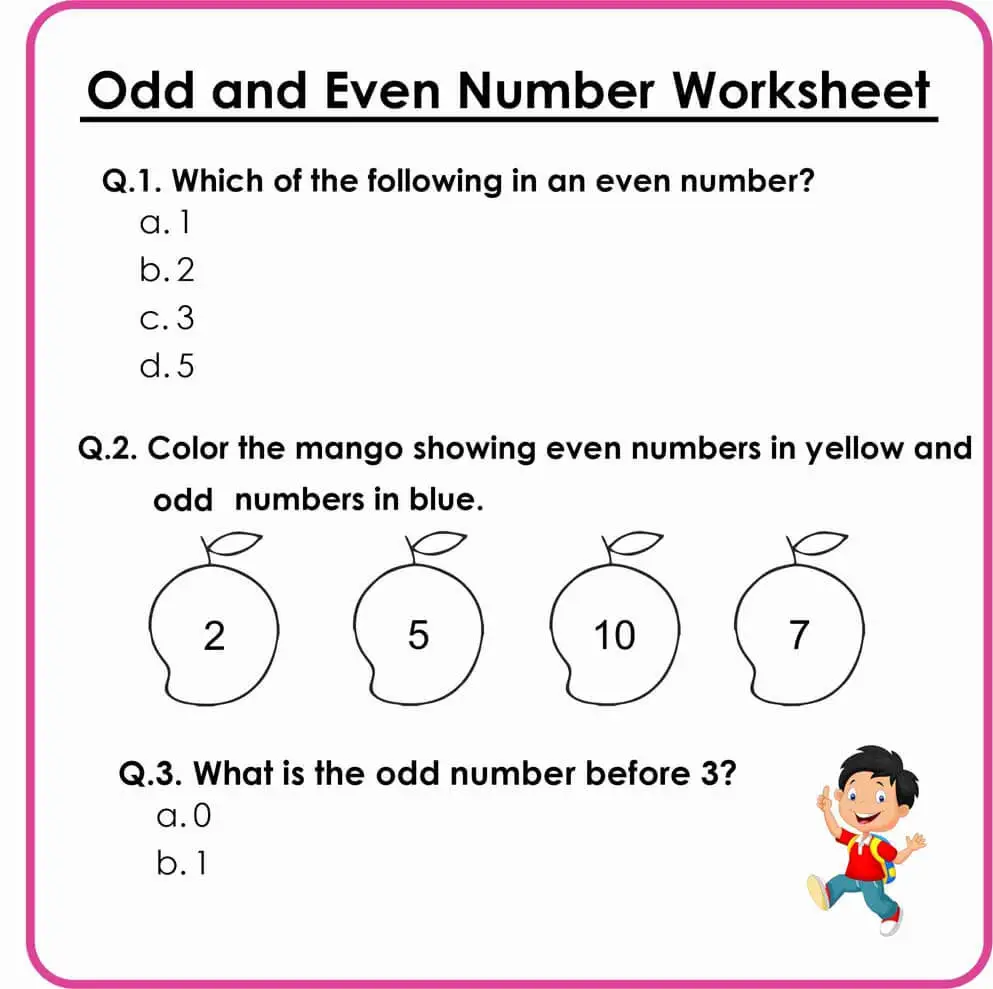
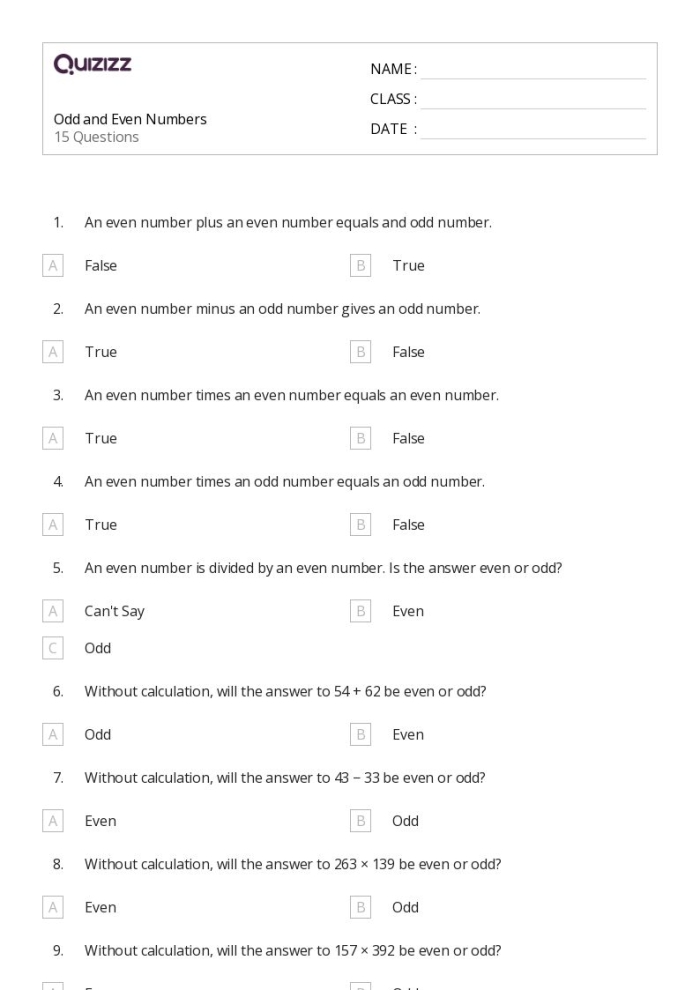
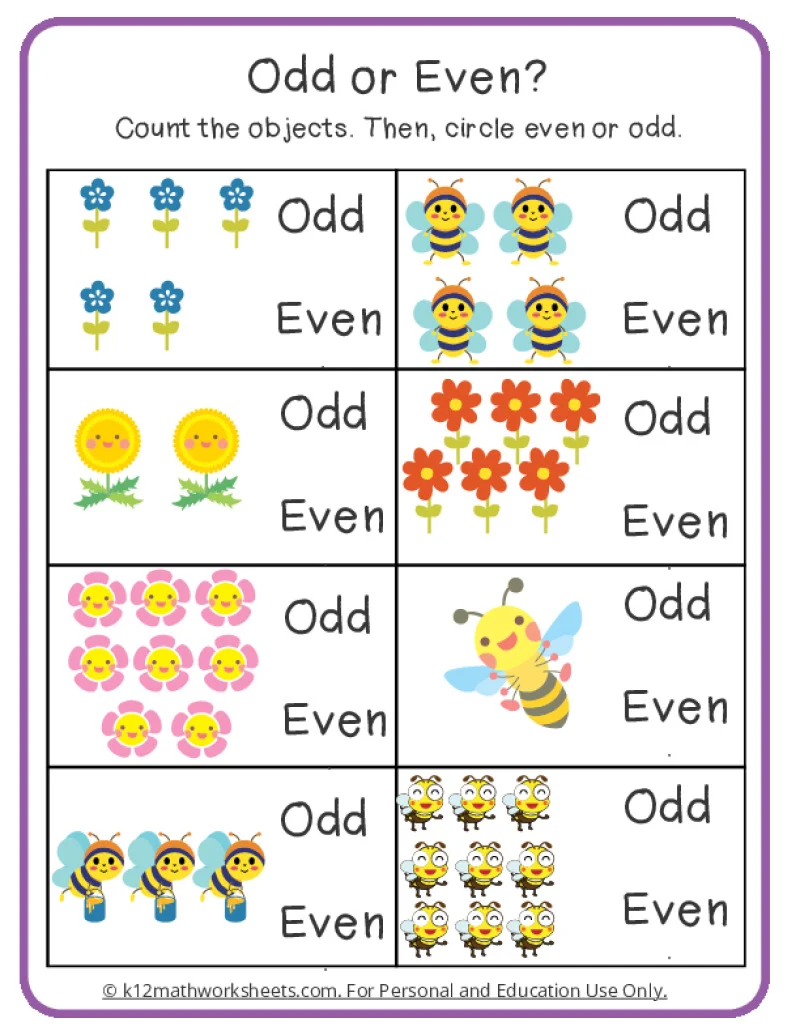
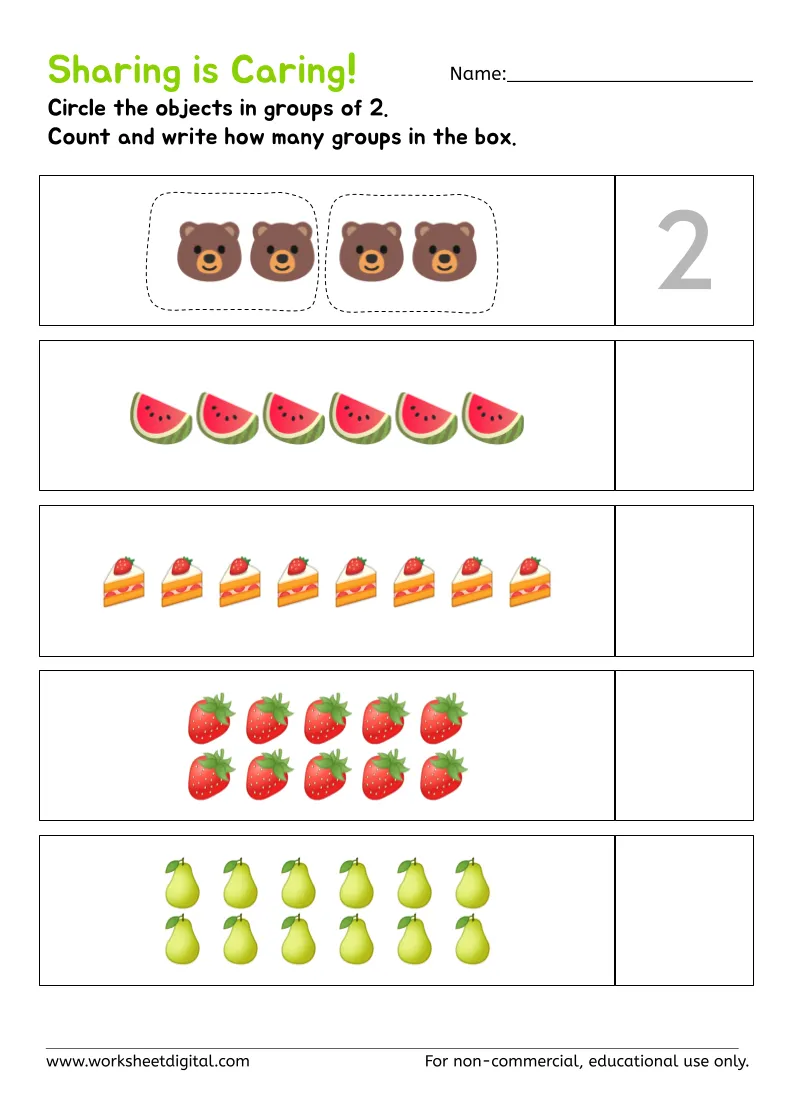
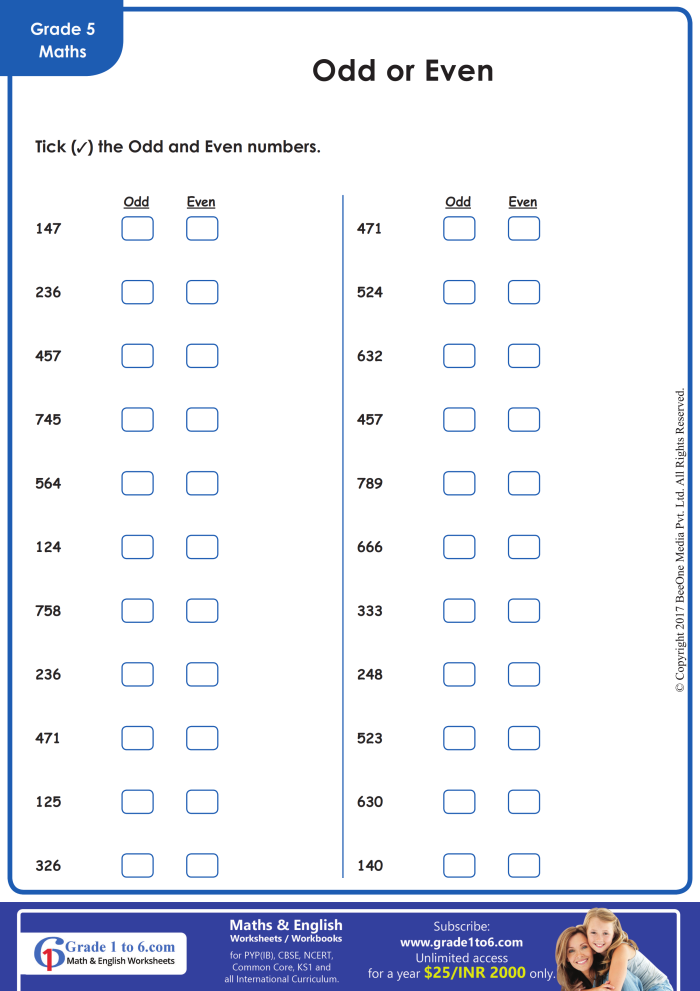
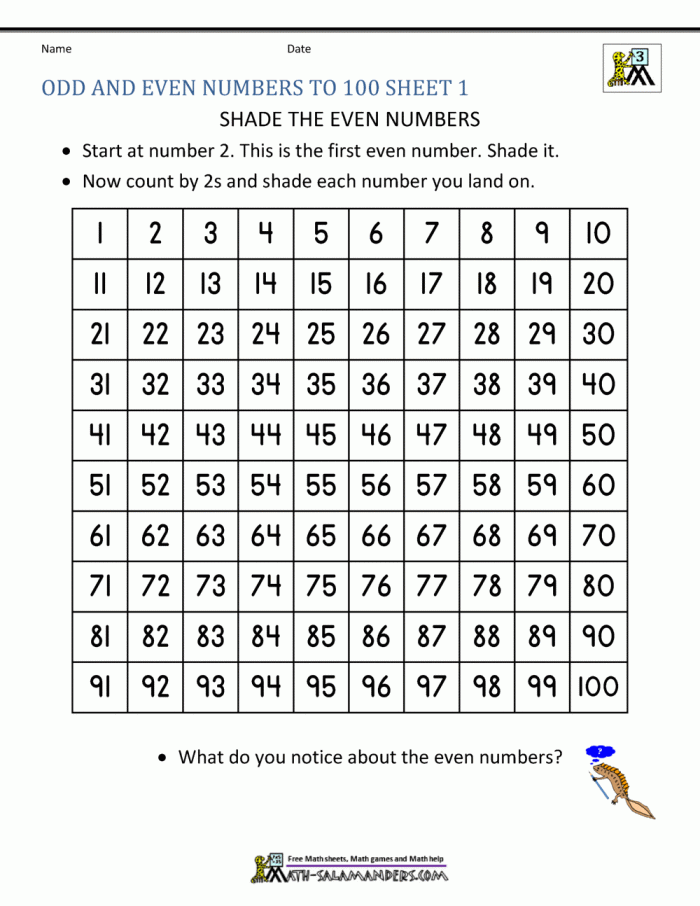
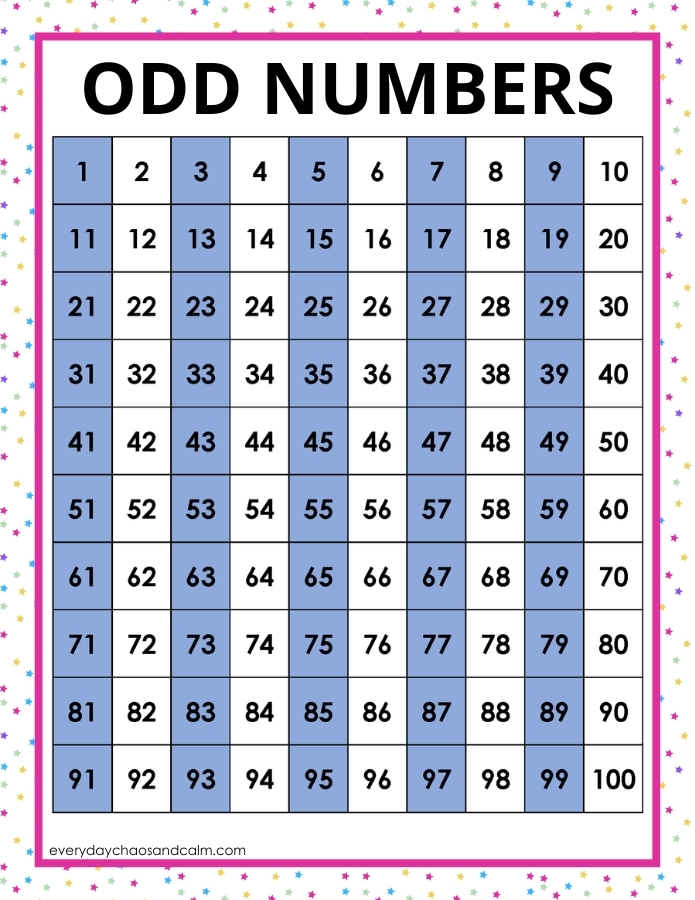
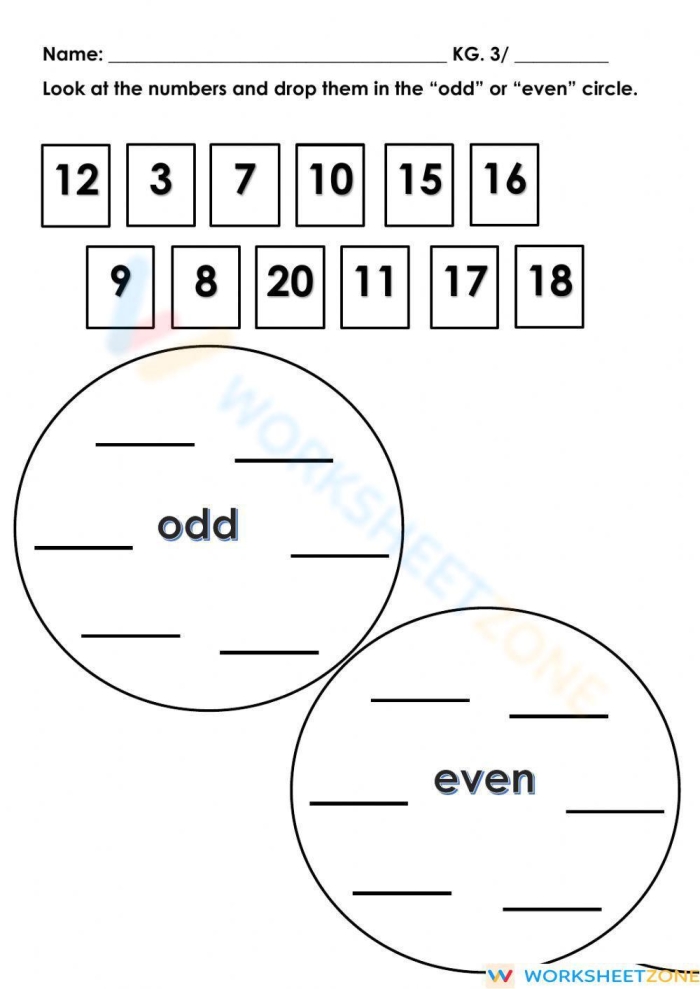
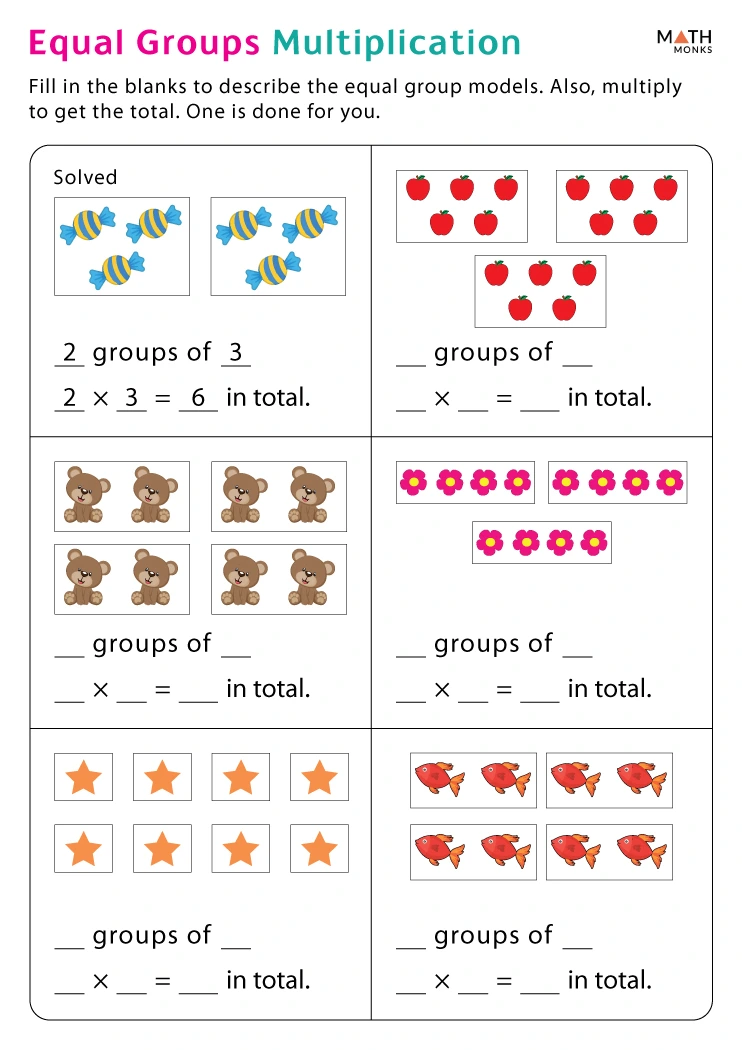
Understanding odd and even numbers is a fundamental skill in first grade math, and grouping objects is an effective way to help children grasp this concept. In this engaging worksheet, your child will practice identifying odd and even numbers through hands-on activities that involve sorting objects into corresponding groups.
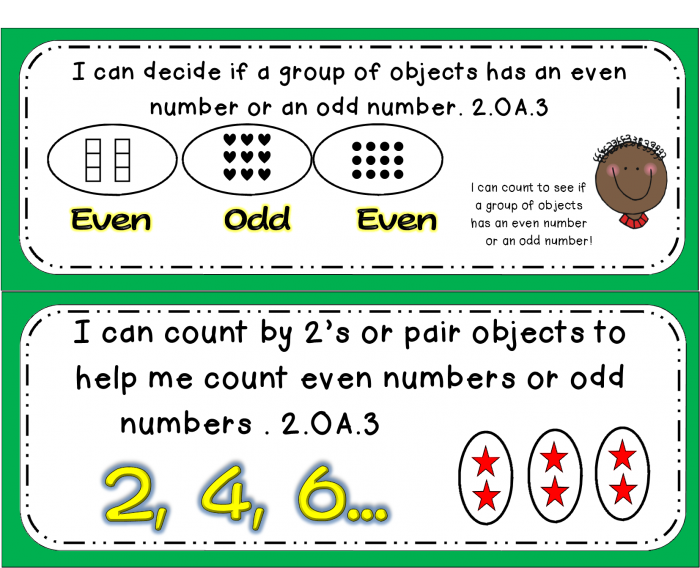
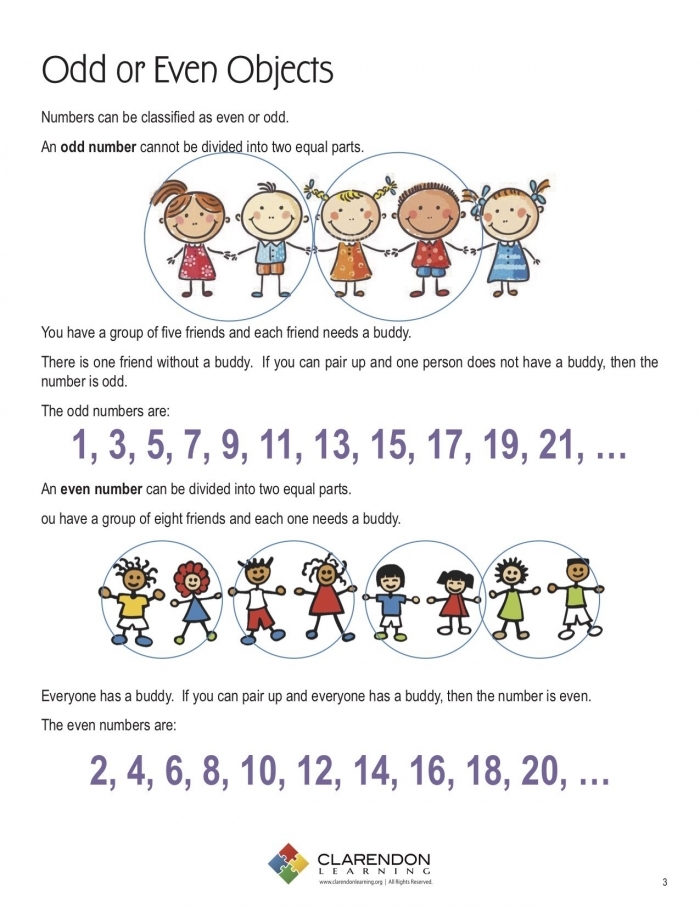
Grouping objects not only makes learning fun but also provides visual reinforcement of the differences between odd and even numbers. For instance, if your child has a collection of toy blocks, they can easily see that an even number of blocks can be paired up without any leftover, while an odd number will always leave one block unpaired. This tangible experience helps solidify their understanding.
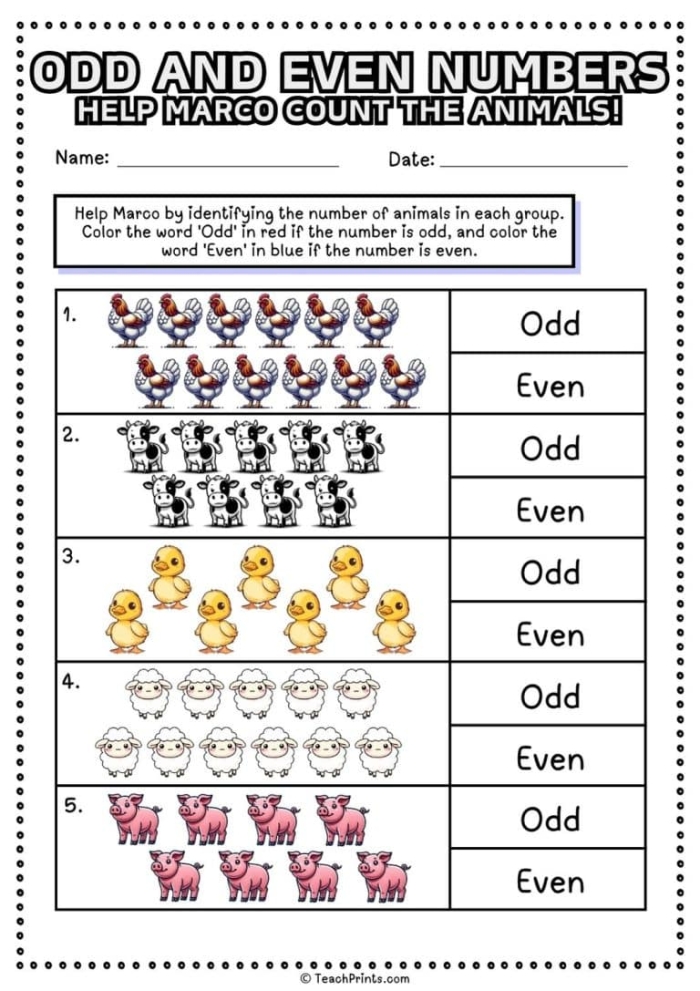
As your child works through the worksheet, they will encounter various scenarios where they need to decide the grouping of objects. This practical exercise fosters critical thinking and encourages them to develop strategies for solving problems. If they group five apples, they will recognize that they cannot form complete pairs, thus identifying it as an odd number. In contrast, grouping four oranges will reveal that they can make two pairs, reinforcing the concept of even numbers.
Moreover, this worksheet aligns with the first-grade geometry curriculum, making it a perfect supplement to lessons on shapes and numbers. Engaging in activities that combine different areas of math not only enhances comprehension but also keeps students interested and motivated. For more practice, you might consider exploring printable worksheets that cover related topics, such as identifying polygons and story sequencing.
By integrating these exercises into your child’s learning routine, you can help them build a strong foundation in math that will serve them well as they progress through school. Whether they are grouping objects or solving problems, each activity plays a crucial role in developing their mathematical skills.
Start Practicing with These Worksheets